Opah
Opah: The First Warm-Blooded Fish in the World
The opah is the first fully warm-blooded fish, keeping its body 5 degrees warmer than the deep ocean with heat-exchange vessels in its gills.
By Emily Carter · Reviewed by our vet team · Updated 10 November 2026 · 9 min read
Warm-bloodedUp to 2 mDeep ocean
At a Glance
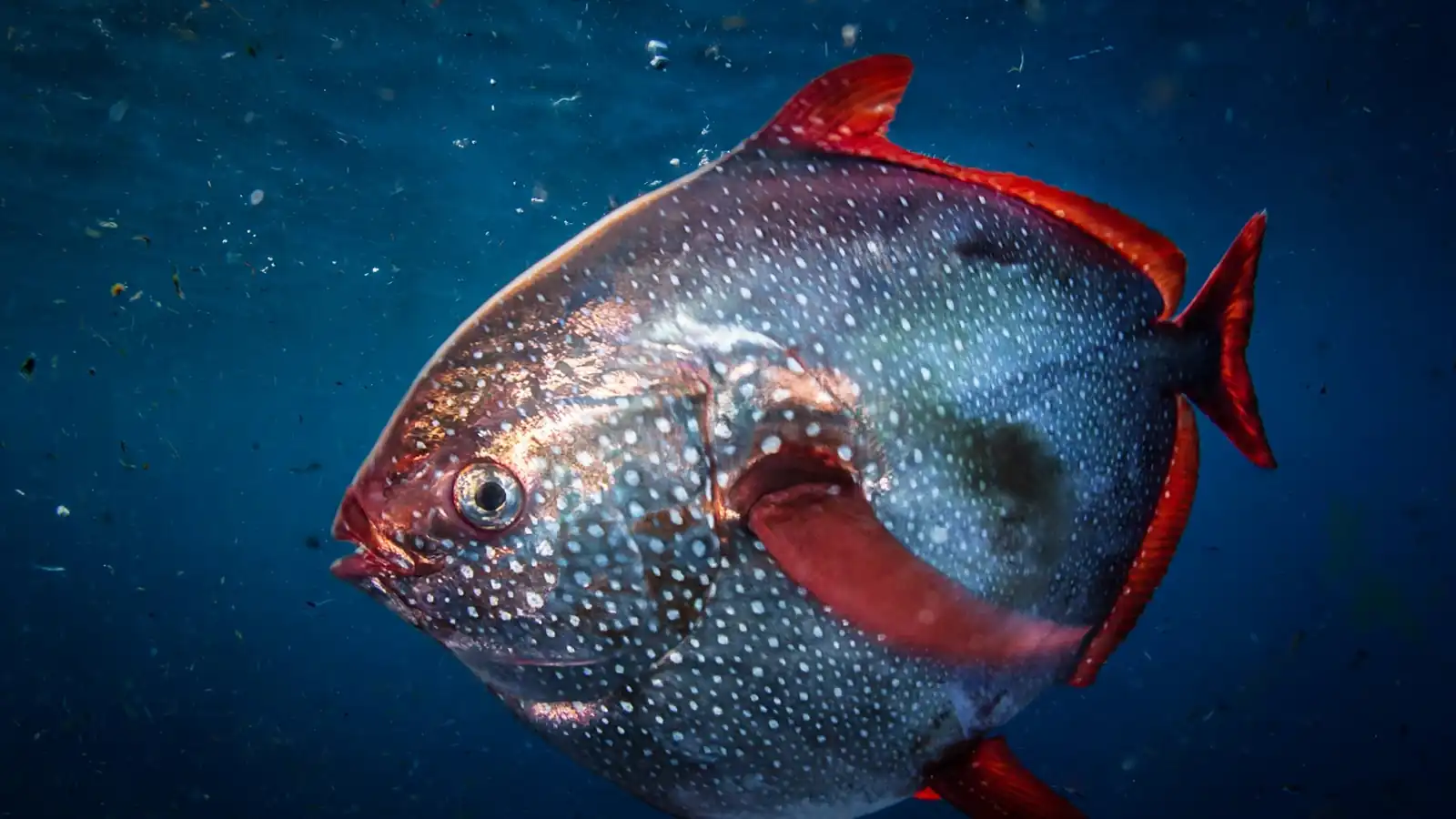
The opah is the first fully warm-blooded fish ever discovered, a silver disc with crimson fins that keeps its body 5 degrees warmer than the deep ocean around it. It lives in the cold, dark water hundreds of metres down, and it does what no other fish can do: it stays warm, and it stays fast, in a world where every other fish is as cold as the water.
Opah Size: How Big Do They Get?
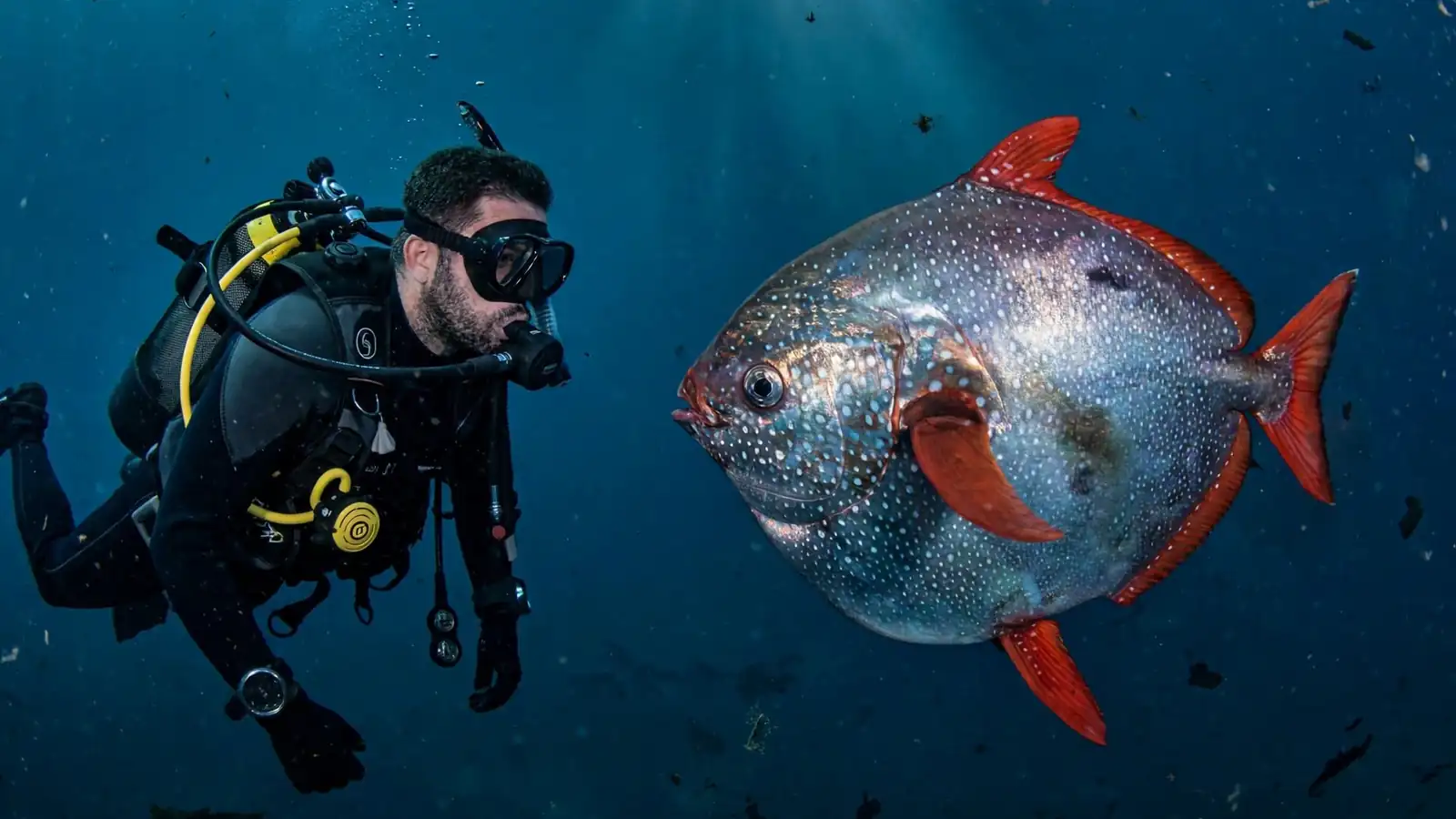
Most measure about 1 metre long and weigh around 45 kg, a large, disc-shaped fish built for the deep ocean. The biggest reliably measured individuals reach 2 metres and 270 kg — a fish the size of a door, and heavier than a grown man. The round, flattened body is its signature: a silver disc with red fins and white spots, unmistakable in the deep blue water.
Size is a matter of the species, and its family is bigger than it used to look. The genus Lampris was once thought to hold two species; a 2018 revision recognised six, and the spotted species of this guide — Lampris guttatus — is the best known of them. The other five are rarer, deeper, and less studied, and its story is still being written.
The First Warm-Blooded Fish
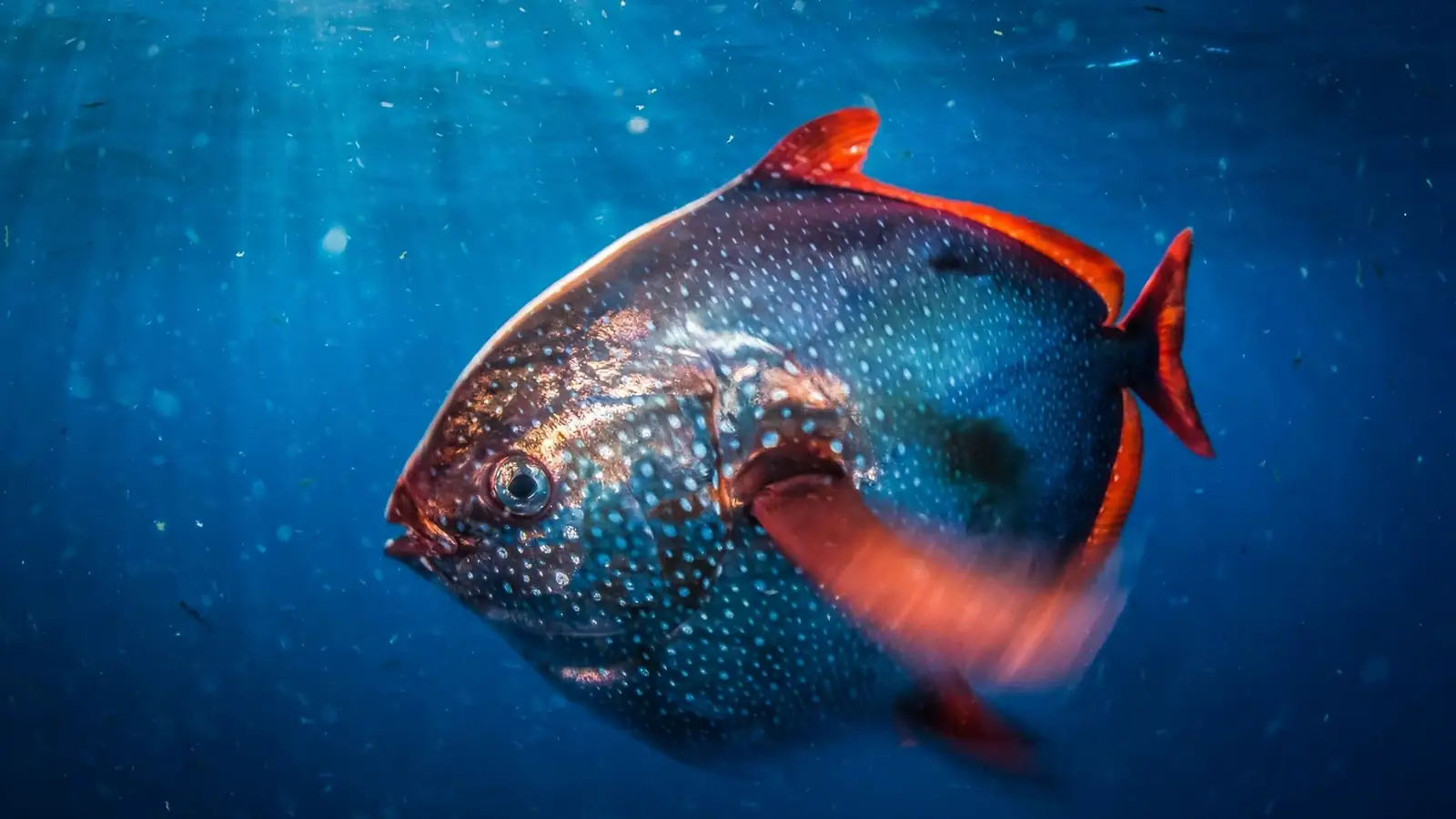
In 2015, scientists announced that it is the first fully warm-blooded fish — the first fish known to keep its whole body warmer than the water around it. Its body runs about 5 degrees Celsius above the ambient temperature, a difference that sounds small but changes everything: a warm heart beats faster, warm eyes see faster, and warm muscles swim faster in the cold deep ocean.
Other fish are warm in places. Tunas and some sharks keep their swimming muscles warm, but the rest of their body is cold. This fish is different: it warms its whole body, including its heart and its brain, and it does it constantly, from the moment it is born to the moment it dies. It is the only fish known to do this, and it is the reason it can hunt in water where other predators slow to a crawl.
Retia Mirabilia
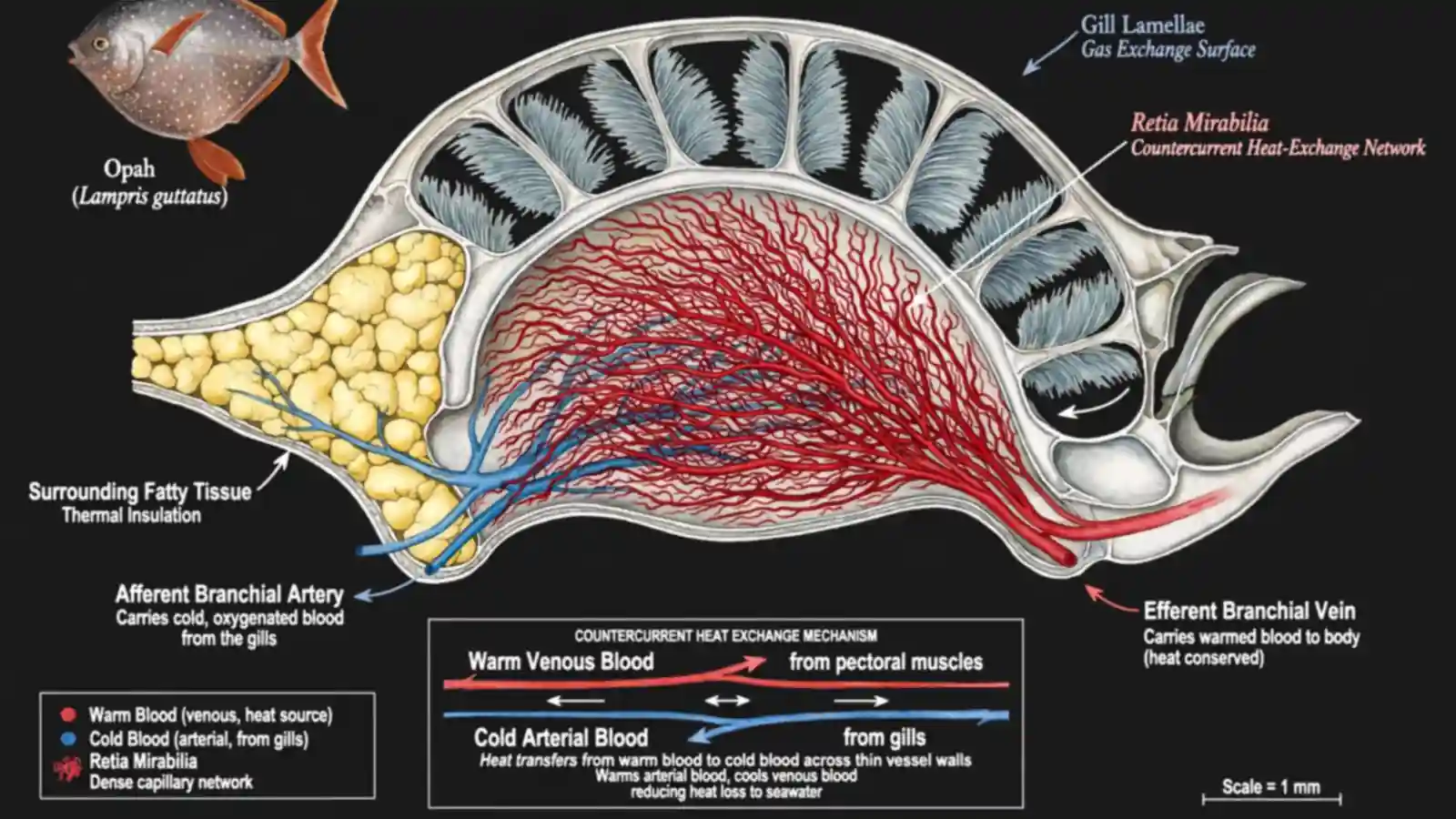
It stays warm with a piece of anatomy called the retia mirabilia — a network of tiny blood vessels in the gills that works as a heat exchanger. Warm blood leaving the body’s core passes close to cold blood returning from the gills, and the heat transfers from one to the other, warming the cold blood before it reaches the heart. It is the same principle as a car radiator run in reverse, and it is built into its gills.
The system works because its gills are different from other fishes’. The blood vessels in the gills are arranged in a dense, counter-current network, and the gills themselves are insulated by a layer of fat. The result is a fish that loses almost no heat to the water, even at 300 metres down, where the temperature is barely above freezing. For the full story of the discovery, see EarthSky’s account of the first truly warm-blooded fish.
Where They Live
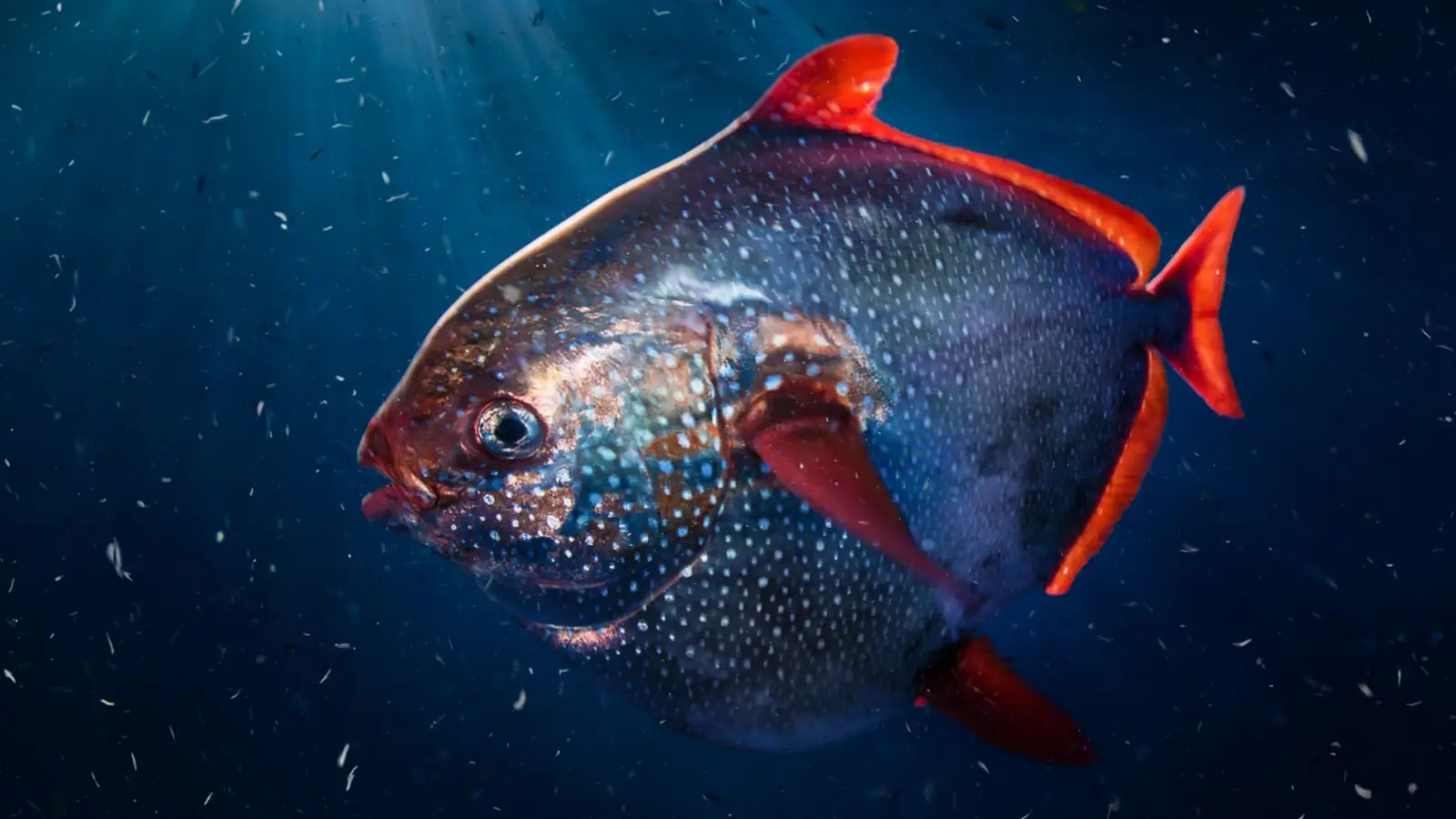
They live in the deep open ocean, from 50 to 500 metres down, in tropical and temperate waters worldwide. They favour the mesopelagic zone — the twilight zone, where the sunlight fades and the water turns dark blue — and they spend their lives in the open water, far from the coast and far from the seabed. They are solitary fish, and they are rarely seen except when they are caught as bycatch in tuna fisheries.
They move with the currents and with their prey, following the deep scattering layer — the great mass of squid, krill and small fish that rises toward the surface at night and sinks during the day. Its life is a slow vertical migration, up at night and down by day, tracking the food through the dark water.
What Do They Eat?
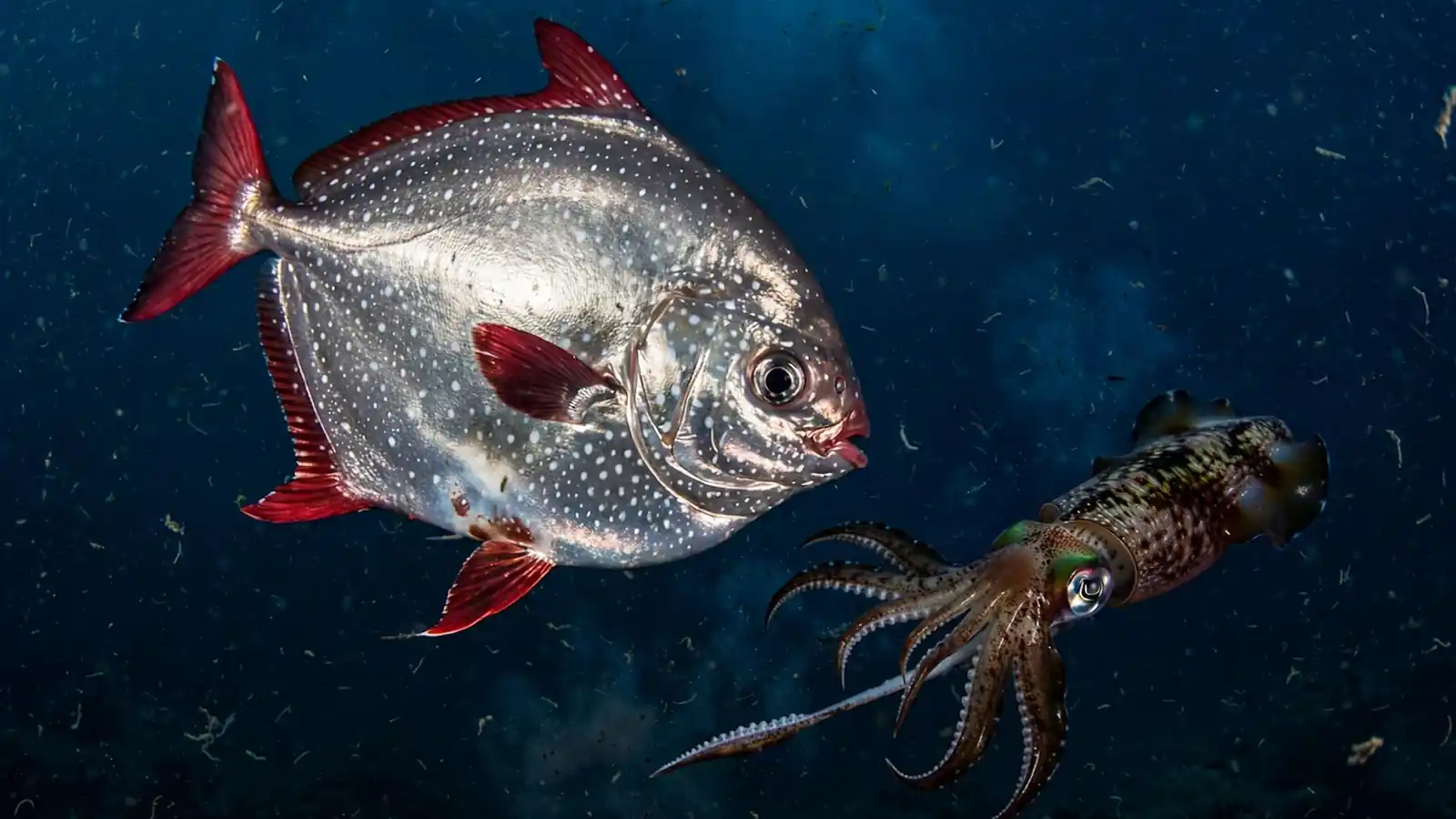
It eats squid, krill and small fish, hunting in the deep scattering layer where the food is thickest. They are not fast pursuit hunters — their round body is not built for speed — but their warm muscles give them an edge in the cold water, letting them move faster and react quicker than the cold-blooded prey around them.
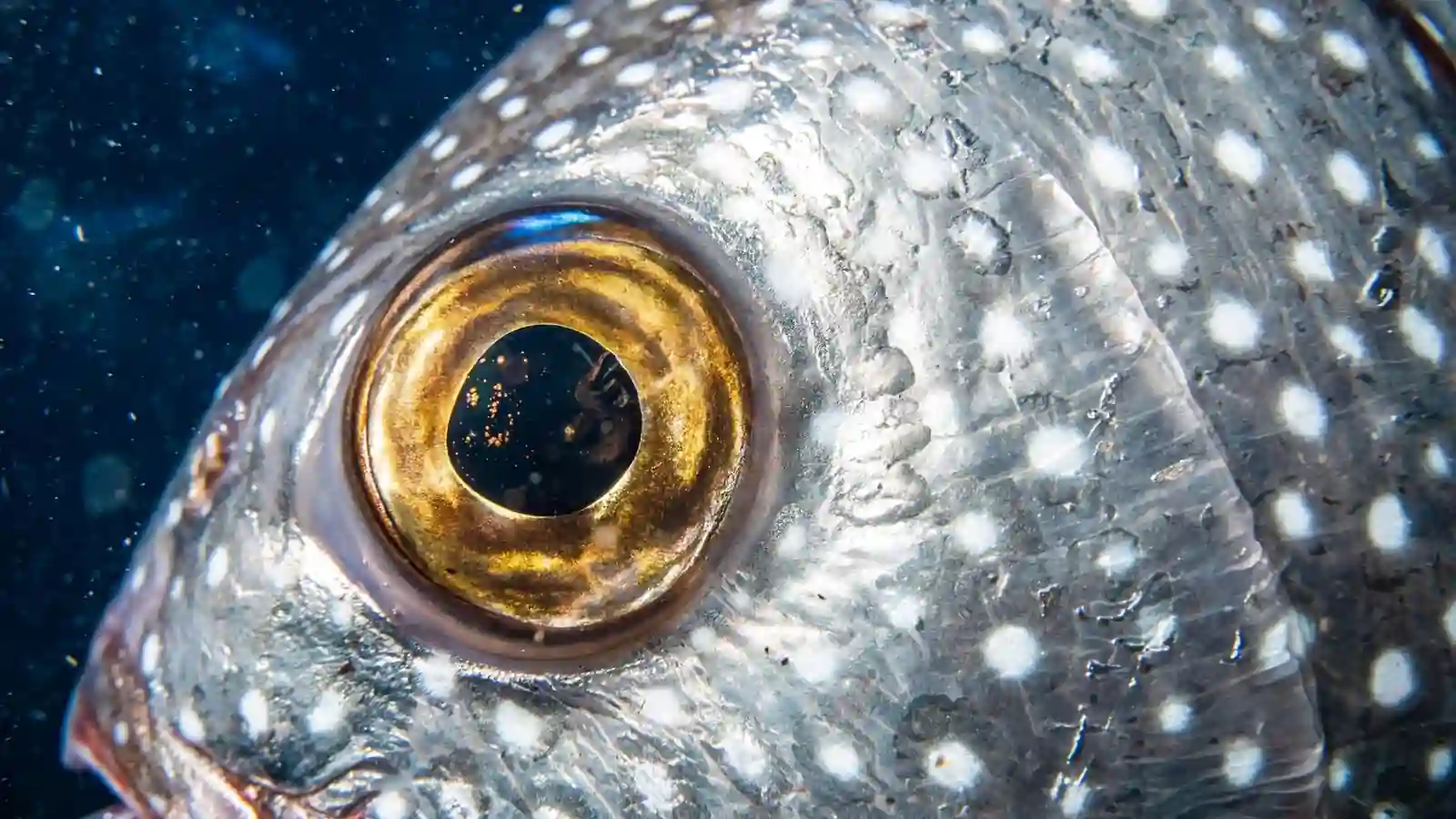
Feeding happens in the deep water, where its large eyes gather what little light reaches 300 metres down. The diet is the same as many deep-sea fish — whatever small animal can be caught in the dark — but this fish catches it warmer, faster, and more efficiently than any of its cold-blooded neighbours.
Vs Other Deep-Sea Fish
Most deep-sea fish are cold, slow, and built for a life of waiting. It is the exception: warm, active, and built for hunting in the cold. Compared with the ocean sunfish, which drifts at the surface and basks in the sun to warm up, this fish generates its own heat internally and keeps it. Compared with the oarfish, which is a long, ribbon-like drifter, this one is a compact, powerful swimmer.
The difference is the retia mirabilia, and it is what sets it apart from every other fish in the deep ocean. No other fish warms its whole body; no other fish hunts with a warm heart in freezing water. It is not the biggest deep-sea fish, or the fastest, or the strangest — but it is the warmest, and that is enough to make it unique.
Opah Conservation
It is listed as Least Concern, and it is not considered at risk. It is caught as bycatch in tuna fisheries, but the catch is small, and the species is widespread across the world’s oceans. There is no targeted fishery, and no evidence that the population is declining.
What is unknown is almost everything else. Its lifespan is poorly known — most of the fish caught are between 1 and 6 years old, but that may reflect the fishery rather than the species — and its breeding habits, its migration routes, and the true size of its population are all unstudied. It is a fish that science is still catching up with, and the warm-blooded discovery of 2015 is a reminder of how much the deep ocean still holds.
Fun Facts
- It is the first fully warm-blooded fish, discovered in 2015 — its body runs about 5 degrees warmer than the water.
- It stays warm with the retia mirabilia, a network of blood vessels in its gills that works as a heat exchanger.
- The genus Lampris now holds six recognised species, not two, after a 2018 revision.
- It can reach 2 metres and 270 kg — a fish the size of a door.
- Its lifespan is poorly known: most caught fish are 1 to 6 years old, but that may reflect the fishery, not the species.
- It is also called the moonfish, for its round, disc-shaped body.
Frequently Asked Questions
Is the Opah Really Warm-Blooded?
Yes. It is the first fully warm-blooded fish, discovered in 2015. It keeps its whole body about 5 degrees Celsius warmer than the water around it — the first fish known to warm its heart and brain as well as its swimming muscles.
How Does an Opah Keep Warm?
With the retia mirabilia, a network of tiny blood vessels in its gills that works as a heat exchanger. Warm blood leaving the body’s core warms the cold blood returning from the gills, and a layer of fat insulates the gills so almost no heat is lost to the water.
How Big Do Opah Get?
Most measure about 1 metre and weigh around 45 kg. The biggest reliably measured individuals reach 2 metres and 270 kg.
Where Do Opah Live?
In the deep open ocean, from 50 to 500 metres down, in tropical and temperate waters worldwide. They favour the mesopelagic zone — the twilight zone — and spend their lives in open water, far from the coast and the seabed.
What Do Opah Eat?
Squid, krill and small fish, hunted in the deep scattering layer where the food is thickest. Their warm muscles give them an edge in the cold water, letting them move and react faster than their cold-blooded prey.
Why Is the Opah Called a Moonfish?
For its round, disc-shaped body, which looks like a full moon in the deep blue water. Its scientific name, Lampris guttatus, means spotted and shining — a reference to the white spots on its silver flanks.
Are Opah Endangered?
No. They are listed as Least Concern, caught only as bycatch in tuna fisheries, with no targeted fishery and no evidence of decline. Their lifespan and breeding habits are still poorly known — the species is one science is still catching up with.
Similar Species Worth Exploring
Keep Exploring
Still exploring deep-ocean country? Meet the other great disc in the Ocean Sunfish guide, follow the ribbon of legend in the Oarfish guide, size up the whole twilight world in the Types of Deep-Sea Fish hub, and then come back to the cold dark to meet the opah.