Oarfish
Oarfish: the real sea serpent that predicts nothing
The oarfish is the longest bony fish on Earth, a silver ribbon out of the deep sea crowned in scarlet, and the living animal behind centuries of sea-serpent reports. This guide measures it honestly, follows it down into the twilight zone it calls home, and then tests its darkest legend, that it rises from the depths to warn of earthquakes, against the evidence.
By Emily Carter · Reviewed by our vet team · Updated 10 November 2026 · 8 min read
Longest bony fish on EarthReliable maximum ~8 metresA harmless krill-eater, not a prophet
At a Glance
An oarfish in the flesh is a rumour made visible: metres of silver ribbon, a scarlet crest, and not one scale, risen from water no sunlight has ever reached. Sailors called it a sea serpent for centuries, and coastal Japan named it a messenger from the dragon palace beneath the waves. The truth, a deep-water life spent straining krill, is stranger than either story.
Oarfish Size: How Long Is the Longest Fish?
First, the honest numbers. A typical adult specimen is about 3 metres long, already longer than a tall human is tall twice over. Reliably measured giants reach about 8 metres, 26 feet, and that verified figure alone makes it the longest bony fish alive, longer than any tuna, marlin or sturgeon. Beyond it, the record books dissolve into legend: strandings and sightings have claimed 11, 13, even 17 metres, but not one of those fish was ever measured properly, and a dead one, soft and easily stretched or torn, is a tape-measure trap. The 8-metre figure is the one to trust.
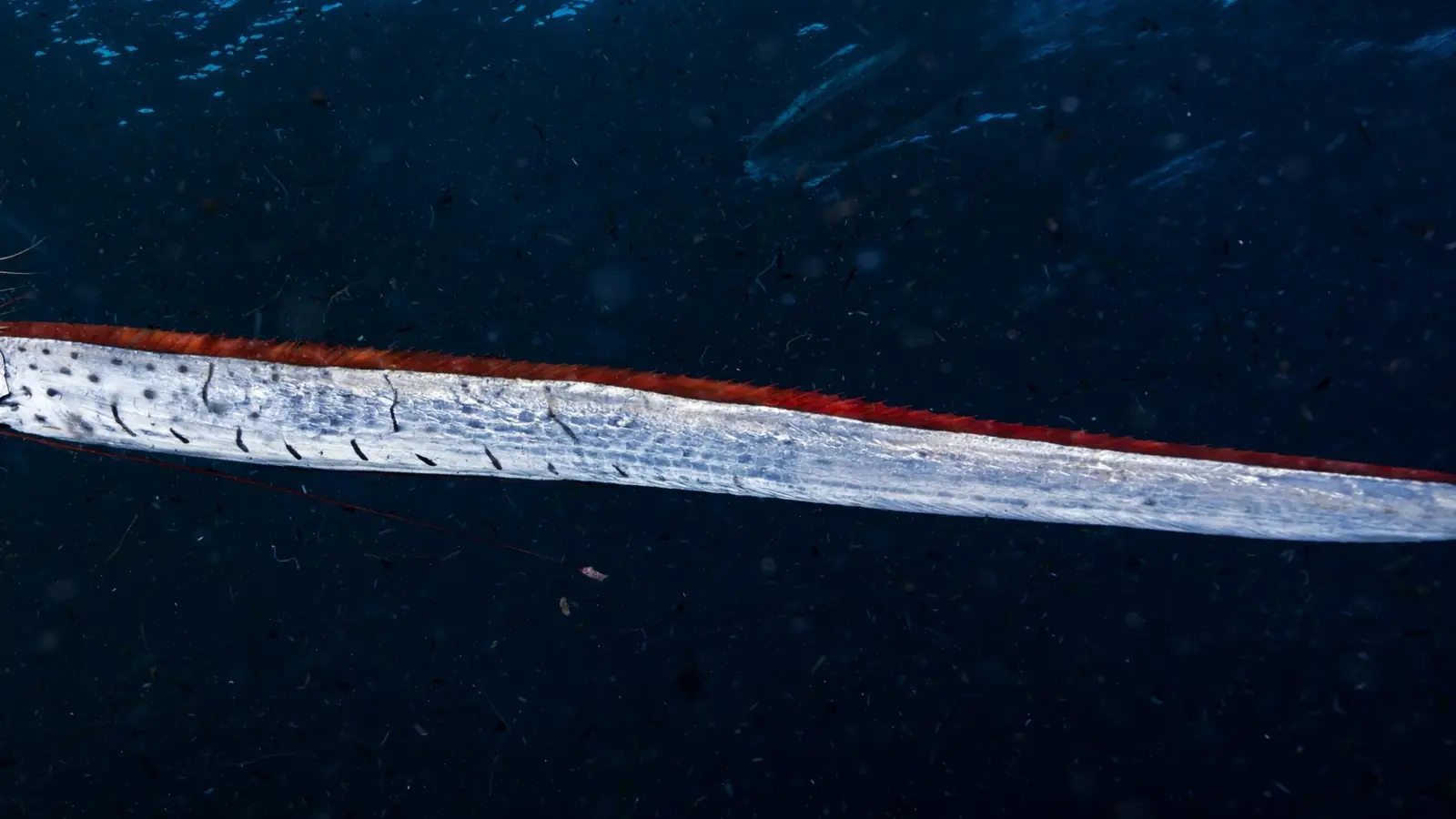
Two species share the family honours. Regalecus glesne, the giant species of the Atlantic and beyond, is the record-holder; its Indo-Pacific counterpart Regalecus russelii runs slightly smaller. Both are ribbons rather than bulk: even a giant weighs surprisingly little for its length, since there is almost no depth or width to the animal, a fact that makes the old sailor’s estimates, made on heaving decks, even harder to trust.
A Ribbon of Silver: Anatomy of a Serpent
The sea-serpent impression is earned. The body is a flattened ribbon, deep at the head and tapering for metres, covered not in scales but in bare silver skin so delicate it sloughs at rough handling. A dorsal fin runs the entire length of the back, and at the front its first rays stretch into a scarlet crest, a crown of red filaments above the small, protruding mouth. The name comes from below: two long pelvic fins, each ending in a flattened paddle, the oars. The fish swims by rippling the great dorsal fin, and submersible cameras often find it hanging vertically, head up, in the water column.
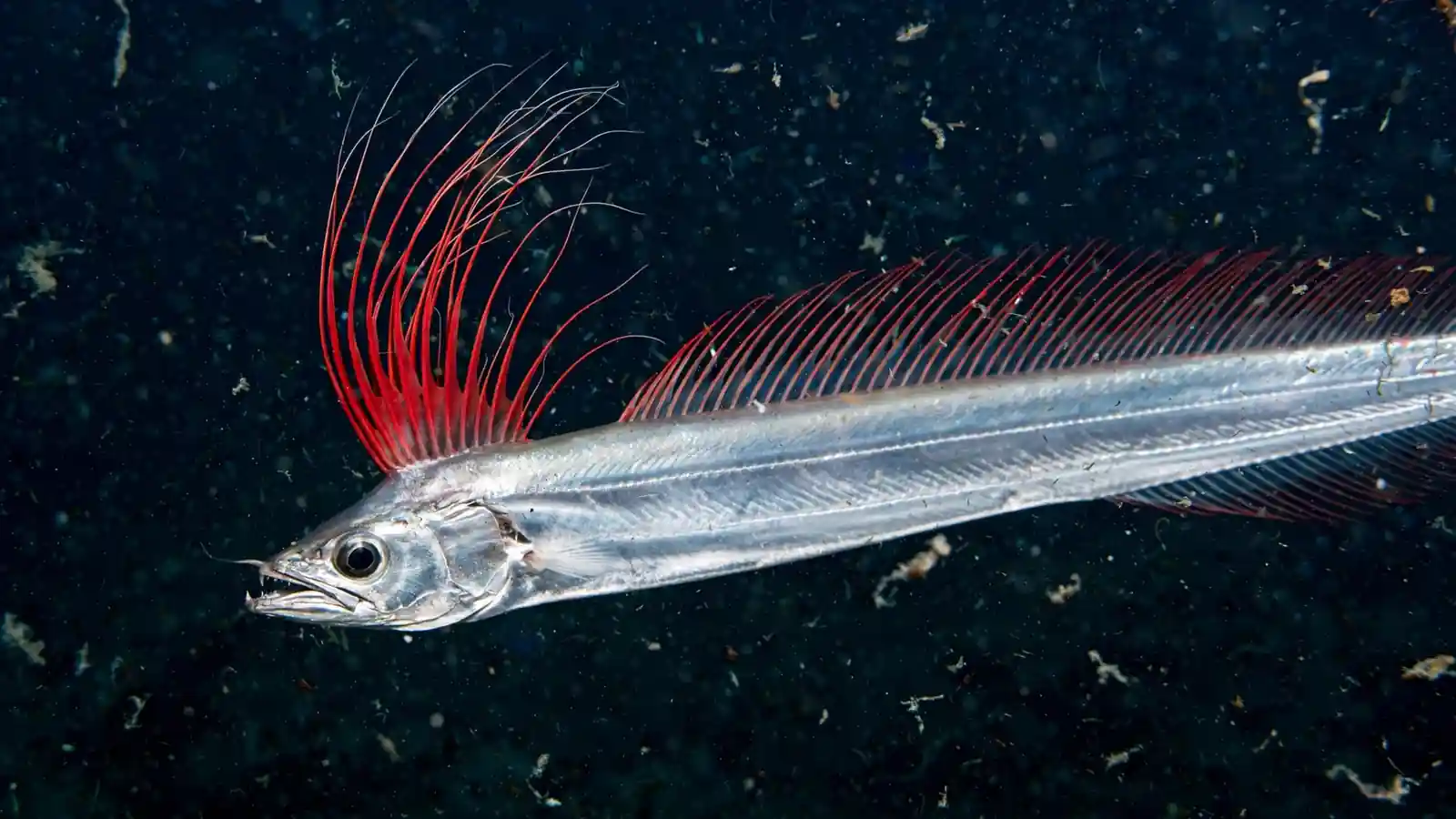
The strangest feature is a talent for self-editing: an individual can shed the rear portion of its own tail, a form of self-amputation seen in lizards but rare in fish, and many adults are missing the tail tip entirely. Combined with the absence of a swim bladder and the fragile, almost gelatinous flesh, the body reads as an animal built for exactly one job: hanging nearly weightless in black water, spending nothing.
The Twilight Zone: Where They Live
They live in the open ocean’s twilight zone and below, roughly 200 to 1,000 metres down, in tropical and temperate seas around the world. It is a habitat of permanent near-darkness, cold and pressure, and the fish is a loner there, drifting in the great empty water column far from any shore or seabed. In its element it hovers and slow-swims through the deep scattering layer, the nightly-rising band of small life that feeds half the ocean.
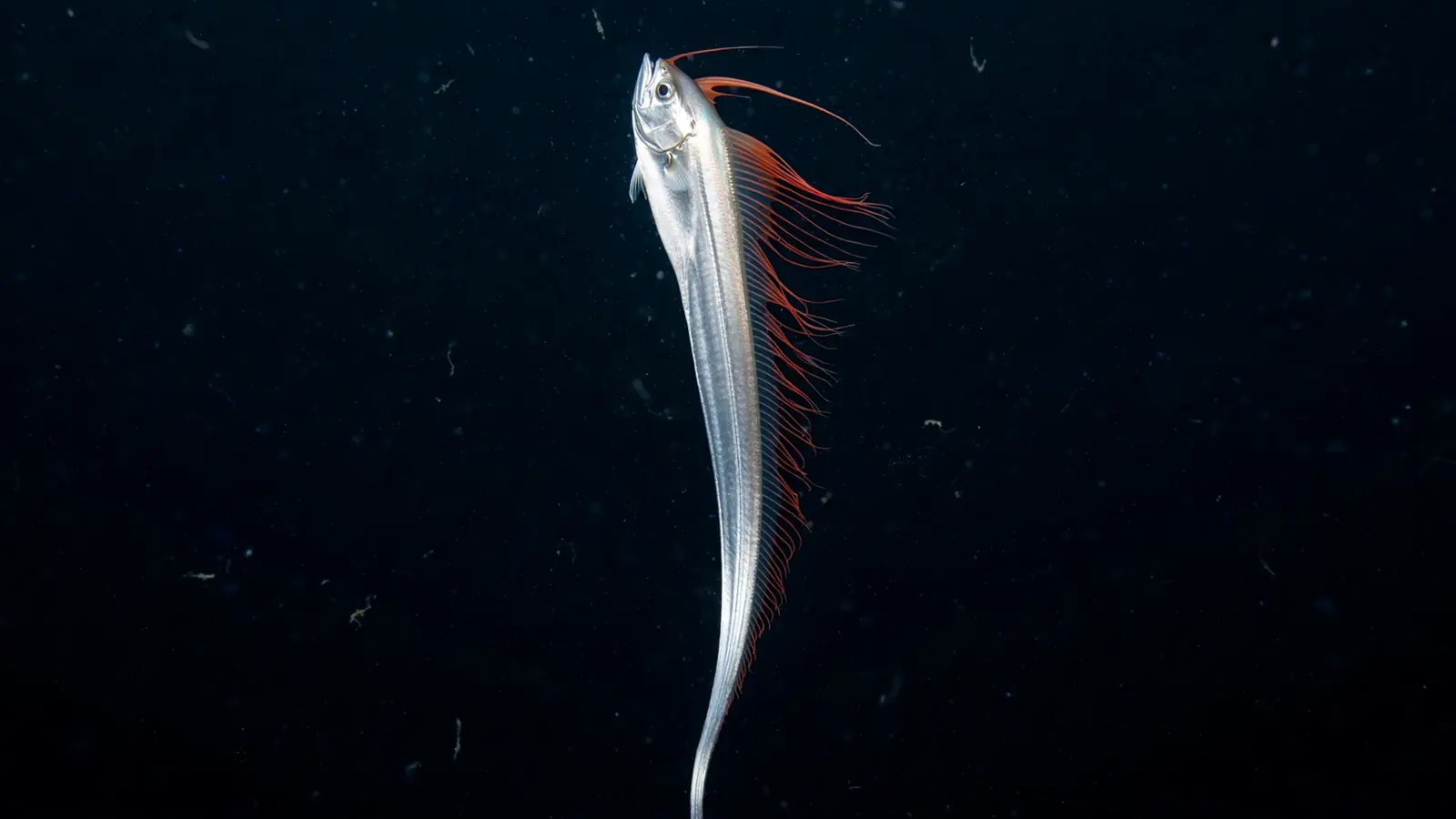
That depth is why the living fish is almost a rumour. Before submersible cameras, everything known came from corpses; even now, footage of healthy individuals in their own world amounts to minutes. The animal’s species account assembles the scattered records, strandings, depths and sightings, into the species’ thin but growing file.
What Does It Eat? A Giant on a Krill Diet
Here is the gentlest fact in this guide: the longest bony fish on Earth is a plankton-strainer. They feed mainly on krill, the small shrimp-like crustaceans of the deep layers, along with other tiny crustaceans, small squid and little fish. The small mouth takes in water, and specialised rakers on the gills sieve the food out, the same feeding machinery, in principle, as a basking shark’s. No fangs, no tackle for prey of any size, nothing in the anatomy that could trouble a swimmer even if the fish ever rose to meet one.
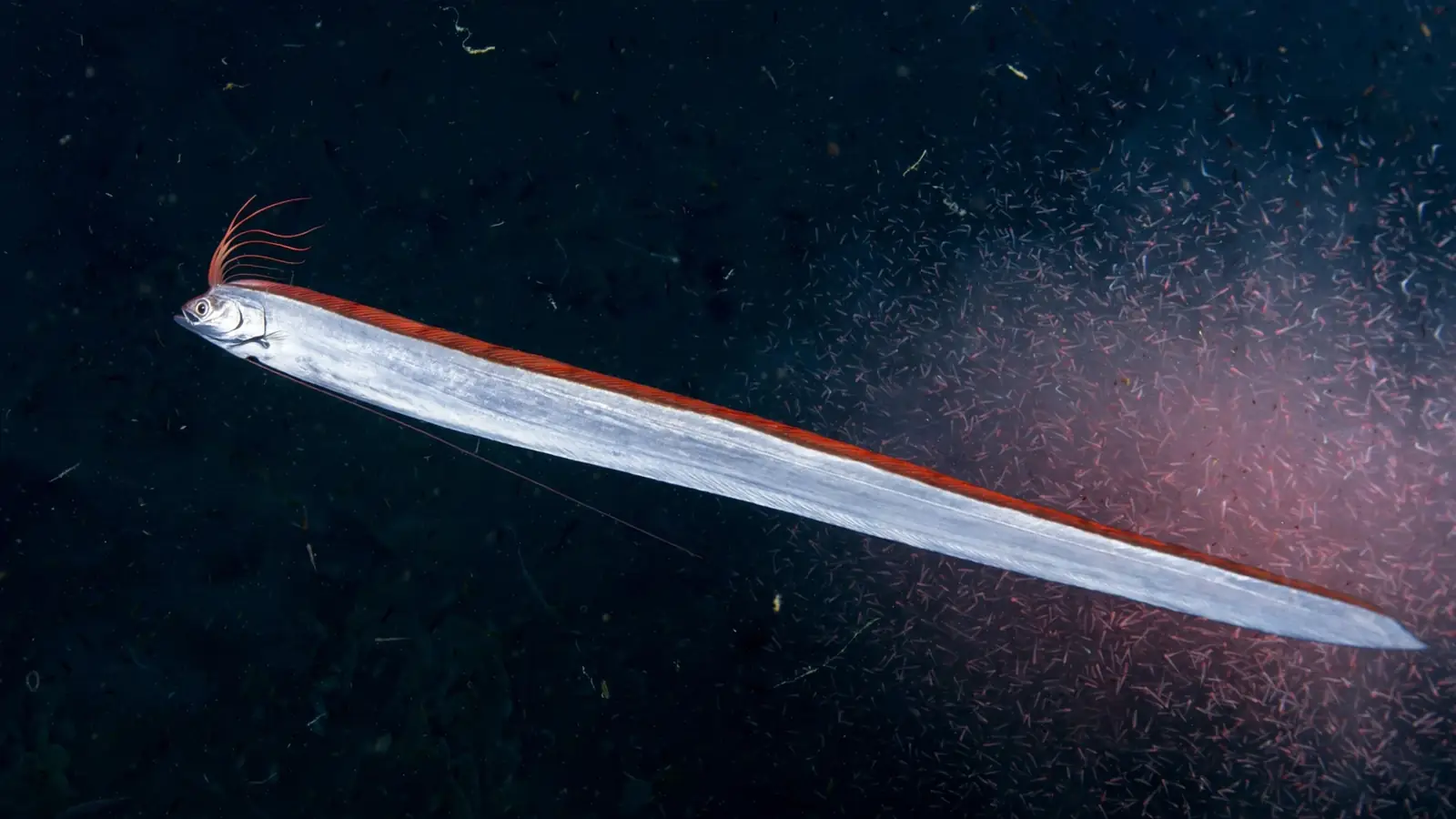
Being harmless and deep has made it safe from almost everything except accident and illness. The longest bony fish on Earth eats crustaceans the size of a thumbnail, is eaten in turn rarely and usually by larger deep predators, and can go a human lifetime, if the myths are set aside, without ever being seen by a person. Its diet is the plainest possible disproof of the monster stories: serpents of legend do not strain plankton.
Why Do They Wash Ashore?
They do, regularly, and it never goes unnoticed. In late 2024, three specimens came ashore in southern California within a few months, including one at Grandview Beach in November, and in February 2025 another stranded at Playa El Quemado in Baja California. The pattern behind the drama is mundane: Individuals found at the surface are almost always sick, injured or dying. Weakened hundreds of metres down, the fish loses its battle with buoyancy and current, drifts up and inshore, and strands. Storms and shifting currents deliver the bodies; illness wrote the story long before.

Each stranding is also a scientific windfall, a chance to measure, sample and dissect an animal that cannot be studied any other way, and researchers move fast when one comes in. But the public meaning of a stranding is set by older stories than science, and no account of this fish is complete until the famous one has been dealt with directly, which the next section does.
The Oarfish Earthquake Myth, Tested
In Japan the species is ryugu no tsukai, the messenger from the palace of the sea god, and folklore across the Pacific reads deep-sea strandings as warnings. The modern version, that they beach themselves before earthquakes, spread hard after the 2011 Tohoku disaster. It has also been tested properly, and it failed: a 2019 study matched records of 336 sightings and other deep-sea fish appearances around Japan against 221 earthquakes, looking for any statistical link. It found exactly one plausible match in time and place, precisely what chance alone would produce. The fish do not feel the faults; the correlation is not there.
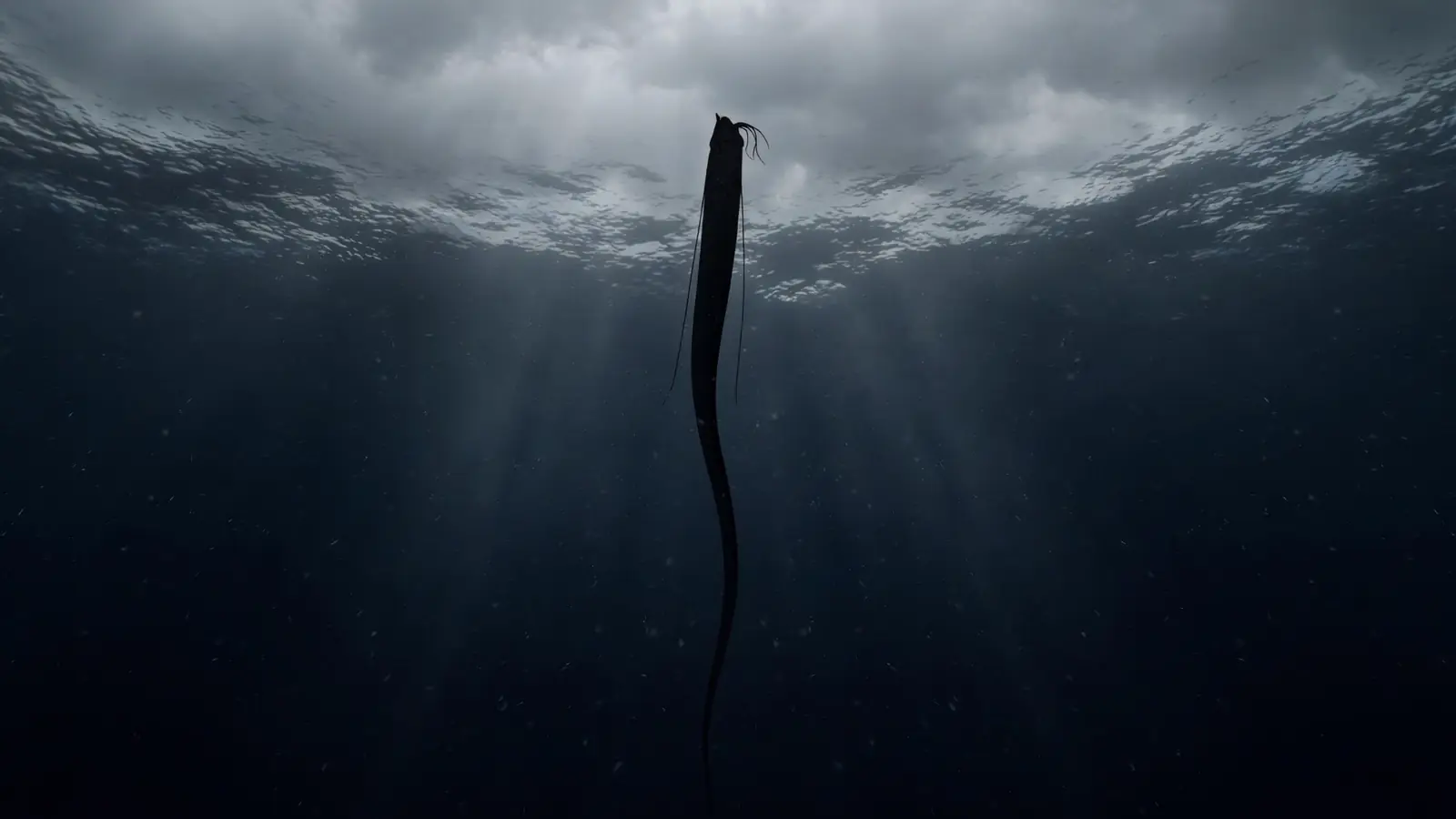
So why does the legend survive its own disproof? Because the ingredients are perfect: a genuinely rare, genuinely serpentine animal, arriving unannounced from an invisible world, on shores where earthquakes are a real terror. Human pattern-hunger does the rest, remembering the stranding before the quake and forgetting the hundred that preceded nothing at all. The animal is a messenger, in the end, but its message is about the deep ocean’s strangeness, not about the fault lines.
Fun Facts
- Its two pelvic fins end in flattened paddles, the “oars” that give the fish its name.
- They can shed the end of their own tail and survive the loss; many adults are found with the tip missing.
- In Japanese tradition the species is ryugu no tsukai, the messenger from the sea god’s palace.
- Despite its serpent looks, the animal has no scales at all; the silver skin is delicate and rubs off at a touch.
- An individual often hovers vertically, head up, rippling its long dorsal fin to hold station in the water column.
- Three specimens stranded in southern California within a few months of each other in late 2024, each one making world news.
Frequently Asked Questions
Do Oarfish Predict Earthquakes?
No. The idea comes from Japanese folklore, which cast the it as a messenger from the sea god’s palace, and it revives whenever one strands before a quake. Science has tested it directly: a 2019 study compared 336 recorded specimens and deep-fish sightings in Japan with 221 earthquakes and found only one plausible match in time and place, no better than chance. Strandings track storms, currents and sickness, not seismic faults.
How Long Is an Oarfish?
Longer than any other bony fish. A typical adult is around 3 metres, and reliably measured giants reach about 8 metres (26 feet). Older reports claim far more, up to 17 metres, but none was ever properly measured, and stranded bodies stretch and tear, inflating estimates. Even at the verified figures, it holds the bony-fish length record comfortably.
Are Oarfish Dangerous?
Not at all. For all its serpent looks, the animal is a gentle filter-hunter of krill and tiny crustaceans, with a small mouth unsuited to biting anything large. It has no interest in people, and the question rarely arises in practice, since almost nobody ever meets a living one; the species spends its life hundreds of metres down in the open ocean.
What Do Oarfish Eat?
Krill, mainly, along with other small crustaceans, tiny squid and small fish. The It hovers or swims slowly through the deep scattering layers and strains its food from the water with specialised gill rakers, a whale’s feeding strategy scaled into a fish. It is one of the deep sea’s quiet ironies that its longest bony fish lives on some of its smallest animals.
Why Do Oarfish Wash Up on Beaches?
Because something has already gone wrong. The individuals that reach the surface are typically sick, injured or dying; weakened in deep water, they are carried upward and inshore by currents and storms until they strand. Healthy animals stay at depth, which is why science learns so much from each stranding, and why three in southern California in late 2024, and one in Baja California in February 2025, drew researchers as well as crowds.
Similar Species Worth Exploring
Keep Exploring
Keep exploring the deep: meet two more legends of the twilight zone, the anglerfish and the goblin shark, in their own guides, or browse the hub of the types of deep-sea fish. Then come back to the silver ribbon that started every sea-serpent story ever told: the oarfish.