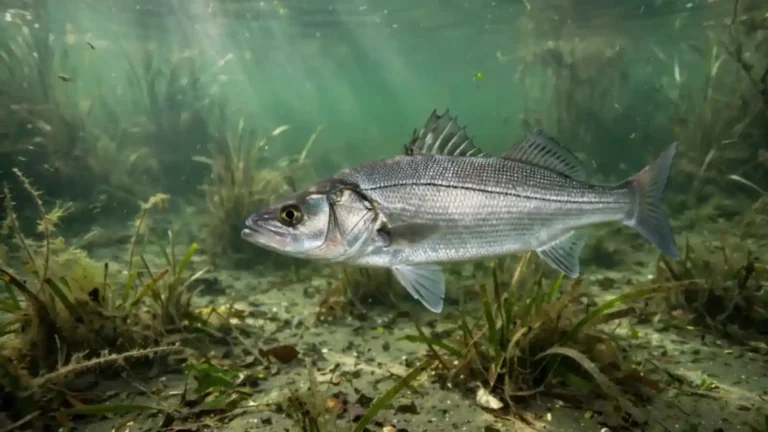
Flatback Sea Turtle
Flatback Sea Turtle: The Turtle That Nests Only in Australia
The flatback sea turtle nests only in Australia, lays the smallest clutches of any sea turtle, and skips the open-ocean phase that every other sea turtle has. It is the most homebound of the seven sea turtles — and the hardest to find anywhere else.
By Emily Carter · Reviewed by our vet team · Updated 10 November 2026 · 9 min read
Nests only in AustraliaAbout 50 eggs a nestNo oceanic phase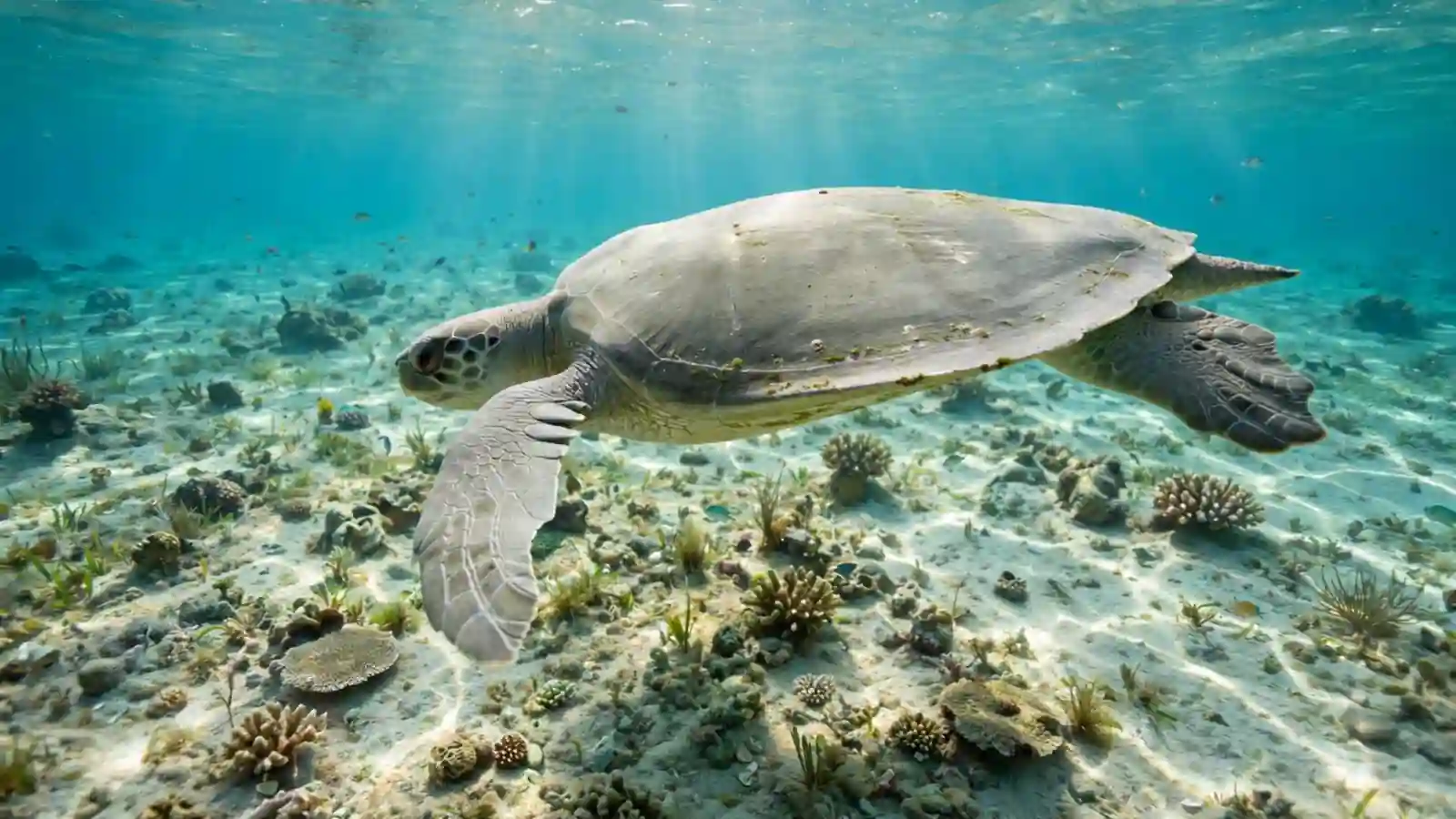
At a Glance
The flatback sea turtle is the sea turtle with the smallest range of the seven species: it nests only on Australian beaches, and its hatchlings never leave the shallow coastal waters. Its flat shell gives it its name, and its small clutches set it apart from every other sea turtle.
Flatback Sea Turtle Size: A 90-Centimetre Shell
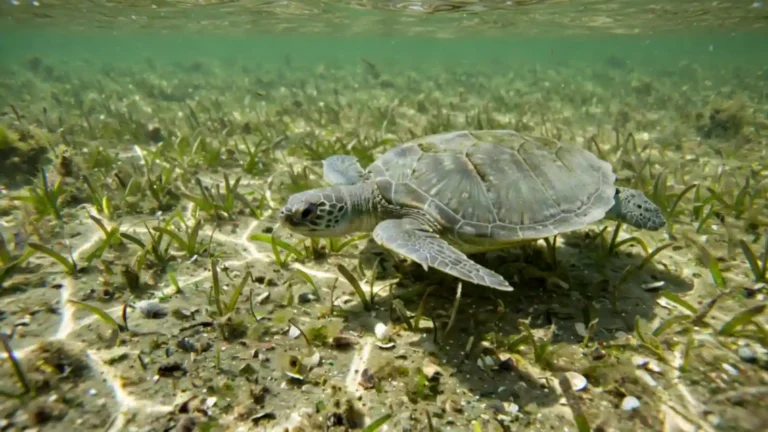
It grows a carapace to about 90 cm long and weighs up to 70 kg — a mid-sized sea turtle, smaller than a leatherback and about the size of a green turtle, but built flatter and lighter. The shell is the giveaway: it is low-domed and almost flat, where other sea turtles carry a high, rounded dome.
The flat shell is not just a shape; it is the animal’s identity. Measured from above, the carapace is wide and gently curved, and the edges turn up slightly, like a shallow dish. It is the flattest shell of any sea turtle, and it is why the species is called the flatback.
The Flat Shell: How the Flatback Got Its Name
It is named for its shell, which is flatter than any other sea turtle’s. The carapace is low-domed and smooth, with upturned edges, and it looks pressed down compared with the high dome of a green turtle or the ridged shell of a leatherback.
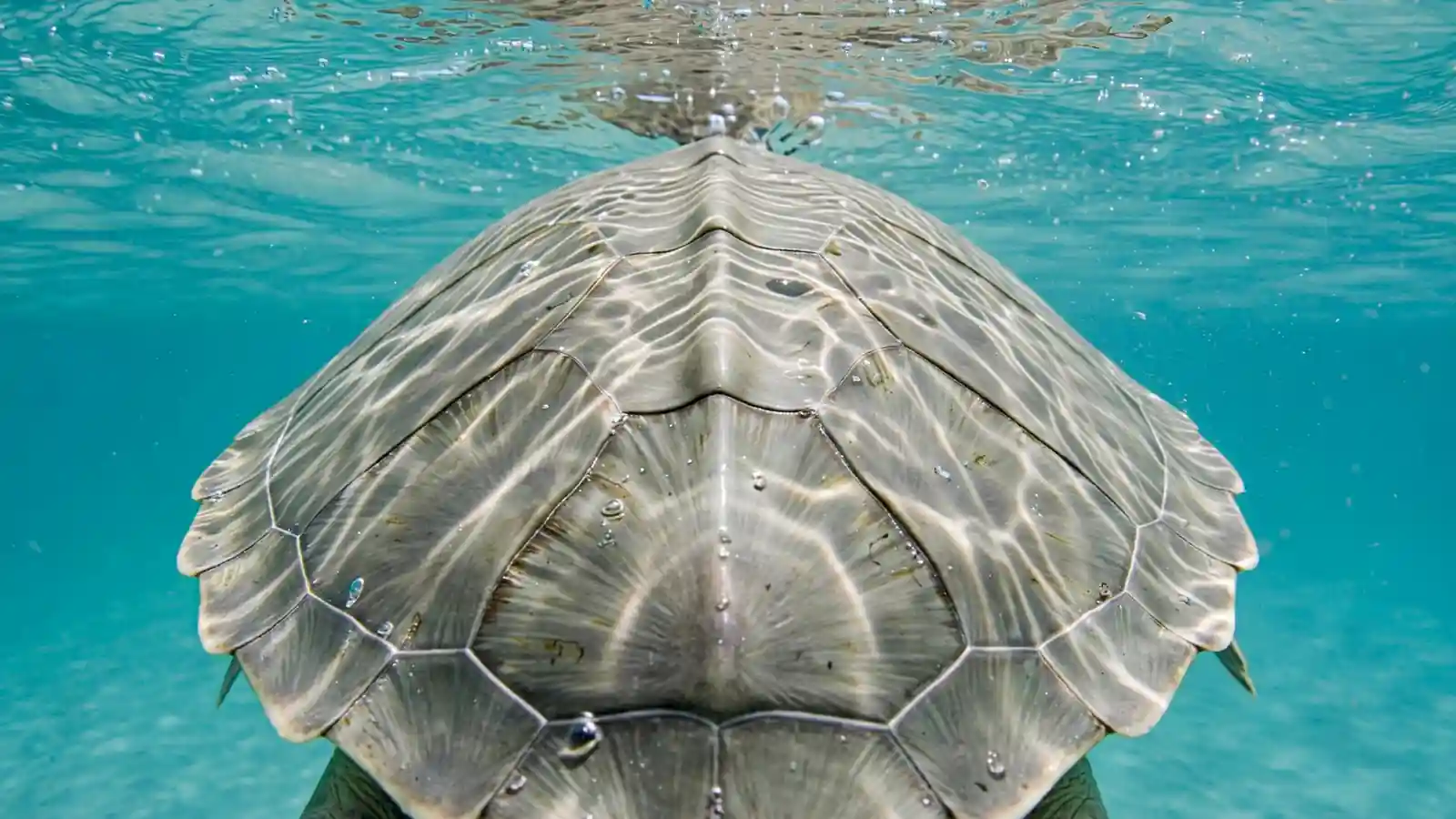
The flat shape suits a turtle that never leaves the shallows. A low shell is easier to carry through seagrass beds and over reef flats, and it may help the turtle slip under ledges where it feeds. The name is descriptive, not poetic: this is the turtle with the flat back, and the shell tells you the species at a glance.
Where Flatback Sea Turtles Nest: Australia Only
Flatback sea turtles nest only in Australia — on the beaches of Queensland, the Northern Territory and Western Australia — and nowhere else on Earth. It is the only sea turtle with a nesting range confined to a single country, and Crab Island in the Torres Strait holds the largest nesting concentration of all.
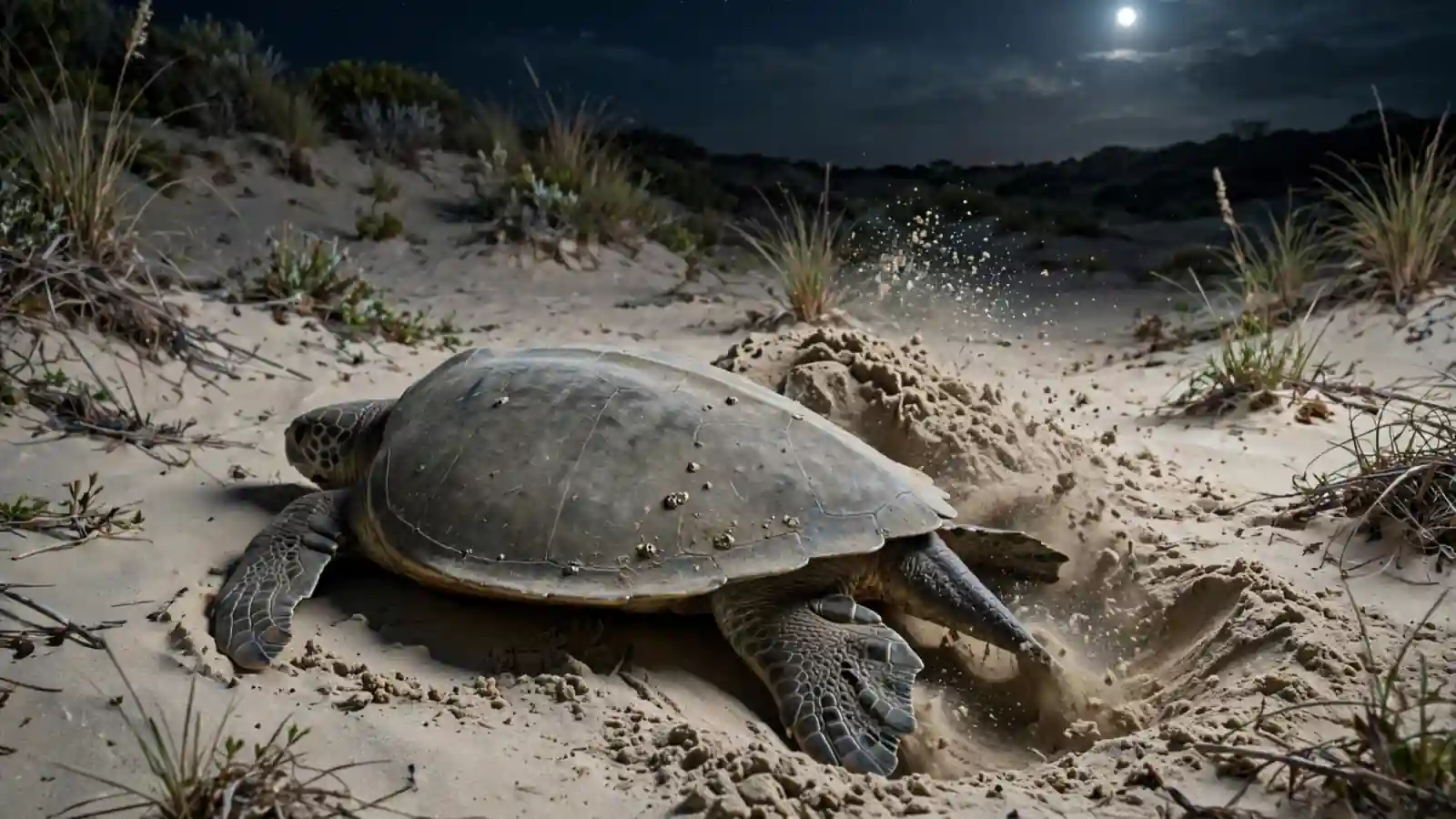
The females come ashore at night, dig a nest in the sand and lay about 50 eggs, then return to the sea. The hatchlings emerge weeks later and head straight for the shallow coastal water, not the open ocean. For the full nesting story, see this flatback turtle profile, which covers the Australia-only range in detail.
What Do Flatback Sea Turtles Eat? Sea Cucumbers and Jellyfish
It eats sea cucumbers, jellyfish, soft corals, molluscs and shrimps — a soft-bodied menu that suits a turtle of the shallow coastal water. It feeds on the sea floor and in the water column, picking up sea cucumbers from the sand and snapping at jellyfish as they drift past.
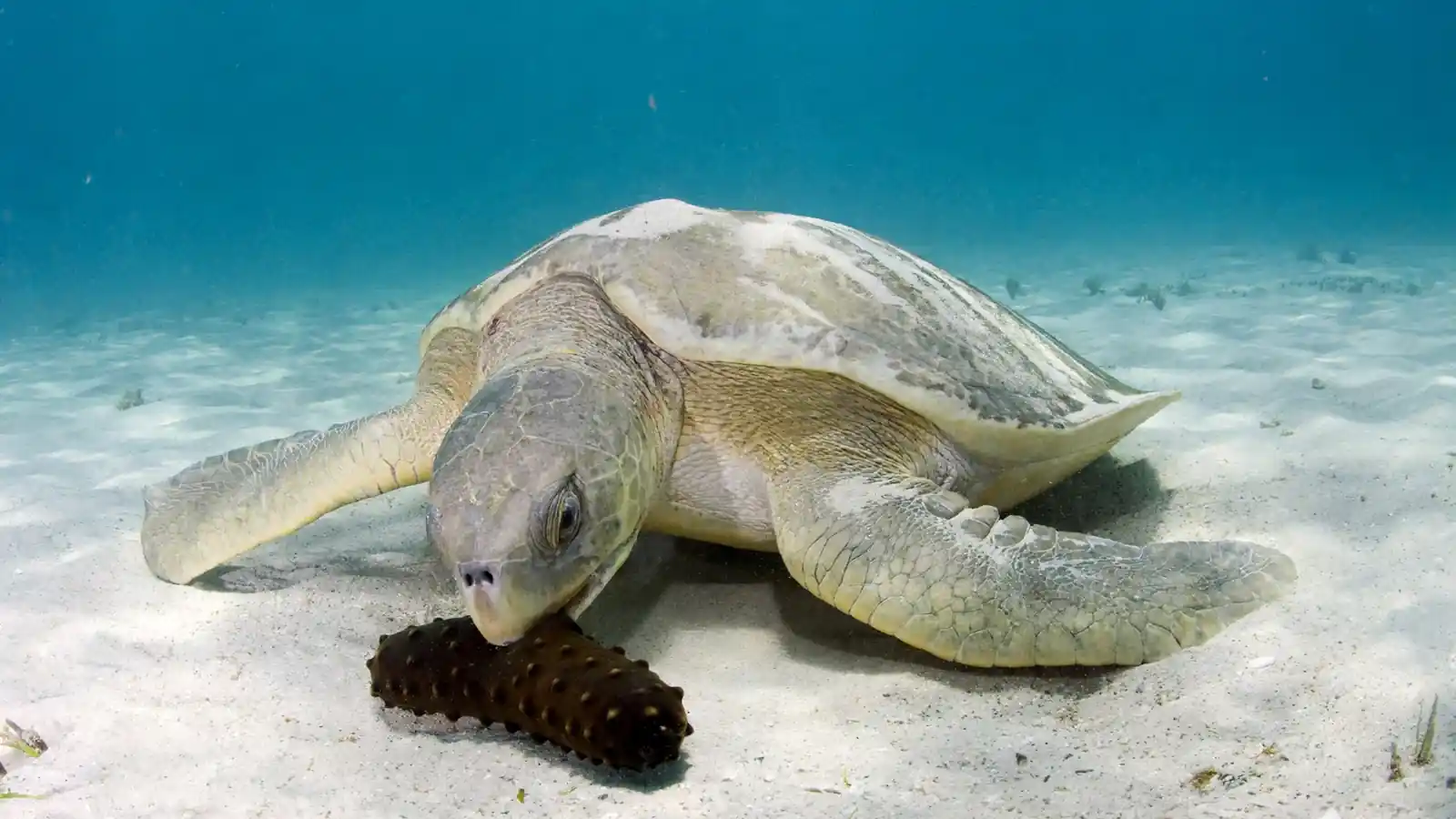
The diet is part of why the flatback never needs the open ocean: its food is in the shallows. Sea cucumbers are abundant on the reef flats and seagrass beds of northern Australia, and jellyfish drift through the same coastal water, so a flatback can feed for its whole life without ever leaving the coast.
No Oceanic Phase: Hatchlings That Stay Coastal
The flatback sea turtle has no oceanic phase — the only sea turtle without one. Every other sea turtle sends its hatchlings out into the open ocean for years, drifting on the currents before returning to the coast as juveniles. Flatback hatchlings do not. They stay in the shallow coastal waters of Australia from the day they hatch.
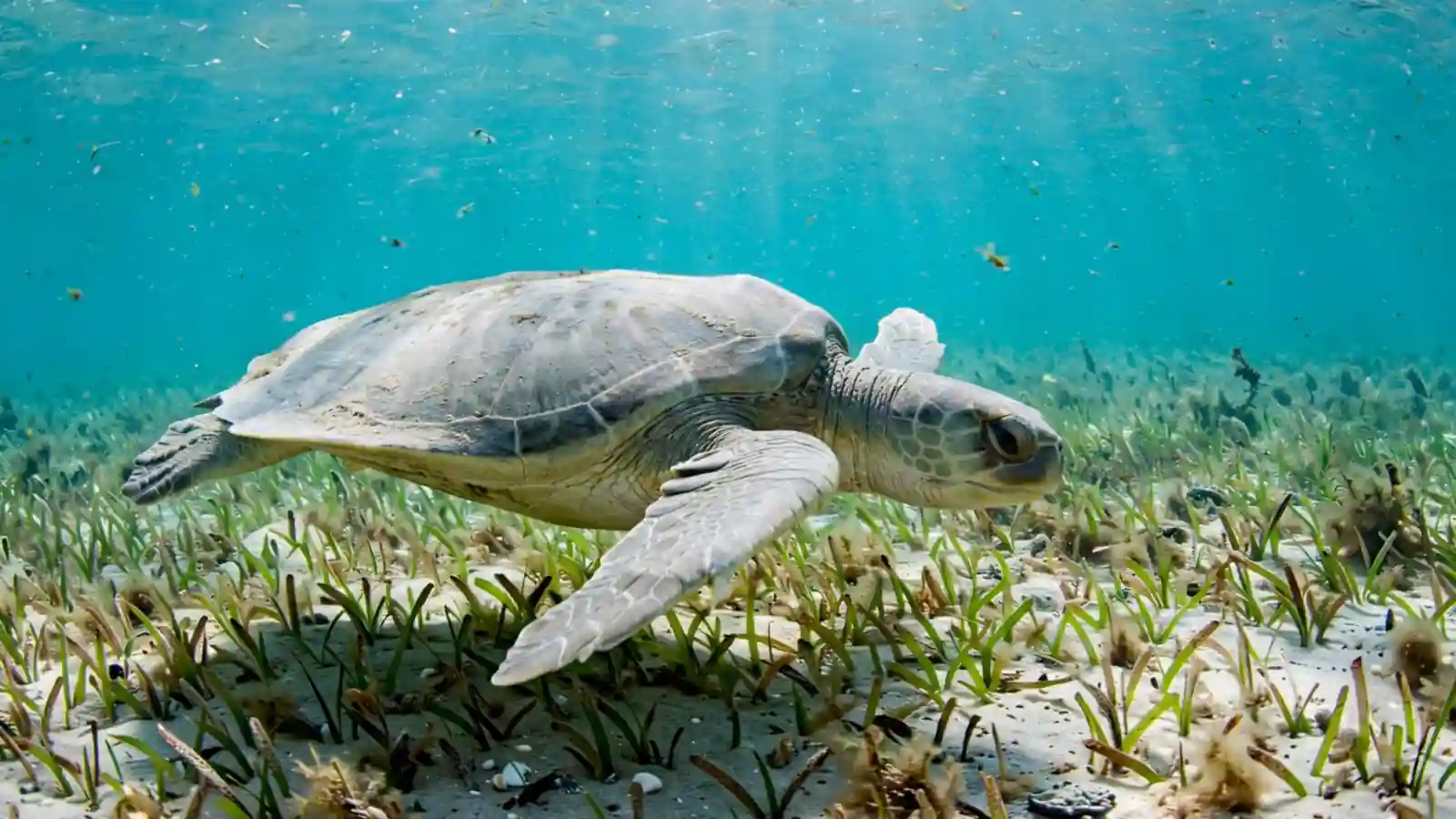
Nobody knows exactly why the flatback skipped the oceanic phase, but the coastal waters of northern Australia are rich enough to support the hatchlings, and the currents there keep them close to shore. The result is a turtle that lives its whole life in one place: born on an Australian beach, feeding in Australian shallows, nesting on an Australian beach.
Flatback Sea Turtle Reproduction: Small Clutches
The flatback sea turtle lays about 50 eggs per nest — far fewer than other sea turtles, which lay 100–200. The small clutch is one of the species’ most distinctive traits, and it is consistent across the nesting beaches: a flatback nest is a small nest, and the hatchlings that emerge from it are the flatback’s whole investment for that night.
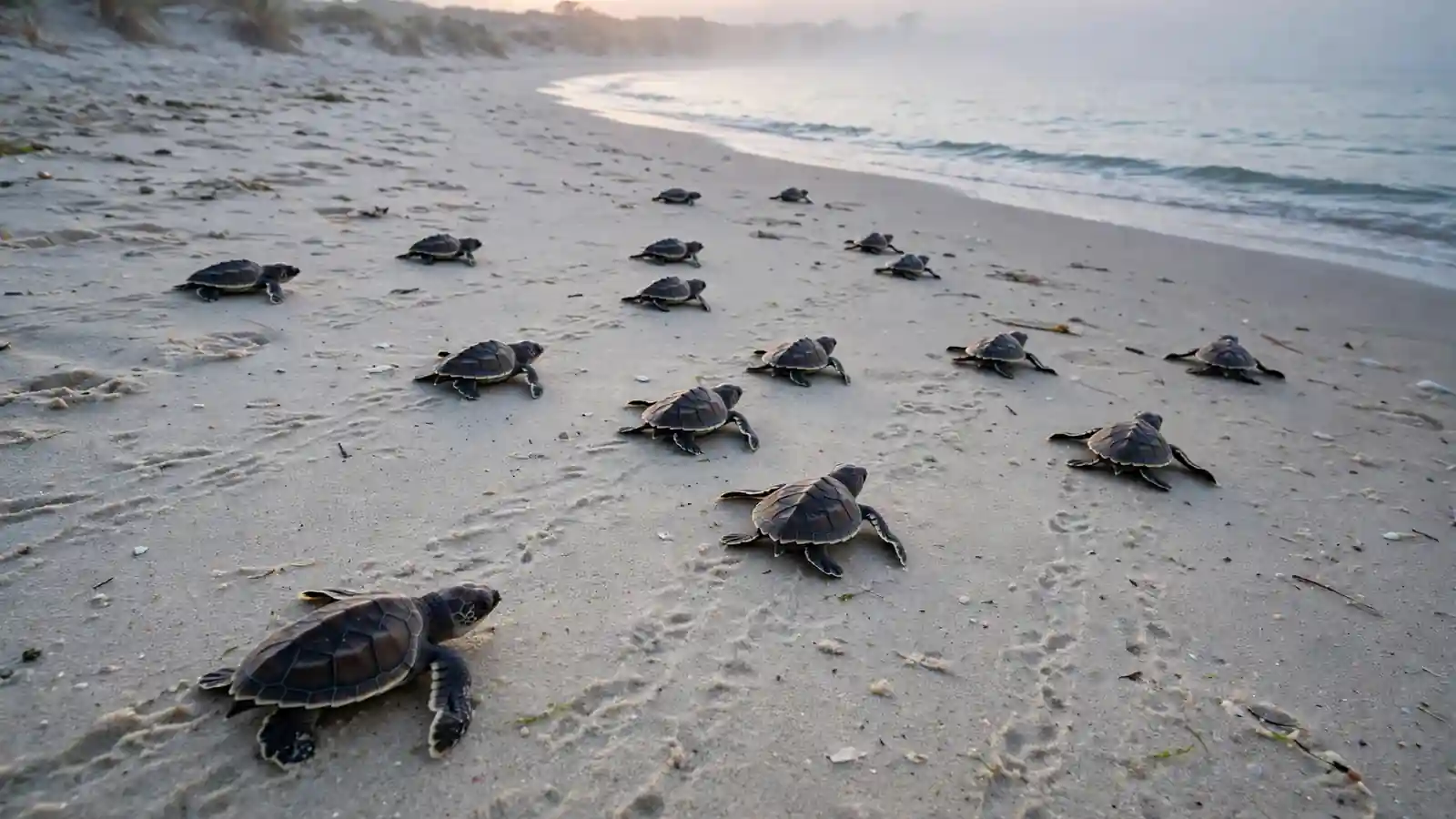
The females nest several times a season, so the small clutch is balanced by repeated nesting. Each nest is dug in the sand above the high-tide line, the eggs incubate for about six weeks, and the hatchlings emerge at night and run for the sea — the same race every sea turtle runs, but in the flatback’s case the sea is only a few metres of shallow coastal water away.
Conservation: Data Deficient Globally, Vulnerable in Australia
The flatback sea turtle is listed as Data Deficient by the IUCN — the global assessment does not have enough data to place it in a threat category — and it was listed as Vulnerable in the IUCN’s 1994 listing before the status changed. Under Australian law, the flatback is listed as Vulnerable under the EPBC Act, which protects it in the only country where it nests.
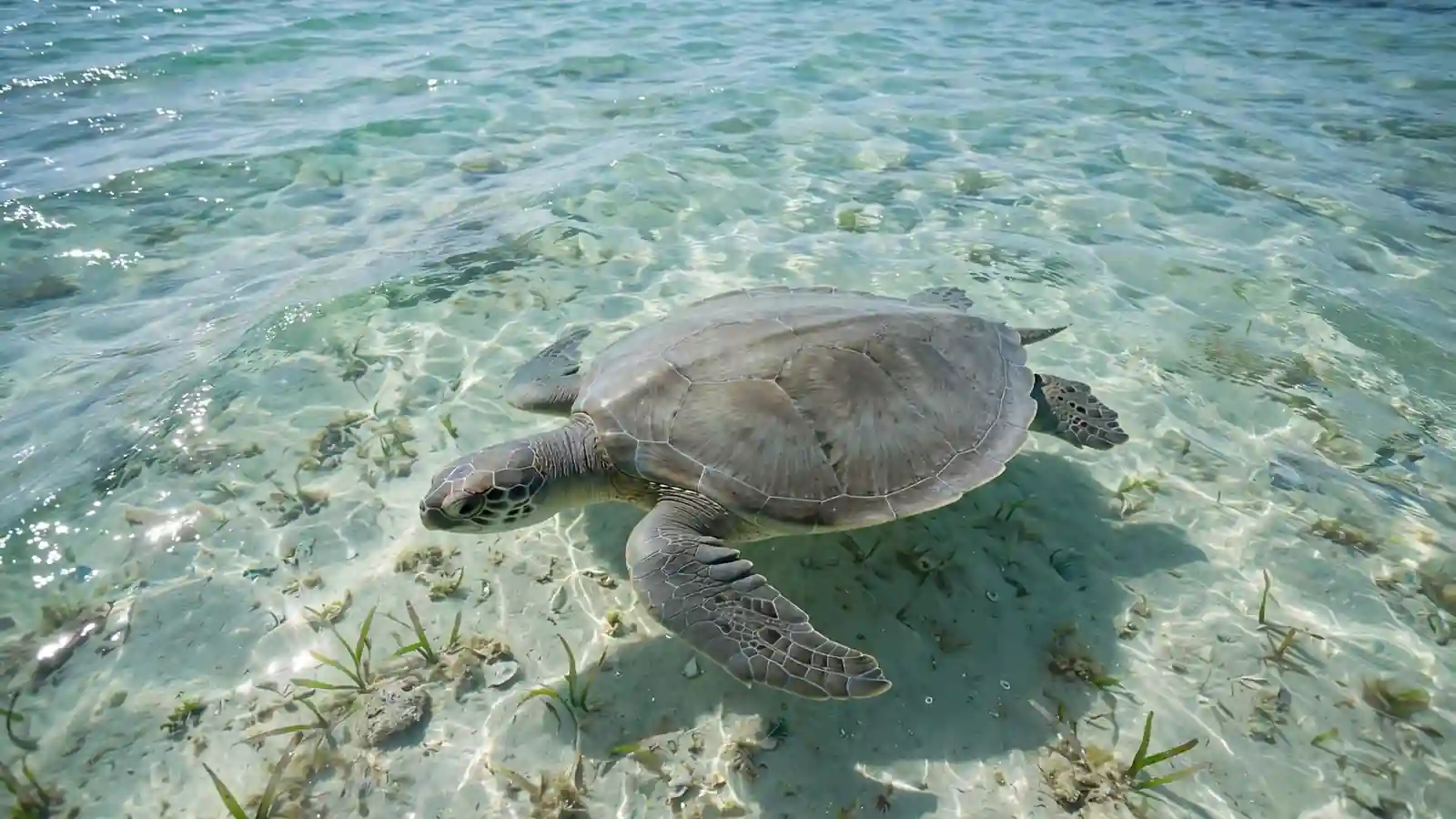
The two listings tell different stories because they measure different things: the IUCN’s Data Deficient means the global picture is incomplete, while Australia’s Vulnerable listing reflects the real pressures on the nesting beaches — foxes and pigs eating eggs, lights disorienting hatchlings, and fishing nets in the coastal water. The turtle’s entire world is Australia, so the Australian listing is the one that matters most.
Fun Facts
- The flatback sea turtle nests only in Australia — the smallest range of any sea turtle.
- It lays about 50 eggs per nest, far fewer than the 100–200 of other sea turtles.
- It is the only sea turtle with no oceanic phase — hatchlings stay coastal for life.
- Its shell is the flattest of any sea turtle, with upturned edges like a shallow dish.
- Crab Island in the Torres Strait holds the largest nesting concentration.
- It is Data Deficient globally but Vulnerable under Australian law.
Frequently Asked Questions
Where Do Flatback Sea Turtles Nest?
Only in Australia — on the beaches of Queensland, the Northern Territory and Western Australia. It is the only sea turtle with a nesting range confined to a single country, and Crab Island in the Torres Strait holds the largest nesting concentration.
How Big Do Flatback Sea Turtles Get?
The carapace grows to about 90 cm long and the turtle weighs up to 70 kg. It is a mid-sized sea turtle, about the size of a green turtle, but with a much flatter, low-domed shell.
What Do Flatback Sea Turtles Eat?
Sea cucumbers, jellyfish, soft corals, molluscs and shrimps. It feeds on the sea floor and in the water column of the shallow coastal water, picking sea cucumbers from the sand and snapping at drifting jellyfish.
How Many Eggs Do Flatback Sea Turtles Lay?
About 50 eggs per nest — far fewer than the 100–200 eggs other sea turtles lay. The small clutch is one of the species’ most distinctive traits, balanced by the female nesting several times a season.
Why Are Flatback Sea Turtles Called Flatbacks?
Because of their shell. The carapace is low-domed and almost flat, with upturned edges — the flattest shell of any sea turtle. It is a descriptive name: this is the turtle with the flat back.
Are Flatback Sea Turtles Endangered?
The global picture is incomplete: the IUCN lists the flatback as Data Deficient, after listing it as Vulnerable in 1994. Under Australian law it is listed as Vulnerable under the EPBC Act, which protects it in the only country where it nests.
What Is the Difference Between a Flatback and a Green Sea Turtle?
The flatback has a flatter shell, a smaller range and smaller clutches. Green turtles nest worldwide and lay 100–200 eggs per nest; flatbacks nest only in Australia and lay about 50. The flatback also has no oceanic phase, while green turtle hatchlings spend years in the open ocean.
Similar Species Worth Exploring
Keep Exploring
Meet the green sea turtle, the worldwide nester the flatback is most often compared with, then the hawksbill sea turtle, the reef turtle of the same waters, and browse the whole family in our sea turtles and marine reptiles hub — then come back to the turtle that nests only in Australia, the flatback sea turtle.