Chambered Nautilus
Chambered Nautilus: The 500-Million-Year-Old Survivor in a 30-Chamber Shell
The chambered nautilus has survived 500 million years with a design no other living cephalopod kept — an external shell of 30 gas-filled chambers, pinhole eyes, and about 90 tentacles with no suckers at all. It is a living fossil, and the shell trade has now pushed it to Vulnerable.
By Emily Carter · Reviewed by our vet team · Updated 10 November 2026 · 9 min read
Shell of 30 chambers500 million years oldVulnerable (2018)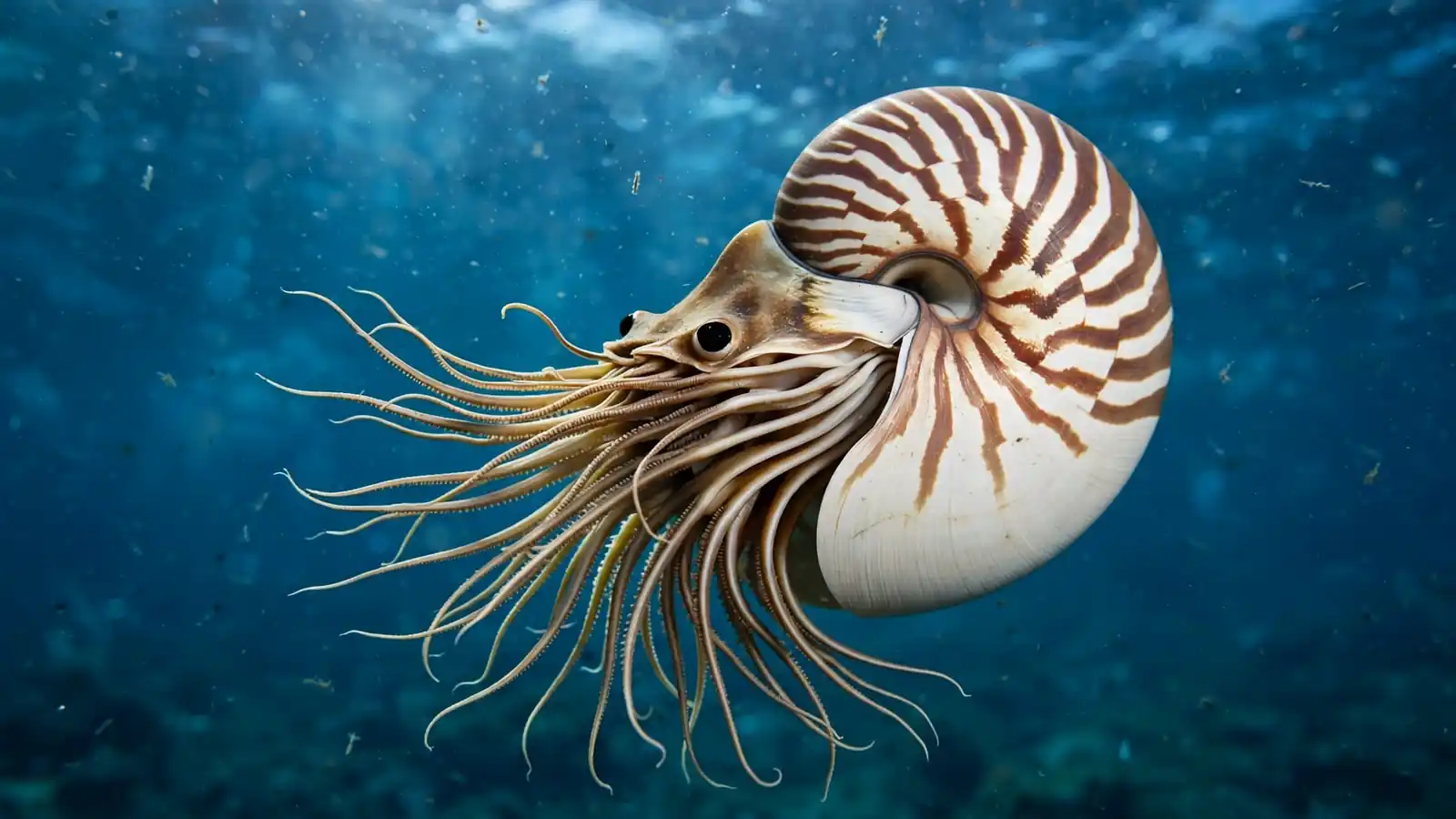
At a Glance
The chambered nautilus is the only living cephalopod with an external shell, a coiled, striped home it carries for its whole life. It has outlived the dinosaurs, the ammonites and nearly every other animal with a shell like it — yet in just fifteen years, the shell trade cut one population by more than 80 percent.
Chambered Nautilus Shell Chambers: 30 Chambers of Buoyancy
The nautilus shell has 30 chambers in an adult — a spiral of gas-filled rooms that the animal builds one at a time as it grows. A hatchling starts with just 7 or 8 chambers, and each new chamber is added at the opening of the shell, sealed off behind it as the animal grows forward. The number 30 is the adult figure; the often-quoted 90 or more is a confusion with the tentacle count, not the chambers.
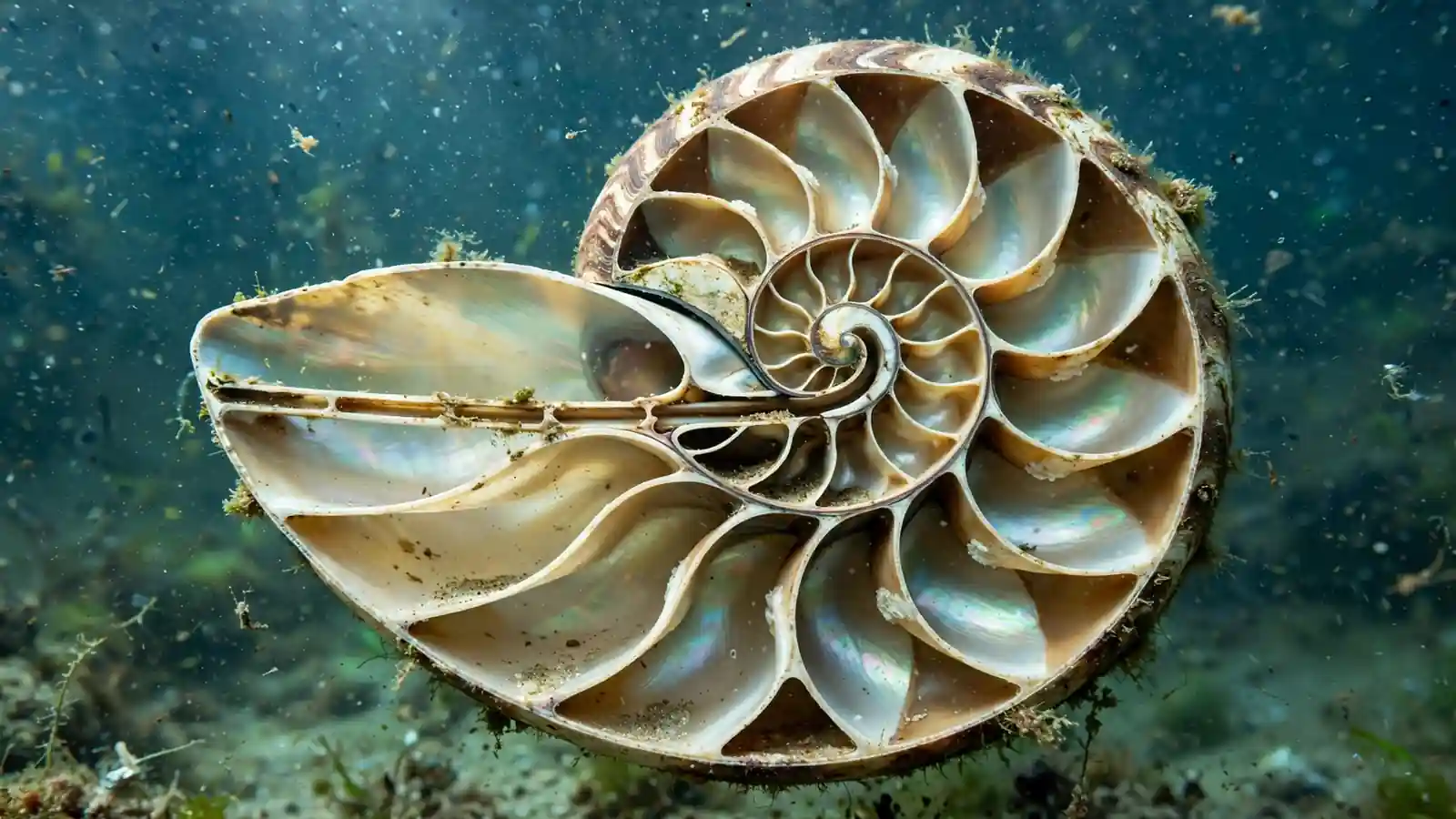
The shell is striped brown and white on the outside and pearly on the inside, and it grows to 20 to 25 cm across in large adults — about the size of a side plate. It is both home and life-support: without it the nautilus has no buoyancy control, no protection, and no way to survive the depths it lives in.
How the Siphuncle Controls Depth
The siphuncle is a tube of living tissue that runs through all 30 chambers of the nautilus shell, and it is the organ that controls depth. By pumping gas and liquid in and out of the chambers through the siphuncle, the nautilus adjusts its buoyancy — rising toward the reef at night to feed, sinking back to the deep slopes by day. It is the same principle as the cuttlebone, perfected half a billion years ago.
The system has a hard limit. Below about 600 m the water pressure is too great and the shell implodes, so the nautilus lives in a narrow band: deep enough to hide by day, shallow enough to feed by night. The siphuncle is what lets it commute between those two worlds every single day.
Pinhole Eyes and 90 Tentacles
It sees through pinhole eyes — simple eyes with no lens, like a camera without a lens, that form a blurry image from light passing through a small hole. It is the most primitive eye of any cephalopod, and it works well enough for an animal that hunts by smell in the dark. Around the head sit about 90 thin tentacles, and they carry no suckers at all — a nautilus grips its food by wrapping the tentacles around it, not by suction.
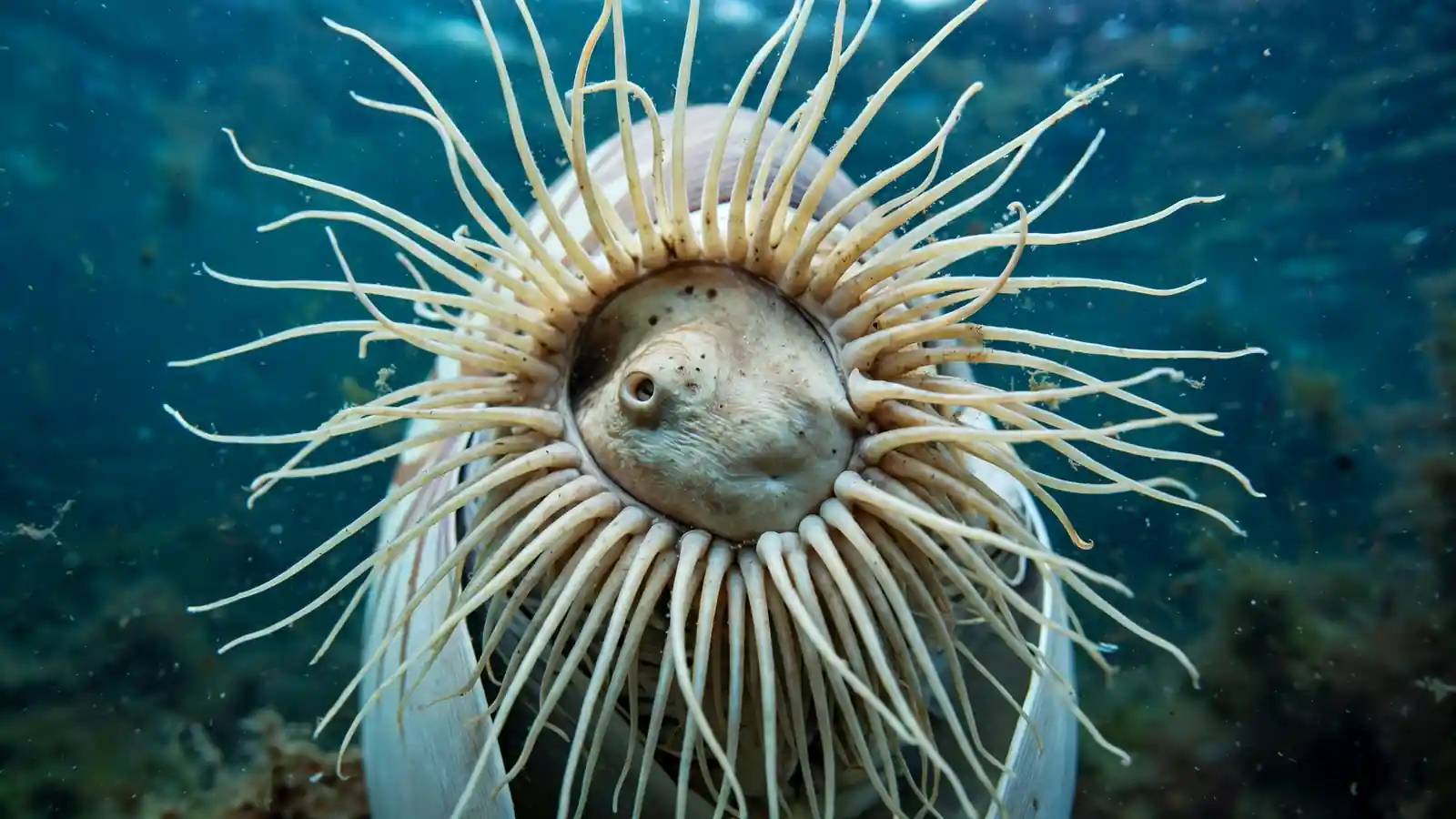
The tentacles are also the animal’s hands and its nose. They taste the water, they find dead animals on the reef slope, and they pass food to the beak. Ninety of them sounds like a lot, and it is — but they are thin and weak compared with an octopus’s eight, and the nautilus is a scavenger, not a hunter, so it does not need strength. It needs reach, and it has plenty of that.
What Do Chambered Nautiluses Eat?
It eats carrion, detritus, living shellfish and crabs — it is a scavenger first and a hunter second. At night it rises from the deep slopes to the reef, following the smell of dead animals, and it uses its 90 tentacles to gather whatever it finds: a dead fish, a moulting crab, a piece of shellfish. It is the reef’s clean-up crew, working the night shift. Another reef mollusc works at the opposite end of the size scale: the leaf sheep sea slug, a tiny green slug that grazes on algae and steals its chloroplasts.
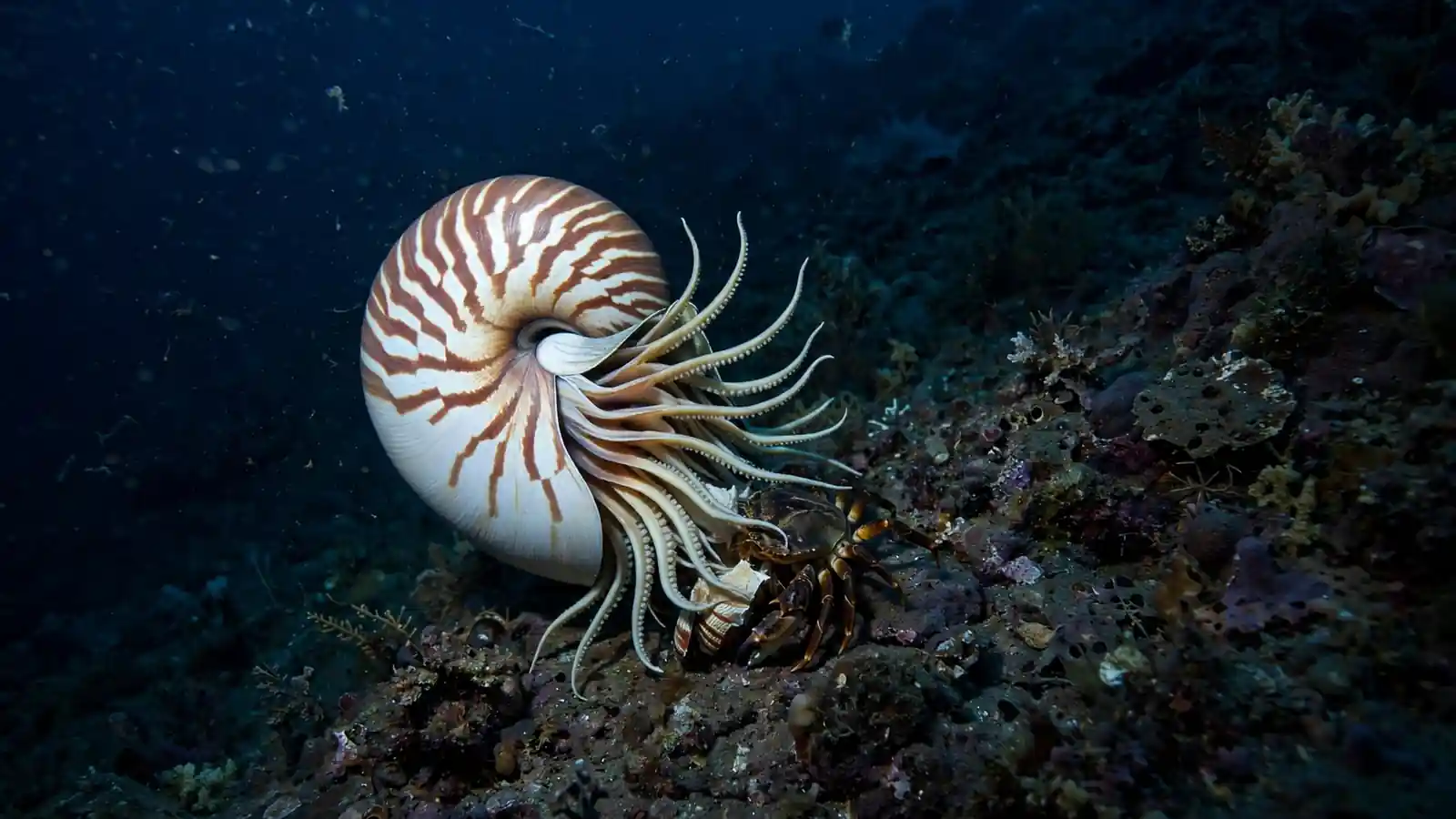
The beak does the cutting. Like all cephalopods the nautilus has a sharp, parrot-like beak, and it uses it to tear flesh from carcasses and crack small shells. It does not chase living prey — it does not need to, because the reef provides a steady supply of dead and dying animals, and the nautilus is patient enough to find them.
Where Chambered Nautiluses Live
It lives on Indo-Pacific reefs and slopes, typically around 300 m deep, in the waters from the Philippines and Indonesia to northern Australia and the western Pacific islands. By day it rests on the deep slope; by night it rises toward the reef to feed, sometimes coming as shallow as 100 m, before sinking back down before dawn.
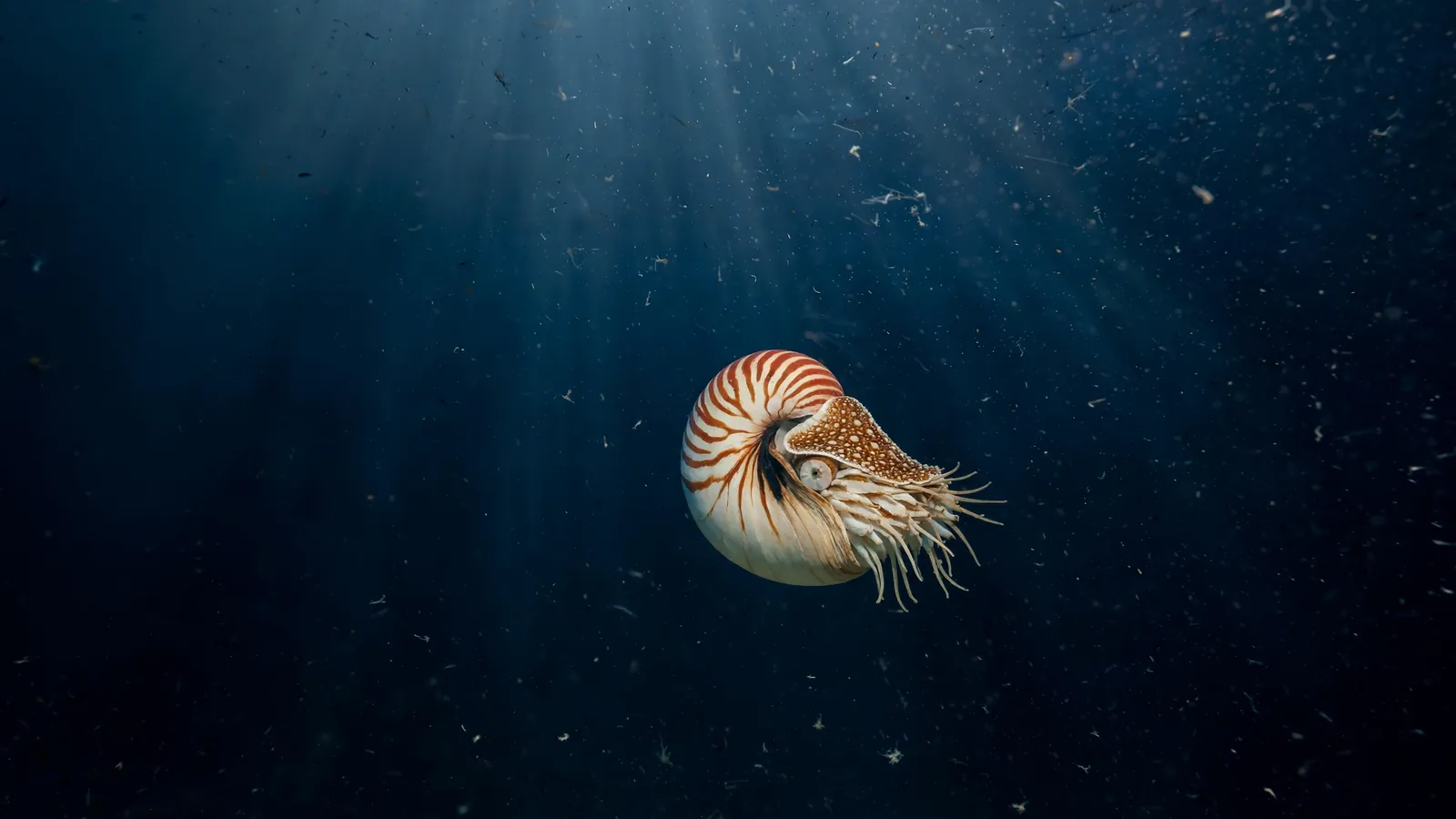
The depth band matters. Too shallow and the shell is exposed to predators and warm water; too deep and the pressure threatens the shell itself. The nautilus lives in the narrow zone where both risks are low, and it has lived there for 500 million years — a habitat choice that has outlasted nearly every other animal on the reef.
Chambered Nautilus Lifespan and Slow Reproduction
It is slow-growing and long-lived for a cephalopod — over 20 years in captivity, and probably a similar span in the wild, though no precise wild figure is published with confidence. It grows slowly, adds chambers one at a time, and does not breed until it is several years old. A juvenile starts life with 7 or 8 chambers and takes years to build the full 30.
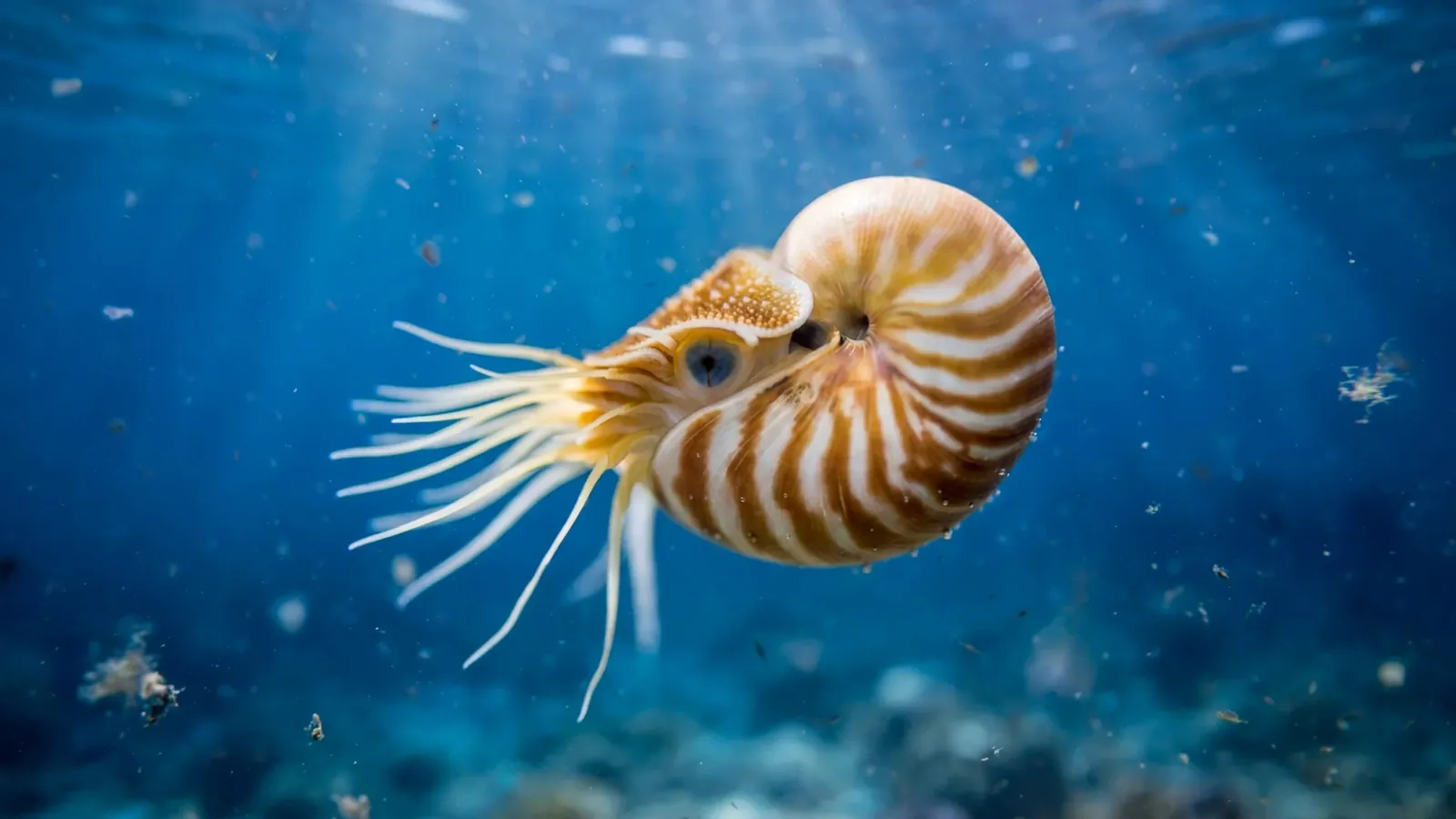
Slow reproduction is what makes the shell trade so dangerous for this species. A nautilus population cannot replace harvested adults quickly: each female lays few eggs, each animal takes years to mature, and a population cut by 80 percent needs decades to recover — if it recovers at all. The nautilus survived 500 million years by being slow and steady, and that same slowness is now its greatest weakness.
Conservation: Vulnerable and the Shell Trade
It is listed as Vulnerable, assessed in 2018, and the cause is the shell trade. Its striped, pearly shell is collected for ornaments, jewellery and souvenirs, and in the Philippines the population fell by more than 80 percent in just 15 years from overharvesting. In response the species was listed on CITES Appendix II in 2016, and under the US Endangered Species Act as threatened in 2017.
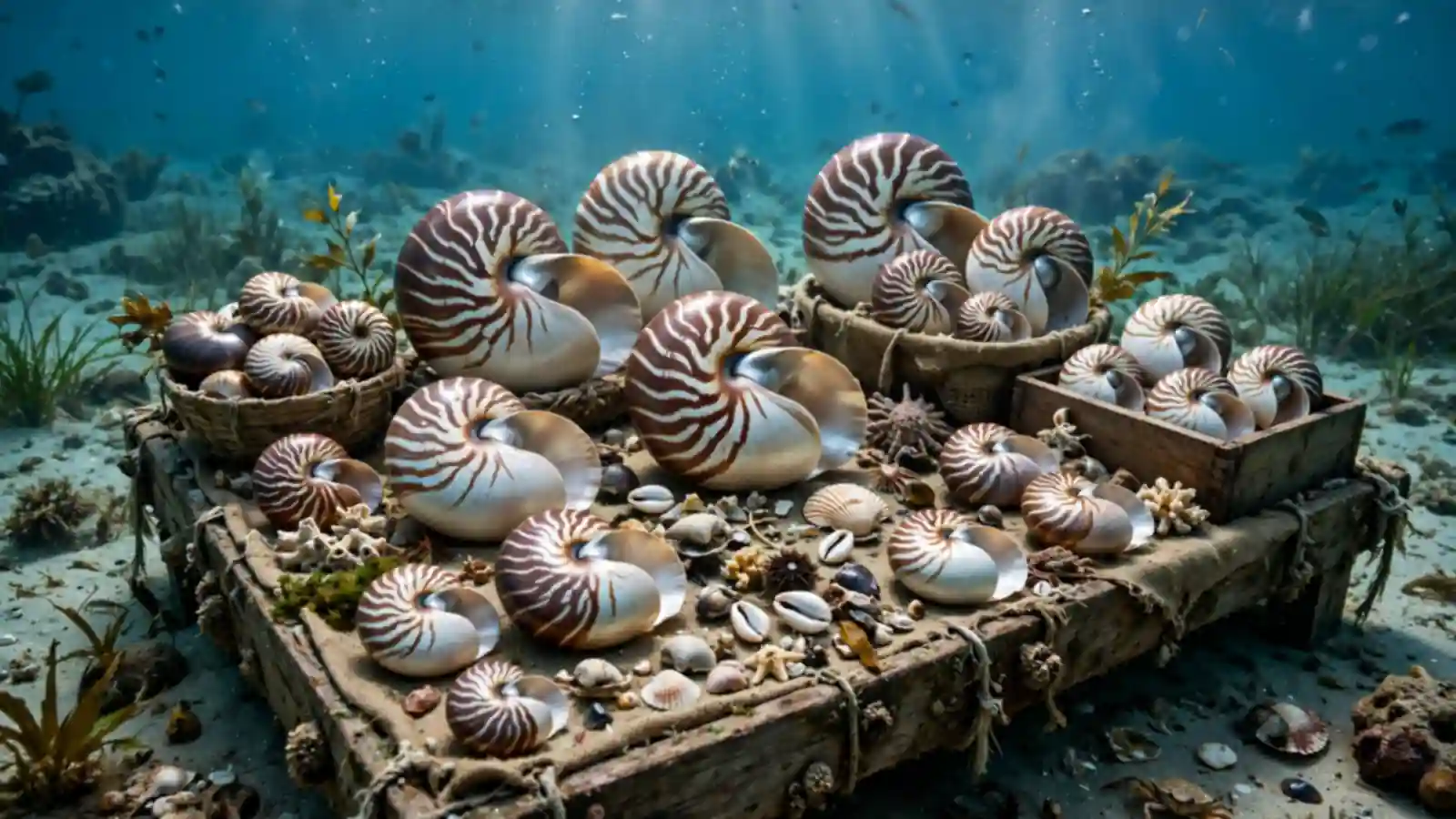
The listings help, but they do not stop the trade. Shells are still sold, and the nautilus is still taken, because a shell that takes years to grow is worth money the moment it is empty. It survived five mass extinctions; whether it survives the souvenir trade depends on whether the listings are enforced. For the full natural history, see this nautilus natural history guide from the Monterey Bay Aquarium.
Fun Facts
- It has survived 500 million years — it predates the dinosaurs by hundreds of millions of years.
- Its shell has 30 chambers as an adult; a hatchling has just 7 or 8.
- It sees through pinhole eyes with no lens, like a camera without a lens.
- It has about 90 tentacles and not a single sucker.
- Below about 600 m the water pressure implodes its shell.
- The Philippines population fell by more than 80 percent in 15 years from shell overharvesting.
Frequently Asked Questions
How many chambers does a chambered nautilus have?
An adult chambered nautilus has 30 chambers in its shell. A hatchling starts with just 7 or 8 chambers, and the animal adds a new chamber at the shell opening as it grows. The often-quoted figure of 90 or more is a confusion with the tentacle count — the nautilus has about 90 tentacles, not 90 chambers.
How does a nautilus control its buoyancy?
Through the siphuncle, a tube of living tissue that runs through all 30 chambers of the shell. By pumping gas and liquid in and out of the chambers through the siphuncle, the chambered nautilus adjusts its buoyancy — rising toward the reef at night to feed and sinking back to the deep slopes by day.
How big do chambered nautiluses get?
The shell grows to 20 to 25 cm across in large adults, about the size of a side plate. The soft body inside is smaller than the shell, and the whole animal — shell, head and tentacles — is about the size of a large grapefruit.
Where do chambered nautiluses live?
On Indo-Pacific reefs and slopes, typically around 300 m deep, from the Philippines and Indonesia to northern Australia and the western Pacific islands. By day they rest on the deep slope; by night they rise toward the reef to feed, sometimes as shallow as 100 m.
What do chambered nautiluses eat?
Carrion, detritus, living shellfish and crabs. The chambered nautilus is a scavenger first and a hunter second — it follows the smell of dead animals on the reef slope at night and uses its 90 suckerless tentacles to gather food and pass it to its beak.
Are chambered nautiluses endangered?
The chambered nautilus is listed as Vulnerable, assessed in 2018, because of the shell trade — the Philippines population fell by more than 80 percent in 15 years from overharvesting. It is on CITES Appendix II (2016) and listed as threatened under the US Endangered Species Act (2017).
How old is the nautilus lineage?
About 500 million years old. The nautilus lineage predates the dinosaurs by hundreds of millions of years and has survived five mass extinctions. The chambered nautilus is the only living cephalopod that still carries an external shell.
Similar Species Worth Exploring
Keep Exploring
Meet the giant squid, the nautilus’s deep-sea cousin, then the common cuttlefish, whose cuttlebone works on the same buoyancy principle, and browse the whole family in our types of cephalopods hub — then come back to the 500-million-year-old survivor in the 30-chamber shell, the chambered nautilus.