Adelie Penguin
Adelie Penguin: The White Eye Ring of Antarctica
The Adelie penguin is the most widespread penguin in Antarctica, a krill hunter with a white eye ring — around 10 million strong and still Least Concern.
By Emily Carter · Reviewed by our vet team · Updated 10 November 2026 · 9 min read
~10 million birdsWhite eye ringKrill hunter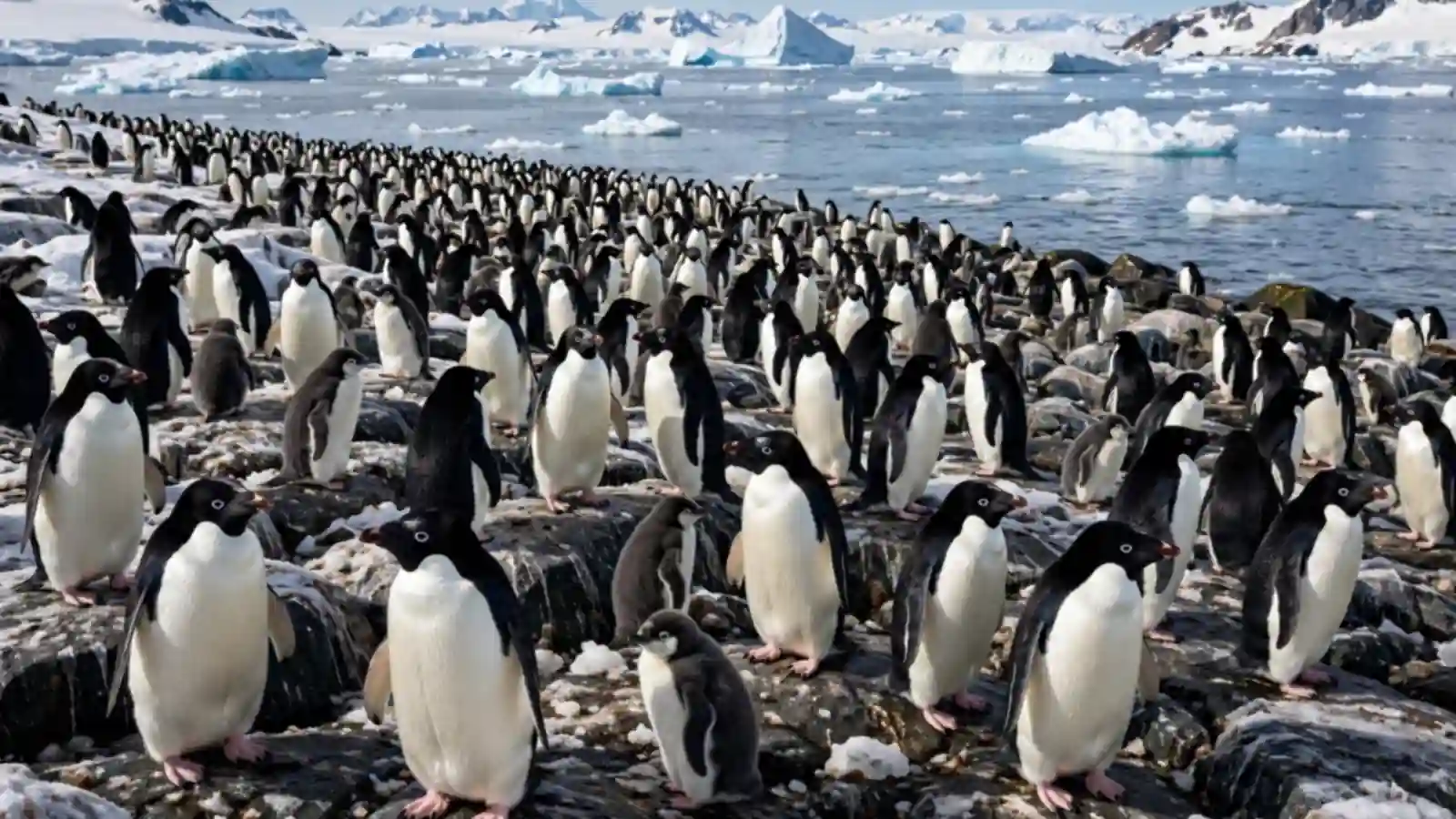
At a Glance
The Adelie penguin is the most widespread penguin in Antarctica, recognised at a glance by the white ring around each eye. It lives on krill, nests in pebble nests on the Antarctic coast, and numbers around 10 million mature birds.
Adelie Penguin Size: Built for Antarctic Cold
It stands 70–73 cm tall and weighs 3.8–8.2 kg — a mid-sized penguin, built for the cold. The body is compact and insulated, with a dense layer of feathers and fat that holds heat against water barely above freezing, and the short, stiff flippers are built for swimming, not flying.
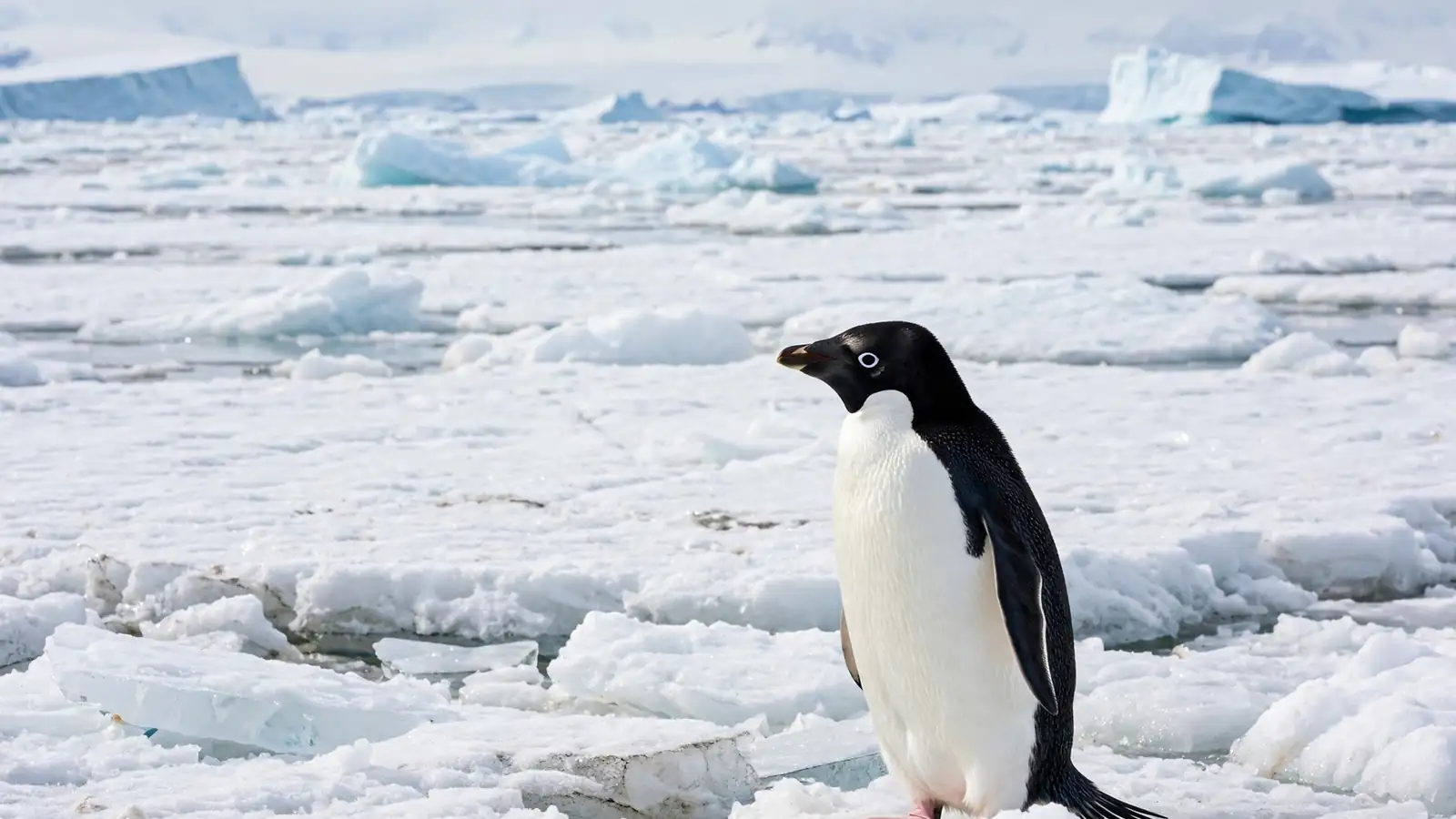
The size range reflects the season. An Adelie fattening up for the breeding season can push toward the top of the weight range, while a bird at the end of a long fast — a male that has incubated eggs for weeks without eating — can drop toward the bottom. The penguin’s body is a battery: it charges on krill and discharges on fasting, and the size tells you where it is in the cycle.
The White Eye Ring: How to Recognise an Adelie Penguin
Its field mark is unmistakable: a clean white ring around each eye, set in a black head. No other Antarctic penguin has it — the chinstrap has a black line under its chin, the gentoo has a white patch above the eye, and the emperor has a pale pink wash on its neck. The white eye ring is the Adelie’s signature, and it is visible from a long way off.
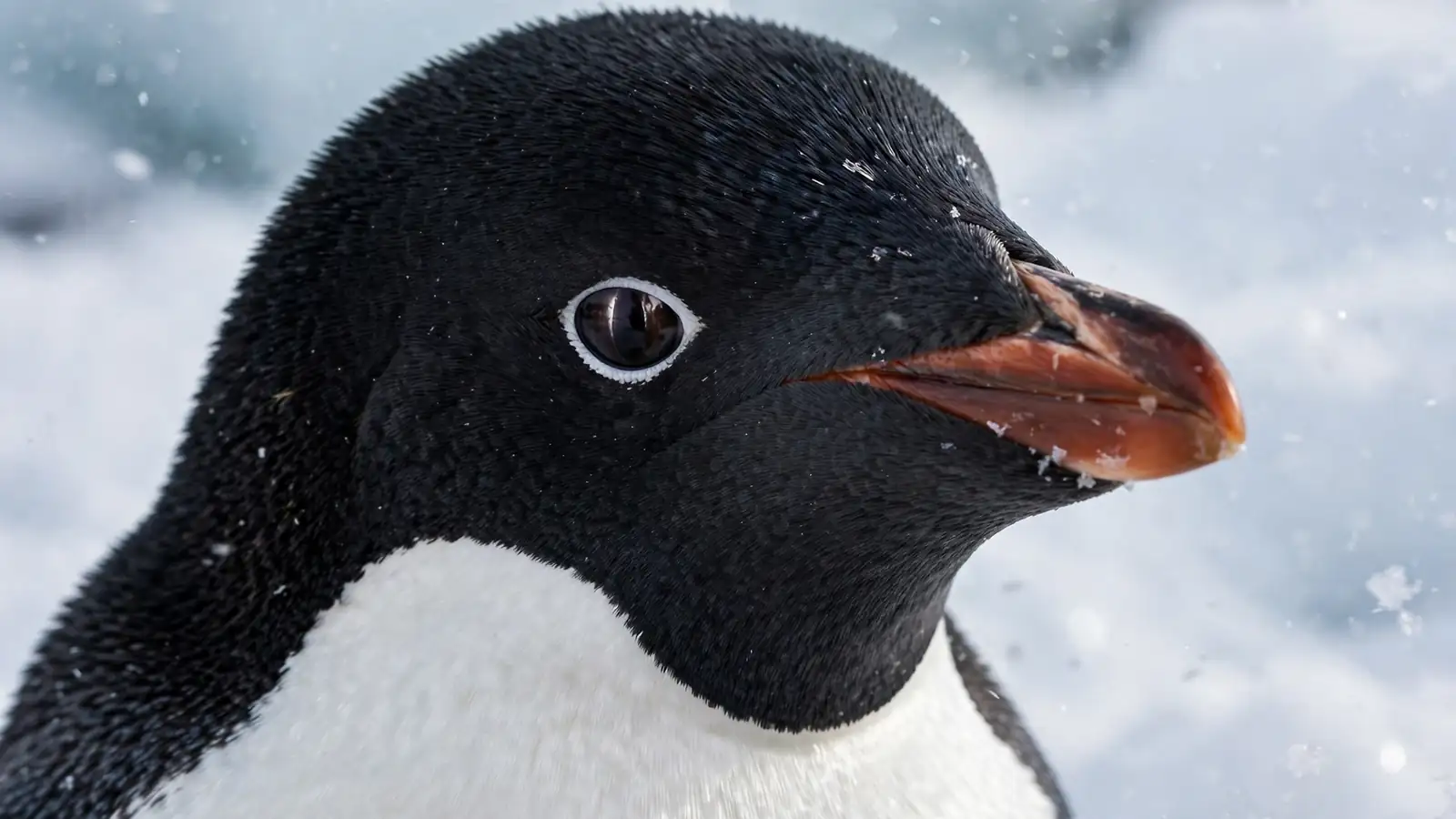
The formal name is Adélie, with the accent, after Adélie Dumont d’Urville, the wife of the French explorer who named the species — but this guide uses the plain spelling Adelie throughout, as the keyword requires. The ring itself is not decoration: it is the mark that lets penguins recognise each other in a colony of thousands, and it lets birdwatchers do the same.
What They Eat: Krill First
Adelie penguins eat krill first, and almost everything else second. Antarctic krill is the base of their diet — small, shrimp-like crustaceans that swarm in the Southern Ocean — with fish and squid as the supplement when krill is scarce. A single Adelie can eat hundreds of krill in a day, diving again and again to the swarms below the ice.
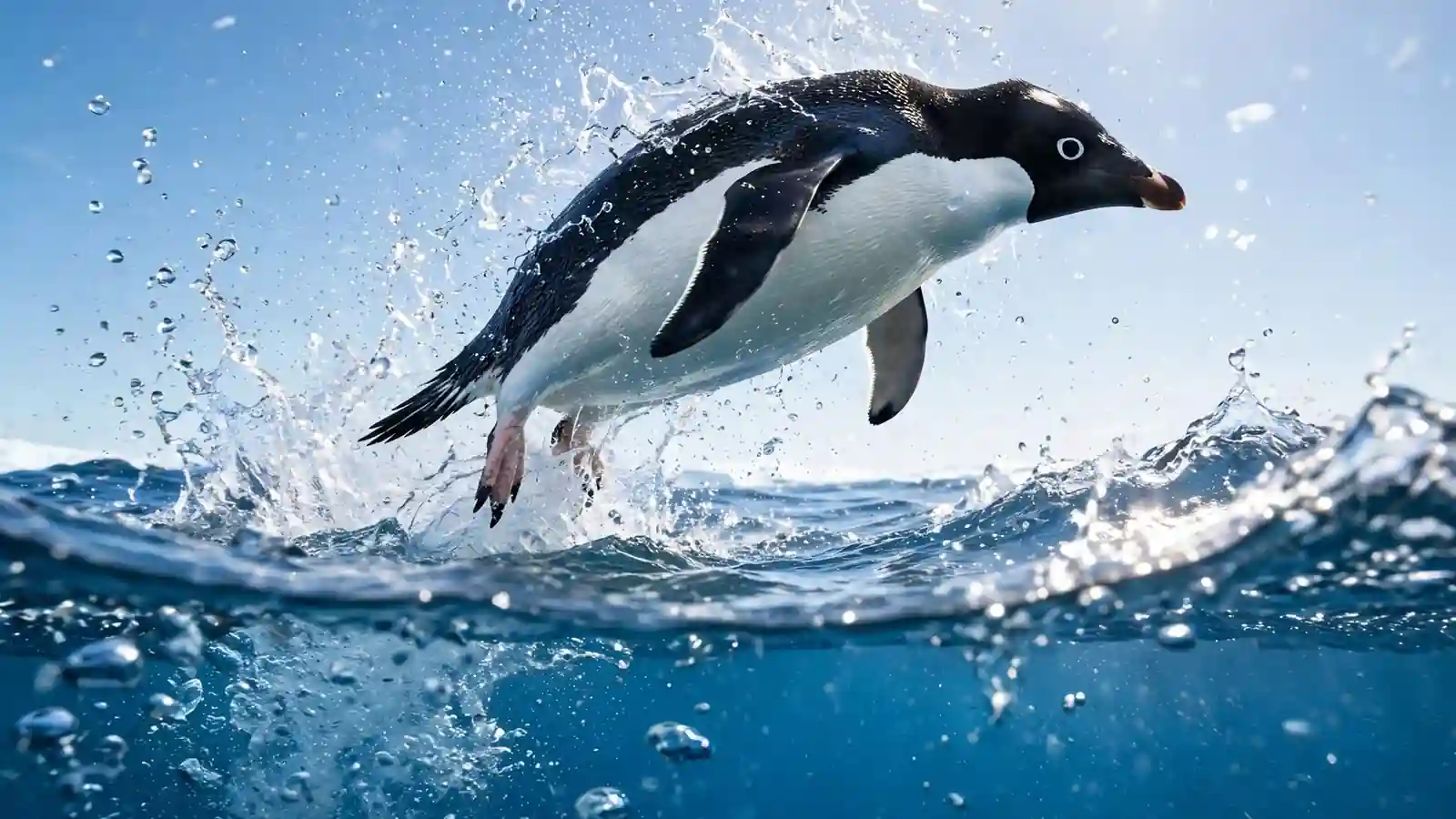
The krill diet is why the Adelie is a traveller. Krill move with the currents and the ice, and the penguins follow, porpoising through the water — leaping in and out like dolphins — to cover ground fast. When the krill are thick, the colony eats well; when the sea ice fails and the krill thin out, the chicks go hungry. The Adelie’s whole life is tuned to a single small crustacean.
Where They Live: The Antarctic Coast
Adelie penguins live on the Antarctic coast and the offshore islands — the most widespread penguin in Antarctica, breeding all around the continent’s edge. They nest on ice-free rocky shores, they hunt in the sea ice, and they spend the winter at sea, following the ice edge as it advances and retreats.
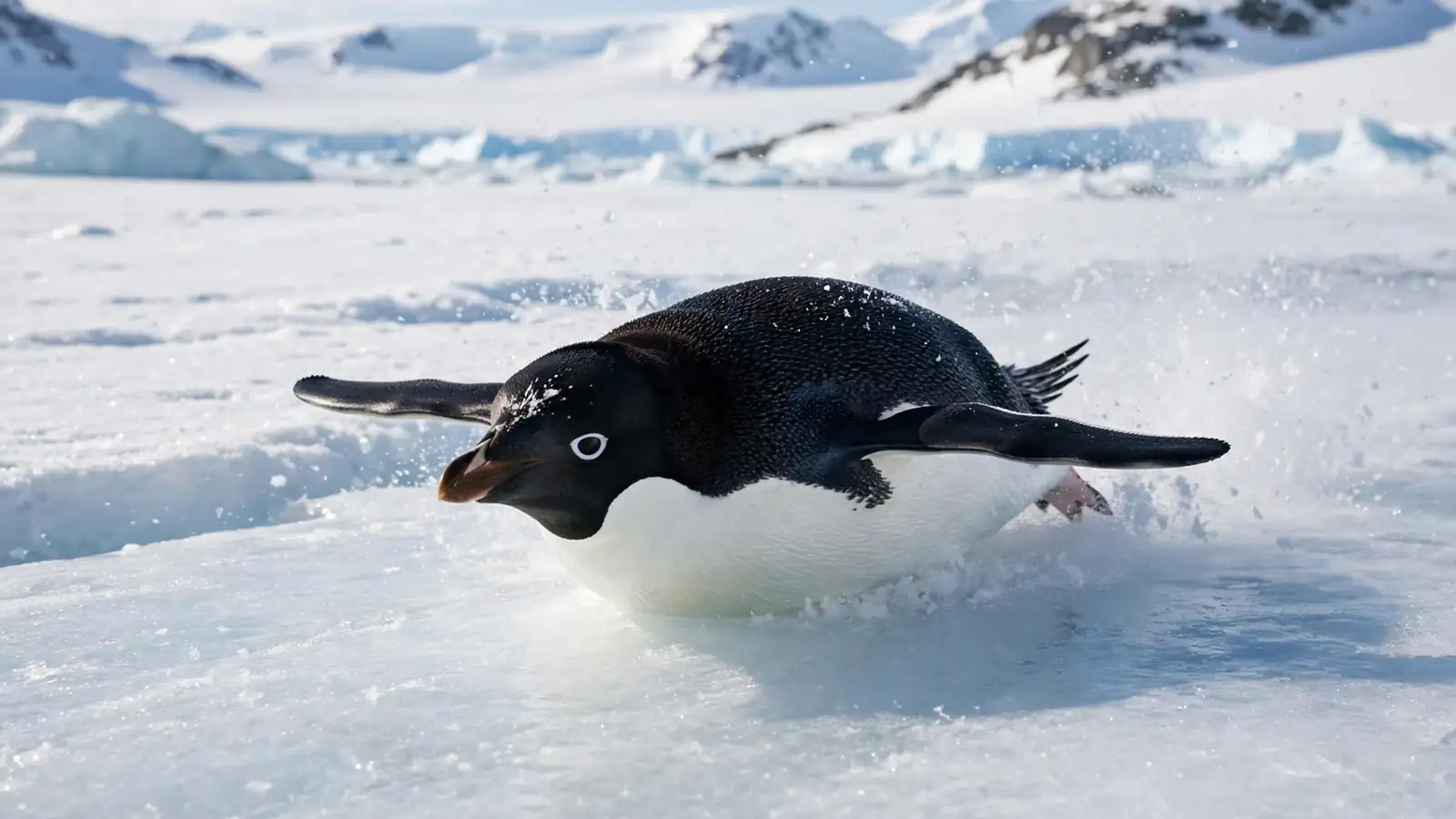
The habitat is defined by the ice. In summer the penguins crowd the rocky breeding colonies; in winter they live on the pack ice, diving through cracks and holes to hunt krill below. They are animals of the ice edge — never far from it, never without it — and their range is the whole Antarctic coastline, wherever the ice and the krill meet.
Breeding: Pebble Nests and Two Chicks
Adelie penguins breed in pebble nests — small rings of stones the male gathers and the female arranges, on the rocky Antarctic shore. Two eggs are laid, and both parents take turns incubating, fasting for weeks while the other hunts. The chicks hatch into a colony of thousands, and within weeks they join crèches — nursery groups of chicks huddled together for warmth while both parents are at sea.
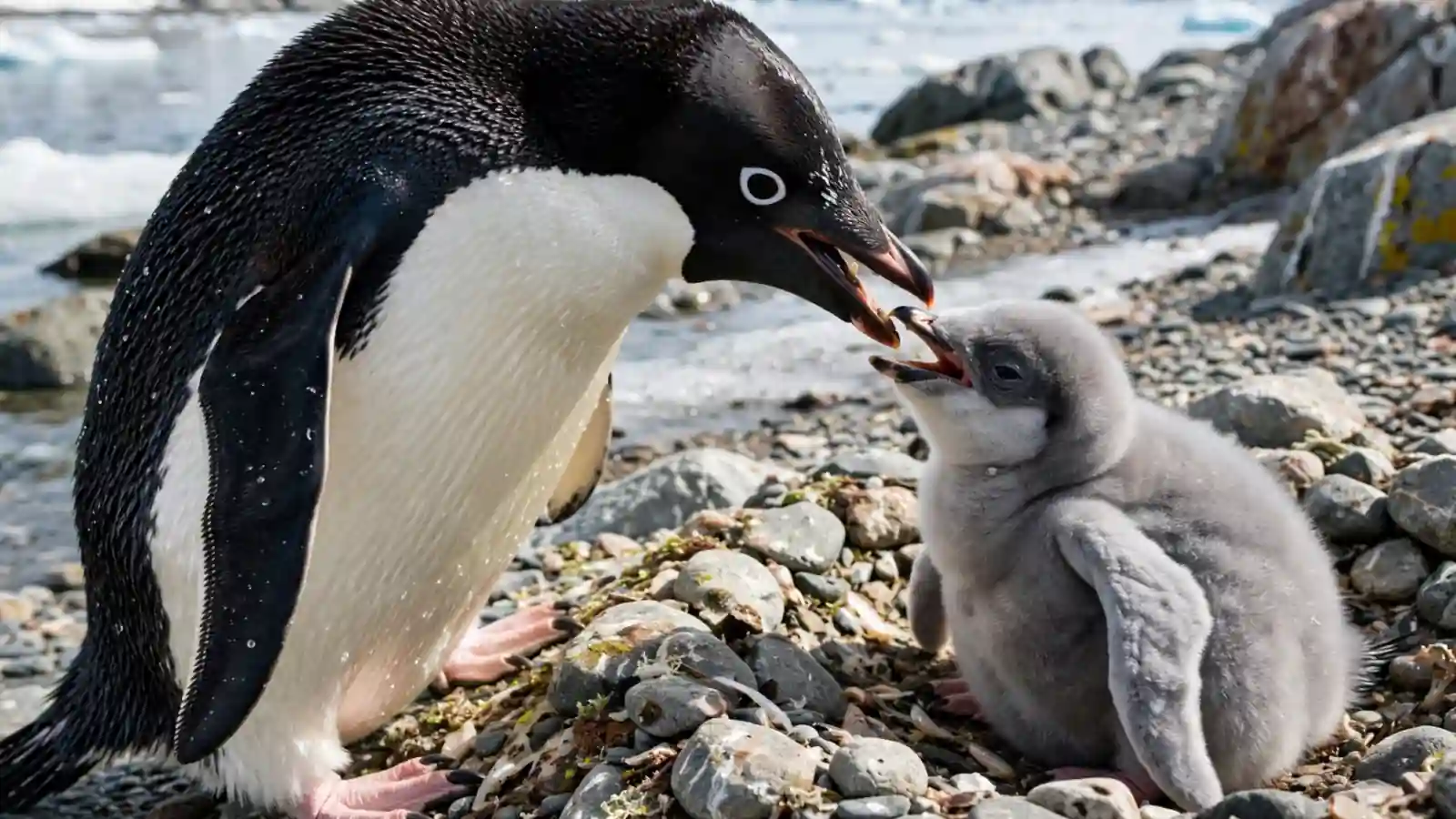
The pebbles matter more than they look. A good nest is a ring of well-chosen stones, and males steal pebbles from each other’s nests when no one is looking — the classic Adelie comedy, played out on every colony. The two chicks are the payoff: one egg is insurance, and in a good krill year both chicks survive to fledge. In a bad year, one does.
Eye Ring or Chinstrap: Telling the Cousins Apart
It and the chinstrap penguin are the two penguins most often confused in Antarctica, and the field marks settle it in a second. The Adelie has a white ring around each eye and a plain black chin; the chinstrap has a thin black line under its chin, like a strap, and no eye ring. Ring or strap — that is the whole identification.
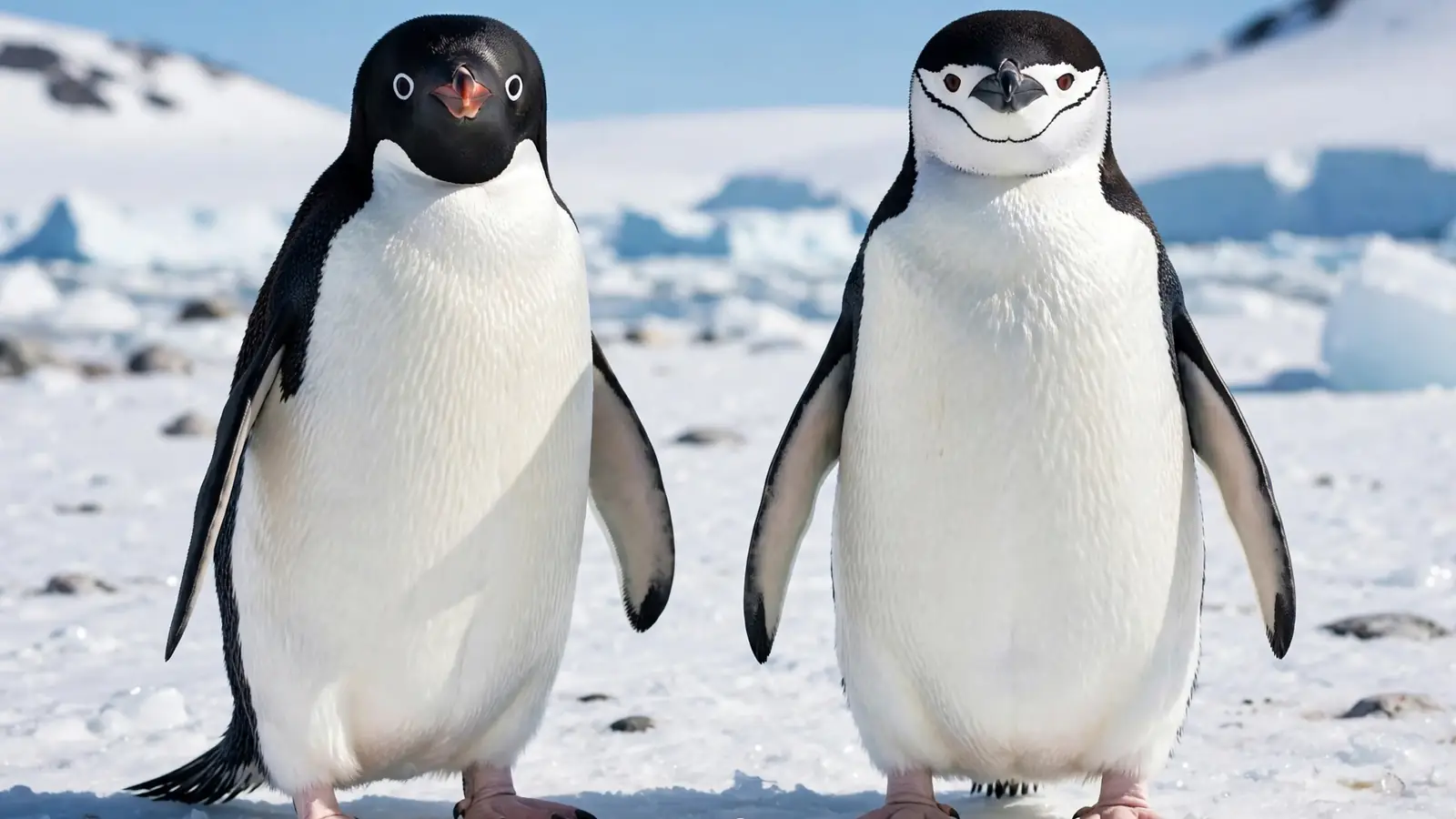
The two are close cousins, both in the genus Pygoscelis, and they often breed on the same islands — which is why the confusion matters. The Adelie is the more widespread of the two, breeding all around the Antarctic coast, while the chinstrap is concentrated on the Antarctic Peninsula and the sub-Antarctic islands. Same genus, same krill diet, same pebble nests — and one small mark that tells them apart.
Conservation: Least Concern (2020), Avian Flu Watch
It is listed as Least Concern in the 2020 assessment by BirdLife, with around 10 million mature individuals and about 3.79 million breeding pairs. It is the most numerous penguin in Antarctica, and its population is large enough that the status is secure — for now.
The watch item is avian flu. In 2024, 532 Adelie penguins were found dead on Heroína Island with H5N1 suspected — a warning that the virus has reached Antarctica, and that even a population of 10 million is not immune to it. The trend is not a population claim: it is a watch item, and the colonies are being monitored for what comes next. For the full picture of the species and its status, see this penguin guide, which covers the population, the diet and the Antarctic life.
Fun Facts
- It is the most widespread penguin in Antarctica.
- Its white eye ring is the field mark — no other Antarctic penguin has it.
- It numbers around 10 million mature birds, with about 3.79 million breeding pairs.
- It nests in pebble nests, and males steal pebbles from each other’s nests.
- Its chicks join crèches — nursery groups huddled together for warmth.
Frequently Asked Questions
What Is an Adelie Penguin?
An Adelie penguin is a mid-sized penguin, Pygoscelis adeliae, of Antarctica — the most widespread penguin on the continent. It is recognised by the white ring around each eye, lives on krill, nests in pebble nests on the Antarctic coast, and numbers around 10 million mature birds.
How Big Is an Adelie Penguin?
70–73 cm tall and 3.8–8.2 kg — a mid-sized penguin, built for the cold. The weight varies with the season: a bird fattening for breeding pushes toward the top of the range, while a fasting incubating male drops toward the bottom.
What Do Adelie Penguins Eat?
Krill first, and almost everything else second. Antarctic krill is the base of their diet, with fish and squid as the supplement when krill is scarce. A single Adelie can eat hundreds of krill in a day, diving again and again to the swarms below the ice.
Where Do Adelie Penguins Live?
On the Antarctic coast and the offshore islands — the most widespread penguin in Antarctica, breeding all around the continent’s edge. They nest on ice-free rocky shores, hunt in the sea ice, and spend the winter at sea, following the ice edge.
How Many Adelie Penguins Are There?
Around 10 million mature individuals, with about 3.79 million breeding pairs. It is the most numerous penguin in Antarctica, and its population is large enough that its conservation status is Least Concern (2020).
What Is the Difference Between an Adelie and a Chinstrap Penguin?
The field mark. The Adelie has a white ring around each eye and a plain black chin; the chinstrap has a thin black line under its chin, like a strap, and no eye ring. Both are in the genus Pygoscelis, both eat krill, and both nest in pebbles — but the ring versus the strap settles it.
Are Adelie Penguins Endangered?
No — the Adelie penguin is listed as Least Concern in the 2020 assessment. The watch item is avian flu: in 2024, 532 Adelie penguins were found dead on Heroína Island with H5N1 suspected, a warning that the virus has reached Antarctica and that even a population of 10 million is being monitored.
Similar Species Worth Exploring
Keep Exploring
Meet the chinstrap penguin, the Adelie’s closest cousin, then the emperor penguin, the giant of Antarctica, and browse the whole family in our types of penguins hub — then come back to the white eye ring of Antarctica, the Adelie penguin.