Types of Penguins
Types of Penguins: one family, eighteen ways to be a penguin
The types of penguins range from a 45-kilogram emperor that breeds in the Antarctic winter dark to a one-kilogram ‘fairy’ penguin tiptoeing ashore at dusk. This hub profiles the 7 species covered in depth on this site — and gives you an honest census of all 18 recognised kinds.
By Emily Carter · Reviewed by our vet team · Updated 10 November 2026 · 7 min read
18 recognised species7 profiled in depth hereSizes: 33 cm to 120 cm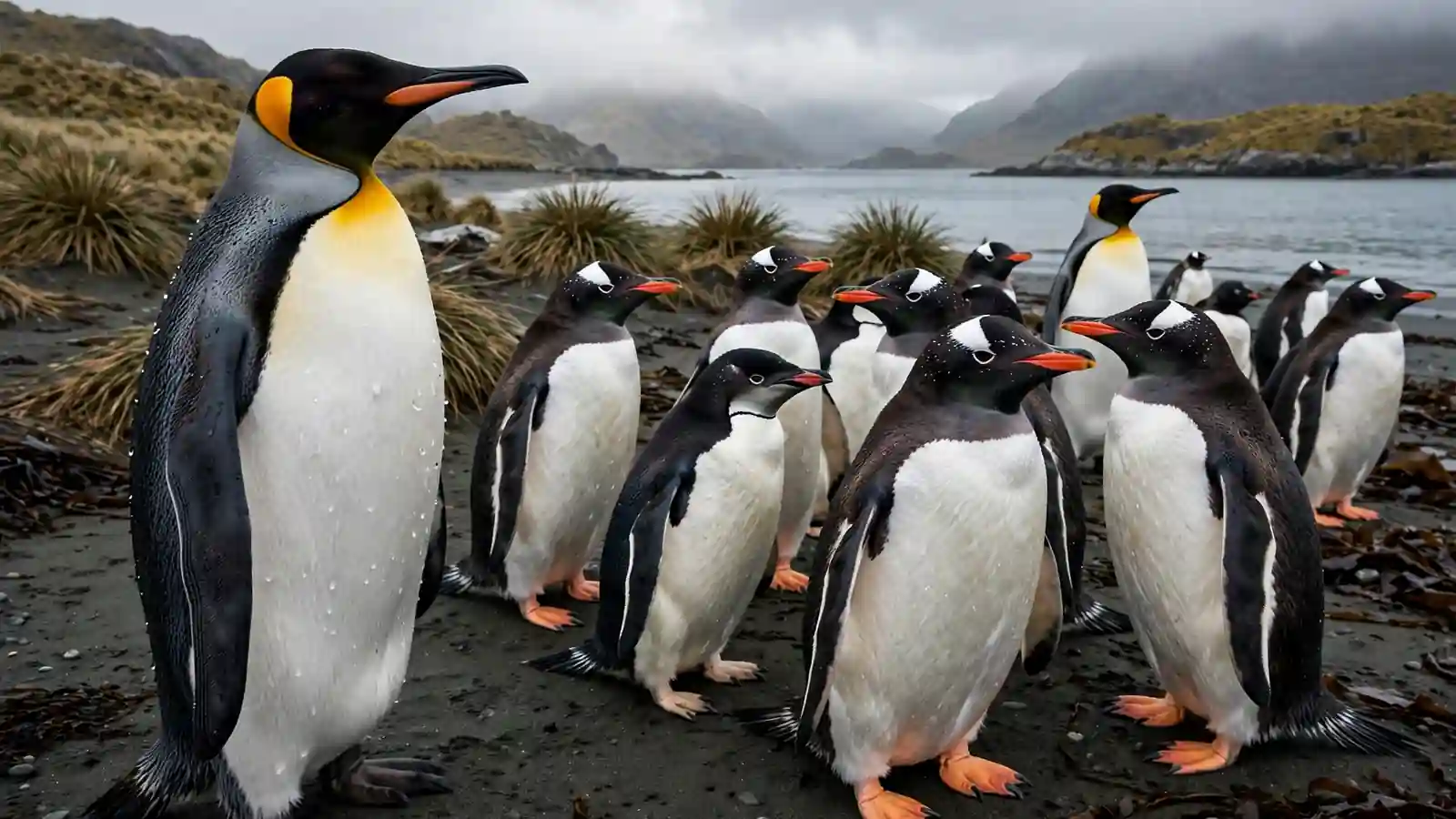
At a Glance
All types of penguins share one body plan — a flightless, torpedo-shaped pursuit diver in a tuxedo — because they all make the same bargain: wings traded for flippers, sky traded for sea. What varies is everything else. This page organises the family the way a visitor meets it: the two giants first, then Antarctica’s brush-tails, the banded penguins of warm coasts, the tiny outlier, and finally an honest roll-call of the species this site has not profiled yet.
The Two Giants: Emperor and King
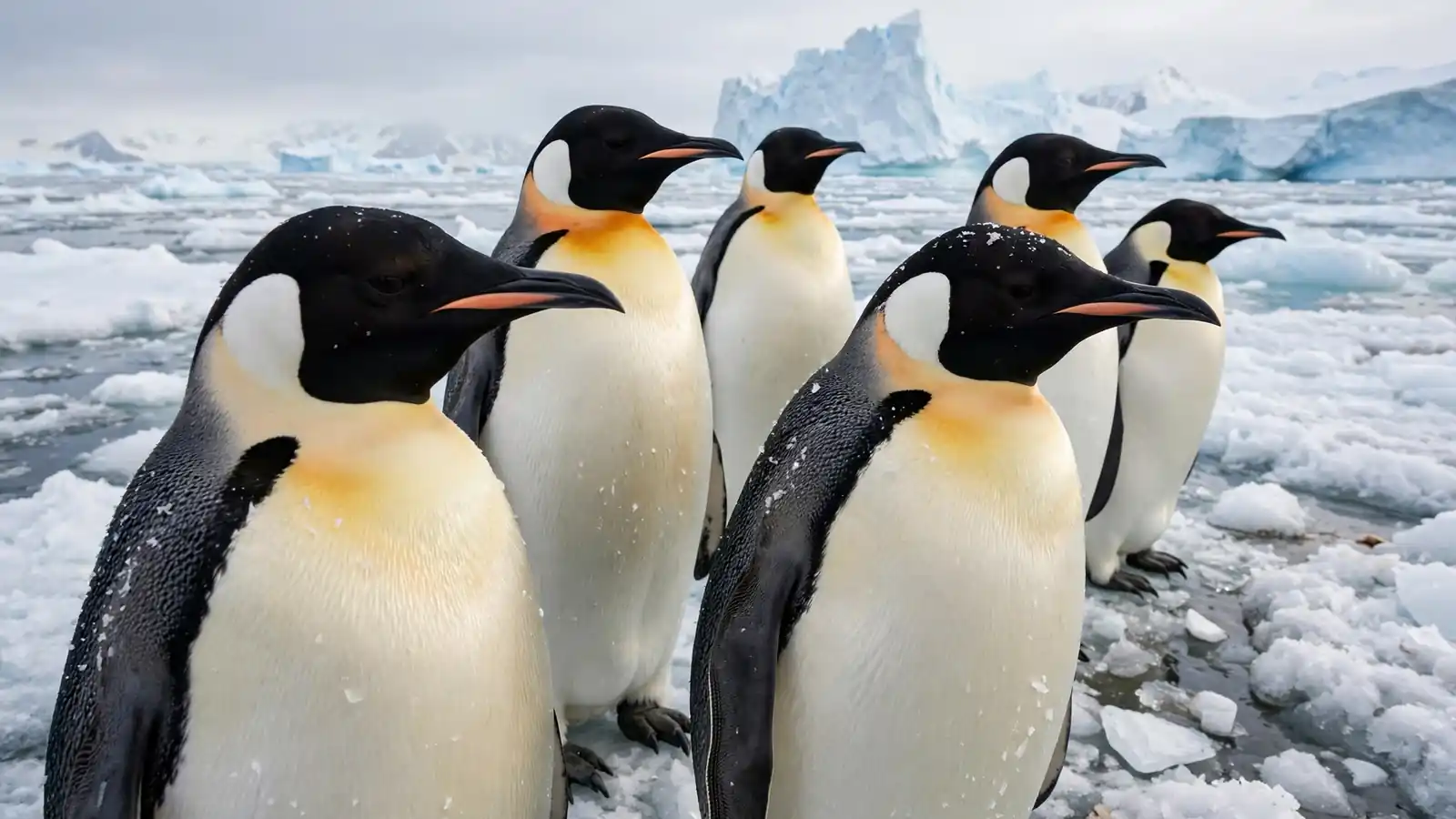
The genus Aptenodytes holds the aristocracy of all types of penguins. The emperor penguin stands up to 120 cm, breeds through the polar night, and was moved to Endangered in April 2026 as its sea-ice nursery fails. The king penguin is its slightly smaller, far more colourful understudy — same silhouette, but with deep orange-gold cheeks flowing into a rich orange breast. Learn that one distinction — pale emperor, vivid king — and the family’s two most confused species never trouble you again.
The Brush-Tails of Antarctica
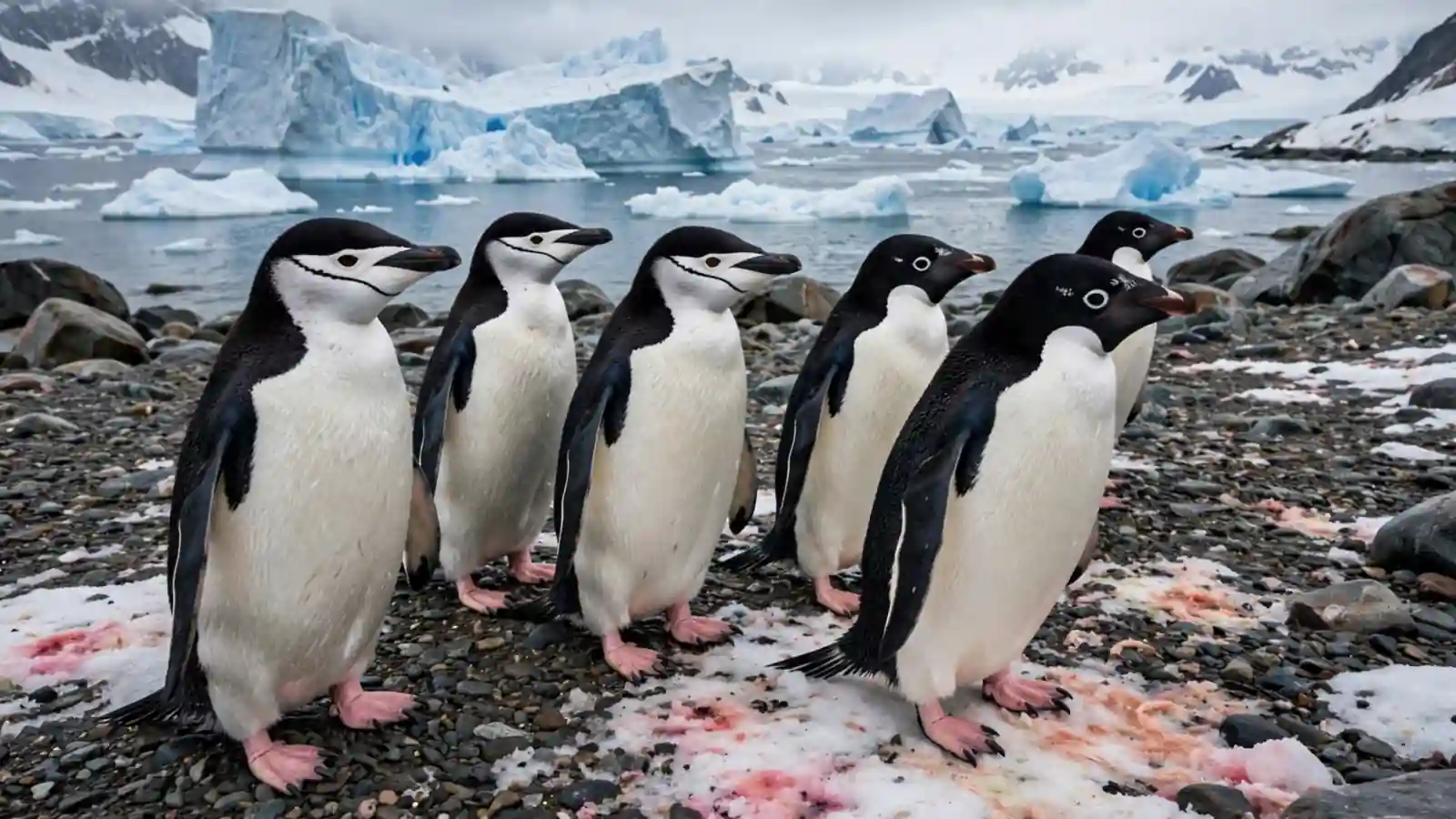
The three Pygoscelis penguins — ‘brush-tails’, for the stiff tail feathers they brace against the ice — are the penguins of the Antarctic coast itself. The gentoo is the family’s speedster and the most northerly of the three; the chinstrap, with its fine black chin line, gathers in colonies of millions; and the Adélie is the feisty, white-eye-ringed original the Antarctic explorers knew. All three live on krill to a degree that makes them living gauges of the Southern Ocean’s health.
The Banded Penguins: Warm Coasts, Loud Voices
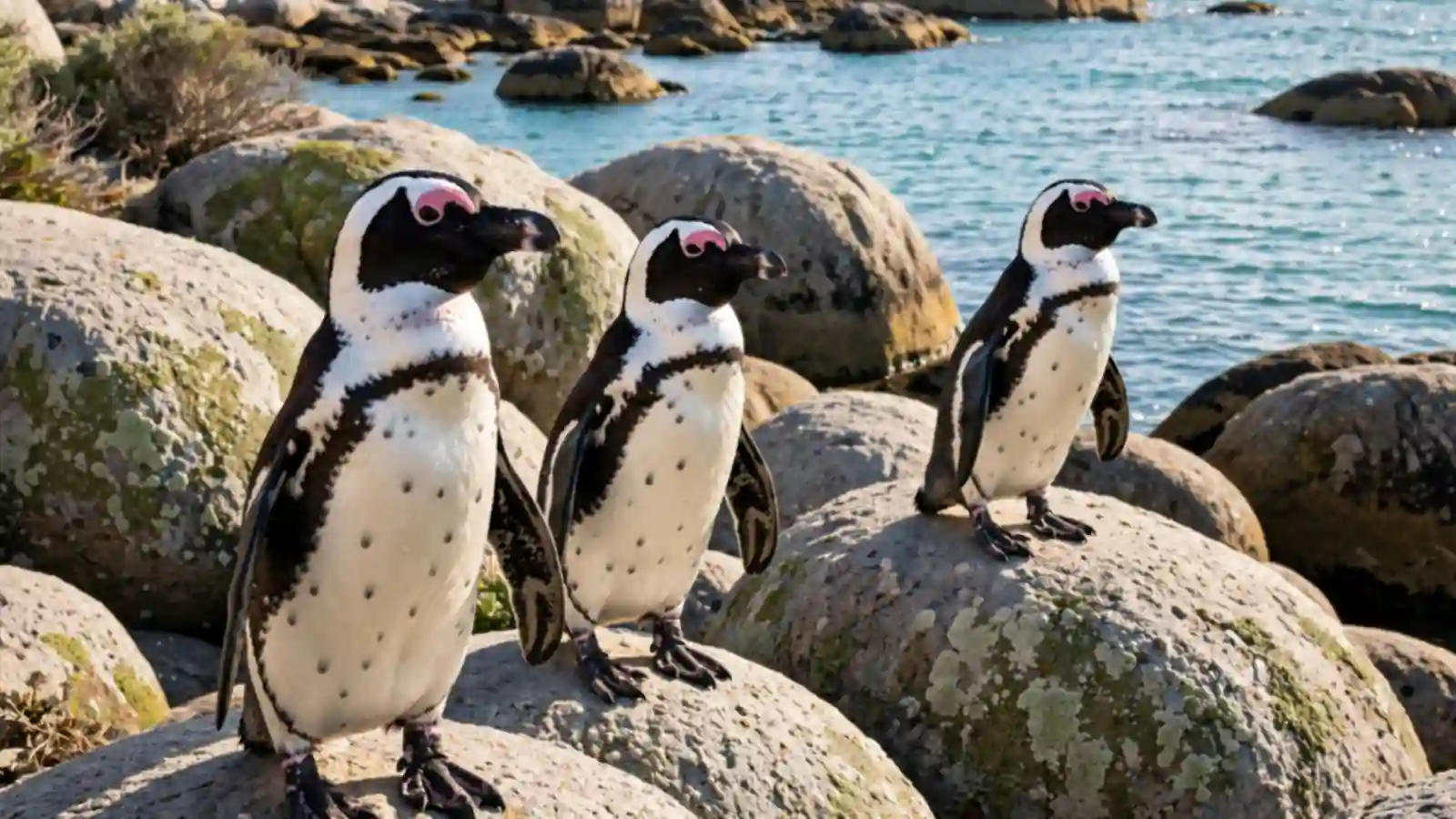
The four Spheniscus are the banded types of penguins, wearing a black horseshoe band across the chest and live where penguins are not supposed to: temperate and even tropical shores. Our profiled member is the African penguin of South Africa’s granite boulders — a species whose braying earned it the old name ‘jackass penguin’, and whose crash in numbers, as sardines and anchovies fail, has pushed it to the edge. Its cousins — Humboldt, Magellanic and Galápagos — are named in the census below.
The Little Penguin: Smallest of All
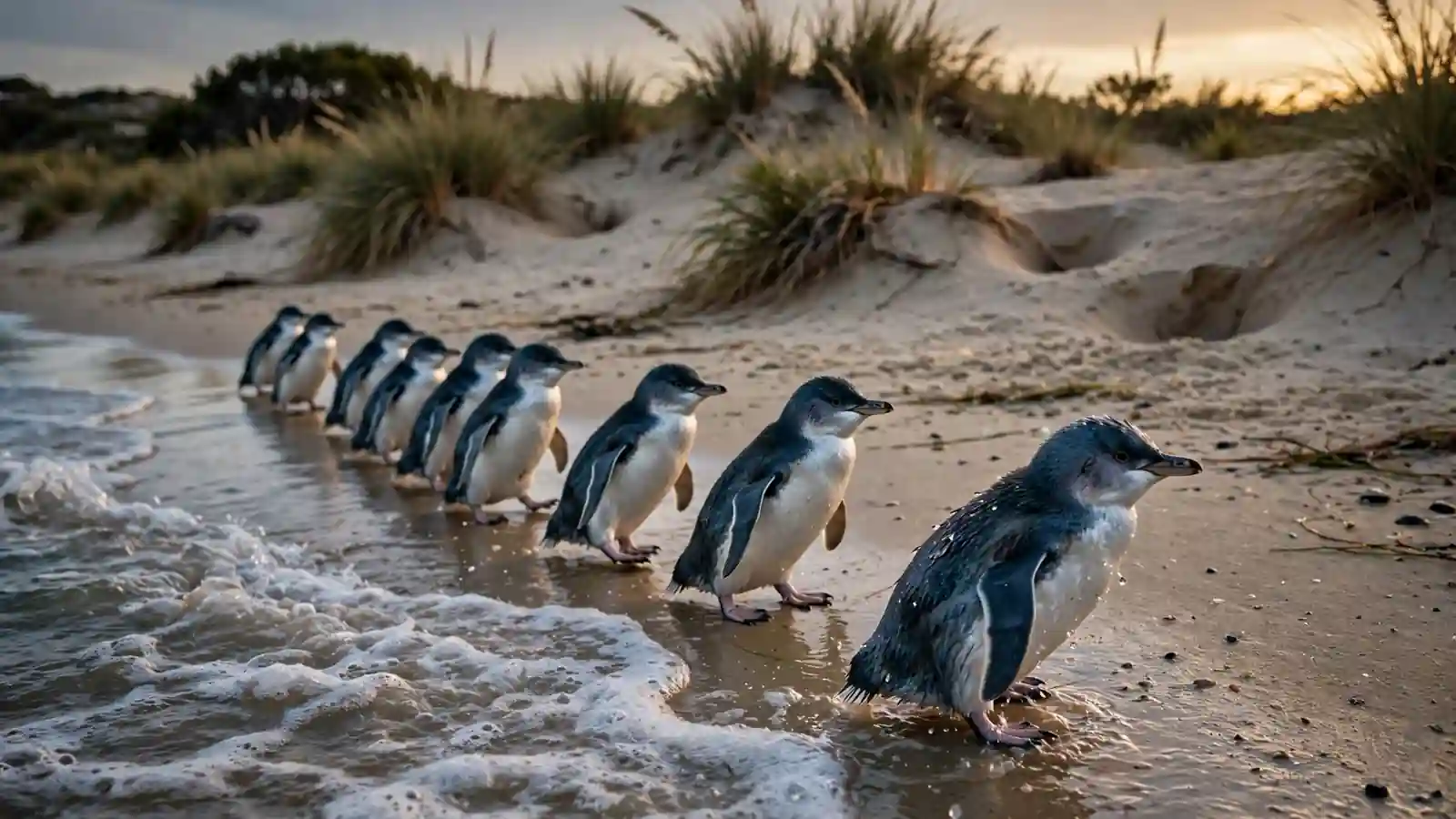
At the far end of the scale of types of penguins stands a penguin the size of a bowling pin. The little penguin — also called the fairy penguin — is slate-blue above, about 33 cm tall, and so wary ashore that it only lands after dark, in the famous dusk parades of Australia and New Zealand. It is the sole member of its genus and the standing disproof that penguins need ice: its beaches are warm enough for sunbathers.
The Full Census: All 18 Types of Penguins, Honestly Counted
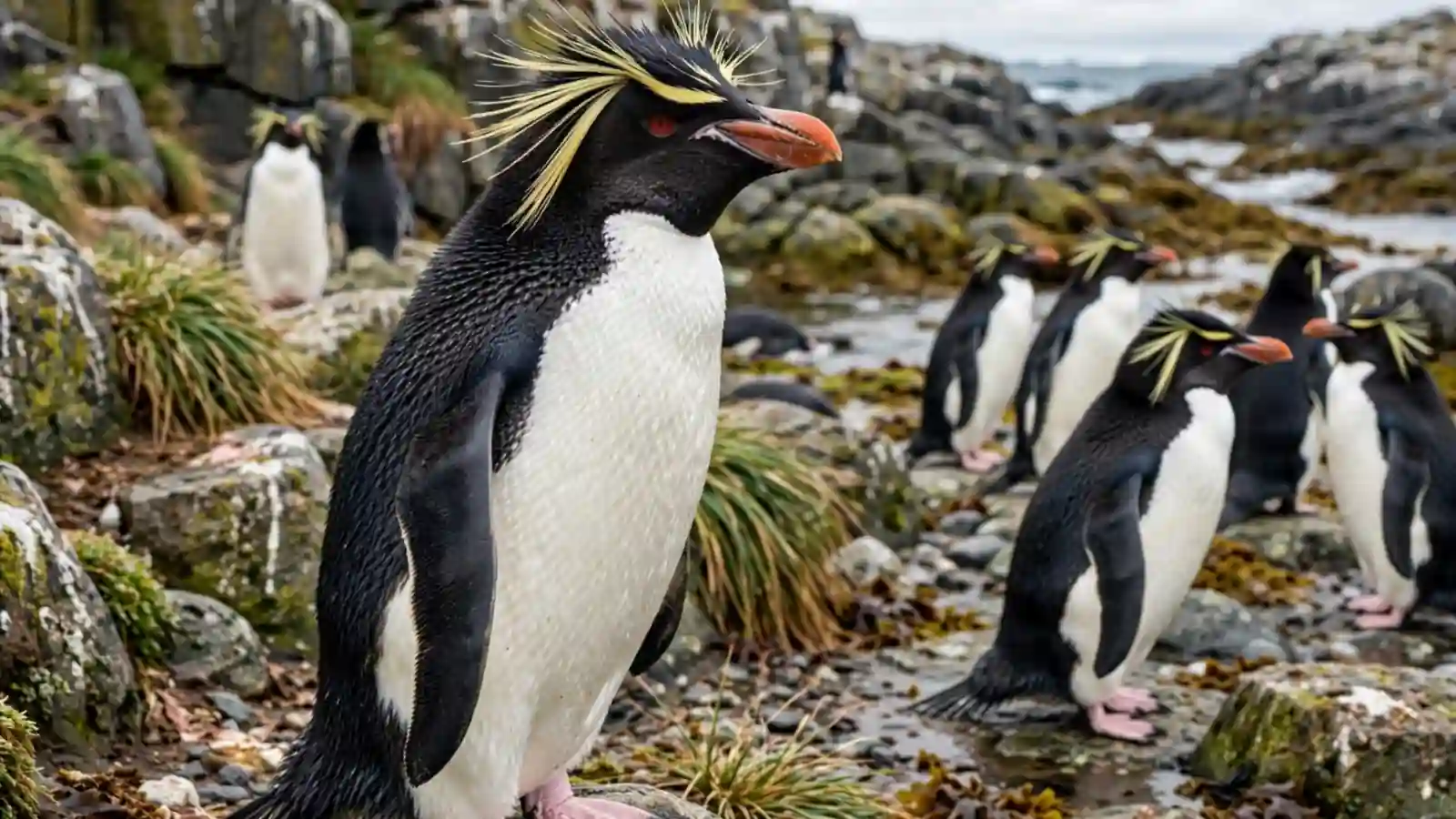
This hub profiles 7 types of penguins in depth. The other 11 recognised penguins are named here so the census is complete — no profiles are implied for them yet. The crested genus Eudyptes is the family’s largest and loudest: Macaroni, Royal, Northern Rockhopper, Southern Rockhopper, Erect-crested, Snares and Fiordland penguins, all sporting yellow crest feathers and red eyes, several of them in serious decline.
Completing the eighteen: the Yellow-eyed penguin of New Zealand — among the rarest of all — and the remaining banded penguins, Humboldt, Magellanic and the equatorial Galápagos penguin, the only species whose range crosses into the Northern Hemisphere. Counts of the family vary between checklists (17 to 19) as taxonomists argue over splitting island populations; 18 is the widely used middle figure. For the family-level facts behind this hub, see the penguin family’s full account.
Fun Facts
- Penguins are an almost entirely Southern Hemisphere family — the Galápagos penguin is the only one that strays north of the equator, and only just.
- The macaroni penguin’s name has nothing to do with pasta: ‘macaroni’ was 18th-century slang for a flamboyant dandy, and the crest looked the part.
- A gentoo’s ‘brush tail’ is functional: the stiff feathers prop the bird tripod-style on steep ice.
- Fossil penguins were giants — some stood taller than a person and weighed as much as one.
- Every penguin species drinks seawater, filtering the salt out through glands above the eyes.
- The word penguin may predate the birds it now names: it was first used for the great auk of the North Atlantic, a completely different (and now extinct) bird.
Frequently Asked Questions
How Many Types of Penguins Are There?
Most checklists recognise 18 living penguin species, in six genera. Counts wobble between 17 and 19 depending on whether a few borderline populations — such as the royal penguin or the white-flippered form of the little penguin — are split or lumped. This hub profiles 7 species in depth and names all the others honestly.
What Is the Biggest Penguin?
The emperor penguin, at 110 to 120 centimetres (43 to 47 inches) tall and up to 45 kg — and it is Endangered as of April 2026. The king penguin is second, near 90 centimetres. Both are dwarfed by extinct giants: the fossil Anthropornis stood around 1.7 metres and may have weighed 90 kg.
What Is the Smallest Penguin Species?
The little penguin of Australia and New Zealand: about 33 centimetres (13 inches) tall and barely a kilogram. It is so small and so nocturnal ashore that its famous evening ‘penguin parades’ look like a procession of toys coming out of the surf.
Do All Penguins Live in Antarctica?
No — only a handful do. Of the 18 species, just the emperor and Adélie live on the Antarctic continent itself, with chinstraps and gentoos on its peninsula. The rest spread across the sub-Antarctic islands and the coasts of South America, Africa, Australia and New Zealand — and one, the Galápagos penguin, lives practically on the equator.
Which Is the Fastest Swimming Penguin?
The gentoo. It is widely cited as the fastest penguin in the water, reaching burst speeds around 36 km/h (22 mph) — faster than any other diving bird. The gentoo’s long tail and powerful flippers make it the speedster of a family built for swimming.
Which Penguins Are Endangered?
More than you would hope. The emperor was uplisted to Endangered in April 2026 as its sea-ice nursery shrinks; the African penguin has recently been assessed as Critically Endangered as its fish stocks fail; and the yellow-eyed, erect-crested, Galápagos and northern rockhopper penguins are all Endangered too. Roughly half the family is in some category of trouble.
What Do Penguins Eat?
Mostly krill, small schooling fish and squid, in proportions that vary by species and ocean. The Antarctic species lean hardest on krill — one reason our series gives krill its own profile — while the banded penguins of warm coasts chase sardines and anchovies. Every penguin in this hub is a pursuit diver, catching prey one piece at a time.
Can Penguins Fly?
No. Penguins are flightless pursuit divers: their wings became stiff flippers for swimming, and all 18 recognised species hunt underwater instead of in the air.
Which Penguins Live in Warm Places?
The four banded penguins of the genus Spheniscus — African, Humboldt, Magellanic and Galápagos — live on temperate and even tropical shores, and the Galápagos penguin lives practically on the equator; the little penguin of Australia and New Zealand is a temperate-coast bird too.
All 7 Penguin Profiles
Keep Exploring
Penguins sit inside our wider types of seabirds hub, next to their fellow divers the boobies and puffins. Start with the giant — the emperor penguin — then work down the size ladder to the little penguin, and you will have met, in depth, all seven of our profiled types of penguins.