Smalltooth Sawfish Facts: Size, Saw and Florida Habitat
Smalltooth Sawfish: A Five-Metre Ray Carrying a Saw
The smalltooth sawfish is a five-metre ray carrying a saw — a tooth-studded rostrum a quarter of its body long, used to stun fish and dig in the sand, on an animal that is now Critically Endangered.
By Emily Carter · Reviewed by our vet team · Updated 10 November 2026 · 7 min read
Tooth-studded saw5.54 m confirmedCritically Endangered (2022)

At a Glance
The smalltooth sawfish is the ray with the saw. Its rostrum — the long, flat blade on the front of its head — carries 20 to 32 pairs of lateral teeth, and the fish uses it like a weapon and a tool at once: slashing through schools of mullet to stun them, and digging in the sand for buried prey. It was the first marine fish protected under the US Endangered Species Act, and it is still Critically Endangered, holding on in the mangroves of Florida. This guide covers the saw, the size, the mangrove nurseries, and what to do if you catch one.
Size: A Five-Metre Ray With a Saw
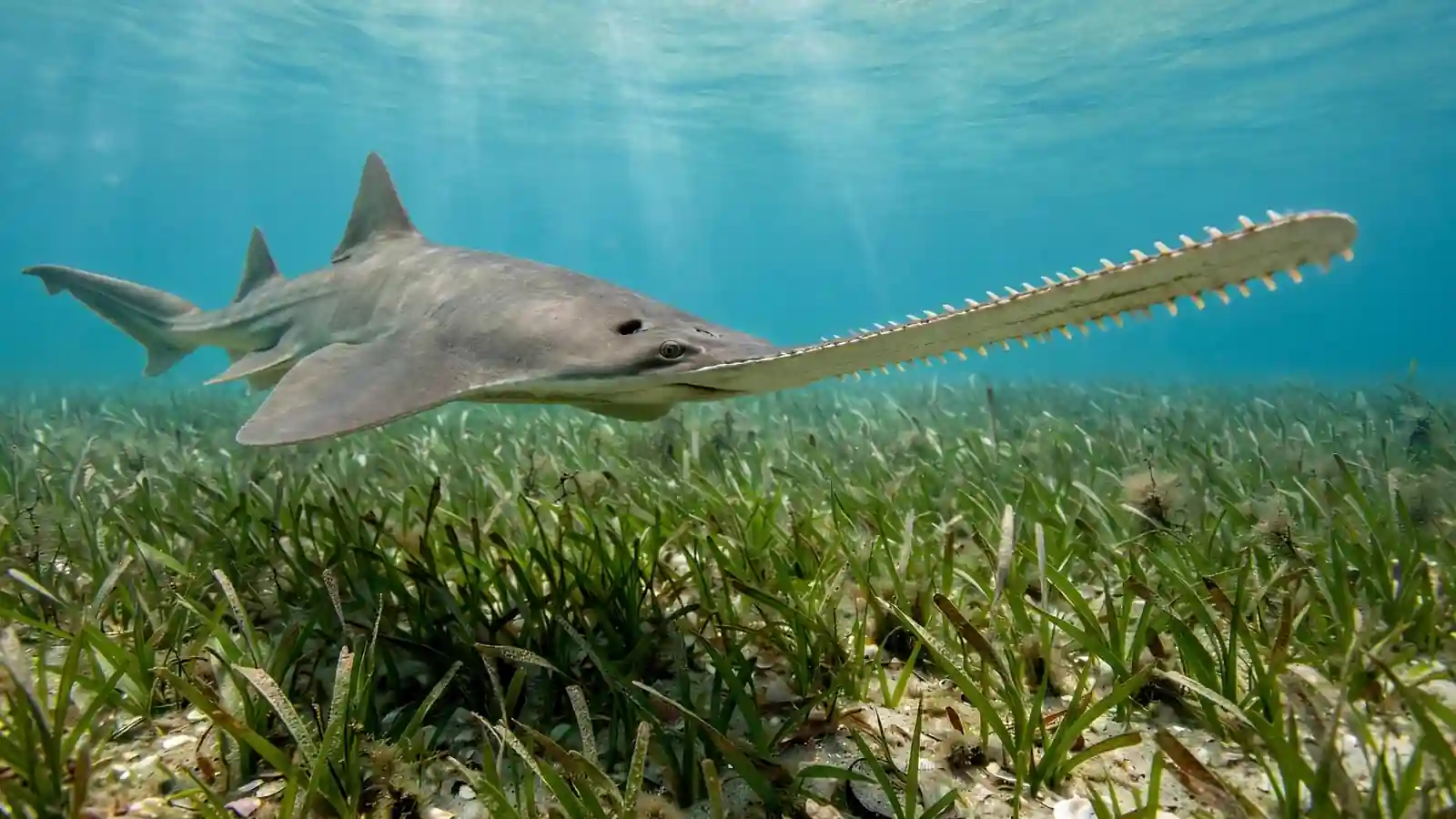
The largest confirmed one measured 5.54 metres long and weighed up to 350 kg — a huge animal, longer than most cars and heavier than a grand piano. The rostrum alone is about a quarter of the total length, a blade of bone and cartilage studded with teeth that grows with the fish. For the full species record, see the full species spotlight.
Bigger figures are often quoted — 7.6 metres is the number you will see in many guides — but that figure is likely an exaggeration, and no verified animal of that size exists. The 5.54-metre fish is the largest that has actually been measured, and it is the number this guide uses. Even at that size, it is one of the largest rays in the Atlantic.
Honest numbers matter for an animal like this. The 7.6-metre figure has been copied from guide to guide for decades, gathering authority it never earned, while the measured fish — 5.54 metres, longer than most cars — needs no exaggeration at all. Printing the verified figure is a small act of respect for a species that has suffered enough from careless handling.
The Saw: 20–32 Pairs of Teeth on a Rostrum
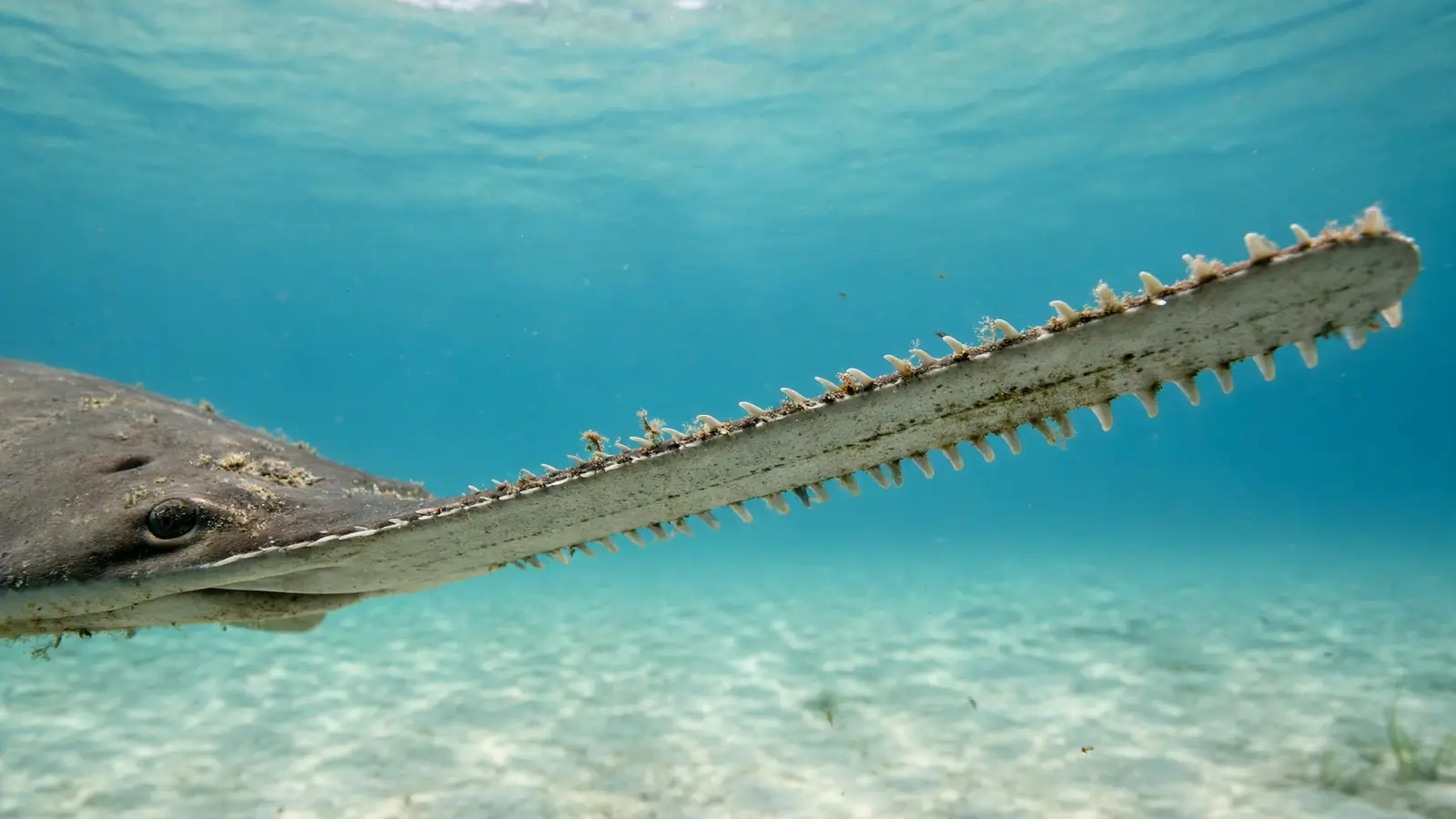
The saw is its rostrum, a long, flat extension of the snout lined with 20 to 32 pairs of lateral teeth. The teeth are not like a shark’s teeth — they are fixed, pointed denticles set into the sides of the blade, and they do not fall out and regrow. Each tooth is a permanent part of the saw.
That permanence cuts both ways. A shark replaces lost teeth all its life; this blade cannot. A tooth broken in a net or a fight is gone for good, which is why a damaged saw is a lifelong injury — and why the advice to cut the line and never handle the rostrum matters so much for the fish’s future.
The saw is a weapon and a tool in one. The sawfish slashes it sideways through a school of mullet, stunning and injuring fish that it then picks up off the bottom, and it digs with it in the sand, stirring up buried shrimp and crabs. It is also a sensor: the rostrum is packed with the pores that detect the electrical signals of hidden prey.
Where Smalltooth Sawfish Live: Florida’s Mangrove Nurseries

They live in shallow coastal and estuarine waters, usually less than 8 metres deep, across the tropical western Atlantic — but today their stronghold is Florida. Charlotte Harbor, the Ten Thousand Islands and Tampa Bay hold the last healthy population in the United States, and the young grow up in the mangrove nurseries of those estuaries.
The mangroves are the key. Young sawfish spend their first years among the mangrove roots, where the tangled maze keeps them safe from sharks and the shallow, food-rich water lets them grow fast. Lose the mangroves and you lose the sawfish: the nursery is not a luxury, it is the reason the species still exists.
What Does It Eat? Mullet Stunned by the Saw
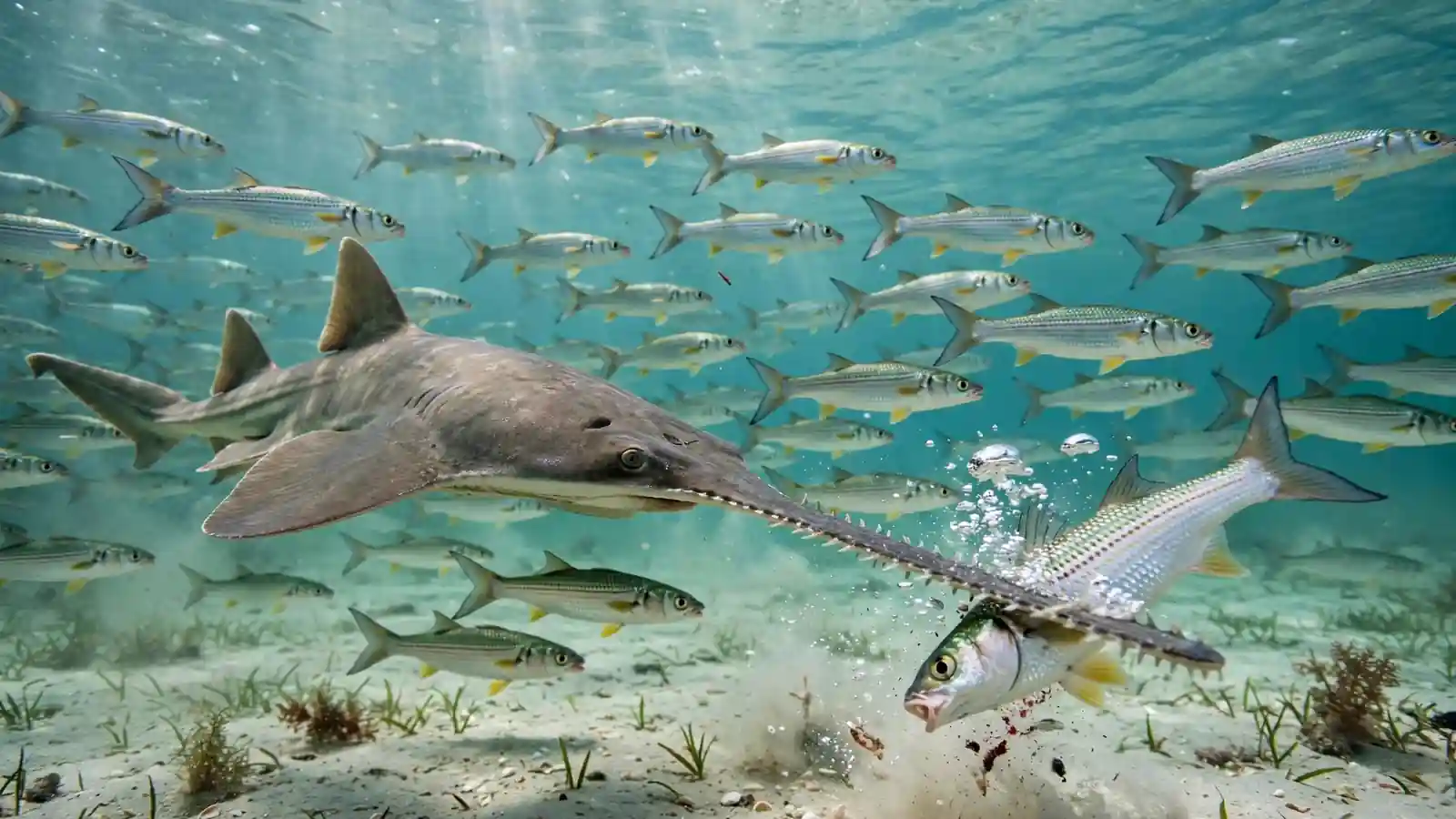
Small fish are the core of its diet, and mullet are the favourite. The sawfish swims into a school of mullet and slashes its rostrum from side to side, stunning fish with the blade and then turning back to eat the ones that sink. It is one of the most distinctive hunting styles in the sea — a ray that fishes with a sword.
The slash is over in a heartbeat. Side to side through the school, the blade stuns rather than kills, and the sawfish circles back through water full of sinking, dazed mullet, eating at leisure. Few predators carry their weapon and their fishing gear in a single blade — and fewer still use it with such economy.
Shrimp and crabs round out the menu, dug from the sand with the saw and picked up off the bottom. The sawfish is a bottom feeder as much as a hunter: the rostrum that stuns mullet in open water is the same tool that roots out a buried crab.
Smalltooth Sawfish Reproduction: Live Pups in Shallow Water

It gives birth to live young in shallow coastal water. Litters run to 7 to 14 pups, a figure established by a 2019 study, and the pups are born at around 60 to 70 cm long — already carrying a miniature saw, complete with teeth.
The pups head straight for the mangroves. Their first years are spent in the nursery estuaries, growing fast on a diet of small fish and shrimp, and only when they are big enough to be safe from most sharks do they move out into deeper coastal water. A sawfish that reaches adulthood has survived the hardest part of its life.
What To Do If You Catch One
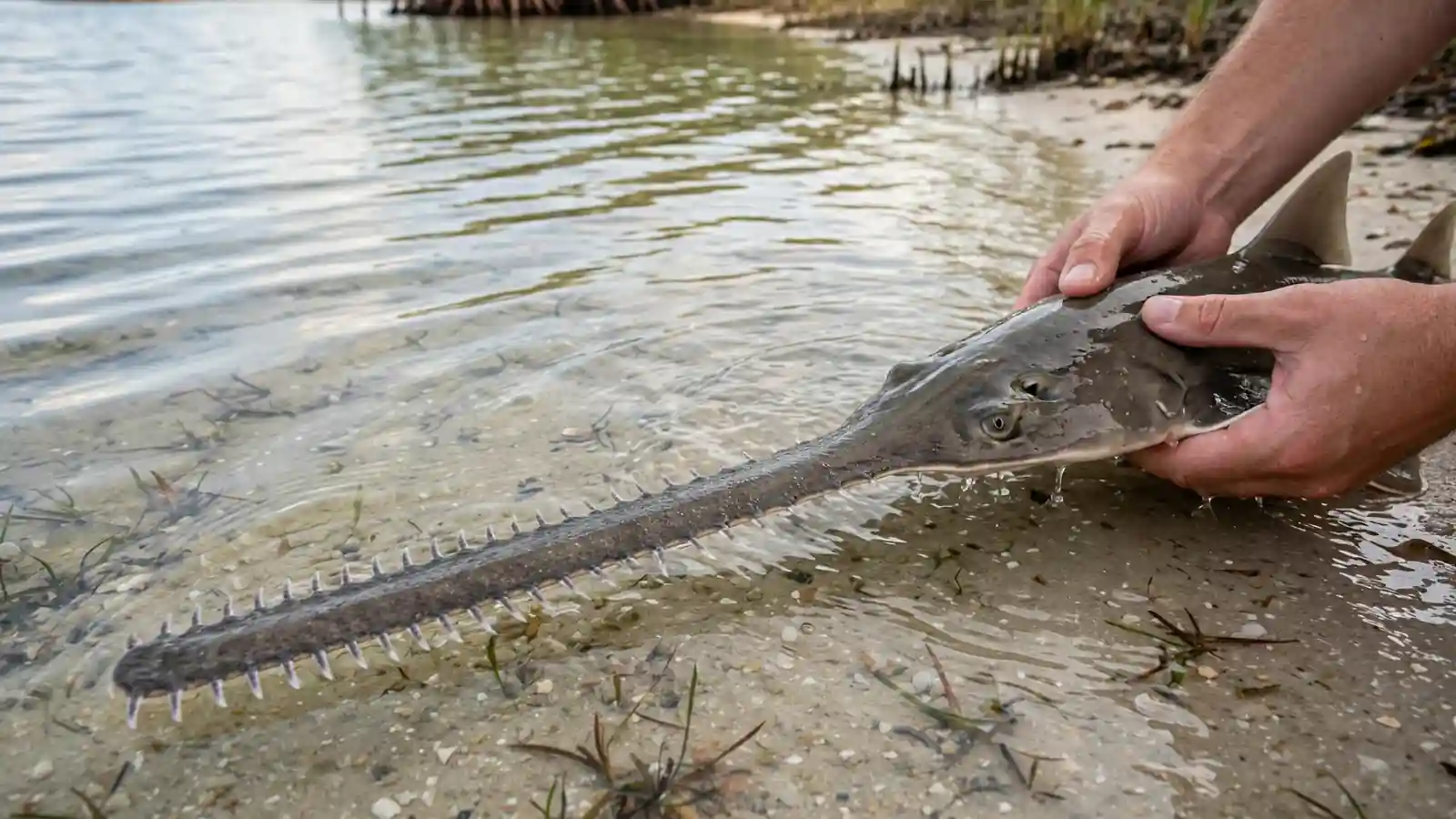
If you catch one, keep it in the water and cut the line as close to the hook as you can. Do not lift it onto a boat or a dock, do not drag it onto the beach, and never handle the saw: the rostrum is the animal’s weapon and it can injure you badly if the fish thrashes.
The release rules are the species’ lifeline in practice. A fish kept in the water, freed by a cut line, swims away with its saw intact and its gills never out of the water — most survive. The protection on paper only works because thousands of individual anglers follow those few simple steps on the water.
Then report it. The state wildlife hotline takes sawfish sightings and catches, and every report helps researchers track where the animals are and how the population is recovering. A sawfish that is released quickly and reported is a sawfish that can breed — and for a Critically Endangered species, every breeding adult matters.
Conservation: Critically Endangered, Slowly Recovering
It is listed as Critically Endangered, a status set in a 2022 assessment after the population fell by more than 80 percent, and possibly as much as 95 percent. It was the first marine fish protected under the US Endangered Species Act, and that protection — plus the safeguarding of Florida’s mangrove nurseries — is the reason the species still exists at all.
There are signs of recovery: sawfish are being seen again in places they had vanished from, and young fish are turning up in the mangroves in growing numbers. But recovery is slow for a fish that breeds as slowly as a sawfish, and the species is still one bad decade away from trouble. The saw is back in Florida’s waters; keeping it there is the work of the next generation.
Fun Facts
- It was the first marine fish protected under the US Endangered Species Act.
- Its saw carries 20 to 32 pairs of lateral teeth and is about a quarter of its body long.
- The largest confirmed one measured 5.54 metres — the often-quoted 7.6 metres is unverified.
- It stuns mullet by slashing its saw sideways through the school.
- Young sawfish grow up in Florida’s mangrove nurseries, among the roots.
- A litter holds 7 to 14 pups, each born at 60 to 70 cm long with a miniature saw.
Frequently Asked Questions
How Big Do Smalltooth Sawfish Get?
The largest confirmed one measured 5.54 metres long and weighed up to 350 kg. The often-quoted 7.6 metres is likely an exaggeration and has never been verified.
What Is the Saw on a Smalltooth Sawfish For?
The saw is a rostrum lined with 20 to 32 pairs of lateral teeth. It uses it to stun schooling fish like mullet and to dig buried prey from the sand.
Where Do Smalltooth Sawfish Live?
They live in shallow coastal and estuarine waters under 8 metres deep, and their last stronghold is Florida — Charlotte Harbor, the Ten Thousand Islands and Tampa Bay.
What Do Smalltooth Sawfish Eat?
It eats small fish, above all mullet stunned with its saw, plus shrimp and crabs dug from the sand.
Why Are Smalltooth Sawfish Critically Endangered?
It lost more than 80 percent of its population — possibly 95 percent — to fishing, bycatch and the loss of its mangrove nurseries, and it breeds too slowly to recover quickly.
What Should You Do If You Catch a Smalltooth Sawfish?
Keep it in the water, cut the line close to the hook, never lift it out or handle the saw, and report the catch to the state wildlife hotline.
How Many Smalltooth Sawfish Are Left?
No exact count exists, but its population fell by more than 80 percent and is now concentrated in Florida, where numbers are slowly recovering.
Similar Species Worth Exploring
Keep Exploring
Still exploring sawfish country? Read the whole family in the Sawfish group guide, meet the thorned Bowmouth Guitarfish, browse the family in the Types of Rays and Skates hub, and then come back to the mangroves to meet the smalltooth sawfish.