Electric Ray Facts: Voltage, Species and the Shock Secret
Electric Ray: The Living Battery of the Sea
The electric ray can deliver a shock of up to 220 volts from organs that are modified muscle, a group of about 69 species in four families.
By Emily Carter · Reviewed by our vet team · Updated 10 November 2026 · 7 min read
Up to 220 voltsAbout 69 speciesModified muscle organs
At a Glance
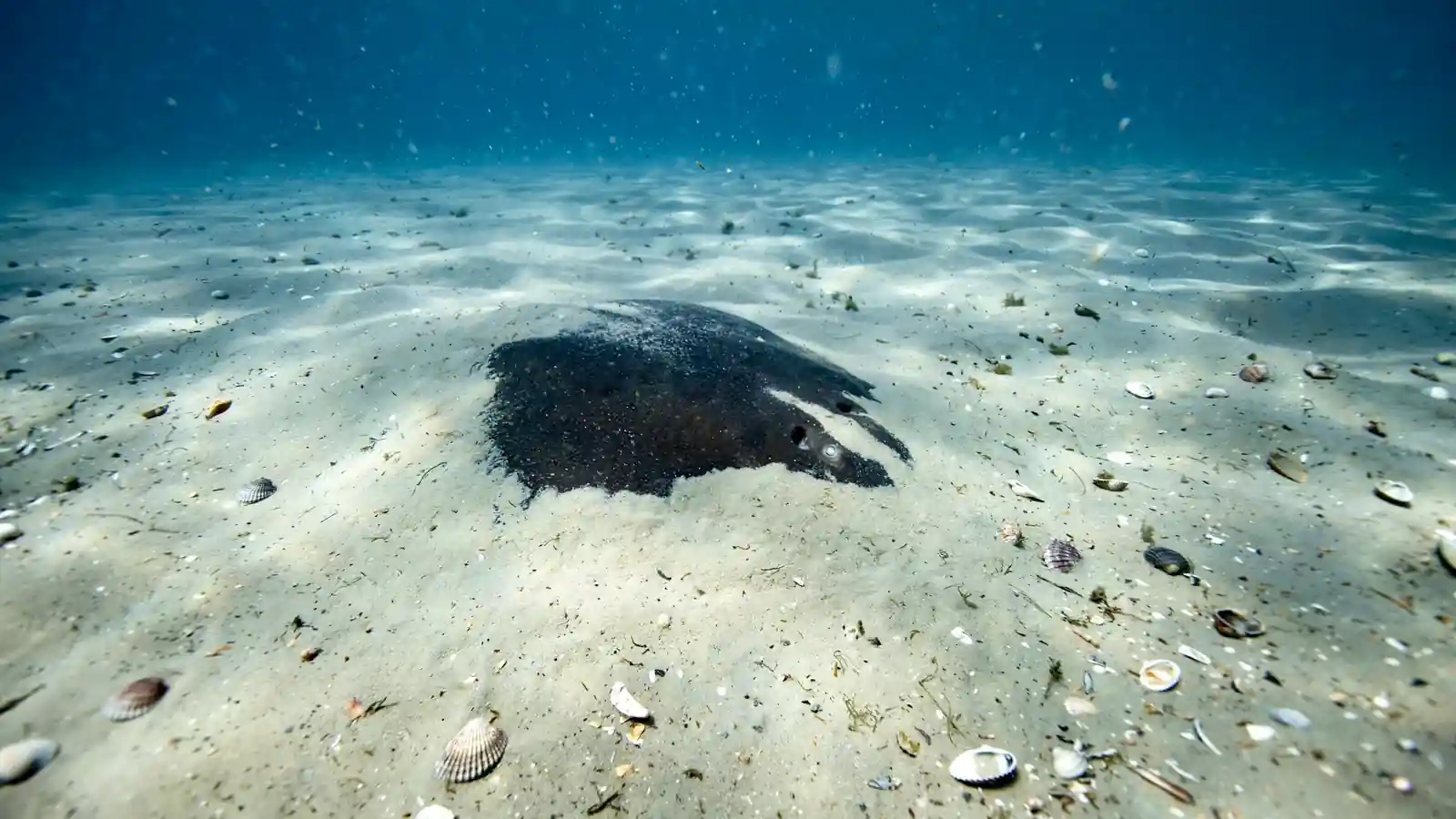
The electric ray is a living battery. Its electric organs — modified muscle, kidney-shaped, about a sixth of its body weight — can deliver a shock of up to 220 volts, enough to stun a fish and enough to knock a diver off balance. There are about 69 species in four families, from the 8-volt sleeper rays to the 220-volt Atlantic torpedo, and the Greeks and Romans used their shocks as medicine. This guide covers the voltage, the species, and the shock’s secret.
Electric Ray Voltage: From 8 Volts to 220 Volts
The shocks range from 8 volts in the sleeper rays to 220 volts in the Atlantic torpedo — a range of nearly thirty times, and a measure of how different the species are. The Atlantic torpedo’s 220 volts is the strongest shock of any electric fish, and it can deliver up to about 1 kilowatt of power.
The voltage is not a weapon for hunting people — it is a weapon for hunting fish. The ray stuns its prey with a burst of electricity, then eats it at leisure, and the shock is also a defence: a predator that bites one gets a shock it does not forget. For the full account of torpedo rays, see the Divers Alert Network torpedo rays article.
The Electric Organs: Modified Muscle, a Sixth of the Body

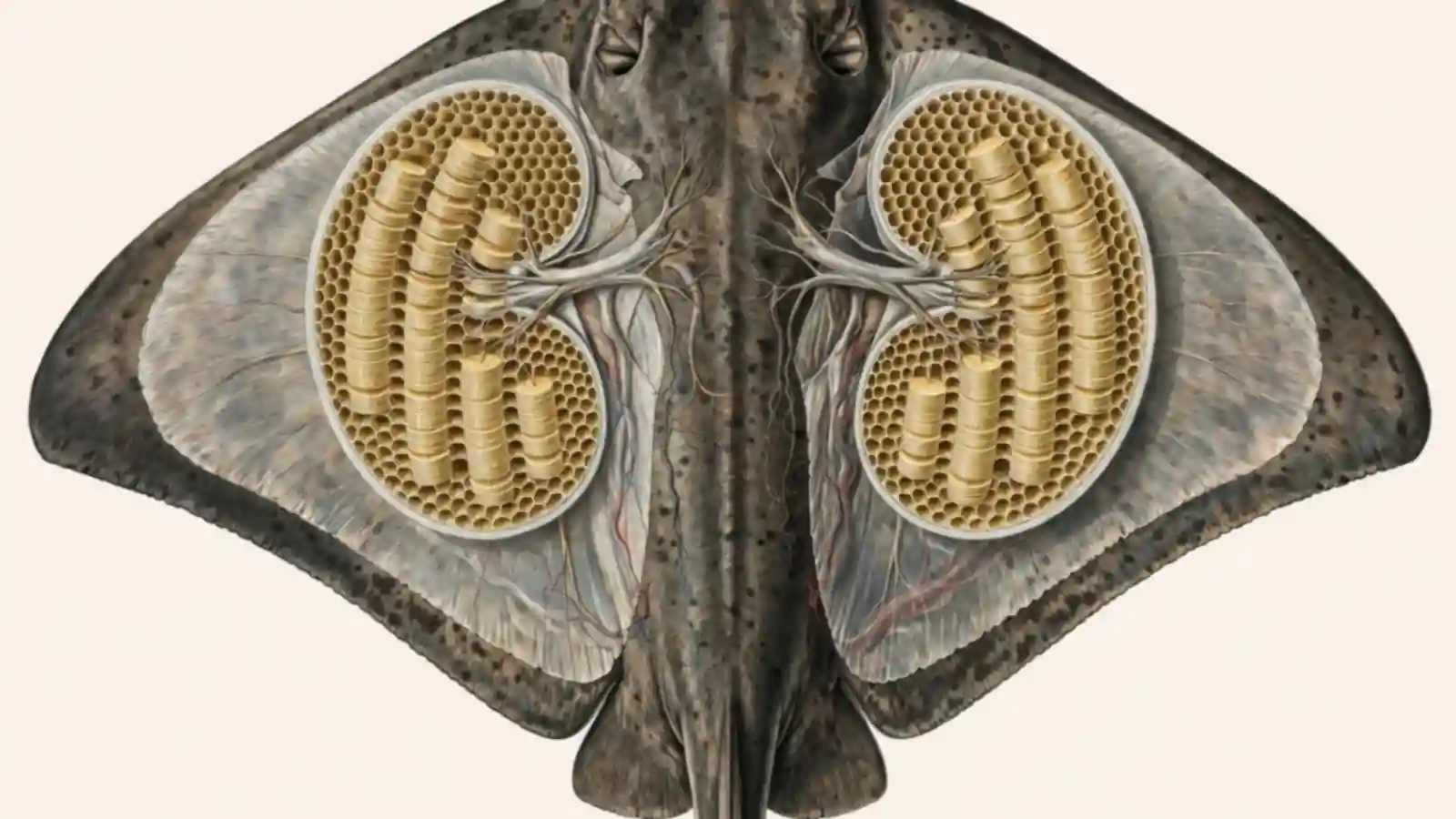
Its electric organs are modified muscle, arranged in columns like the cells of a battery, and they make up about a sixth of the ray’s body weight. The organs are kidney-shaped, set on either side of the head, and they fire in a single, coordinated burst.
The organs’ design is a marvel of evolution: each column is a stack of electrocytes, and the stacks add up — thousands of tiny voltages, fired together, make the 220-volt shock. The ray controls the discharge precisely, firing only when it needs to.
Electric Ray Species: About 69 in Four Families
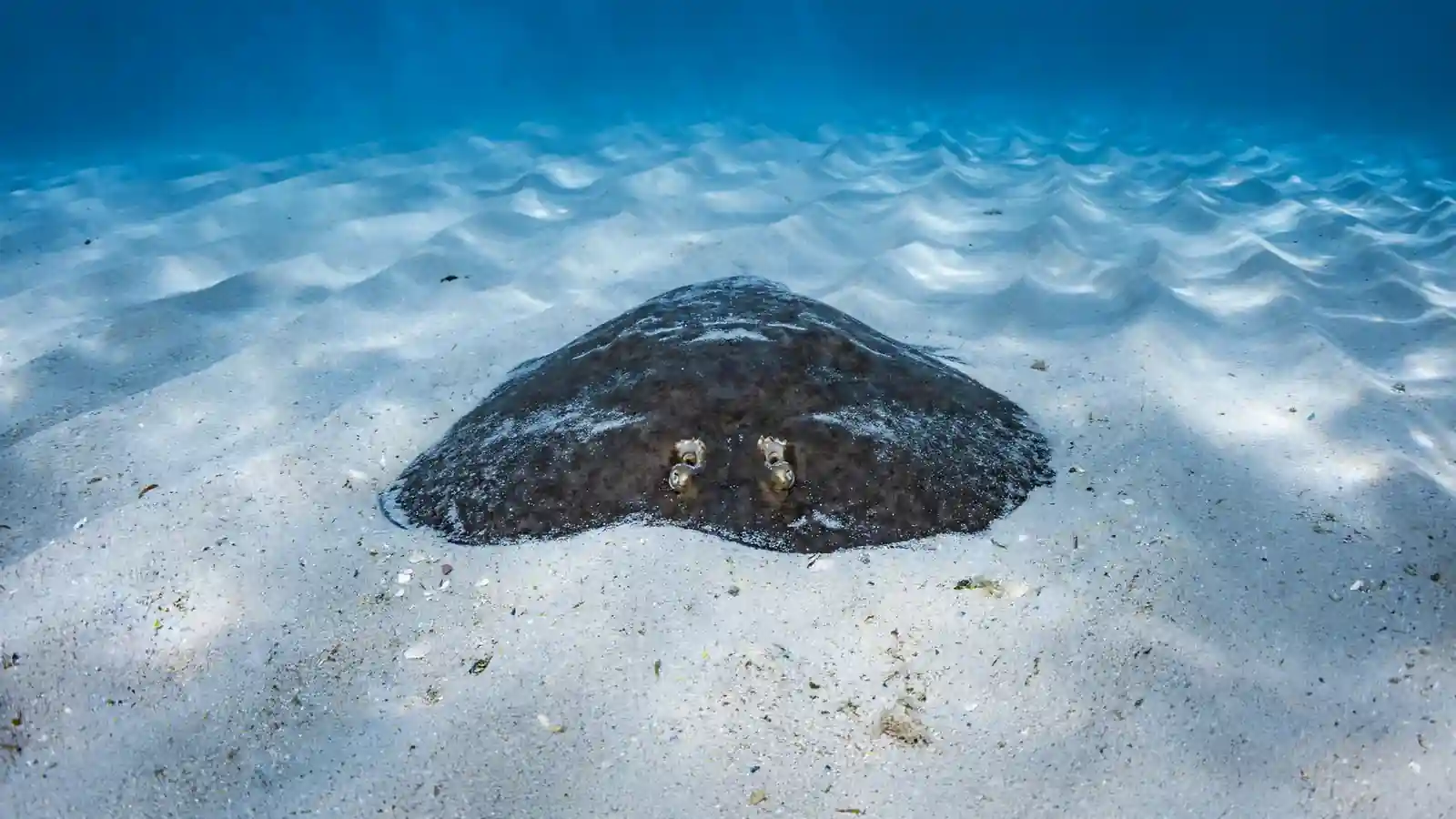
There are about 69 species in four families: the Torpedinidae (the torpedo rays, including the Atlantic torpedo), the Narkidae (the sleeper rays), the Narcinidae (the numbfishes) and the Hypnidae (the coffin ray, a single species from Australia). Each family has its own shape, its own voltage and its own range.
The torpedo ray — the name most people know — is a synonym for this ray, and it is the same animal covered here. The name “torpedo” comes from the Latin torpere, meaning to be stiff or numb, after the effect of the shock.
The Atlantic Torpedo: The Largest and Strongest
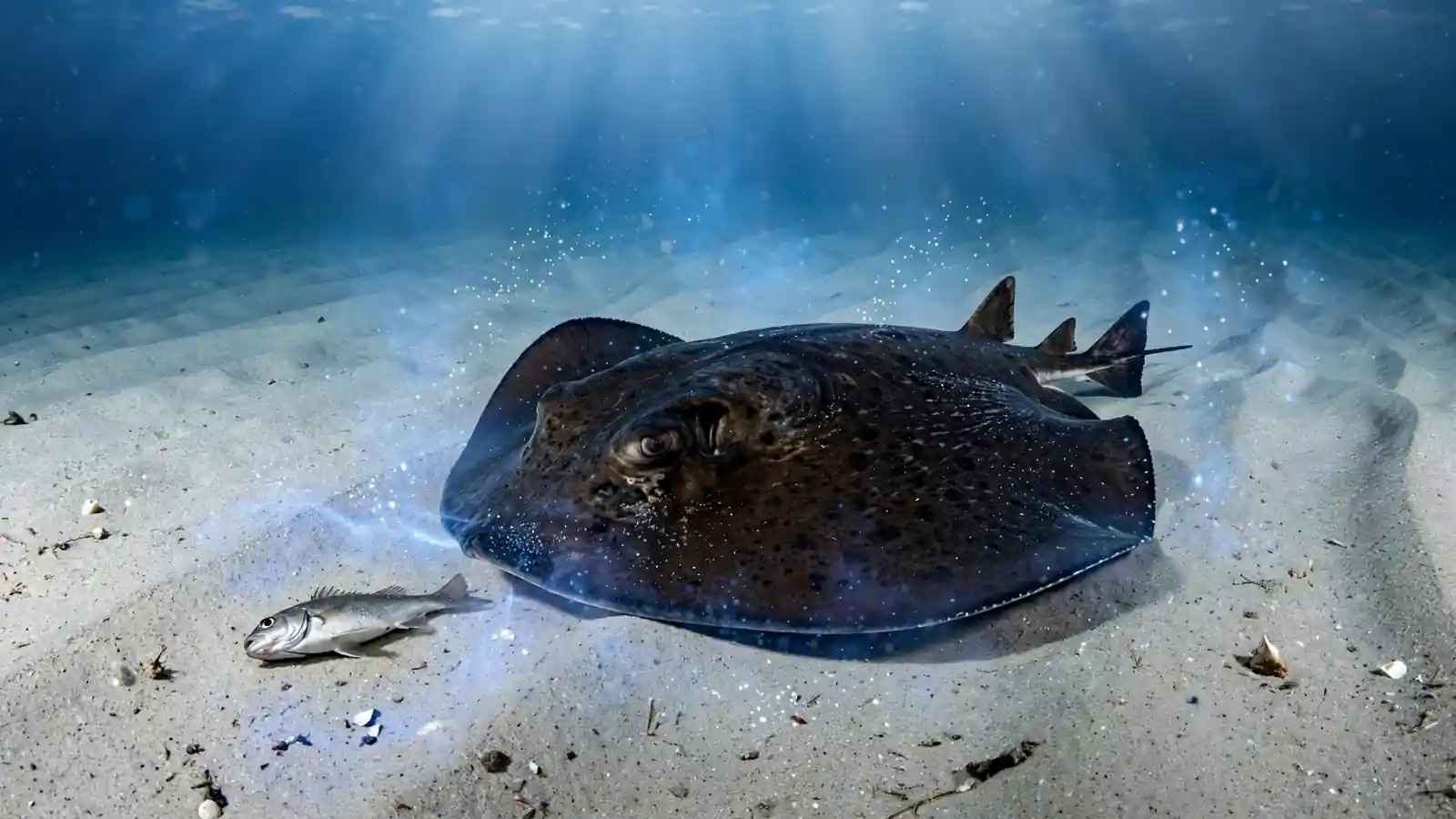
The Atlantic torpedo is the largest of them, at 1.8 metres and 90 kg, and the strongest, at 220 volts. It is listed as Least Concern, and it lives on both sides of the Atlantic, from shallow coastal water down to the deep.
Its size is part of its power: a bigger ray has bigger electric organs, and bigger organs make a bigger shock. The Atlantic torpedo’s 220 volts is the highest any of them reaches, and it is the species most often encountered by divers in the eastern Atlantic.
Torpedo Rays in History: Shocks for Gout and Headaches
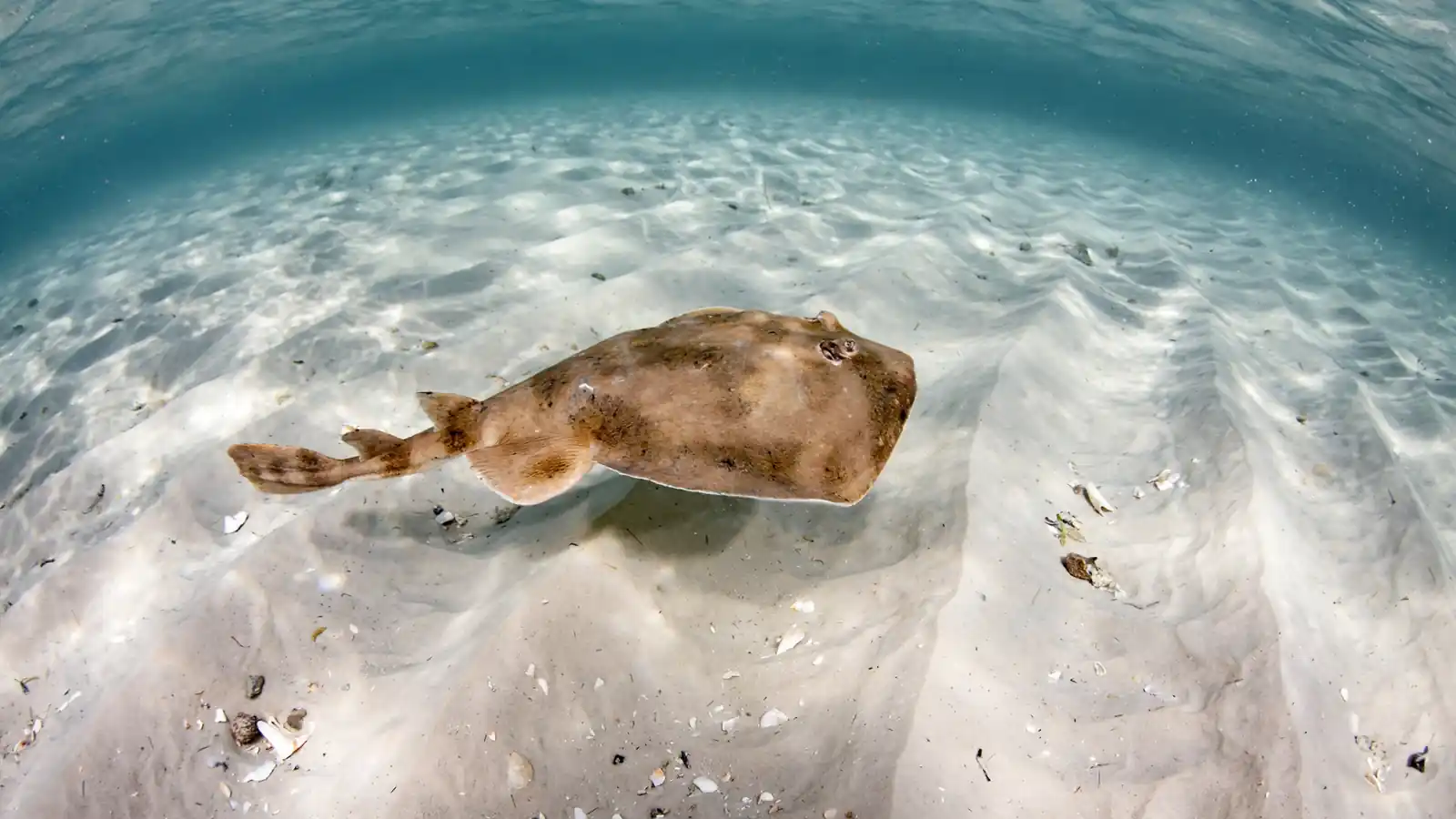
The Greeks and Romans used the ray’s shocks as medicine, applying live torpedo rays to the feet of gout sufferers and to the heads of people with headaches. The treatment was recorded by physicians of the time, and it worked — or at least, it seemed to — by numbing the pain with the shock.
The practice is the origin of the word “torpedo” in English, and it is also the origin of a whole field of medicine: the study of electric fish led, centuries later, to the discovery of bioelectricity and the development of the battery. The ray is a medical pioneer.
Are Electric Rays Dangerous? Painful, Rarely Lethal

Its shock is painful, but it is rarely lethal. The 220-volt shock of the Atlantic torpedo can knock a diver off balance and cause a fall, and it can stun a swimmer in shallow water — but deaths are almost unknown, and the shock itself is not the danger so much as the disorientation it causes.
The danger should not be inflated. Electric rays are not aggressive, they do not hunt people, and they fire only when threatened or hunting. A diver who gives the ray space will never feel its shock.
Conservation: A Group That Needs Its Coasts
Electric rays are not, as a group, in crisis — the Atlantic torpedo is listed as Least Concern — but they depend on coastal waters, and coastal waters are under pressure. Habitat loss, pollution and bycatch all take a toll on a group that lives where people live.
The species’ future is tied to its coasts. Protect the shallow bays and reefs where electric rays hunt and breed, and the living batteries keep their charge; lose the coasts, and the shocks go quiet.
Fun Facts
- The Atlantic torpedo can deliver a shock of up to 220 volts and about 1 kilowatt of power.
- Electric organs are modified muscle, about a sixth of the ray’s body weight.
- “Torpedo” comes from the Latin torpere, meaning to be stiff or numb.
- The Greeks and Romans used the ray’s shocks to treat gout and headaches.
- Sleeper rays deliver only about 8 volts — the weakest shock of any of them.
- There are about 69 species in four families.
Frequently Asked Questions
How Strong Is an Electric Ray Shock?
From 8 volts in the sleeper rays to 220 volts in the Atlantic torpedo, which can deliver up to about 1 kilowatt of power. The shock is painful, but rarely lethal.
How Do Electric Rays Produce Electricity?
Their electric organs are modified muscle, arranged in columns like the cells of a battery. Each column is a stack of electrocytes, and the stacks add up — thousands of tiny voltages, fired together, make the shock.
Are Electric Rays Dangerous to Humans?
Painful, rarely lethal. A shock can knock a diver off balance, but deaths are almost unknown, and electric rays do not hunt people — they fire only when threatened or hunting.
What Is the Biggest Electric Ray?
The Atlantic torpedo, at 1.8 metres and 90 kg, and the strongest, at 220 volts. It is listed as Least Concern.
Where Do Electric Rays Live?
In coastal waters worldwide, from shallow bays and reefs down to the deep — wherever their prey lives, from the surface to the continental slope.
What Do Electric Rays Eat?
Fish, stunned with a burst of electricity and then eaten at leisure — the shock is the ray’s hunting tool, and it works on anything that swims within range.
Why Are They Called Torpedo Rays?
From the Latin torpere, meaning to be stiff or numb, after the numbing effect of the electric ray’s shock — the name the Greeks and Romans knew them by.
Similar Species Worth Exploring
Keep Exploring
Still exploring the rays? Meet the leaping Spotted Eagle Ray, watch the schooling Cownose Ray, and then compare the other famous sting, the Southern Stingray, and then come back to the coast to meet the electric ray.