Bristle Worm: Polychaete Facts, Sting and Reef Role
Bristle Worm: Polychaete Facts, Sting and Reef Role
The bristle worm is a segmented marine worm with a pair of bristly paddles on every segment, and it is one of the most successful animals in the sea. Bristle worms live everywhere from coral reefs to the deep sea, from tiny sand-dwellers to three-metre giants, and they include both the reef’s clean-up crew and its most painful stinger.
By Emily Carter · Reviewed by our vet team · Updated 10 November 2026 · 8 min read
Segmented polychaeteBristly parapodiaReef to deep sea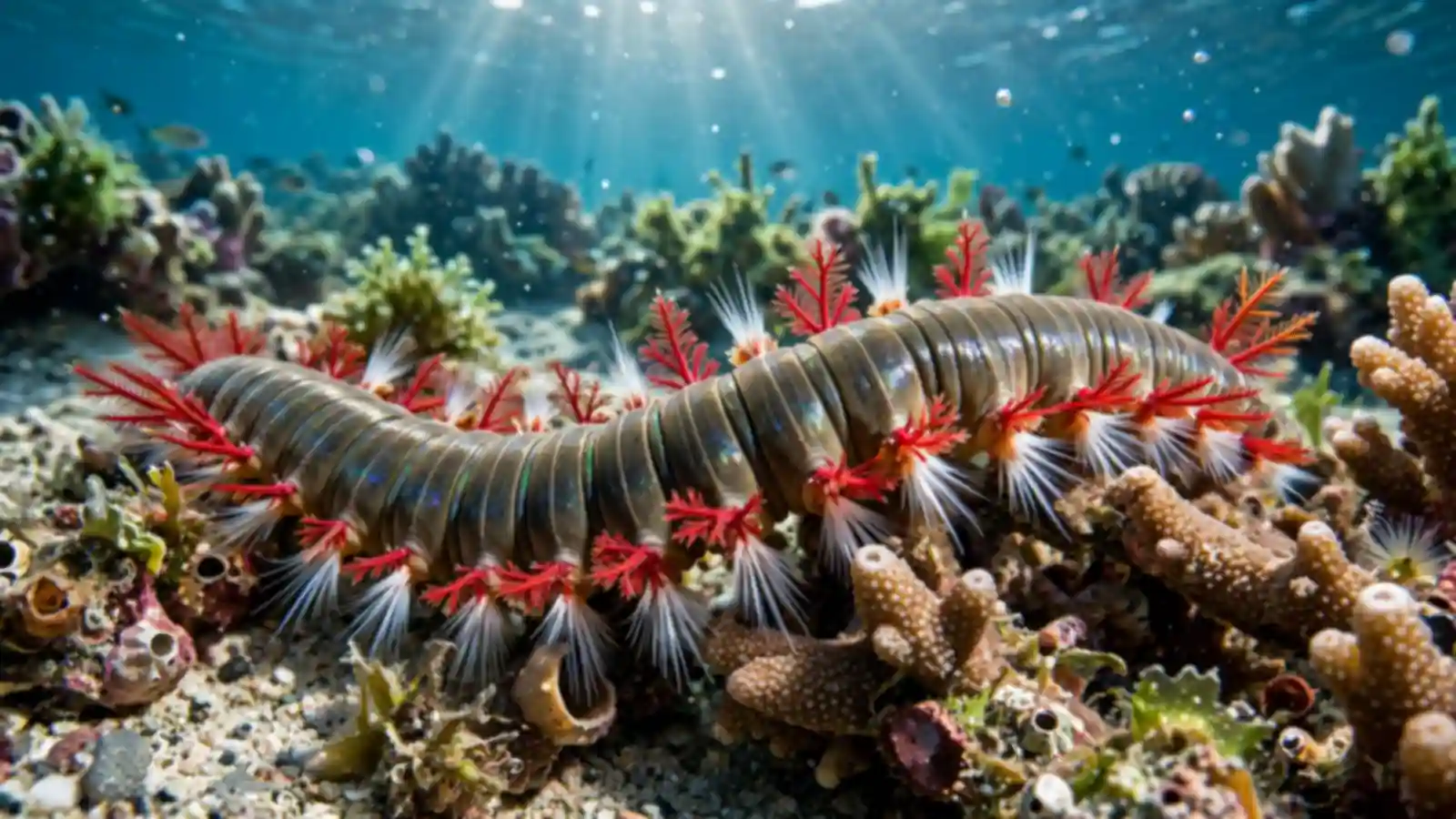
At a Glance
The bristle worm is not one species but a whole class of animals — the Polychaeta, the bristle worms — with more than 10,000 known species and more being found every year. What unites them is the body plan: a segmented body with a pair of fleshy paddles, called parapodia, on every segment, and each paddle carries a bundle of bristles, called chaetae, that give the class its name. The bristles are used for crawling, swimming, burrowing and defence, and in some species they are hollow, venom-filled and painful to touch.
What Is a Bristle Worm?
It is a marine segmented worm in the class Polychaeta, a group that includes the lugworm, the Christmas tree worm, the bobbit worm and the fireworm. The class is one of the oldest and most diverse animal groups in the sea: polychaetes have been around for more than 500 million years, and they live in every marine habitat, from the tide pools of a rocky shore to the trenches six kilometres down.
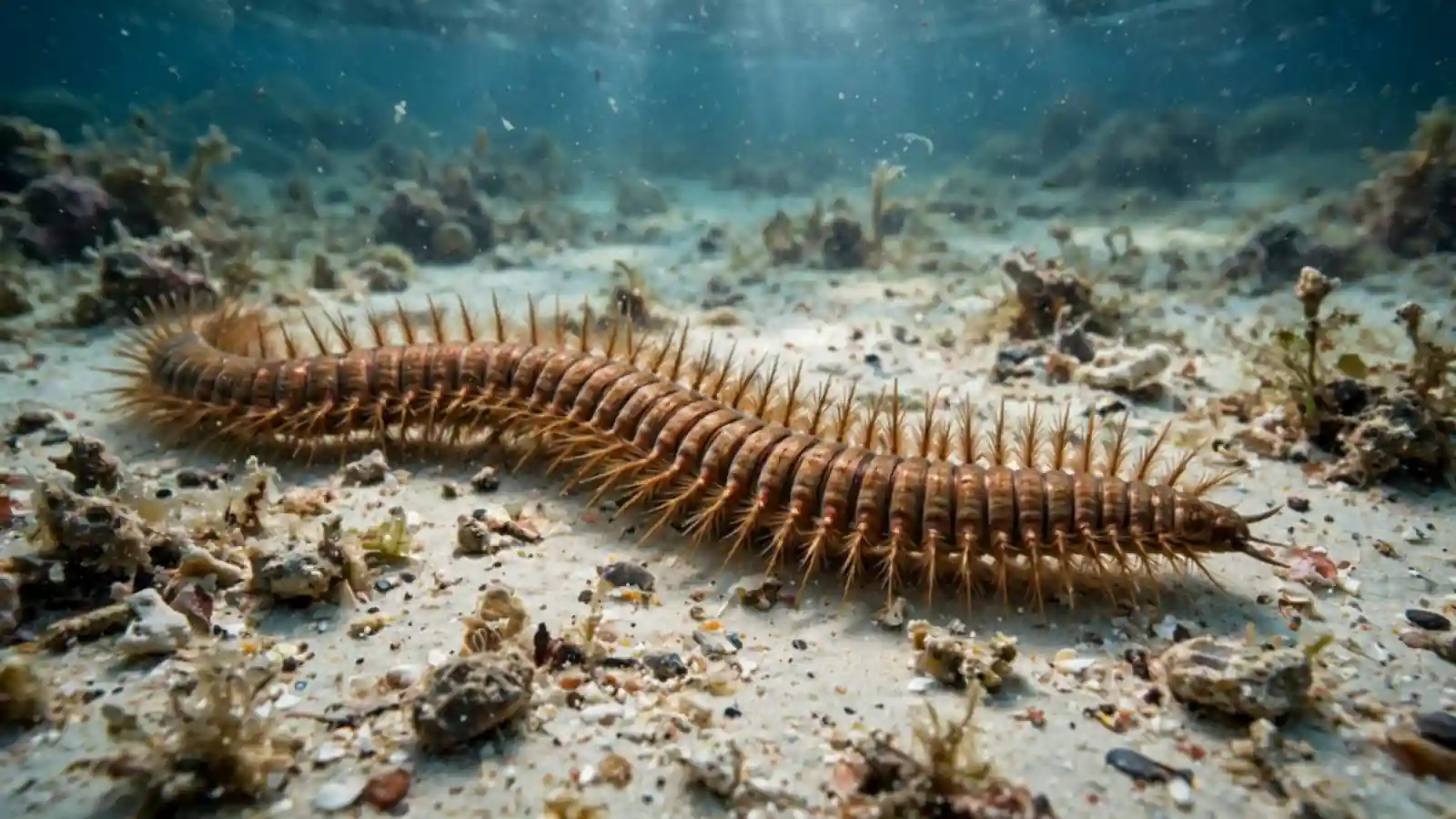
The defining feature is the parapodia — the fleshy, leg-like paddles on each segment, tipped with bristles. The bristles, or chaetae, are made of chitin, and they work like tiny oars and anchors: the worm rows with them, grips the sand with them, and in some species defends itself with them. The head carries eyes, antennae and jaws, and the body is divided into segments that each repeat the same paddle-and-bristle pattern.
Bristle Worm Sting: Chaetae and Parapodia
The bristles are its toolkit. Each parapodium carries a bundle of chaetae — stiff, hair-like bristles made of chitin — and the worm uses them to crawl across the seabed, to swim, to grip the walls of its burrow, and to anchor itself in the current. In crawling species the bristles work like the legs of a caterpillar, gripping and pushing; in swimming species they work like oars.
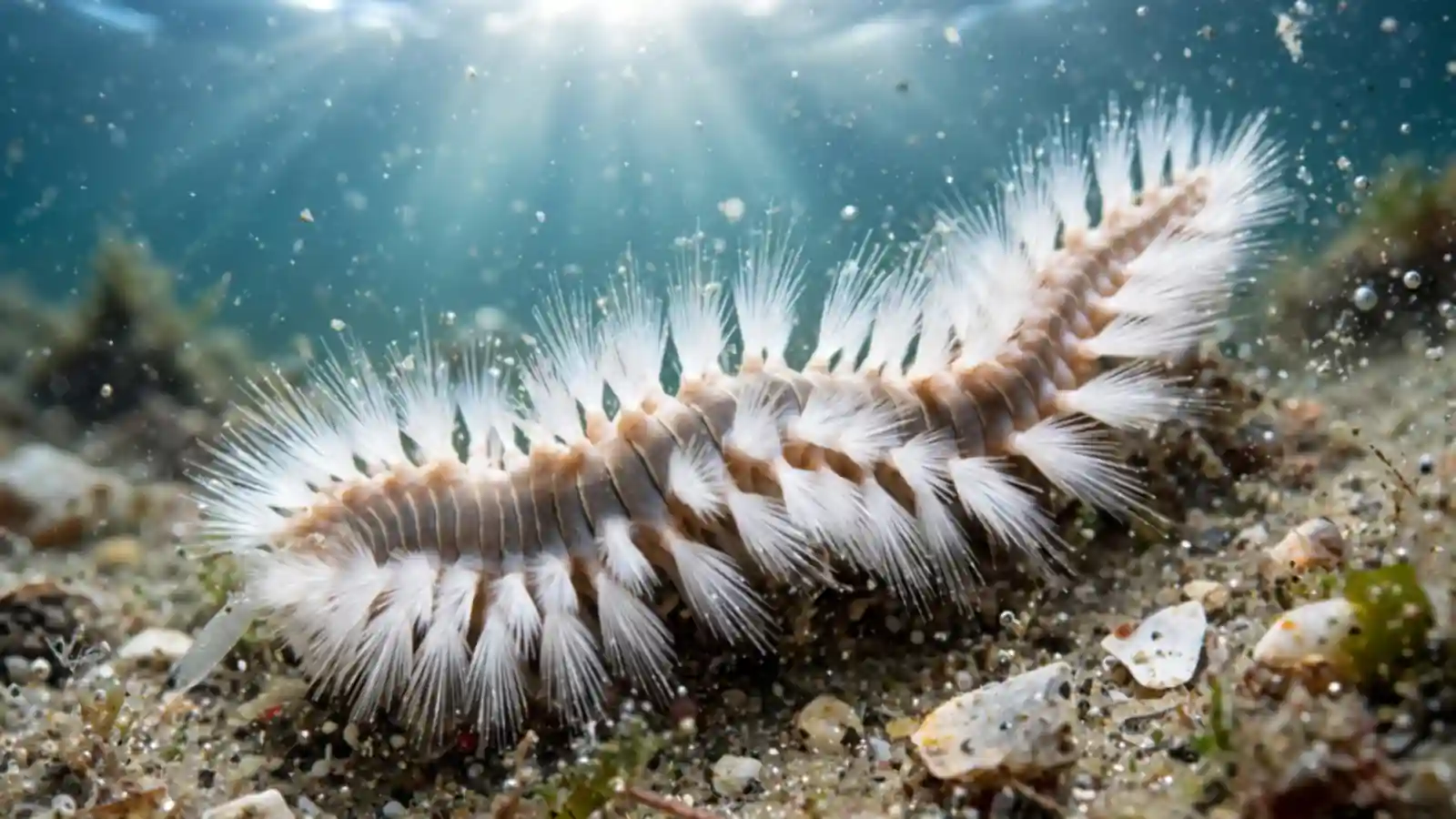
In some species the bristles are also weapons. The fireworm, one of the reef species, carries hollow bristles filled with a toxin that breaks off in the skin and causes a painful, burning sting — the reason it is called a fireworm. The fireworm has its own guide on this site, and it is the one that reef divers learn to recognise and avoid. Most bristle worms, though, are harmless: their bristles are for moving, not for stinging. The common reef bristleworm is Eurythoe complanata, a 5 to 20 centimetre species found on reefs across the tropics.
The Types: From Reef to Deep Sea
The bristle worms fall into two broad ways of life: the free-moving worms that crawl, swim and hunt, and the tube-dwelling worms that live in tubes and filter the water. The free-movers include the fireworms of the reefs, the bobbit worm of the sand — a three-metre ambush predator with jaws like scissors — and the lugworm of the mudflats, which burrows in a U-shaped tube and leaves its famous coiled casts on the sand.
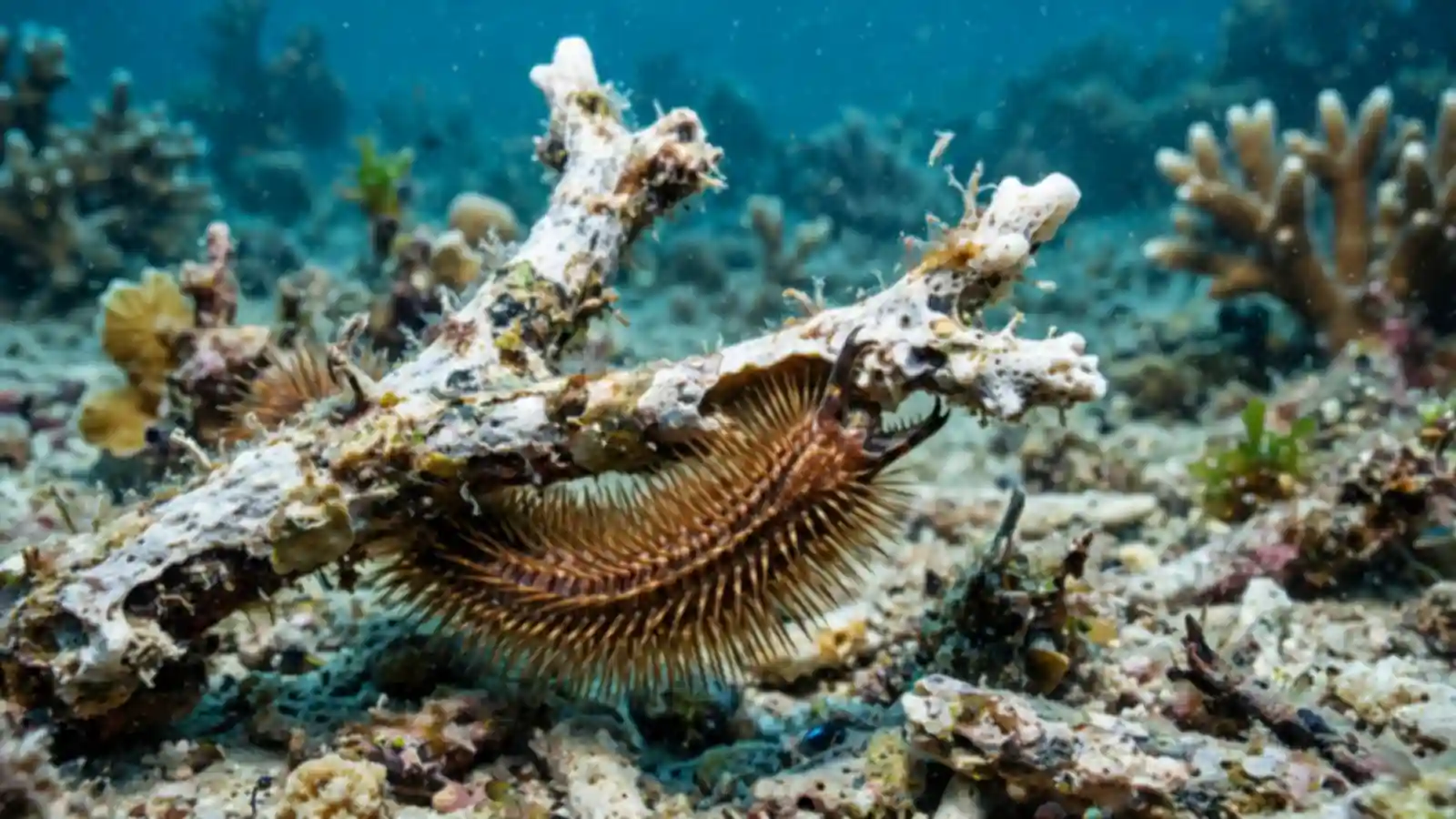
The tube-dwellers include the Christmas tree worm of the coral reefs, with its bright spiral crowns, and the giant tube worm of the hydrothermal vents, which feeds through bacteria and has no mouth at all. Between the two ways of life are thousands of species in every size and shape: tiny sand worms a centimetre long, burrowing worms that eat detritus, and deep-sea worms that glow. The class is so diverse that a single handful of mud can hold a dozen species.
Habitat: Every Ocean, Every Depth
Bristle worms live in every marine habitat on Earth. They are in the sand of the beach and the mud of the estuary, in the coral reef and the kelp forest, on the continental shelf and in the abyssal plain, at hydrothermal vents and on whale falls. They are among the first animals to colonise a new habitat and among the last to leave a dying one, and in many seabed communities they are the most abundant animals of all.
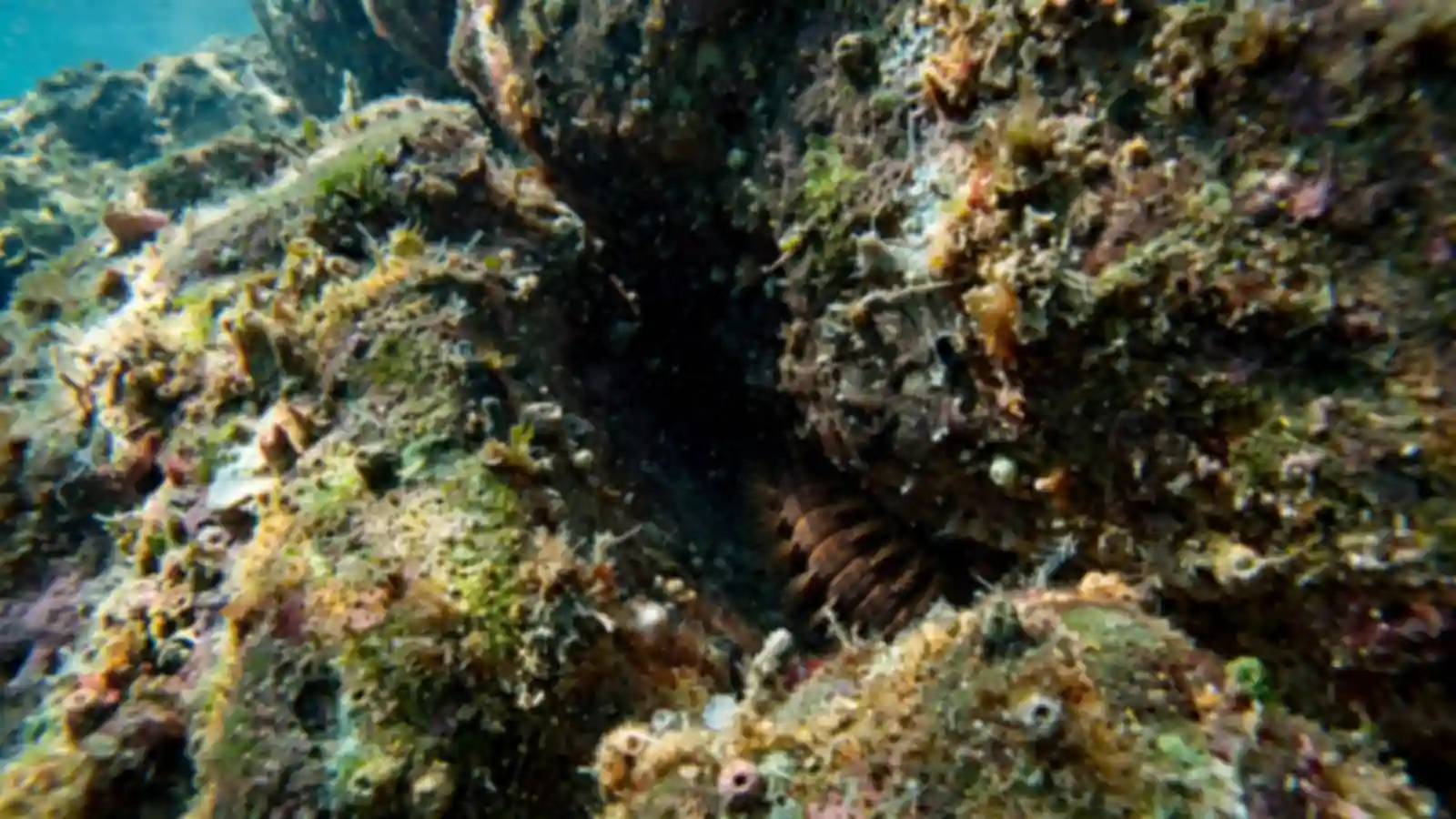
The habitat shapes the worm. Reef species are often brightly coloured and free-moving, hunting or scavenging among the coral. Sand and mud species burrow, eating detritus and turning over the sediment — the lugworm alone can process tonnes of sand a year on a single mudflat. Deep-sea species are often pale and slow, living on the thin rain of dead matter from above. Wherever there is seawater and sediment, there is one.
Diet: Scavengers, Hunters and Filter Feeders
Bristle worms eat almost everything. Most are detritus feeders, eating the dead organic matter that settles on the seabed — a job that makes them the clean-up crew of the sea floor, recycling nutrients back into the ecosystem. Others are filter feeders, catching plankton from the water with feathery crowns, and others are hunters, with jaws that snap shut on small prey.

The hunters are the most dramatic. The bobbit worm, a tropical sand species, buries itself and waits with its jaws open, snapping shut on fish that swim too close — a strike so fast it can cut a fish in half. The fireworm grazes on coral and sponges, and the lugworm eats sand, digesting the organic matter in it and leaving the clean sand behind as a coiled cast. Between the scavengers, the filter feeders and the hunters, the bristle worms cover every way of making a living on the seabed.
Reef and Aquarium Life
In the reef, bristle worms are the clean-up crew: they eat detritus, turn over the sediment, and keep the reef’s surfaces clean. In a reef aquarium, the same worms appear on their own — small bristle worms arrive on live rock and live in the sand, eating leftover food and detritus. Most aquarists welcome them as free cleaners, and the small, common species are harmless.

The trouble comes with the larger ones. A big fireworm in an aquarium can sting a fish or a coral, and a large one can eat a small clam or a sleeping fish. The advice is consistent: leave the small ones alone, and remove the large ones with tweezers or a trap — never with bare hands, because the bristles break off in the skin and sting. The bristleworm guide from The Sea describes the common aquarium species and how to handle them.
Life Cycle and Lifespan
Its life begins as a tiny larva, drifting in the plankton for days or weeks before settling on the seabed. The larva grows segment by segment, adding parapodia and bristles as it grows, and the adult lives from a few months in the smallest species to more than ten years in the largest. Many species breed by swarming — rising into the water in great numbers on a single night, releasing eggs and sperm together, in an event that draws fish from all around.

The swarming is one of the great spectacles of the reef: on certain nights of the year, the water fills with worms, and the fish feed in a frenzy. The larvae that survive settle and begin the cycle again. No species in the class has been assessed by the IUCN, so the class carries no Red List category — most species are abundant, and their status is simply unknown.
Fun Facts
- There are more than 10,000 known species of bristle worms — and more are found every year.
- The bobbit worm can grow to three metres and snap a fish in half with its jaws.
- Fireworm bristles are hollow, venom-filled and break off in the skin — the sting burns for hours.
- The lugworm can process tonnes of sand a year on a single mudflat.
- Bristle worms have been around for more than 500 million years.
- Many bristle worms breed by swarming — rising into the water in great numbers on a single night.
Frequently Asked Questions
What Is a Bristle Worm?
A bristle worm is a marine segmented worm in the class Polychaeta, with more than 10,000 known species. What unites them is the body plan: a segmented body with a pair of fleshy paddles, called parapodia, on every segment, each carrying a bundle of bristles called chaetae. The class includes the lugworm, the fireworm, the Christmas tree worm and the bobbit worm.
Are Bristle Worms Dangerous?
Most are harmless. The small, common bristle worms in reefs and aquariums are detritus eaters with no sting. The exception is the fireworm, whose hollow bristles are filled with a toxin that breaks off in the skin and causes a painful, burning sting. As a rule, never touch a bristle worm with bare hands — the bristles can break off and irritate the skin even in harmless species.
What Do Bristle Worms Eat?
Almost everything. Most are detritus feeders, eating the dead organic matter that settles on the seabed. Others are filter feeders, catching plankton with feathery crowns, and others are hunters with jaws — the bobbit worm snaps shut on fish, and the fireworm grazes on coral and sponges.
How Do Bristle Worms Help a Reef?
By cleaning it. Most bristle worms are detritus feeders, eating the dead organic matter that settles on the seabed and recycling nutrients back into the ecosystem. Burrowing species turn over the sediment and oxygenate it, and filter-feeding species clear plankton from the water. In a reef aquarium the same worms arrive on live rock and do the same job — which is why most aquarists welcome the small ones as free cleaners.
How Big Do Bristle Worms Get?
From a centimetre long to three metres. The smallest bristle worms are tiny sand-dwellers barely visible to the eye; the largest is the bobbit worm, which can reach three metres and is one of the longest worms in the sea. Most reef and aquarium species are a few centimetres long.
What Should You Do If a Bristle Worm Stings You?
Remove any bristles with tweezers or sticky tape, rinse the area with vinegar, and apply a cold compress. Do not rub the area, which drives the bristles deeper. Seek medical care if the pain is severe, if the reaction spreads, or if there are signs of an allergic reaction. The best protection is prevention: never handle a bristle worm with bare hands.
What Is the Difference Between a Bristleworm and a Fireworm?
A fireworm is a type of bristle worm. “Bristle worm” is the whole class, Polychaeta, with more than 10,000 species; the fireworm is one group within it, known for its hollow, venom-filled bristles that cause a painful burning sting. Most bristle worms are harmless detritus eaters — the fireworm is the stinging exception, and the one reef divers learn to avoid.
Similar Species Worth Exploring
Keep Exploring
Start with the fireworm, the stinging one of the reefs, then meet the lugworm, the burrowing worm of the mudflats, and browse the whole family in our types of marine worms hub — then come back to the class that holds them all, the bristle worm.