Fireworm: Venomous Bristles, Sting and Coral Predator
Fireworm: Venomous Bristles, Sting and Coral Predator
The fireworm is a bristle worm with a sting like a burn — a reef scavenger whose hollow bristles break off in the skin and deliver a venom that hurts for hours. It is beautiful and dangerous in the same breath: a banded, bristly worm that divers learn to recognise at a glance and never to touch.
By Emily Carter · Reviewed by our vet team · Updated 10 November 2026 · 8 min read
Venom bristlesBurning stingReef scavenger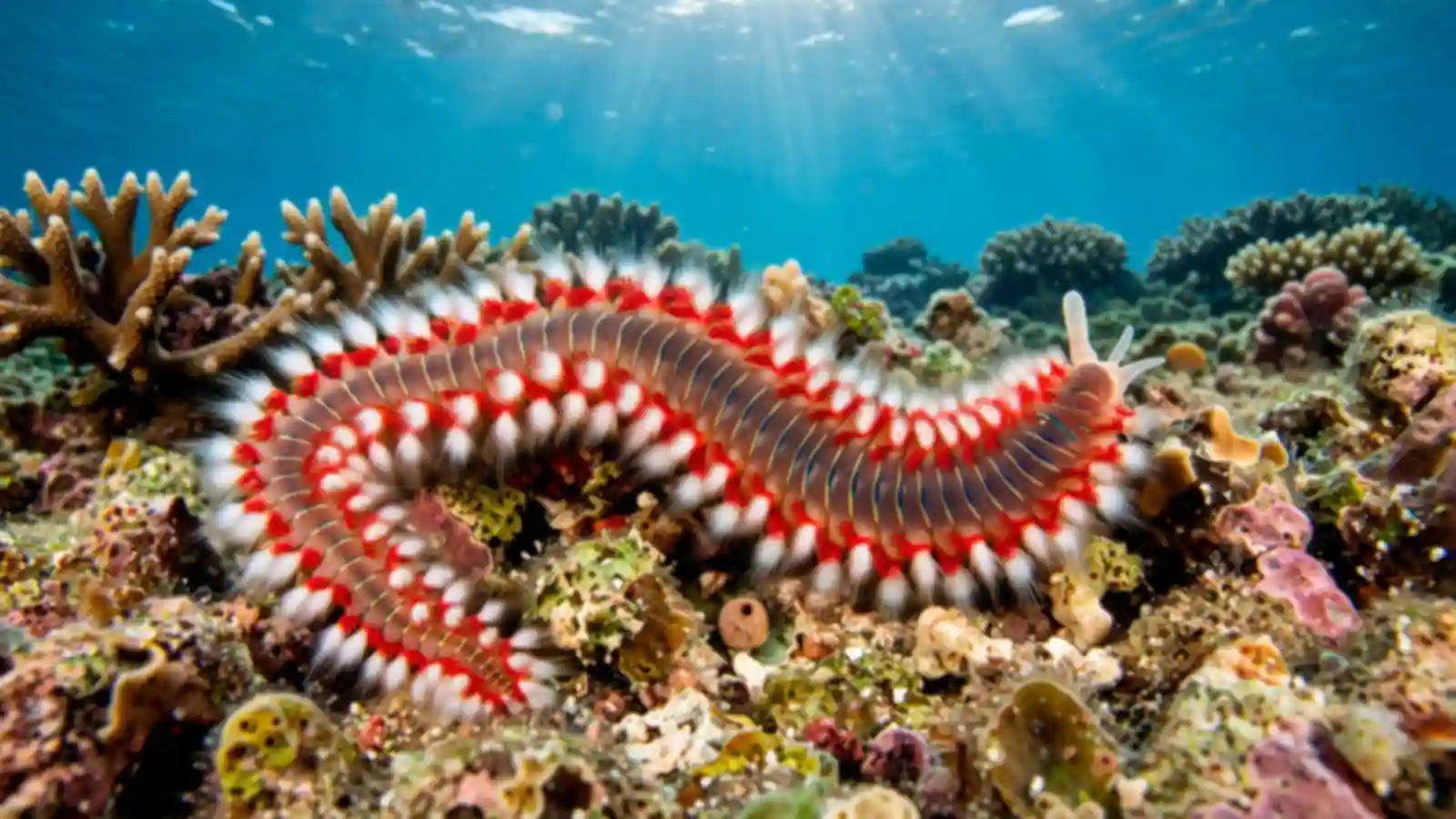
At a Glance
The fireworm is a bristle worm of the tropical reefs, and its name is a warning. It is a segmented worm, typically 7 to 10 centimetres long and up to about 30 centimetres, banded in red, white and green, with a pair of bristly paddles on every segment — and the bristles are hollow, filled with a toxin, and break off in the skin at the lightest touch. The sting burns like a fire, and it can hurt for hours. The worm is a scavenger and a coral eater, and it is one of the most recognisable animals on the reef.
What Is a Fireworm?
It is a bristle worm in the family Amphinomidae, the fireworms, and the best-known species is the bearded one, Hermodice carunculata, of the tropical Atlantic and the Caribbean. The name “bearded” comes from the fleshy, beard-like caruncle on its head, a sensory organ that helps it find food. The worm is a segmented polychaete, like its cousin the bristle worm family as a whole, but it is the one with the sting.

It lives on coral reefs, in rock crevices and under stones, coming out at night to feed. It is a scavenger and a predator, eating coral, sponges, anemones and carrion, and it is active after dark — which is when divers most often meet it, as a banded, bristly shape moving across the reef in the torchlight.
Bristles: The Hollow Venom Sting
Its bristles are its weapon. Each parapodium carries a bundle of fine, hollow bristles — chaetae — filled with a toxin, and the bristles are brittle: at the lightest touch they break off in the skin, and the toxin is released. The exact chemistry is still being studied — researchers have found toxin genes but no venom gland — but the effect on skin is not in doubt. The sting is immediate and painful, like a burn, and the area swells, reddens and itches for hours, sometimes for days. The bristles are hard to remove, because they are fine and brittle, and they keep releasing toxin until they are out.

The sting is a defence, not a hunting tool. The worm is slow and soft, and the bristles are what keep predators away — fish learn quickly not to bite one, and divers learn not to touch one. The worm advertises its danger with its colours: the bright red, white and green banding is a warning, and it works. The sting is rarely dangerous to a healthy adult, but it is painful, and it is the reason this worm is the bristle worm that everyone knows.
The Sting: What Happens and What to Do
The sting begins the moment the bristles touch skin. The bristles break off and lodge in the skin, and the toxin they carry causes an immediate burning pain, followed by redness, swelling and itching that can last for hours or days. The pain is often compared to a bee sting or a burn, and the affected area can stay sensitive for a week. The bristles themselves are the problem: they are fine, brittle and hard to see, and they keep releasing toxin until they are removed.

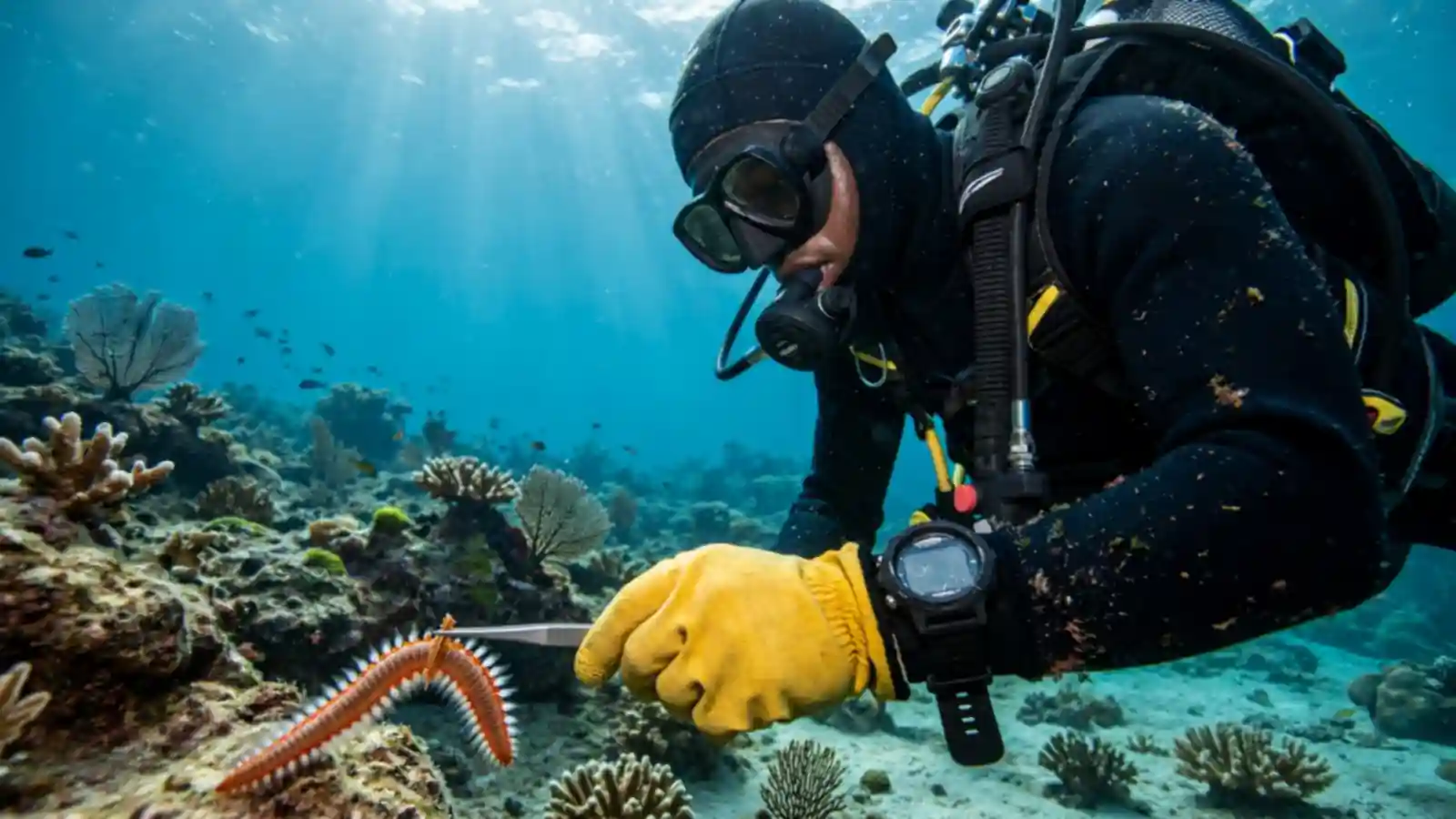
The first aid is simple: remove the bristles with tweezers or sticky tape, rinse the area with vinegar or seawater, and apply a cold compress. Do not rub the area, which drives the bristles deeper, and do not use fresh water, which can trigger any remaining bristles to release more toxin. Seek medical help if the pain is severe, if the sting is near the eyes or mouth, or if there are signs of an allergic reaction. The sting is rarely dangerous, but it is painful enough that prevention — never touching one — is the best treatment of all.
Habitat: Tropical Reefs and Rock Crevices
Fireworms live on tropical coral reefs, in the Atlantic and the Caribbean, the Mediterranean and the Indo-Pacific, in water up to about 40 metres deep. They hide in rock crevices, under stones and in coral rubble during the day, and come out at night to feed — which is why divers most often see them on night dives, as banded shapes moving across the reef in the torchlight.
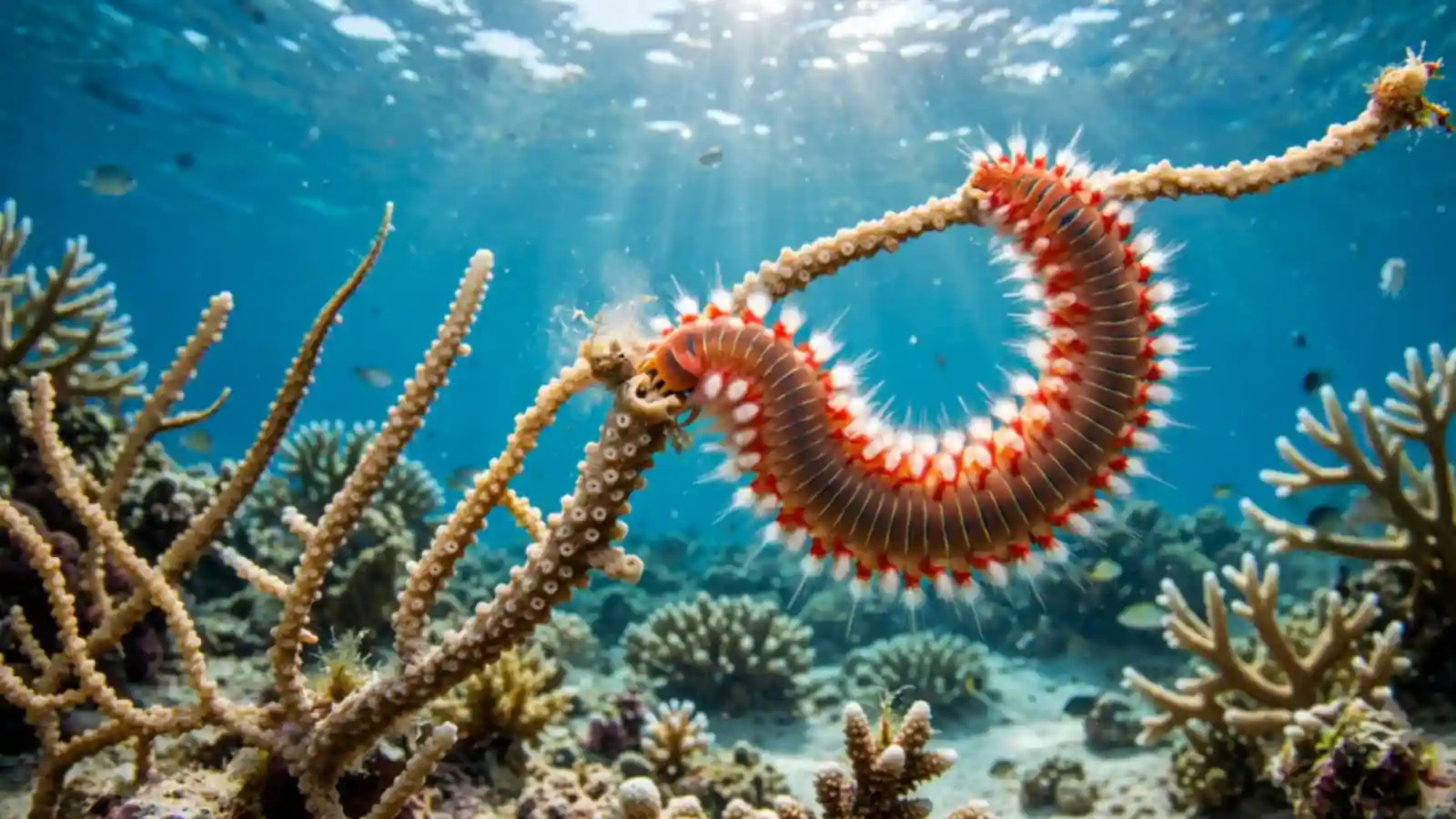
The habitat is the reef itself, and it is part of its clean-up crew: it eats dead coral, sponges and carrion, recycling the reef’s waste. The worm’s range is wide, and its numbers are highest where the reef is healthy and the food is plentiful. In the Mediterranean, the species has become more common in recent years as the sea has warmed — a small, stinging sign of a changing ocean.
Fireworm Diet: Coral, Sponges and Carrion
It is a scavenger and a coral eater. Its diet is built around coral — it grazes on soft corals and on the polyps of stony corals — with sponges, anemones and carrion as extras, and it feeds at night, moving across the reef and eating as it goes. The coral-eating habit is why it matters to the reef: in small numbers it is a cleaner, eating dead and damaged coral, but in large numbers it can damage living coral, and outbreaks of fireworms have been linked to coral disease.
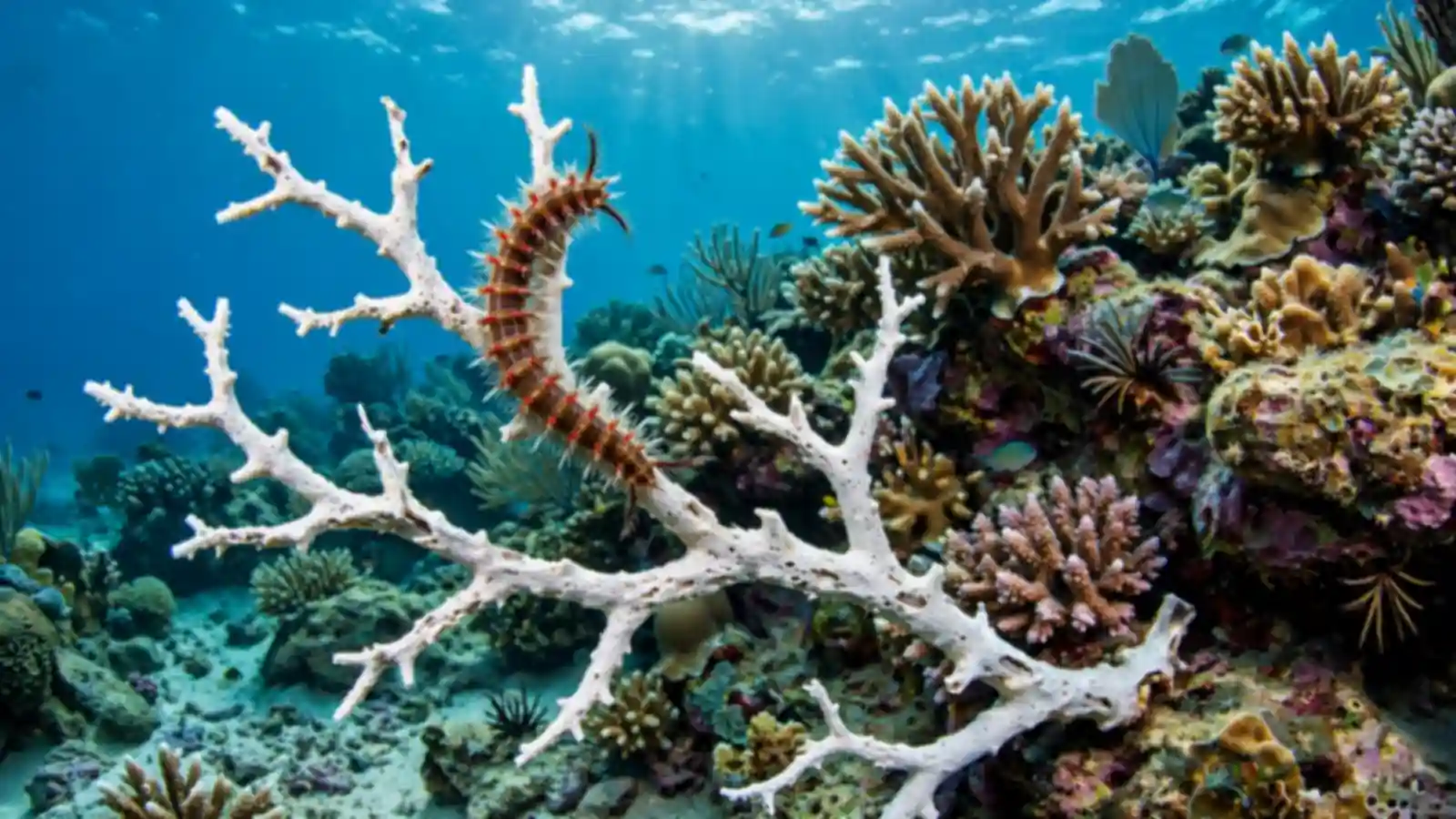
The worm’s feeding is also why it is a vector for coral disease. Fireworms move from coral to coral, and they can carry the bacteria that cause coral disease on their bristles and in their gut — a link that scientists are still studying. It is not the cause of coral disease, but it may be one of the ways the disease spreads, and its role in the reef’s health is more complicated than it first looks.
Coral Disease: The Hidden Damage
Its hidden role is in coral disease. Scientists have found that fireworms can carry the bacteria that cause coral diseases — including the bacteria linked to stony coral tissue loss disease, the reef disease that has swept the Caribbean — on their bristles and in their gut, and that the worms move from coral to coral, feeding as they go. It does not cause the disease, but it may be one of the ways the disease travels between corals.
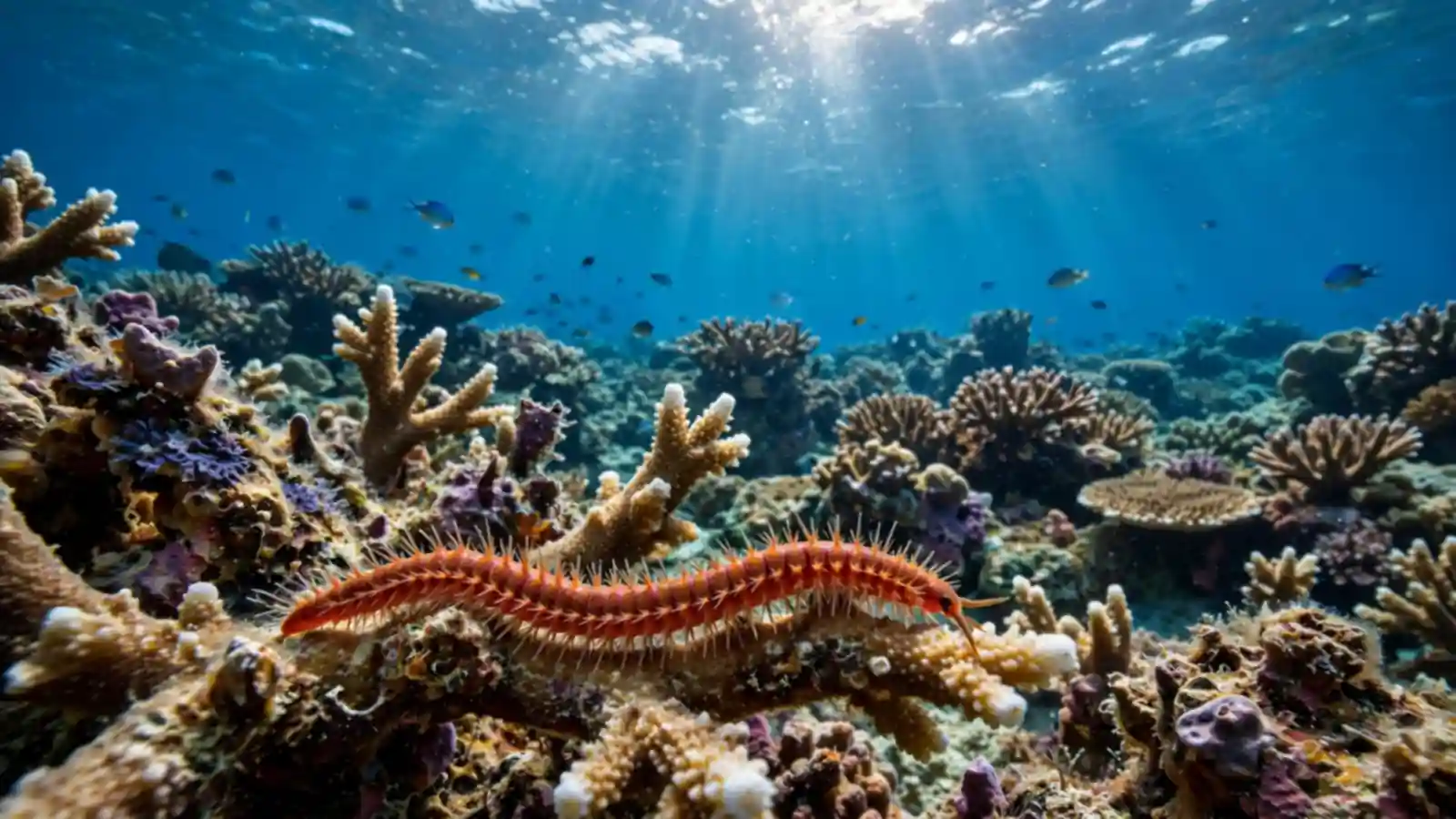
The link is still being studied, and the evidence is growing: fireworms collected from diseased corals carry the disease bacteria, and fireworms that feed on a diseased coral and then on a healthy one can pass the bacteria on. The finding changes how it is seen — from a simple scavenger to a possible vector, and a reminder that the reef’s animals are connected in ways that are only beginning to be understood.
Life Cycle and Lifespan
Its life begins as a tiny larva, drifting in the plankton for days or weeks before settling on the reef. The young worm grows steadily, adding segments and bristles as it grows, and it lives for several years, feeding at night and hiding by day. It breeds by releasing eggs and sperm into the water, and the larvae drift on to the next reef.
The species has not been assessed by the IUCN, so it carries no Red List category. In most of its range it is common, and its bright banding on the reef is the best evidence of a healthy population. The bearded guide from The Sea describes the animal, its sting and its reef life in detail.
Fun Facts
- Its bristles are hollow, filled with toxin, and break off in the skin at the lightest touch.
- The sting burns like a fire and can hurt for hours, sometimes for days.
- The bearded one is named for the fleshy, beard-like caruncle on its head.
- Fireworms can carry the bacteria that cause coral disease from coral to coral.
- The worm is most active at night — divers meet it on night dives, in the torchlight.
- In the Mediterranean, fireworms have become more common as the sea has warmed.
Frequently Asked Questions
What Is a Fireworm?
It is a bristle worm, Hermodice carunculata, of the tropical reefs — a segmented worm up to 35 centimetres long, banded in red, white and green, with hollow bristles filled with a toxin. It is a scavenger and coral eater, active at night, and it is one of the most recognisable animals on the reef.
How Bad Is a Fireworm Sting?
It burns like a fire. The hollow bristles break off in the skin at the lightest touch and release a toxin, causing immediate burning pain, redness, swelling and itching that can last for hours, sometimes for days. The pain is often compared to a bee sting or a burn.
What Should You Do If Stung by a Fireworm?
Remove the bristles with tweezers or sticky tape, rinse the area with vinegar or seawater, and apply a cold compress. Do not rub the area, which drives the bristles deeper, and do not use fresh water, which can trigger any remaining bristles to release more toxin. Seek medical help if the pain is severe, if the sting is near the eyes or mouth, or if there are signs of an allergic reaction. The best protection is prevention: never touch one, learn its bright banding, and wear gloves if you must handle rocks or rubble.
How Big Do Fireworms Get?
Typically 7 to 10 centimetres in the wild, and up to about 30 centimetres — one source records 35.6 centimetres. The bearded one is a medium-sized bristle worm, far smaller than the three-metre bobbit worm, but its bright banding makes it look bigger than it is.
What Do Fireworms Eat?
Coral, sponges, anemones and carrion. It grazes on soft corals and the polyps of stony corals, with sponges and carrion as extras, feeding at night as it moves across the reef. In small numbers it is a cleaner, eating dead and damaged coral; in large numbers it can damage living coral.
Do Fireworms Damage Coral Reefs?
Yes, in two ways. Fireworms graze on living coral, eating soft corals and the polyps of stony corals, and in large numbers they can damage a reef. They can also carry the bacteria that cause coral diseases on their bristles and in their gut, moving from coral to coral as they feed — it does not cause the disease, but it may be one of the ways the disease spreads.
What Is the Difference Between a Fireworm and a Bristle Worm?
It is a type of bristle worm. “Bristle worm” is the whole class, Polychaeta, with more than 10,000 species; the fireworm is one group within it, known for its hollow bristles that break off in the skin and burn. Most bristle worms are harmless detritus eaters — the fireworm is the stinging exception, and the one reef divers learn to avoid.
Similar Species Worth Exploring
Keep Exploring
Start with the bristle worm family guide, then meet the bobbit worm, the three-metre ambush hunter, and browse the whole family in our types of marine worms hub — then come back to the reef’s burning touch, the fireworm.