Herring Gull: Size, Diet, Colonies and Clever Foraging
Herring Gull: Size, Diet, Colonies and Clever Foraging
The herring gull is a large seabird of the North Atlantic coasts, and one of the cleverest birds in the world. It eats almost anything — fish, crabs, chips, carrion — drops shells on rocks to crack them, steals food from other birds, and has moved from the cliffs to the rooftops of the cities, where it now nests above the streets it scavenges.
By Emily Carter · Reviewed by our vet team · Updated 10 November 2026 · 8 min read
Yellow bill, red spotDrops shells on rocksEats almost anything
At a Glance
The herring gull is a large, pale-grey-and-white seabird with a yellow bill marked by a red spot, and it is one of the most familiar birds of the North Atlantic coast. It lives on cliffs, beaches, harbours and rooftops, eats almost anything it can find, and has learned to live alongside people — stealing chips from seaside visitors, dropping shells on car roofs to crack them, and nesting on the flat roofs of the cities. Its call, the long, laughing cry over the harbour, is the sound of the seaside.
What Is a Herring Gull?
It is a large gull in the family Laridae, and its scientific name is Larus argentatus — the European species. It lives around the coasts of the North Atlantic, from Scandinavia and Britain to Iceland and the Atlantic coast of North America, and it is one of the most abundant gulls in the world, with a European population of 2 to 2.4 million birds.
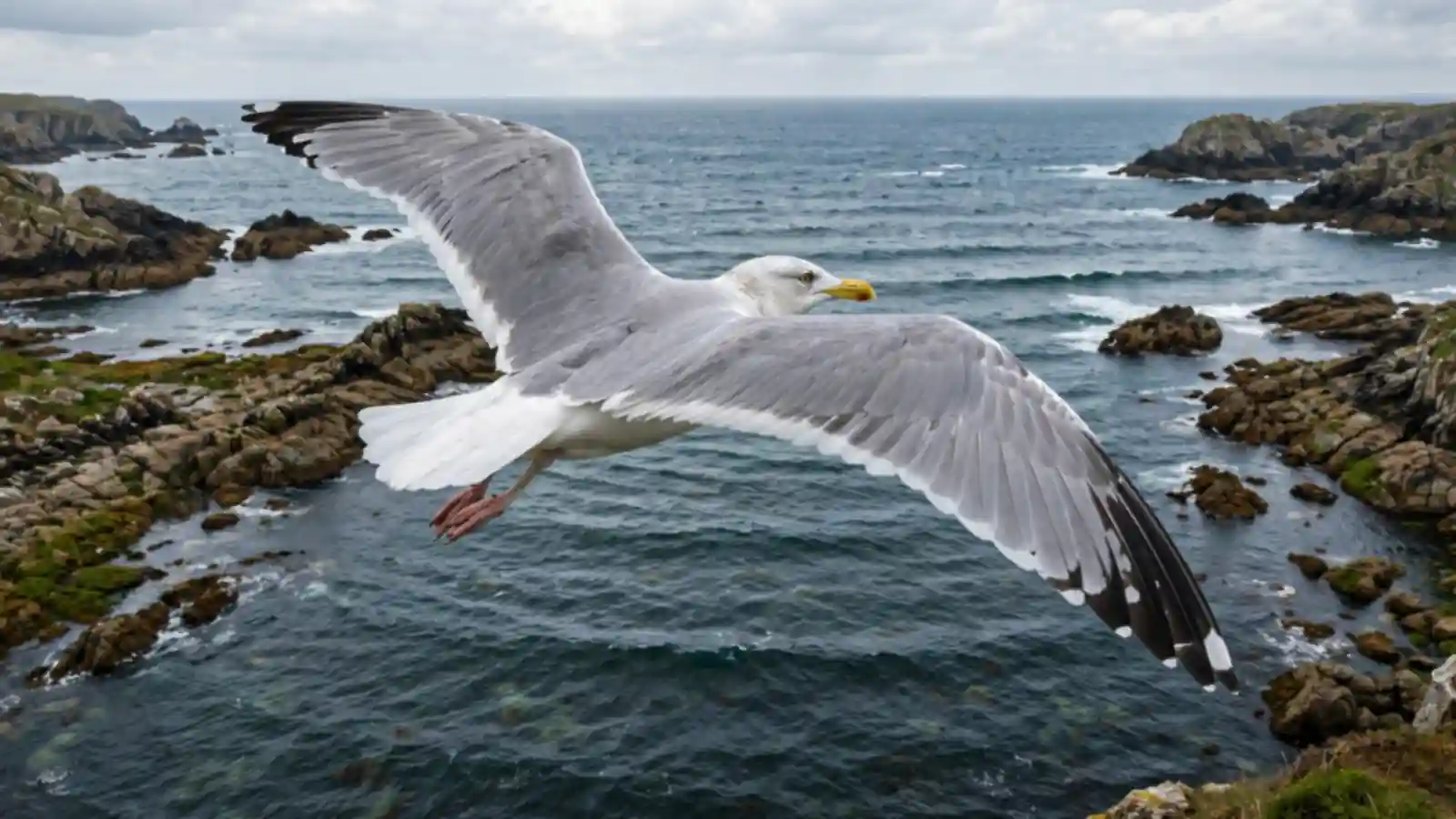
The gull is a study in adaptation. It nests on cliffs and islands, on rooftops and piers, and it eats fish, crabs, mollusks, carrion, scraps and rubbish — whatever the coast and the city offer. It is a bird that has learned to live with people, and in many seaside towns it is now more common on the rooftops than on the cliffs.
Herring Gull Size and Appearance
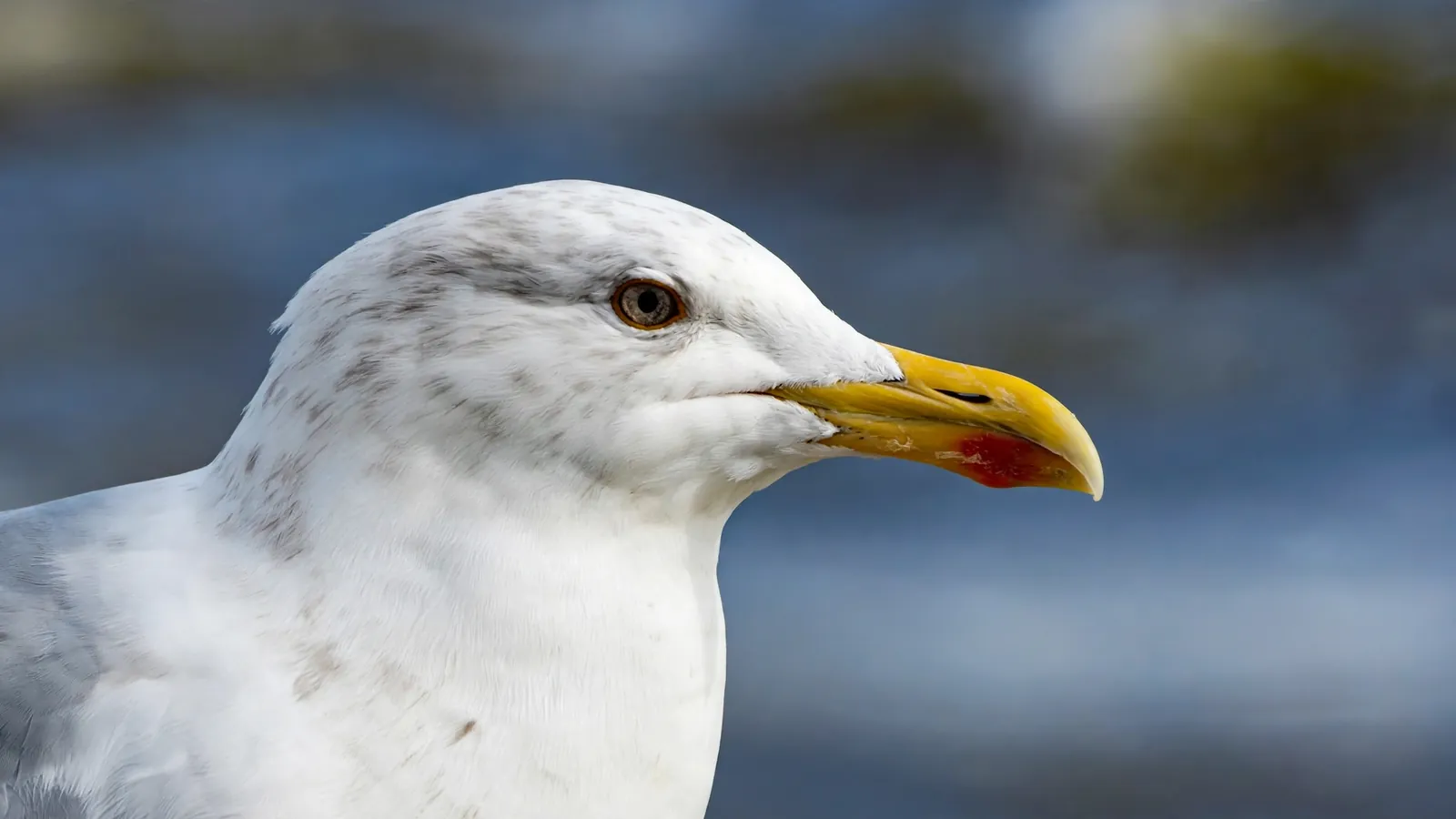
It measures 55 to 67 centimetres long, with a wingspan of 125 to 155 centimetres and a weight of 800 to 1,250 grams. The adult is pale grey above and white below, with a white head, black wingtips and pink legs — and a yellow bill with a red spot on the lower mandible, the spot that the chicks peck to make their parents regurgitate food.
The young look nothing like the adults. A juvenile is mottled brown all over, with a dark bill and dark legs, and it takes about four years to gain the adult plumage — passing through a series of mottled stages that make young gulls hard to identify. The slow change is one of the reasons gull-watching is a puzzle: the same bird looks like four different species before it grows up.
European vs American Species
It is not one bird but two — or rather, it was one bird until the taxonomists split it. The European species, Larus argentatus, lives around the coasts of Europe, and the American species, Larus smithsonianus, lives around the coasts of North America. The two look almost identical, and they were long treated as one species, but their calls, their genetics and their moult patterns differ enough that they are now counted as separate species.
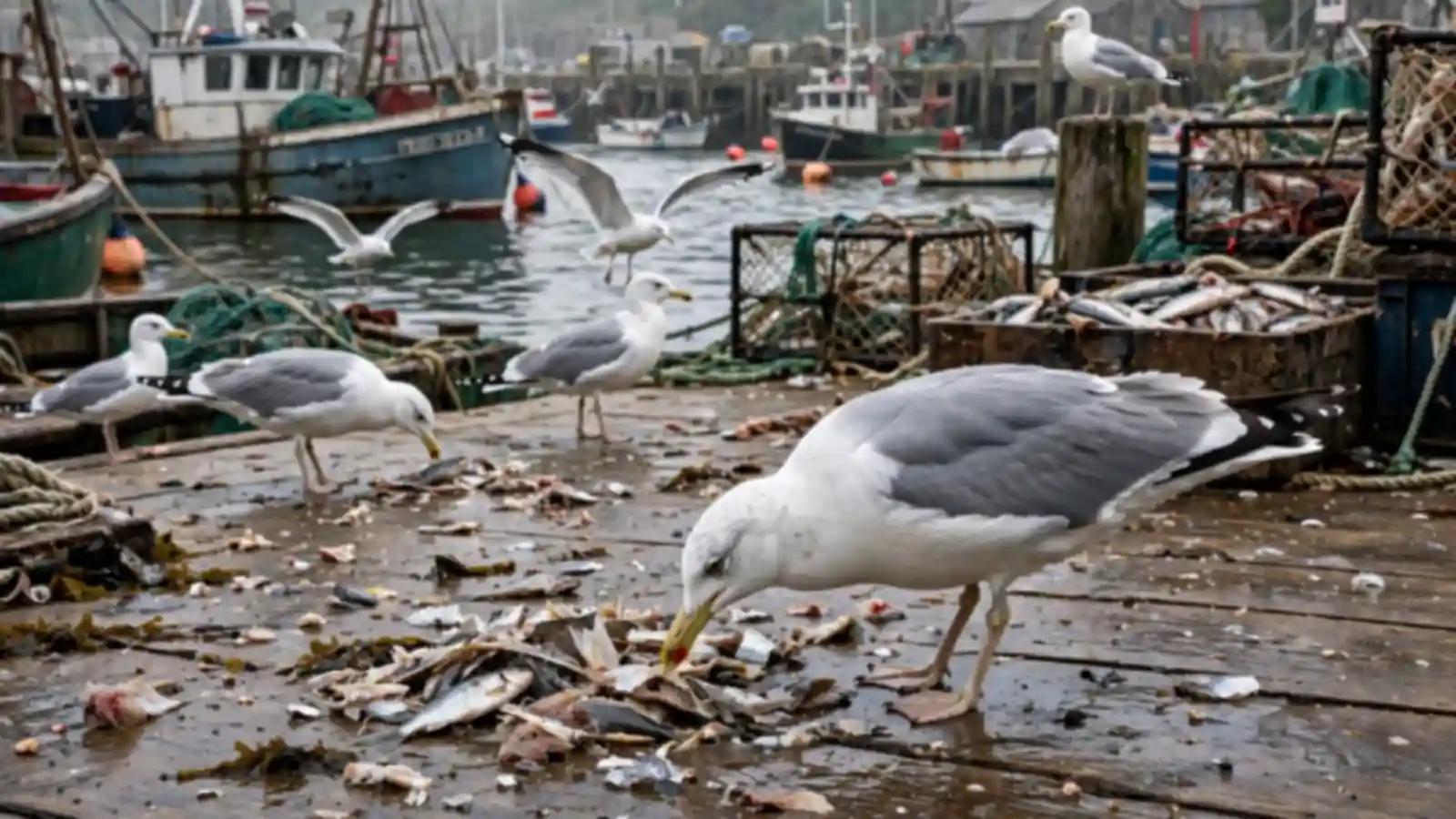
The split is named once and then set aside: this guide follows the European bird, Larus argentatus, and the American bird is its close twin across the Atlantic. Both are harbour scavengers, both drop shells on rocks, and both have moved from the cliffs to the rooftops — the same bird, in two oceans, living the same life.
Diet: The Ultimate Opportunist
It eats almost anything. Fish and crabs are the staple, with mollusks, worms, eggs, small birds, carrion, scraps and rubbish as extras — and the gull is famous for its taste for human food, from chips and sandwiches to the contents of a dustbin. It steals from other birds, it follows fishing boats for offal, and it has learned to open packets and to drop food on hard surfaces to break it open.

The diet is the gull’s strength. Where other seabirds depend on one food, it depends on whatever is available, and it has thrived on the change — moving into the cities, where the food is plentiful and the nesting sites are free. The gull’s opportunism is also why it is sometimes a pest: it steals food from people, it raids dustbins, and it defends its nest with dives and cries that can drive a walker from a rooftop.
Dropping Shells: Tool-Like Foraging
Its most famous trick is dropping shells. The gull picks up a mussel or a clam, flies up over a hard surface — a rock, a road, a car roof — and drops the shell, letting it crack open on the impact. Then it flies down and eats the meat inside. The trick is learned, not instinctive: young gulls watch adults do it, and they practice, dropping shells from greater and greater heights until they get it right.

The dropping is tool use, of a sort — the gull uses the hard surface as a hammer, and the height as a force. The gull’s other famous trick is the same idea in reverse: it stamps its feet on wet sand to bring worms to the surface, mimicking the rain that drives the worms up. Both tricks show the same mind: a bird that solves problems, learns from others, and uses the world around it as a tool. The moon snail is one of the gull’s shellfish prey, dropped on the rocks like any other clam.
Colonies and Family Life
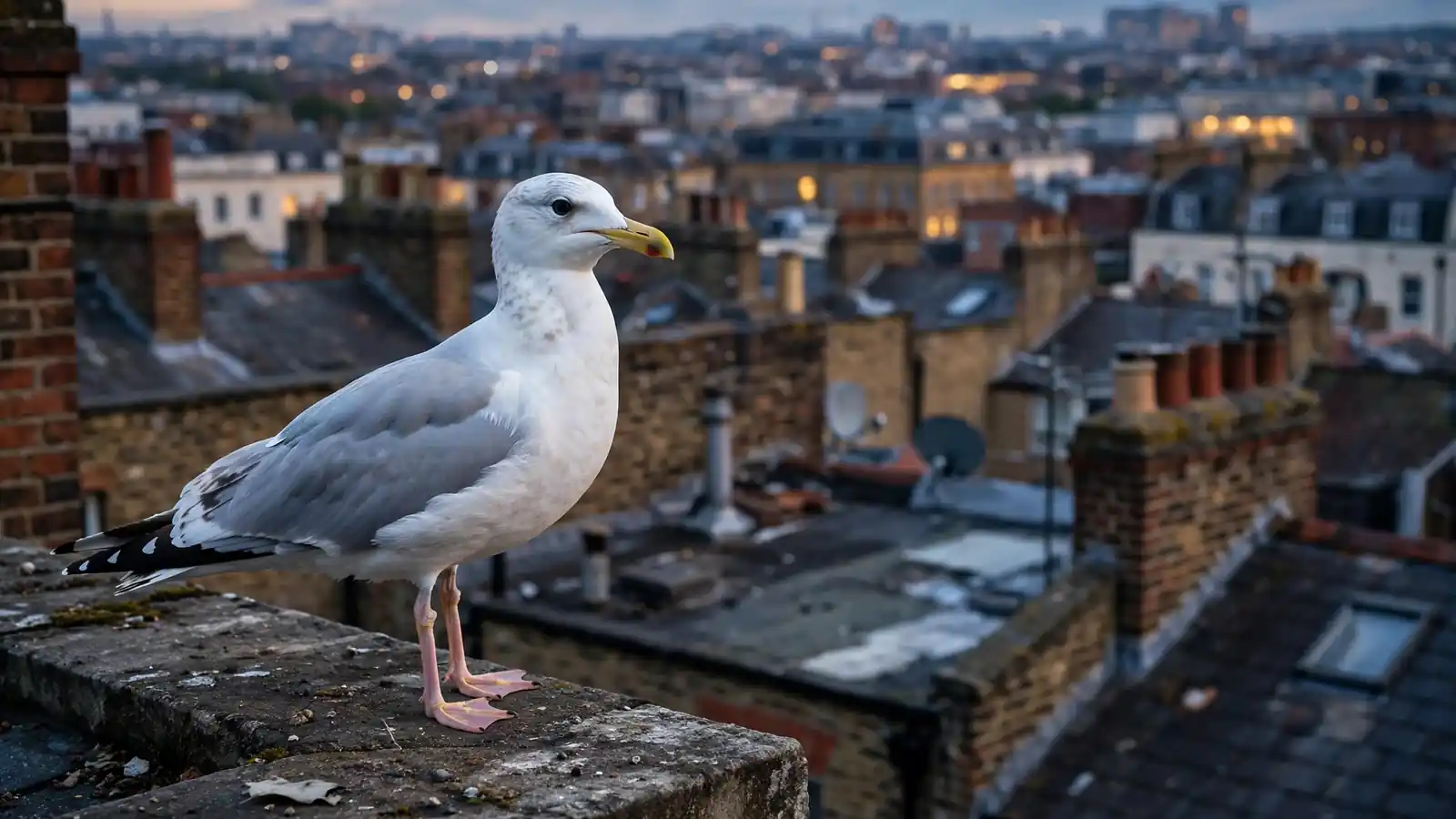
Herring gulls nest in colonies — on cliffs, on islands, and now on the flat rooftops of the cities, where the roof is the new cliff. The nest is a scrape lined with grass and seaweed, and the female lays two or three eggs, which both parents incubate for about a month. The chicks hatch covered in fluffy grey down, and they are fed by their parents for weeks, pecking the red spot on the adult’s bill to make it regurgitate food.
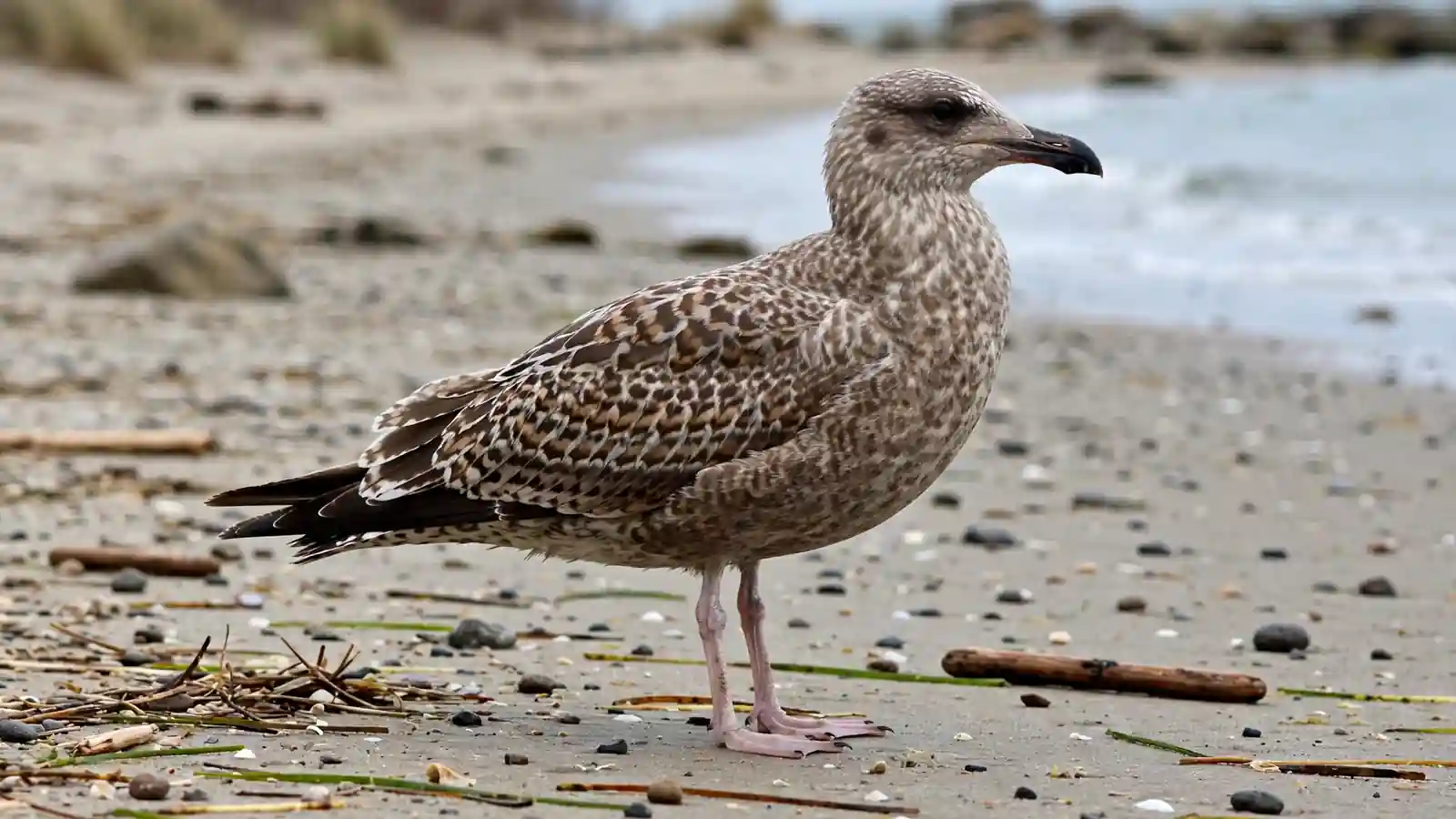
The colony is a noisy, crowded place, and the gulls defend it fiercely — diving at intruders, crying loudly, and mobbing anything that comes near the nests. The mottled brown juveniles take four years to gain adult plumage, and they spend those years learning the coast: where to find food, how to drop a shell, and which rooftops are safe. The colony is a school as much as a nursery.
Lifespan and Adaptability
Its life begins as a fluffy chick in a cliff nest, guarded by an adult, and it spans an average of about 13 years — though the oldest recorded bird lived to 49, and some sources say up to 50. The gull’s life is a long apprenticeship: four years to adult plumage, and years more to learn the coast, the harbours and the rooftops.
The species is listed as Least Concern on the IUCN Red List, and its population is large — 2 to 2.4 million in Europe alone. The profile from Oiseaux-birds describes the bird, its calls and its colonies in detail.
Fun Facts
- A chick pecks the red spot on its parent’s bill to make it regurgitate food.
- Herring gulls drop mussels on rocks — and car roofs — to crack them open.
- A juvenile takes about four years to gain its adult plumage.
- The oldest recorded one lived to 49 years old.
- Herring gulls stamp their feet on wet sand to bring worms to the surface, mimicking rain.
- The European population is 2 to 2.4 million birds.
Frequently Asked Questions
How Big Is a Herring Gull?
Large for a gull: 55 to 67 centimetres long, with a wingspan of 125 to 155 centimetres and a weight of 800 to 1,250 grams. The adult is pale grey above and white below, with a white head, black wingtips, pink legs and a yellow bill with a red spot on the lower mandible.
What Do Herring Gulls Eat?
Almost anything. Fish and crabs are the staple, with mollusks, worms, eggs, small birds, carrion, scraps and rubbish as extras — and the gull is famous for its taste for human food, from chips and sandwiches to the contents of a dustbin. It steals from other birds, follows fishing boats for offal, and has learned to open packets.
How Long Do Herring Gulls Live?
On average about 13 years, though the oldest recorded bird lived to 49, and some sources say up to 50. The gull’s life is a long apprenticeship: four years to adult plumage, and years more to learn the coast, the harbours and the rooftops.
Are Herring Gulls Aggressive?
Around food and nests, yes. Herring gulls steal food from people and from other birds, raid dustbins, and defend their nests with dives and loud cries that can drive a walker from a rooftop. Away from food and nests they are wary and quick to fly. The aggression is defence and opportunism, not malice — the gull is protecting its chicks and its dinner.
Where Do Herring Gulls Nest?
In colonies on cliffs, islands and rooftops. The nest is a scrape lined with grass and seaweed, and the female lays two or three eggs, which both parents incubate for about a month. The chicks hatch covered in fluffy grey down and are fed by their parents for weeks. In many seaside towns the gulls now nest on flat rooftops — the roof is the new cliff.
How Can You Tell a Herring Gull From Other Gulls?
By its size, its bill and its legs. The herring gull is large, with a yellow bill marked by a red spot on the lower mandible, pink legs, a pale grey back and black wingtips. The red spot is the key: the chicks peck it to make their parents regurgitate food, and no other common gull carries quite the same combination.
Do Herring Gulls Migrate?
Some do, some don’t. Northern herring gulls move south in winter, following the coast to warmer waters, while southern birds are largely resident, staying on the same coast all year. Young birds wander further than adults, and a gull ringed in Britain has been found as far away as North Africa.
Similar Species Worth Exploring
Keep Exploring
Start with the Atlantic puffin, the clown of the North Atlantic, then meet the brown pelican, the plunge-diving pelican of the coasts, and browse the whole family in our types of seabirds hub — then come back to the clever opportunist of the harbour, the herring gull.