Ghost Crab
Ghost Crab: the fastest crab on the beach
The ghost crab sprints across tropical beaches at up to 16 km/h, digs burrows a metre deep, and sees in every direction with its stalked eyes. This guide follows the genus Ocypode, about 20 species of pale night-running crabs, from the Atlantic species of the American shore to the burrows it plugs against the tide.
By Emily Carter · Reviewed by our vet team · Updated 10 November 2026 · 10 min read
Up to 16 km/h — the fastest crabStalked eyes see in every directionBurrows a metre deep

At a Glance
A ghost crab is easy to miss and hard to catch. By day it is a pale shape in a burrow above the tide line, and by night it is a blur across the sand, running faster than any other crab on the beach. Its stalked eyes see in every direction at once, and its burrow is a metre deep. This is the whole animal, at a glance, before the detail begins.
Ghost Crab Speed: The Fastest Crab on the Beach
It can run at up to 16 kilometres per hour, and the claim that it covers 100 body lengths in a second makes it the fastest crab on the beach by a wide margin. The speed is a sideways scuttle, legs blurring as the crab changes direction in an instant, and it is fast enough to outrun most of the animals that hunt on the sand.

The speed is an escape first and a hunting tool second. One that is spotted on the open beach can reach its burrow before a bird or a person can close the distance, and the same speed lets it dart out, snatch a piece of food, and return to cover before anything else reacts.
Stalked Eyes: Seeing in Every Direction
Its eyes sit on long stalks that rise above its shell, and they see in every direction, including behind. The stalks can swivel independently, and the crab watches the beach around it without turning its body, which is why it is so hard to approach unnoticed.

The eyes are the reason the crab is called a ghost. At night they catch the light and shine, and the pale crab itself seems to appear and vanish on the sand. The colour helps too: its shell matches the sand it lives on, pale cream or grey, and a still crab is easy to walk past.
Where They Live: Sandy Beaches Above the Tide
Ghost crabs live on tropical and subtropical sandy beaches, above the tide line, from the Atlantic coast of the Americas to the shores of the Indian and Pacific oceans. The Atlantic species, Ocypode quadrata, is the one on the American shore, and it shares its beaches with the tourists who rarely see it.
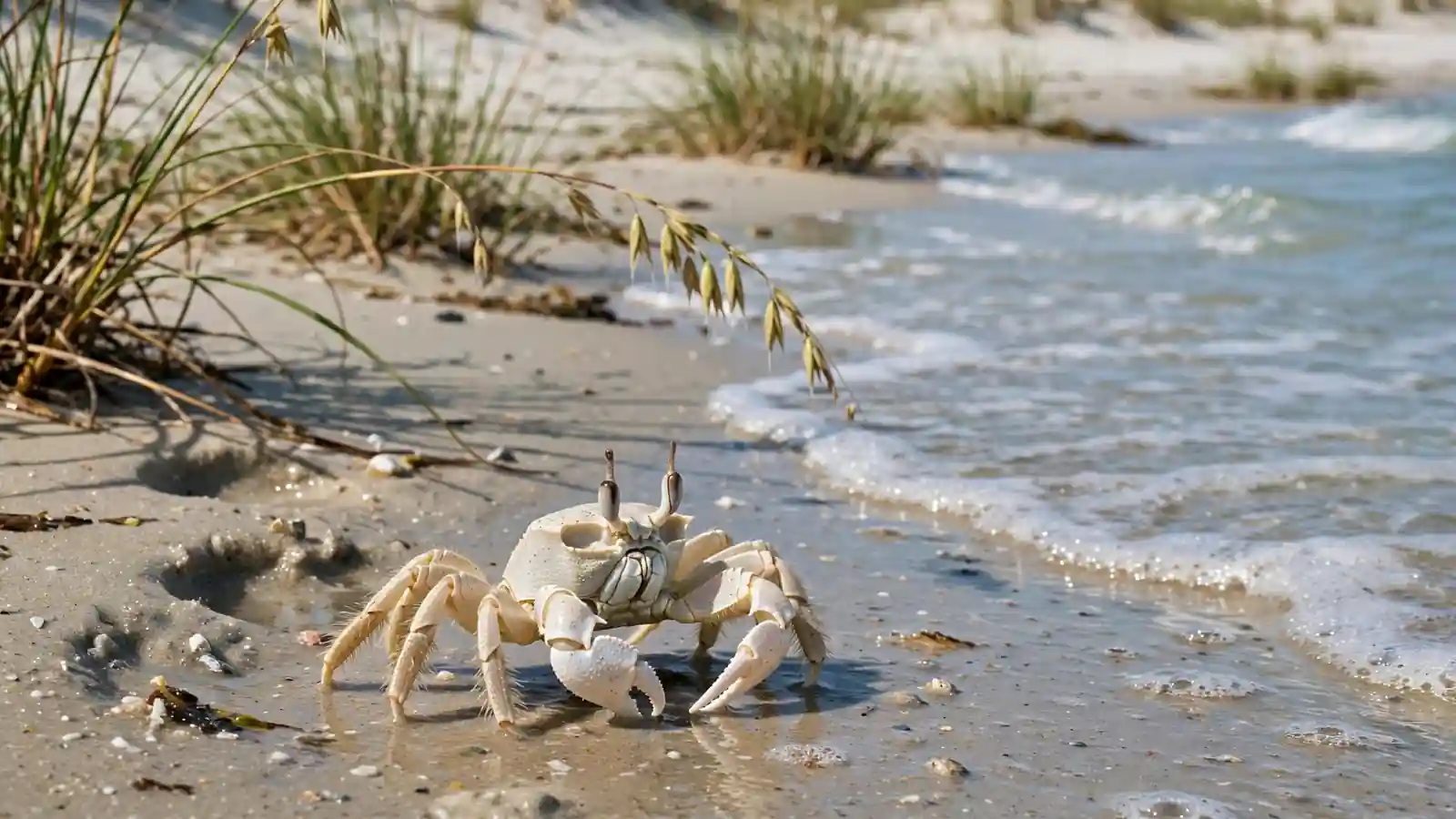
The beach above the tide line is the crab’s territory because it is the driest part of the shore, and it is more at home on land than most crabs. It still needs the sea — its larvae develop in the water — but the adult lives like a land animal that happens to eat from the sea’s leavings.
Burrows a Metre Deep: The Daytime Home
It digs a burrow up to 1.3 metres deep, a tunnel into the sand that stays cool and damp through the heat of the day. The crab digs with its legs, piling the sand into a mound beside the entrance, and at high tide it plugs the entrance with sand to keep the water out.

The burrow is the crab’s daytime home and its refuge from everything on the beach. It sleeps in the burrow through the day, emerges at dusk to feed, and returns before dawn, and the same burrow may serve one crab for weeks. The mounds and holes along the high-tide line are the visible sign of a beach full of ghost crabs.
What Do They Eat? Scavengers of the Night Beach
It is a scavenger of the night beach. It eats washed-up fish, dead crabs, molluscs and anything else the tide leaves behind, and it will also catch small live animals it can overpower, including turtle hatchlings on nesting beaches. The crab’s speed is what makes it a scavenger: it can cover a wide stretch of beach in a single night, checking every piece of debris.
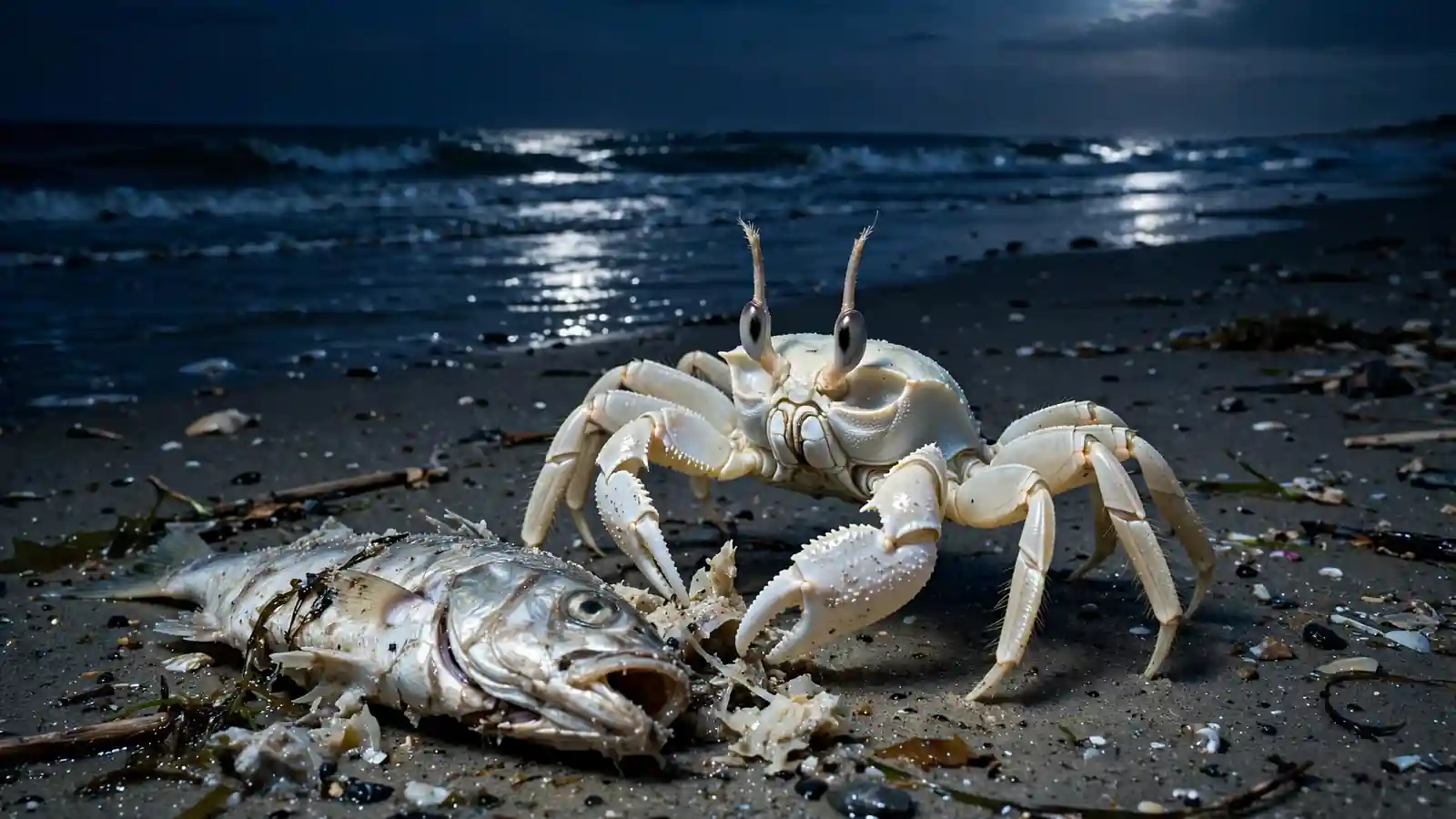
For a wider survey of the genus, see this guide. The scavenging matters to the beach: ghost crabs are the clean-up crew of the high-tide line, and a beach without them accumulates far more dead matter than a beach with them.
Ghost Crab Life Cycle: From Sea Larva to Land Crab
It begins life in the sea, as a tiny larva in the plankton, and it returns to the sea to breed. The female carries her eggs under her tail until they hatch, then releases the larvae into the surf, where they drift and feed for weeks before settling back onto a beach as young crabs.
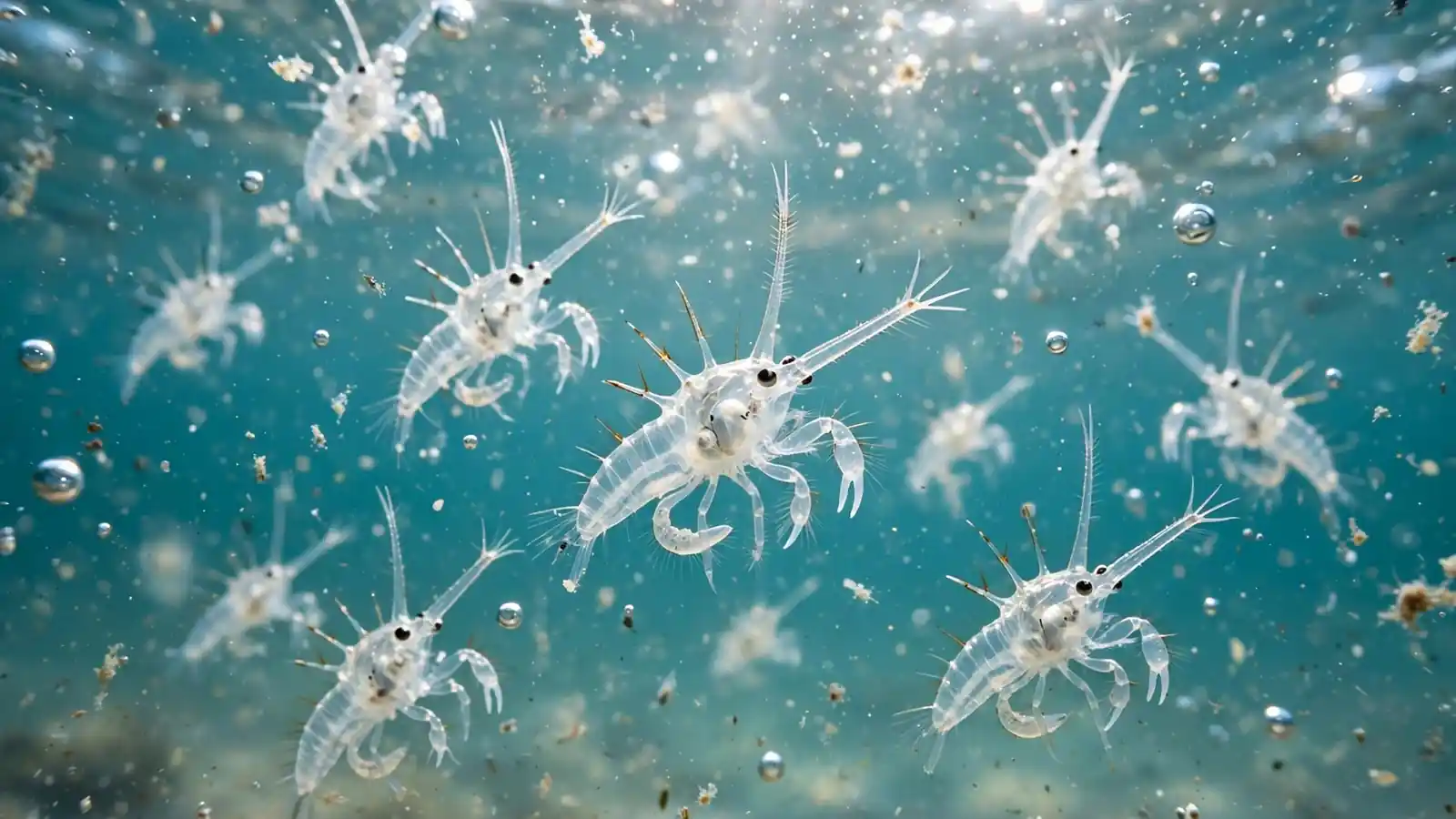
The young crab is a miniature of the adult, pale and fast, and it digs its first burrow high on the beach, above the reach of the waves. From there it grows by moulting, and within a year it is a full-sized ghost crab, running the same stretch of sand its parents ran.
Vs the Fiddler Crab: Two Beach Crabs Compared
It and the fiddler crab are the two crabs most people meet on a beach, and they are easy to tell apart once you know what to look for. It is pale, fast and nocturnal, with stalked eyes and a burrow a metre deep, while the fiddler crab is small, mudflat-bound and diurnal, with the male’s one giant claw doing the talking.

They belong to the same family, the Ocypodidae, and they share the same basic design — a square shell, long legs, and eyes on stalks — but they have taken it in opposite directions. The fiddler crab invested in display, this one invested in speed, and between them they cover the whole beach, from the mudflat at low tide to the dry sand above the high-tide line.
Fun Facts
- It can run at up to 16 km/h — about 100 body lengths in a second.
- Its stalked eyes see in every direction, including behind.
- Its burrow can reach 1.3 metres deep, and it plugs the entrance at high tide.
- The genus Ocypode counts about 20 species, and the count varies by source.
- Ghost crabs are nocturnal scavengers that clean the high-tide line.
- It is harmless to people — shy, fast, and quick to run for its burrow.
Frequently Asked Questions
How Fast Can Ghost Crabs Run?
It can run at up to 16 kilometres per hour, which is about 100 body lengths in a second. That makes it the fastest crab on the beach, fast enough to outrun most of the animals that hunt on the sand.
Are Ghost Crabs Dangerous?
No. It is a shy, nocturnal scavenger. It will pinch if handled, but it has no venom and no interest in people — its first response to anything large is to run for its burrow.
Where Do Ghost Crabs Live?
Ghost crabs live on tropical and subtropical sandy beaches, above the tide line. The Atlantic species lives on the American shore, and other species are found on beaches around the Indian and Pacific oceans.
Why Are They Called Ghost Crabs?
Ghost crabs are pale like sand, active mostly at night, and fast enough to seem to appear and vanish. Their stalked eyes catch the light at night, which adds to the ghostly impression.
What Do Ghost Crabs Eat?
It eats washed-up fish, dead crabs, molluscs and anything else the tide leaves behind. It is a scavenger of the night beach, and it will also catch small live animals it can overpower.
How Deep Do Ghost Crab Burrows Go?
Its burrow can reach about 1.3 metres deep. The crab digs with its legs, piles the sand into a mound beside the entrance, and plugs the entrance with sand at high tide.
Can Ghost Crabs Breathe Out of Water?
Yes, for a time. A ghost crab breathes with gills that must stay damp, and it keeps them moist in its burrow and by returning to the water’s edge. The adult lives mostly on land but still needs the sea.
Similar Species Worth Exploring
Keep Exploring
Keep exploring the crabs: meet the fiddler crab, the little mudflat crab with the giant waving claw, or browse the whole family in our guide to the types of crabs. Then come back to the night beach, home of the ghost crab.