Fiddler Crab
Fiddler Crab: the tiny crab that waves one giant claw
The fiddler crab’s male waves one enormous claw to win a mate and warn rivals — a signal so big the claw can weigh half his body. This guide covers the whole group, about 100 species of mudflat crabs, from the waving display that gives them their name to the burrows they dig and the mud they eat.
By Emily Carter · Reviewed by our vet team · Updated 10 November 2026 · 10 min read
One claw can weigh half his bodyThe wave wins mates and warns rivalsDigs burrows in the mudflat
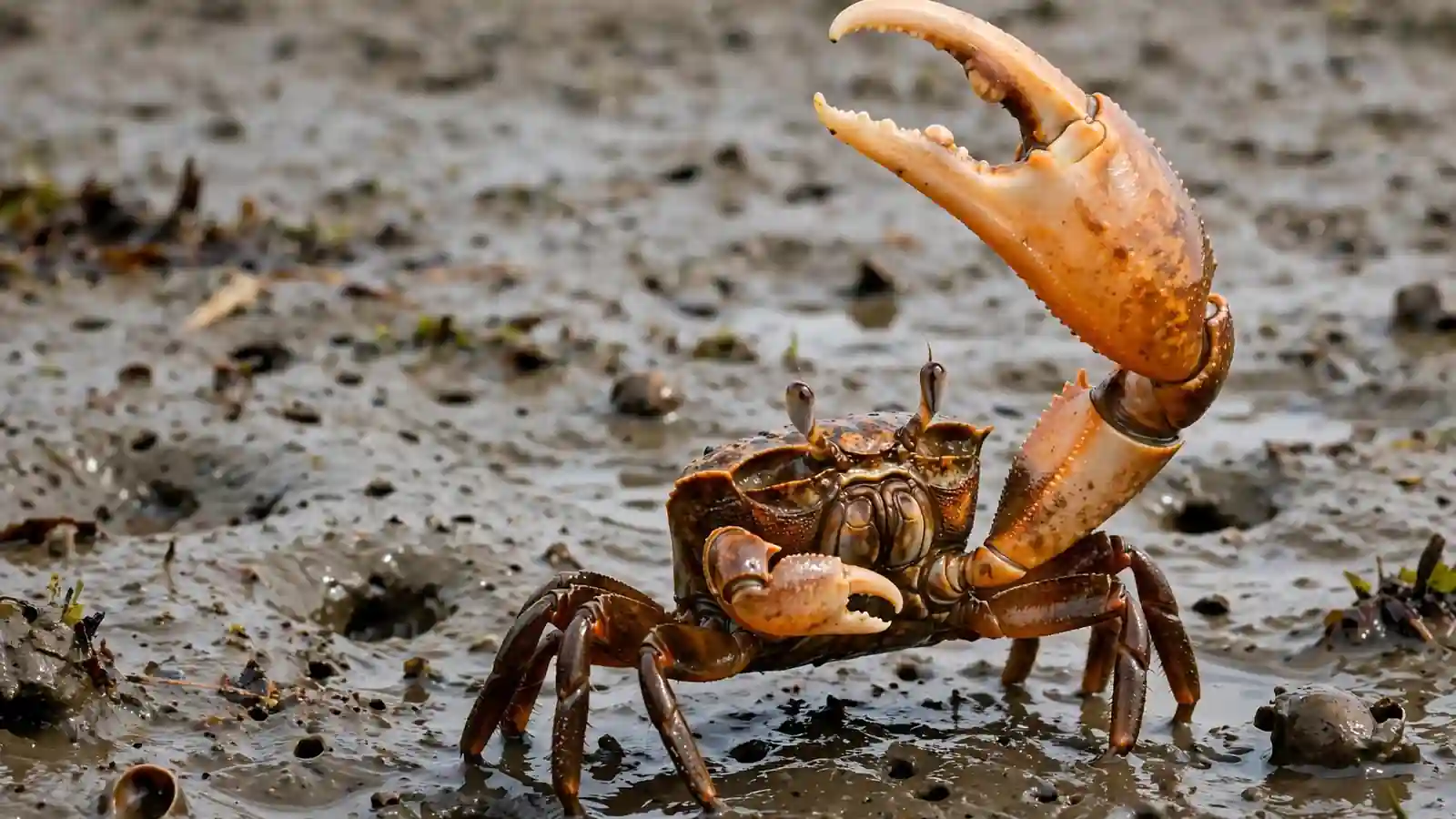
At a Glance
A fiddler crab looks like a mistake at first glance — a small crab with one claw far too big for its body, waving it in the air like a flag. The claw is the whole story: a signal, a weapon and a burden all at once, and the male carries it because the females judge him by it. This is the whole animal, at a glance, before the detail begins.
Fiddler Crab Size: Small Body, Enormous Claw
It is a small animal. The largest species, Afruca tangeri, reaches about 5 centimetres across the shell, and most species are smaller, yet the male carries a claw that can weigh from a third to half of his whole body. The claw is the biggest thing about him, and it shapes everything he does.
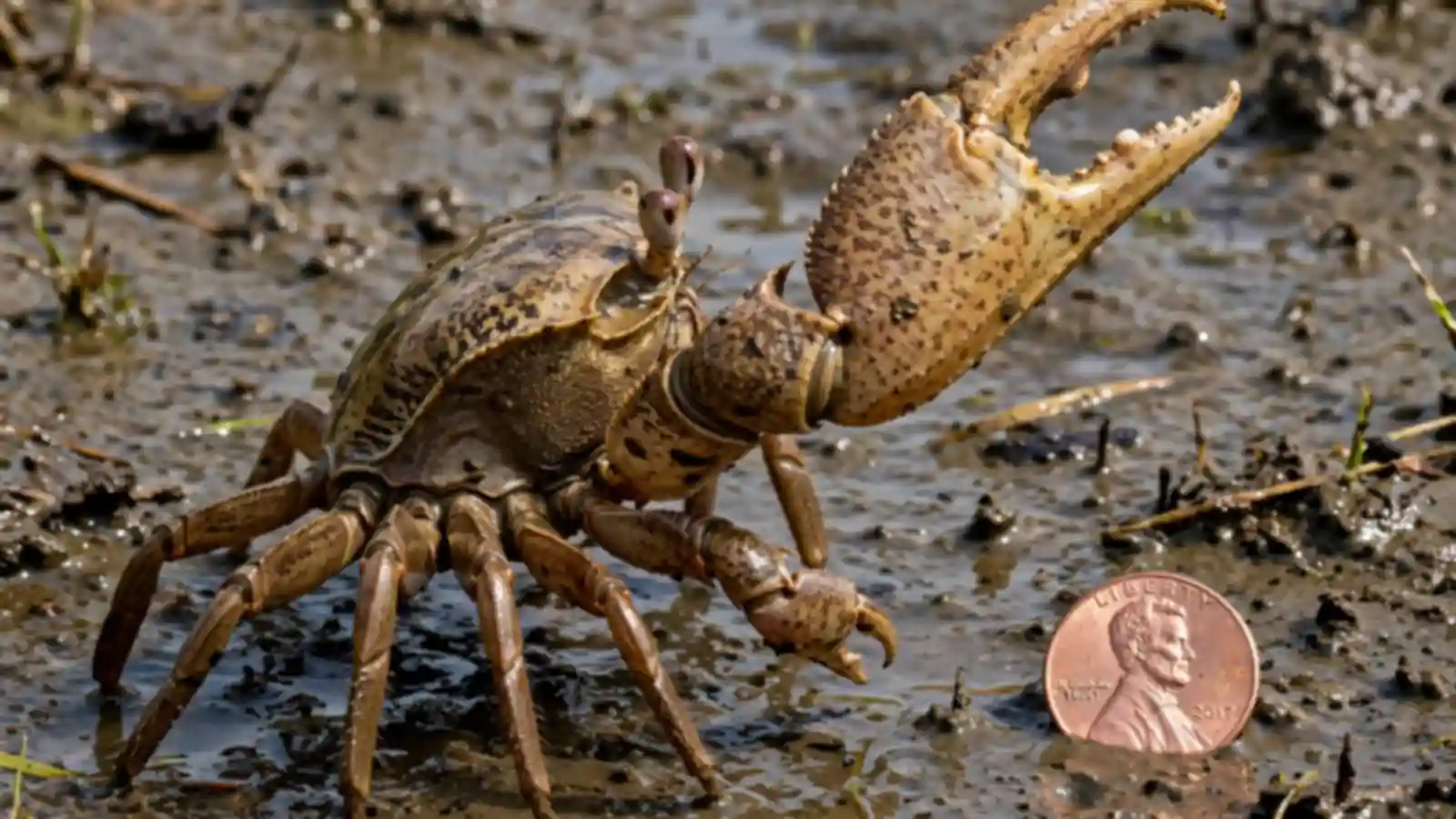
The female shows what the body looks like without the burden: two small claws, both used for feeding, and a body built for digging and walking rather than display. The male’s giant claw is useless for eating — he feeds with the small one — and the cost of carrying it is real, in energy and in speed.
Why the Male Waves One Giant Claw
The male waves his giant claw to win a mate and to warn rivals, and the females judge the wave. A fast, high, regular wave says the male is strong and healthy, and females walk towards the best wavers, while rival males read the same wave as a warning to stay away. The wave is a signal first and a weapon second.
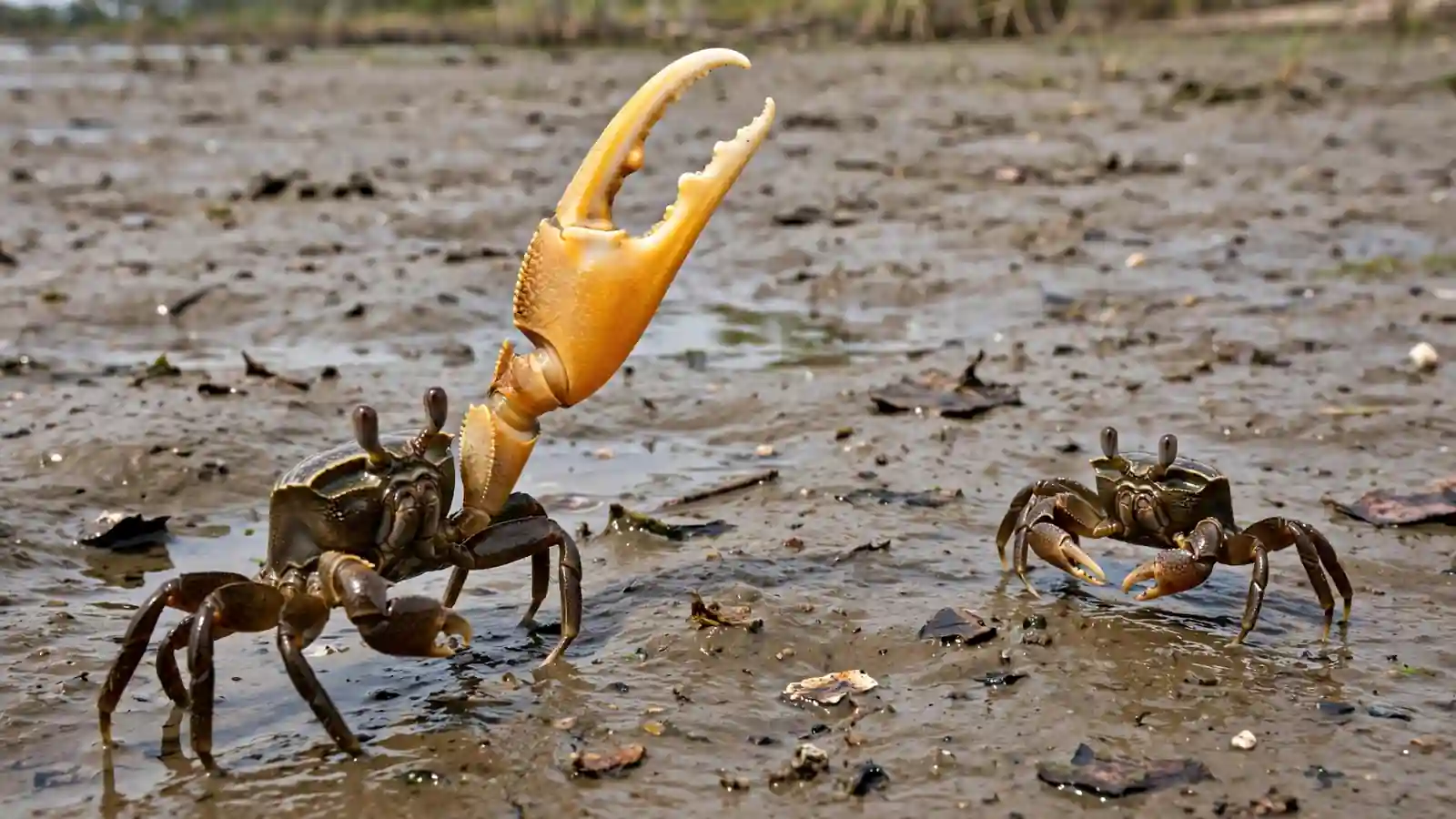
When two males meet, the wave can turn into a fight, claw against claw, and the bigger claw usually wins. But most contests are settled by display alone, and the mudflat at low tide is a field of waving claws, each male advertising himself to the females that walk between the burrows.
Where They Live: Mudflats, Marshes and Mangroves
Fiddler crabs live on mudflats, in salt marshes and among mangroves, in the intertidal zone where the tide covers them twice a day. They need soft mud to dig in and firm ground to walk on, and a healthy mudflat can hold thousands of them, each with its own burrow and its own patch of mud to feed on.
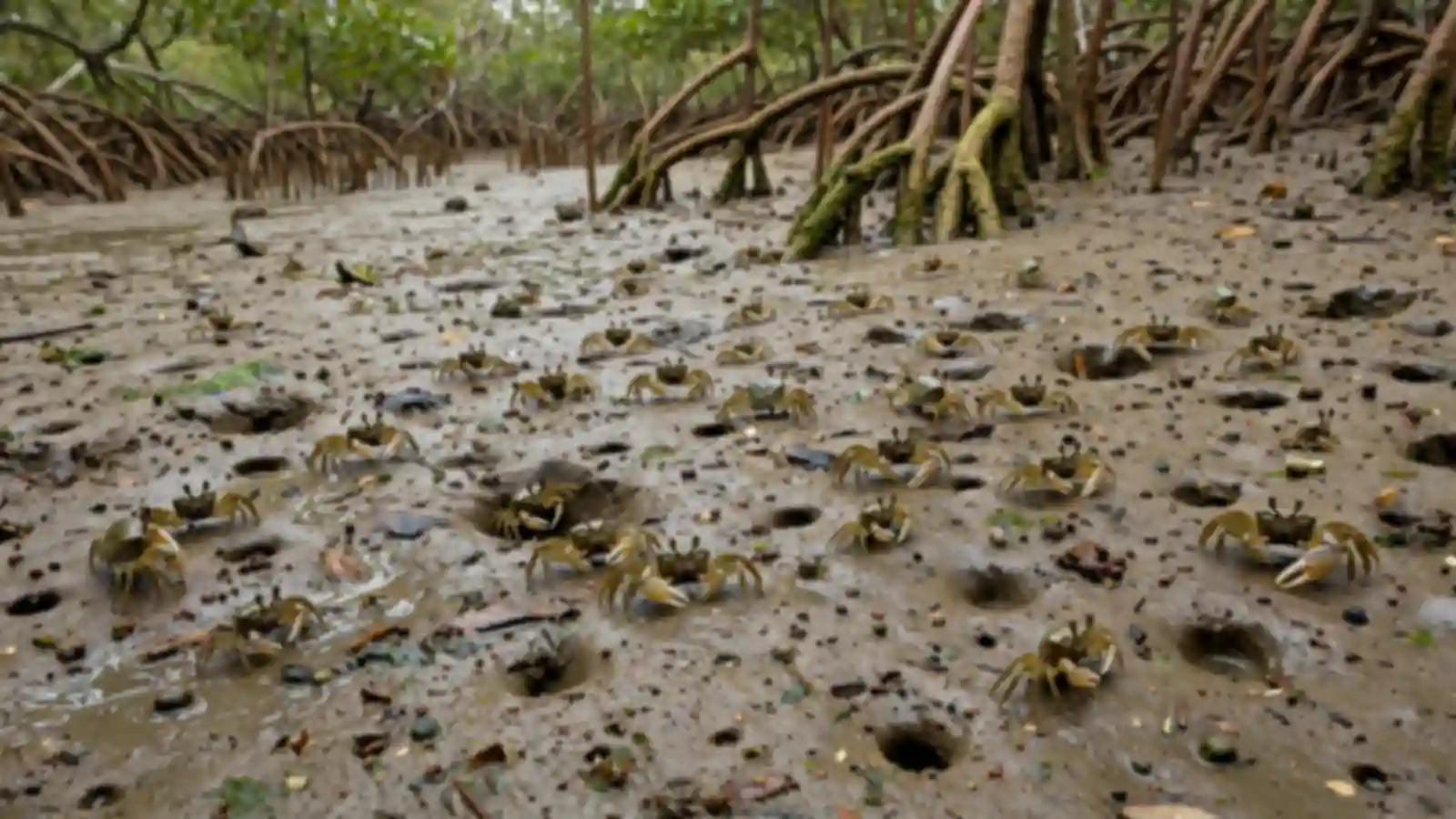
The mudflat is a busy place at low tide. The crabs emerge from their burrows as the water falls, spread across the mud to feed and display, and retreat as the tide returns, sealing their burrows behind them until the next low water.
Burrows: The Underground Home
Every one digs a burrow, a tunnel into the mud that serves as shelter, mating chamber and refuge from the tide. The crab digs with its legs and claws, piling the excavated mud into small pellets around the entrance, and the burrow can be as deep as the crab is wide — deep enough to stay damp when the surface dries.
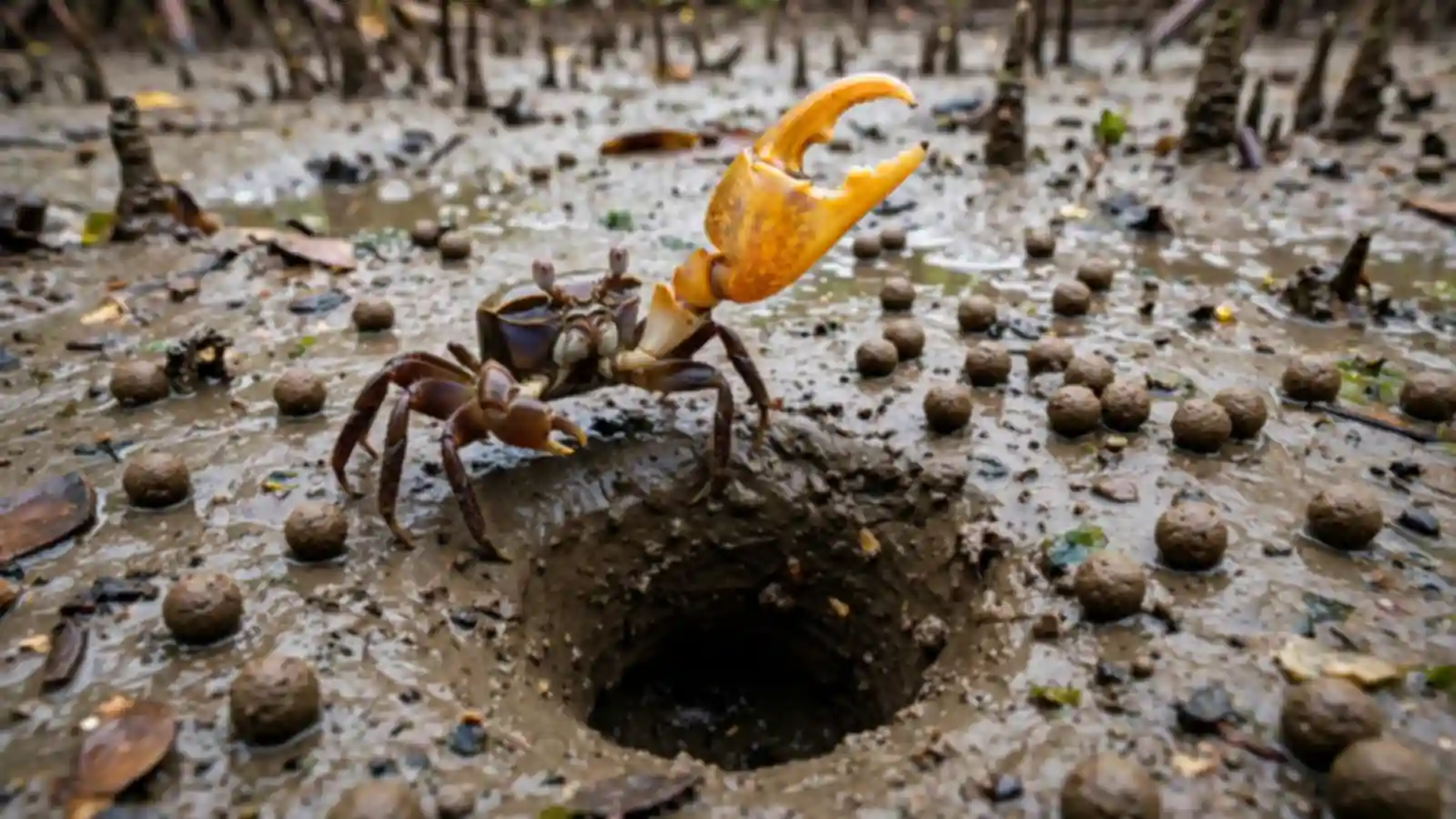
The burrow is also the male’s stage. A male waves his claw beside his burrow, and a female that likes the wave follows him inside, where mating takes place. After mating the female carries her eggs in the burrow, and the young hatch into the tide as tiny larvae that drift away before returning to the mud as young crabs.
What Do They Eat? Scraping the Mud
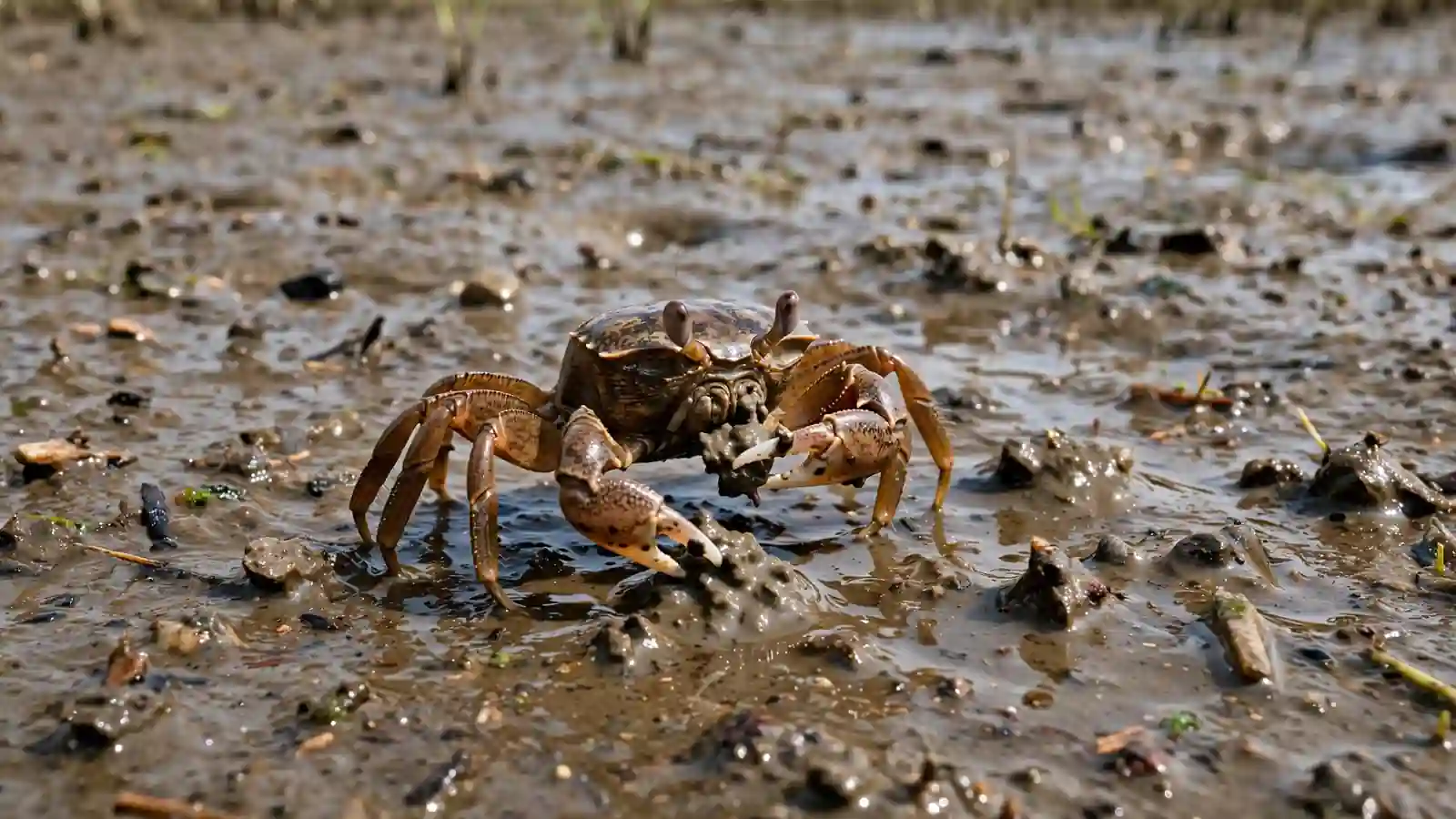
It eats detritus, algae and bacteria scraped from the mud, and it eats with the small claw, scooping mud to its mouthparts and sorting the food from the grains. The mouthparts are covered in fine hairs that trap the tiny food particles, and the cleaned sand is dropped as a neat pellet beside the crab.

A feeding crab leaves the mud patterned with pellets and scrape marks, and a whole mudflat of feeding crabs can process a surprising amount of mud in a single low tide. The crab is a cleaner of the shore as much as a resident of it, turning dead matter and algae into crab.
Fiddler Crab Life Cycle: From Larva to Waver
It begins life as a tiny larva in the plankton, drifting in shallow water before it settles onto a mudflat as a young crab. The larva is transparent and helpless, and most are eaten before they ever reach the mud, but the survivors grow fast, moulting again and again through their first year.
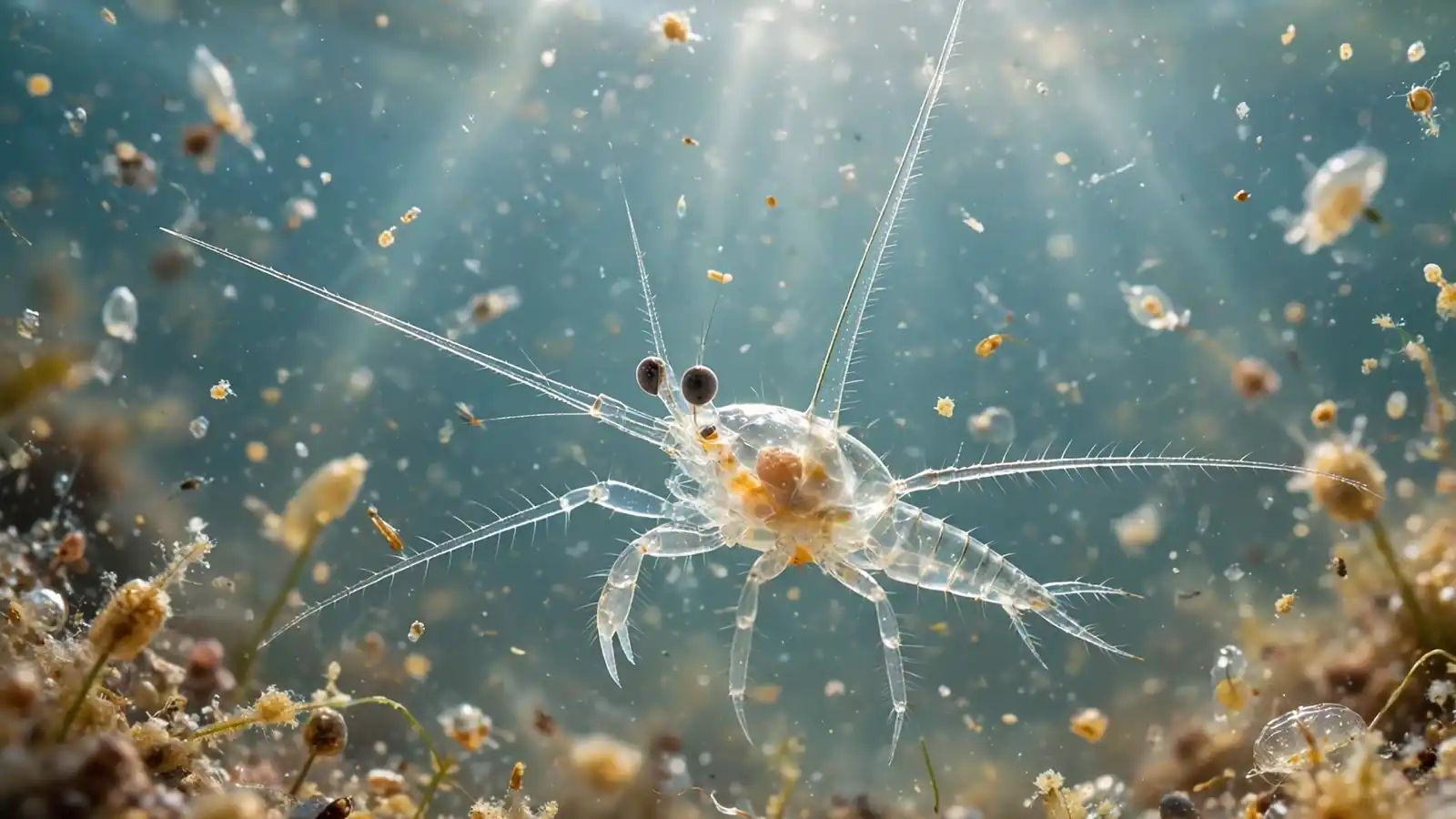
The male’s giant claw appears as he matures, growing larger with each moult until it dominates his body, and from then on his life is divided between waving, fighting and feeding. It lives up to about two years in the wild, a short life spent mostly in the open on the mud.
Females and the Small Claws: Feeding, Not Fighting
The female carries two small claws, and she uses both of them to feed. She scoops mud with each claw in turn, sorting food from sand twice as fast as a male, and she spends her low tides eating rather than displaying. The difference is the whole story of the species: the male invests in the claw, the female invests in feeding.
For a wider survey of the group, see this guide. Females choose their mates by the wave, and a male that waves well gets the chance to pass on his genes, while the female’s two small claws keep her fed through the breeding season. The mudflat works because both strategies work, side by side on the same mud.
Fun Facts
- A male’s giant claw can weigh from a third to half of his whole body.
- Females judge males by their wave — a fast, high wave wins the mate.
- It feeds by scooping mud and sorting the food from the sand.
- The largest species reaches about 5 cm across the shell.
- Fiddler crabs dig burrows that shelter them from the returning tide.
- The group counts about 100 species, all of them mudflat crabs.
Frequently Asked Questions
Why Do Male Fiddler Crabs Have One Big Claw?
The male fiddler crab’s giant claw is a signal and a weapon. He waves it to attract females and warn rivals, and he fights with it when two males meet. Females judge the wave, so a bigger, better-waved claw wins more mates.
Why Do Fiddler Crabs Wave Their Claw?
Fiddler crabs wave to attract mates and warn rivals. The wave is a display: a fast, high, regular wave tells females the male is strong and healthy, and tells other males to stay away from his burrow.
How Big Do Fiddler Crabs Get?
The largest fiddler crab species, Afruca tangeri, reaches about 5 centimetres across the shell. Most species are smaller, though the male’s giant claw can weigh from a third to half of his body.
Where Do Fiddler Crabs Live?
Fiddler crabs live on mudflats, in salt marshes and among mangroves, in the intertidal zone. They dig burrows in the soft mud and emerge at low tide to feed and display.
What Do Fiddler Crabs Eat?
A fiddler crab eats detritus, algae and bacteria scraped from the mud. It scoops mud to its mouth with the small claw, sorts the food from the grains, and drops the cleaned sand as a pellet.
How Long Do Fiddler Crabs Live?
A fiddler crab lives up to about two years in the wild. It grows fast as a young crab, moulting repeatedly, and the male’s giant claw appears as he matures.
Are Fiddler Crabs Dangerous?
No. A fiddler crab is harmless to people. The male’s giant claw looks alarming but is used for display and for fighting other males, not for attacking anything larger than a rival crab.
Similar Species Worth Exploring
Keep Exploring
Keep exploring the crabs: meet the ghost crab, the fastest crab on the beach, or browse the whole family in our guide to the types of crabs. Then come back to the mudflat, home of the fiddler crab.