Red Drum
Red Drum: The Copper Drummer of the Estuaries
The red drum is a copper-red estuary fish that drums with its swim bladder at dusk, growing to 155 cm with a black eyespot at its tail.
By Emily Carter · Reviewed by our vet team · Updated 10 November 2026 · 9 min read
Up to 155 cmDrums at duskLeast Concern
At a Glance
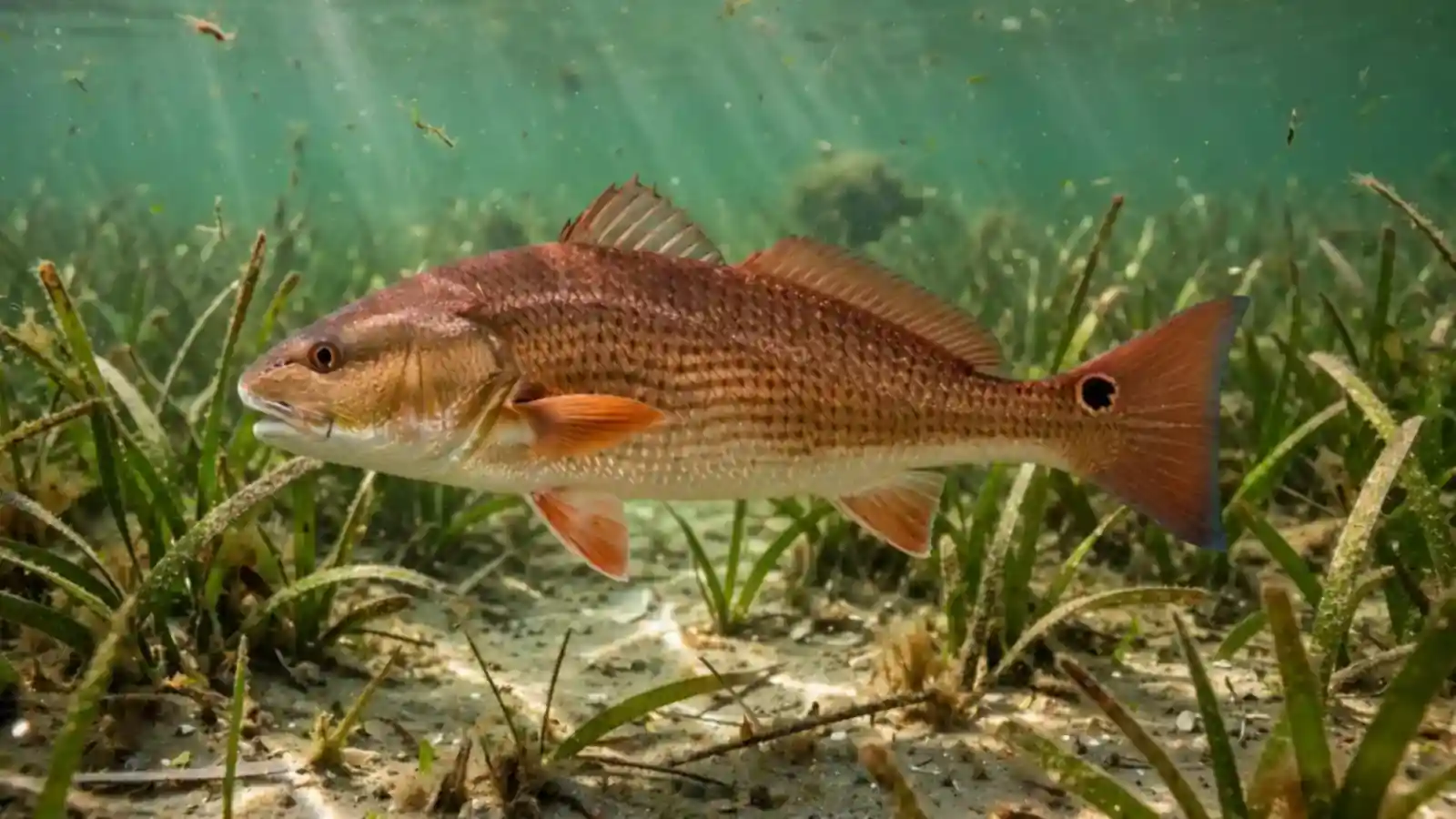
The red drum is the copper-red drummer of the western Atlantic, a fish that makes its own music with its swim bladder at dusk and carries a black eyespot at the base of its tail. It is the only species in its genus, a fish of estuaries and bays that grows from a puppy drum in the shallows to a bull red in the open sea.
Red Drum Size: How Big Do They Get?
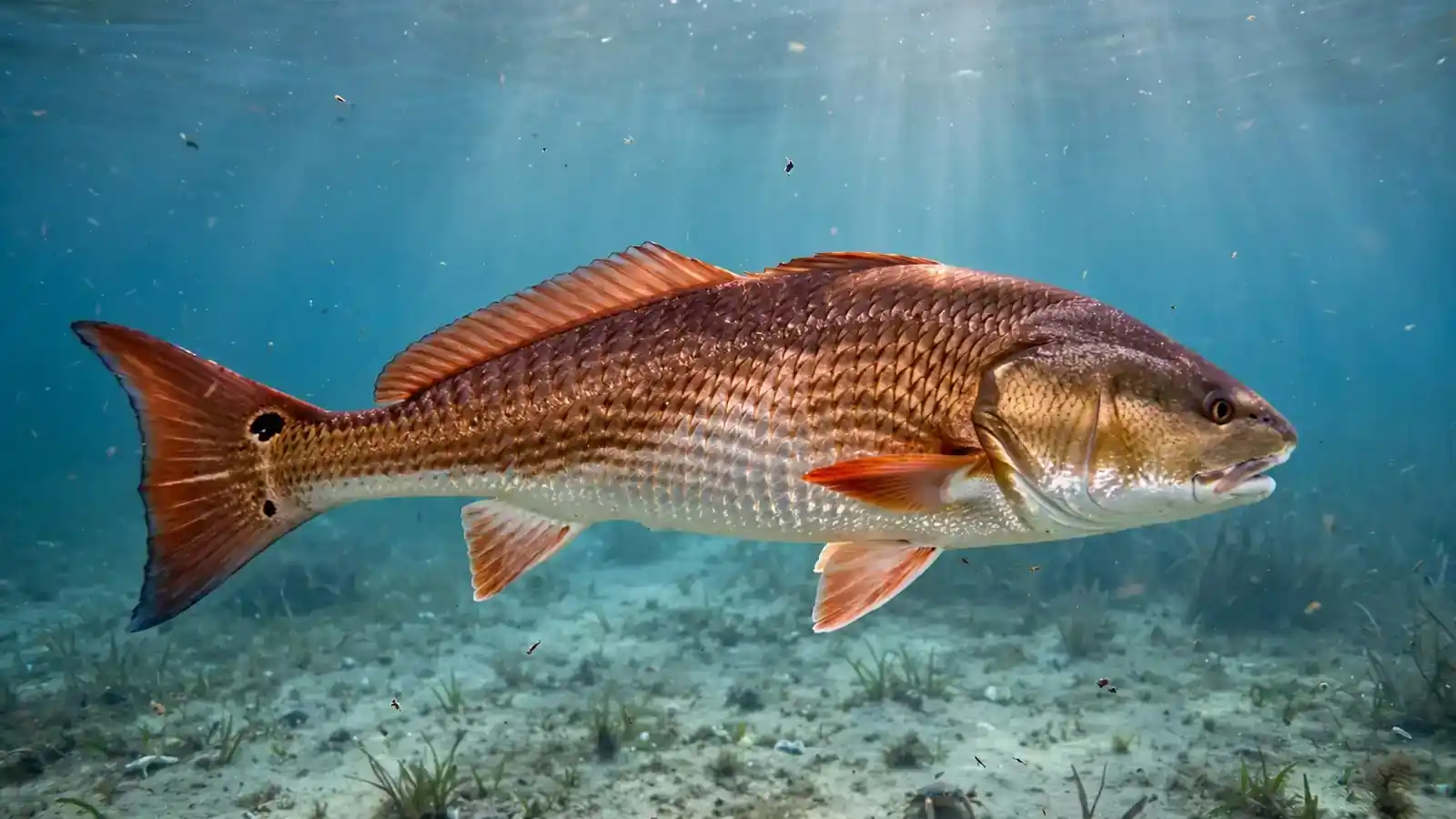
Most measure about 100 cm long and weigh around 22 kg, a solid, powerful fish built for the estuary. The biggest reliably measured individuals reach 155 cm and 45 kg, and the rod-and-reel record — a 94 lb (43 kg) fish caught off Hatteras in 1984 — is one of the most famous catches in American fishing. A fish that size is a bull red, a fish that has survived decades in the open sea.
Growth is fast in the warm estuaries and slow in the open ocean. It reaches maturity at around three to five years old, and the oldest recorded fish lived to 62 years. The big bull reds are the oldest fish in the population, and they are the ones that produce the most eggs — which is why the slot limit, protecting both the smallest and the largest fish, matters so much.
The Drumming Sound
It is named for the sound it makes, not its colour. Males drum at dusk in the spawning season, vibrating the muscles around their swim bladder to produce a low, resonant thumping that carries through the water. The sound is loud enough to be heard from a boat, and on a still evening in a spawning bay the drumming of a hundred males is a sound like distant thunder.
The drumming is a mating call. The males gather in the passes and inlets at dusk, drum to attract the females, and the spawning happens in the dark water above the sand. It is the reason the fish is called a drum, and the reason anglers listen for the sound — where the drums are drumming, the fish are spawning, and the fishing is at its best.
The Tail Spot
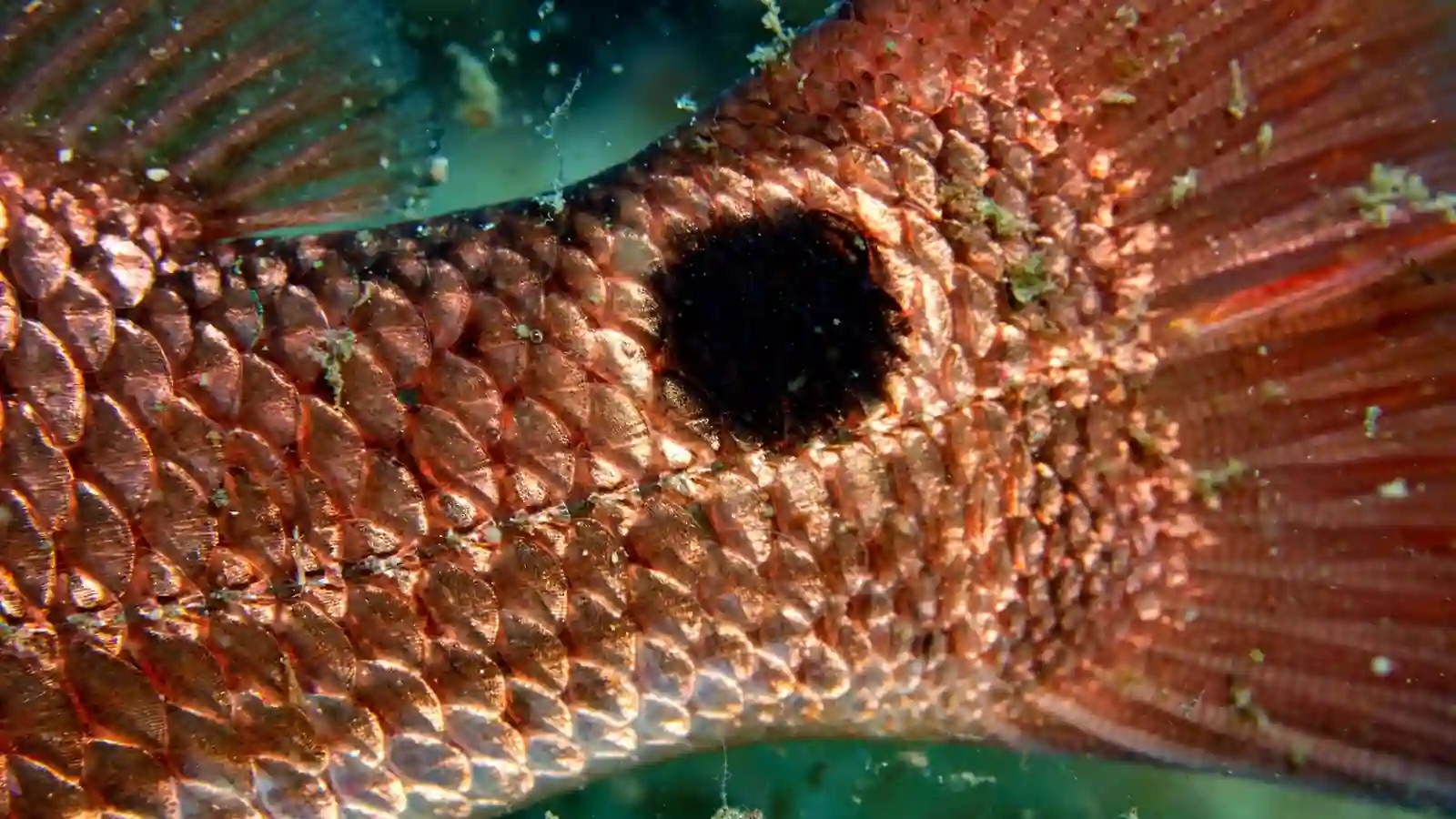
Every one carries a black eyespot at the base of its tail, a single dark spot ringed with pale scales that looks like a watching eye. Some fish carry more than one spot — two, three, even a row of them down the flank — but one spot is the rule, and it is the fish’s most reliable identification mark. The spot is there from the juvenile stage, and it stays for life.
The spot is thought to be a decoy, drawing a predator’s eye away from the head and toward the tail — a false target that lets the fish escape with a nip out of its tail fin instead of a bite out of its head. Whether or not that is the true purpose, the spot works as a field mark: no other fish in the estuary carries quite the same black eyespot on a copper-red body.
Where They Live
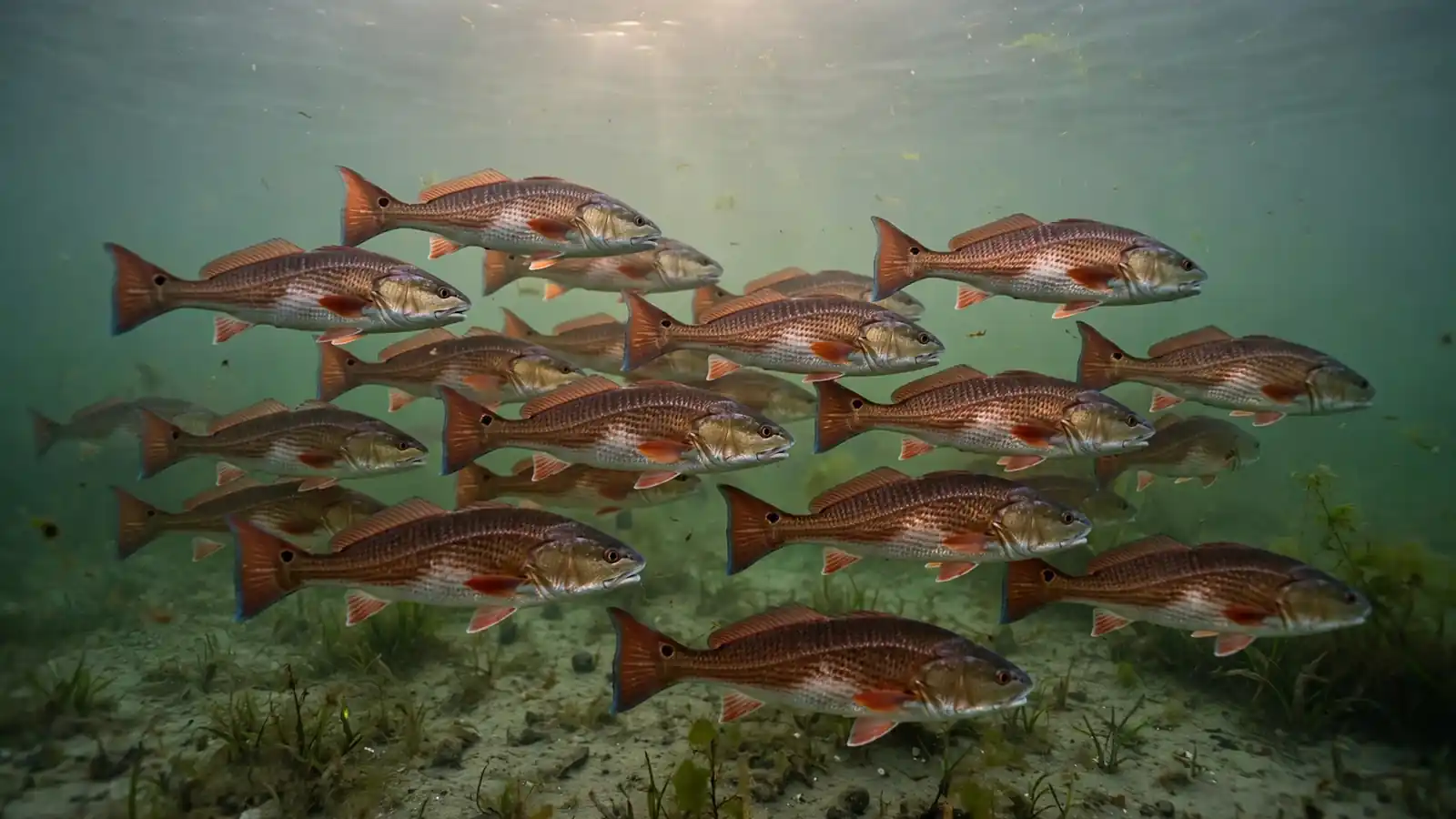
They live in the estuaries, bays and coastal waters of the western Atlantic, from New England to the Gulf of Mexico, with their stronghold along the south-eastern United States. They favour shallow, brackish water over sand, mud and oyster beds, living from the shallows down to around 40 metres, and they move with the tides and the seasons. For the full species profile, see the Florida Museum’s profile of the species.
Juveniles — the puppy drum — live in tidal creeks and marsh edges, where the water is shallow and the food is plentiful. As they grow they move into deeper bays and passes, and the largest fish, the bull reds, live in the open sea, returning to the estuaries only to spawn. Its life is a slow migration outward, from the creek to the coast to the open ocean.
What Do They Eat?
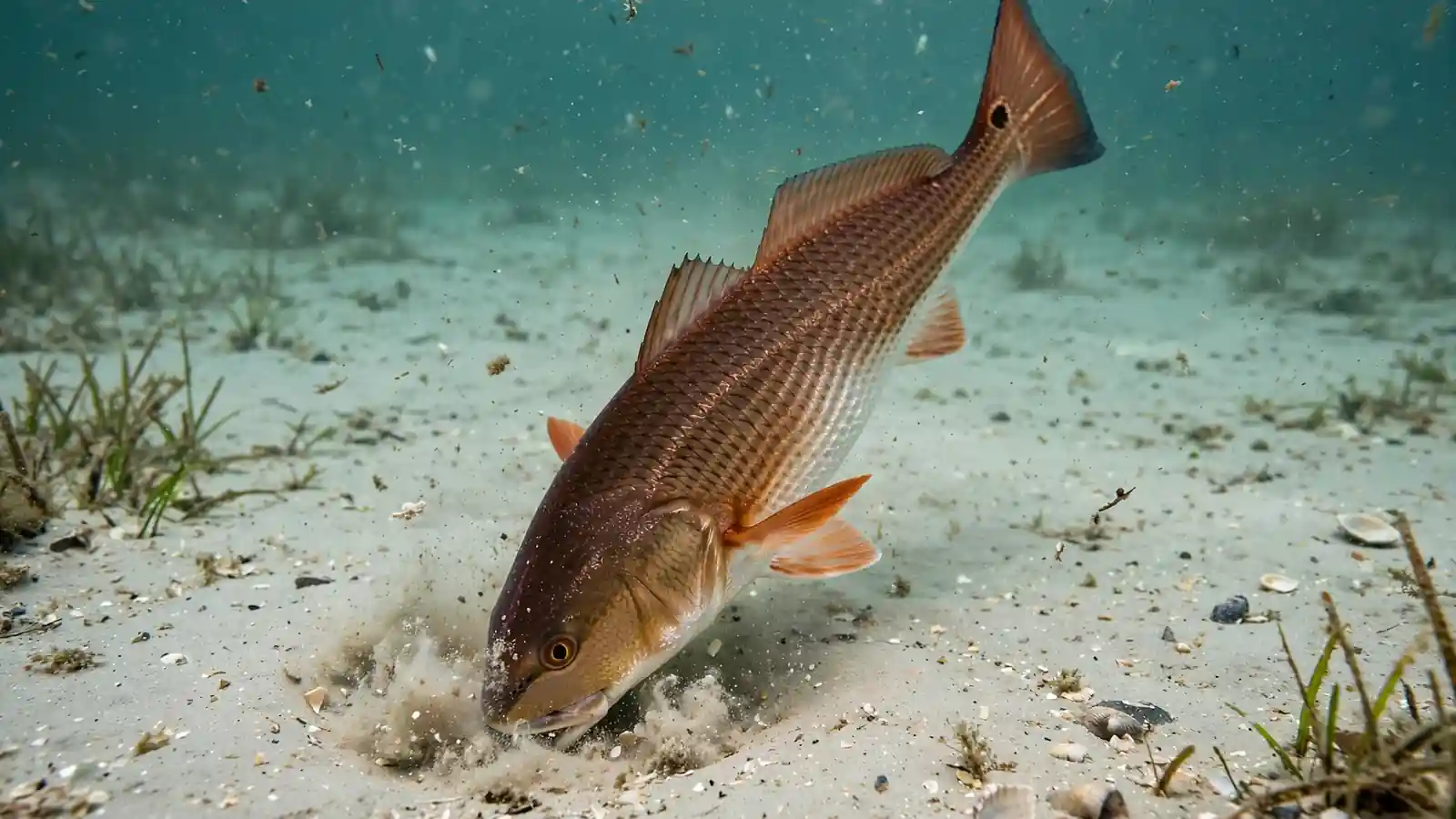
They eat crabs, shrimp, molluscs and small fish, hunting on the bottom in the shallows. They feed by rooting in the sand and mud, tail tilted up and head down, crushing crabs and molluscs with the blunt teeth in their throat. A school of them feeding on a flat will leave a trail of mud clouds behind it, and the birds that follow the school know what the clouds mean.
Feeding is busiest at dawn and dusk, when the crabs and shrimp are moving and the water is cool. It is not a fast hunter — it is a deliberate one, working the bottom methodically, and its copper colour blends with the muddy water of the estuary. A drum that is feeding is a drum that is hard to see, until it turns and the sun catches its flank.
Life Cycle: From Puppy Drum to Bull Red
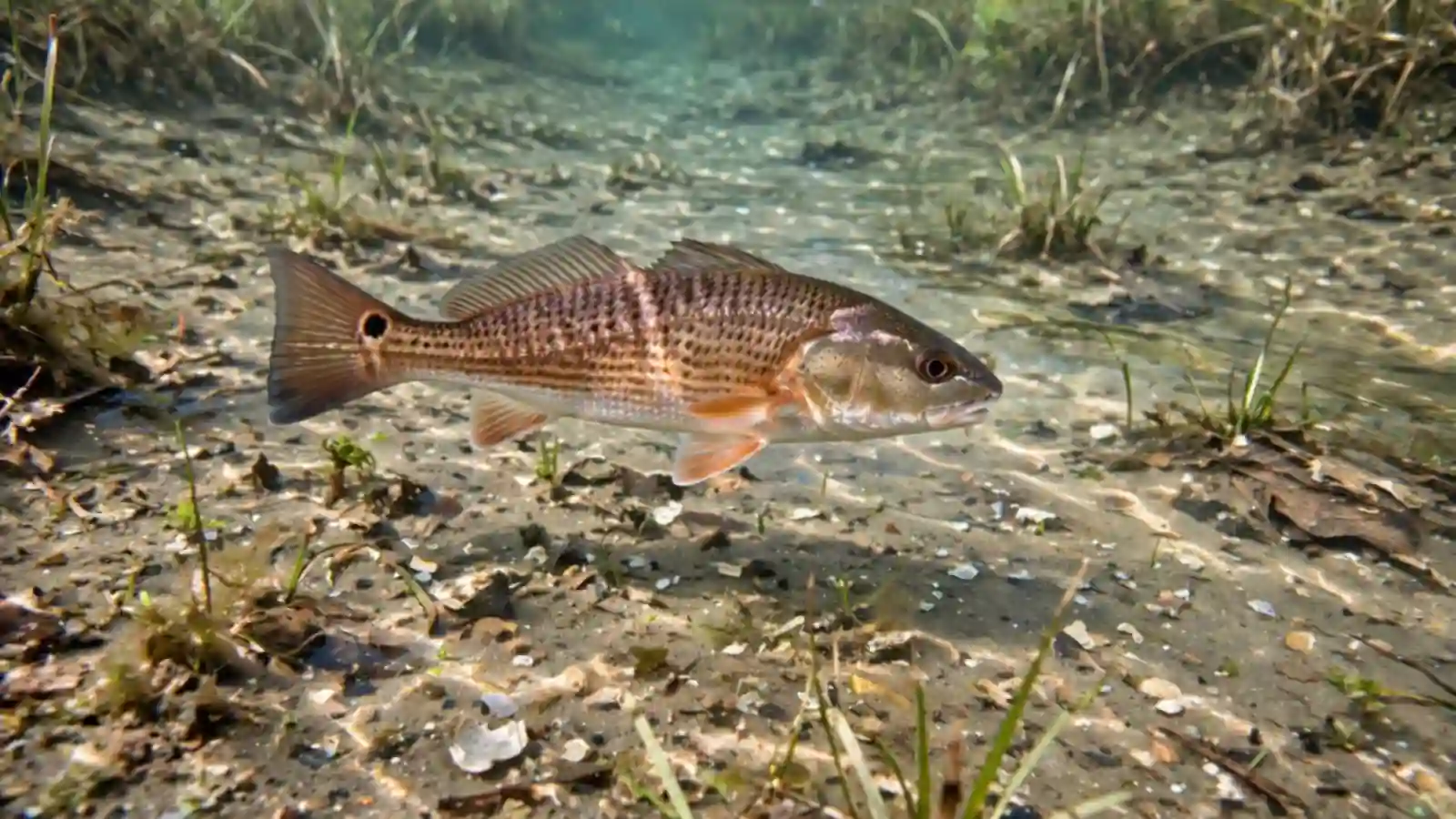
It starts life as a larva drifting in the open ocean, then settles in a tidal creek as a juvenile — a small copper fish a few centimetres long, hiding among the marsh grass and feeding on tiny crustaceans. The puppy drum stage lasts a few years, and the fish grows fast in the warm, food-rich shallows, reaching maturity at around three to five years old.
As it grows it moves outward: from the creek to the bay, from the bay to the pass, from the pass to the open sea. The bull reds — the fish over a metre long — live offshore, returning to the estuaries in late summer and autumn to spawn. A bull red can be 40 years old or more, and the oldest recorded fish lived to 62. It is a long life for a fish that started as a speck in a tidal creek.
Red Drum Conservation
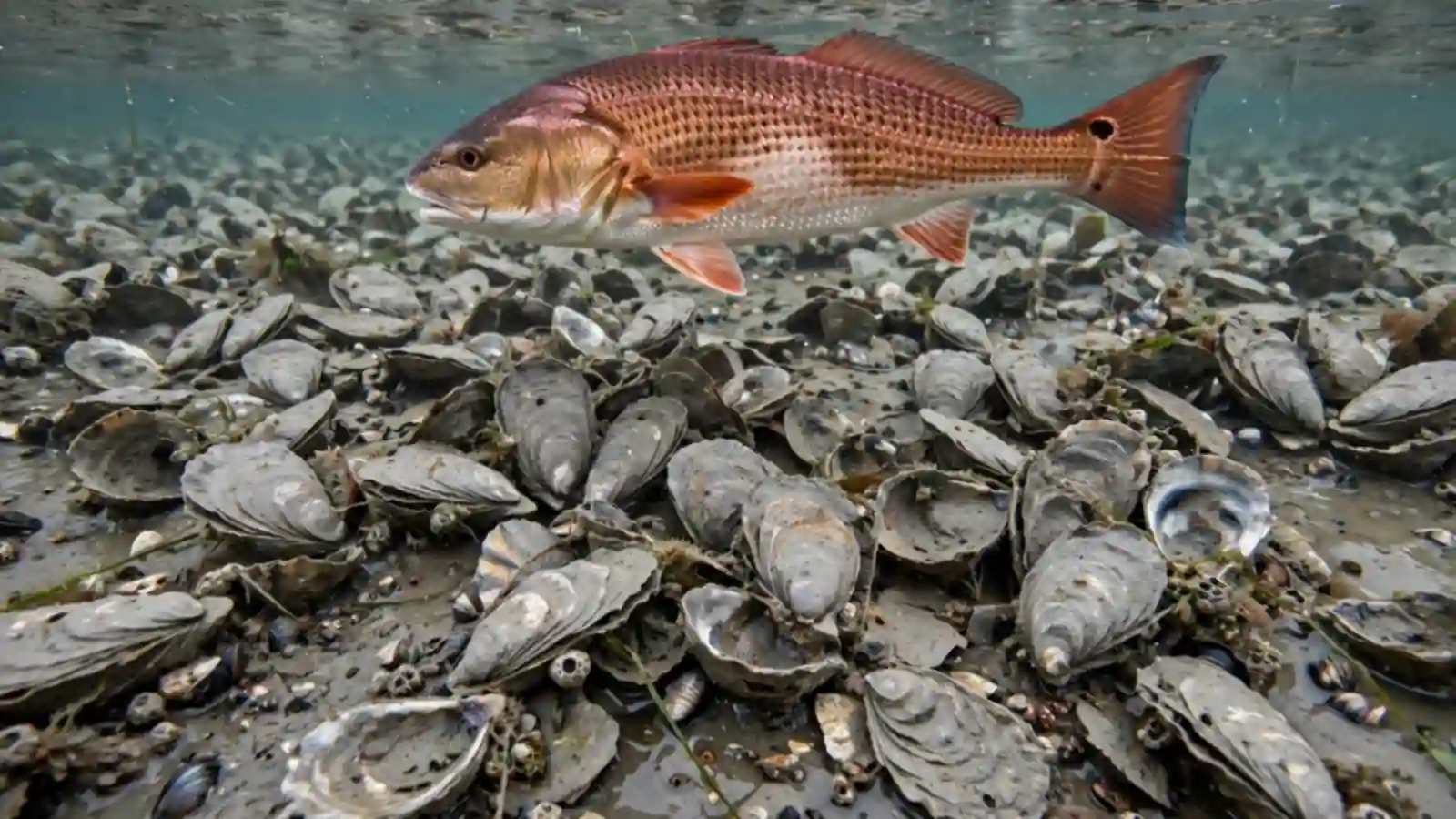
It is listed as Least Concern, a status set in 2020 with a stable trend — a verified, current assessment, and good news for a fish that was once fished to the edge. In the 1980s the stock was in trouble, hammered by commercial fishing for the blackened redfish trade, and the recovery that followed is one of the great success stories of American fisheries management.
The recovery came from the slot limit: a rule that protects both the smallest fish and the largest, letting anglers keep only the middle-sized ones. The slot limit keeps the juveniles growing and the big breeding bull reds spawning, and the stock has held steady ever since. It is a model that other fisheries have copied, and a reminder that a fishery can come back when the rules are right.
Fun Facts
- The rod-and-reel record fish weighed 94 lb (43 kg), caught off Hatteras in 1984.
- Males drum at dusk in the spawning season, vibrating their swim bladders loudly enough to be heard from a boat.
- The oldest recorded fish lived to 62 years.
- Every one carries a black eyespot at the base of its tail — some carry two or three.
- It is the only species in its genus, Sciaenops.
- The slot limit that saved the species protects both the smallest fish and the largest breeding bull reds.
Frequently Asked Questions
How Big Do Red Drum Get?
Up to 155 cm and 45 kg, with most adults around 100 cm and 22 kg. The rod-and-reel record is a 94 lb (43 kg) fish caught off Hatteras in 1984.
Why Do Red Drum Make a Drumming Sound?
Males drum at dusk in the spawning season, vibrating the muscles around their swim bladder to produce a low, resonant thumping. It is a mating call, loud enough to be heard from a boat, and it gives the fish its name.
What Is the Black Spot on a Red Drum’s Tail?
A black eyespot at the base of the tail, ringed with pale scales. It is the fish’s most reliable identification mark — some fish carry two or three spots — and it is thought to work as a decoy, drawing a predator’s eye away from the head.
Where Do Red Drum Live?
In the estuaries, bays and coastal waters of the western Atlantic, from New England to the Gulf of Mexico. Young fish live in tidal creeks and marsh edges; the largest bull reds live in the open sea and return to the estuaries to spawn.
What Do Red Drum Eat?
Crabs, shrimp, molluscs and small fish, hunted on the bottom in the shallows. They feed by rooting in the sand and mud, tail tilted up and head down, crushing crabs and molluscs with the blunt teeth in their throat.
How Long Do Red Drum Live?
The oldest recorded fish lived to 62 years. They reach maturity at around three to five years old, and the big bull reds offshore can be 40 years old or more.
Are Red Drum Endangered?
No. They are listed as Least Concern, a status set in 2020 with a stable trend. The stock recovered from heavy fishing in the 1980s thanks to the slot limit, which protects both the smallest fish and the largest breeding adults.
Similar Species Worth Exploring
Keep Exploring
Still exploring estuary country? Meet the grey cousin in the Mangrove Snapper guide, cross the Atlantic in the European Seabass guide, meet the estuary’s great predator in the Bull Shark guide, and then come back to the bay at dusk to hear the red drum.