Red Footed Booby
Red Footed Booby: The Tree-Nesting Tropical Diver
The red footed booby is the smallest booby — the only one that nests in trees — plunge-diving for flying fish at dawn and dusk in tropical seas, with feet as red as its name.
By Emily Carter · Reviewed by our vet team · Updated 10 November 2026 · 9 min read
Smallest boobyNests in treesRed feet
At a Glance
The red footed booby is the smallest booby, the only booby that nests in trees, and the most tropical of its family. It is 66–76 cm long, about a kilogram, with a wingspan to a metre, and it plunge-dives for flying fish at dawn and dusk in the open ocean.
Red Footed Booby Anatomy: The Smallest Booby
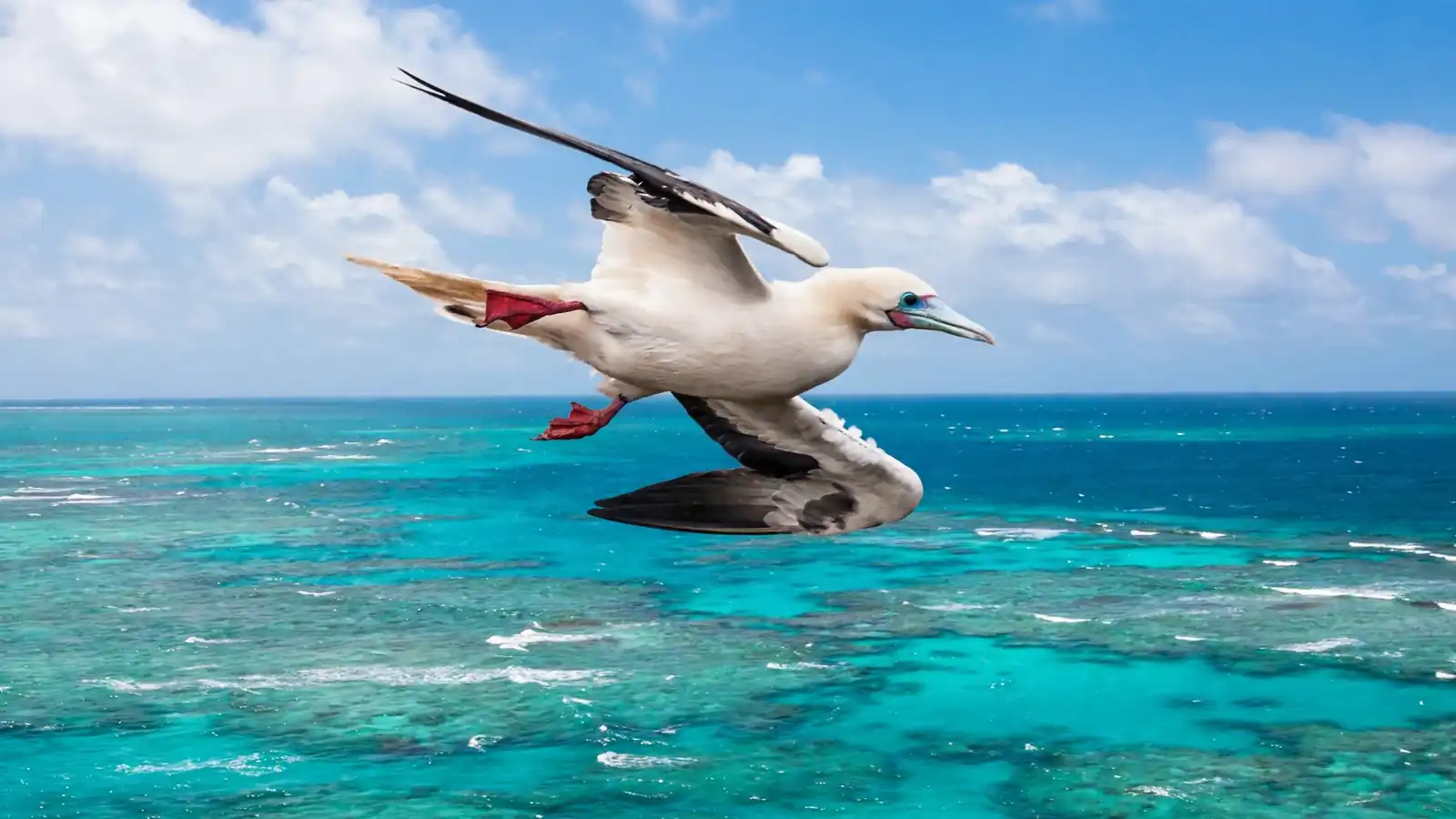
It is the smallest booby, 66–76 cm long and about a kilogram, with a wingspan to a metre. Its feet are bright red, its bill is blue with a red base, and its body is built for the open ocean: long wings, a pointed bill, and a streamlined shape that cuts the air.
The red feet are the giveaway, and they are also the display: the bird shows them off in courtship, and the brighter the red, the healthier the bird. The feet are not just colour — they are a signal, and a mate chooses by them.
Red Footed Booby Morphs: White, Brown and In Between
It comes in three morphs — white, brown, and an intermediate — and three subspecies, each with its own range. The white morph is the best-known: white body, black wingtips, red feet. The brown morph is all brown, and the intermediate is a mix of the two.
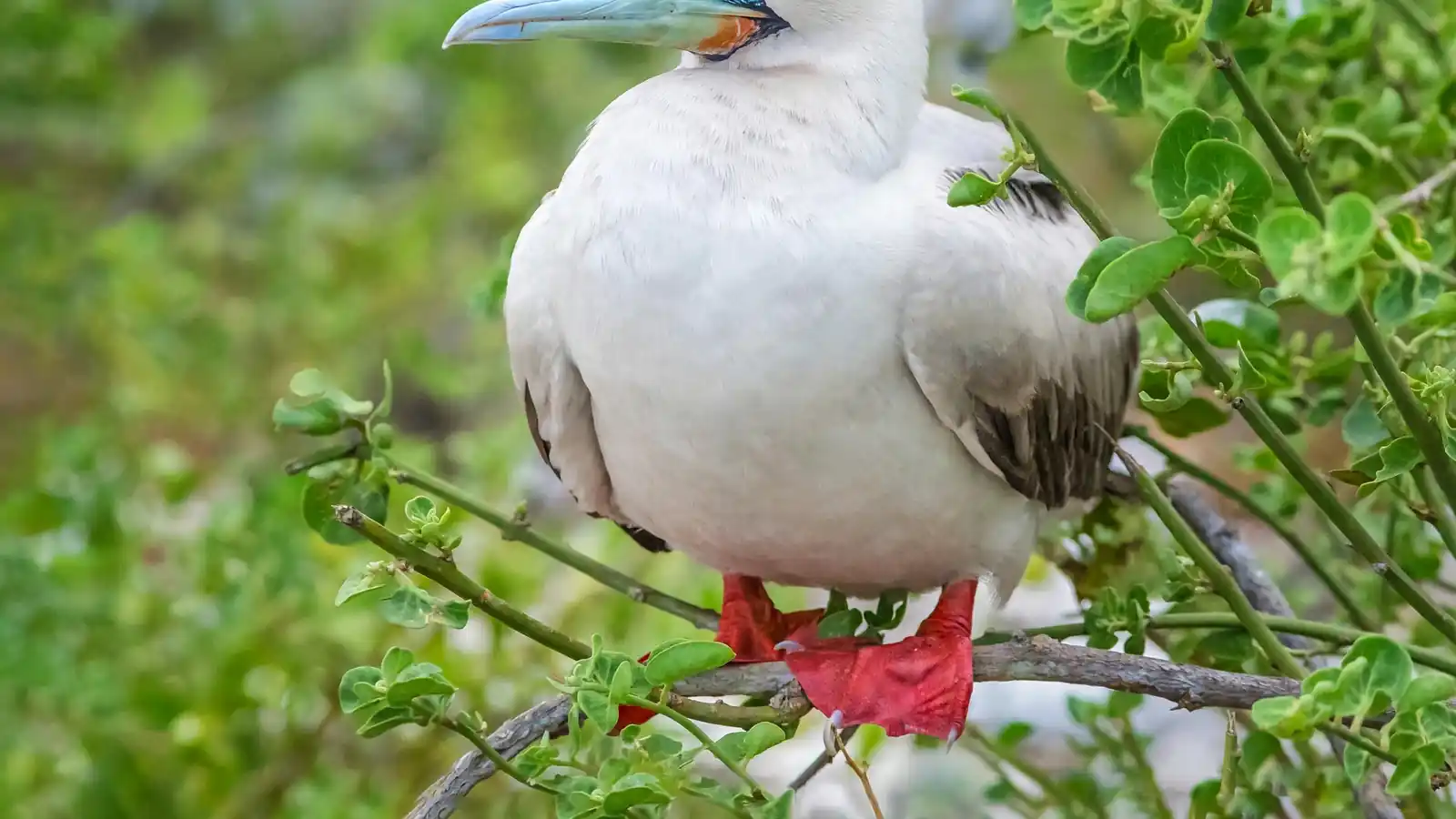
The morphs are not different species, and they are not different sexes: they are colour forms of the same bird, and they breed together. A white bird and a brown bird can be mates, and their chicks can be either colour — the morph is a matter of genes, not of species.
The Tree-Nesting Booby
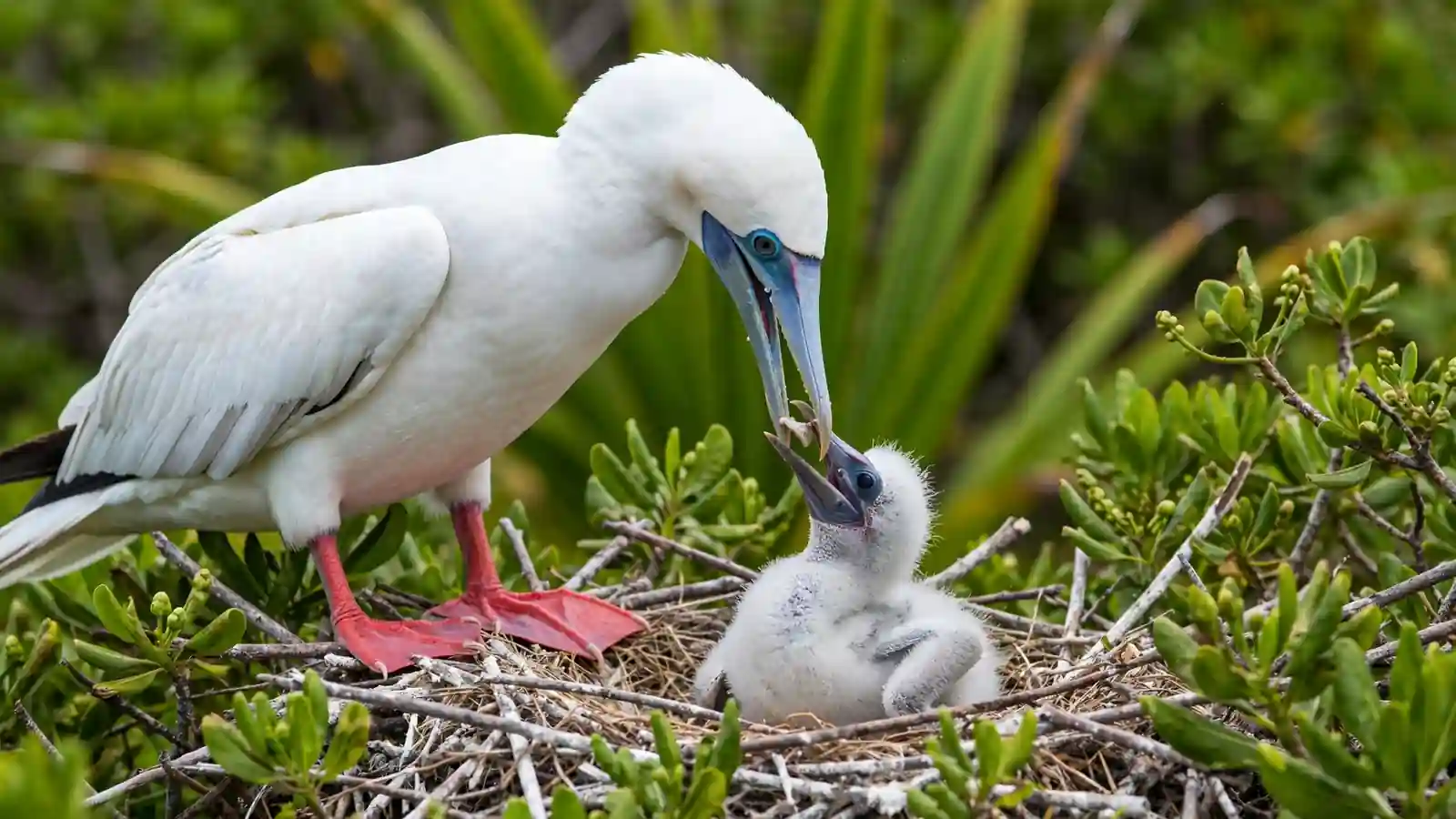
It is the only booby — with Abbott’s booby — that nests in trees. It builds a flimsy nest of sticks in a bush or a tree, on an island in the tropical ocean, and it lays a single egg there, high above the ground.

The tree nest is a solution to a problem: it lives on small tropical islands, and the ground is crowded with other seabirds. The trees are free, and the nests are safe from the rats and crabs that eat eggs on the ground. It is the only booby that chose the trees, and it is the only one that could.
Where They Live: Tropical Seas Worldwide
Red footed boobies live in tropical seas worldwide, on small islands in the Atlantic, the Pacific and the Indian Oceans. They are pelagic birds: they spend most of their lives over the open ocean, and they come to land only to breed.

The largest colony is on Genovesa Island in the Galápagos — the world’s largest colony of the species, though no precise count exists, and no global population figure is known. The birds are widespread, but they are not counted, and their numbers are a guess.
The islands it chooses are small, remote and treeless — or nearly so: a few bushes, a few low trees, and a colony of boobies in the branches. The birds return to the same islands year after year, and the colonies are stable for decades, even as the birds themselves come and go across the open ocean.
What Do They Eat? Flying Fish and Squid
Red footed boobies eat flying fish and squid, caught at the surface of the open ocean. They are pursuit divers: they fly low over the water, spot the fish, and plunge in after them, grabbing the prey with their bill.

The diet is the open ocean’s diet: flying fish that leap from the water, squid that rise to the surface at night, and the occasional small fish. It does not eat on land, and it does not eat in the shallows — it eats in the deep, open sea.
Plunge-Diving at Dawn and Dusk
It plunge-dives from 20–30 metres up, folding its wings and dropping like a dart into the water. It hunts at dawn and dusk, when the flying fish are near the surface and the light is low — the hours when the ocean’s surface is richest.
The dive is fast and precise: the bird spots the fish from the air, folds its wings, and drops, entering the water with barely a splash. It grabs the fish with its bill, surfaces, and swallows it — and then it is back in the air, hunting again. A booby that misses its dive does not chase the fish underwater — it surfaces, shakes itself off, and takes to the air again, ready for the next drop. For more on this booby, see this guide to the red footed booby.
Breeding: One Egg, a Year of Care
It lays a single egg, incubated for about 45–46 days, and the chick is cared for for over a year — one of the longest chick-care periods of any seabird. The parents take turns incubating, and they take turns feeding the chick, and the chick stays in the nest for months.
The single egg is the point: it invests everything in one chick, and it raises that chick slowly and carefully. A pair that loses its egg does not lay another — it waits for the next year, and tries again.
Fun Facts
- It is the smallest booby, at 66–76 cm and about a kilogram.
- It is the only booby — with Abbott’s booby — that nests in trees.
- It comes in three morphs: white, brown and intermediate.
- It plunge-dives from 20–30 metres up, at dawn and dusk.
- Its chick is cared for for over a year — one of the longest chick-care periods of any seabird.
- The largest colony is on Genovesa Island in the Galápagos, though no precise count exists.
Frequently Asked Questions
What Is a Red Footed Booby?
A tropical seabird in the species Sula sula, the smallest booby, 66–76 cm long and about a kilogram, with a wingspan to a metre. It is the only booby — with Abbott’s booby — that nests in trees, and it plunge-dives for flying fish and squid in the open ocean.
Why Does It Have Red Feet?
The red feet are a courtship signal: the bird shows them off to a mate, and the brighter the red, the healthier the bird. The feet are not just colour — they are a display, and a mate chooses by them.
Where Do Red Footed Boobies Nest?
In trees and bushes, on small tropical islands. They build a flimsy nest of sticks in a bush or a tree, and they lay a single egg there, high above the ground — safe from the rats and crabs that eat eggs on the ground.
What Do Red Footed Boobies Eat?
Flying fish and squid, caught at the surface of the open ocean. They are pursuit divers: they fly low over the water, spot the fish, and plunge in after them, grabbing the prey with their bill.
How Do Red Footed Boobies Hunt?
By plunge-diving from 20–30 metres up, folding their wings and dropping like a dart into the water. They hunt at dawn and dusk, when the flying fish are near the surface and the light is low.
How Many Eggs Do Red Footed Boobies Lay?
One. The single egg is incubated for about 45–46 days, and the chick is cared for for over a year — one of the longest chick-care periods of any seabird. A pair that loses its egg waits for the next year.
Is the Red Footed Booby Endangered?
No — it is listed as Least Concern, but its population is declining. No global population figure is known, and the largest colony, on Genovesa Island in the Galápagos, has no precise count.
Similar Species Worth Exploring
Keep Exploring
Meet the blue footed booby, its famous cousin, then the great cormorant, the diver that dries its wings, and browse the whole family in our types of seabirds hub — then come back to the tree-nesting tropical diver, the red footed booby.