Red King Crab
Red King Crab: the giant of the Bering Sea
The red king crab is a giant of the Bering Sea with a leg span of five feet — and an introduced population now marching across the Barents Sea. This guide follows Paralithodes camtschaticus from the cold rocky bottoms of Bristol Bay to the Norwegian fjords it was never meant to reach, and the pods it gathers in along the way.
By Emily Carter · Reviewed by our vet team · Updated 10 November 2026 · 10 min read
Leg span to about 1.8 mIntroduced to the Barents Sea in the 1960sGathers in pods on the seabed
At a Glance
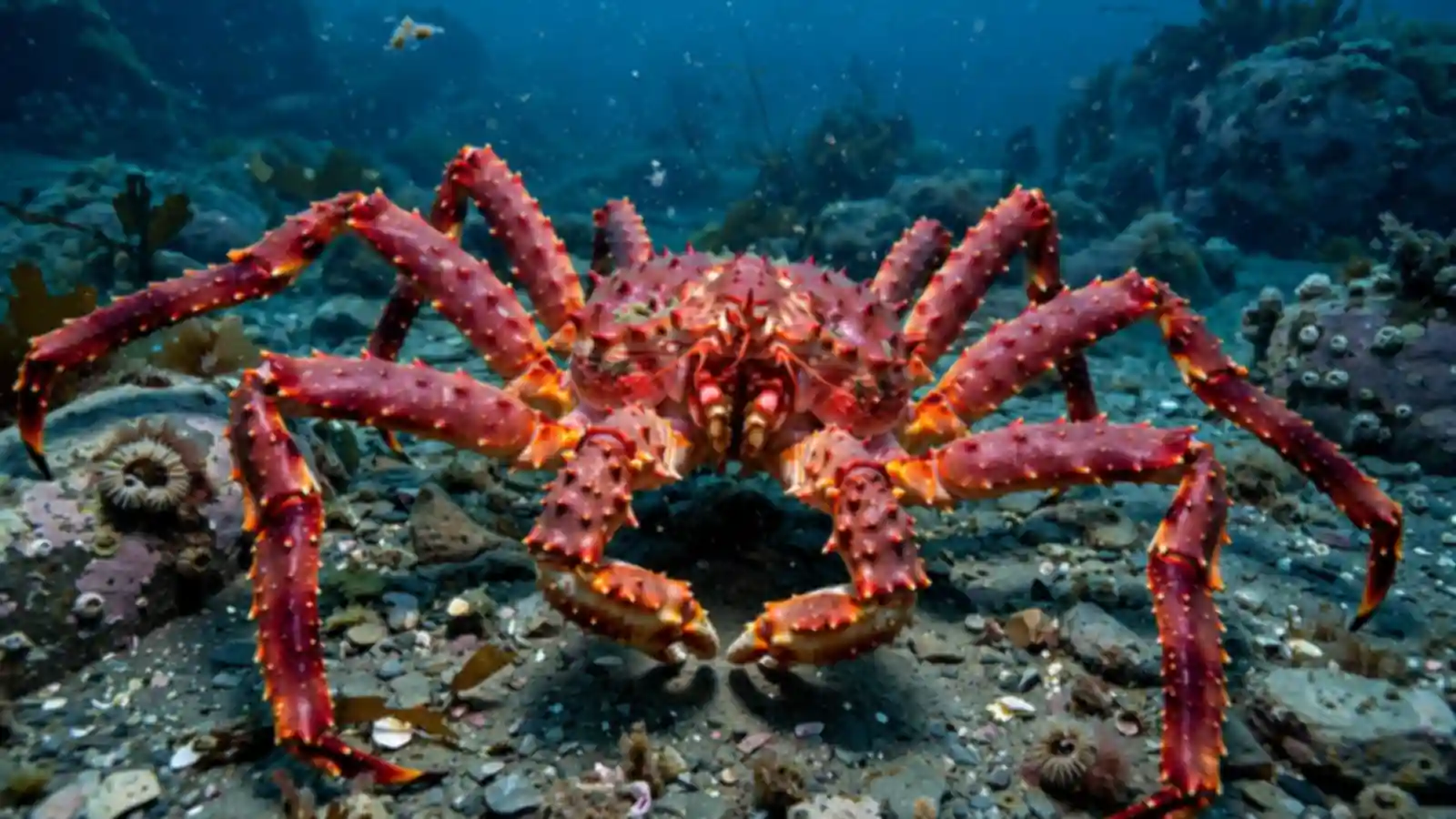
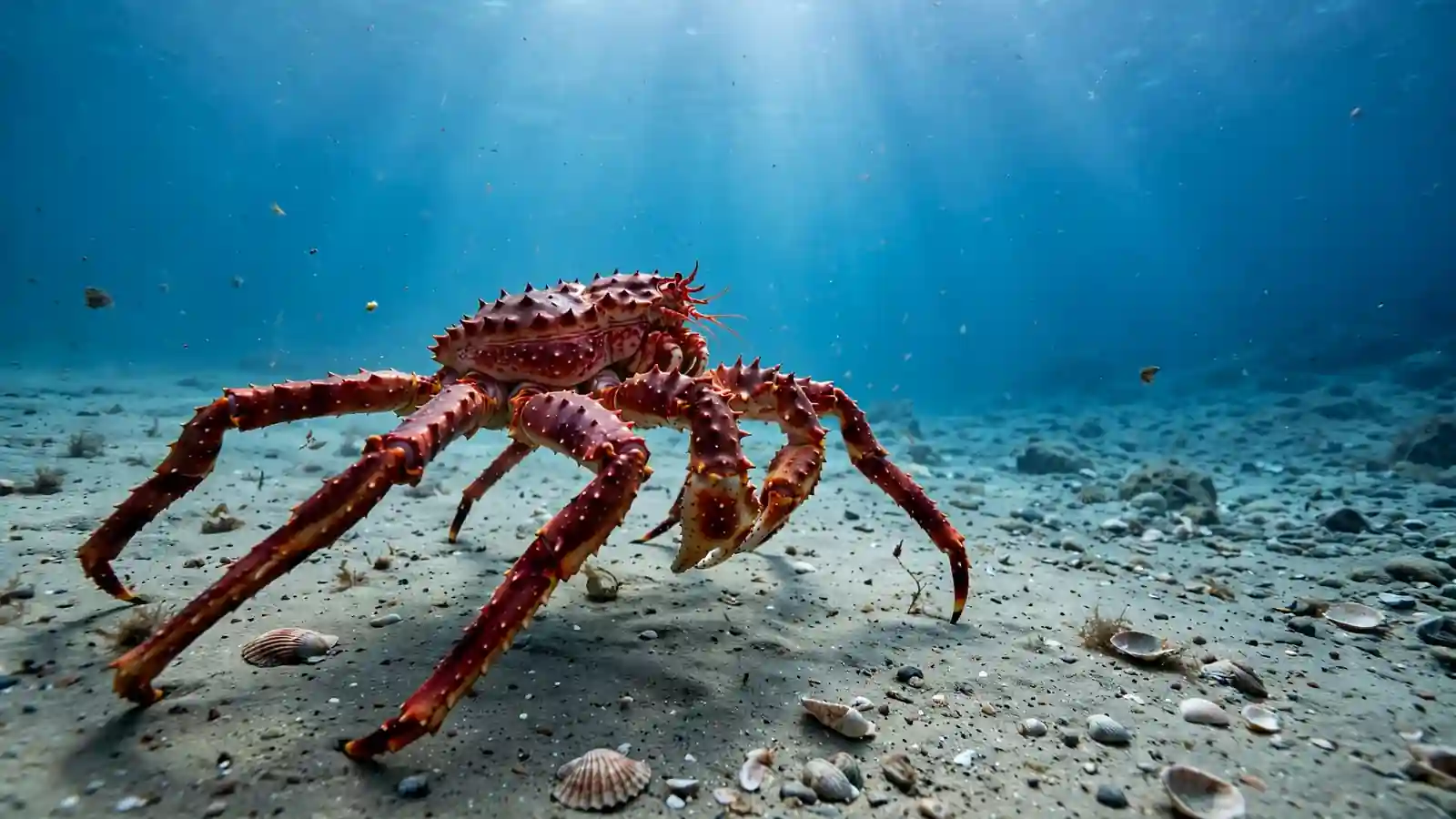
A red king crab looks like a creature from a colder, older sea — deep red, long-legged and spined, walking the bottom of the Bering Sea in water barely above freezing. It is the largest crab of the northern Pacific, and it is also an invader, carried to the Barents Sea by people and now spreading along Norway’s coast. This is the whole animal, at a glance, before the detail begins.
Red King Crab Size: Carapace, Legs and Weight
It is a large animal by any measure. The carapace reaches about 28 centimetres across, and the leg span reaches about 1.8 metres — five feet from claw tip to claw tip — which makes it one of the biggest crabs in the world. The legs are long, spiny and powerful, built for walking the cold seabed rather than swimming.

The weight is where the sources disagree, and the disagreement is worth stating plainly. The Alaska fish-and-game profile gives a record male of 24 lb, while other reports reach 28 lb, so the honest figure is the Alaska record with the higher reports noted alongside it. Either way, a big one is a heavy animal, and its size is the reason it is fished.
The Bering Sea Home: Cold Water and Rocky Bottoms
It is a cold-water animal of the northern Pacific, at home in the Bering Sea, Bristol Bay and the Gulf of Alaska. It lives on rocky and sandy bottoms in water barely above freezing, from the shallows down to several hundred metres, and it moves with the seasons, coming shallower to breed and deeper to feed.
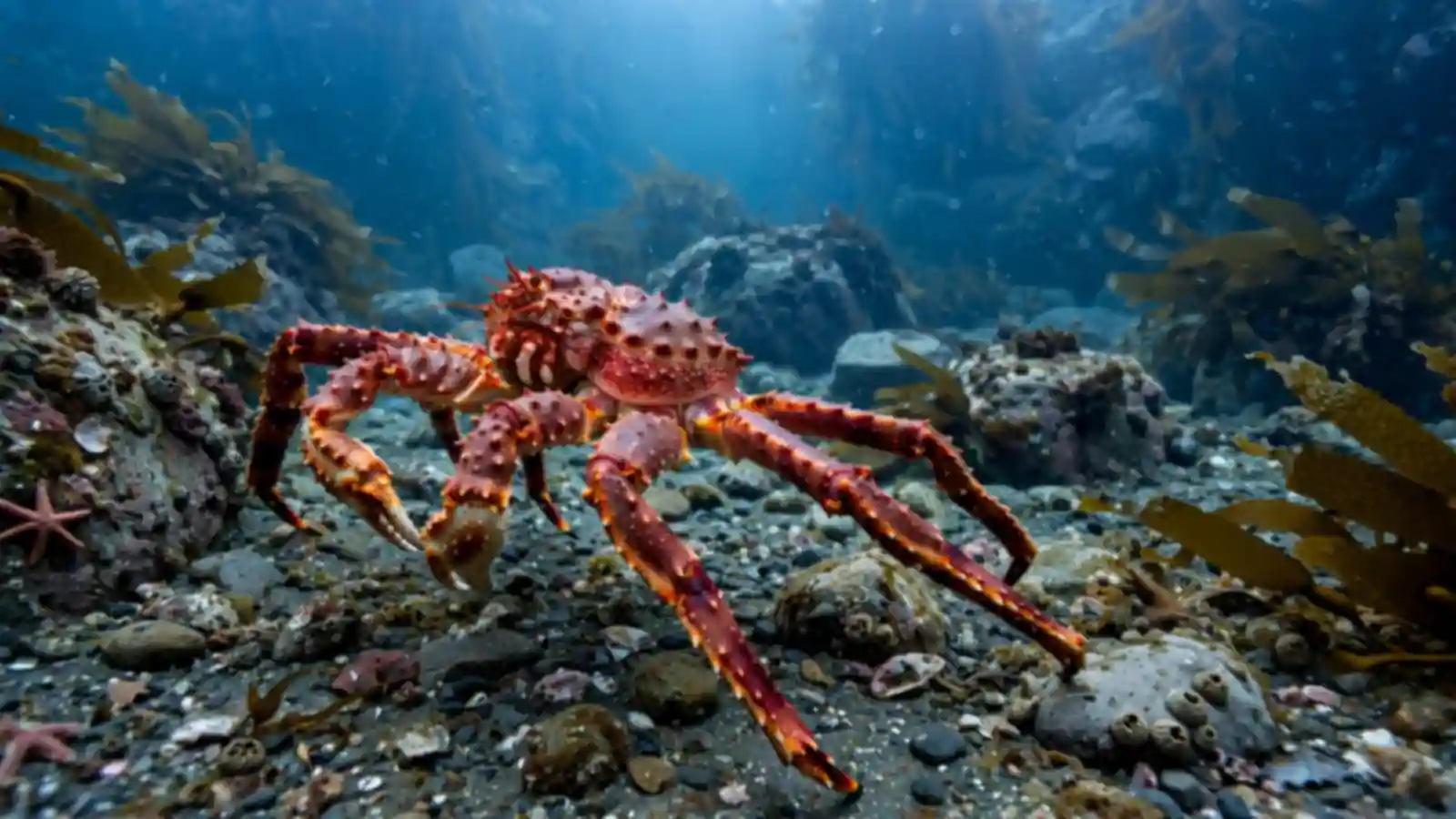
The cold is the point. Its whole biology is built for it — slow growth, a long life, and a shell that thickens with age — and the Bering Sea fishery exists because the crab is both large and abundant in those cold waters. The same cold tolerance is what let it survive the journey to the Barents Sea.
The Barents Sea Invasion: An Introduced Population
In the 1960s the Soviet Union introduced red king crabs to the Barents Sea, hoping to build a new fishery, and the crabs did what introduced species do when they find a suitable home: they spread. The population now marches along Norway’s coast, and Norwegian fishermen catch them while ecologists watch what they do to the native seabed.
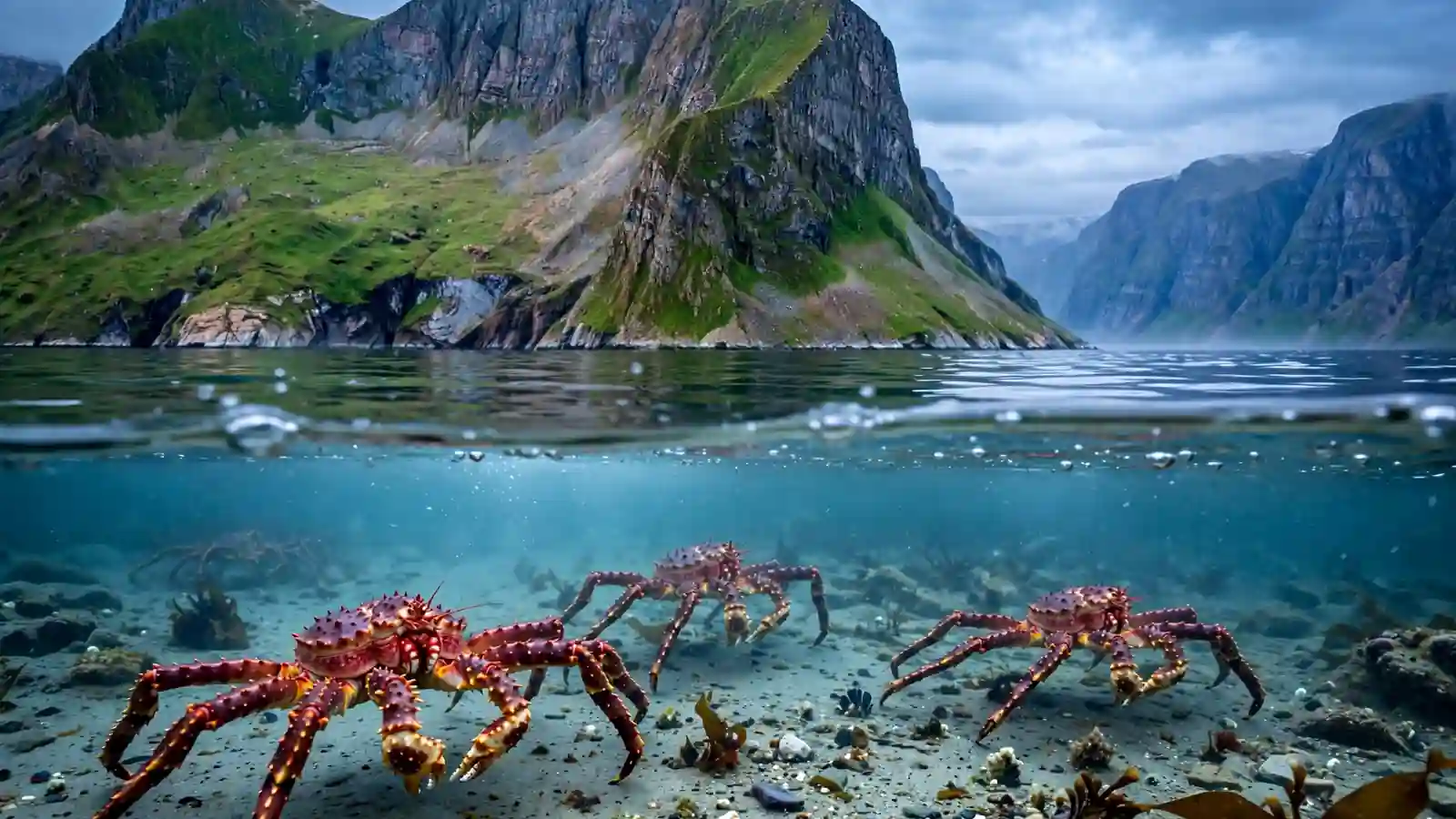
The invasion is the persistent news story around the red king crab, and it is a story with two sides. The crabs are valuable — a Barents Sea fishery now exists where none did before — but they are also predators on a seabed that never evolved with them, eating the molluscs and crabs that native animals depend on.
What Do They Eat? Scavenger and Predator
It eats molluscs, crabs, sea stars, fish and algae, and it is both a predator and a scavenger. It crushes shells with its claws, picks apart dead animals on the seabed, and grazes algae when prey is scarce, and the diet shifts with the season and the depth.

For a wider survey of the species, see this full profile. The broad diet is part of why the crab succeeds as an invader: it can eat almost anything on the bottom, and a seabed full of new food is a seabed it can settle on.
Podding: Why Red King Crabs Gather in Groups
Red king crabs gather in large groups, a behaviour called podding, and a pod can hold hundreds of animals clustered together on the seabed. Juveniles pod for protection, and adults pod too, especially around the moult, when their shells are soft and they are most vulnerable.
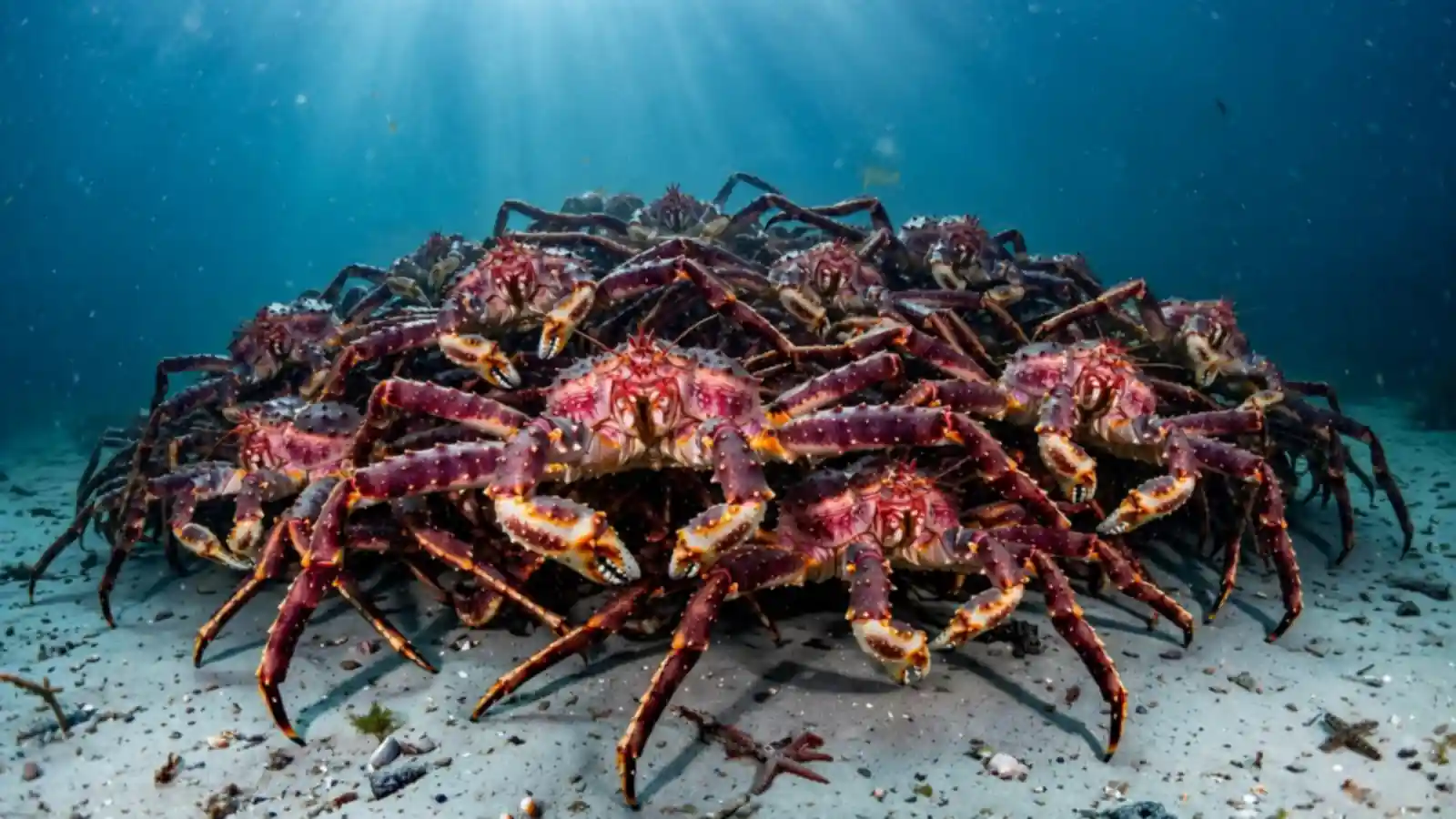
The pod is a defence that works by numbers. A predator that finds a pod faces a mass of spines and claws, and the crabs on the outside shield the ones inside. The behaviour is one of the most photographed sights of the Bering Sea, and it is also a warning: a pod is easy to catch, and the fishery has learned to leave pods alone during the moult.
Red King Crab Life Cycle: From Larva to Giant
It begins life as a tiny larva in the plankton, drifting in the cold surface water for weeks before it settles onto the bottom as a young crab. The larva is spiny and transparent, and most are eaten before they ever reach the seabed, but the survivors grow fast in their first years.
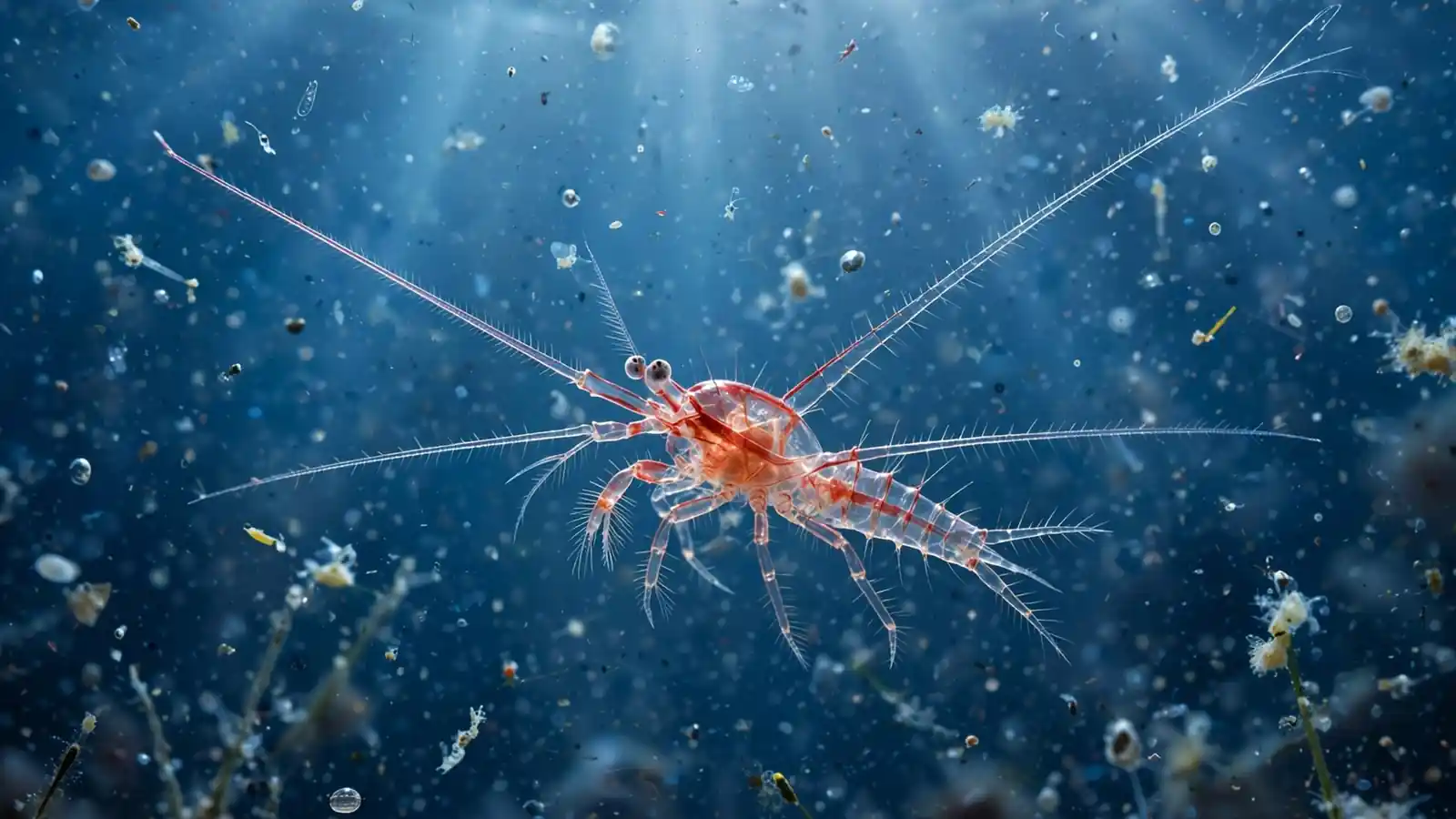
Growth slows with age, and it lives 20 to 30 years, moulting less often as it gets older and larger. The biggest animals are the oldest, and they are also the most valuable to the fishery — which is why the fishery protects the breeding females and the smallest males.
Conservation: A Managed Giant With a Spreading Range
It is managed as a fishery, not protected as an endangered animal, and the Bering Sea catch is set each year from surveys of the stock. The rules protect females and small males, and the fishery closes when the stock falls, which has happened in years when the crab numbers dropped.
The Barents Sea population is managed differently, as an invasive species that is also a resource: Norway fishes it hard in the west to slow the spread, and manages it as a fishery in the east where it is established. It is two stories at once — a managed giant at home, and a spreading invader abroad.
Fun Facts
- Its leg span reaches about 1.8 metres — five feet across.
- The record male weighed 24 lb by the Alaska profile, though other reports reach 28 lb.
- Red king crabs gather in pods of hundreds, especially around the moult.
- The species was introduced to the Barents Sea in the 1960s and is still spreading.
- It lives 20 to 30 years, growing slower as it ages.
- Its carapace reaches about 28 cm across, and its legs are long and spiny.
Frequently Asked Questions
How Big Do Red King Crabs Get?
Its carapace reaches about 28 centimetres across, and its leg span reaches about 1.8 metres. The record male weighed 24 lb by the Alaska fish-and-game profile, though other reports reach 28 lb.
Where Do Red King Crabs Live?
The red king crab lives in the cold northern Pacific — the Bering Sea, Bristol Bay and the Gulf of Alaska. It was introduced to the Barents Sea in the 1960s and now spreads along Norway’s coast.
Are Red King Crabs Invasive?
In the Barents Sea, yes. It was introduced there by the Soviet Union in the 1960s, and it has spread along Norway’s coast, eating native molluscs and crabs. In its native Bering Sea it is a natural part of the ecosystem.
What Do Red King Crabs Eat?
A red king crab eats molluscs, crabs, sea stars, fish and algae. It is both a predator and a scavenger, crushing shells with its claws and picking apart dead animals on the seabed.
How Long Do Red King Crabs Live?
It lives 20 to 30 years. It grows fast in its first years and slower as it ages, moulting less often, and the biggest animals are the oldest.
Why Are They Called King Crabs?
King crabs are the largest crabs of the cold seas, and the red king crab is the biggest of them in the northern Pacific. The name marks its size and its long spiny legs, not any royal connection.
Are Red King Crabs Endangered?
No. It is not endangered. It is managed as a fishery in the Bering Sea, with annual catch limits, and in the Barents Sea it is managed as an invasive species that is also fished.
Similar Species Worth Exploring
Keep Exploring
Keep exploring the crabs: meet the snow crab, the other Bering Sea giant, or browse the whole family in our guide to the types of crabs. Then come back to the cold Bering Sea, home of the red king crab.