Great Cormorant
Great Cormorant: The Diver That Dries Its Wings
The great cormorant dives with wettable feathers, then dries its wings in the sun for ten minutes — a diver that chose the water over the air, and a bird that came back from the brink in Europe.
By Emily Carter · Reviewed by our vet team · Updated 10 November 2026 · 9 min read
Wettable feathersDives to 15–20 m500,000+ pairs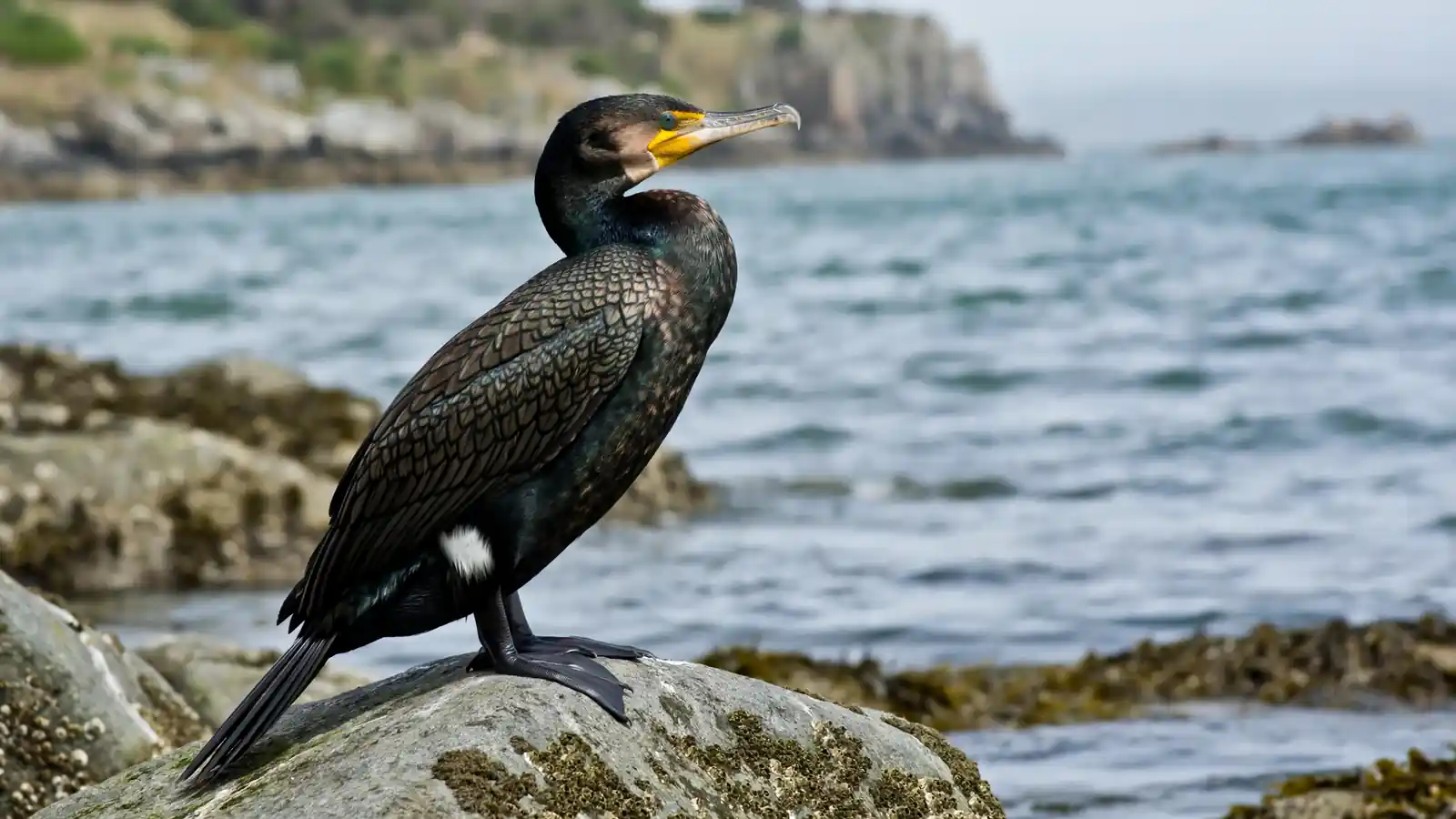
At a Glance
The great cormorant is a big black diver, 80–100 cm long with a wingspan of 121–160 cm, that lives on coasts, lakes and rivers across Europe, Asia and Africa. It is famous for one thing: after a dive, it stands with its wings spread wide, drying them in the sun — because its feathers are wettable, and it cannot fly until they dry.
Great Cormorant Anatomy: The Diver in Black
It is a big black bird, 80–100 cm long, weighing 1.8–2.8 kg, with a wingspan of 121–160 cm. Its bill is long and hooked, its neck is thick and powerful, and its body is built for diving: dense bones, strong legs set far back, and feet that paddle like oars.
The black is not quite black: in breeding season, the adult grows a white thigh patch and a white throat, and the head and neck turn a glossy green-black. The bird is unmistakable on the water — big, black, and low in the water, with only its head and neck showing.
Wettable Feathers: The Secret of the Dive
Its feathers are wettable: they absorb water instead of repelling it, and the bird sinks easily and dives deep. Most waterbirds have waterproof feathers that trap air and make them buoyant — the cormorant has the opposite, and it is the secret of its diving.

The wet feathers are a trade: the bird dives better, but it cannot fly until the feathers dry, and it loses heat in the water. The cormorant pays for its diving with cold and with waiting — and it pays willingly, because the fish are worth it.
Great Cormorant Wing Drying: Ten Minutes in the Sun
After a dive, it stands with its wings spread wide in the heraldic pose — wings out, head up, drying in the sun for ten to twenty minutes. The pose is famous, and it is necessary: the wet feathers must dry before the bird can fly again.

The pose is also a signal: a cormorant with its wings spread is a cormorant that has finished fishing, and the other birds on the rock know it. The drying takes time, and the bird waits — a black statue on a rock, wings wide, while the sun does its work.
On a cloudy day the drying takes longer, and the bird waits longer — patience is part of the cormorant’s trade.
Diving: 30 Seconds Down, 20 Metres Deep
It dives for an average of 28–30 seconds, and it can pass 70 seconds on a long dive. It dives commonly to 15–20 metres down, propelled by its feet, steering with its tail, and hunting by sight in the green water.

The dive is a chase: the cormorant spots a fish, dives after it, and grabs it with its hooked bill. It swallows the fish headfirst, underwater or at the surface, and then it dives again — a bird that fishes for a living, and fishes well.
What Do They Eat? Fish, Swallowed Headfirst
Great cormorants eat fish to 30–40 cm long, swallowed headfirst — the head goes down first, so the fins fold flat and the fish slides down the throat. They eat whatever fish are in the water: roach, perch, pike, eels, and the small fish of the coast and the lake.
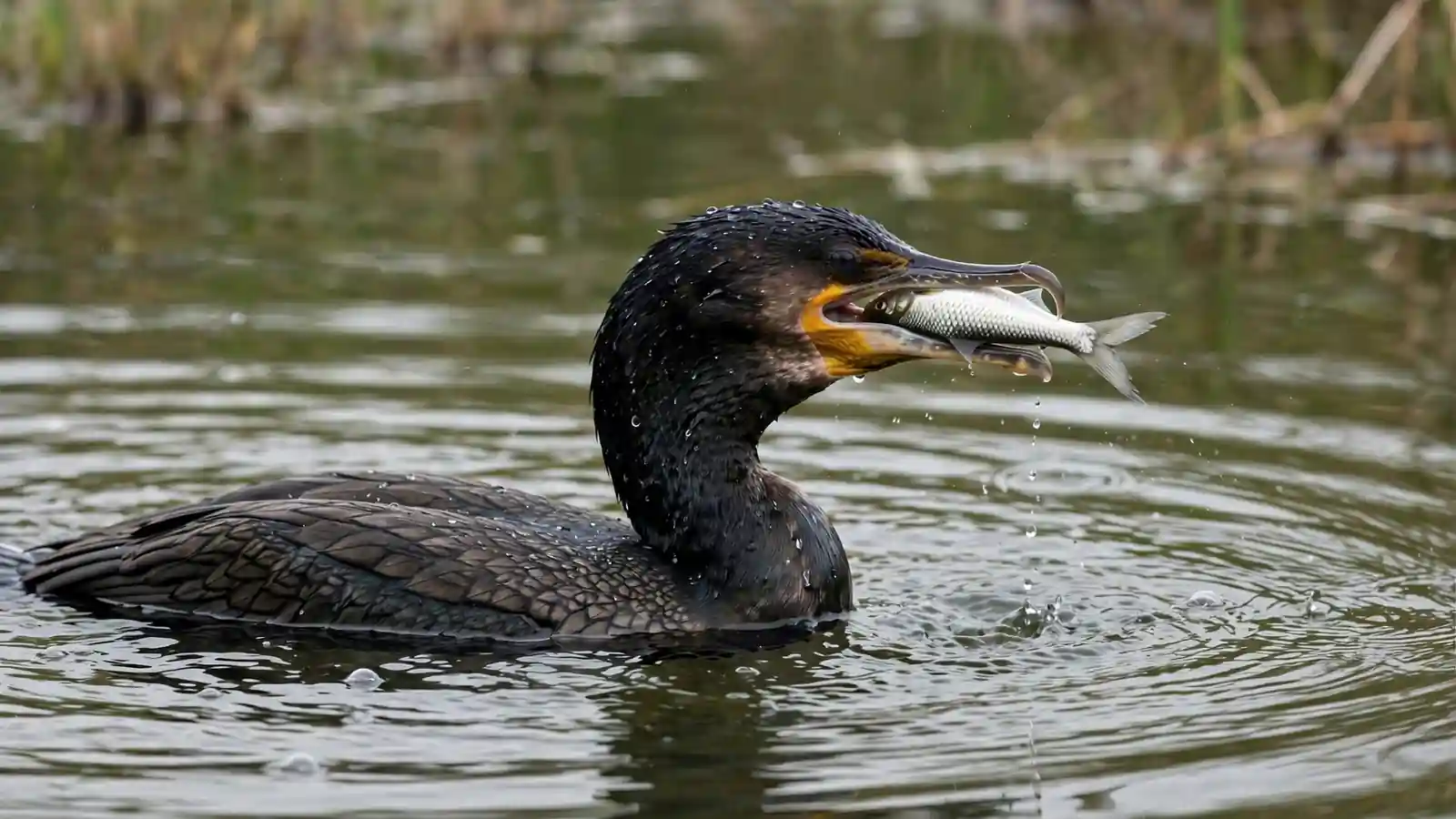
The diet is the reason for the cormorant’s reputation: fishermen have blamed it for eating their fish for centuries, and in some places it is still shot for it. But the cormorant eats what the water gives it, and the water gives it fish — which is what a diver is for.
Where They Live: Coasts, Lakes and Rivers
Great cormorants live on coasts, lakes and rivers across Europe, Asia and Africa, and they are at home in salt water and fresh water alike. They nest in trees or on cliffs, in colonies, and they roost on rocks, posts and buoys — anywhere with a view of the water and a place to dry their wings.

They are partial migrants: the northern birds move south in winter, and the southern birds stay put. In Europe, they are a familiar sight on every coast and every lake, and their colonies are growing — which is the story of the next section. For more on it, see this cormorant guide.
The colonies are noisy, crowded and smelly — hundreds of nests in a single tree, or on a single cliff, with the birds coming and going all day. The trees under a cormorant colony die from the droppings, and the colony moves on, leaving a skeleton of white branches behind it. It is a bird that reshapes the land it nests on, and the land remembers it long after the birds have gone.
The Comeback: 30,000 Pairs to Over 500,000
Its comeback is one of Europe’s great conservation stories. In the 1970s, there were about 30,000 breeding pairs in Europe — the bird was persecuted, shot, and driven to the edge. By 2020, there were over 500,000 breeding pairs, and the bird is now common on every coast.
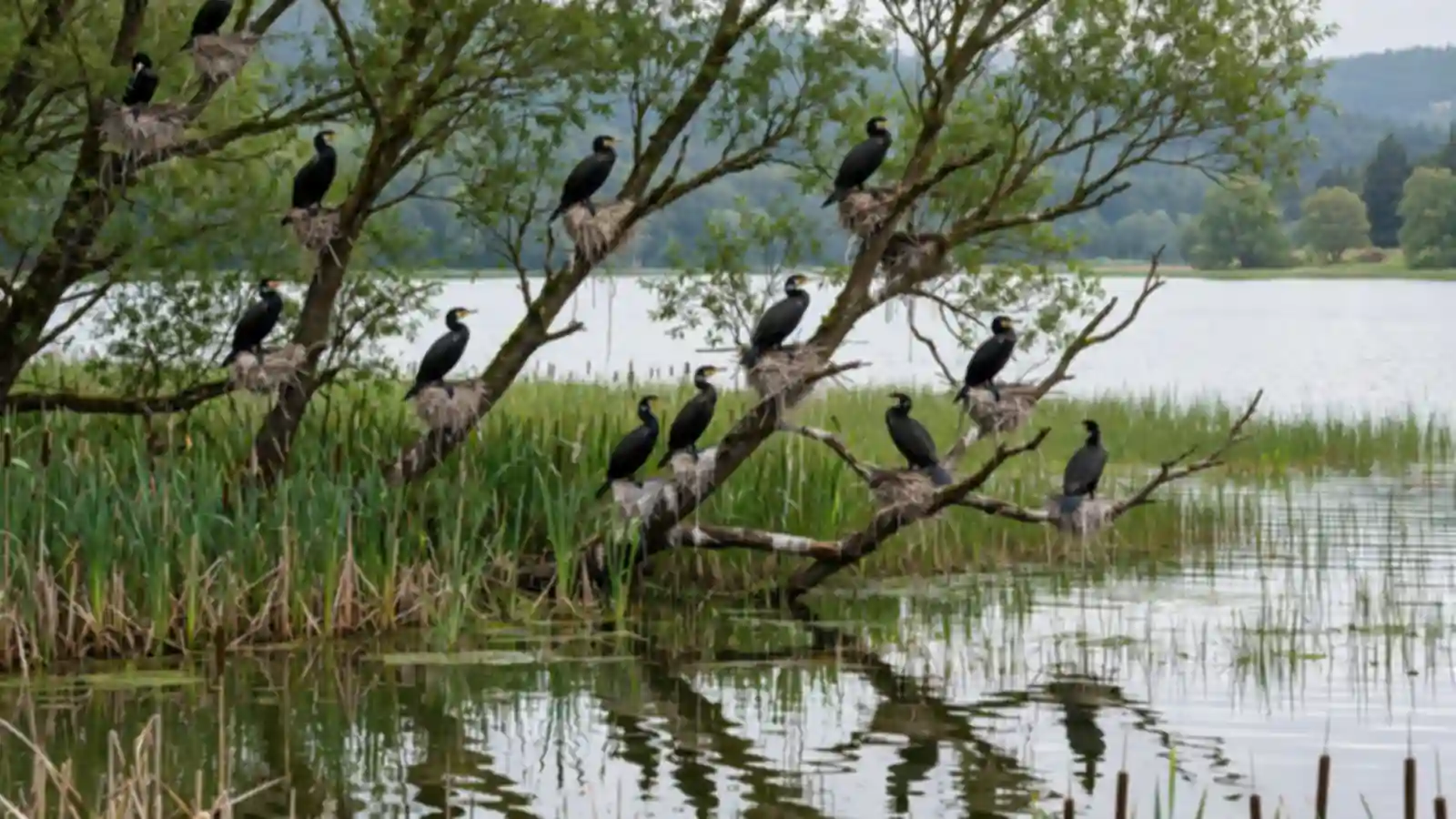
The recovery came from protection: the bird was protected, the persecution stopped, and the cormorant did the rest. It is a reminder that a bird that was once shot for eating fish can come back — and that the comeback is not always welcome, because the fishermen still blame it for their catch.
Fun Facts
- Great cormorants are 80–100 cm long, with a wingspan of 121–160 cm.
- Their feathers are wettable — they absorb water, which is why the bird can dive so well.
- They dry their wings in the heraldic pose for ten to twenty minutes after a dive.
- They dive for an average of 28–30 seconds, and can pass 70 seconds.
- They swallow fish headfirst, so the fins fold flat.
- European breeding pairs grew from about 30,000 in the 1970s to over 500,000 by 2020.
Frequently Asked Questions
What Is a Great Cormorant?
A large black diving bird in the species Phalacrocorax carbo, 80–100 cm long with a wingspan of 121–160 cm, living on coasts, lakes and rivers across Europe, Asia and Africa. It dives for fish and dries its wings in the sun afterwards.
Why Do Cormorants Dry Their Wings?
Because their feathers are wettable — they absorb water instead of repelling it, which helps the bird dive. After a dive, the bird must stand with its wings spread for ten to twenty minutes to dry them before it can fly again.
How Deep Do Great Cormorants Dive?
They dive commonly to 15–20 metres down, for an average of 28–30 seconds, and they can pass 70 seconds on a long dive. They are propelled by their feet and steer with their tail.
What Do Great Cormorants Eat?
Fish to 30–40 cm long, swallowed headfirst — the head goes down first, so the fins fold flat and the fish slides down the throat. They eat roach, perch, pike, eels and the small fish of the coast and the lake.
Where Do Great Cormorants Live?
On coasts, lakes and rivers across Europe, Asia and Africa, in salt water and fresh water alike. They nest in trees or on cliffs, in colonies, and they roost on rocks, posts and buoys.
How Many Great Cormorants Are There?
In Europe, breeding pairs grew from about 30,000 in the 1970s to over 500,000 by 2020 — one of the great conservation comebacks. The bird is now common on every European coast and lake.
Are Great Cormorants Endangered?
No — they are listed as Least Concern, and their numbers are growing. They were once persecuted and shot for eating fish, but protection brought them back, and they are now one of Europe’s commonest waterbirds.
Similar Species Worth Exploring
Keep Exploring
Meet the red footed booby, the tree-nesting tropical diver, then the Atlantic puffin, the clown of the sea, and browse the whole family in our types of seabirds hub — then come back to the diver that dries its wings, the great cormorant.