Sand Dollar
Sand dollar: the white disc is the skeleton — the animal is purple
The sand dollar on the beach is a ghost. The real animal is a dark, velvet-coated, slow-moving urchin that stands in underwater meadows by the thousand, sweeping dinner across its own body with ten thousand tiny hands. Finding a white one means finding a skeleton; finding a purple one means finding a life — and knowing the difference takes five honest checks. Here they are.
By Emily Carter · Reviewed by our vet team · Updated 10 November 2026 · 9 min read
Alive = dark, fuzzy, movingWhite disc = the skeleton (test)Never collect a living one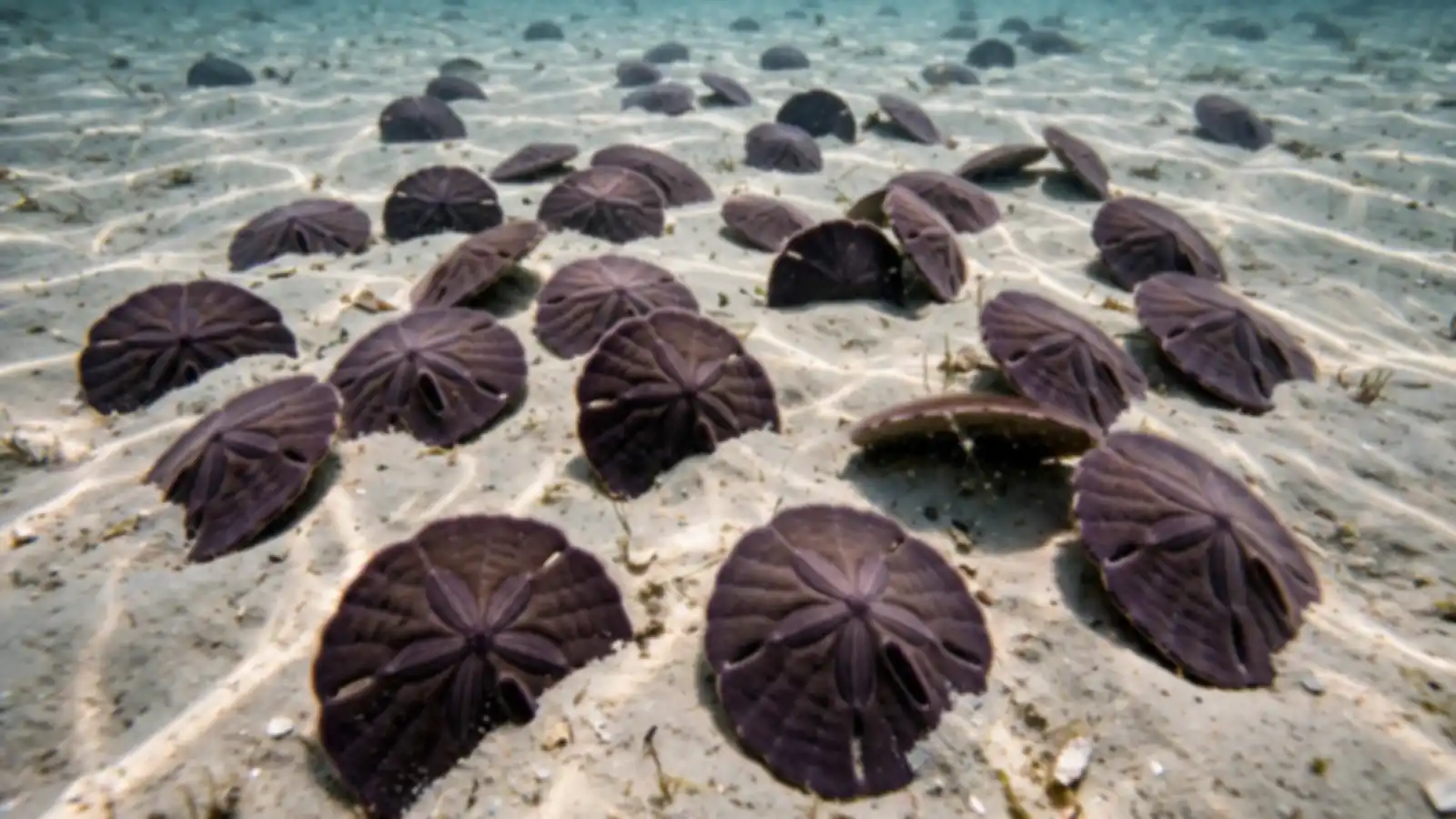
At a Glance
A sand dollar is a sea urchin that evolution ironed flat: the round, spiky ball of its cousins pressed into a disc that can vanish into sand, harvest currents, and carpet whole seabeds in silent, grazing thousands. But the version everyone knows — white, bare and flower-stamped — is only ever the animal’s remains. Learn to meet the living one first.
Is a Sand Dollar Alive? The Five-Minute Check
The question decides whether you are holding a souvenir or an animal. A living one announces itself: deep purple, brown or grey in colour; coated head-to-edge in tiny spines that feel exactly like velvet and ripple in slow waves; and heavy with life. Turn it over and the underside is alive with movement — tube feet waving, particles travelling along the food grooves toward the mouth.
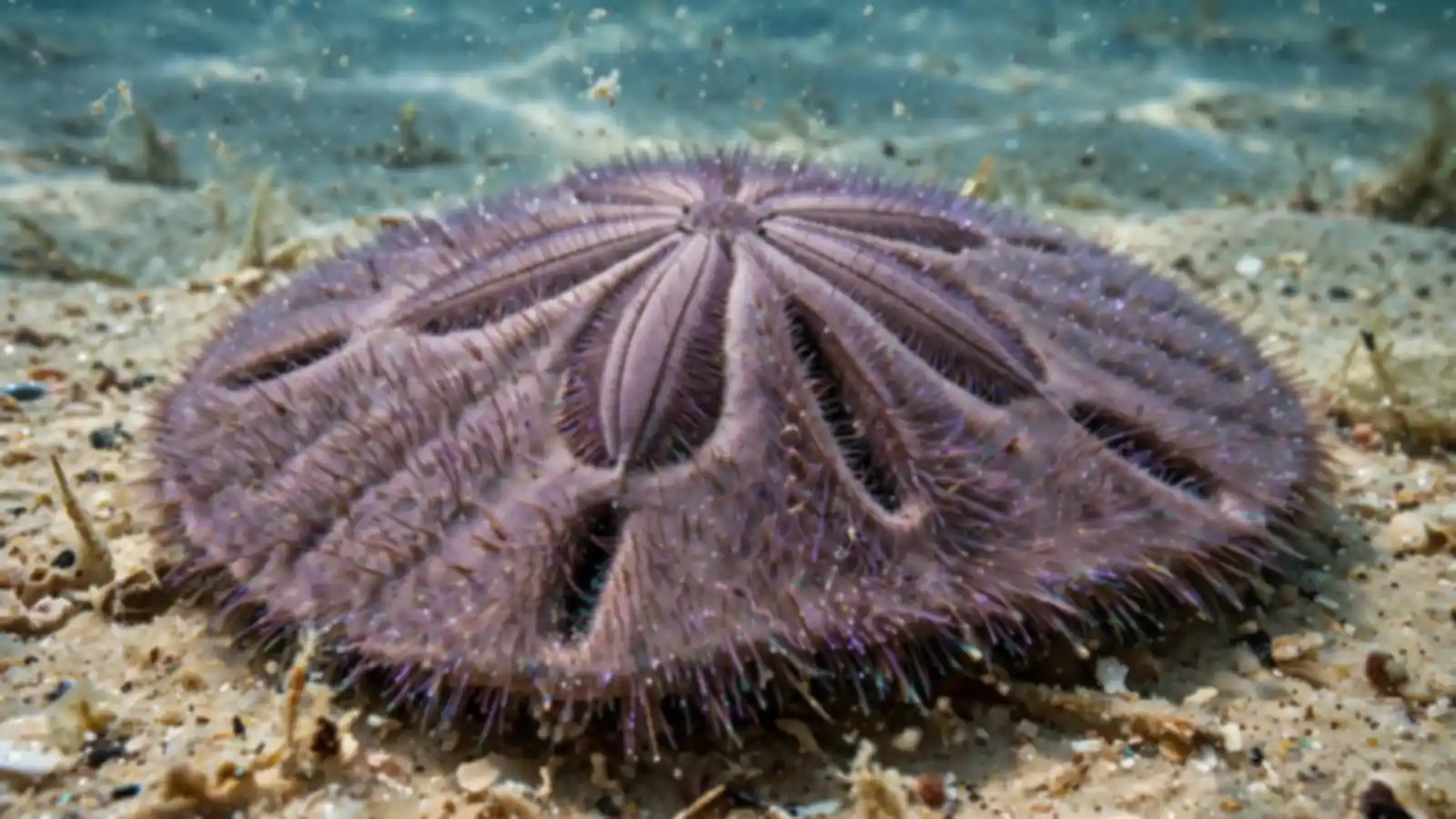
The fastest single test is your own palm. A living one stains skin yellow with echinochrome, the pigment in its skin and spines — wipe your hand after holding one and the colour tells you the truth in seconds. Movement is the backup check: watch the spines. On a living animal they never fully stop.
And here the ethics are absolute, because a living one out of water dies within minutes. Collect only the white, bare, lightweight discs that are certainly dead. Anything dark, fuzzy or staining goes gently back where you found it, buried edge-down in wet sand. Every beachcomber’s rule is the same: when in doubt, it is alive.
The Skeleton: What the White Disc Really Is
The white disc is called a test, and it is not a shell the animal lived inside — it is the animal’s own skeleton, a rigid box of fused calcium-carbonate plates that sat just beneath its skin. In life it carried the spines, tube feet and muscles; in death the soft covering rots and washes away, the sun bleaches the plates white, and the sea delivers the finished test to the tideline.

Read one closely and the anatomy survives. The five-petal flower on top — the petaloid — is where paired rows of tube feet did the breathing. The mouth sits at the centre of the underside, the anus behind it, an arrangement that breaks the radial symmetry of other urchins and gives sand dollars a true front and back. Many species also carry slots (lunules) that channel food and stabilise the disc in currents.
Inside a broken test, beachcombers sometimes find five small, bird-shaped jaw elements — pieces of the five-toothed chewing mill echinoderms call Aristotle’s lantern. Folklore named them doves; biology calls them evidence of a working grazer. For the formal picture, the species account of the common one, Echinarachnius parma, lays out the anatomy in full.
Sand Dollar vs Sea Biscuit: Telling the Cousins Apart
The sea biscuit is its inflated relative, and beside a flat test the difference is comical: where the dollar is a wafer, the biscuit is a bun — thick, domed and plump, built for ploughing slowly through soft sediment rather than gliding into sand. In life a sea biscuit wears a coat of short brown spines, exactly as a living one does.
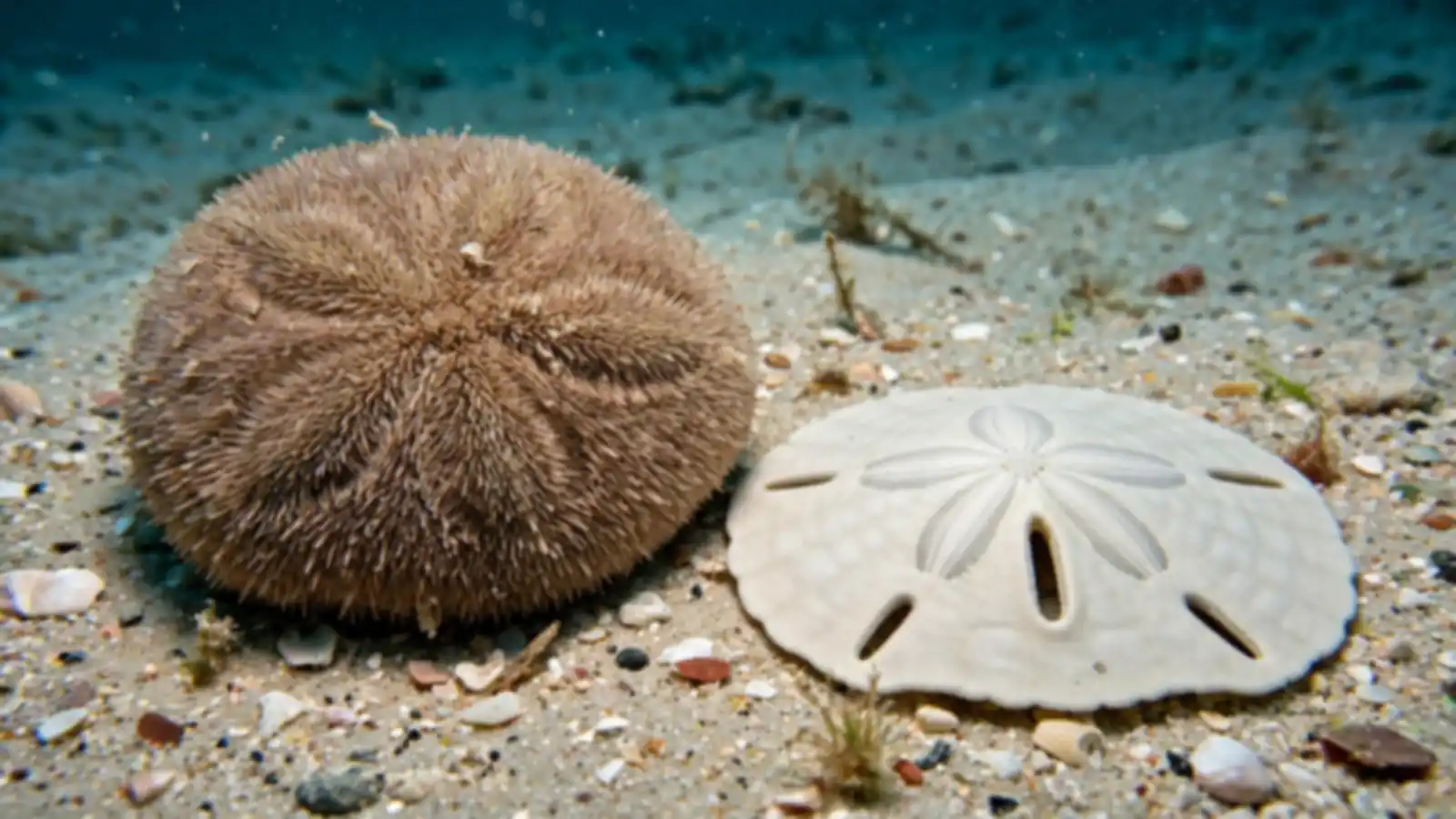
Both belong to the same broad story: irregular urchins that abandoned the round, defensive ball of their ancestors for flattened or burrowing bodies and a diet of particles. Regional names multiply the confusion — sea cookie and snapper biscuit are simply local members of the same flattened clan, not different kinds of animal.
So the field rule is simple. Coin-flat and it is a dollar; domed like a baked good and it is a biscuit. And whether the sea biscuit before you is a thick white test or a dark, spiny living animal, the alive-or-dead checks above apply word for word.
What Sand Dollars Eat: Sweeping the Seabed
A feeding one is a conveyor system wearing velvet. Thousands of tiny spines and hair-like cilia cover its surface, and together they pass food particles hand over hand along ciliated grooves on the underside to the mouth at the centre: diatoms, plankton snatched from the current, fragments of algae and the organic crumbs sifted out of the sand itself.
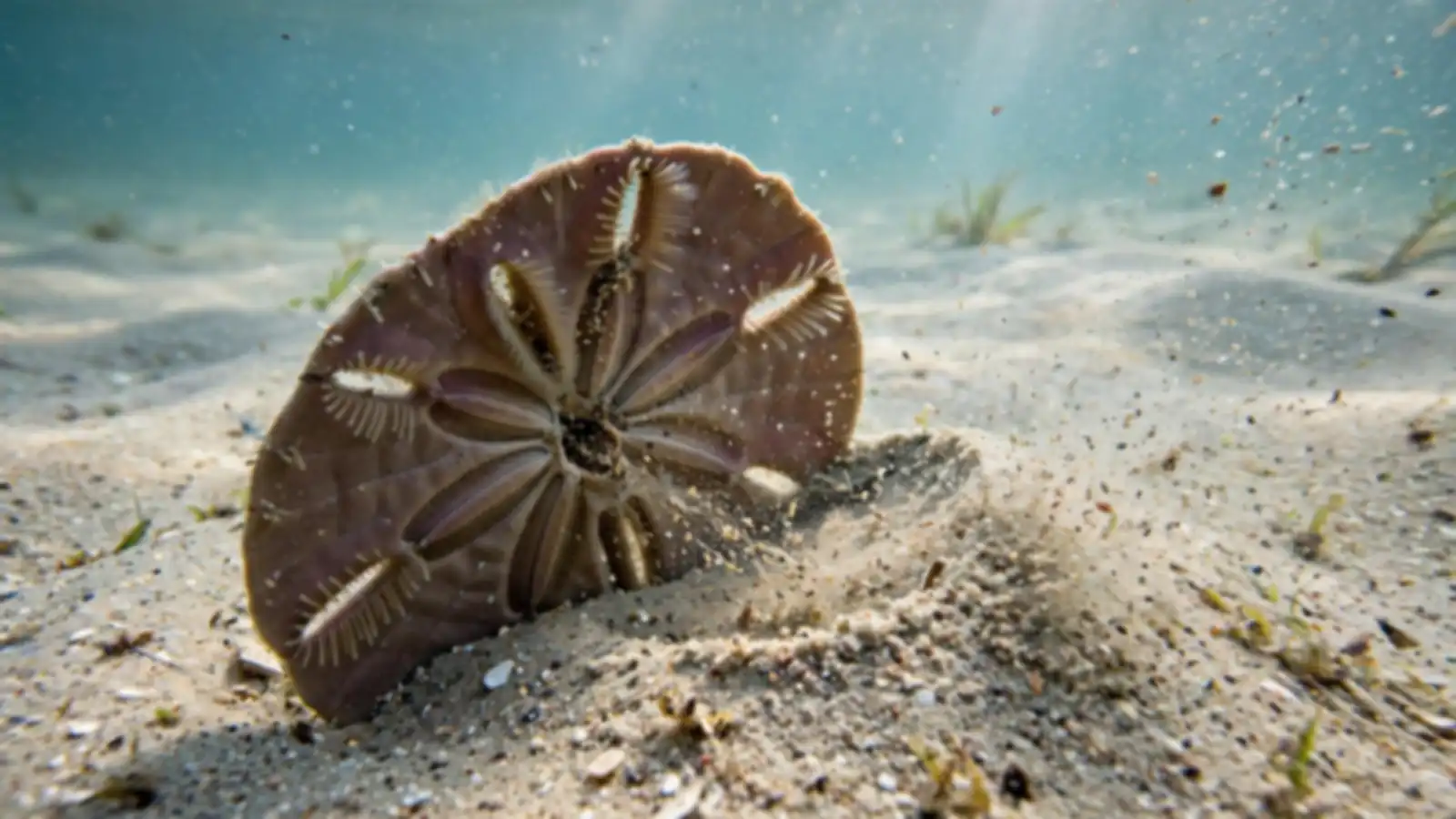
Position is strategy. On current-swept flats, sand dollars famously stand tilted — front edge dug in, disc angled up into the flow — turning the whole body into a net that intercepts drifting food. In quieter sand they lie flatter and graze the grains around them, sorting the edible from the inedible grain by grain.
Inside, the five-part jaw mill grinds the harvest further. It is a complete processing line — catch, convey, chew — running on an animal with no brain at all, and it runs so well that a bed of sand dollars can filter and rework astonishing areas of seabed between tides.
Beds, Trails and the Hidden Meadows
Sand dollars rarely live alone. In the right sand — shallow, current-fed, just offshore or in big tidal flats — they gather in beds of hundreds or thousands, packed edge to edge where the food supply runs richest. From a boat or a low-flying drone, a good bed darkens the seabed like a shadow with a purpose.
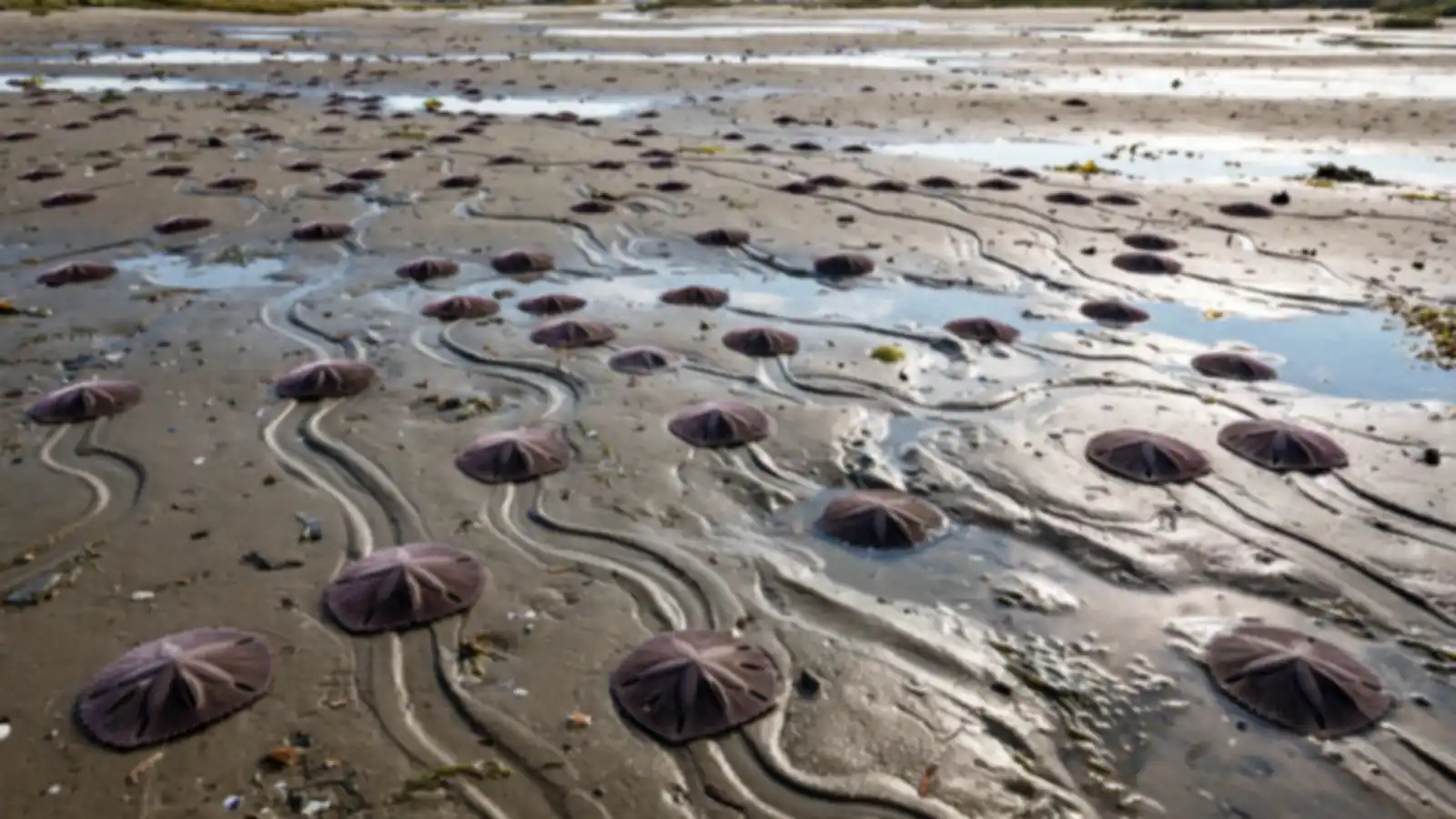
At low tide the beds betray themselves. Half-buried discs stud the wet sand, and between them wind the ploughed, wandering trails of animals that grazed through the surface layer overnight. Follow a trail and it ends, more often than not, at its author — tilted, fuzzy and busy in an inch of water.
The beds matter beyond themselves. Grazing sand dollars stir and sift the sediment, their discarded shells house tiny crabs and worms, and the animals themselves feed fish, sea stars and the occasional wolf eel crunching through the shallows’ edge. A bare-looking sand flat is, on inspection, a working farm.
Lifespan and the Five-Petal Pattern
Most sand dollars live about 6 to 10 years, and roomy, well-fed populations — the Pacific eccentric species among them — can reach the mid-teens. Age is written in the skeleton: the plates of the test lay down growth rings, so a dead, clean test can be aged almost like a tree, ring by counted ring.
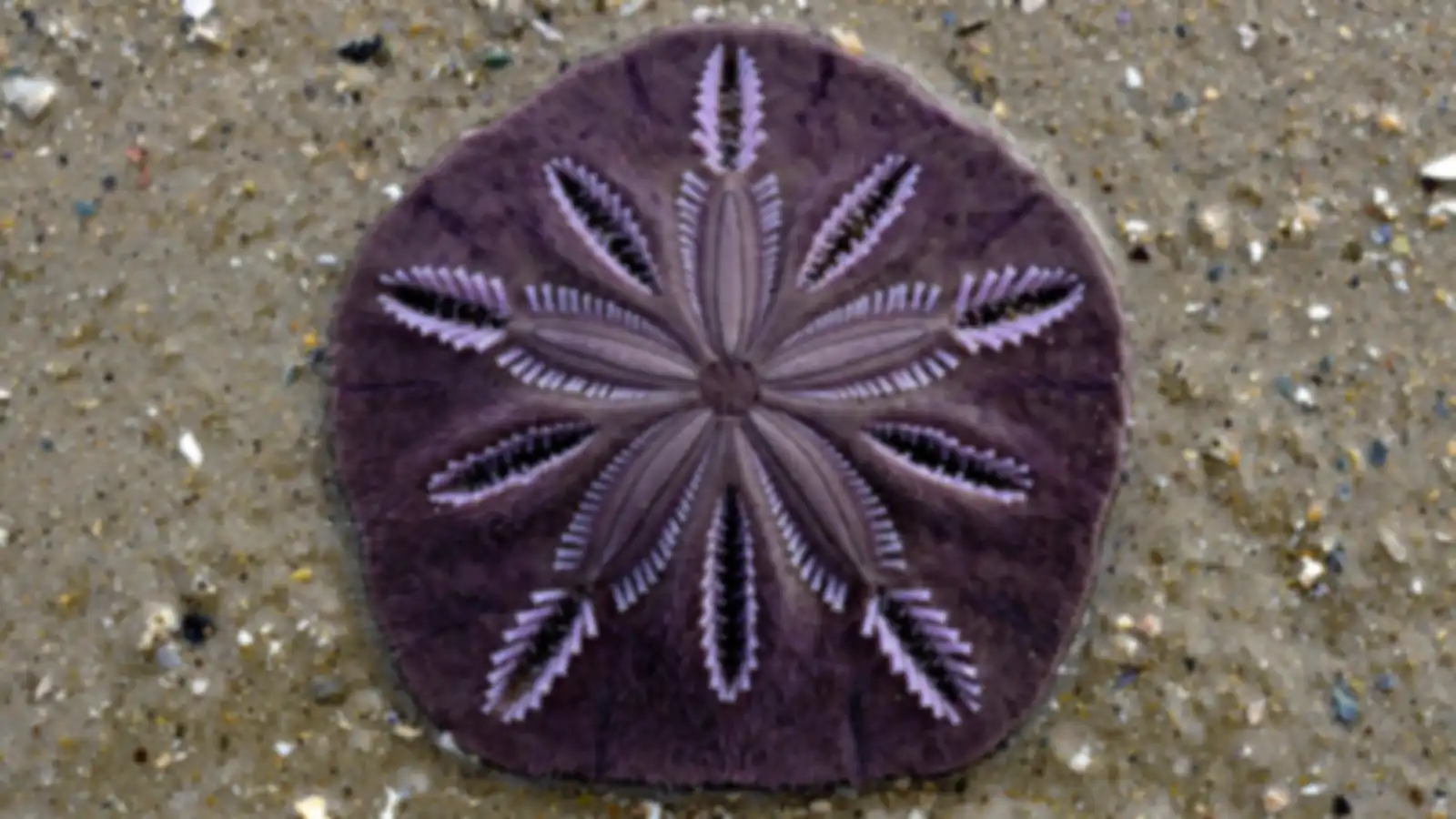
Life begins as a drifter. Adults broadcast eggs and sperm into the water; the larvae ride the plankton for weeks, metamorphose, and settle to the sand as discs smaller than a fingernail. Growth is quickest in the first few years, slowing as the disc approaches its adult span of roughly 5 to 10 centimetres.
Predators thread the whole story: fish peck at exposed beds, sea stars pry and digest, gulls take the stranded at low tide, and storms roll whole meadows. Against it all, the species’ answer is numbers — millions of larvae, thousands per bed, and a skeleton so light it travels the beaches for years after its owner. The flower on the disc outlives the flower’s maker, which is exactly why the world thinks the animal is white.
Fun Facts
- A living one stains your palm yellow — the pigment echinochrome is the fastest alive-or-dead test on the beach.
- The white disc is an internal skeleton called a test; in life it sits just under the skin, covered in velvet spines.
- Sand dollars move and feed with thousands of spines and cilia passing food particles hand over hand to the mouth.
- Its age can be counted in growth rings inside the plates of its test, much like a tree’s.
- The five jaw parts sometimes found inside a broken test were nicknamed “doves” by beachcombers.
- In strong currents, sand dollars stand tilted on edge like tiny sails to catch food drifting past.
Frequently Asked Questions
Is a Sand Dollar Alive?
If it is dark, fuzzy and moving, yes. A living sand dollar is deep purple, brown or grey, coated in tiny velvety spines that ripple constantly, and it will stain your palm yellow — the pigment is called echinochrome and is the fastest live check there is. The white disc on the beach is not alive; it is the skeleton, the test, left after death. A living sand dollar out of water dies within minutes, so look, photograph, and put it gently back.
How Can You Tell if a Sand Dollar Is Alive or Dead?
Run through the checks: colour (dark and rich means alive, white or pale grey means dead), coating (a living one feels like velvet; a dead test is bare and chalky), movement (living spines and tube feet shift constantly), weight (a dead test feels light and hollow) and the palm test (yellow staining means alive). If there is any doubt, treat it as alive and return it to the water — the cost of guessing wrong is the animal’s life.
What Is a Sand Dollar’s Skeleton Called?
A test. It is not a shell the animal lives in but a rigid internal skeleton of fused calcium-carbonate plates, covered in life by skin and thousands of tiny spines. The flower pattern on top marks the petaloid, where rows of tube feet handle breathing. Break one open — a found, long-dead one only — and you may find five small jaw parts inside, pieces of the chewing apparatus echinoderms call Aristotle’s lantern.
What Is the Difference Between a Sand Dollar and a Sea Biscuit?
Thickness and lifestyle. A sand dollar is flattened almost to a wafer, built to bury in shifting sand and sweep fine food from currents. A sea biscuit is its inflated cousin — thick, domed and biscuit-shaped, often living on or in softer, deeper bottoms and ploughing through sediment. Both are irregular sea urchins of the same broad clan; names like sea cookie and snapper biscuit belong to regional members of the same flattened family.
How Long Do Sand Dollars Live?
Most live about 6 to 10 years, with some species and well-fed Pacific populations reaching the mid-teens. Their age can be read like a tree’s, in growth rings laid down in the plates of the test. Larvae drift in the plankton for weeks before settling; from there, growth is fastest in the first years, slowing as the disc reaches its full span of roughly 5 to 10 centimetres in common species.
What Do Sand Dollars Eat?
Fine food, swept. Thousands of tiny spines and hair-like cilia pass particles hand over hand along food grooves on the underside to the mouth at the centre: diatoms, plankton, algal fragments and organic crumbs sifted from the sand and the water. Many species stand tilted into the current to intercept the flow. They are, in effect, living conveyor belts grazing the seabed grain by grain.
Similar Species Worth Exploring
Keep Exploring
Survey the clan in our guide to the types of echinoderms, or meet a predator of shelled things in our wolf eel guide. Next tide, look past the white ghosts on the sand and find the dark, velvet originals grazing in the shallows — the living sand dollar.