Types of Reef Fish
Types of Reef Fish: the city and its citizens
The types of reef fish divide the world’s busiest neighbourhood into jobs: parrotfish garden the coral, cleaner wrasse run its clinics, moray eels patrol its alleys and stonefish pretend to be its pavement. This hub profiles 37 of them — grouped by the work they do on the reef, from gardeners to the night watch.
By Emily Carter · Reviewed by our vet team · Updated 10 November 2026 · 10 min read
37 profiles by reef jobAround 6,000–8,000 reef fish species existMost diverse fish habitat on Earth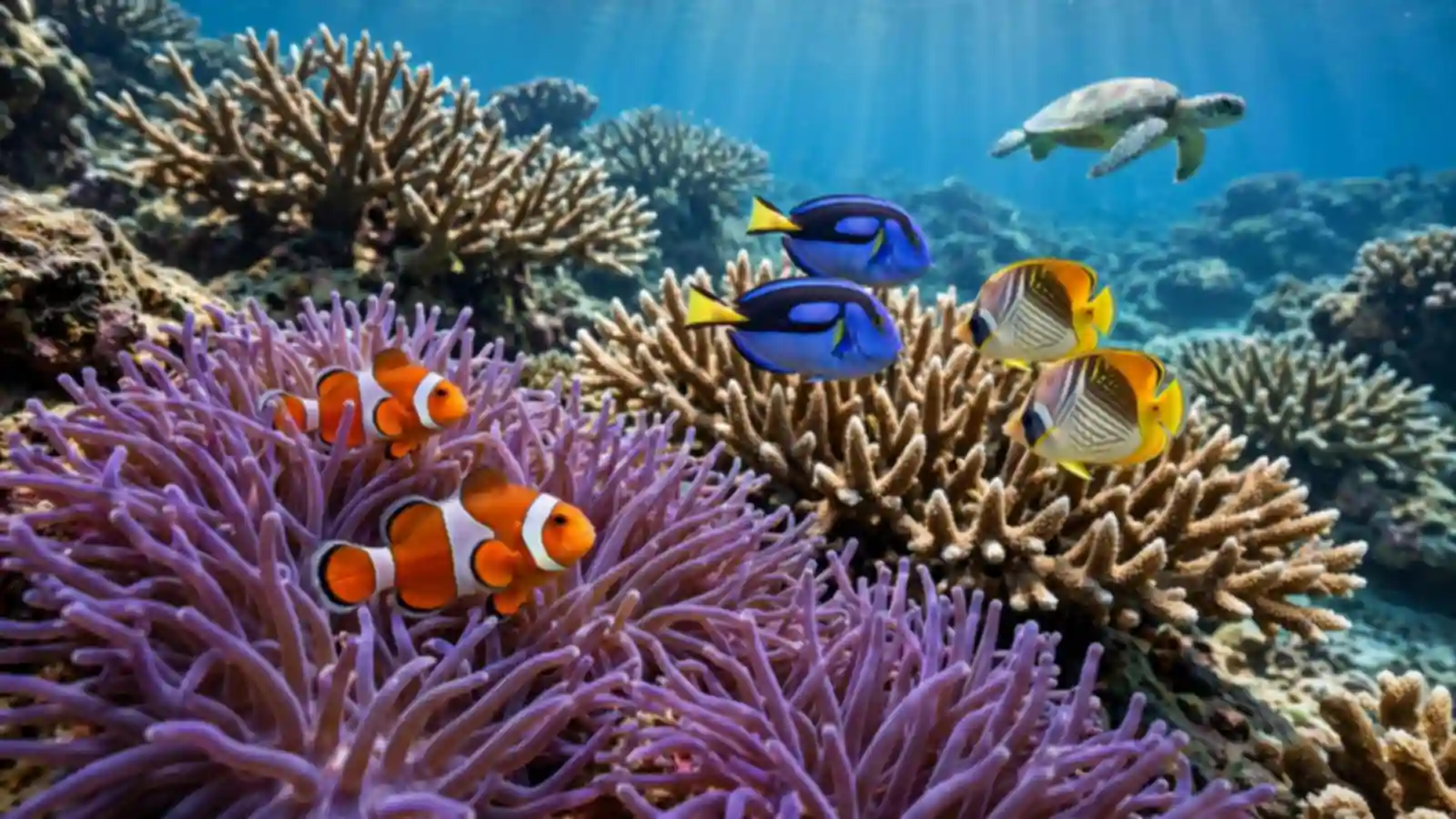
At a Glance
The types of reef fish in this hub share an address — a coral reef — but almost nothing else. A reef is less a habitat than a city, with labour divided among thousands of species packed onto a fraction of the seafloor. Reading them by job, rather than by family tree, is the fastest way to understand the place: every reef runs on its gardeners, its partnerships, its hunters and its cleaners, and each of the 37 profiles below is filed under the shift it works.
The Gardeners: Grazers and Sand-Makers
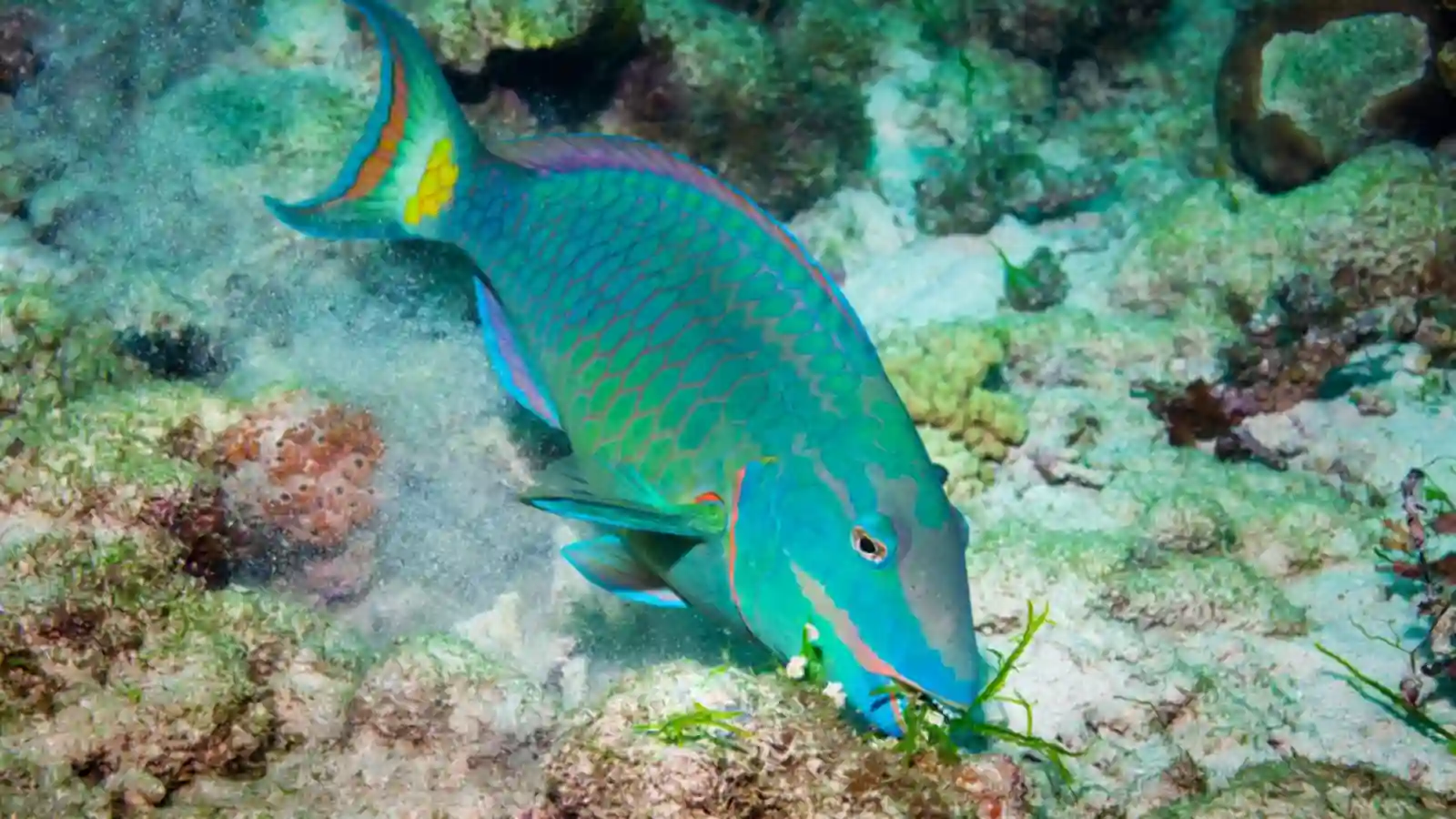
Left alone, algae would smother the coral within years. The grazing guild — the first of the types of reef fish in this hub — prevents it: parrotfish scrape the rockwork with fused beaks and return the ground-up coral as white sand; blue tangs and yellow tangs mow in loose schools; damselfish farm private algae plots and defend them against fish ten times their size; and the vast wrasse family fills hundreds of niches in between. The butterflyfish are the guild’s specialists — beautiful, pair-bonded and in many cases dependent on live coral itself.
Partners and Drifters: The Reef’s Famous Relationships
Some types of reef fish are famous for who they live with. The clownfish shelters inside a stinging anemone and guards it fiercely; the goby shares a burrow with a nearly blind shrimp, keeping watch while the shrimp digs; and the cleaner wrasse operates fixed cleaning stations where predators queue to be serviced — inside their own open mouths. Beside them drift the gentle oddballs: seahorses and their straightened pipefish cousins, kelp-mimicking leafy seadragons, whole meadows of garden eels, and the banner-finned moorish idol.
The Hunters: Lionfish, Moray Eel and the Ambush Artists
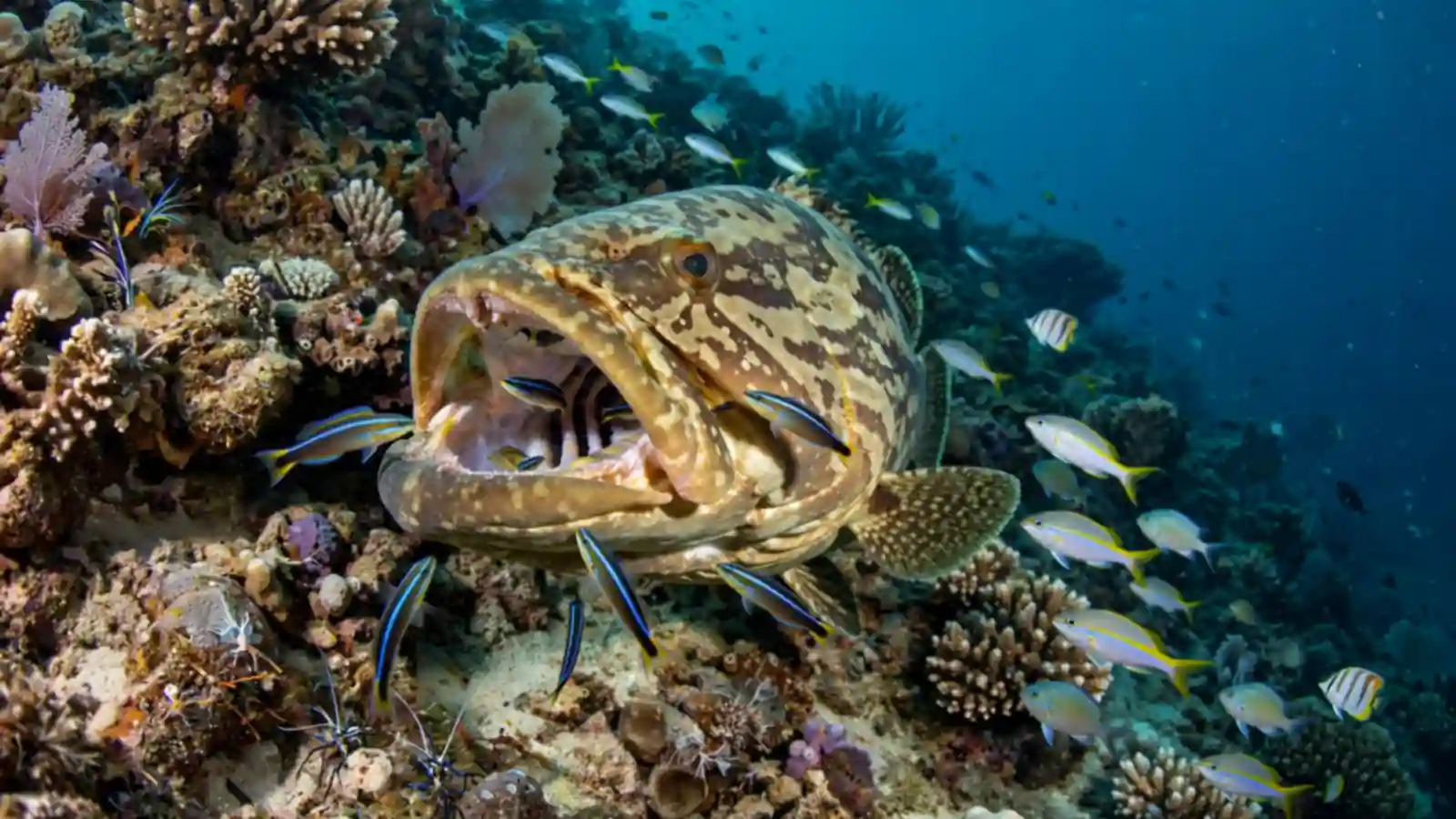
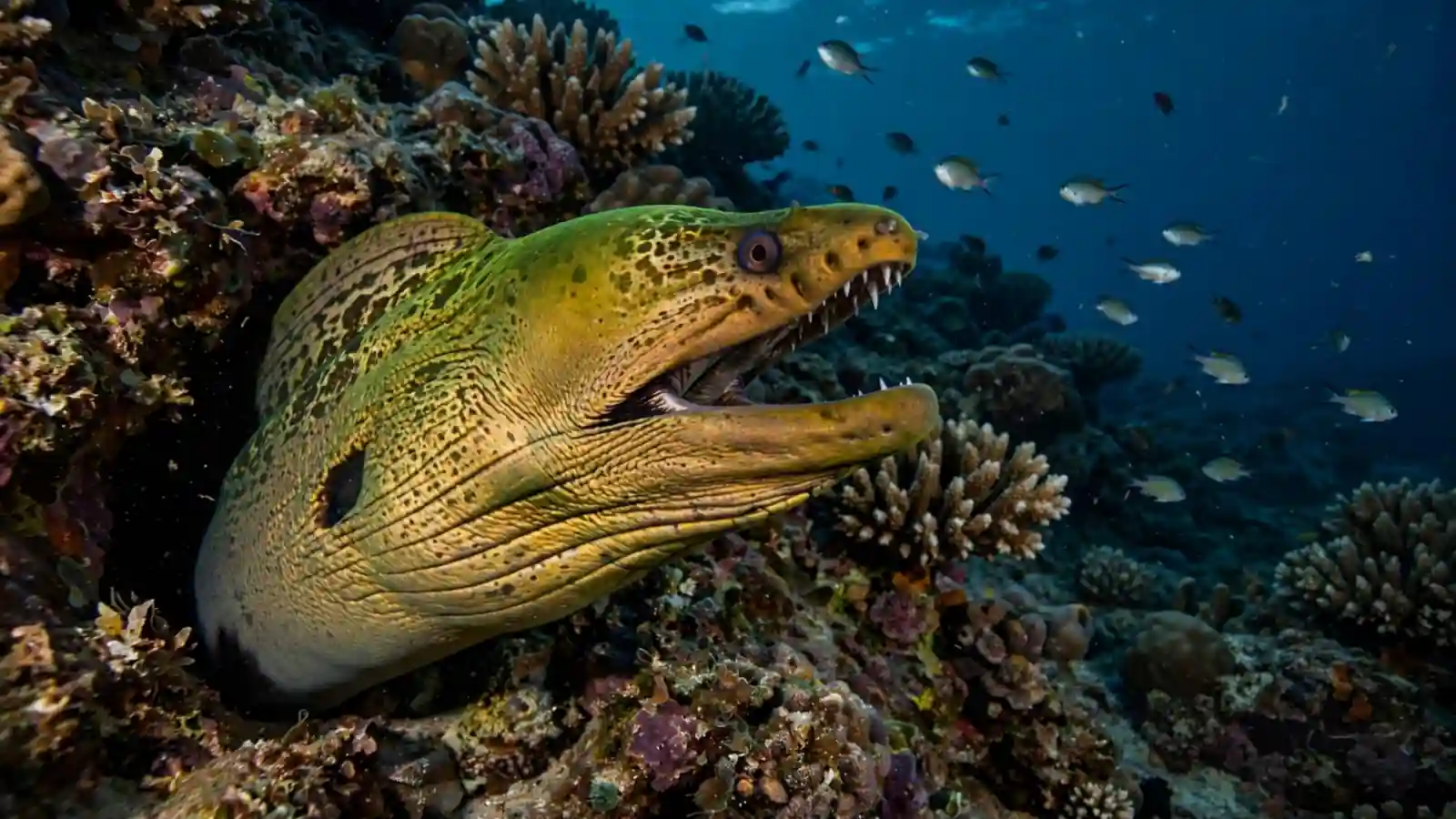
The reef’s police force — the hunters among its types of reef fish — works from cover. Moray eels hunt by smell with a second set of jaws in the throat, like several other ambush types of reef fish, while groupers — up to the quarter-tonne giant grouper — inhale prey with vacuum strikes, sometimes recruiting morays and octopuses as hunting partners. The lure-fishing frogfish strikes in six milliseconds, among the fastest bites in the animal kingdom; great barracuda supply the open-water menace; and the snappers — red, mangrove and yellowtail — hunt the reef edges and wrecks.
Armour and Venom: Handle With Care
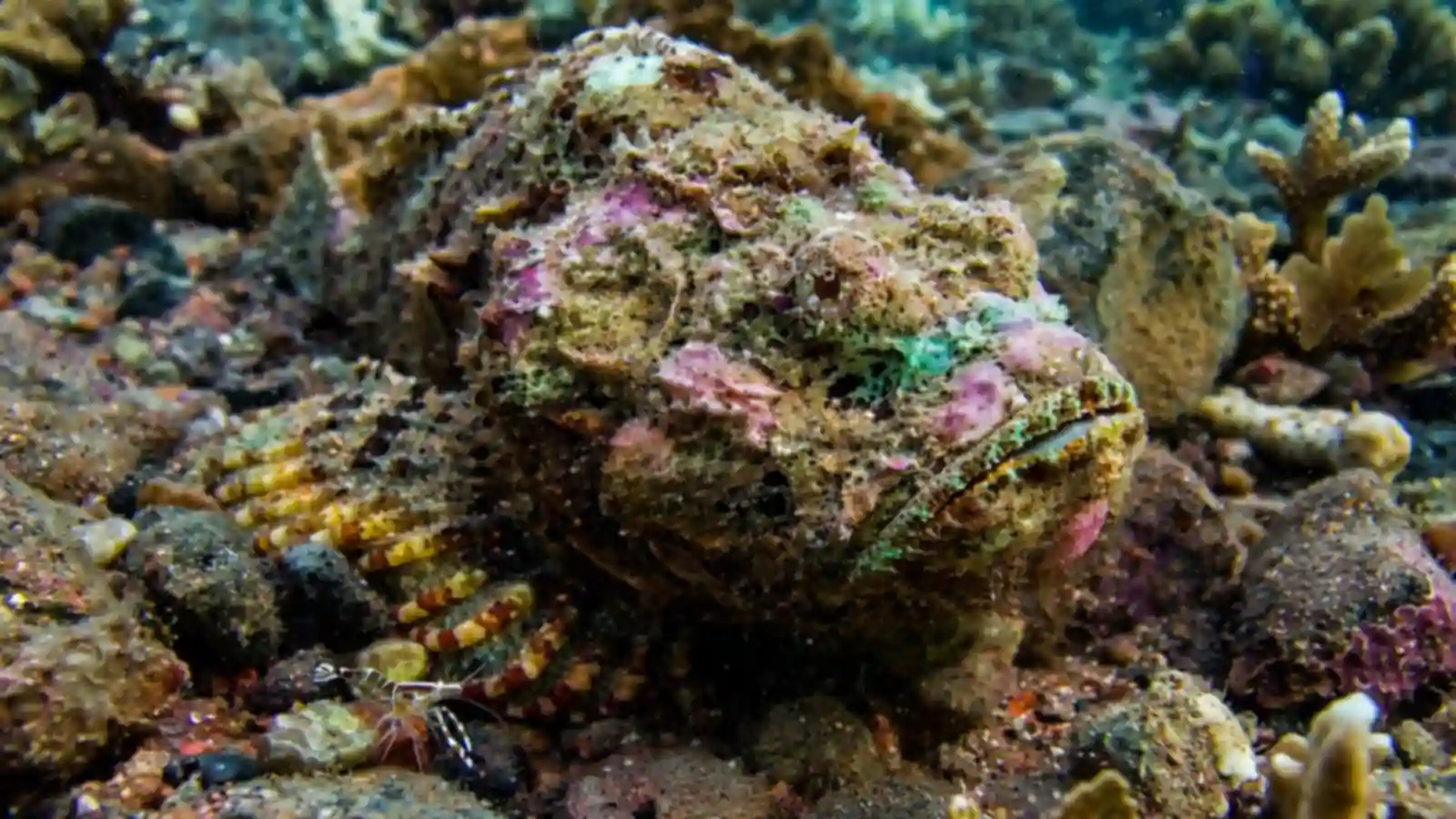
A second defensive philosophy runs through these types of reef fish: be too dangerous or too awkward to eat. The stonefish is the extreme — the most venomous fish known, invisible as a rock. Its cousins the scorpionfish and the flamboyant lionfish carry venom in their spines, while pufferfish and porcupinefish combine inflation, spikes and toxins. The boxfish and horned cowfish simply wear a rigid box of bone — and glide through the water with a precision engineers have studied for car design.
The Night Shift
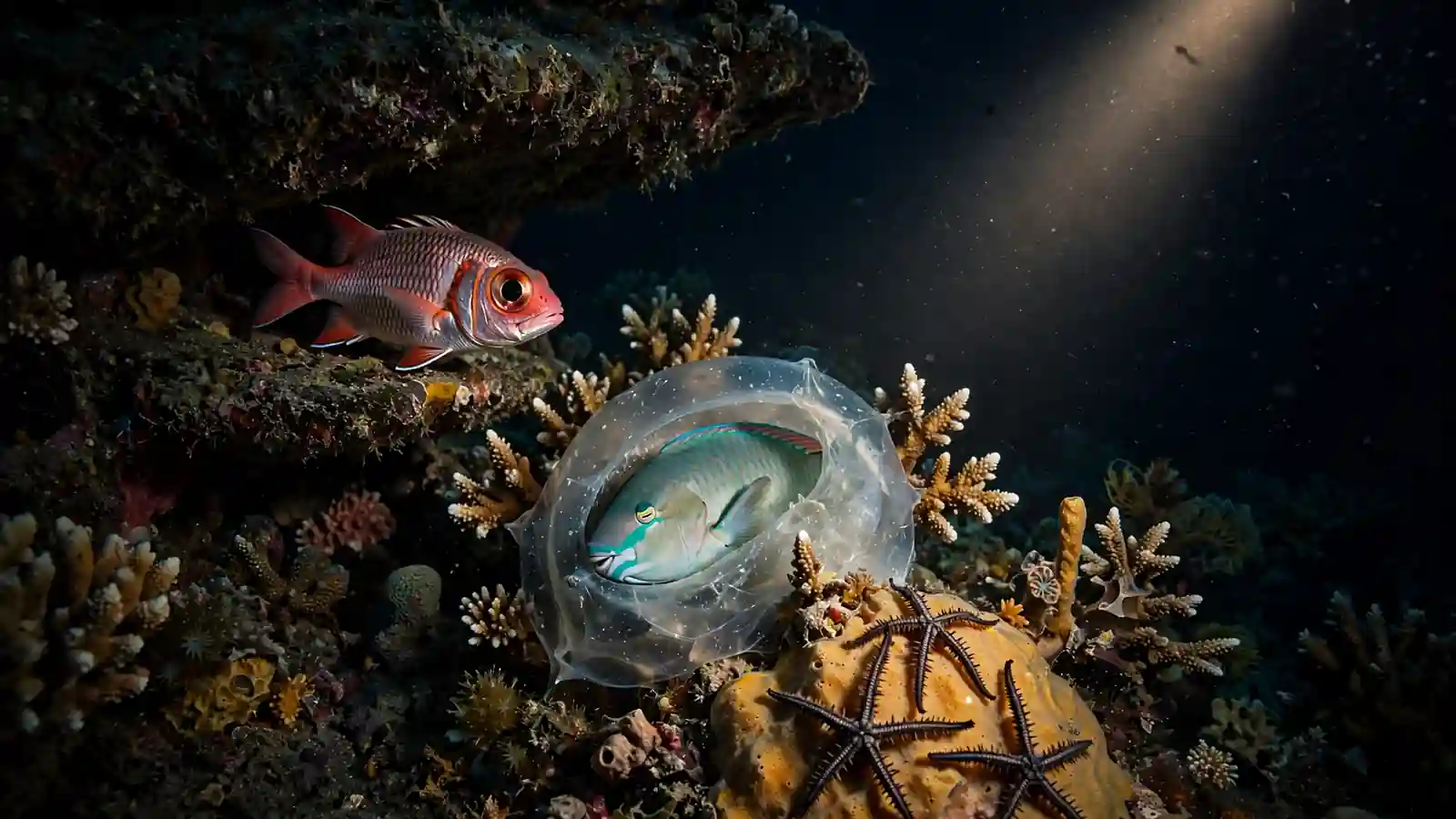
At dusk the types of reef fish change staff. Day-active types of reef fish wedge into crevices, fade their colours, and some — parrotfish — wrap themselves in a mucous sleeping bag that hides their scent. Out come the red, big-eyed squirrelfish and the hunting morays, while the day’s grazers sleep. It is, effectively, a second reef living at the same address, and one reason a species list for a single reef keeps growing the longer anyone looks. For the broad science of these communities, the coral reef fish overview makes a good companion; and this hub lives inside our types of fish collection, opposite in every way to the types of deep-sea fish.
Fun Facts
- Much of the white sand on tropical beaches is parrotfish poop — ground coral, passed and polished.
- Clownfish colonies are ruled by the largest fish, a female; if she dies, the top male changes sex and takes over.
- A frogfish’s strike takes about six milliseconds — too fast for prey to react, and nearly too fast to film.
- Groupers have been filmed inviting moray eels to hunt with head-shake signals — and both species catch more together.
- Boxfish body shape inspired a famously aerodynamic concept car; the fish is more stable than it looks.
- Cleaner wrasse are so valuable that reefs experimentally stripped of them lost fish species within months.
Frequently Asked Questions
How Many Types of Reef Fish Are There?
Coral reefs are home to roughly 6,000–8,000 fish species — about a quarter of all marine fish on under one percent of the ocean floor. This hub profiles 37 types of reef fish, organised by the jobs they do: gardeners that keep algae down, partners that live inside famous mutualisms, hunters, and the armoured oddballs. The full fish fauna of a single rich reef can pass 500 species.
Why Are Reef Fish So Colorful?
Because the reef is a crowded, sunlit city where being recognised matters more than being hidden. Colours and patterns identify species, advertise territory, signal ‘cleaning station open’, confuse predators with false eyespots, and — for many — actually are camouflage against dappled coral. In the blue-filtered light of deeper water, several of these colours effectively disappear.
What Is the Most Venomous Reef Fish?
The reef stonefish. Its thirteen dorsal spines deliver one of the most potent venoms of any fish, and its camouflage is so complete that swimmers can step on it without ever seeing it. Its scorpionfish and lionfish cousins carry defensive venom too — reef venom is almost always defensive, meant to teach predators a lesson rather than catch dinner.
Do Reef Fish Sleep?
Yes — differently. Many reef fish sleep in crevices, change into muted night colours, or rest on the sand. Parrotfish famously blow a transparent mucous cocoon around themselves each night, which masks their scent from hunting moray eels. Meanwhile the night shift — squirrelfish, bigeyes and the morays themselves — wakes up and takes over the reef.
What Do Parrotfish Do for the Reef?
They are its gardeners and its sand factory. Parrotfish scrape algae off coral with fused, beak-like teeth, keeping the reef from being smothered; the ground-up coral they swallow passes out as fine white sand — much of the sand on tropical beaches passed through a parrotfish. A single large individual can produce hundreds of kilograms of sand in a year.
Why Do Big Fish Let Cleaner Wrasse Into Their Mouths?
Because the service is worth more than the snack. Cleaner wrasse pick off parasites, dead skin and food scraps — a health service groupers, snappers and even moray eels queue for at fixed cleaning stations. Both sides benefit, the truce is observed even by predators mid-hunt, and reefs with cleaners removed measurably lose fish diversity.
Are Reef Fish in Danger?
Many are. Coral bleaching from warming seas destroys the habitat reef fish depend on, and roughly a third of reef-associated species face elevated extinction risk. Specialists suffer first: butterflyfish that eat only live coral, seahorses in trawled seagrass, and groupers fished out at their spawning aggregations. Protecting the coral protects the whole cast in this hub.
What Is a Reef Fish?
A reef fish is a fish that lives on a coral reef — around 6,000 to 8,000 species in all, making reefs the most diverse fish habitat on Earth — where each species works a job: gardening algae, cleaning, hunting or hiding in armour.
What Are the Most Common Reef Fish?
No single species dominates a reef; the most numerous families are the grazers and gardeners — wrasses in their hundreds of species, damselfish farming their algae plots, parrotfish and tangs mowing the rockwork.
What Is the Largest Reef Fish?
The giant grouper, the reef’s biggest bony predator, reaching a quarter of a tonne — a goliath-class fish of about 8 feet at full size.
All 37 Types of Reef Fish Profiles
Keep Exploring
Tour the rest of the fish world from the types of fish hub, descend to the opposite extreme with the types of deep-sea fish, or start with the two profiles every reef visitor meets first: the clownfish and the parrotfish. However you explore it, the reef rewards a second look at its types of reef fish.