Wolf Eel
Wolf eel: the gentle “eel” that is not an eel at all
The wolf eel is the cold Pacific’s great impostor: two metres of eel-shaped fish that is actually a wolffish — bony-skulled, molar-toothed and devoted. Pairs of them share one den for years, guard their eggs together for months, and greet familiar divers like old neighbours. The face looks like a gargoyle; the life is a love story. Here is the truth about the fish behind the name.
By Emily Carter · Reviewed by our vet team · Updated 10 November 2026 · 9 min read
Not a true eel — a wolffishPairs bond for yearsBoth parents guard the eggs
At a Glance
The wolf eel is the North Pacific’s beloved fraud: a fish named for two animals it is not — neither wolf nor eel — and loved by every diver who has met one. It lives in dens among cold boulders, pairs up for the long term, and crushes sea urchins with teeth like a nutcracker set. Start with the size of the animal, most of which you will never see.
Wolf Eel Size and Shape
A resident is a lot of fish folded into a small address. Adults reach about 2 to 2.4 metres (roughly 8 feet) and up to about 18 kilograms (40 pounds), yet the part on public display is usually just the head and shoulders at a den entrance. The rest — a long, tapering, eel-like body — is coiled away inside the rockwork behind.
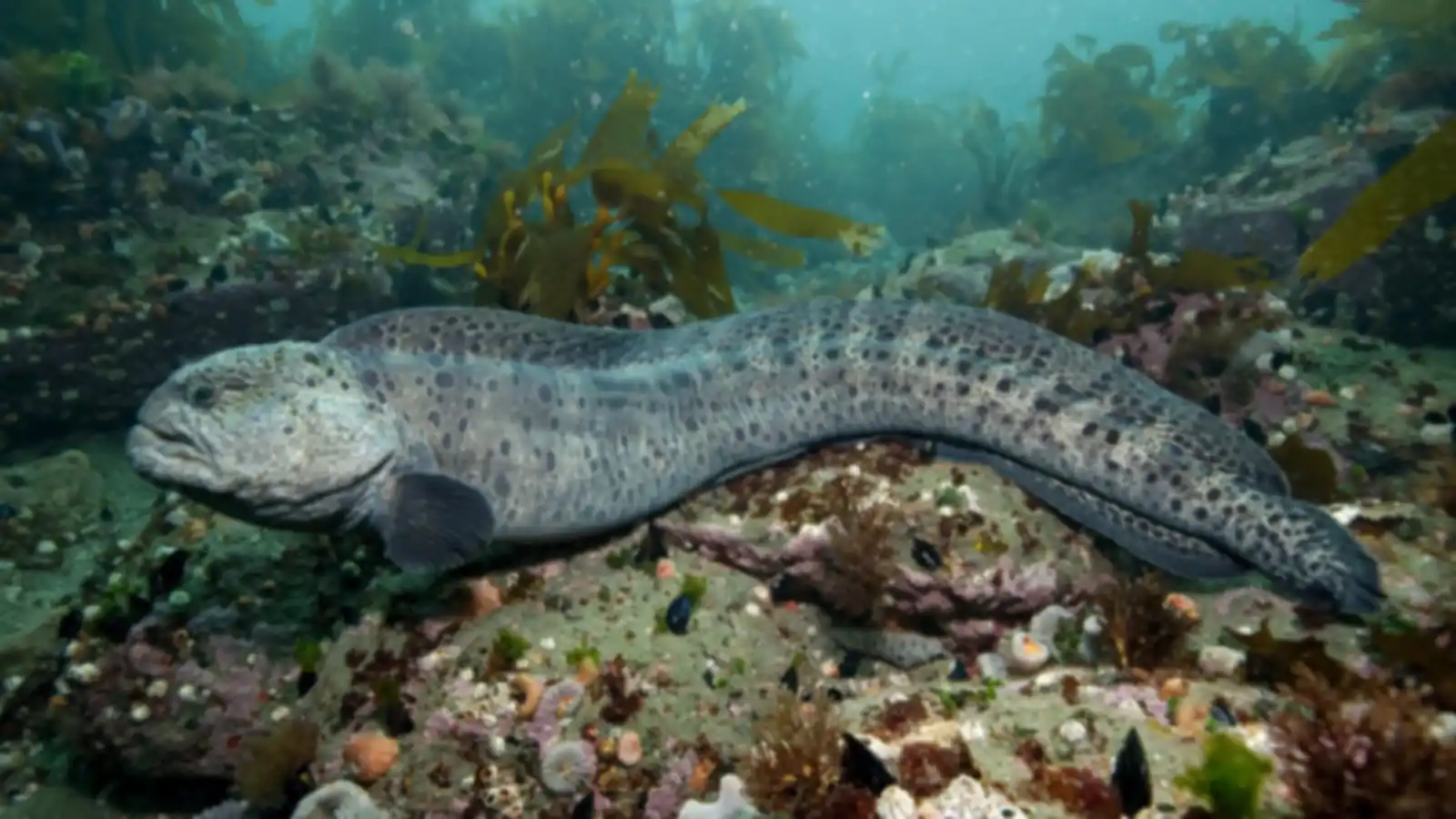
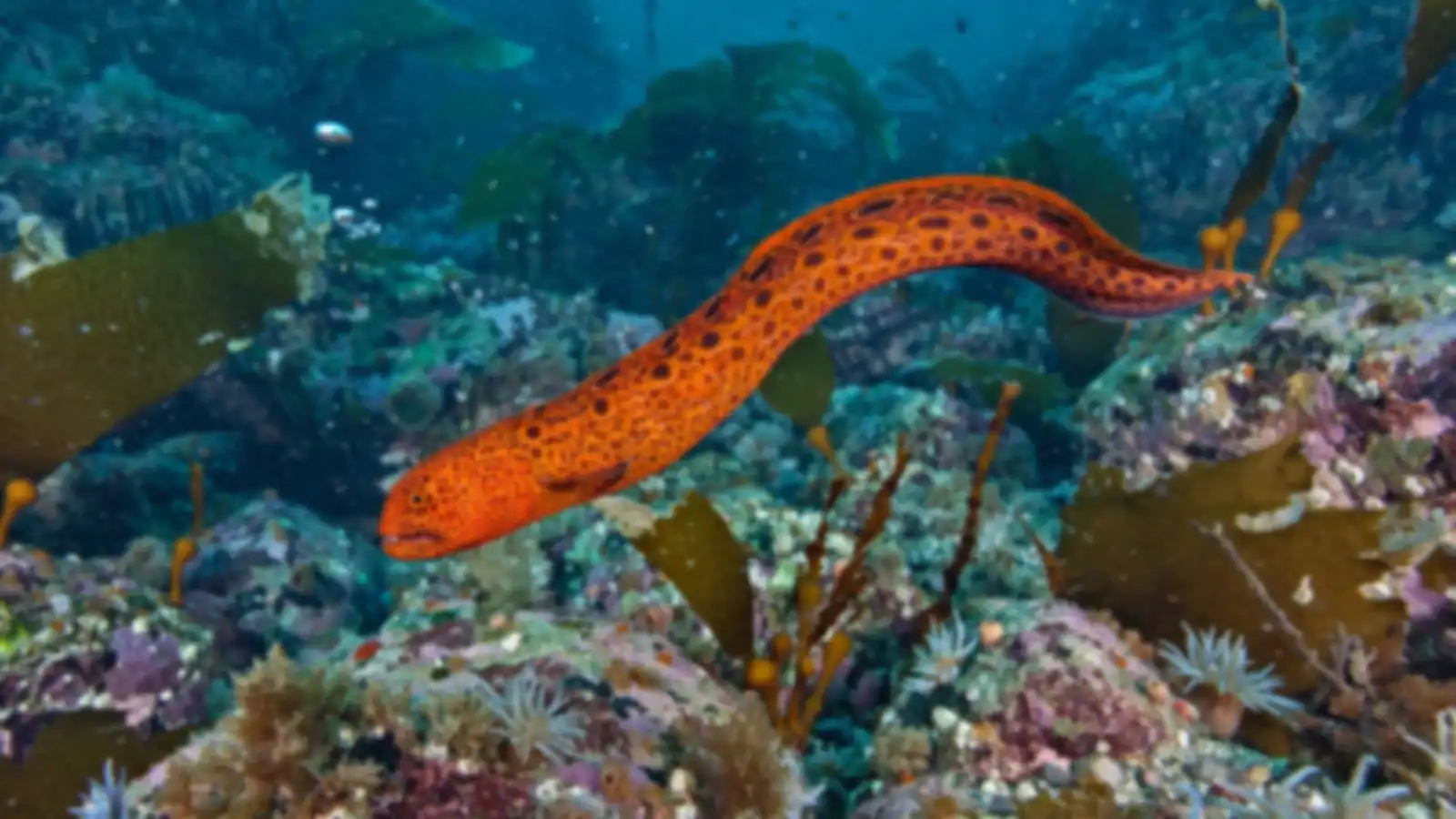
Age rewrites the whole appearance. Juveniles are slender and brilliant orange-red, swimming freely over the reef; as they settle into the den life they thicken, darken and mottle into the greys and browns of the adults. Old males turn pale and almost white-headed, their skulls growing lumpy and craggy; females stay darker and slightly spotted. Divers learn to read an individual the way you read a face.
The build underneath is the first clue to the animal’s real identity: a stout, bony skeleton, broad paddle-like pectoral fins, and a long dorsal fin running the body’s length. You can browse the full species record for Anarrhichthys ocellatus for its measured range and depths along the Pacific coast.
Is a Wolf Eel a Real Eel? The Wolffish Truth
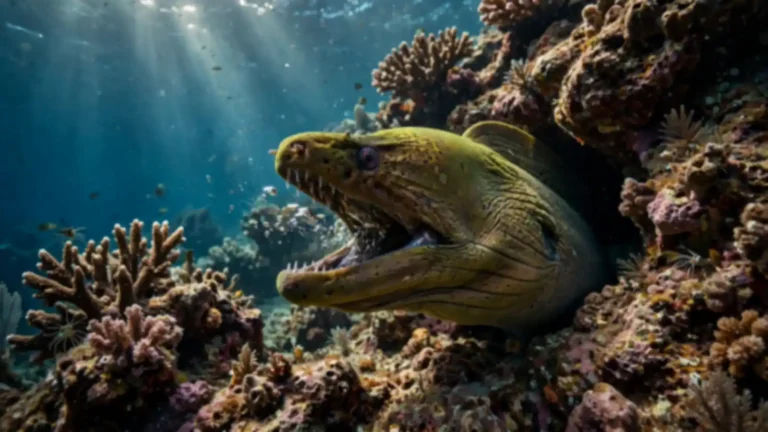
No — and the correction is the whole story. True eels, like the moray eel, belong to the order Anguilliformes, with a ribbon-like larval stage and no pectoral-fin paddles of this kind. The animal is a wolffish, Anarrhichthys ocellatus, from a family of cold-water, bottom-dwelling fish with heavy bony skulls. Its skeleton is fully bony — never let anyone tell you it is cartilaginous; that claim circulates online and is simply wrong.
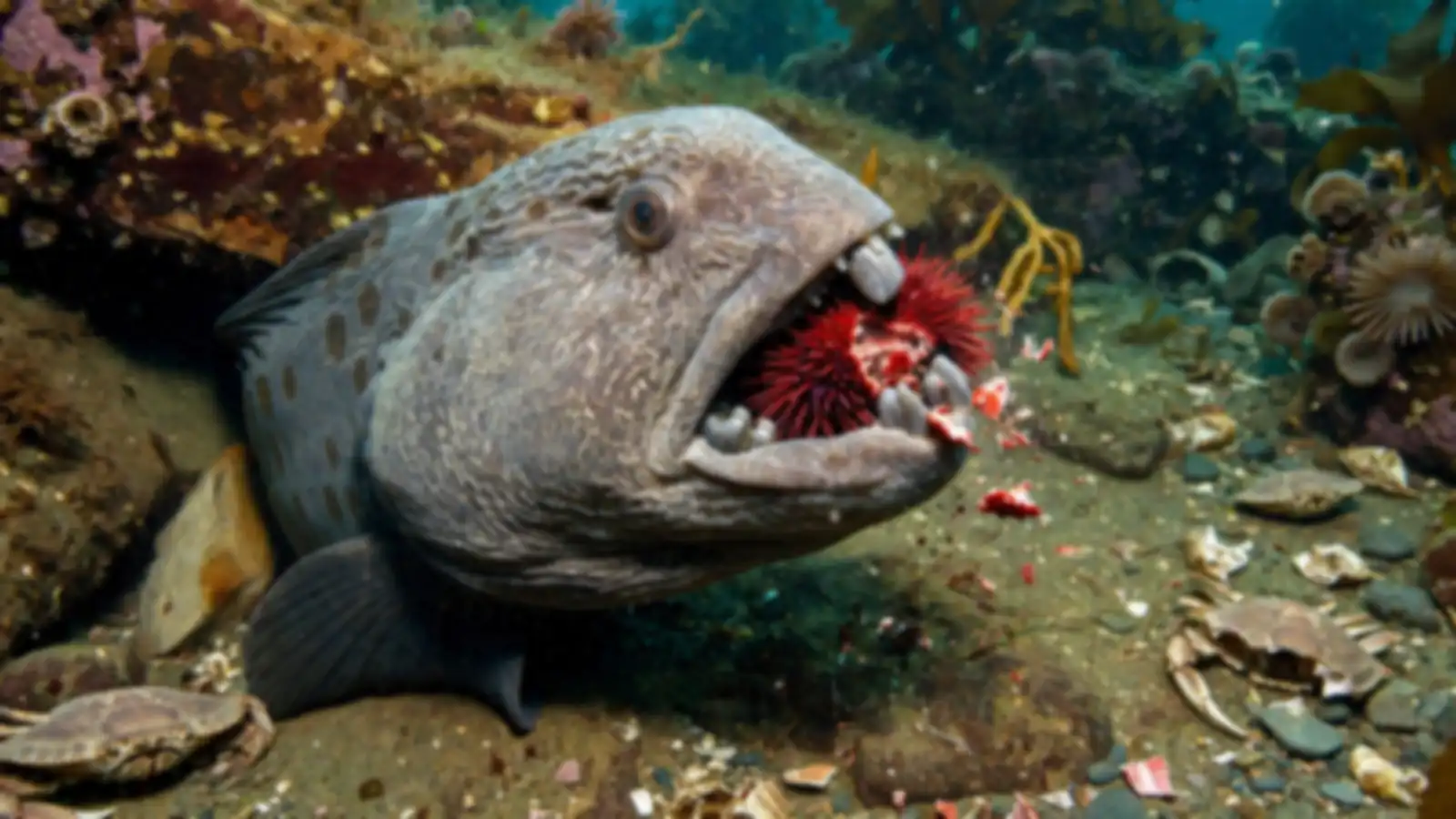
The jaws give the family away. At the front are strong, fang-like teeth for seizing prey; behind them sit rows of blunt molars that function as a crushing mill. Sea urchins — spines, shell and all — crabs and thick-shelled clams go in whole and come apart under pressure few fish can generate. The wolffish clan, from the Atlantic to the Pacific, are all built on this nutcracker plan.
So why the eel shape? Because crevice life shapes its tenants. A long, flexible body folds into rock dens, threads through boulder fields and backs out of holes — advantages so strong that unrelated fish keep evolving the same silhouette. The species is an eel the way a dolphin is a fish: form following function, ancestry saying otherwise.
Habitat: Dens in the Cold Pacific
Wolf eels own the cold end of the Pacific: rocky reefs from the Aleutian Islands and Alaska down the coast of British Columbia and the Pacific Northwest to California, in water from the shallows to a few hundred metres deep. The essential feature is not depth but architecture — boulders, ledges and wreckage with holes a two-metre fish can call home.

A good den is real estate for life. It shelters the fish by day, when it rests with only its head out, watching; at night the fish ranges the reef floor to hunt, returning before dawn. The midden of cracked urchin tests and shells accumulating outside the door is the surest sign of occupancy — the rubbish heap of a well-fed resident.
Kelp forest edges and rocky points where currents sweep food past are prime neighbourhoods. Divers who return to the same site meet the same fish in the same hole for years — a site fidelity more like a songbird’s territory than a fish’s range, and the foundation of the animal’s famous social life.
Do Wolf Eels Mate for Life? The Pair Bond
As nearly as fish manage, yes. A mated pair forms a lasting bond: the two fish share one den, defend it together, and breed together season after season. Aquarists and researchers have followed individual pairs holding the same den for years, the male and female instantly recognisable by their faces, and the partnership is the centre of both animals’ lives.

Courtship is unhurried — appropriate for animals with decades to spend. Pairs form when the fish are around four to seven years old; in the breeding season the female lays a mass of eggs in the den, and the male fertilises them there. Then the partnership’s real work begins, because their eggs are not abandoned to chance.
Should one partner die, the survivor may in time accept a new mate — fidelity here is devotion, not a life sentence. But while both live, the arrangement holds: one den, one partner, and a shared mortgage of eggs to defend through the cold months ahead.
Parents on Guard: The Long Watch Over the Eggs
The female lays up to roughly 10,000 eggs in a single pale mass in the back of the den — and then both parents stay. For some 13 to 16 weeks, the pair coils around the eggs in turn, fanning them with their fins to keep oxygen flowing, cleaning them, and driving off the crabs, sea stars and fish that would happily eat the whole nursery in an hour.
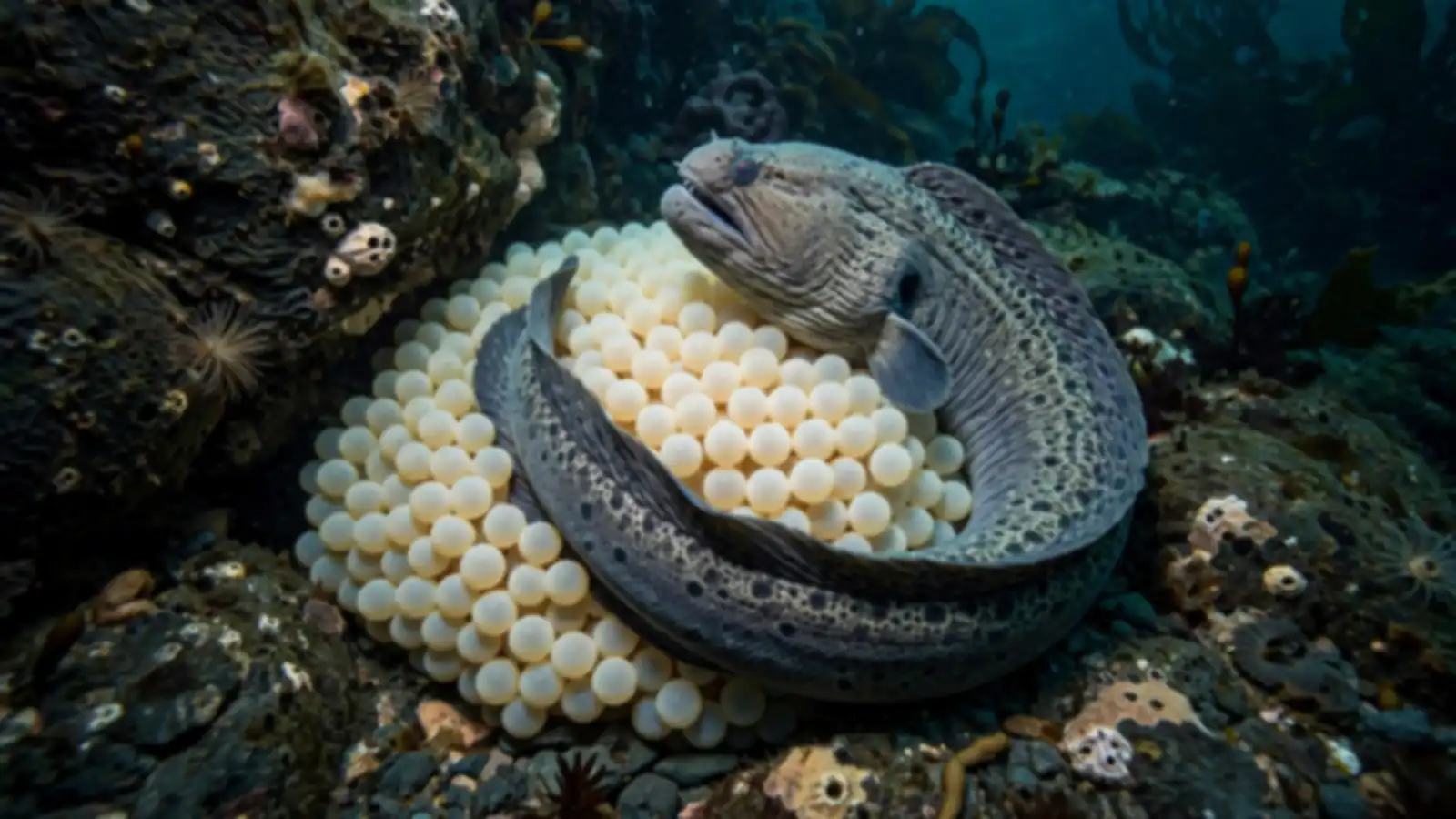
The shift system is the remarkable part. One parent guards while the other slips out to feed; then they swap. In many fish, guarding means one exhausted parent fasting for the duration. Wolf eels solved it with teamwork — the same pair bond that holds the den also staffs it, around the clock, for a quarter of the year.
When the eggs finally hatch, the larvae drift away into the plankton, beginning the free-swimming orange youth before settling to a den of their own. Almost none survive — which is precisely why the parents’ months of unpaid overtime matter. Every adult fish on the reef is the product of one of the most devoted nurseries in the fish world.
Lifespan and the Orange Years
Its lifespan is usually estimated at around 20 to 25 years — phrase it as a range, because sources vary and truly old individuals in quiet water may exceed it. The arc of that life is written in colour: a blazing orange juvenile, a mottled grey adult, and, for old males, a pale, craggy elder whose head looks carved from reef rock itself.
Threats are modest but real: wolf eels are taken in some trap and trawl fisheries and prized in a few local food markets, and their dens make them easy targets for spearfishing where it is allowed. Against that stands their temperament with divers — curious, calm, and famously willing to accept an offered urchin from a familiar hand, a relationship that has made them ambassadors for cold-water reefs.
Their prey includes the purple and red urchins that can strip a kelp forest bare, so a reef with wolf eels is quietly a reef with gardeners. Protect the old pairs in their dens and the whole neighbourhood benefits — kelp, reef and the long grey tenant alike, curled in the dark with its partner, exactly as a one should be.
Fun Facts
- The animal is not an eel: it is a wolffish with a fully bony skeleton, named for a long body evolved for crevice life.
- Juvenile wolf eels are brilliant orange-red; the grey, craggy look arrives only with the settled adult years.
- Both parents guard the egg mass for 13 to 16 weeks, taking turns to fan and defend it while the other feeds.
- A female can lay up to about 10,000 eggs in a single mass inside the pair’s den.
- Wolf eels crush whole sea urchins — spines included — with molar teeth at the back of the jaw that work like a nutcracker.
- Old males turn pale and lumpy-headed with age, becoming some of the most recognisable individual fish on their reefs.
Frequently Asked Questions
Is a Wolf Eel a Real Eel?
No. The wolf eel is a wolffish — a member of the family Anarhichadidae — with a fully bony skeleton, pectoral fins it uses like paddles, and none of a true eel’s defining anatomy. The long body is a case of convergent evolution: a fish that lives in dens and crevices ends up eel-shaped whatever its ancestry. Its scientific name, Anarrhichthys ocellatus, places it firmly with the wolffish.
How Long Do Wolf Eels Live?
Estimates for the wolf eel’s lifespan generally fall in the range of about 20 to 25 years, with some individuals likely living longer in quiet water. They are slow to mature — breeding begins at around four to seven years — and pairs may hold the same den for many seasons, which fits a long, settled life rather than a brief one.
Do Wolf Eels Mate for Life?
They are about as close as fish get. Wolf eel pairs form lasting bonds, share a single den, and return to breed together season after season; researchers and aquarists have watched the same pairs hold the same dens for years. If one partner dies, the survivor may eventually pair again, but while both live, the partnership — den, territory and egg-guarding included — is shared.
Are Wolf Eels Dangerous?
Not unless you grab one. Wolf eels are famously calm around divers, often curious, and many accept food gently from a trusted hand. But the jaws that crush sea urchins can deliver a serious bite if the fish is handled, cornered or speared — injuries almost always involve someone seizing the animal. Watched and left in peace, a wolf eel is one of the reef’s most peaceable giants.
What Do Wolf Eels Eat?
Hard food, crushed. Sea urchins are a favourite — spines and all — along with crabs, clams, mussels, snails and the occasional fish. The wolf eel’s jaws carry strong front teeth for gripping and broad molars at the back that work like a nutcracker. A pile of broken shells and urchin tests outside a den is the standard sign that one lives there.
How Big Do Wolf Eels Get?
A wolf eel grows to about 2 to 2.4 metres (up to roughly 8 feet) and can weigh around 18 kilograms (40 pounds). Males grow larger and paler than females, with bigger, more craggy heads. Despite that size, most of the animal is usually hidden: what divers meet is a head at a den entrance, with two metres of fish folded away inside the rock.
Similar Species Worth Exploring
Keep Exploring
Compare the real thing in our guide to the moray eel, a true eel of the tropical reefs, or browse every den-dweller of the cold coasts in our guide to the types of fish. In a boulder den under the kelp, two grey heads watch the water side by side, year after year — the wolf eel.