Geoduck
Geoduck: the giant clam with a one-metre neck and a 140-year life
The geoduck is the largest burrowing clam on Earth, a Pacific shellfish whose neck can stretch a metre long and whose life can run past 140 years. It is also the clam nobody can pronounce. This guide says the name the way locals say it, opens up the remarkable siphon that does the feeding, and explains the long, still life lived a metre under the sand.
By Emily Carter · Reviewed by our vet team · Updated 10 November 2026 · 8 min read
Siphon up to 1 m longLifespan around 140 yearsPronounced “gooey-duck”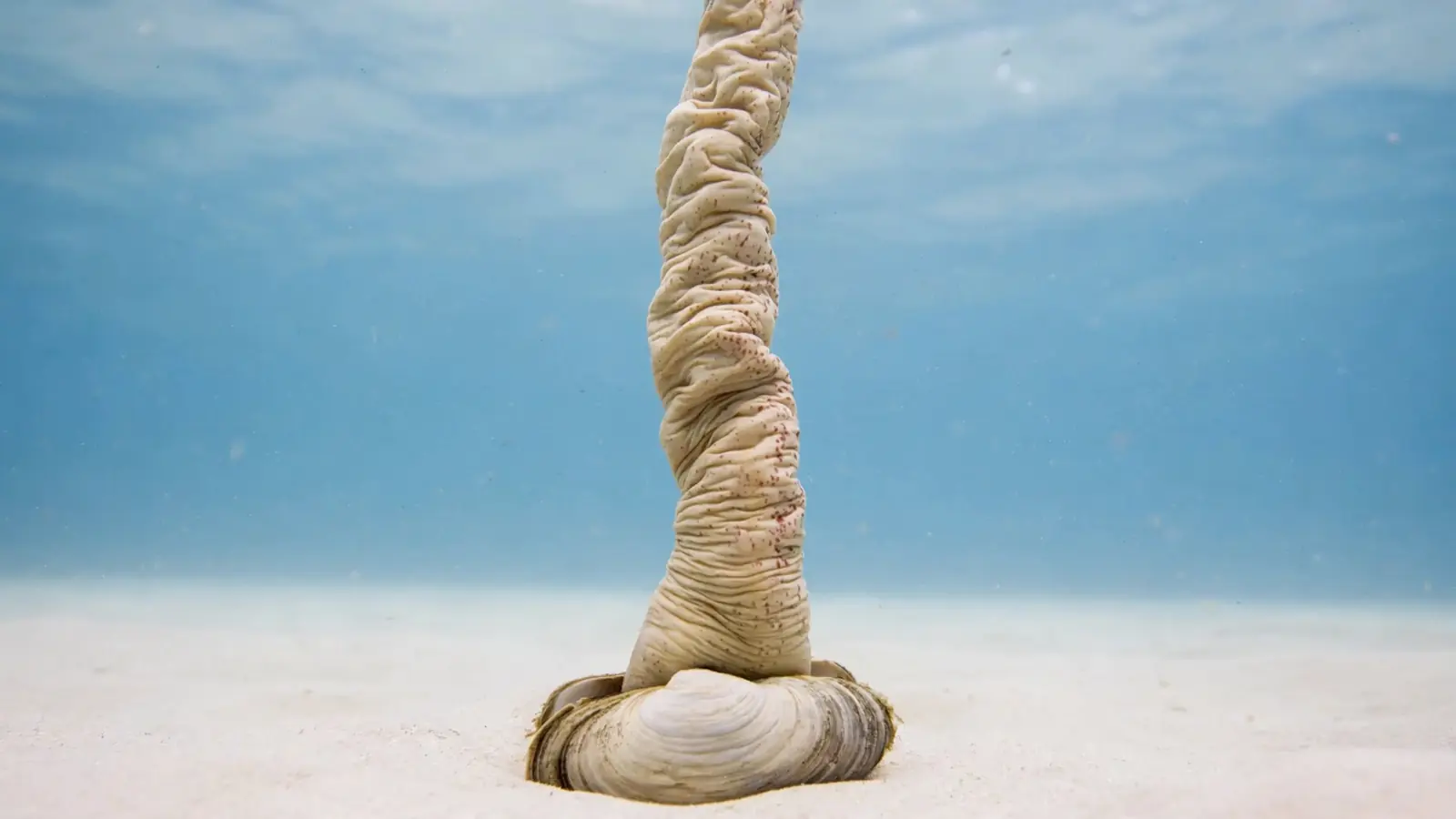
At a Glance
A geoduck spends its adult life buried a metre deep, and it may spend more than a century down there. All the world sees of it is the tip of a long siphon at the sand’s surface, quietly filtering the tide as it passes. Everything else about this clam, its great age, its size and its improbable name, stays underground with it.
Geoduck Size and Anatomy
Start with the mismatch: this is the world’s largest burrowing clam, yet its shell, at 15 to 20 centimetres, is nothing special. The size is in the soft parts. A large adult weighs around 1 to 1.5 kilograms, and most of that weight is the siphon, the long muscular neck that gives the animal its silhouette. The shell cannot contain it. Young geoducks outgrow their shells early and live the rest of their lives with the body permanently too big to withdraw, the valves gaping around a tenant that no longer fits.
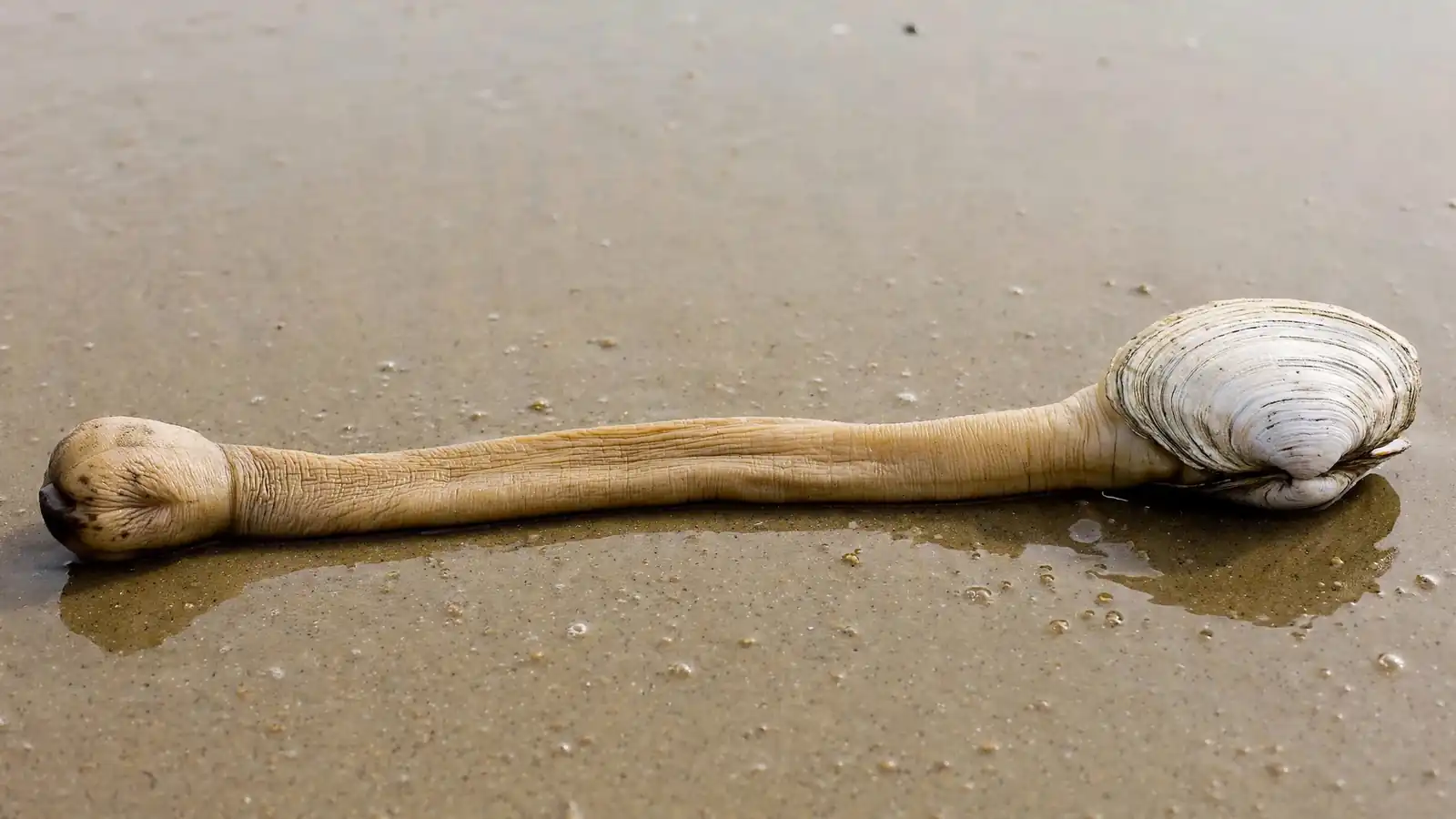
That odd proportion explains the whole lifestyle. A clam that cannot close its shell has two options, armour it cannot carry or depth it can dig to, and the clam chose depth. The shell still does useful work, shielding the buried body and anchoring the animal against the pull of its own siphon, but the real defence is the metre of sand overhead. Measured against other clams, which mostly close up and wait, this one is a specialist in disappearance.
The Clam’s Siphon: A One-Metre Neck
The animal feeds, breathes and breeds through a single piece of plumbing. The siphon is a fused double tube: one channel draws seawater down from the surface, the other returns it after the gills have strained out the plankton. Fully extended it can reach a metre, which is exactly the distance between the buried body and the open water it feeds from. The two openings at the tip, one in and one out, are all of the animal that ever meets the world.
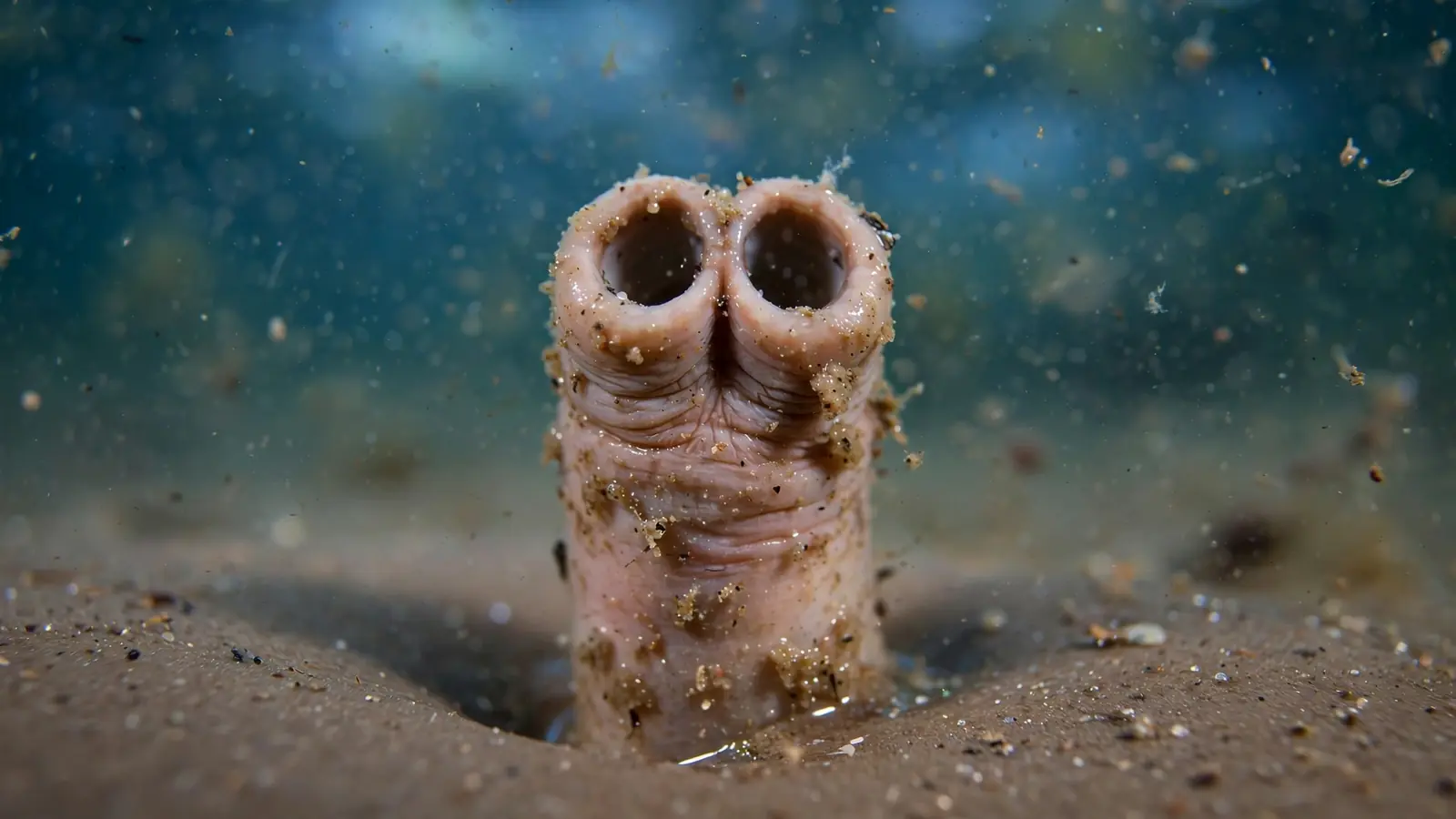
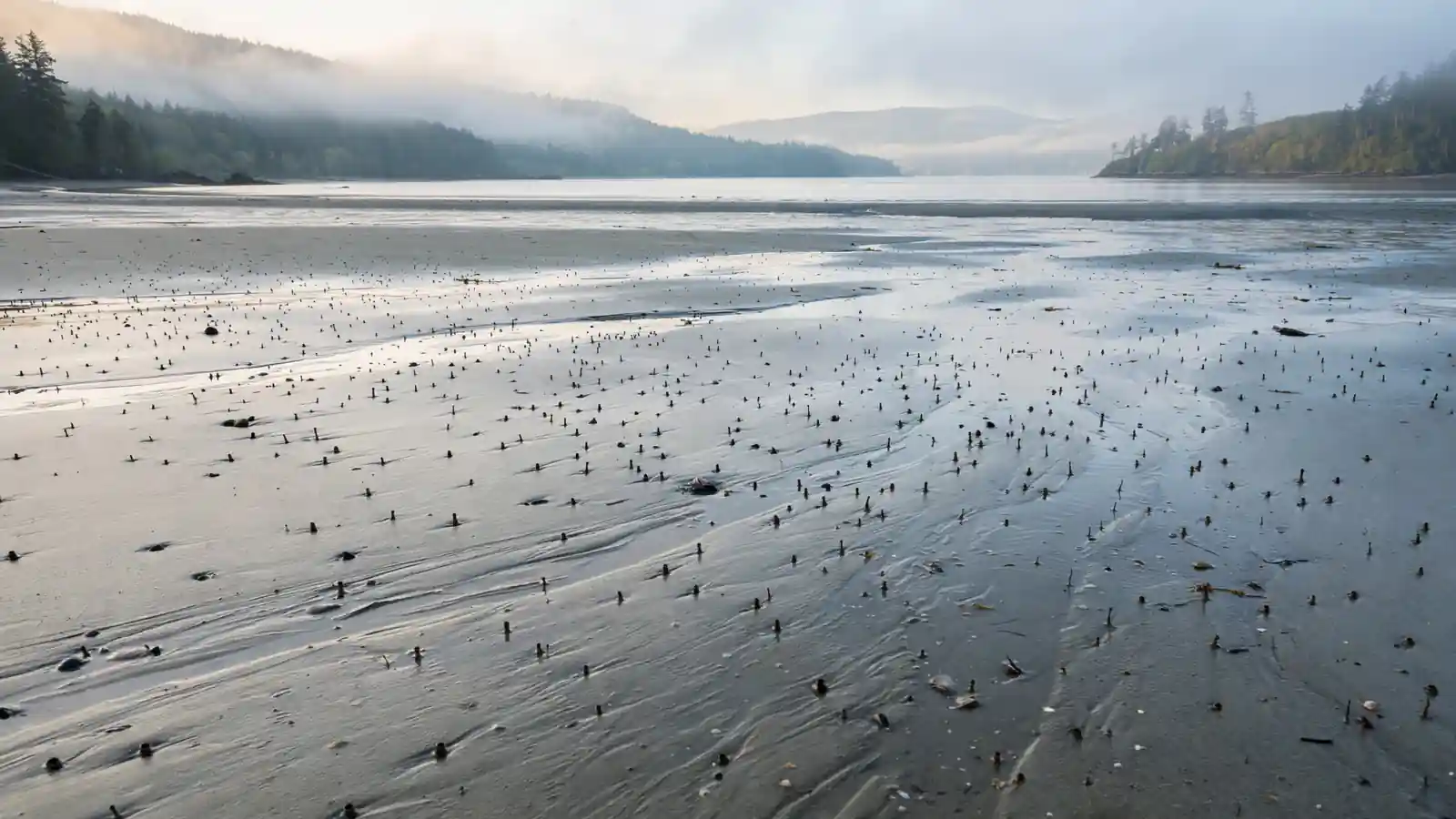
Life through a straw has its risks. Fish and sea stars nip at the exposed tip, and a cropped siphon can regrow only so far, but the trade is worth it: the body, with everything vital in it, stays buried beyond reach. Juveniles work their way down as they grow, digging deeper each year until they reach the full adult depth, after which the address is permanent. Watch a clam bed at low tide and the siphons are the whole show, hundreds of tips standing in the wet sand, each one the chimney of an invisible animal.
How Do You Pronounce Geoduck?
Gooey-duck. Say it that way and you will be understood from Alaska to Baja. The baffling spelling is a 19th-century attempt to write down a word from Lushootseed, the language of the Nisqually people of Puget Sound: gʷídəq, often interpreted as “dig deep”, which is precisely what the animal does. Early writers rendered the sounds as best they could, the spelling stuck, and the clam has been defeating readers ever since. No ducks, at any point, were involved.
The animal collects names wherever it goes. On its home coast it is also the king clam, in China it is the elephant-trunk clam, and divers sometimes call it the mud duck. Its scientific name is Panopea generosa. However it is labelled, the pronunciation survives every translation, and newcomers to the Pacific Northwest are still identified, kindly, by the moment they first say the name in a fish market. The full species profile traces the name and the animal through the scientific record.
Habitat: Buried and Staying There
Its world is the Pacific coast of North America, from Alaska to Baja California, in sand and soft mud from the low shore down to more than 100 metres of water. The larva drifts, settles, and digs; the young clam burrows deeper as it grows; and by the time it is an adult, roughly a metre of sediment stands between it and everything that might eat it. From that moment it does not travel, migrate or relocate. Its habitat is a single hole, occupied for a lifetime.
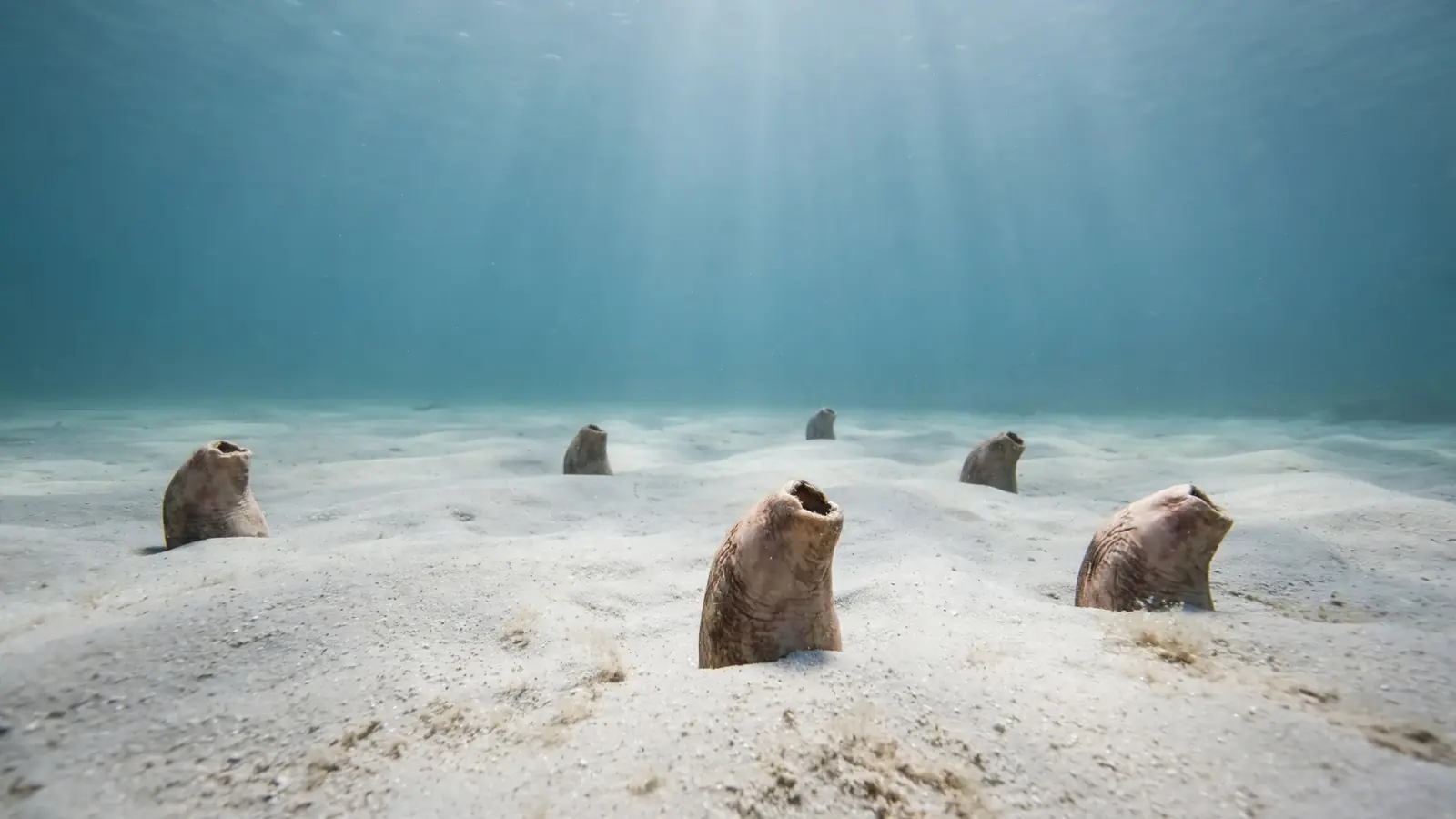
An adult one, dug in for good, experiences the ocean as weather at the end of a tube: tides, plankton blooms, storms stirring the surface. Beds can be dense, and a healthy bed is a filter-feeding engine and a landmark in the local food web, eaten around rather than eaten. Buried, long-lived and almost unreachable, the adult animal has effectively opted out of the predator problem that shapes most marine life.
A Lifespan of 140 Years
Count the fine rings in a specimen’s shell and you can read its age like a tree’s. The answers regularly pass a century: a typical lifespan is around 140 years, and the oldest individual on record is usually aged at 168 years, a clam that settled into the sand in the middle of the 19th century. That puts the it in the small club of the longest-lived animals on Earth, in the company of ocean quahogs and Greenland sharks.

The long life runs on a slow clock, and it includes a great deal of reproduction. Geoducks spawn by broadcasting eggs and sperm into the water above the bed; a female releases millions of eggs in a single spawning, and across a century and a half of summers the lifetime total runs into the billions. Almost all of it feeds something else, but the arithmetic of the strategy is clear: stay buried, stay alive, and let the sheer number of summers do the rest.
The Fishery: A Prized and Guarded Clam
Here the animal guide and the food story meet, briefly and honestly. The animal is a prized seafood, commanding some of the highest prices of any clam, especially in East Asian markets where the siphon is a delicacy. The wild harvest matches the animal’s strangeness: divers on air hoses work the beds by hand, loosening the sand around each buried clam with a jet of water and drawing it out whole, because a metre-deep animal that cannot be dug from above must be floated out of its own burrow.
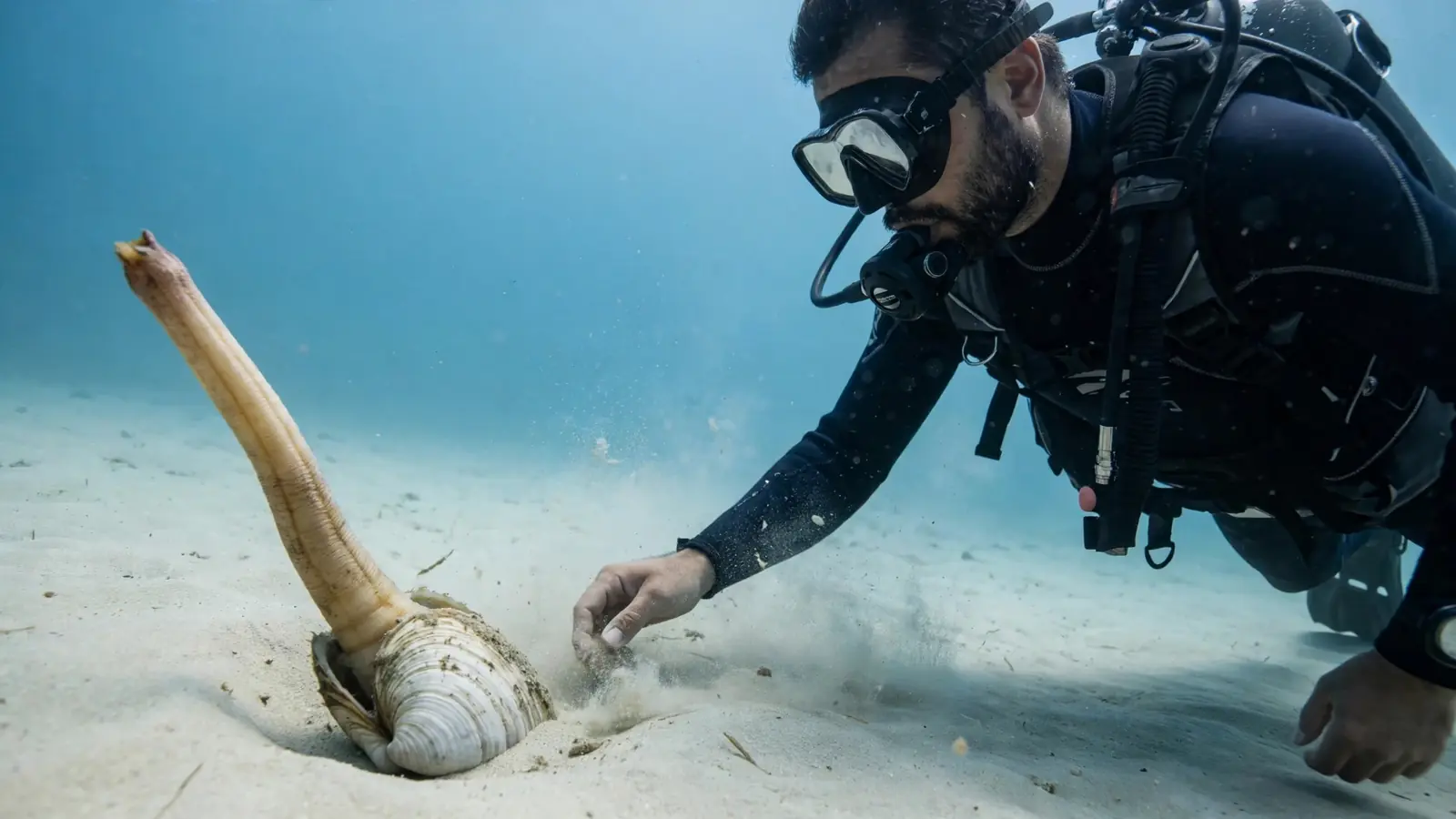
The same qualities make wild stocks easy to damage: an animal that needs decades to mature cannot quickly replace a harvested bed, so the fisheries are closely managed, with quotas, seasons and strict licensing, and farmed geoducks now supply part of the demand. It is a fittingly careful end to the story. The It is not just the largest burrowing clam or the owner of the worst-spelled name in seafood; it is a standing argument that the slowest life in the sea can also be one of the longest.
Fun Facts
- Geoduck is pronounced “gooey-duck”: the spelling is a 19th-century attempt to write the Lushootseed word gʷídəq.
- Its shell is almost an afterthought: the animal outgrows it as a juvenile and can never close itself inside again.
- The oldest specimen on record is usually aged at 168 years, which means it settled into the sand before the telephone was invented.
- A female clam releases millions of eggs in a single spawning, and across a 140-year life the total runs into the billions.
- Once a one has dug itself a metre down, it never travels again: adults are among the most stay-at-home animals on Earth.
- Harvesters find buried geoducks by the tip of the siphon, called the show, poking just above the sand at low tide.
Frequently Asked Questions
How Do You Pronounce Geoduck?
Gooey-duck. The spelling is a 19th-century attempt to write the Lushootseed word gʷídəq, spoken by the Nisqually people of Puget Sound. Read the name the way it sounds, not the way it looks, and you will say it the way everyone in the Pacific Northwest does.
What Is a Geoduck?
A geoduck, Panopea generosa, is the largest burrowing clam in the world. It lives buried about a metre deep in the sand and mud of the north-east Pacific, feeding through a siphon that can stretch a metre long, and it commonly lives for well over a century.
How Long Do Geoducks Live?
A typical geoduck lives around 140 years, which places it among the longest-lived animals on Earth. The oldest individual on record is usually aged at 168 years, counted from the growth rings laid down in its shell, one fine ring for every year of its buried life.
Why Is It Called a Geoduck?
The name comes from the Lushootseed word gʷídəq, often interpreted as “dig deep”, a fair description of an animal that buries itself a metre down. No ducks are involved. The clam is also called the king clam, and in China the elephant-trunk clam, after its long siphon.
How Big Do Geoducks Get?
The shell itself is modest, 15 to 20 centimetres long, but the animal outgrows it as a juvenile and can never withdraw inside again. The siphon is the impressive part, reaching up to a metre, and a large geoduck weighs around 1 to 1.5 kilograms, most of it neck.
Where Do Geoducks Live?
Geoducks live along the Pacific coast of North America, from Alaska down to Baja California. They bury themselves in sand and mud from the low shore down to water more than 100 metres deep, and once an adult is dug in, it stays in that spot for the rest of its life.
How Do Geoducks Eat With Such a Long Siphon?
The long neck is a double tube. One side draws seawater down to the buried body, where the gills filter out plankton, and the other side expels the filtered water and waste. The tip of the siphon reaches the water above the sand while the clam stays safely buried a metre below.
Similar Species Worth Exploring
Keep Exploring
Keep exploring the mollusks: meet the scallop, the clam family’s restless cousin with 200 eyes and a swimming escape, or browse the whole family tree in our guide to the types of mollusks. Then come back to the quiet record-holder under the Pacific sand, the clam that outlives everyone who studies it: the geoduck.