Storm Petrel
Storm Petrel: Europe’s Smallest Seabird
The storm petrel is Britain’s smallest seabird — a 25 gram tubenose with a white rump that winters off South Africa and can live past 30 years.
By Emily Carter · Reviewed by our vet team · Updated 10 November 2026 · 9 min read
~25 gWhite rumpLives past 30 years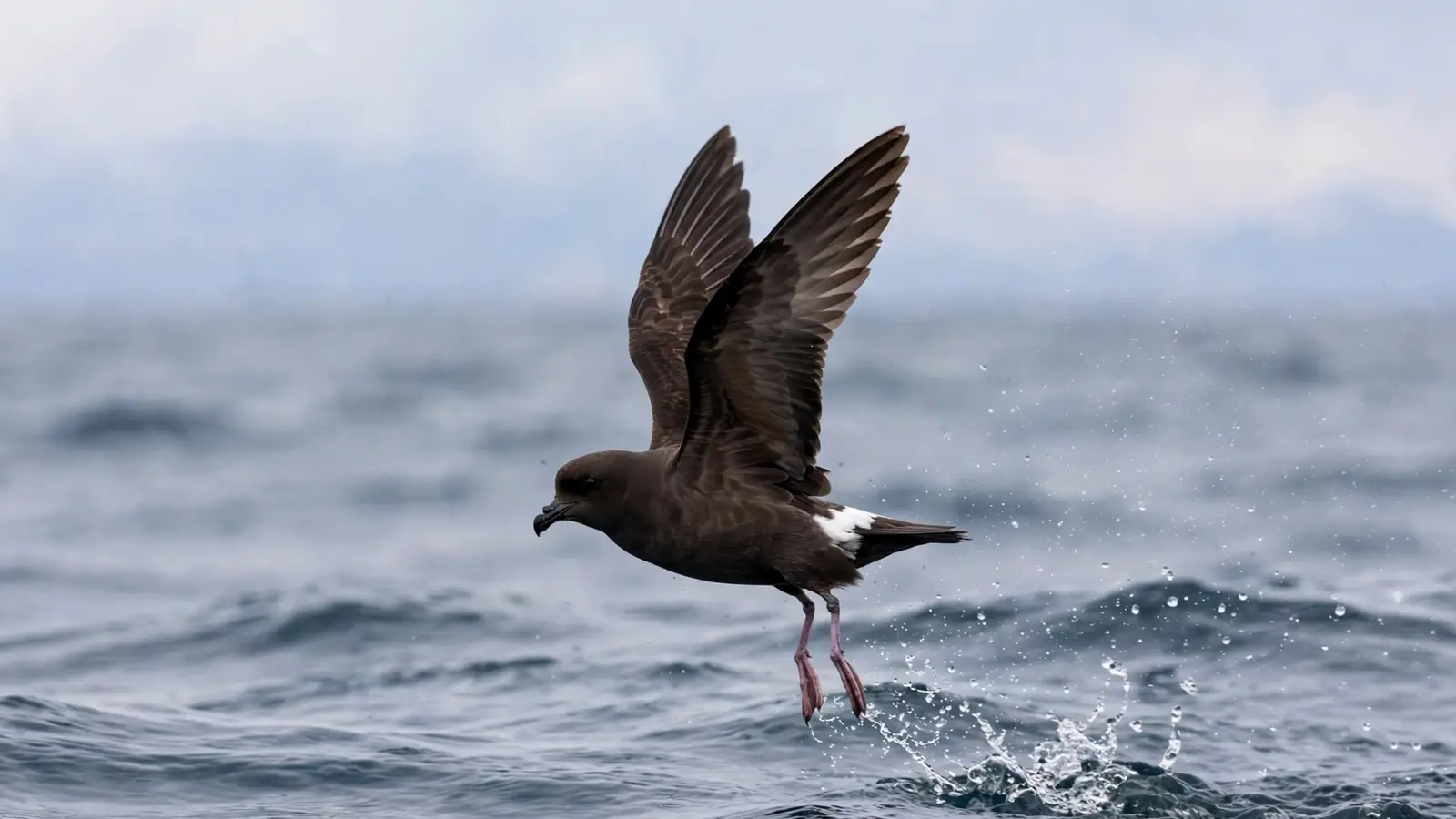
At a Glance
The storm petrel is a tiny tubenose seabird — 14–18 cm long and about 25 grams — and Britain’s and Europe’s smallest seabird. It nests in burrows on island colonies like Mousa in Shetland, and winters off South Africa.
Storm Petrel Size: Europe’s Smallest Seabird
It is Europe’s smallest seabird: 14–18 cm long, with a wingspan of 37–41 cm and a weight of about 25 grams — barely the weight of a sparrow, and smaller than a blackbird. It is a tiny, dark bird with a fluttering, bat-like flight, and it looks fragile next to almost any other seabird.
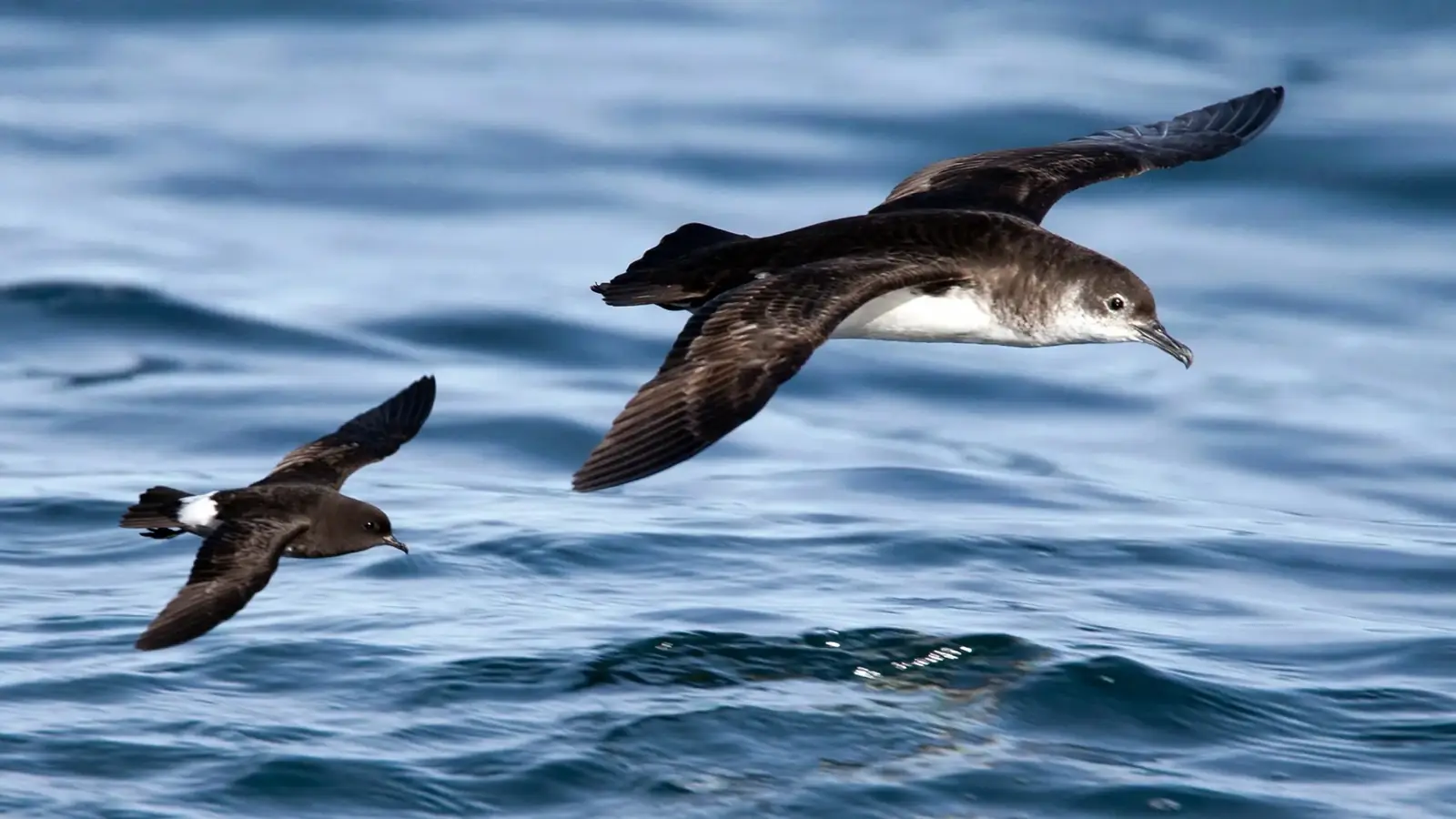
The comparison below shows the scale: a petrel beside a Manx shearwater, the middle tubenose, and the petrel is the small one — a fraction of the shearwater’s size, with the white rump band as its mark. Size is its story: it is the smallest seabird in Europe, and it lives its whole life at a scale that no other British seabird matches.
The White Rump: How to Recognise a Storm Petrel
Its field mark is the white rump: a broad white band across the base of the tail, set against a dark, sooty body. In flight the bird shows a white rump and a pale band across the upper wing, and those two marks — the white rump and the pale wing bar — are what separate it from every other small dark seabird at sea.

The rump is the mark that matters at a distance. A petrel at sea is a small dark bird, and without the white rump it would be hard to tell from a swift or a swallow — but the white band shows clearly in flight, and it is the reason birdwatchers can pick the petrel out of a wave-tossed sea. White rump, pale wing bar, fluttering flight: that is it.
Where They Nest: Mousa and Island Colonies
Storm petrels nest in burrows and crevices on island colonies — and the largest colony in Britain is on Mousa, in Shetland, with about 11,800 pairs. Mousa is a small island with a famous broch, an Iron Age tower, and the petrels nest in its walls and in the stonework around it — a colony in a monument, counted by sound at night.

The nesting is nocturnal and secretive. The birds come ashore only at night, they call with a purring, churring song, and they lay a single egg in a burrow or a crevice — in a wall, under a stone, in the broch itself. The colony is invisible by day and audible by night, and the count is made by listening, not by looking. For the full colony story, see this petrel guide, which covers the Mousa colony, the nesting and the migration.
Migration: Winters Off South Africa
Storm petrels winter off South Africa, thousands of miles from their breeding colonies in the North Atlantic. After the breeding season the birds leave Mousa and the other islands, cross the equator, and spend the winter in the southern Atlantic and the Indian Ocean — a migration of extraordinary length for a bird that weighs 25 grams.

The wintering grounds are the open ocean off South Africa, where the petrels feed on plankton and small fish at the surface. They return in spring, back to the same burrows and the same islands, and the cycle begins again — a 25-gram bird that crosses the world twice a year and comes home to the same stone wall.
What They Eat: Plankton at the Surface
Storm petrels eat plankton and small fish at the surface — tiny crustaceans, fish eggs and small fish, picked from the water as the bird hovers and patters on the waves. The feeding is a fluttering dance: the petrel holds its wings out, dips its feet onto the water, and picks up food without ever landing.

The pitter-pat is its signature. The bird walks on the water, its feet pattering on the surface, its wings beating to hold it up, and it snatches plankton from the top of the sea. It is a small bird eating small food, and the whole feeding style is built for a 25-gram body that cannot dive deep or carry much weight.
Three Tubenoses, Three Sizes
It is one of three tubenoses in this guide, and the three are separated by size. It is the smallest — a 25-gram bird with a white rump, barely bigger than a sparrow. The Manx shearwater is the middle bird, black above and white below, with long narrow wings. The sooty shearwater is the largest, all brown, with a longer, more powerful flight.
The tubenose is the giveaway for all three: the tube on the bill that gives the group its name, an adaptation for smelling food at sea and for excreting salt. Petrel, shearwater and sooty are three sizes of the same trick — and it is the smallest of them, the one that fits in a hand.
Conservation: Least Concern, a Long-Lived Seabird
It is listed as Least Concern, and its population is large — hundreds of thousands of pairs across the North Atlantic, with Mousa alone holding about 11,800. It is not a rare bird, and it is not in obvious decline.
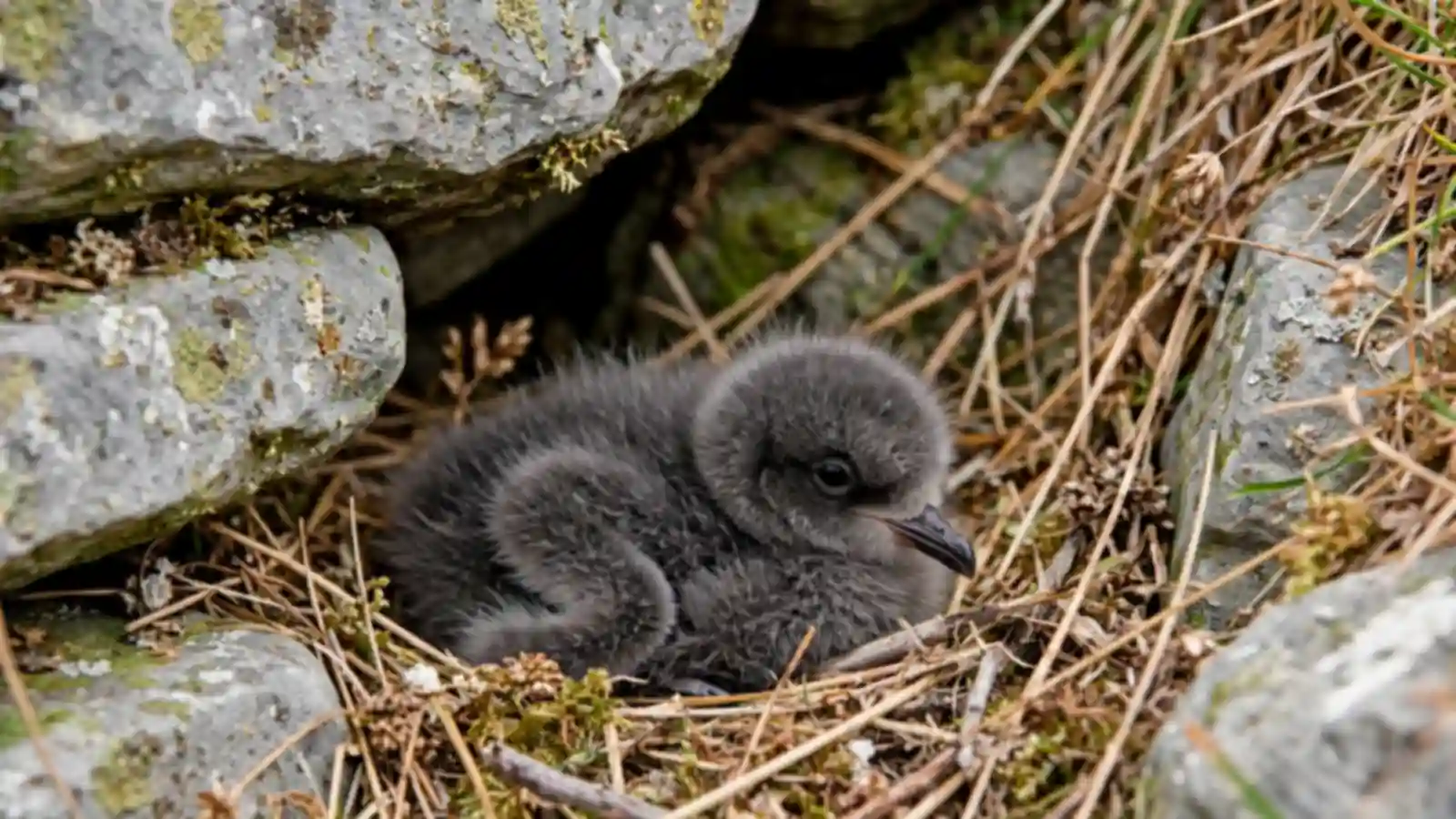
The surprise is the lifespan. A bird that weighs 25 grams can live up to about 33–34 years — an approximate maximum, and one of the longest lives of any small bird. It is tiny, but it is tough: it crosses the world twice a year, it breeds in stone walls, and it lives for decades. Least Concern is the status; longevity is the story.
Fun Facts
- It is Britain’s and Europe’s smallest seabird — about 25 grams.
- Its white rump band is the field mark that identifies it at sea.
- Mousa, in Shetland, holds about 11,800 pairs — the largest UK colony.
- It winters off South Africa, thousands of miles from its breeding islands.
- It can live up to about 33–34 years — an approximate maximum for a 25-gram bird.
- It nests in the walls of Mousa Broch, an Iron Age tower in Shetland.
Frequently Asked Questions
What Is a Storm Petrel?
A storm petrel is a tiny tubenose seabird, Hydrobates pelagicus — Britain’s and Europe’s smallest seabird, at 14–18 cm and about 25 grams. It is dark with a white rump band, it nests in burrows on island colonies like Mousa, and it winters off South Africa.
How Big Is a Storm Petrel?
14–18 cm long, with a wingspan of 37–41 cm and a weight of about 25 grams — barely the weight of a sparrow, and smaller than a blackbird. It is Europe’s smallest seabird.
Where Do Storm Petrels Nest?
In burrows and crevices on island colonies — most famously Mousa, in Shetland, with about 11,800 pairs, the largest colony in Britain. The birds nest in the walls of Mousa Broch, an Iron Age tower, and come ashore only at night.
How Can You Recognise a Storm Petrel?
By the white rump band across the base of the tail, set against a dark, sooty body, plus a pale band across the upper wing and a fluttering, bat-like flight. The white rump is the mark that separates it from every other small dark seabird at sea.
Where Do Storm Petrels Spend the Winter?
Off South Africa, thousands of miles from their breeding colonies in the North Atlantic. After breeding they cross the equator and spend the winter in the southern Atlantic and the Indian Ocean, feeding on plankton and small fish at the surface.
How Long Do Storm Petrels Live?
Up to about 33–34 years — an approximate maximum, and one of the longest lives of any small bird. A 25-gram bird that crosses the world twice a year and lives for decades is one of the great surprises of seabird biology.
Are Storm Petrels Endangered?
No — the storm petrel is listed as Least Concern, with hundreds of thousands of pairs across the North Atlantic. Its colonies are protected, its numbers are not in obvious decline, and its long life is a sign of a bird that is doing well.
Similar Species Worth Exploring
Keep Exploring
Meet the Manx shearwater, the middle tubenose that owns Skomer, then the sooty shearwater, the largest of the three, and browse the whole family in our types of seabirds hub — then come back to Europe’s smallest seabird, the storm petrel.