Milkfish
Milkfish: the silvery bangus, bony, farmed and beloved
The milkfish is the silvery bangus of Southeast Asia: a fast, schooling fish that grows to 1.8 metres, feeds on algae, and is farmed across the region despite being famously bony. This guide covers its size, its habitat, its diet and the national-fish question that has no official answer.
By Emily Carter · Reviewed by our vet team · Updated 10 November 2026 · 10 min read
The only living chanidTo 1.8 metres longFamously bony
At a Glance
A milkfish is a flash of silver in warm water: a fast, streamlined schooling fish with a deeply forked tail and a mouth built for filtering, the only living member of its family and one of the most farmed fish on Earth. In the Philippines it is bangus, a fish so loved it is called the national fish, and the love is real even if the title is not official.
What Is a Milkfish?
Chanos chanos is the only living species in the family Chanidae, a family with a long fossil history and a single survivor. It is a silvery, streamlined fish with a deeply forked tail, a small toothless mouth, and a body built for speed and distance, and it is the only species of its kind left in the sea.
It is also one of the most important farmed fish in the world. They have been raised in ponds in Southeast Asia for centuries, and the Philippines, Indonesia and Taiwan farm them in enormous numbers, which is why a fish most of the world has never heard of is a daily food for hundreds of millions of people.
Size and Identification
It grows to 1.8 metres long and 14 kilograms at most, though the fish on a market stall are usually far smaller, nearer 40 to 60 centimetres. The weight figures vary: the stronger sources give 14 kilograms as the maximum, while one source claims 19 kilograms in ponds, and the honest figure is 14. The body is the giveaway — long, silvery, torpedo-shaped, with a deeply forked tail and a single dorsal fin set far back.

Identification is straightforward once you know the shape: no other common Indo-Pacific fish combines the size, the silver, the forked tail and the small mouth in quite the same way. The young gather in schools near the surface, and adults run in open coastal water, and both are fast enough to be hard to follow with the eye.
Habitat and Range
They live across the tropical Indo-Pacific, from the Red Sea and East Africa to the Pacific islands, in coastal waters, lagoons, estuaries and mangrove creeks. They are at home in the sea and in brackish water alike, moving between reef flats, river mouths and fish ponds with an ease few marine fish can match, and they gather in schools that can number in the thousands. The species account maps the full range and the family in detail.
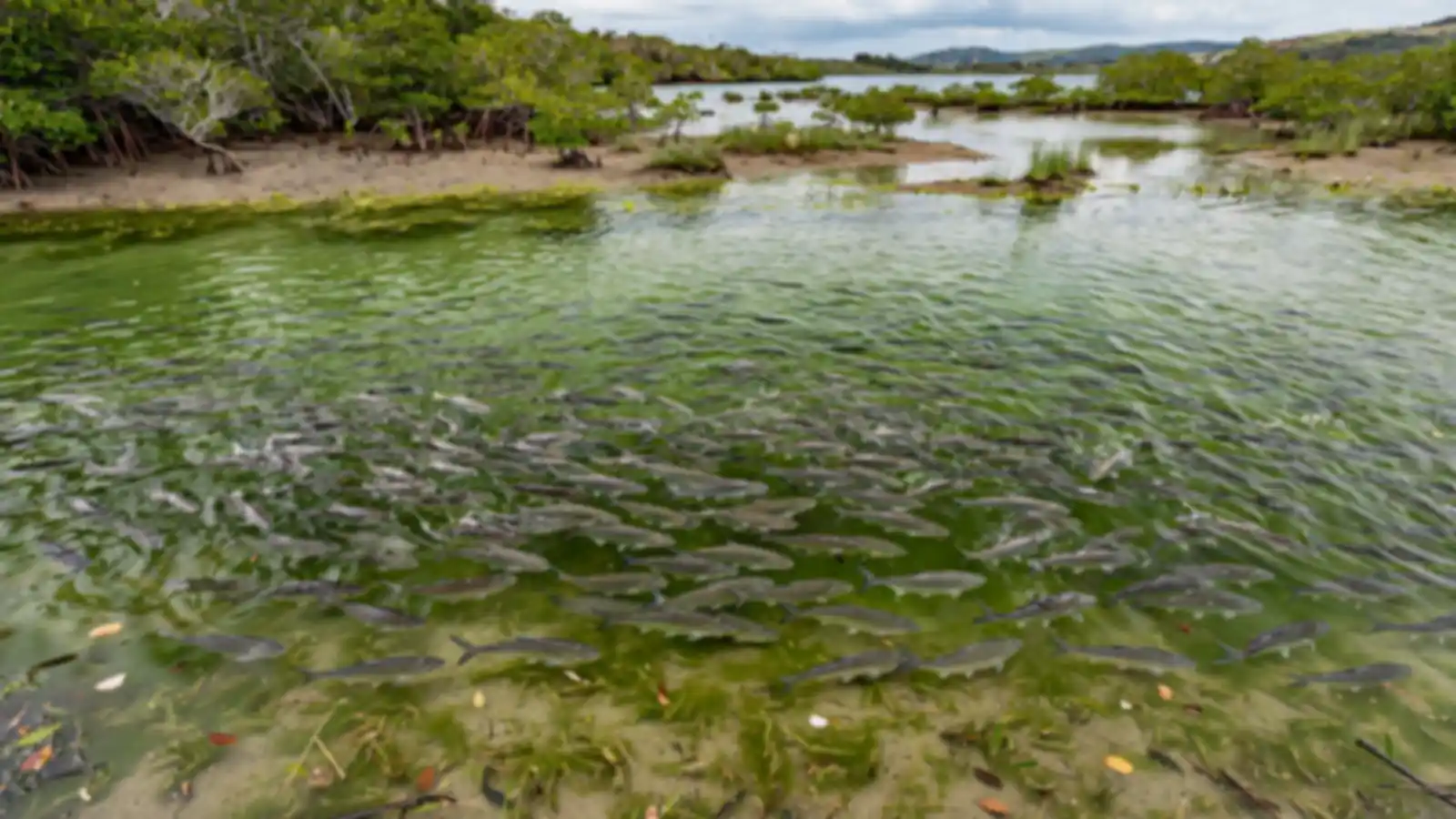
They are travellers as well as residents. The young ride currents between islands, adults move along coasts with the seasons, and the species turns up wherever warm shallow water meets a food supply. Ponds and lagoons suit them as well as open sea, which is the whole reason the farming industry exists: a fish that thrives in a pond is a fish a farmer can raise.
Diet and Feeding
It eats algae and small invertebrates, filtering them from the water with fine gill rakers and picking them from surfaces with its small mouth. It is a herbivore by habit and a filter feeder by method, grazing on the green growth of shallow water and taking the tiny animals that live in it, and it feeds mostly by day in the warm upper water.
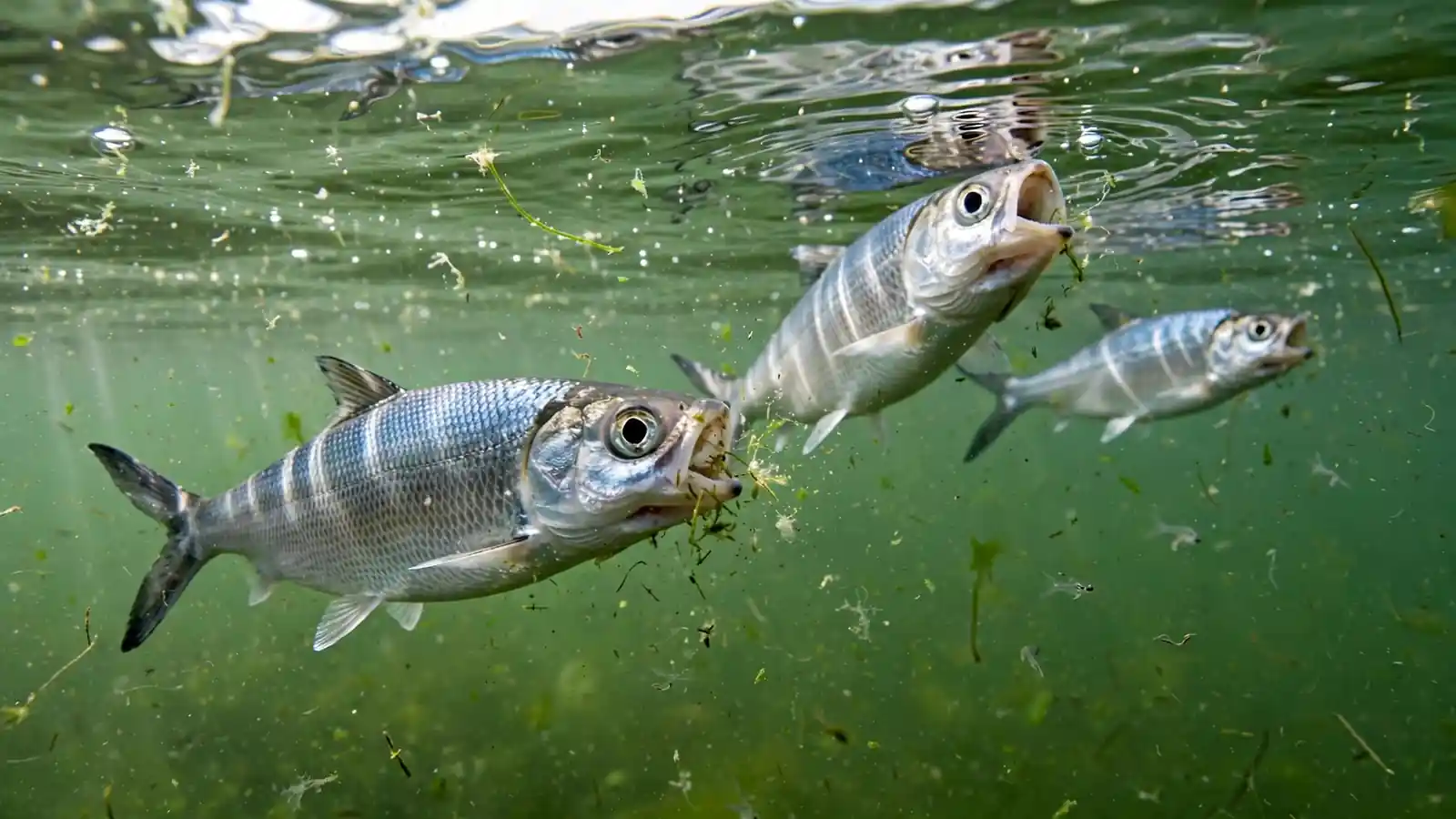
The diet is the reason the fish is farmed so easily: algae grows wherever there is sun and shallow water, and it turns it into flesh without needing fish meal or expensive feed. It is a low-input, high-yield animal, and its feeding is the whole foundation of the bangus industry, a fish that eats what the pond grows.
Why Milkfish Are So Bony
It is famously bony, and the fame is earned: its flesh is full of fine intermuscular bones, thin needle-like bones that run through the muscle in rows. They are not the big central bones of most fish but dozens of small ones, and they are the reason eating one takes care, a good knife and a little patience.
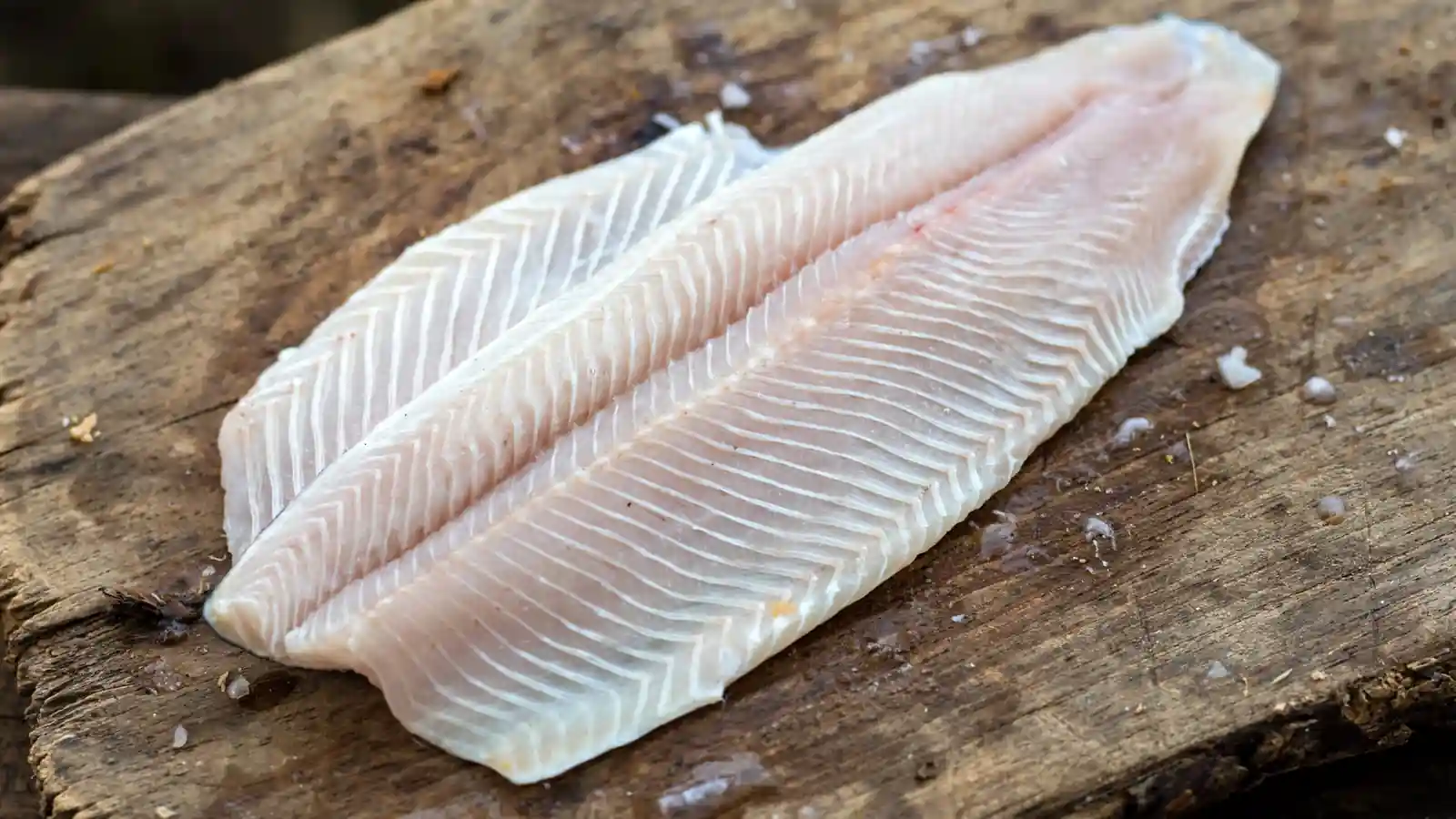
The bones are the fish’s signature and its only real flaw as food. Filipino cooks have answered them with skill: boneless bangus, where the fine bones are pulled out one by one, is a whole craft, and it is also cooked in sour soups where long cooking softens the bones. The bones do not stop anyone eating it; they are simply the price of a fish that is otherwise cheap, fast-growing and everywhere.
Farming and Food: The Bangus Industry
Its farming is one of the oldest aquaculture industries in the world, with ponds in the Philippines and Indonesia that have raised bangus for centuries. The fish are stocked as fry caught from the wild or raised in hatcheries, grown in brackish ponds on algae and natural feed, and harvested in nets by the tonne, and the industry feeds millions of people across Southeast Asia.

As food it is versatile: fried, grilled, stewed in sour sinigang, smoked, or made into boneless bangus for the careful eater. It is a food fish first and a wild animal second in most people’s minds, and the farming is the reason: a fish this widely raised is a fish most people meet on a plate before they ever meet it in the sea.
The “National Fish” Question: Popular, Not Official
In the Philippines it is popularly known as the national fish, and the title is used everywhere: in cookbooks, in school lessons, in market talk. It is a title the fish has earned by love, not by law, and the distinction matters: the Philippine National Commission for Culture and the Arts has stated that the title has no basis in law, and there is no statute that names it as the national fish.

So the honest wording is popularly known as the national fish of the Philippines, never the official national fish. The love is real either way — bangus is the fish of Filipino home cooking, the centre of the national dish of daing na bangus, and the animal most Filipinos would name if asked for one fish that is theirs. A title given by a people counts for a great deal, even when no law has signed it.
Fun Facts
- It is the only living species in its family, Chanidae, a family with a long fossil history.
- It is called bangus in the Philippines and bandeng in Indonesia and Malaysia.
- It is popularly known as the national fish of the Philippines, but the title has no basis in law.
- Its flesh is full of fine intermuscular bones, and boneless bangus is a whole craft.
- It grows to 1.8 metres and 14 kilograms, though market fish are usually far smaller.
- It has been farmed in Southeast Asian ponds for centuries, one of the oldest aquaculture industries in the world.
Frequently Asked Questions
How big do milkfish get?
To 1.8 metres long and 14 kilograms at most, though the fish on a market stall are usually nearer 40 to 60 centimetres. The stronger sources give 14 kilograms as the maximum; one source claims 19 kilograms in ponds.
Is milkfish the national fish of the Philippines?
Popularly, yes; officially, no. It is widely called the national fish of the Philippines, but the National Commission for Culture and the Arts has stated the title has no basis in law. The honest wording is popularly known as the national fish.
Why is milkfish so bony?
Its flesh is full of fine intermuscular bones, thin needle-like bones that run through the muscle in rows. They are the fish’s signature and its only real flaw as food, and Filipino cooks answer them with boneless bangus and long, slow cooking.
Where do milkfish live?
Across the tropical Indo-Pacific, from the Red Sea and East Africa to the Pacific islands. They live in coastal waters, lagoons, estuaries and mangrove creeks, and move easily between the sea and brackish water.
What do milkfish eat?
Algae and small invertebrates. It is a herbivore and a filter feeder, grazing on the green growth of shallow water and filtering tiny animals from the water with its fine gill rakers.
What is bangus?
Bangus is the Filipino name for it, Chanos chanos. Bandeng is the Indonesian and Malay name. It is the same fish: a silvery, schooling, famously bony fish that is farmed across Southeast Asia.
Is milkfish good to eat?
Yes, it is one of the most important food fish in Southeast Asia, fried, grilled, stewed in sour sinigang, smoked or served as boneless bangus. Its flesh is firm and flavourful, and the fine bones are the only drawback.
Similar Species Worth Exploring
Keep Exploring
Keep exploring the silvery schoolers: meet the vast shoals in our sardine guide, or browse the whole shoal in the types of fish. Then come back to the bony, beloved bangus: the milkfish.