European Squid
European Squid: The Common Squid of the Atlantic and Mediterranean
The European squid is the common squid of the eastern Atlantic and Mediterranean, with fins covering two-thirds of its mantle. It is the squid that every fishmonger knows — and the one whose name causes the most confusion in the sea.
By Emily Carter · Reviewed by our vet team · Updated 10 November 2026 · 9 min read
Fins cover two-thirds of mantleIs the common squidCommercial fishery
At a Glance
The European squid is the common squid of the eastern Atlantic and Mediterranean, Loligo vulgaris, and its fins cover about two-thirds of its mantle. Its mantle is usually 15–25 cm, and it is one of the most fished squid in European waters.
European Squid Size: A 25-Centimetre Mantle
It grows a mantle usually 15–25 cm long, to 40 cm in large animals, and the maximum published weight is 1.5 kg. SeaLifeBase cites a 64 cm male mantle record, but that is exceptional — a record, not a typical size — and this guide gives the usual 15–25 cm range with the record flagged as exceptional.
The size makes the squid a mid-sized commercial squid: big enough to be worth fishing, small enough to be abundant. A 25 cm mantle is the size of a dinner plate, and a school of squid near the surface is a wall of flashing, colour-changing animals.
Common Squid or European Squid? The Naming
“Common squid” is the alternate name for Loligo vulgaris — there is no separate “common squid” species. It IS the common squid, and the two names describe the same animal: the common squid of the eastern Atlantic and the Mediterranean.
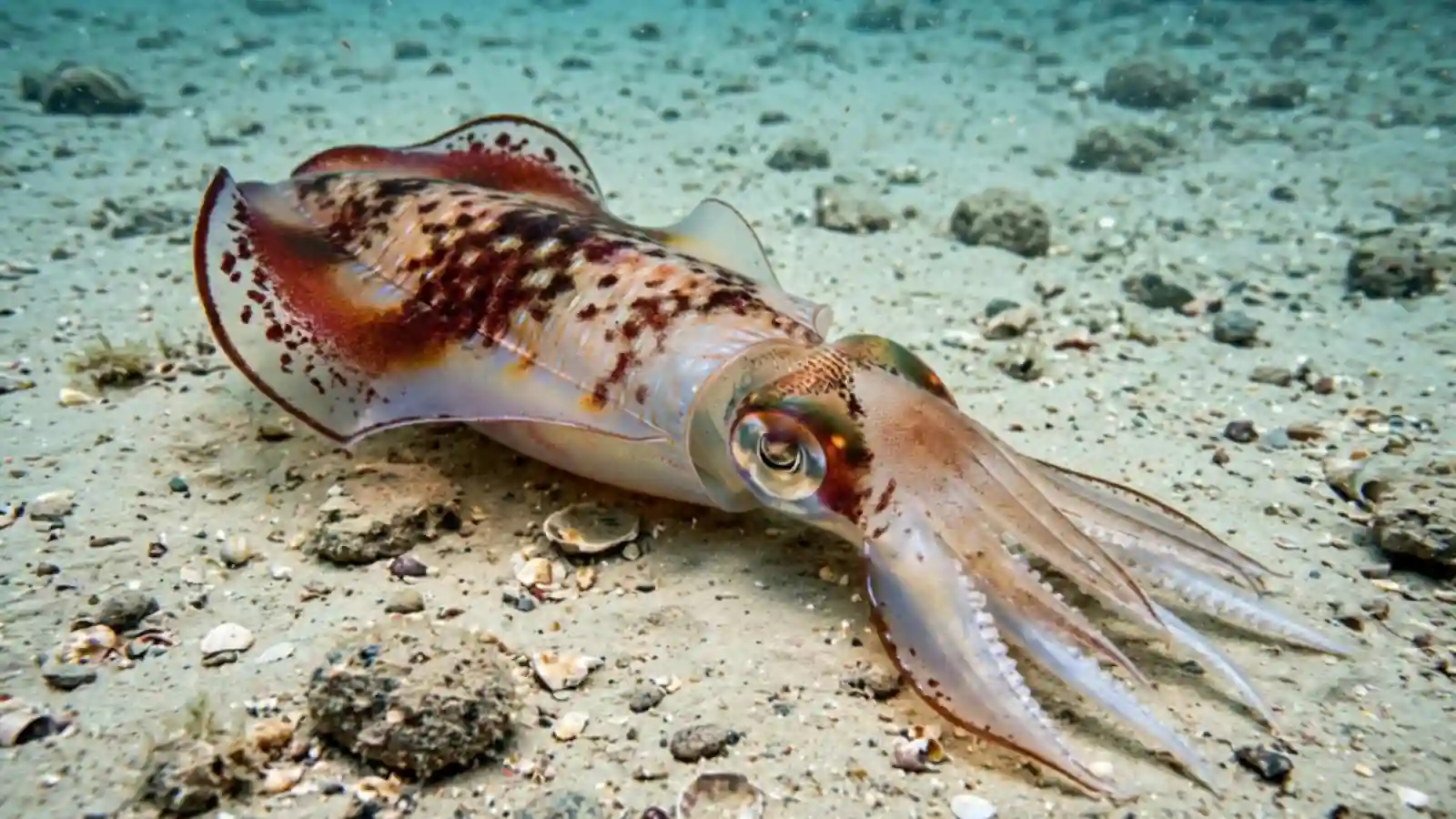
The confusion comes from the name itself: “common” sounds like a description, not a species, so people assume there must be a separate common squid somewhere. There is not. If a fishmonger sells you common squid in the eastern Atlantic or the Mediterranean, it is Loligo vulgaris — and the squid changes colour on the seabed as it moves, which is part of why it is so often seen.
The Rhomboid Fins: Two-Thirds of the Mantle
Its fins are rhomboid — diamond-shaped — and they cover about two-thirds of the mantle. The fins are the field mark: long, flat and diamond-shaped, running most of the length of the body, where other squid have short, ear-like fins at the back of the mantle.
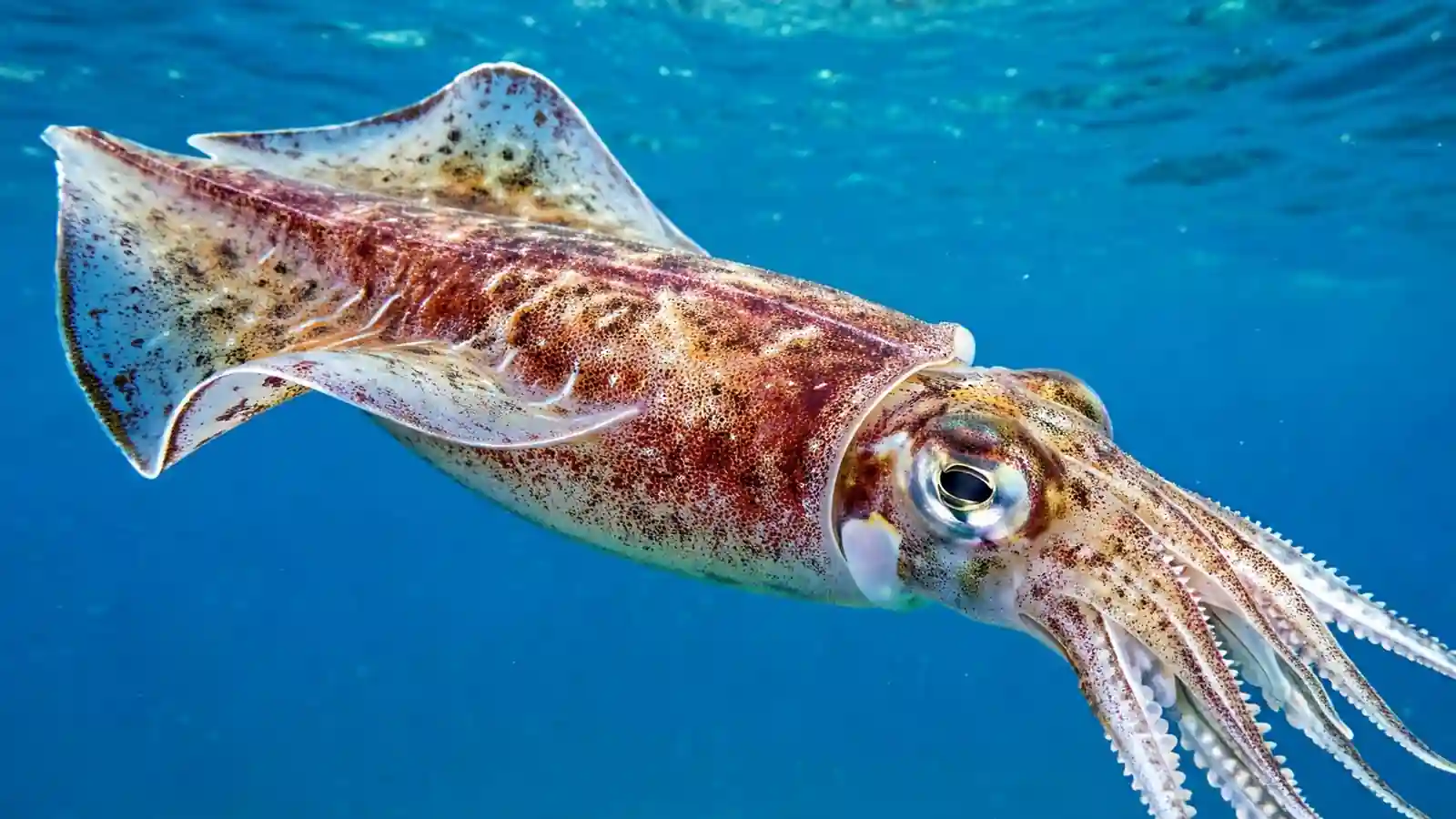
The long fins are built for the squid’s life: they steer the animal as it swims, they help it hover, and they work with the jet to move it through the water. A squid in the water is a torpedo with a diamond on its back, and the fins are what give it away.
Where European Squids Live: Atlantic and Mediterranean
European squids live in the eastern Atlantic from the North Sea to West Africa, plus the Mediterranean, in water 0–500 m deep and usually 20–250 m. They are benthopelagic animals — living near the bottom and in the water above it — and they are most common on the continental shelf.

The seagrass beds of the Mediterranean are one of its favourite habitats: the squid hunts among the blades, hides in the grass and lays its eggs on the sea floor. It is a shelf animal, not a deep-sea one, and its whole life is lived within a few hundred metres of the surface.
What Do European Squids Eat? Fish and Crustaceans
It eats fish, crustaceans and other cephalopods, and juveniles eat plankton. It is a fast, aggressive hunter, catching fish with its arms and tentacles and pulling them in with its beak — and it will take prey nearly its own size, including other squid.

The diet changes as the squid grows: juveniles eat plankton in the surface water, and adults hunt fish and crustaceans on the shelf. It is a generalist, and that is part of why it is so abundant — it eats whatever the eastern Atlantic offers.
Reproduction: Death After Spawning
It breeds once and dies after spawning. The female lays her eggs in clusters attached to rocks and other hard surfaces on the sea floor, and the eggs hatch into tiny planktonic young that drift in the currents before settling to the bottom.

The lifespan is short: females live 1.5–2 years, males about 3 years. The female dies after laying her eggs, and the male dies soon after mating — a single breeding season, and then the next generation takes over the shelf.
Conservation: A Commercially Fished Squid
It is listed as Data Deficient by the IUCN (2019 assessment, assessed 2015), because there are no statistics available to determine the level at which the species is currently being fished — the catch is usually mixed with Loligo forbesii, so the figures are uncertain. It is a major commercial species, fished across the eastern Atlantic and the Mediterranean.

The Data Deficient listing is not a clean bill of health; it is a statement that the data is missing. The squid is fished hard, and its numbers rise and fall with the currents and the climate — but without separate catch statistics, the IUCN cannot place it in a threat category. For the full species account, see this squid species profile, which covers the 15–25 cm mantle, the rhomboid fins and the Data Deficient listing in detail. The profile is a useful check for anyone buying squid at a fish counter, since the fins — two-thirds of the mantle, diamond-shaped — are the quickest way to tell it from the veined squid beside it.
Fun Facts
- It IS the common squid — there is no separate “common squid” species.
- Its rhomboid fins cover about two-thirds of its mantle.
- Its mantle is usually 15–25 cm, to 40 cm, and the maximum published weight is 1.5 kg.
- It is listed as Data Deficient by the IUCN (2019), because its catch is mixed with Loligo forbesii.
- Females live 1.5–2 years, males about 3 years.
- A 64 cm male mantle record exists — exceptional, not typical.
Frequently Asked Questions
How Big Do European Squids Get?
The mantle is usually 15–25 cm, to 40 cm in large animals, and the maximum published weight is 1.5 kg. SeaLifeBase cites a 64 cm male mantle record, but that is exceptional — a record, not a typical size.
Is the European Squid the Same as the Common Squid?
Yes. “Common squid” is the alternate name for Loligo vulgaris — there is no separate “common squid” species. It IS the common squid of the eastern Atlantic and the Mediterranean.
Where Do European Squids Live?
In the eastern Atlantic from the North Sea to West Africa, plus the Mediterranean, in water 0–500 m deep and usually 20–250 m. They are benthopelagic animals of the continental shelf, and they are common in Mediterranean seagrass beds.
What Do European Squids Eat?
Fish, crustaceans and other cephalopods, and juveniles eat plankton. It is a fast, aggressive hunter that catches fish with its arms and tentacles, and it will take prey nearly its own size.
How Long Do European Squids Live?
Females live 1.5–2 years, males about 3 years. Like most squid, the squid breeds once and dies after spawning — a short life, and a fast one.
Are European Squids Endangered?
The IUCN lists the squid as Data Deficient (2019 assessment), because there are no statistics to determine the level at which it is fished — the catch is usually mixed with Loligo forbesii. It is a major commercial species, fished hard, but the data is missing, so no threat category can be assigned.
What Do European Squid Fins Look Like?
Rhomboid — diamond-shaped — and covering about two-thirds of the mantle. The long, flat, diamond-shaped fins are the field mark: other squid have short, ear-like fins, while the European squid’s fins run most of the length of its body.
Similar Species Worth Exploring
Keep Exploring
Meet the Japanese flying squid, the squid that flies 30 metres out of the water, then the bobtail squid, the tiny squid that glows with bacteria, and browse the whole family in our types of cephalopods hub — then come back to the common squid of the Atlantic and Mediterranean, the European squid.