Bengal Cat Colors & Breed Guide: Types, Traits & Care
Bengal: wild looks, loyal soul
The Bengal cat looks like a miniature leopard and plays like an athlete: confident, curious, and endlessly active.
By Emily Carter · Reviewed by our vet team · Updated 21 October 2026 · 9 min read
Lifespan 12–16 yrsWeight 8–15 lbActive & loyal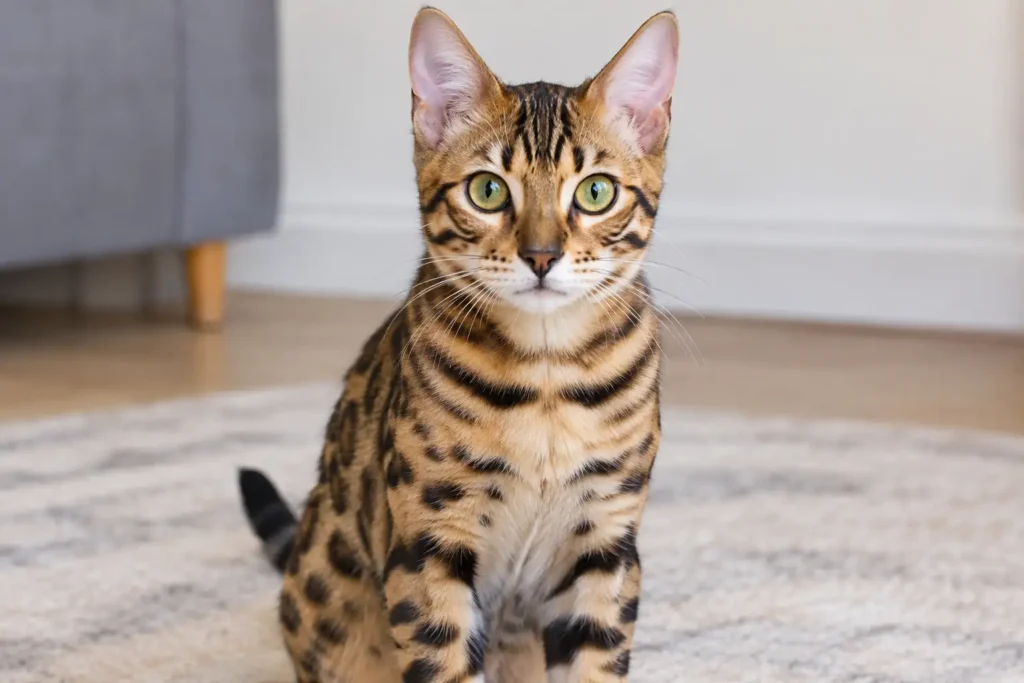
The Bengal cat is one of the most striking cat breeds in the world: a fully domestic cat with the spotted, rosetted coat of a miniature leopard. Behind the wild looks is a playful, athletic, and intensely social companion that behaves more like a dog than a typical house cat.
At a Glance
Size and Weight
Adult Bengals are medium to large, athletic cats, typically 8 to 15 pounds depending on sex and generation. Earlier generations, closer to the original wild cross, tend to run larger, and males are generally bigger than females.
Coat and Colors
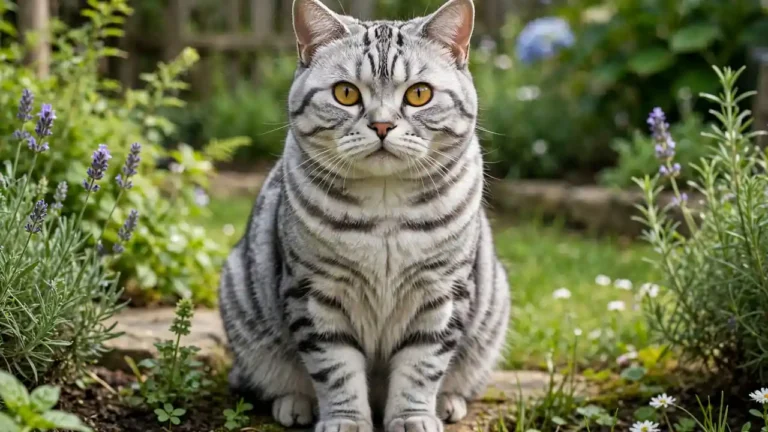
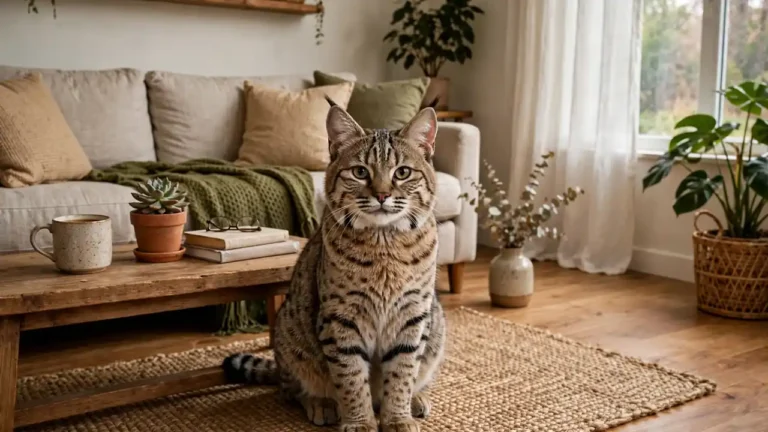
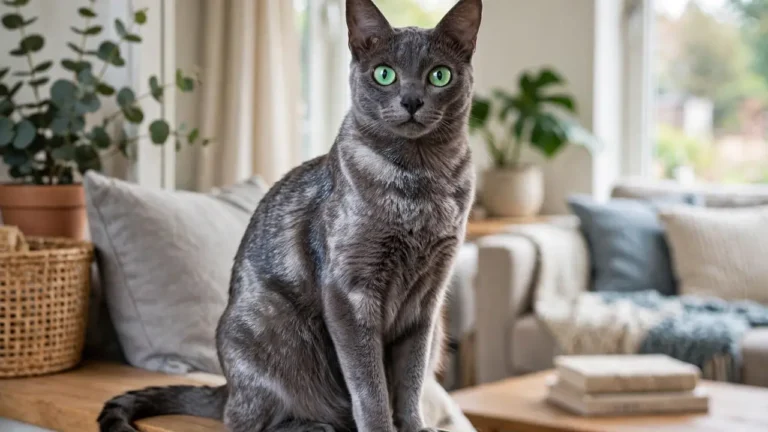
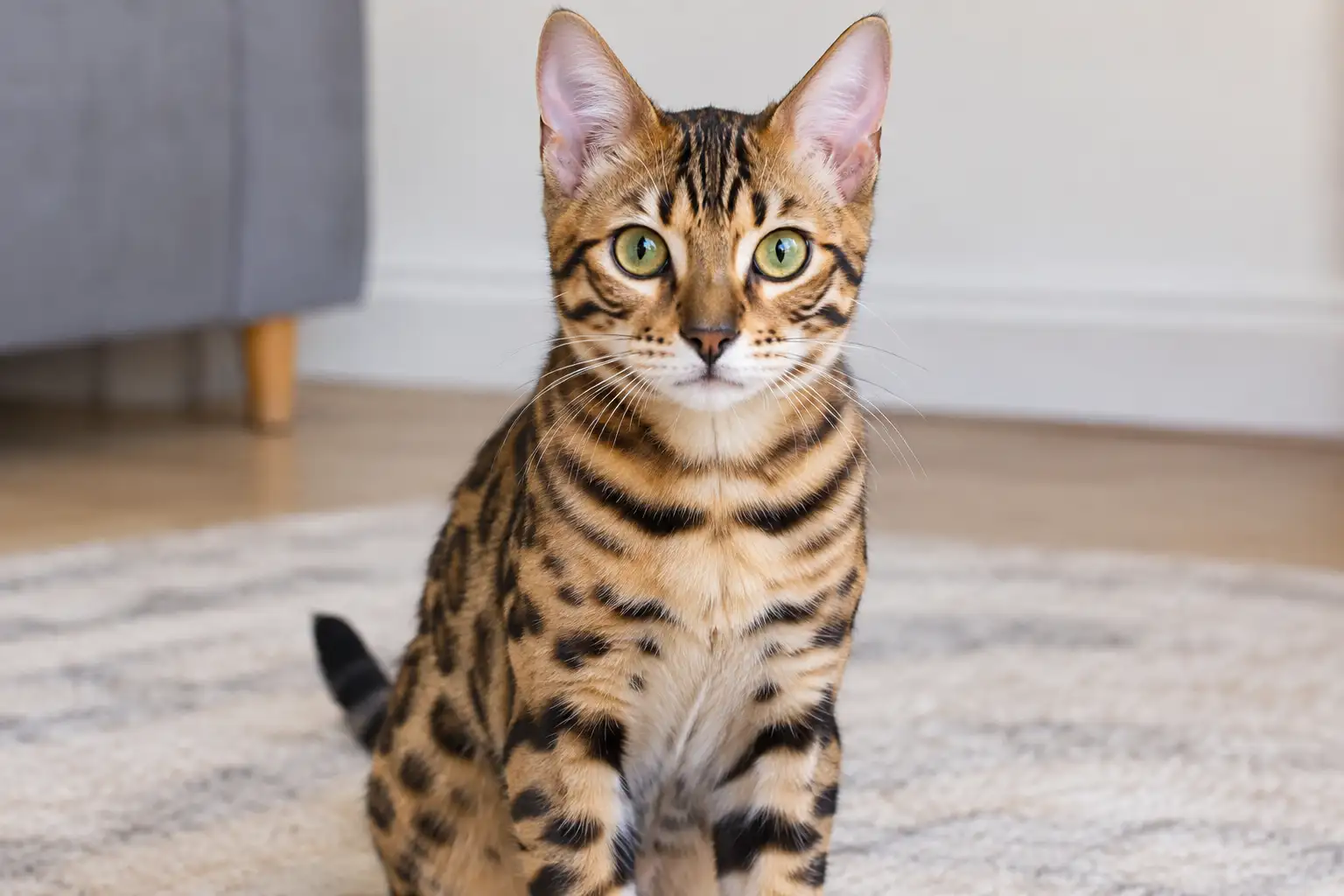
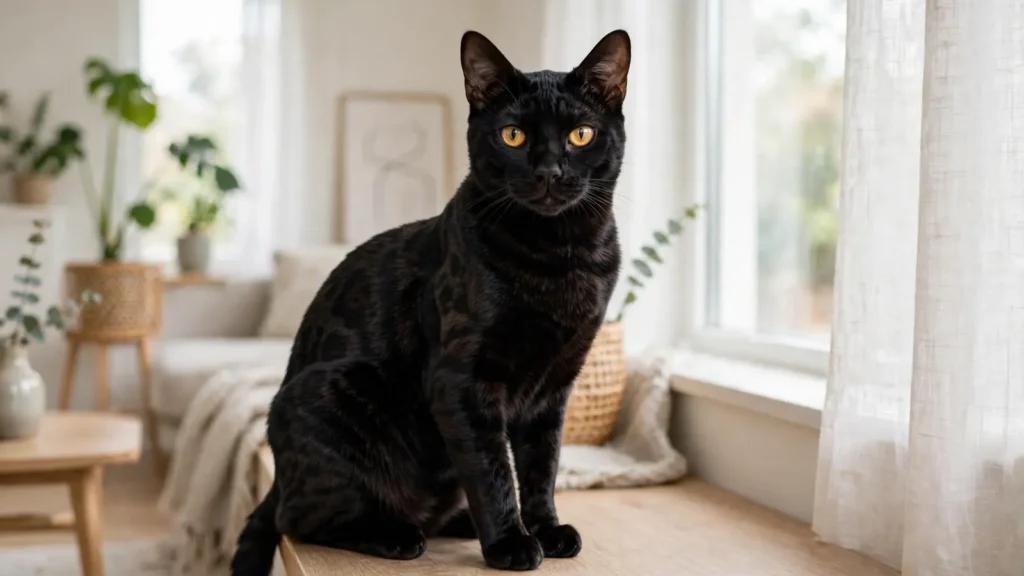
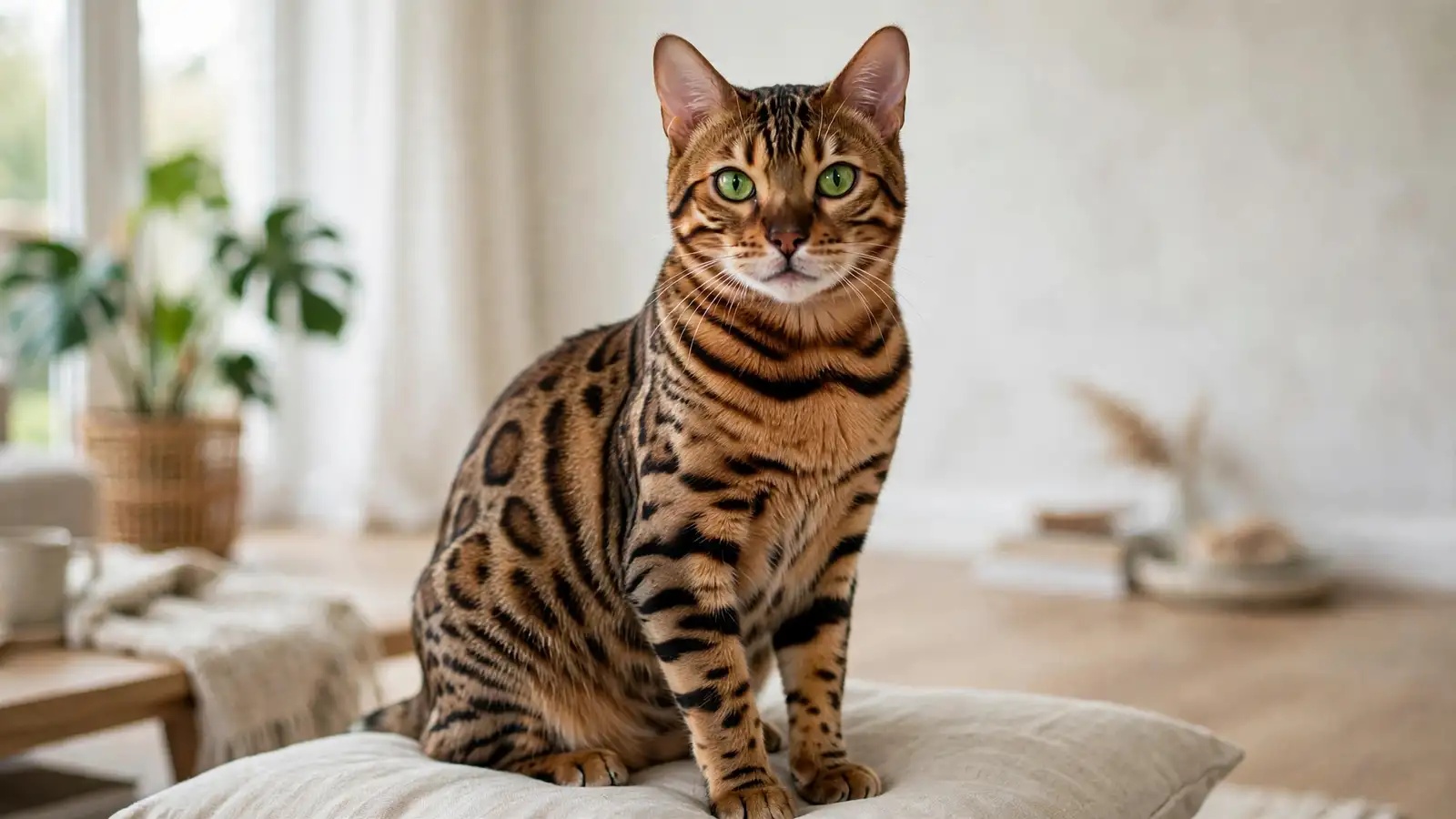
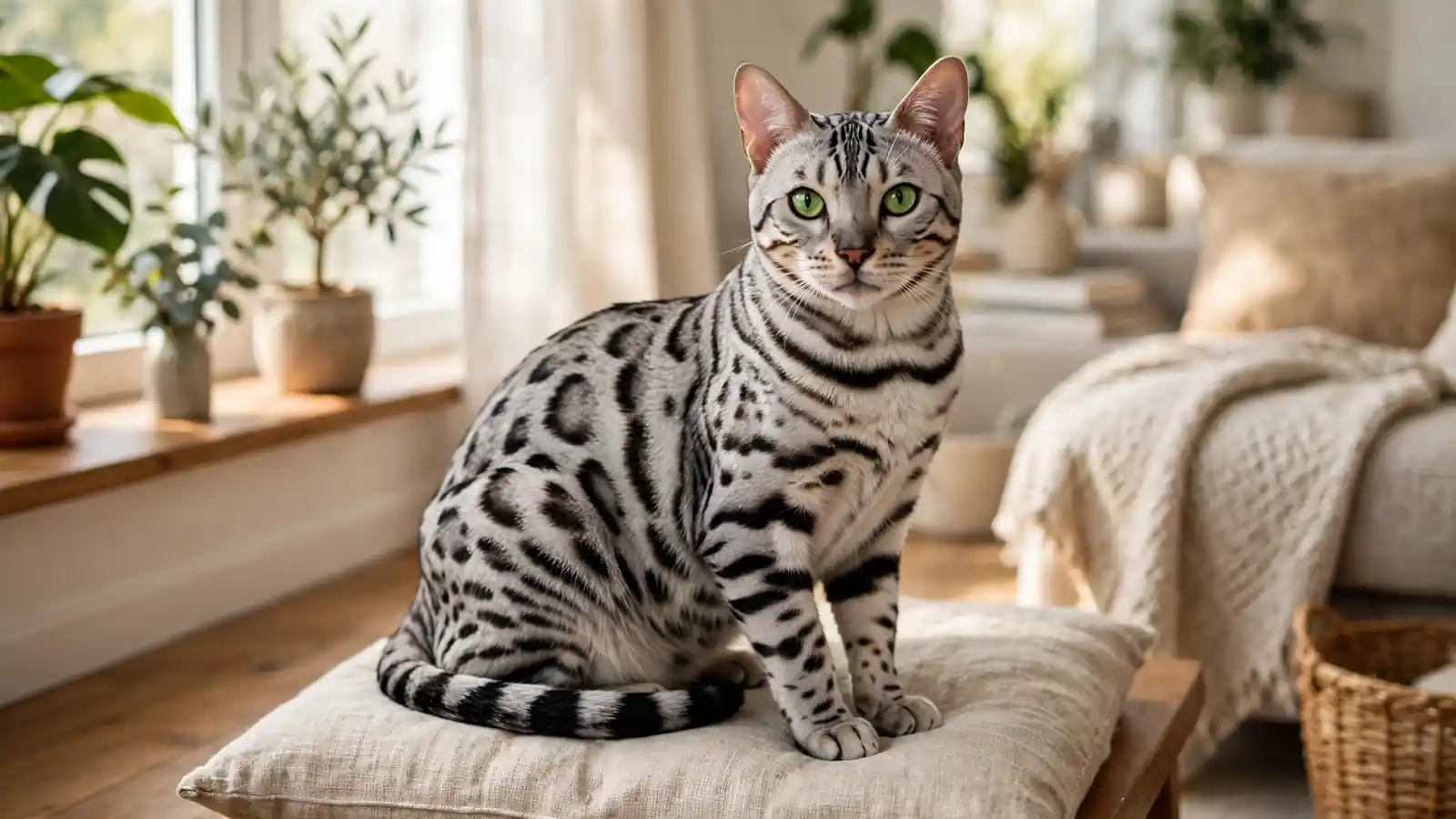
A Bengal cat’s colors range from warm brown and golden shades to cool silver, snow, blue-gray, and melanistic coats. Their appearance also depends heavily on their pattern, with spotted, rosetted, and marbled Bengals creating very different looks.Pet lovers often identify this breed by its striking coat variations, 𝐜𝐨𝐦𝐦𝐨𝐧𝐥𝐲 𝐤𝐧𝐨𝐰𝐧 𝐚𝐬 𝐒𝐢𝐥𝐯𝐞𝐫 𝐁𝐞𝐧𝐠𝐚𝐥, 𝐒𝐧𝐨𝐰 𝐁𝐞𝐧𝐠𝐚𝐥, 𝐁𝐥𝐚𝐜𝐤 𝐁𝐞𝐧𝐠𝐚𝐥, 𝐖𝐡𝐢𝐭𝐞 𝐁𝐞𝐧𝐠𝐚𝐥, 𝐁𝐥𝐮𝐞 𝐁𝐞𝐧𝐠𝐚𝐥, 𝐆𝐫𝐞𝐲 𝐁𝐞𝐧𝐠𝐚𝐥, 𝐚𝐧𝐝 𝐎𝐫𝐚𝐧𝐠𝐞 𝐁𝐞𝐧𝐠𝐚𝐥.

History and Origins
The Bengal breed began with American breeder Jean Mill, who in 1963 crossed a domestic shorthair with an Asian leopard cat. She aimed to create a domestic cat with the leopard cat’s exotic spotted coat.
Mill’s work stalled when her first husband died, but she resumed in the 1970s. Around the same time, geneticist Willard Centerwall was crossing Asian leopard cats with domestic cats for research.
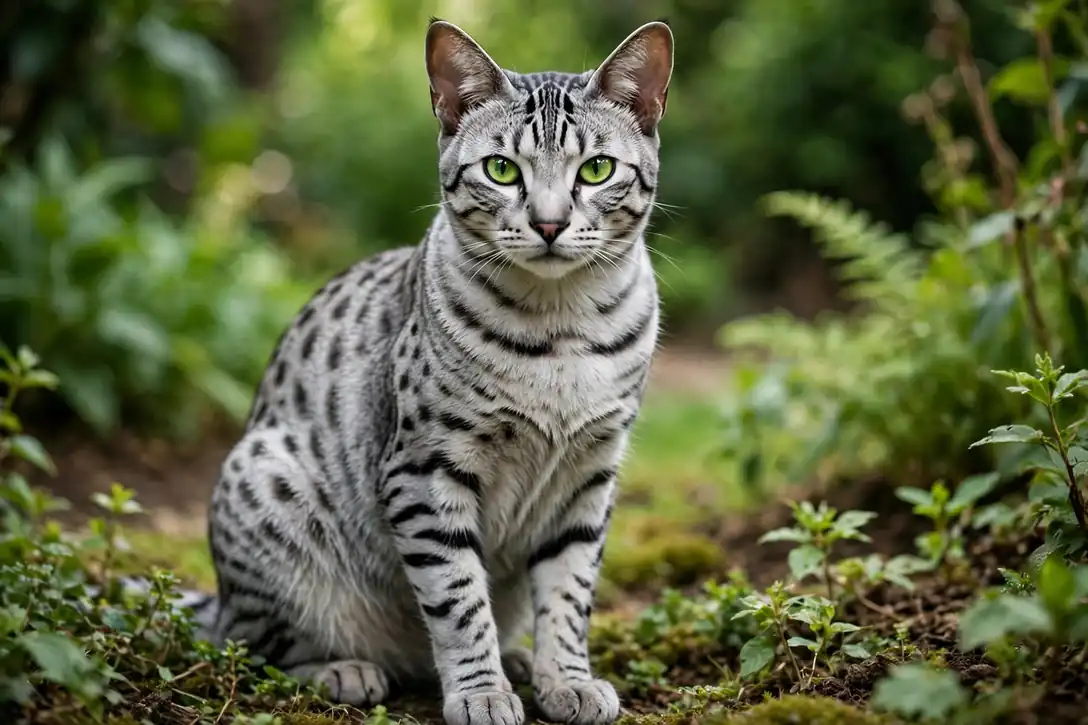
Mill continued the programme using Centerwall’s cats along with spotted domestic cats, producing affectionate cats five generations removed from their wild ancestors. Later development added Abyssinian, Burmese, and Egyptian Mau bloodlines.
Modern pet Bengals are classified by filial generation: F1 is the first cross, with later generations progressively more domestic in size and temperament. Most pet Bengals are higher generation cats.
The Bengal’s wild look is no accident. It comes from a real wild ancestor, crossed with domestic cats starting in the 1960s.
Physical Characteristics
Every Bengal carries that wild looking coat: short, dense and single layered, with markings that can be spotted, rosetted or marbled. The silver Bengal pairs a pale silver white ground with dark markings for an almost metallic contrast, while snow Bengals run from ivory and cream to very light shades with darker points.
Bengal Personality and Behavior
Living with a Bengal is less like owning a typical cat and more like sharing your home with a small, spotted athlete who has opinions. The Bengal cat is confident, curious, and highly active: an intelligent problem solver that gets bored quickly, and a bored Bengal tends to invent its own entertainment, usually at your expense.
Intelligent and curious, they get bored quickly and a bored Bengal invents its own entertainment.
Bengals bond closely with their people. Their affection shows up as following you from room to room, playing with you, and insisting on being involved in whatever you are doing.
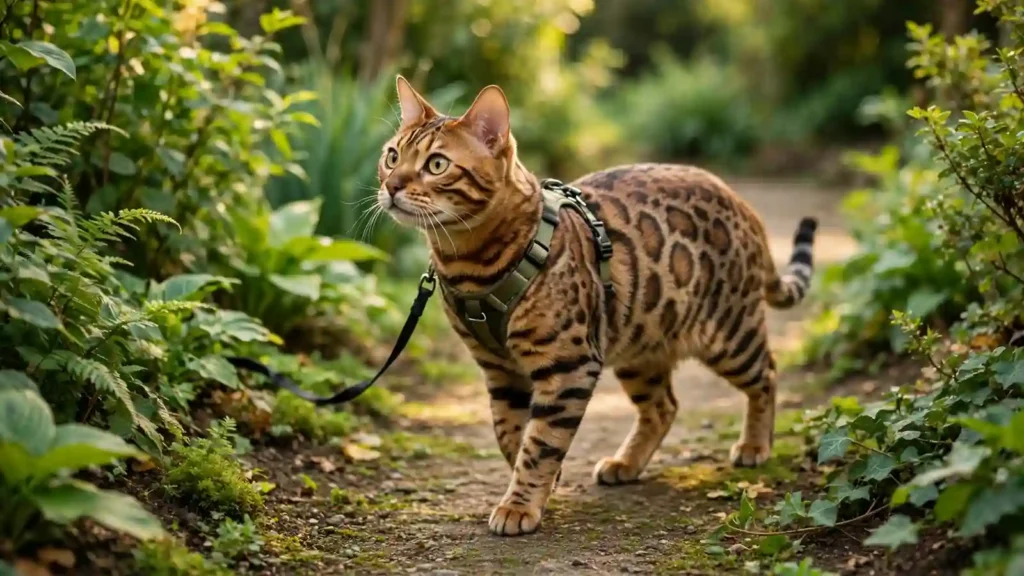
Bengals are among the most trainable cat breeds. Many learn tricks, play fetch, and walk on a harness and leash.
- Stunning, exotic appearance
- Playful, entertaining, and devoted like a dog
- Intelligent and highly trainable
- Very high energy and exercise needs
- Demands daily enrichment and attention
- Vocal and strong willed
Care Essentials
Complete food rich in animal protein, with measured meals adjusted for your cat’s weight, age, and activity level.
A weekly brush with a soft bristle brush or grooming mitt removes loose hair and keeps the coat glossy.
Active, interactive play every single day, plus puzzle feeders and food dispensing toys to make meals mentally engaging.
Tall cat trees, wall mounted shelves, and window perches, because Bengals naturally seek high vantage points.
Nutrition and Diet
An athletic cat burns serious energy. Feed a complete commercial cat food appropriate for your cat’s life stage: as obligate carnivores, Bengals need animal protein rich nutrition. Follow the feeding guide on your chosen food, adjusted for weight, age, and activity level, and measure meals rather than leaving food out all day.

Grooming
Good news: that spectacular coat is one of the lowest maintenance parts of owning a Bengal. The fur is short, dense, and single layered: it rarely mats and sheds less than many breeds. Routine brushing also lets you check the skin for redness, flakes, or parasites, and bathing is rarely necessary.

Exercise and Enrichment
Their exercise needs are not negotiable. Bengals need active, interactive play daily, plus the freedom to climb, jump, and run around the home. Owners who cannot commit to daily play sessions should seriously reconsider the breed.

Health
Bengals are generally healthy cats, but responsible ownership means knowing the conditions the Bengal cat breed is prone to. Before buying, ask the breeder for documented health screening, and keep up with annual vet exams: early detection is the best tool against every condition on this list.
HCM thickens the heart muscle and is the most common heart disease in cats. It often shows no early symptoms, which is why reputable breeders have their breeding cats screened by a veterinary cardiologist with an echocardiogram.
An inherited eye condition that gradually destroys the retina and leads to blindness. Night blindness is typically the first sign, and DNA testing lets breeders identify carriers.
A dislocating kneecap: the patella slips out of its groove, causing intermittent limping or a skipping gait. Mild cases may need only monitoring, while severe cases can require surgery.
Indoor and Outdoor Living
Bengals would love the great outdoors, but letting one roam free is one of the riskiest things you can do. A Bengal can live happily indoors provided the home offers serious enrichment: climbing structures, daily interactive play, and mental challenges. Free roaming brings fights, traffic, and a real risk of theft because of their exotic appearance and value.
Family Suitability
The honest answer depends on your family. Bengals can be great with older children who understand how to respect a cat’s space and play appropriately. They are less suited to homes with very small children, since the breed’s size, strength, and boisterous play can overwhelm toddlers. Many Bengals enjoy feline company, especially a similarly playful companion.
Finding a Breeder or Rescue
Pet quality Bengal kittens typically cost $1,500 to $4,000, with the price varying by generation, coat quality and color, and breeder reputation. Early generation cats command the highest prices. Choose a breeder who health tests, and budget for the purchase price plus ongoing care.
- Ask for documented health screening: DNA results for PRA and PK deficiency, and cardiac screening for HCM
- Ask to see the parents and the living conditions
- Kittens should be raised in a home environment
- A good breeder answers questions openly and asks you some too
Quick Quiz: Is a Bengal Right for You?
Answer four questions. Tap yes or no.
Frequently Asked Questions
Are Bengal cats good house pets?
Yes, Bengal cats can make excellent house pets for owners who can provide plenty of exercise, playtime, climbing opportunities, and mental stimulation. They are intelligent, active, curious, and often form strong bonds with their families.
How much is a Bengal cat?
In States where it is legal to own, it typically costs $1,500 to $4,000 for a pet quality kitten, depending on generation, coat, and breeder.
Are Bengal cats legal in the US?
It depends on where you live and the cat’s generation. Some US states restrict or ban Bengal ownership, typically targeting early generations (F1 to F3) closest to the wild cross, while others allow later generations, sometimes with conditions. Always check your state, county, and city laws before getting a Bengal.
How long do Bengal cats live?
Roughly 12 to 16 years according to most veterinary sources, though estimates vary. Good diet, healthy weight, and preventive care support longevity.
The Bengal cat suits active, experienced owners who want an engaged, entertaining companion and can provide daily play, climbing space, and mental stimulation. If you want a calm lap cat, or you are away from home most of the day, a less demanding breed will make you both happier.
Similar Breeds Worth Exploring
Related Breed Guides
Keep Exploring
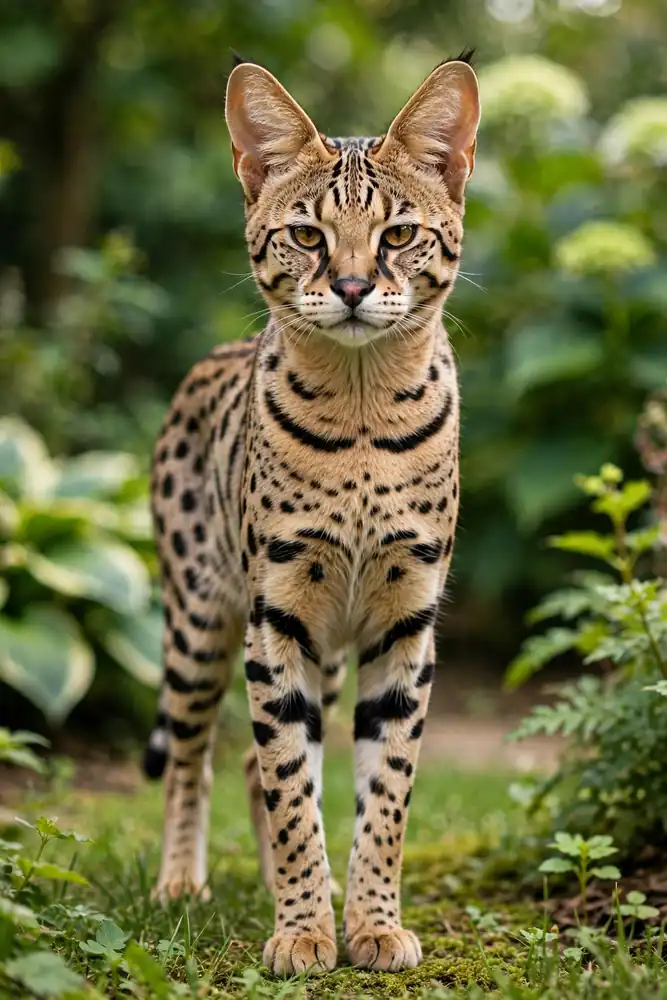
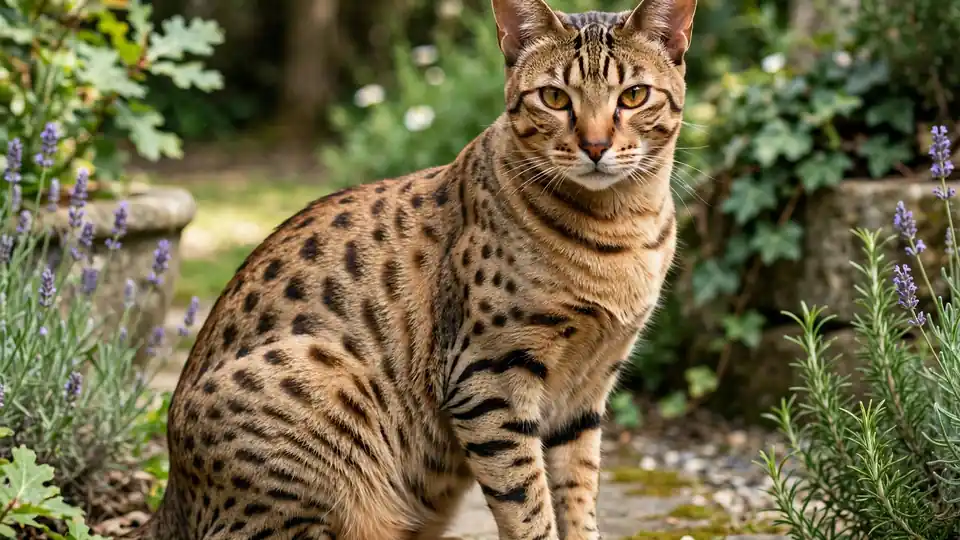
Still deciding? Compare the tall, wild looking Savannah, or meet the fully domestic spotted Ocicat. Every guide on this site follows the same layout, so the facts you need are always in the same place.