Korat Cat Breed Guide
Korat: at a Glance
A compact silver blue cat with a heart shaped face and huge green eyes. Thailand’s good luck cat bonds completely, plays fetch, and wants to be wherever you are.
By Emily Carter · Reviewed by our vet team · Updated 21 October 2026 · 13 min read
Lifespan 15+ yrs Weight 6–10 lb Loyal & devoted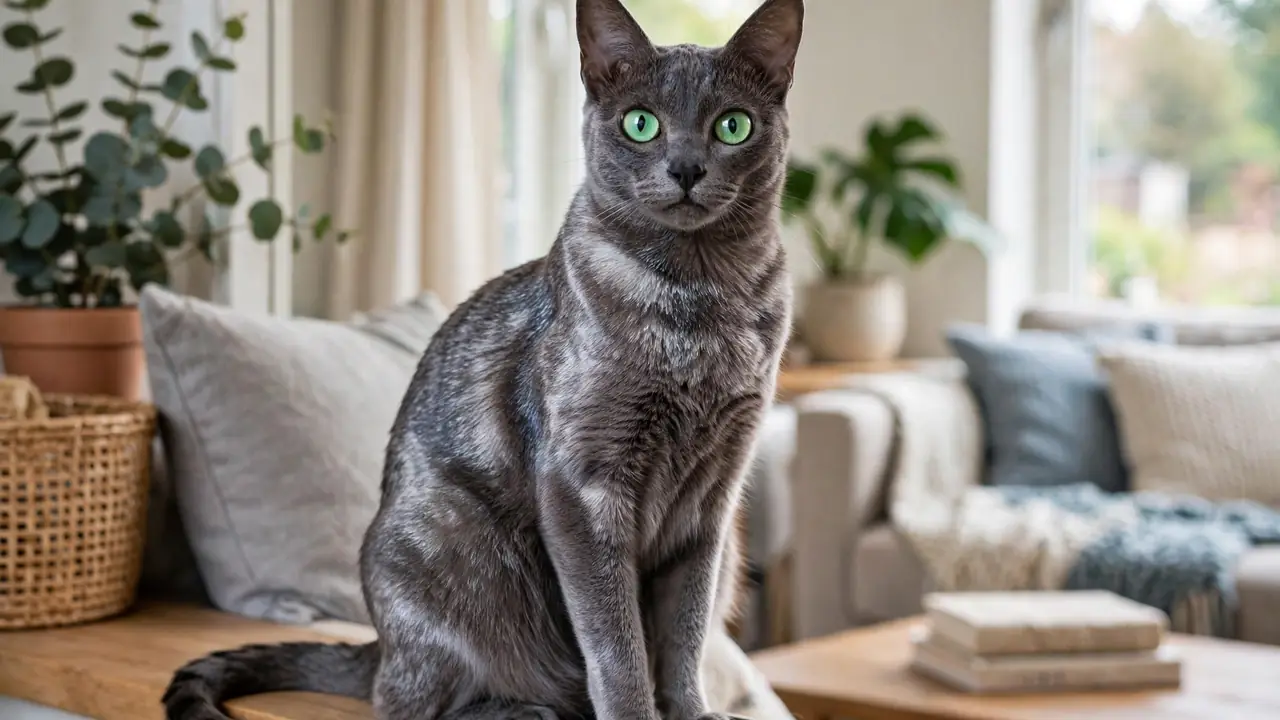
Short on time? Here is the Korat cat in a nutshell.
At a Glance
Size and Weight
The Korat cat is smaller than it looks, and stronger than it seems.
Most adult Korat cats weigh between 6 and 10 pounds. The body is compact and muscular, with a broad chest that gives the cat a surprising heft when you pick it up.
Coat and Colors
The coat of the Korat cat is one of the most beautiful in the cat world, and it deserves a close look.
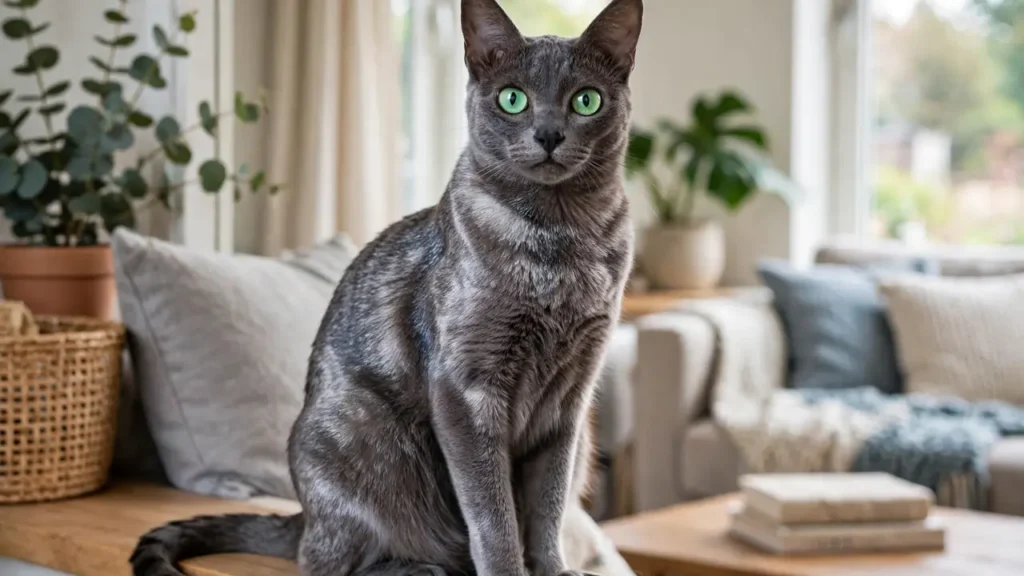
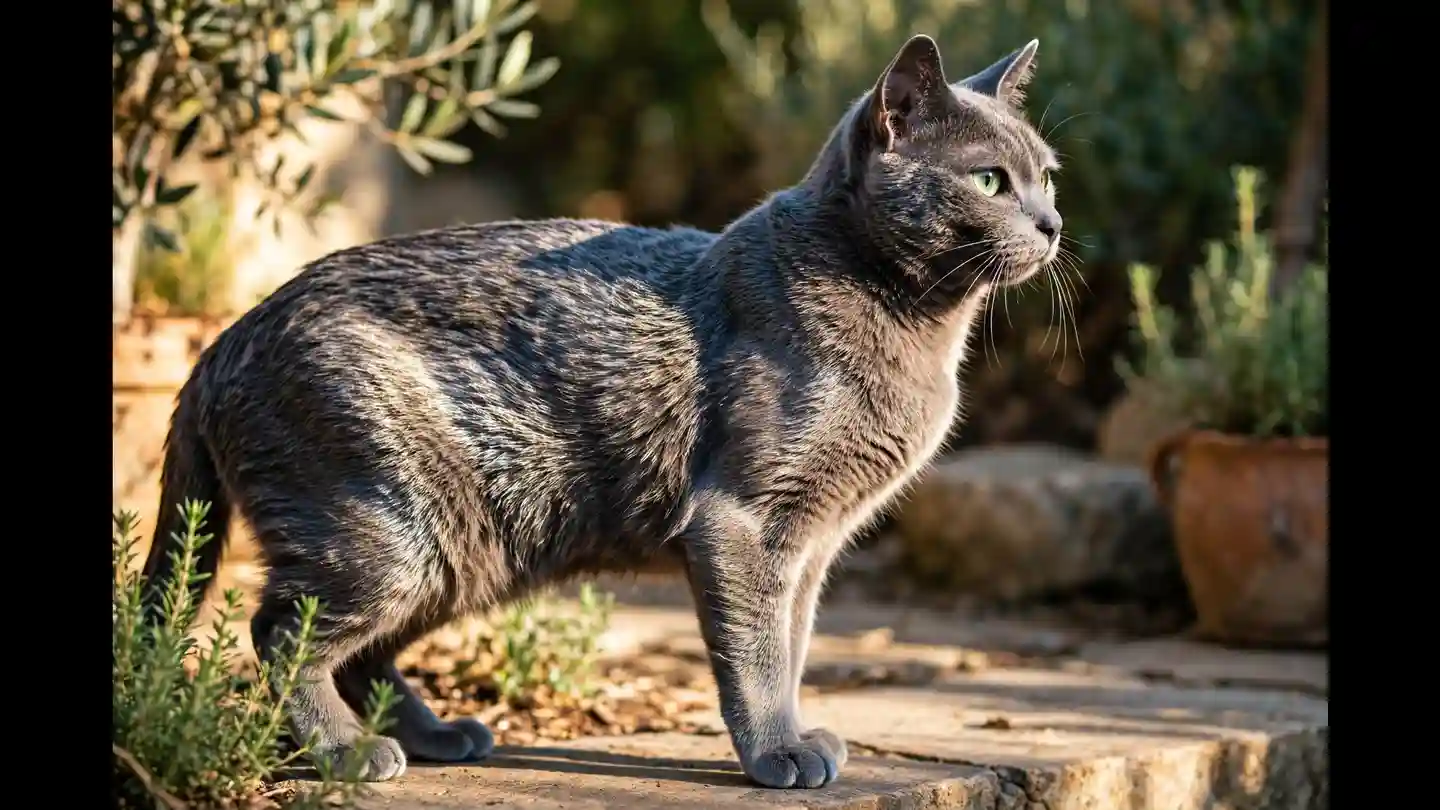
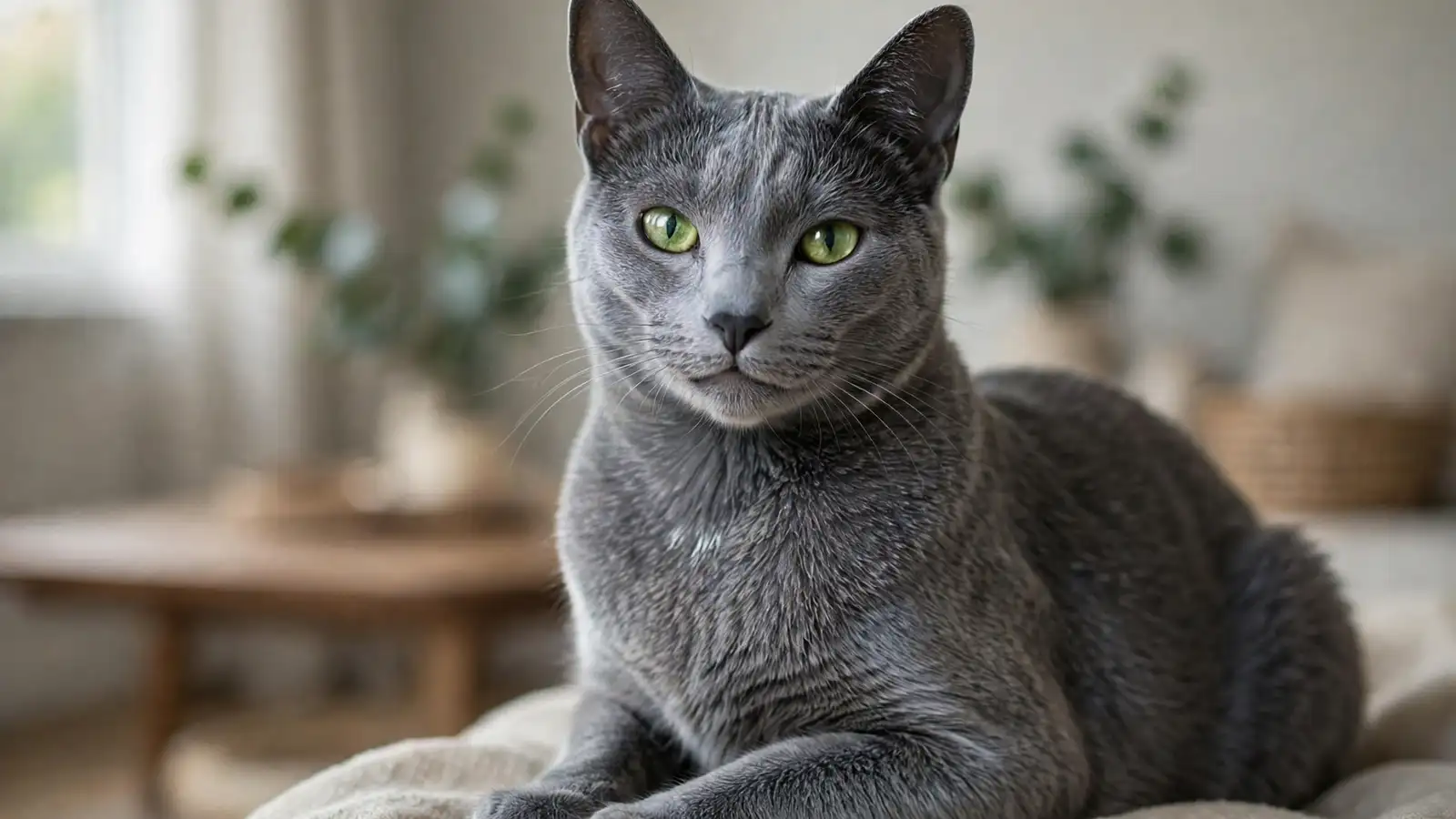
It wears a single layer of short, fine hair in a luminous blue grey. Each hair is tipped with silver, and that silver tipping creates the famous shimmering effect. When a Korat moves through sunlight, the coat seems to glow with a silvery halo that follows every step. Photographs never quite capture it.
The color deepens with age. Kittens are born a paler, softer grey, and the coat darkens and takes on more silver as the cat matures. A fully grown Korat shows a rich, even blue with bright silver tips across the back, sides, and tail. There are no markings, no stripes, no white patches. The color is uniform from nose to tail tip.
The eyes complete the picture. Korat eyes are large, round, and luminous green, set wide in a heart shaped face. The green deepens as the cat ages, shifting from a pale amber green in kittens to a vivid emerald in adults. Against the silver blue coat, the effect is striking. The nose leather is a soft lavender grey, and the paw pads match in a dusky blue lavender tone.
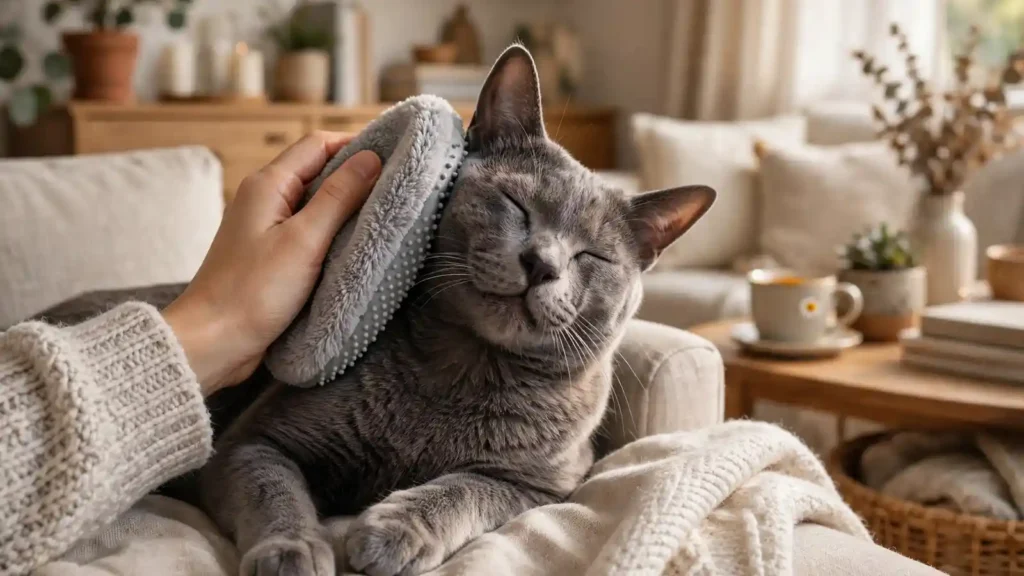
Because the coat has no dense undercoat, it lies close to the body and feels silky rather than plush. It rarely mats and sheds modestly. A weekly brushing removes loose hair and polishes the silver tips to keep the shimmer bright.

History and Origins
The Korat cat is one of the oldest known cat breeds, with roots that run deep in Thai history.
The Korat is one of the oldest known breeds, described in ancient Thai manuscripts among a small group of lucky cats, and known at home as the Si-Sawat.
In Thai culture the Korat stands for good luck and prosperity, and pairs were traditionally given as wedding gifts to bless a marriage with happiness.
The first Korats reached the United States in 1959, when a pair was sent to a breeder in Oregon. Careful breeding from that small start established the breed in the West.
It comes from Thailand, where it is known as the Si-Sawat, a name that refers to a seed with a silver blue color. Ancient manuscripts describing the cats of Siam include the Korat among a small group of lucky breeds. In Thai culture, the Korat remains a symbol of good luck and prosperity, and pairs of Korats were once presented to brides to bless a marriage.
The first Korats arrived in the United States in 1959, when a pair was sent to a breeder in Oregon. From that small beginning, careful breeding established the Korat cat as a distinct breed in the West. That long, unbroken history gives the breed a consistency of type that breeders and owners prize.
Physical Characteristics
Every line of the Korat cat seems designed to catch the eye.
The most famous feature is the heart shaped face. The forehead is broad and flat, the cheeks are full and rounded, and the muzzle tapers to a neat point, forming a clear heart outline when viewed head on. Large, prominent eyes sit wide apart in that face, giving it an alert, intelligent expression.
The ears are large with rounded tips, set high on the head. The body is compact and muscular with a broad chest and a curved back. The tail is medium in length, thicker at the base and tapering to a rounded tip. Kittens can take up to two years to develop their full coloring and build.
Korat Personality and Behavior
The Korat cat does not do anything halfway, especially when it comes to affection.
They learn routines quickly, figure out doors and drawers, and love fetch — many start the game themselves by dropping a toy at your feet.
Cautious with strangers, but they study you, approve of you, then love you with unusual intensity.
Meals, play and greetings at the door, on schedule. These cats notice routine, and notice when it slips.
- Fiercely loyal and affectionate
- Low shedding, easy single coat
- Intelligent and playful at any age
- Needs company — dislikes being ignored
- Notices every change in routine
- Wants to be involved in everything
This is a cat that bonds hard. It chooses its people and then devotes itself completely, following them from room to room. Korats are sensitive to moods and seem to know when their person needs company. Many owners describe their Korat as almost doglike in its loyalty.
Intelligence is a hallmark of the breed. Korat cats learn routines quickly, figure out how doors and drawers work, and enjoy puzzle toys. They play with enthusiasm at any age, and a favorite game is fetch, which many Korats will start by dropping a toy at your feet.
Care Essentials
A consistent, high quality diet in measured meals on a schedule. This muscular breed has a healthy appetite, so avoid free feeding.
A weekly brush with a soft brush or mitt polishes the silver tips. Bathing is rarely needed; trim nails, check ears and keep up dental care.
Ten to fifteen minutes of active play a couple of times a day — wand toys, feather teasers, crinkle balls and the beloved game of fetch.
Indoor living with a sturdy cat tree by a sunny window and a stable routine. Introduce new pets and changes gradually.
Caring for a Korat cat is straightforward, but this breed asks for one thing above all: your time.
This breed thrives on companionship. This is not a cat that tolerates being ignored or left alone for long stretches. Plan to spend real time with your Korat every day, playing and simply being together. A lonely Korat can become withdrawn, so this breed suits homes where someone is around most of the day.
Routine care covers the basics. Keep fresh water available, clean the litter box daily, and schedule regular veterinary checkups. The Korat appreciates a stable routine and notices when things change, so introduce new pets or schedules gradually.
Nutrition and Diet
A Korat cat does best on a consistent, high quality diet.
Feed a complete and balanced cat food appropriate for your cat’s age. Wet food, dry food, or a mix of both can work well. Many owners find that a combination gives the best of both worlds: the hydration of wet food and the convenience of dry.
This muscular breed has a healthy appetite, but it can gain weight if food is always available. Measure meals and stick to a feeding schedule rather than free feeding. Treats are fine in moderation but should make up only a small part of the daily diet. Fresh water should always be available, and some Korats drink more from a fountain.

Grooming
Grooming a Korat cat is one of the easiest jobs in the cat world.
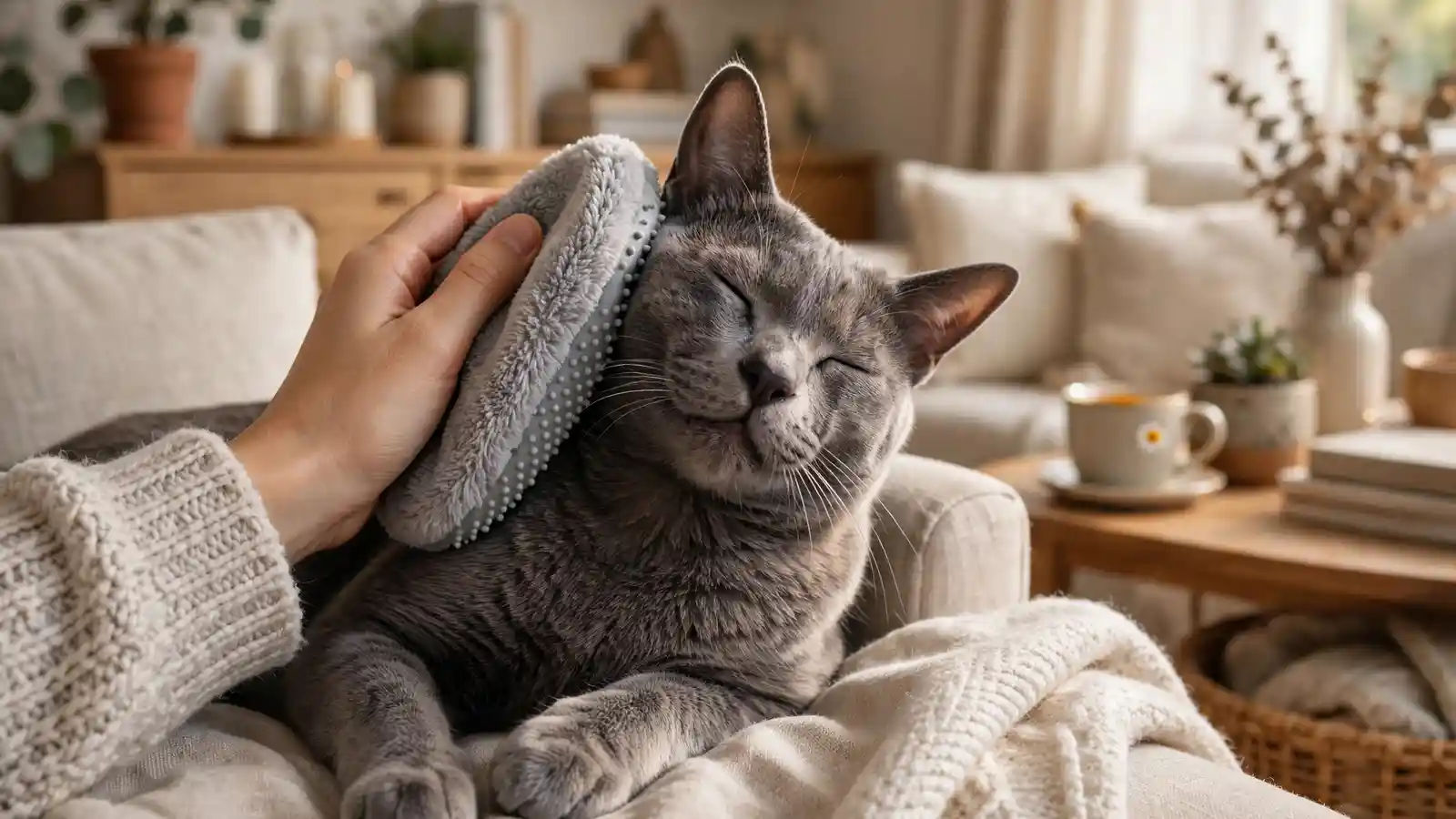
The short, single coat needs only a weekly brushing with a soft brush or grooming mitt. This removes loose hair, distributes natural oils, and keeps the silver tipping bright. Most Korats enjoy the attention and will purr through the whole session.
Bathing is rarely needed. The coat stays clean on its own, and overbathing can strip the oils that give it shine. A bath is only called for if the cat gets into something messy.
Do not forget the small details. Trim the nails every couple of weeks, check the ears for wax buildup, and brush the teeth as often as your cat will allow. Dental care is worth the effort, since clean teeth support overall health for years.
Exercise and Enrichment
A Korat cat with nothing to do is a Korat plotting something.
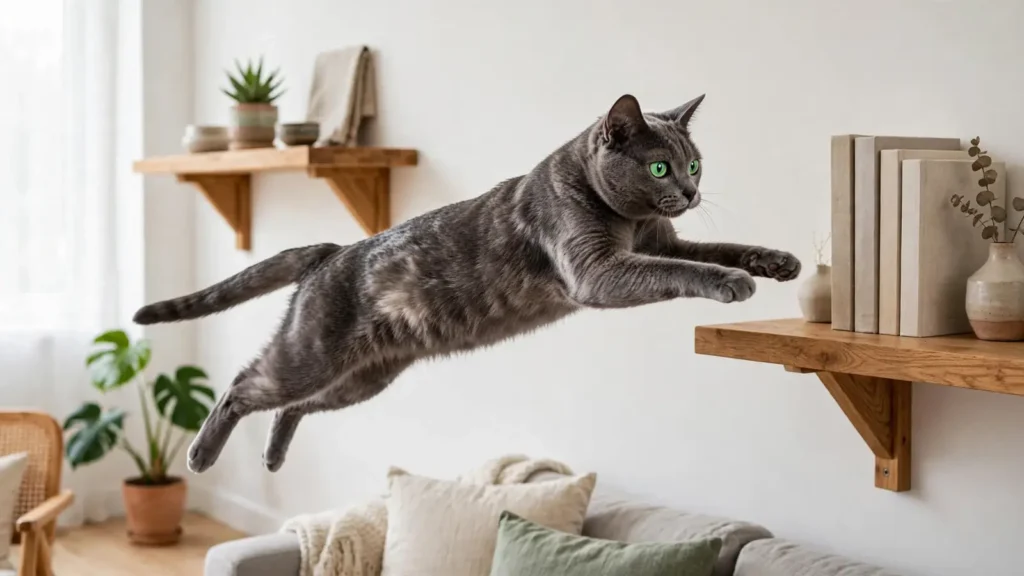
This is an athletic, playful breed that needs daily active play. Wand toys, feather teasers, and crinkle balls all get a strong response. Interactive sessions of ten to fifteen minutes, a couple of times a day, will keep it fit and content.
Climbing and perching feed the Korat’s love of high places. A sturdy cat tree near a window is ideal, giving the cat a lookout post and a sunny napping spot in one. Puzzle toys and treat balls engage the sharp Korat mind and slow down fast eaters at mealtime.
Health
The Korat is generally a healthy, long lived breed.
The Korat is generally a healthy breed with a reputation for hardiness from its natural development in Thailand, commonly living 15 years or more.
Responsible breeders screen for gangliosidosis (GM1 and GM2), an inherited neurological condition documented in the breed, test their breeding cats and share results openly.
With good care, it commonly lives 15 years or more, and many reach their late teens in fine shape. The breed has a reputation for hardiness that traces back to its natural development in Thailand.
Responsible breeders screen for gangliosidosis, an inherited neurological condition known as GM1 and GM2, which has been documented in the breed. A reputable breeder will test breeding cats and be open about the results. Beyond that, standard preventive care goes a long way: keep vaccinations current, maintain parasite prevention, and schedule annual veterinary exams.
Indoor and Outdoor Living
The Korat is at its best as an indoor cat.
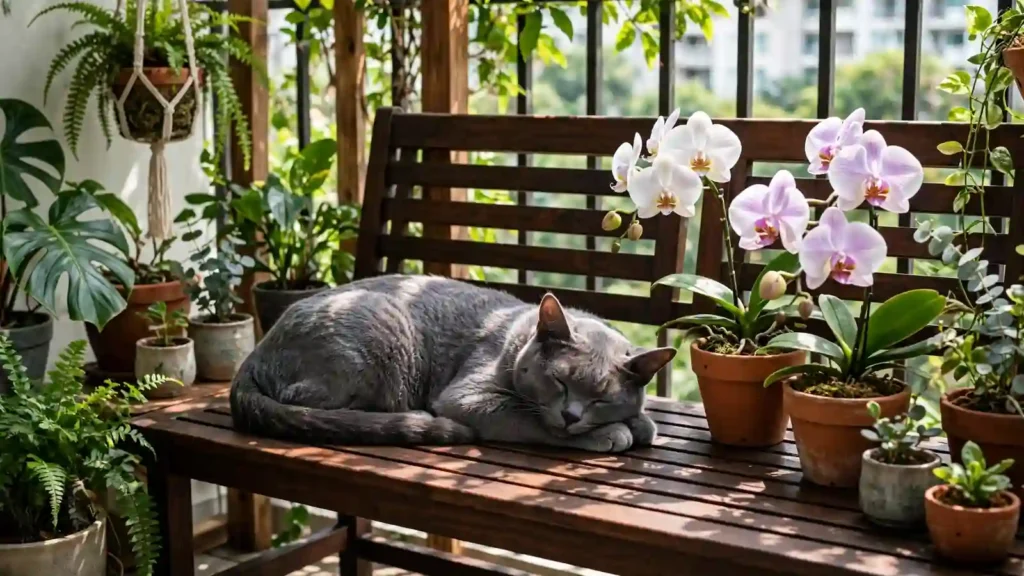
Indoors, it is safe from traffic, predators, and disease, and its shimmering coat stays clean and bright. The breed adapts well to apartment living as long as it gets enough play and attention. A home with sunny windows and vertical space will make a Korat very happy.
Some Korats enjoy supervised outdoor time on a harness and leash. If you try it, start indoors with the harness, keep sessions short, and never leave the cat unattended. Free roaming outdoors is not recommended, so keep this good luck charm safely inside.
Family Suitability
The right family will find the Korat to be an unforgettable companion.
This breed does wonderfully with respectful children who understand how to handle a cat gently. The breed’s playful nature makes it a fun match for kids, and its loyalty means it will happily join in family life.
With other cats and cat friendly dogs, Korats usually adjust well, especially when introductions are gradual. The breed tends to prefer the company of its own kind and often thrives with another feline friend, which can also ease loneliness when the family is away.
Finding a Breeder or Rescue
Taking time to find the right source is the most important step in getting a Korat.
A responsible breeder raises kittens in the home, socializes them well, screens for inherited conditions like gangliosidosis, and welcomes your questions. Expect to be asked questions too. Good breeders care deeply about where their kittens go and will want to know about your home and lifestyle.
Breed specific rescues and shelters sometimes have Korats or Korat mixes looking for homes. These cats can make wonderful companions, and adoption gives a deserving cat a second chance. Avoid anyone who will not let you see where the cats live or who pressures you to decide quickly.
- Breeder screens for gangliosidosis and shares results
- Kittens raised in the home and well socialized
- Expect questions about your home and lifestyle — good breeders ask
- Check breed rescues — Korats sometimes need new homes
Quick Quiz: Is a Korat Right for You?
Answer four questions. Tap yes or no.
Frequently Asked Questions
Are Korat cats good for first time owners?
They can be, as long as the owner is home often and ready for an affectionate, demanding companion. This breed is not a low maintenance decoration. It wants interaction, play, and closeness every day. First time owners who work from home or have flexible schedules usually do very well with this breed.
Do Korat cats shed a lot?
No. The Korat has a short, single coat with no thick undercoat, so shedding is modest compared to many breeds. Weekly brushing keeps loose hair under control. You will notice a bit more shedding in spring, but nothing dramatic.
Why are Korats considered lucky?
In Thailand, it has been regarded as a symbol of good luck and prosperity for centuries. The breed appears in ancient manuscripts among a small group of fortunate cats, and pairs were traditionally given as wedding gifts to bless a marriage with happiness.
Are Korat cats hypoallergenic?
No cat breed is truly hypoallergenic, and the Korat is no exception. However, its short single coat and modest shedding mean there is less loose hair and dander around the home than with heavy coated breeds. Allergy sufferers should spend time with one before committing.
How long do Korat cats live?
Korats are known for longevity. With good nutrition, regular veterinary care, and an indoor lifestyle, it commonly lives 15 years or more, and quite a few reach their late teens. Their generally healthy constitution is one of the breed’s great strengths.
Do Korat cats get along with other pets?
Yes, usually very well. It is social and often enjoys feline company, and it can befriend respectful dogs. Gradual introductions work best, as with any breed. Many Korats are happiest in a home with another cat to play with when the humans are busy.
The Korat is a small silver treasure: a heart faced, green eyed companion that gives its whole heart to its people and asks mainly for time and closeness in return.
Similar Breeds Worth Exploring
Related Breed Guides
Keep Exploring
Browse the full A to Z cat breed collection to compare personalities, or find out your cat’s age in human years with the cat age calculator.