Sea Cucumber
Sea cucumber: the seabed’s shape-shifting recycler
A sea cucumber is a leathery echinoderm — a close relative of starfish and sea urchins — that spends its life slowly vacuuming the ocean floor. It has no brain, breathes through its rear end, and when attacked can eject its own internal organs and grow them back. This group guide covers what sea cucumbers are, three folded species worth knowing, how they feed and breathe, and the organ-expelling defence that baffles predators.
By Emily Carter · Reviewed by our vet team · Updated 10 November 2026 · 8 min read
About 1,786 known speciesNo brain — just a nerve ringBreathes through its rear end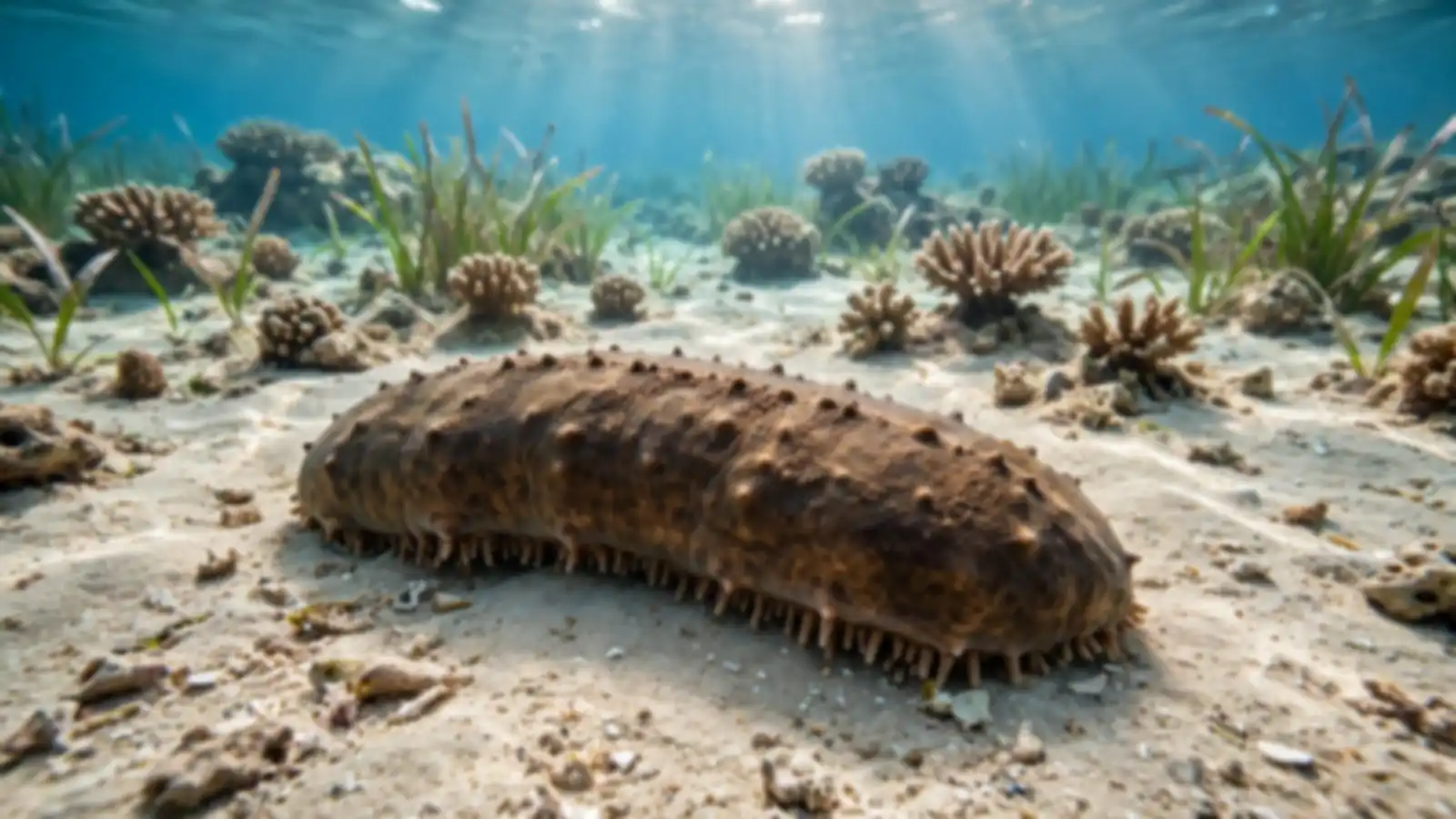
At a Glance
The sea cucumber looks like something the tide forgot — a plump, leathery sausage lying on the seabed. The appearance is a disguise for one of the most unusual body plans in the animal kingdom. Under the skin, this animal is a five-sided echinoderm like its starfish cousins, with a body wall that can switch from liquid to solid on demand and an ability to regrow entire organ systems that medical researchers envy.
Around 1,786 species are known, most of them 10 to 30 centimetres long, though the extremes run from 3-millimetre minnows of the group to the snake-like Synapta maculata at more than three metres. They live on seabeds everywhere, with the greatest diversity in the Asia-Pacific region, and this guide folds in three of the most-searched species — the giant, black and warty sea cucumbers — as subsections below.
What Is a Sea Cucumber?
It is an echinoderm of the class Holothuroidea. The five-part symmetry of its starfish relatives is stretched out along a long body: five rows of tube feet run from mouth to rear, the three downward rows (the trivium) forming a walking sole and the two upper rows (the bivium) reduced to sensory duties. Around the mouth sits a ring of ten to thirty tentacles — modified tube feet — that shovel or filter food.
There is no true brain. A simple nerve ring around the mouth coordinates the animal, with radial nerves running the body’s length. Even the skeleton is reduced to microscopic spicules embedded in the skin. What the body wall does have is remarkable: ‘catch’ collagen that the nervous system can stiffen into armour or relax until the animal pours itself through a crack like slow liquid — the trick behind both escape and the famous organ ejection.
Their range is as impressive as their anatomy. Sea cucumbers live from tropical tide pools to the deepest ocean trenches — they are among the dominant animals of the abyssal plains, where in some regions they make up the great majority of the large animal biomass. The shallow tropics of the Asia-Pacific hold the richest variety, which is why so much of this guide’s story, from diversity to dinner tables, plays out there.
Types of Sea Cucumbers: Three Species to Know
Three of the most searched-for species are folded into this guide rather than given separate pages — each shows a different side of the family.
Giant Sea Cucumbers
The giants of the group — species like the pineapple species, whose tall golden spikes make it look like a piece of reef architecture — can pass half a metre and weigh several kilograms. Giant sea cucumbers are slow, conspicuous grazers of reef slopes, and their size makes them prime targets for the food trade wherever they are not protected.

Black Sea Cucumber
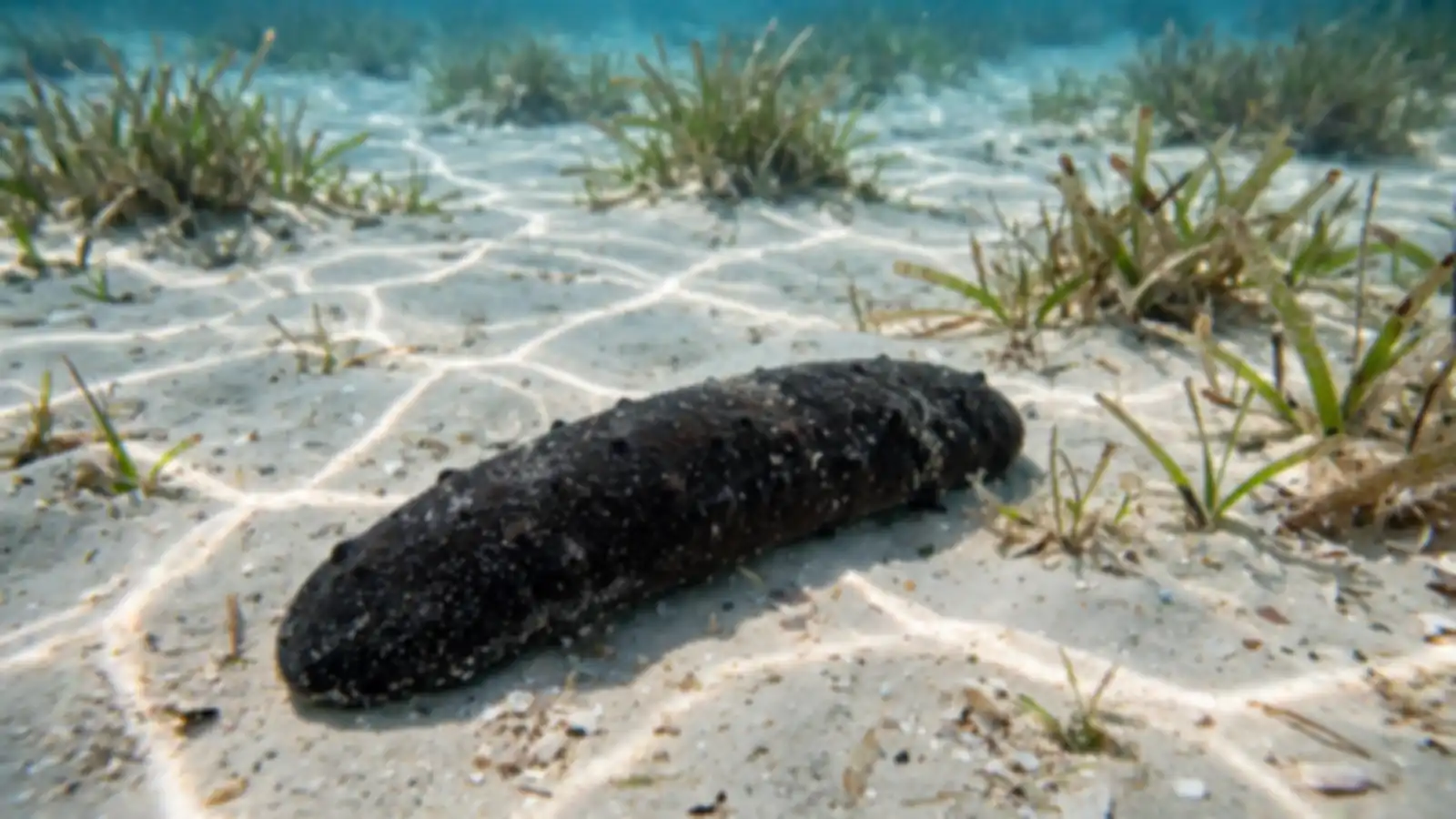
This black species is one of the great sand processors of tropical lagoons. Dusting itself with a coat of sand for camouflage, it ploughs through sediment all day, digesting the organic film and leaving cleaned sand behind — a single population can rework the entire top layer of a lagoon floor.
Warty Sea Cucumber
The warty species wears its name honestly: rough, wart-like projections armour its skin. Found on temperate Pacific coasts, it is a classic eviscerator — squeeze it and it may respond with the full organ-ejecting defence described below — and it can also aestivate, shutting down almost entirely when summer water grows too warm.

What Do They Eat? Diet and Breathing
Most sea cucumbers are detritivores — the vacuum cleaners of the sea. Deposit feeders shovel sediment in with their oral tentacles, digest the bacteria and organic scraps, and pass out clean sand; suspension feeders hold feathery tentacles into the current and lick them clean one at a time. Either way, the result is a recycled seabed: nutrients returned to the ecosystem and sediments kept oxygenated, services entire reef communities quietly depend on.

Breathing is the famous oddity. It pumps water in and out of its anus, filling a pair of branched internal structures called respiratory trees — lungs, in effect, plumbed through the rear end. The rhythm is visible in many species, and the arrangement is so roomy that some small fish, the pearlfish, famously move in and live inside, entering through the same door.
Ecologists rank this feeding among the reef’s essential services. By endlessly turning over the sediment, sea cucumbers keep it oxygenated and stop organic waste building up to toxic levels; their digestion even raises local alkalinity slightly, buffering the water around corals. Remove the cucumbers — as overfished reefs have learned — and the seabed begins, quite literally, to suffocate in its own waste.
A Startling Defense: Ejecting Its Organs
The signature defense is evisceration: threatened or squeezed, many species contract violently and eject parts of their gut — sometimes the respiratory trees and other organs too — out through the rear or a torn body wall. The expelled mass distracts or disgusts the predator while the cucumber crawls away, and within weeks the missing organs are regrown from scratch. Can sea cucumbers regrow their organs? Completely — it is one of the most dramatic regeneration feats of any animal.

Some species add a second weapon: Cuvierian tubules, sticky white threads fired from the rear that swell in seawater and entangle crabs and fish in a gluey net — the threads of some species are also mildly toxic. Between organ ejection, sticky threads and a body that can liquefy or lock solid, this soft animal is anything but defenceless.
People and the Trepang Trade
People have harvested sea cucumbers for centuries: dried as trepang or bêche-de-mer, they are a prestige food across Asia, and the trade now reaches reefs worldwide. Conservation reporting in 2025 highlighted how high prices are driving overharvest and illegal trade, emptying reefs of the very animals that keep their sediments healthy; aquaculture of valuable species is growing in response.
Farming is the hopeful chapter. Several valuable species are now bred in hatcheries and ranched on the seabed, and because it cleans as it feeds, growers increasingly pair them with fish and shellfish farms, where the cucumbers process the waste falling from the cages above. Few animals offer to solve their own overfishing problem while tidying up somebody else’s.
Science wants them for a different reason. An animal that regrows its gut in weeks, and stiffens or melts its tissues on command, is a living research programme in regeneration — one more reason the humble cucumber matters. For taxonomy and the full species list, the reference page catalogues the class family by family.
Fun Facts
- It breathes through its anus, pumping water into internal ‘respiratory trees’ — and small pearlfish sometimes live inside, entering through the same opening.
- Its body wall contains catch collagen that can switch between liquid and solid, letting the animal pour through cracks or lock into armour.
- Some species regrow a complete digestive system within weeks of ejecting it — a feat researchers study for regenerative medicine.
- The longest, Synapta maculata, stretches beyond three metres; the smallest are just three millimetres.
- Despite the sausage shape, the body hides five-part symmetry — the rows of tube feet betray its starfish ancestry.
- A population of sea cucumbers can rework the entire top layer of a lagoon’s sand, keeping the seabed clean and oxygenated.
Frequently Asked Questions
What Is a Sea Cucumber?
A sea cucumber is a marine echinoderm of the class Holothuroidea, related to starfish and sea urchins. It has a soft, leathery, elongated body with five rows of tube feet and a mouth ringed by feeding tentacles. Around 1,786 species live on seabeds worldwide, where they recycle sediment and organic debris.
Is a Sea Cucumber an Animal or a Plant?
A sea cucumber is definitely an animal — an echinoderm, in the same phylum as starfish. The plant-like name comes only from its shape and stillness. It moves, feeds, breathes and reproduces as animals do, though it has no brain, coordinating itself with a simple ring of nerves around the mouth instead.
Do Sea Cucumbers Have a Brain?
No. Sea cucumbers have no brain at all. A nerve ring encircling the mouth connects to radial nerves running along the body, and that simple network runs everything — feeding, movement, the stiffening of the body wall and even the ejection and regrowth of organs. It is proof of how much a nervous system can do without a central processor.
Why Do Sea Cucumbers Eject Their Organs?
Sea cucumbers eject their organs as a defence called evisceration. When attacked or stressed, they expel parts of the gut and other organs, which distract, disgust or entangle the predator while the cucumber escapes. The lost organs are then regrown over the following weeks, so the sacrifice is temporary — an extraordinary trade most animals cannot make.
How Do Sea Cucumbers Breathe?
Sea cucumbers breathe by pumping seawater in and out through the anus. Inside, the water fills a pair of highly branched structures called respiratory trees, where oxygen is absorbed — effectively lungs ventilated from the rear. The pumping rhythm can often be seen in resting animals, and the spacious trees are why some fish shelter inside.
What Do Sea Cucumbers Eat?
Sea cucumbers eat detritus: dead plankton, bacteria and organic scraps mixed into seabed sediment or drifting in the current. Deposit feeders shovel sediment in with their mouth tentacles and pass out cleaned sand; suspension feeders catch particles on feathery tentacles. This feeding recycles nutrients and keeps the seabed healthy.
Similar Species Worth Exploring
Keep Exploring
Meet the family’s glamorous side in the sea apple, or tour all five classes in our guide to the types of echinoderms. The seabed would be a poorer, dirtier place without the sea cucumber.