Skates
Skates: the flat fish that lay mermaid’s purses
Skates are cartilaginous flat fish — close relatives of sharks and rays — that row themselves over the seabed on wing-like fins and lay their eggs in leathery cases called mermaid’s purses. Unlike their ray cousins they have no sting, and unlike almost everyone else in the family they are most diverse in cold, deep water. This guide explains how to tell a skate from a ray, and profiles the six species people search for most.
By Emily Carter · Reviewed by our vet team · Updated 10 November 2026 · 9 min read
Family Rajidae, 150+ speciesNo sting — a fleshy, thorny tailEggs laid in mermaid’s purses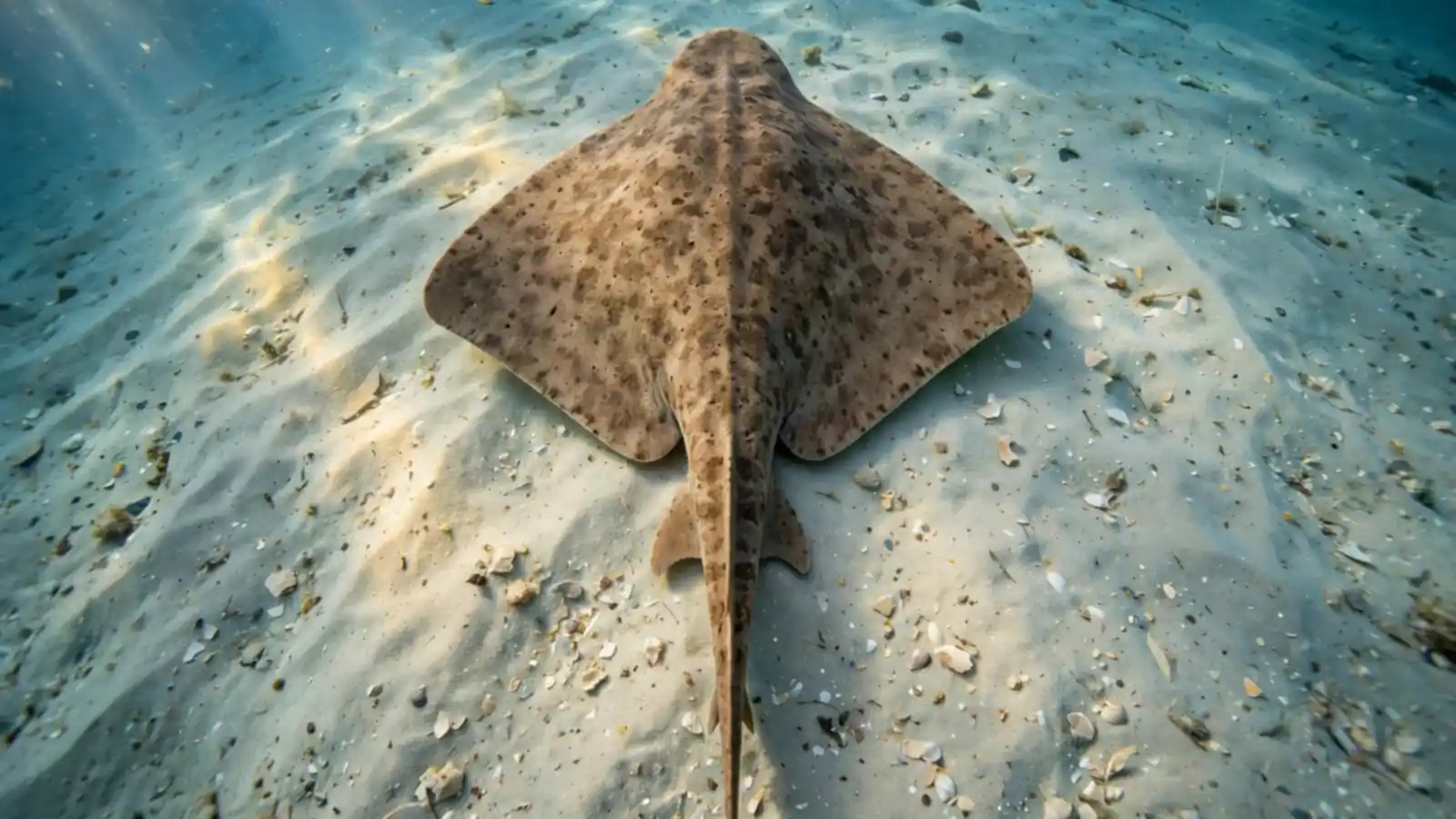
At a Glance
Skates are usually met second-hand: find a black, horned pouch on the strandline after a storm and you have probably met one without ever seeing it. They are the egg-laying half of the flat, winged fishes called batoids — the other half, the rays, give birth to live young instead. That single difference, plus a fleshy tail that carries small dorsal fins and never a stinging spine, separates the two groups at a glance once you know to look.
This is a structural group guide: it introduces the family Rajidae and folds in the six members that have their own search followings — common, little, winter, thorny and longnose, plus the thornback ray, which is one in ray’s clothing. Species-level profiles of individual rays and the wider family live in the Types of Rays and Skates hub that this guide belongs to.
What Is a Skate Fish?
It is a cartilaginous fish of the family Rajidae, in the ray superorder Batoidea. The body is a flattened diamond: the pectoral fins are fused to the head and ripple in waves to row the animal along, a motion called rajiform swimming. The mouth and five pairs of gill slits sit underneath, while the eyes and two breathing holes — spiracles — are on top, so it can lie buried in sediment and still breathe and watch.

Details give the family away. The snout is stiff, supported by a solid rostrum; the tail is thick and fleshy with two small dorsal fins near its tip; and the skin carries thorn-like denticles, especially along the back and tail. They even have weak electric organs running through the tail — too feeble for hunting or defence, and probably used to signal others in the dark.
Skates vs Rays: How to Tell Them Apart
The two groups are constantly confused — even their common names swap identities, as the thornback ray below proves. These are the reliable checks, summarised from the family reference:
- Reproduction: they lay eggs in cases; rays give birth to live young. This is the definitive difference.
- Tail: the tail is thick and fleshy with two small dorsal fins; a ray’s tail is thin and whip-like, often with a stinging spine.
- Defence: they rely on thorny projections along the back and tail; rays rely on the sting (though mantas and some others have lost it).
- Pelvic fins: divided into two lobes in these fish, a single lobe in rays.
- Teeth: small and pointed in this group; plate-like crushing teeth in rays.
If you find an egg case on the beach, the argument is already settled: whatever laid it, it was not a ray. All rays bear live young, so the mermaid’s purse belongs to this side of the family (or to certain sharks, whose cases usually carry curly tendrils instead of horns).
Types of Skates: Six Species to Know
More than 150 species are described, in 17 genera. These six account for most of the curiosity — and most of the confusion.
Common Skate
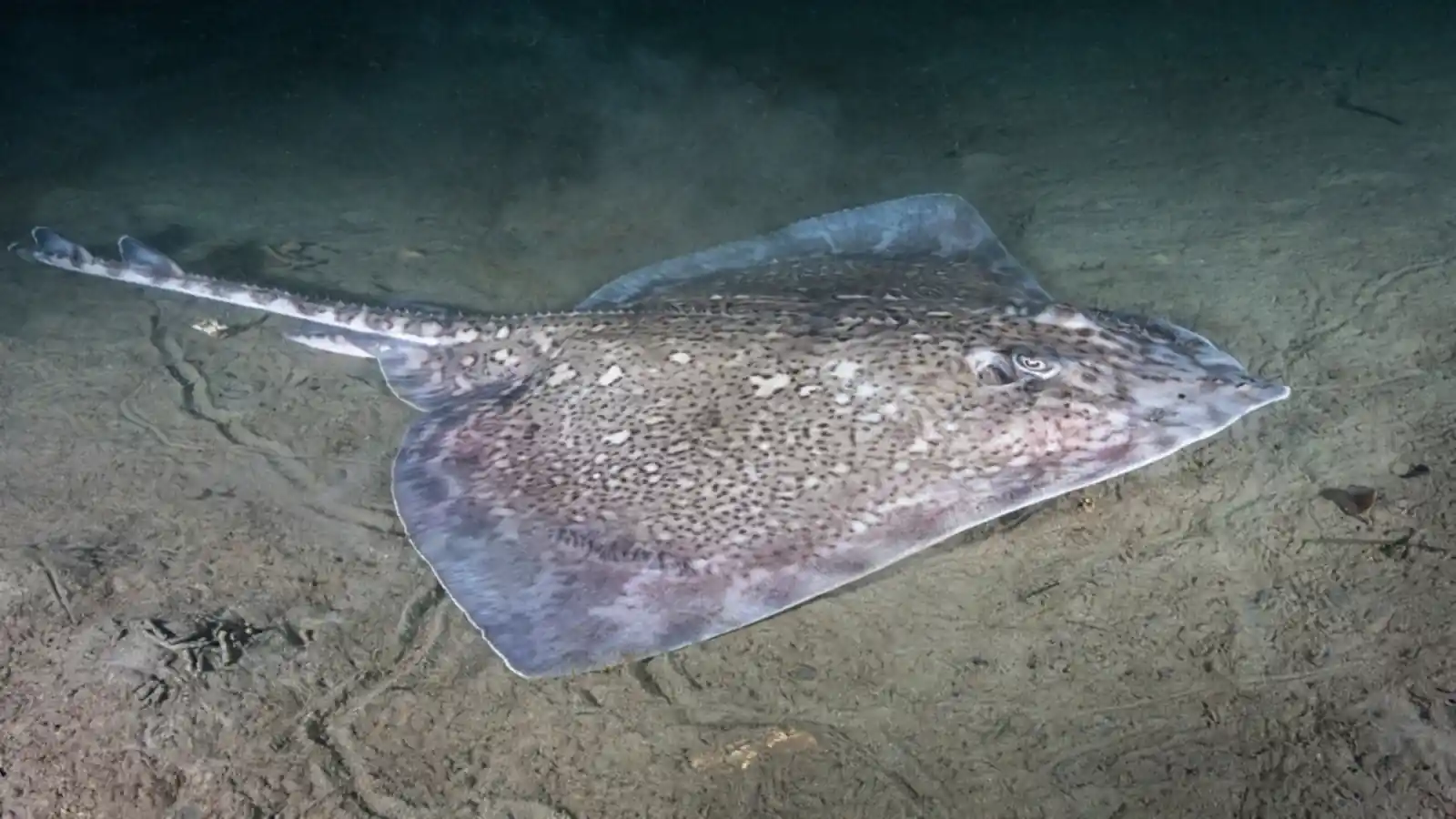
Once the giant of European waters, the common one was recently split into two species — the blue and the even larger flapper, which can exceed two metres and ranks among the world’s biggest members of the family. Long-lived, slow to mature and heavily fished, both are now critically endangered, and the name ‘common’ is a sad souvenir of what the seas used to hold.

Little Skate
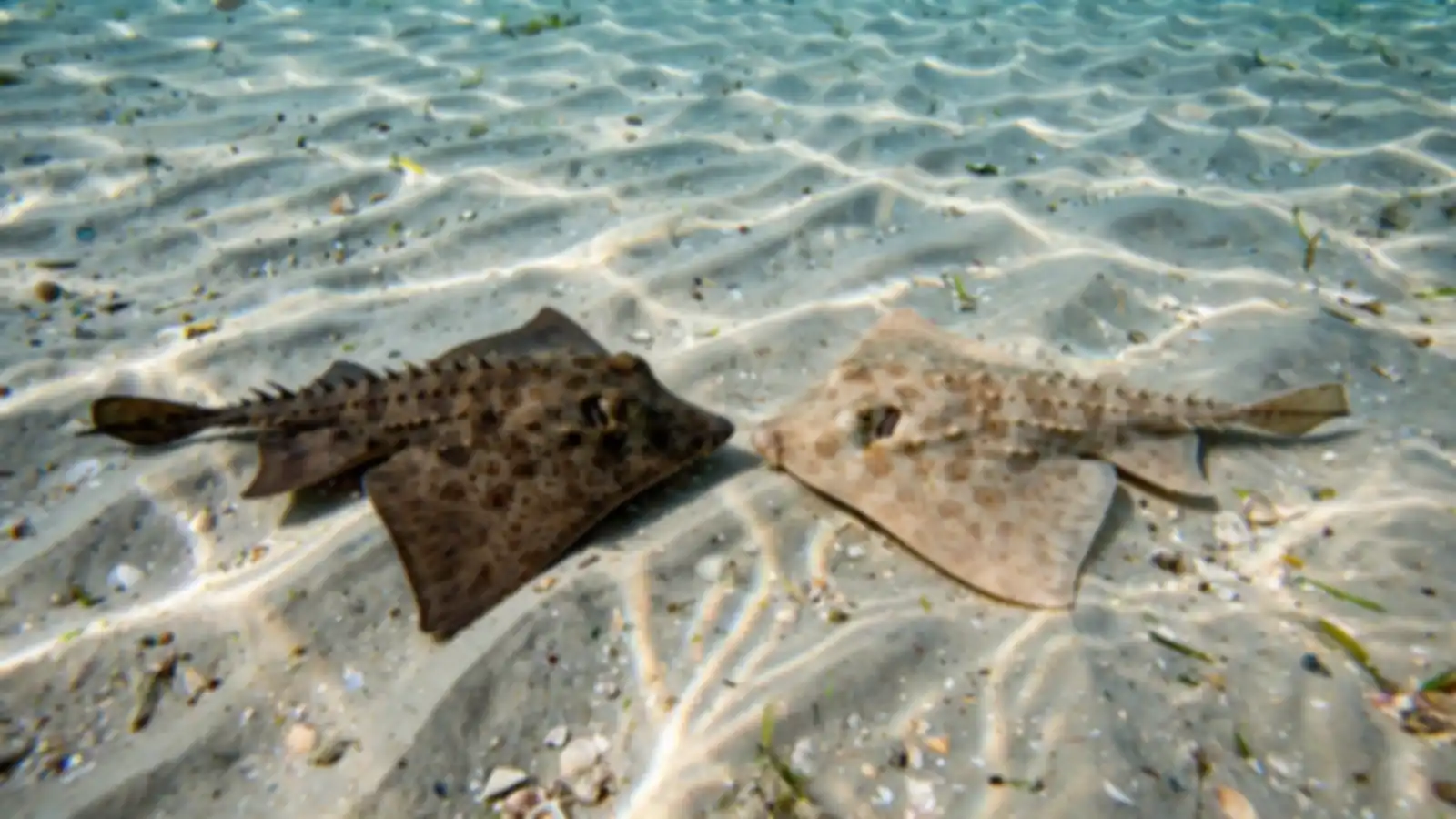
The small species of the northwest Atlantic, rarely passing half a metre, with a short, bluntly rounded snout. It is a laboratory favourite and a constant source of identification arguments with its larger neighbour below — size, snout shape and tooth rows separate them, when anything can.
Winter Skate
Its bigger twin grows toward a metre, with a more rounded disc and distinctive dark spotting as a juvenile. Named for its inshore movements in the colder months, it has been heavily fished for its wings and is now endangered across much of its range.
Thorny Skate
A cold-water species of the North Atlantic wearing its name on its back: rows of stout thorns run along the spine and tail, with larger thorn patches on the disc. It ranges into deep water and has declined sharply under fishing pressure, a pattern repeated across the family.
Thornback Ray
The family’s great impostor: the thornback ray is a true member of the family, Raja clavata, named a ray by fishermen centuries before the distinction mattered. Its back and tail carry the ‘rose thorn’ spines that give it away, and its square, horned egg cases are among the commonest mermaid’s purses on European beaches.
Longnose Skate
The eastern Pacific representative, recognised instantly by its sharply pointed, elongated snout. It is one of the largest of them on its coast, reaching well over a metre, and a mainstay of west-coast fisheries from California to Alaska.
Reproduction: Egg Cases
All of them are oviparous. After mating at traditional nursery grounds, the female deposits egg cases — mermaid’s purses — directly onto the seabed. Each case is a tough, fibrous capsule with a horn at each corner and a species-specific keel along its edge; most hold a single embryo, though some species pack in up to seven. Development is slow: a young one may spend up to 15 months inside the case before hatching as a miniature adult.
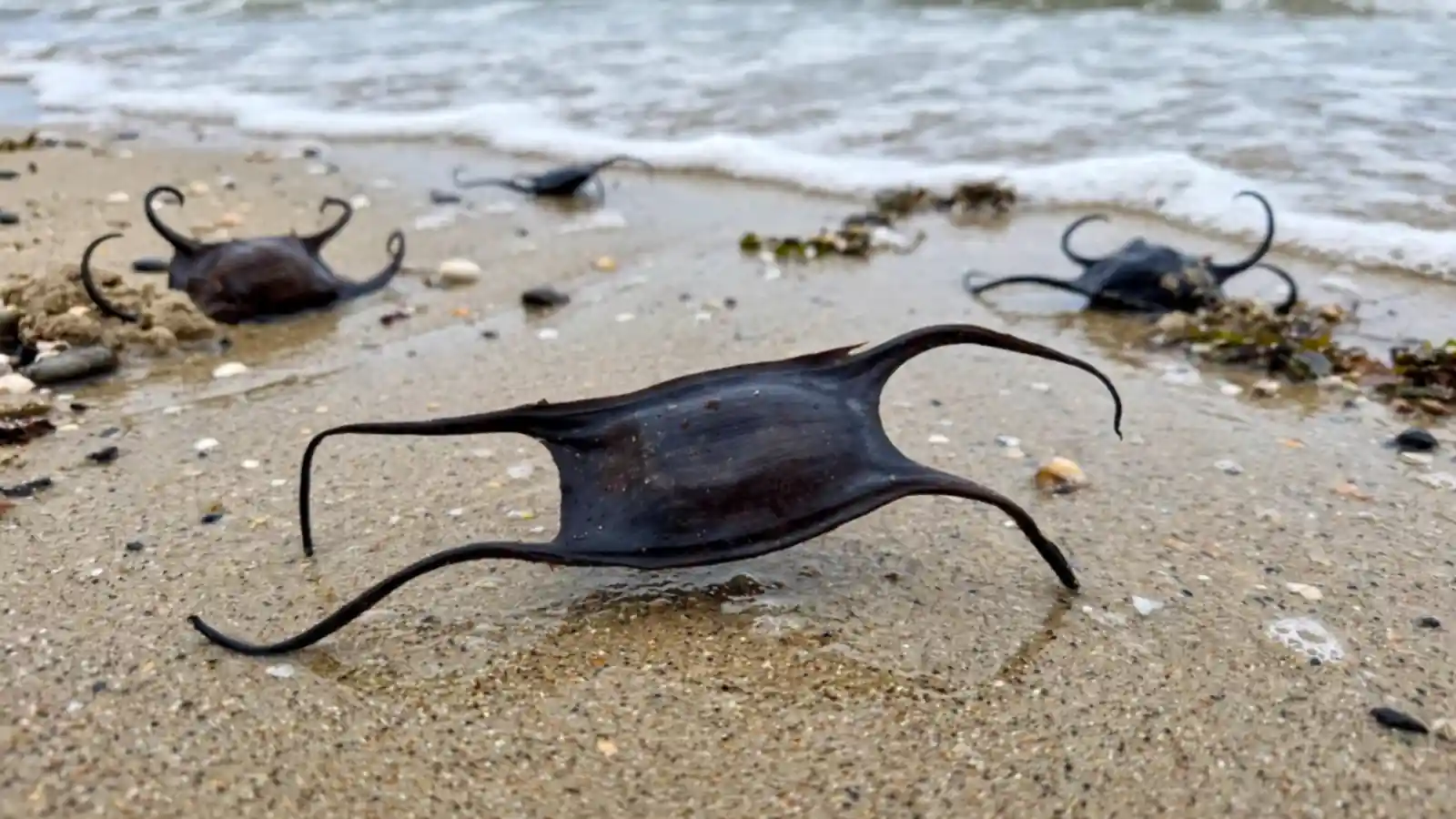
Empty cases wash ashore by the thousand, and they have become a scientific resource: because each species’ purse differs in size, shape and keel, beachcombers in a long-running citizen-science eggcase hunt record their finds and map the nurseries of species they will never see alive. A black purse with four horns, found on the strandline, is a nursery report written in keratin.
Habitat, Diet and a Quiet Crisis
They break the tropical rule of their relatives: they are most diverse at high latitudes and in deep water, from the intertidal zone down past 3,000 metres, and they thin out as water warms, where stingrays take over. Most live on continental shelves and upper slopes over sand, mud or cobble, half-buried by day and hunting by night.
The menu is bottom fare — shrimp, crabs, clams, oysters and small fish — crushed by grinding plates in the jaws. They are also the family’s walkers: many species plant their modified pelvic fins on the seabed and punt themselves along, a fin-walking gait scientists study as a clue to how walking first evolved. Slow growth and late maturity make all of them vulnerable to overfishing, and several of the species above are now threatened — the family’s quiet crisis.
Fun Facts
- They have weak electric organs in their tails — among fish, only this group and electric rays have them, and they probably use theirs to communicate.
- Some of them ‘walk’ along the seabed on their pelvic fins; the neural circuits involved may echo the ones that later let animals walk on land.
- An embryo can spend up to 15 months developing inside its mermaid’s purse before it hatches.
- The ‘common’ one turned out to be two species — the blue and the larger flapper — separated by scientists only recently.
- Each species’ egg case has a unique shape and keel, so an empty purse on the beach can be identified to species like a fingerprint.
- They are the only cartilaginous fish group more diverse in cold, deep water than in the tropics — the reverse of their ray cousins.
Frequently Asked Questions
What Is a Skate Fish?
A skate is a flat, cartilaginous fish of the family Rajidae, related to sharks and rays. It has a diamond-shaped body made of fused pectoral fins, a fleshy tail with two small dorsal fins, and mouth and gill slits on its underside. Unlike rays, they lay eggs in leathery cases and never carry a stinging spine.
What Is the Difference Between a Skate and a Ray?
The decisive difference is reproduction: they lay eggs in cases called mermaid’s purses, while rays give birth to live young. They also have thick, fleshy tails with small dorsal fins and thorny defences; rays have thin whip-like tails, often with a sting. Their pelvic fins split into two lobes, and their teeth are small rather than plate-like.
Do Skates Lay Eggs?
Yes — all of them lay eggs, which is the family’s defining trait. The female deposits tough, fibrous egg cases with a horn at each corner onto the seabed. Each case protects one embryo in most species, though some hold several, and development can take up to 15 months before a fully formed young one hatches.
Do Skates Have Stings or Stingers?
No. None has a stinging spine — that weapon belongs to the rays. They defend themselves with thorn-like denticles along the back and tail instead, which is why names can mislead: the ‘thornback ray’, for example, is actually a member of this family, and its thorns are not stings. They are harmless to people who leave them alone.
What Is the Largest Skate in the World?
The largest are the flapper and its close relative the blue — the two species formerly lumped together under one common name. The flapper can grow beyond two metres across. Both are now critically endangered after decades of fishing, a fall from the days when the ‘common’ skate was exactly that.
Where Do Skates Live?
They live on seabeds in all oceans, from the intertidal zone to depths beyond 3,000 metres, but they are most diverse in cold and deep water at high latitudes — the reverse of stingrays. Most favour continental shelves and slopes over sand, mud or rocky ground, where they lie half-buried and hunt bottom animals at night.
How Can You Tell Skates Apart?
Telling them apart takes a checklist: overall size, snout shape (pointed in the longnose, blunt in the little), the pattern of thorns along the back and tail, tooth-row counts and the shape of the egg case. The classic puzzle — the little versus the winter — is settled by size, disc shape and teeth: the winter grows much larger and has more tooth rows.
Similar Species Worth Exploring
Keep Exploring
This guide sits inside the full tour of the types of rays and skates — compare the egg-layers here with live-bearers like the southern stingray. Flat, patient and ancient, nothing on the seabed does quiet like the skates.