Frilled Shark
Frilled Shark: the living fossil with 300 teeth
The frilled shark is a living fossil from the deep ocean, an eel-bodied shark with frilled red gills, 300 needle teeth and a body plan older than the dinosaurs’ fall. Almost nobody has seen one alive, yet its teeth turn up in rocks tens of millions of years old. Here is its size, its record-breaking pregnancy, and why the “extinct” headlines are wrong.
By Emily Carter · Reviewed by our vet team · Updated 10 November 2026 · 9 min read
About 300 trident-shaped teethPregnant for up to 3.5 yearsFossil kin 80 million years old
At a Glance
A frilled shark looks like a message from another era: an eel’s body, a snake’s strike, gills gathered in a frilled red collar, and a mouth full of identical white tridents. It lives so deep, and surfaces so rarely, that each specimen makes news — and each rumour of its extinction has to be corrected. This is one of the least seen and most extraordinary sharks alive.
Frilled Shark Size and Shape
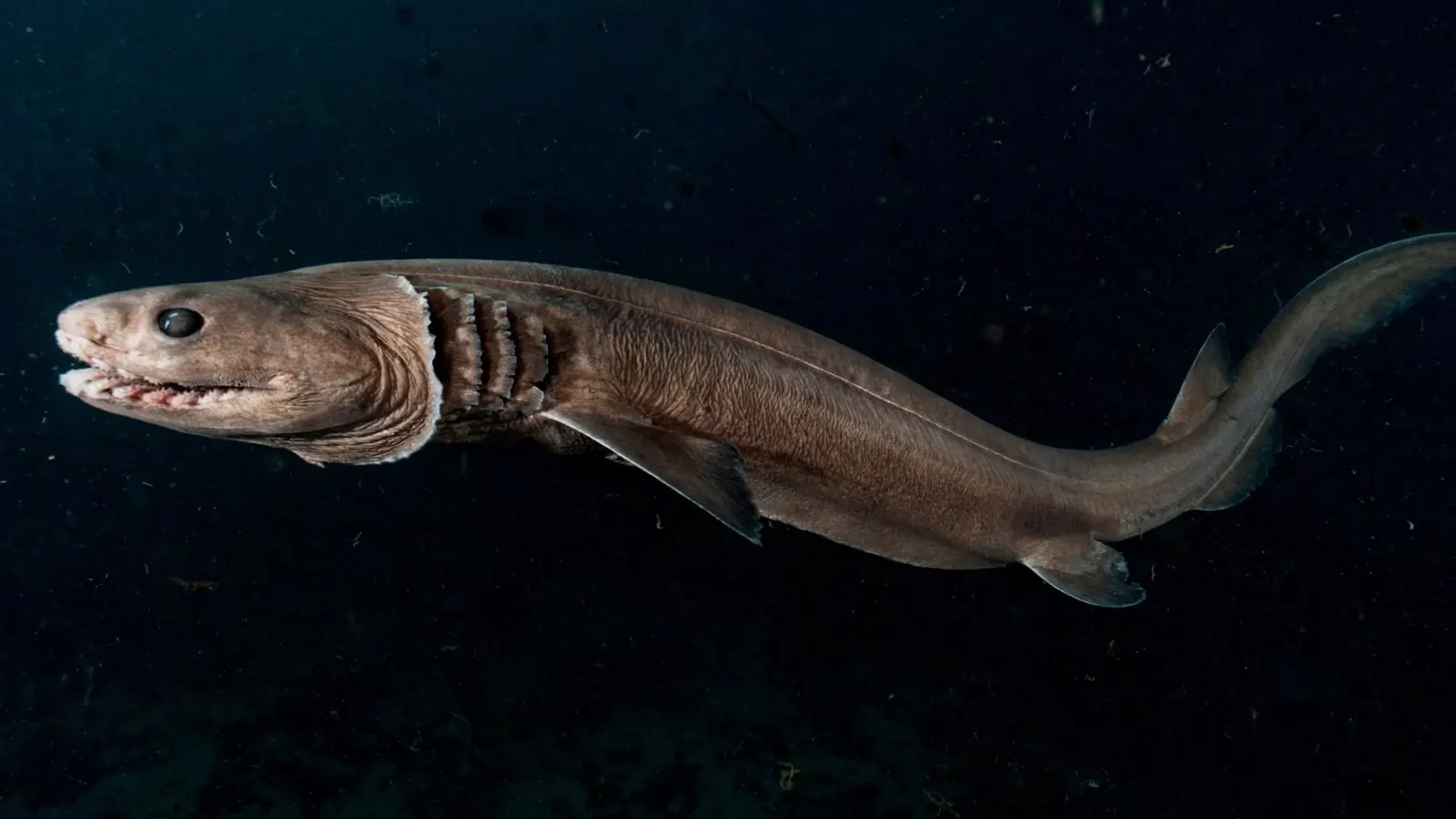
The It is a modest size wrapped in a strange shape. Adults reach about 1.5 to 2 metres (5 to 6.5 feet), females a little larger than males, but almost none of that length is where you expect it: the body is long, supple and eel-like, chocolate brown, with the single dorsal fin set far back near the tail and a broad, rounded tail fin like a paddle.

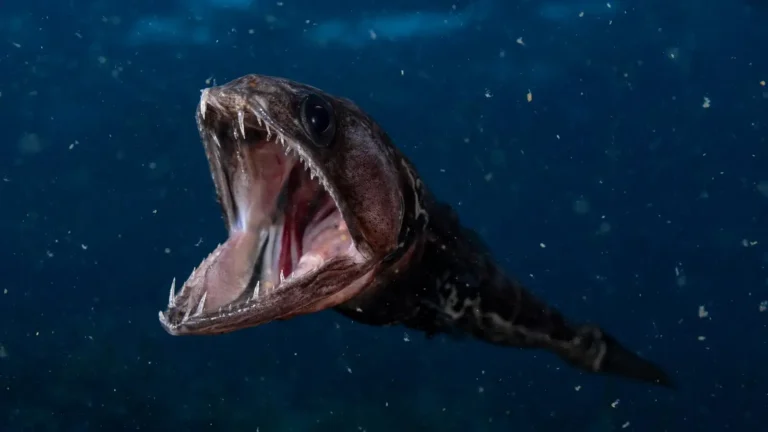
You can browse the full species record for Chlamydoselachus anguineus for its measured data. The head breaks shark rules in every direction. The mouth sits at the very front of the snout rather than slung underneath, the jaws are long and packed with teeth, and behind the head the six gill slits run almost all the way around the throat — the first pair nearly meets beneath it, their frilly red edges forming the collar that names the animal.
That collar is working equipment, not costume. The frilled edges are rich in blood vessels and may help the shark breathe in the oxygen-poor deep water it favours, flushing the gills of an animal that spends much of its life hovering almost motionless in the dark.
Teeth: 300 Tridents in Neat Rows
Open its mouth and the deep sea stares back. It carries around 300 teeth in some 25 rows, and every tooth is the same uncanny shape: a small white trident, three long needle cusps rising from a single base. Nothing in the arrangement is for cutting or crushing. These are hooks for soft bodies — a cage that closes on squid and fish and does not let go.
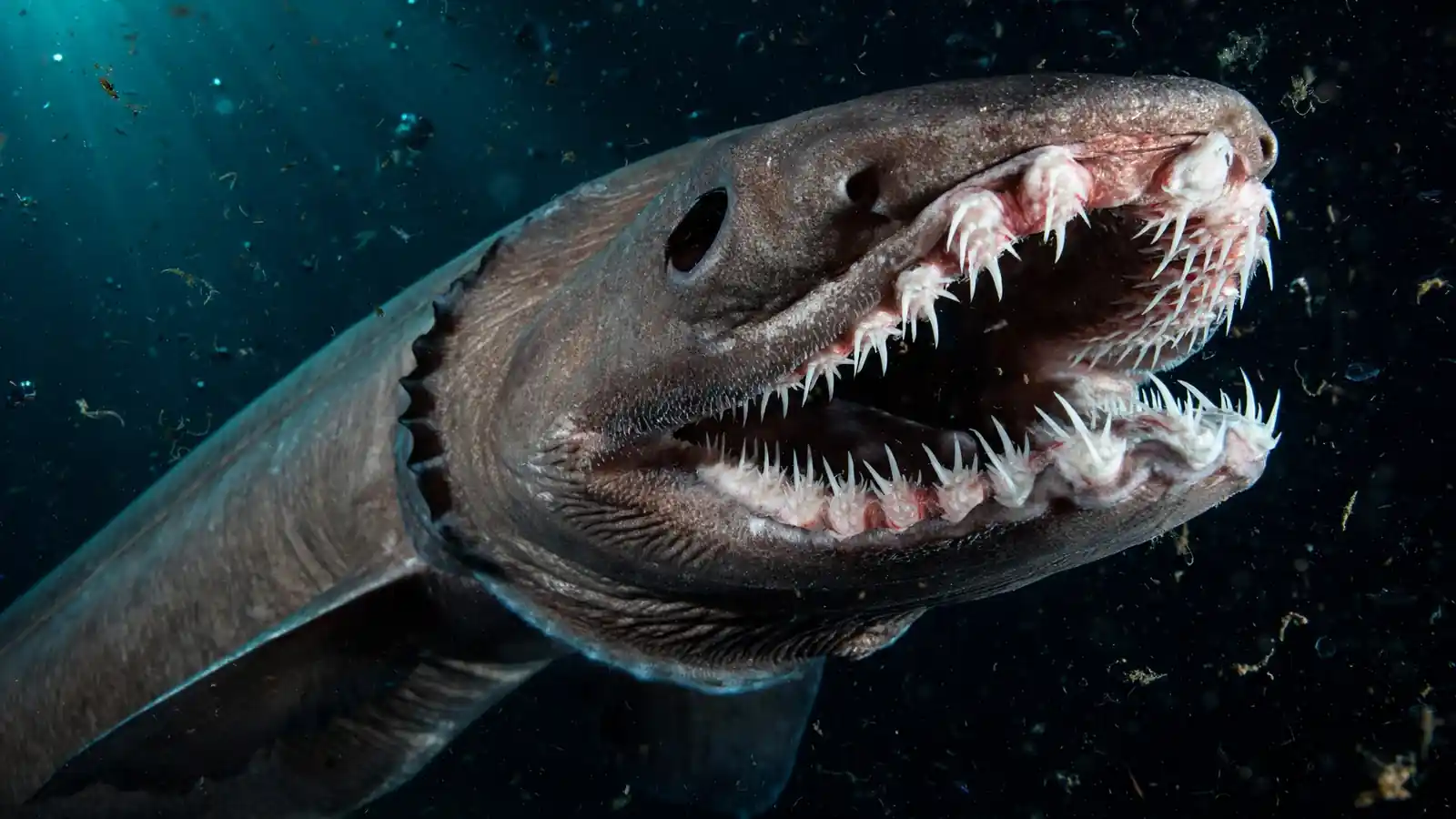
The design explains the diet found in the few stomachs ever examined: fast, soft prey, mostly squid, including species far too quick for a sluggish hunter to chase down. Researchers suspect the shark strikes like a snake, lunging from a coiled hover, and that the pale teeth may even glint as a lure in the black water, drawing curious squid within range of the strike.
Teeth like these are also why we know the family’s antiquity. Teeth fossilise when nothing else does, and trident teeth matching this design appear in rocks 80 to 95 million years old. The shark in a modern trawl net is carrying equipment its ancestors were already using while tyrannosaurs walked above the same oceans.
A Living Fossil From the Age of Dinosaurs
“Living fossil” is an overused label, but the species earns it twice over. Its lineage is genuinely ancient — the family’s teeth are known from the age of the last dinosaurs — and the animal itself seems to have been left alone by evolution in a way few vertebrates are: six gill slits where modern sharks have five, a mouth at the front of the head, a skeleton lightly built and partly uncalcified, more like a blueprint for a shark than the finished article.
When the species was described in 1884, scientists were so struck by its snake-like anatomy that its scientific name, Chlamydoselachus anguineus, means roughly “frilled, snake-like shark”. Some early writers doubted it was a shark at all. It sits on one of the oldest surviving branches of the shark family tree, close to the root from which all modern sharks grew.
It shares that deep-time strangeness with the goblin shark, the other “fossil” that still turns up in modern nets. Between them they make the point of this whole corner of the ocean: the deep sea is a museum that never closed, and some of its exhibits are still swimming.
Where Frilled Sharks Live: Habitat and Depth
Frilled sharks live on the continental and island slopes of the Atlantic and Pacific Oceans, in scattered pockets from Norway to New Zealand, Japan to California, usually in water 500 to 1,000 metres deep and recorded between about 120 and 1,500 metres. The map looks like a handful of thrown darts, but that is an artefact of how rarely anyone fishes or films at those depths; the true range is probably continuous along the world’s deep slopes.
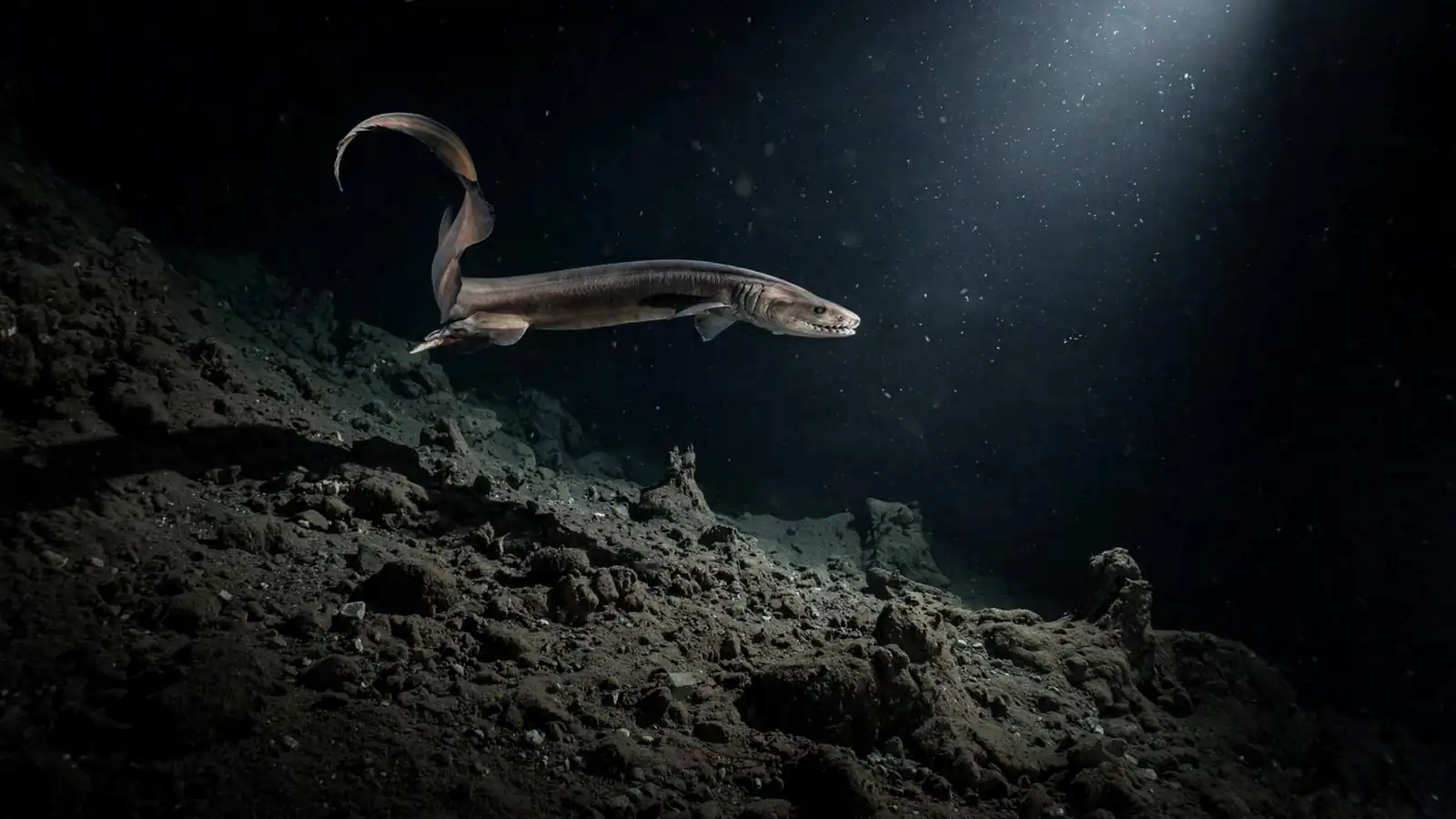
On the slope it hovers over the bottom or swims slowly through the water column, hunting the twilight and darkness where squid shoal. Its lightly built skeleton and oil-rich liver give it near-neutral buoyancy, so it can hang in the water like a held breath, spending almost nothing to wait for prey to come to it.
Surface appearances are accidents, and usually tragedies. A specimen in shallow water is almost always a sick or dying animal pushed upward, unable to cope with the warmth and pressure change — which is why the rare live captures, like the famous 2007 specimen filmed off Japan, survive only hours. The deep is not its refuge; it is simply the only place its body works.
The Longest Pregnancy on Earth
Buried in this shark’s biology is a world record. By tracking embryo growth across the few pregnant females ever examined, scientists estimate its gestation at up to three and a half years — the longest pregnancy of any backboned animal, longer than an elephant’s, longer than the great whales’. In the cold, food-poor deep, everything about this shark happens in slow motion, and motherhood most of all.

The pups, when they finally arrive, are born live in litters of 2 to 15, each already 40 to 60 centimetres long and carrying enough yolk-grown reserves to start life in a desert. Their development is so slow that a female caught in one decade may be carrying embryos conceived years earlier, at a pace set by near-freezing water and a metabolism turned almost off.
Slow is survivable in a stable world, and for millions of years the deep slope was the most stable world on Earth. It is only now, as deep trawls and longlines reach the slopes in force, that a three-and-a-half-year pregnancy becomes a liability — a population that replaces itself this slowly cannot shrug off losses.
Is the Frilled Shark Still Alive?
Every few years a headline announces the species as a creature back from extinction, or asks whether it still exists at all. The answer is unglamorous and reassuring: it never went anywhere. The species is assessed as Least Concern, specimens surface steadily in deep trawls and on longlines around its range, and research submersibles have filmed it swimming in its own world, most famously off Japan and in the Atlantic.
The confusion is a matter of arithmetic. An animal that lives a kilometre down, in ones and twos, across three oceans, can go years between photographs without being rare in any meaningful sense — it is simply almost never looked at. Rarity of sightings is not rarity of sharks, and the animal is the deep sea’s standing proof of the difference.

What is genuinely scarce is knowledge. Its population size, its breeding grounds, even its lifespan are estimates built from a few hundred specimens in 140 years. The cookiecutter shark writes its presence on the bodies of whales; the it leaves almost no trace at all, which may be the most successful survival strategy in this entire guide.
Fun Facts
- Its teeth are identical white tridents, about 300 of them in 25 rows — and they may glint in the dark as a lure for squid.
- At up to three and a half years, its pregnancy is the longest known in any backboned animal.
- It has six gill slits instead of the usual five, and the first pair nearly meets under its throat to form its frill.
- A live specimen filmed off Japan in 2007 caused worldwide headlines, then died within hours in the warm shallow water.
- Trident teeth like its own appear in rocks 80 to 95 million years old, from the last age of the dinosaurs.
- Its mouth is at the front of its head like a snake’s, not slung underneath like almost every other shark.
Frequently Asked Questions
Is the Frilled Shark a Living Fossil?
Yes, in the real sense. The frilled shark’s family is known from trident teeth in rocks 80 to 95 million years old, and the living animal keeps ancient features most sharks have lost, including six gill slits, a mouth at the front of the head and a lightly built, eel-like skeleton.
Is the Frilled Shark Still Alive or Extinct?
It is alive and was never extinct. The frilled shark is listed as Least Concern, and specimens are caught or filmed regularly across its deep-water range. It is rarely seen simply because it lives 500 to 1,000 metres down, far from cameras.
How Long Is a Frilled Shark Pregnant?
Scientists estimate the frilled shark’s pregnancy lasts up to three and a half years, the longest gestation of any backboned animal. The pups are born live, in litters of 2 to 15, each already 40 to 60 centimetres long.
How Big Do Frilled Sharks Get?
Frilled sharks grow to about 1.5 to 2 metres (5 to 6.5 feet) long, with females slightly larger than males. The body is long and eel-like, chocolate brown, with the dorsal fin set far back near the tail.
Where Do Frilled Sharks Live?
Frilled sharks live on deep continental and island slopes of the Atlantic and Pacific, from Norway to New Zealand and Japan to California. They are usually found 500 to 1,000 metres down, hovering over the slope in cold, dark water.
How Many Teeth Does a Frilled Shark Have?
A frilled shark has around 300 teeth in about 25 rows. Every tooth is shaped like a small white trident with three needle-like points, designed to hook and hold soft prey such as squid rather than to cut.
Are Frilled Sharks Dangerous to Humans?
No. Frilled sharks live hundreds of metres below the surface, are slow and lightly built, and almost never encounter people at all. There is no record of one harming a human; the rare individuals brought up alive are themselves in distress.
Similar Species Worth Exploring
Keep Exploring
Still curious about sharks? Meet the goblin shark, the deep sea’s other living fossil, or browse every species in our guide to the types of sharks. None of them reaches as far back in time as the frilled shark.