Irukandji Jellyfish
Irukandji Jellyfish: tiny sting, delayed danger
The irukandji jellyfish is smaller than a thumbnail, yet its sting can trigger a delayed, whole-body syndrome — here is how it works and how to stay safe. This guide covers the small cubozoans of northern Australia, led by Carukia barnesi, and the syndrome that Jack Barnes proved by letting one sting him.
By Emily Carter · Reviewed by our vet team · Updated 10 November 2026 · 10 min read
Bell smaller than a thumbnailSyndrome delayed 5–120 minutesOnly two species proven to cause it
At a Glance
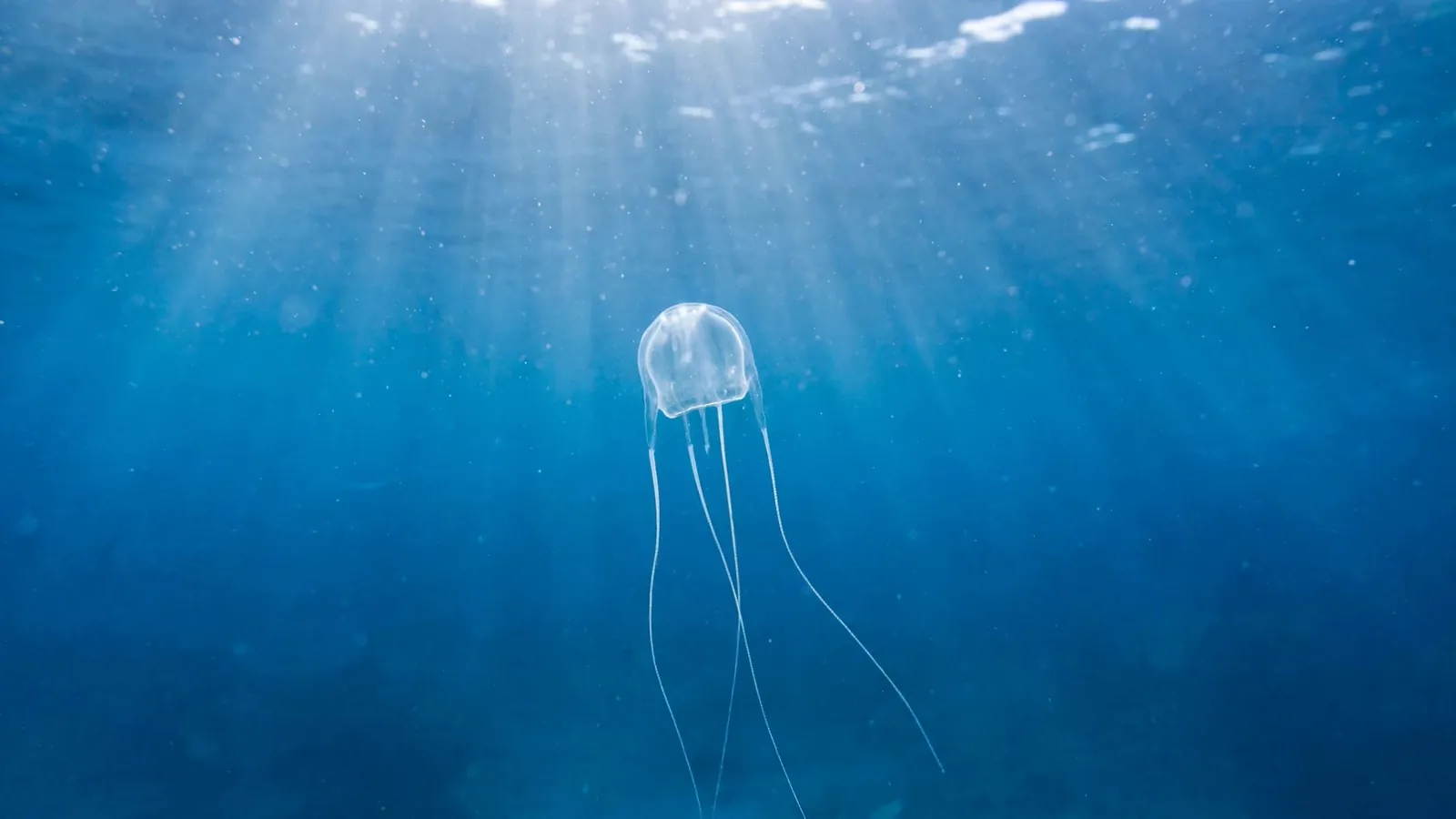
An irukandji jellyfish is smaller than a thumbnail, nearly transparent, and almost impossible to see in the water — and its sting can trigger a whole-body syndrome that arrives up to two hours later. This is the whole animal, at a glance, before the detail begins. If you are stung, seek hospital care immediately.
Irukandji Jellyfish Size: Smaller Than a Thumbnail
It is tiny: its bell is about 2 centimetres across, smaller than a thumbnail, and typically 1 to 2.5 centimetres, with four tentacles that can reach a metre long. The bell is almost transparent, and the animal is nearly invisible in the water — which is part of why the sting is so dangerous.
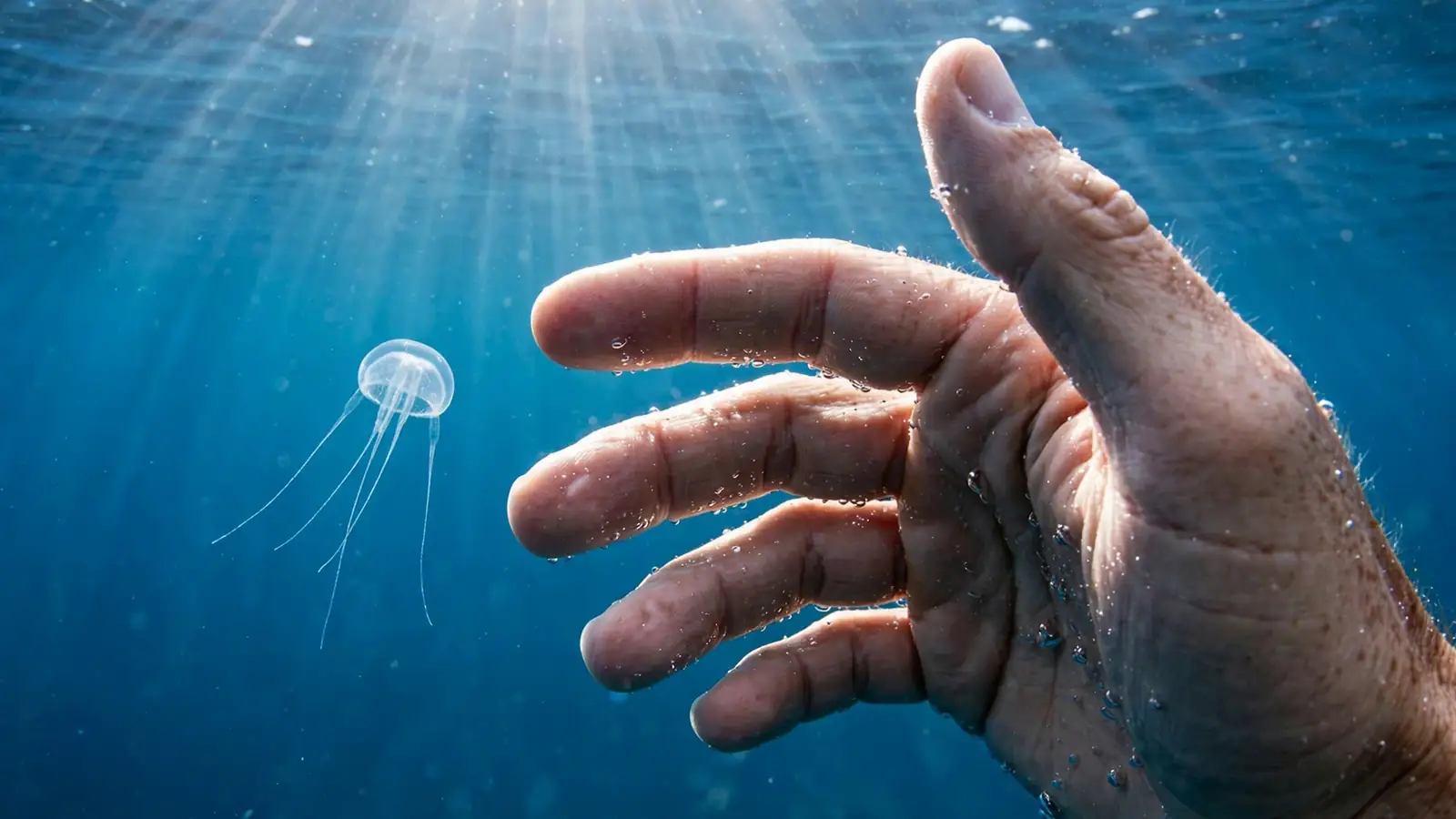
The size is the reason the irukandji is hard to avoid. A swimmer cannot see a 2 cm transparent bell in the water, and the tentacles are thin and clear, so the sting often comes without warning. The animal is small, and the danger is out of all proportion to its size.
Carukia Barnesi: The Classic Irukandji Species
The classic irukandji species is Carukia barnesi, named for Jack Barnes, the doctor who proved it caused the syndrome. In 1964 Barnes let an irukandji sting him, his son and a lifeguard, and all three developed the syndrome — the proof that this tiny jellyfish was the cause of the mysterious illness that had puzzled doctors for years.
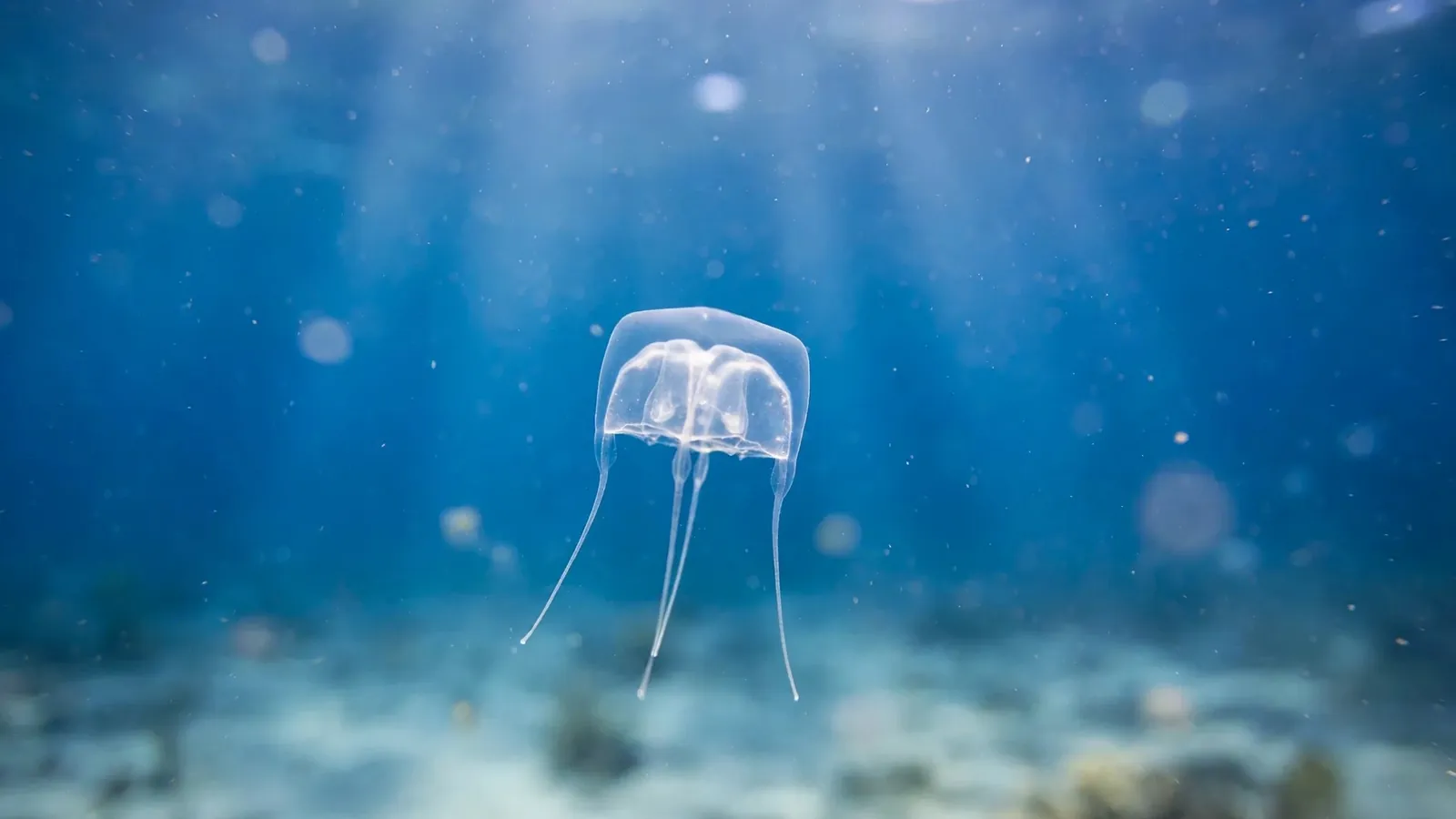
About sixteen species are known as irukandji, but only two have been proven to cause the syndrome: Carukia barnesi and Malo kingi. Other sources put the number of implicated species as high as twenty-five, but the proof belongs to two, and the classic species is the one Barnes tested on himself.
Where They Live: Northern Australia and Beyond
They live in the warm waters of northern Australia, and beyond — in the tropical Indo-Pacific and, increasingly, further south as the water warms. They are found in coastal waters, in estuaries, and around reefs, and they are most common in the summer, when the water is warmest.
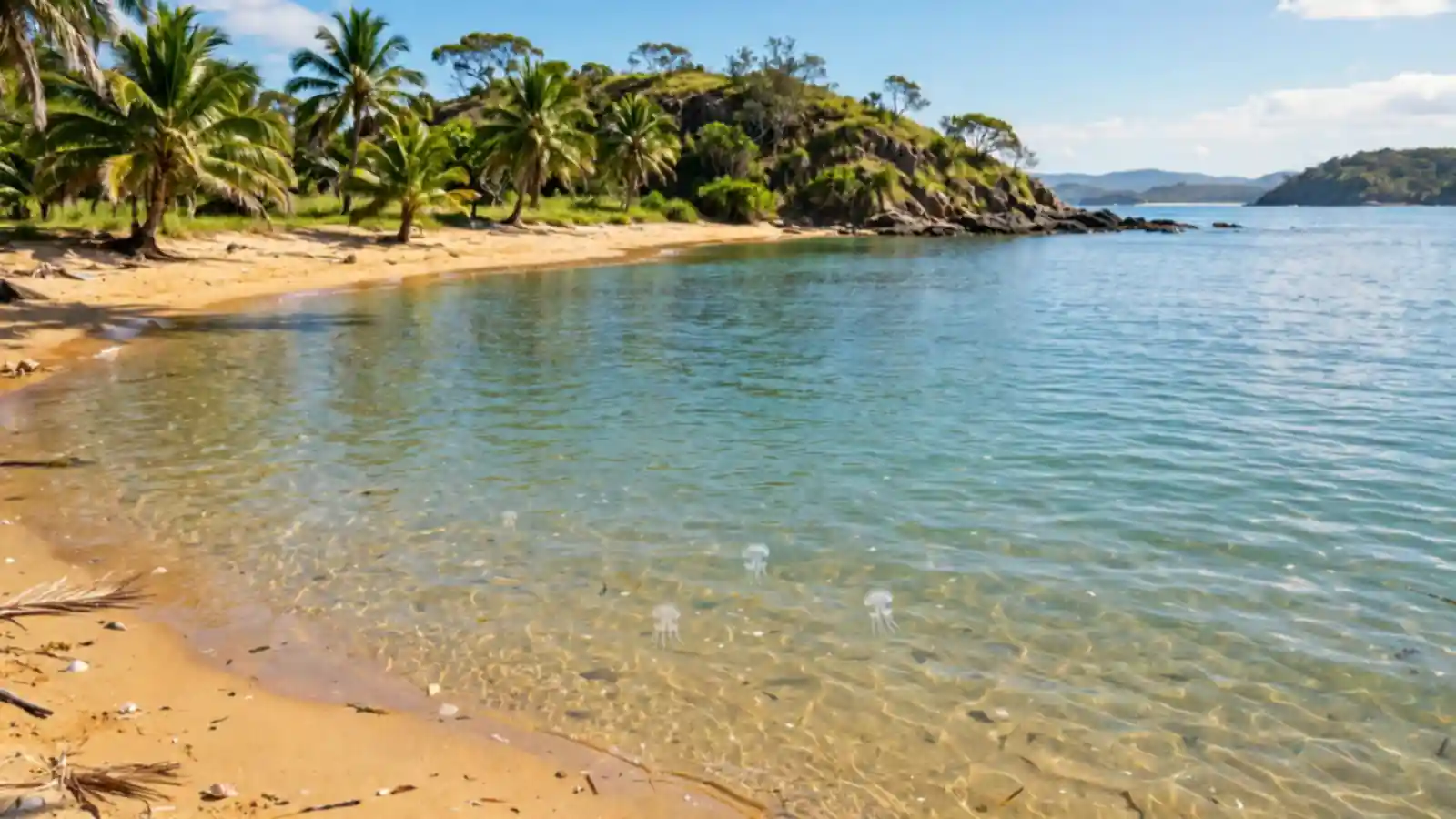
The range is spreading, and the beaches of northern Australia now carry stinger warnings and netted swimming enclosures for the summer months. The irukandji is a warm-water animal, and as the water warms, the animal follows the warmth — and the warnings follow the animal.
The Delayed Syndrome: What Happens After the Sting
The irukandji syndrome is delayed: it arrives 5 to 120 minutes after the sting, on average about 30 minutes, and it is a whole-body illness. The sting itself is often barely felt — a small mark, a little pain — and then the syndrome arrives: severe back and kidney pain, cramps, vomiting, sweating, high blood pressure, and a sense of impending doom.

The cause is a surge of catecholamines, the body’s own stress hormones, triggered by the venom. The venom does not do the damage directly — it tells the body to flood itself with adrenaline, and the flood is what hurts. Two deaths have been attributed to the syndrome, both in Australia in 2002, and the number is small, but the illness is real and the care is hospital care.
Irukandji Jellyfish vs Box Jellyfish: Not the Same Danger
The irukandji and the box jellyfish are in the same class, Cubozoa, but they are not the same danger. The box jellyfish — the sea wasp, Chironex fleckeri — is large, with many tentacles and a venom that can kill in minutes. The irukandji is tiny, with four tentacles, and its venom works slowly, through a delayed syndrome that arrives up to two hours later.
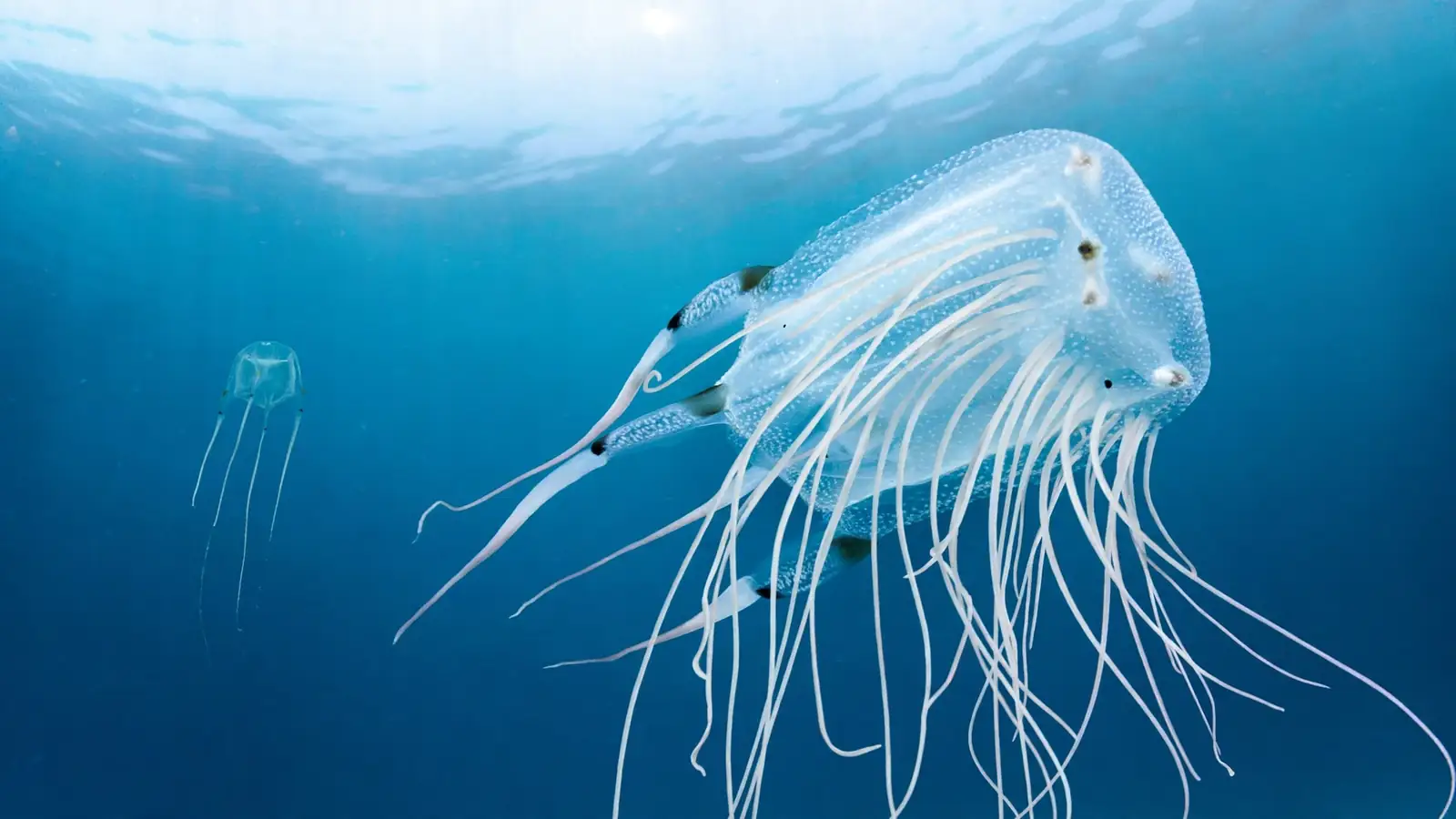
The difference matters because the first aid is different and the danger is different. A box jellyfish sting is an immediate emergency, and an irukandji sting is a delayed one — the sting may feel like nothing, and the illness arrives later, when the swimmer has already left the water. Both need hospital care, but the irukandji’s danger is that it is easy to dismiss.
What To Do After a Sting: Hospital Care
If you are stung by one, seek hospital care immediately — even if the sting feels minor, and even if you feel well. The syndrome is delayed, and the only safe course is to be in hospital when it arrives, where the pain and the blood pressure can be managed. No effective first aid is known beyond getting to hospital, according to a 2012 review.
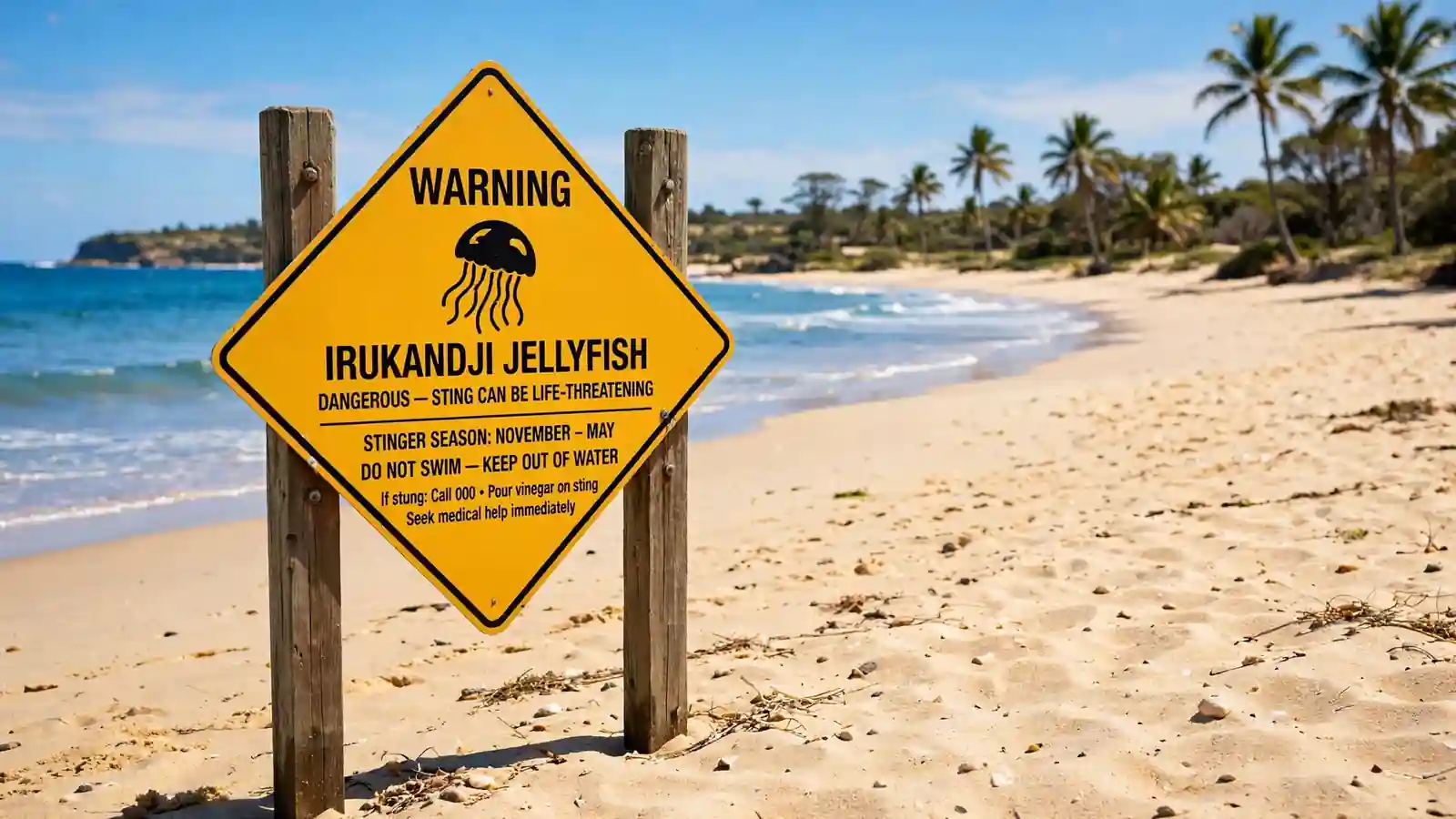
For a wider survey of the syndrome, see this irukandji syndrome guide. The message is simple and it is the whole point of this guide: the sting is small, the syndrome is delayed, and the hospital is the answer. Do not wait to see if it gets worse — go.
Life Cycle and Reproduction
It begins life as a polyp, a tiny stalked animal fixed to a rock or a shell, and the polyp buds off young medusae — the small bells that swim away to become the jellyfish we know. The polyp stage is long and hidden, and the medusa stage is short and free-swimming.
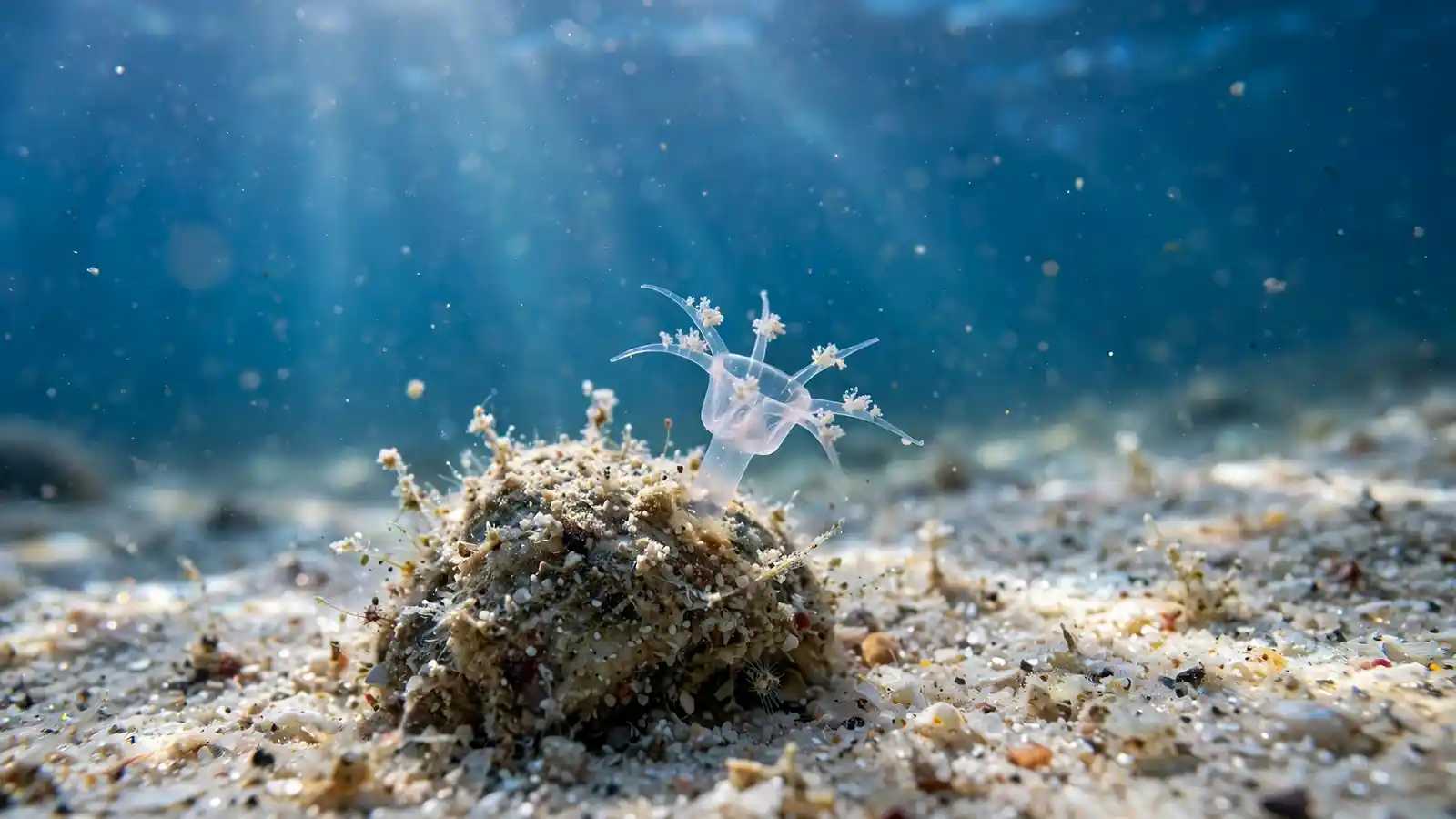
The medusa grows, mates, and releases eggs, and the eggs settle as polyps to begin the cycle again. The life cycle is the classic jellyfish pattern, compressed into a tiny animal: a polyp that waits, and a medusa that swims, and a sting that arrives when nobody is looking.
Fun Facts
- An irukandji bell is about 2 cm — smaller than a thumbnail.
- The syndrome is delayed 5 to 120 minutes, on average about 30.
- Jack Barnes proved the cause in 1964 by letting one sting him, his son and a lifeguard.
- Only two species have been proven to cause the syndrome.
- The sting itself is often barely felt — the illness arrives later.
- Two deaths have been attributed to the syndrome, both in Australia in 2002.
Frequently Asked Questions
What Is an Irukandji Jellyfish?
It is a tiny cubozoan jellyfish, about 2 centimetres across, that lives in the warm waters of northern Australia. Its sting can trigger a delayed, whole-body syndrome called Irukandji syndrome. The classic species is Carukia barnesi.
How Big Is an Irukandji Jellyfish?
It is about 2 centimetres across, typically 1 to 2.5 centimetres, with four tentacles that can reach a metre long. It is smaller than a thumbnail and almost transparent in the water.
What Is Irukandji Syndrome?
Irukandji syndrome is a delayed, whole-body illness caused by the irukandji sting. It arrives 5 to 120 minutes after the sting, on average about 30 minutes, and brings severe back and kidney pain, cramps, vomiting, sweating, high blood pressure, and a sense of impending doom.
How Long After a Sting Does Irukandji Syndrome Start?
Irukandji syndrome starts 5 to 120 minutes after the sting, on average about 30 minutes. The sting itself is often barely felt, and the illness arrives later, which is why the sting is easy to dismiss.
What Does an Irukandji Sting Feel Like?
The sting itself is often barely felt — a small mark and a little pain. The syndrome that follows is the real illness: severe back and kidney pain, cramps, vomiting, sweating and high blood pressure, arriving up to two hours later.
Where Do Irukandji Jellyfish Live?
They live in the warm waters of northern Australia and the tropical Indo-Pacific, in coastal waters, estuaries and around reefs. They are most common in summer, and their range is spreading as the water warms.
Is an Irukandji Jellyfish the Same as a Box Jellyfish?
No. Both are cubozoans, but the box jellyfish is large, with many tentacles and a venom that can kill in minutes, while the irukandji is tiny, with four tentacles, and its venom works slowly through a delayed syndrome that arrives up to two hours later.
Similar Species Worth Exploring
Keep Exploring
Keep exploring the jellyfish: meet the box jellyfish, the large cubozoan cousin, or browse the whole family in our guide to the types of jellyfish. Then come back to the northern Australian coast, home of the irukandji jellyfish.