Lion’s Mane Jellyfish
Lion’s Mane Jellyfish: the red giant of the cold seas
The lion’s mane jellyfish is the largest jellyfish on Earth, a cold-water colossus whose bell can outspan a tall man and whose tentacles trail like the mane it is named for. It carries around 1,200 stinging tentacles, shelters young fish inside a living fortress, and grows from a speck to a giant inside a single northern summer. It also owns one of zoology’s most argued-over records, a tentacle measurement from 1870 that may make it the longest animal that ever lived.
By Emily Carter · Reviewed by our vet team · Updated 10 November 2026 · 9 min read
About 1,200 tentaclesCold seas only, never the tropicsFrom speck to giant in one summer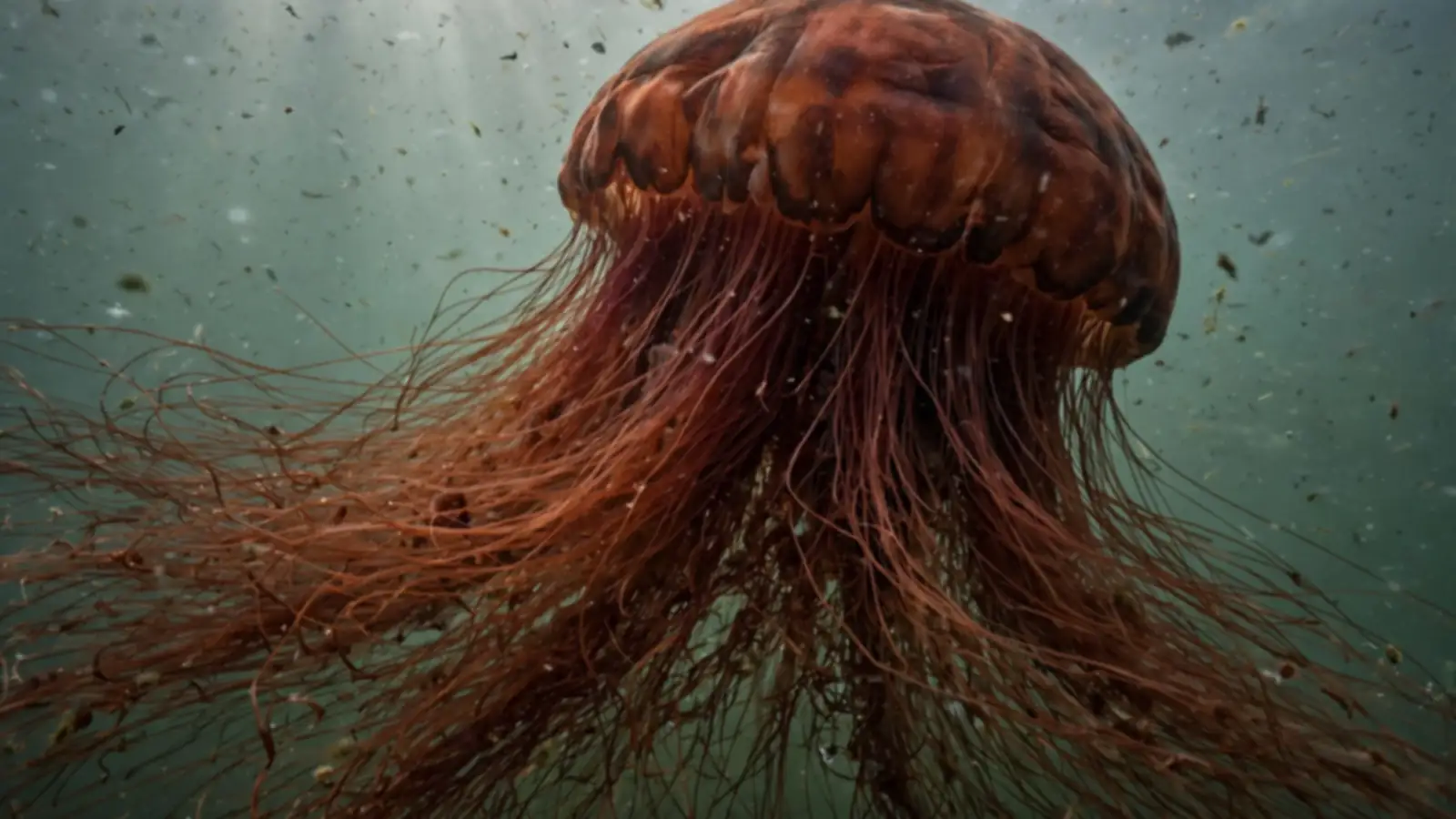
At a Glance
The lion’s mane jellyfish, Cyanea capillata, is built to a scale no other jellyfish attempts. Beneath the great scalloped bell hang eight clusters of tentacles, around 1,200 in total, and a thicket of frilled oral arms coloured like a lion’s coat, yellow and orange in the young, deepening to crimson and purple-brown in the giants. It is a northern animal through and through, and everything about it, its size, its sting, its one-year sprint of a life, follows from the cold water it rules.
Lion’s Mane Jellyfish Size: The 1870 Record, With Caveats
Start with the honest numbers. A specimen in the warmer, southern parts of its range is a modest animal, its bell typically 30 to 50 centimetres across. Size climbs with cold and latitude: in northern and Arctic waters, bells pass a metre, and the largest reliably reported approach or exceed 2 metres across, making this the biggest jellyfish species known. Even a 1-metre bell trails tentacles many times its width, and the whole animal moves through the water like slow, red weather.
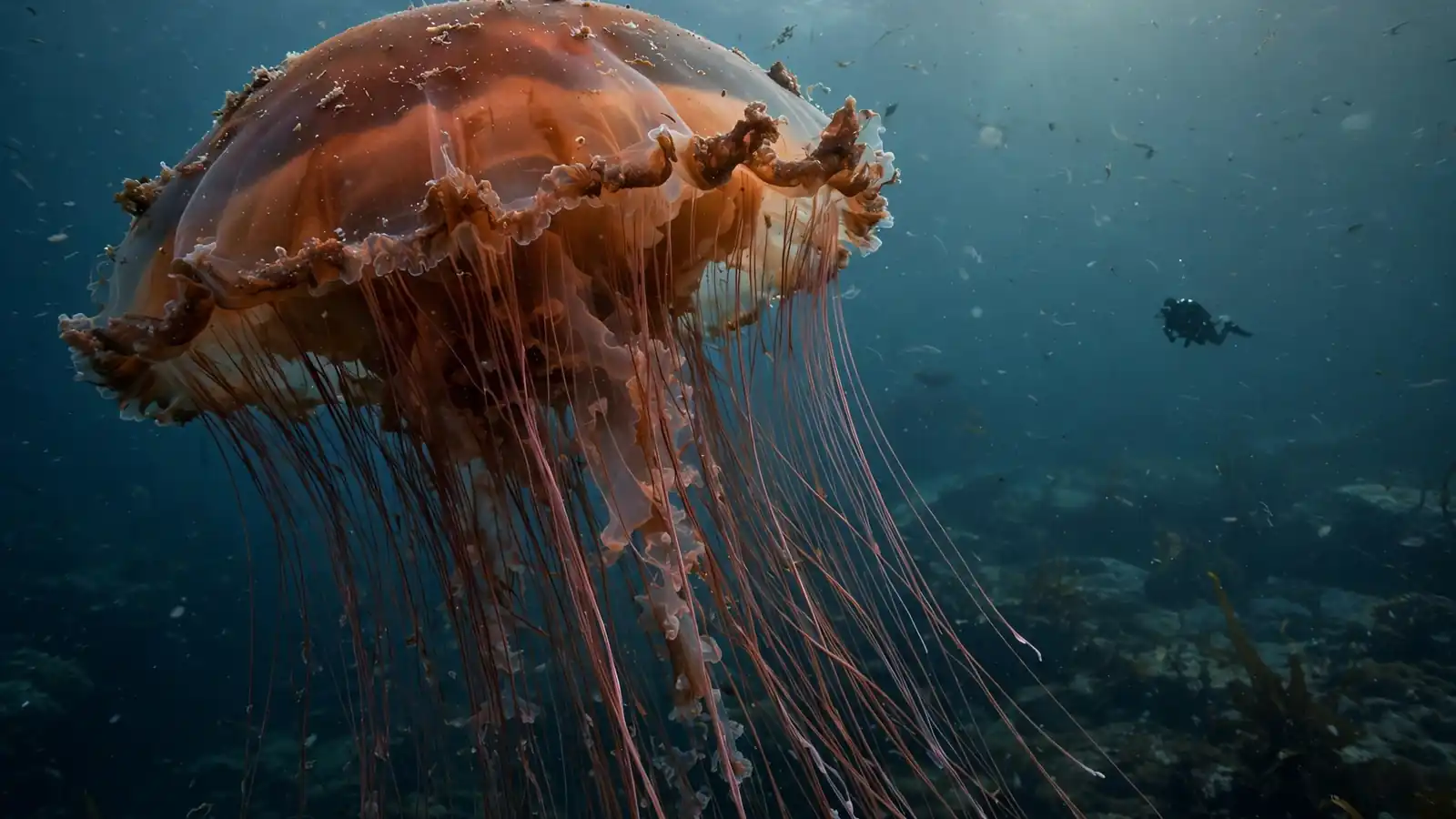
Then there is the legend. In 1870, a lion’s mane washed ashore in Massachusetts Bay was measured with a bell about 2.3 metres across and tentacles of 36.5 metres, longer than a blue whale. That single measurement is still quoted everywhere, and it deserves its asterisk: it is one 19th-century record, never repeated, and some specialists suspect the animal may have been an unusually large individual measured generously, or even a different Cyanea species. Print it, by all means, but print the caveat with it: the typical lion’s mane is impressive enough without borrowing 1870’s ruler. The record and its history are laid out in the animal’s species account and its famous 1870 specimen.
The Mane Itself: 1,200 Tentacles in Eight Clusters
The mane is not a tangle but an architecture. The tentacles hang in eight distinct clusters, U-shaped groupings under the bell’s scalloped rim, and each cluster can hold well over a hundred fine tentacles, giving a big adult its total of around 1,200. Between and beneath them cascade the oral arms, thick, frilled curtains that can be as colourful as the bell. As the jellyfish pulses along, the tentacles stream out behind into a drifting net far larger than the animal’s body suggests.
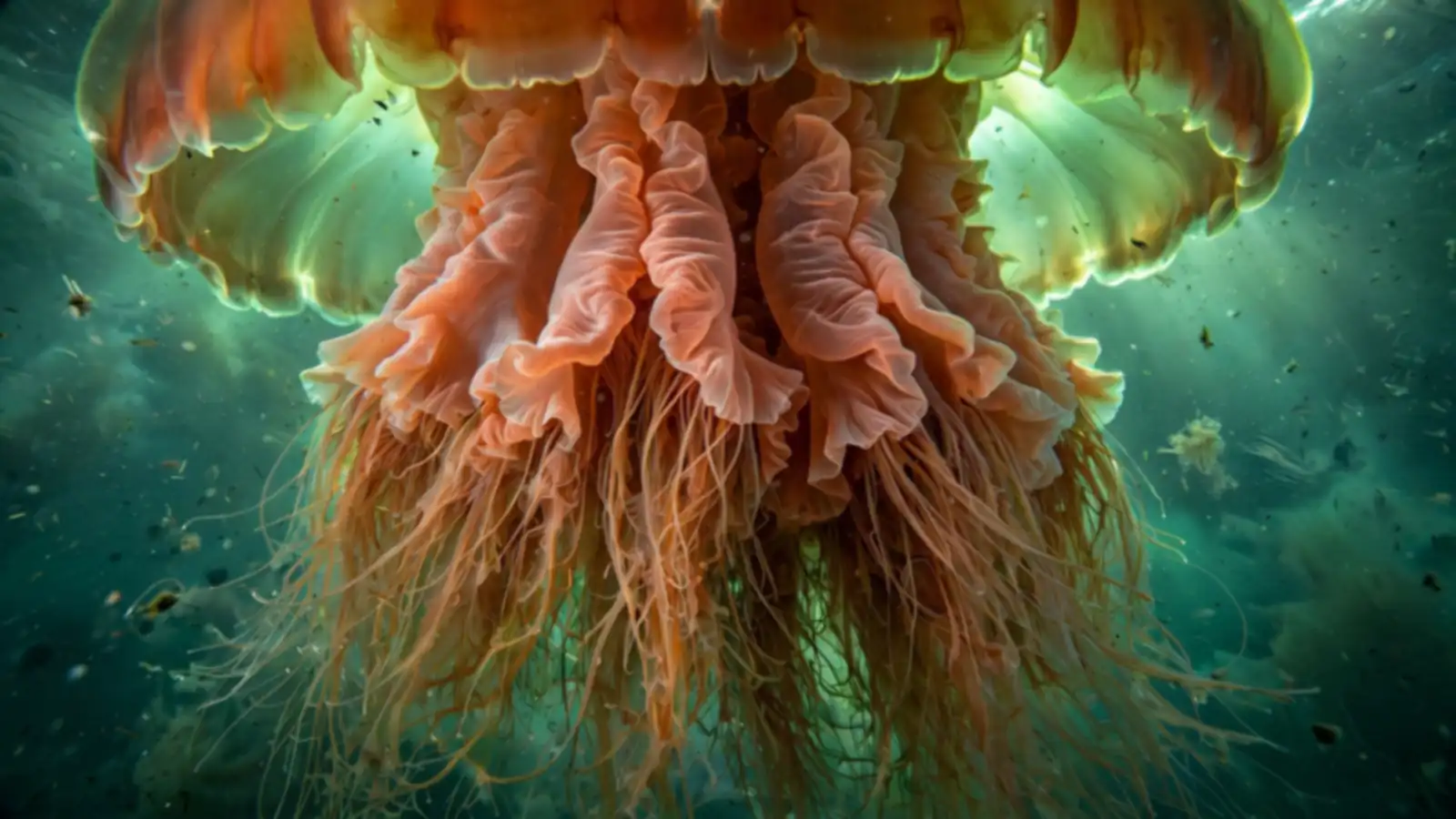
That net is both fishing gear and fortress. Prey that blunders in is stung and drawn up to the oral arms; at the same time, certain young fish, butterfish and young cod among them, live inside the mane unharmed, using it as a nursery with built-in bodyguards. Few structures in the sea serve so many tenants at once, and none looks less like engineering: it is, at a distance, simply a lion’s mane flowing in slow water.
Lion’s Mane Jellyfish Sting: Painful, Rarely Dangerous
A lion’s mane sting is a genuine sting: contact with the tentacles brings immediate burning pain, red welts and, with extensive contact, cramps or worse in rare cases. It is nevertheless in a different league from the tropics’ box jellyfish; healthy adults almost always recover with basic first aid, rinsing with seawater, removing tentacle fragments carefully, and hot water or ice for pain. The greatest risks are a very large area of contact, stings to the face, or vulnerable swimmers.
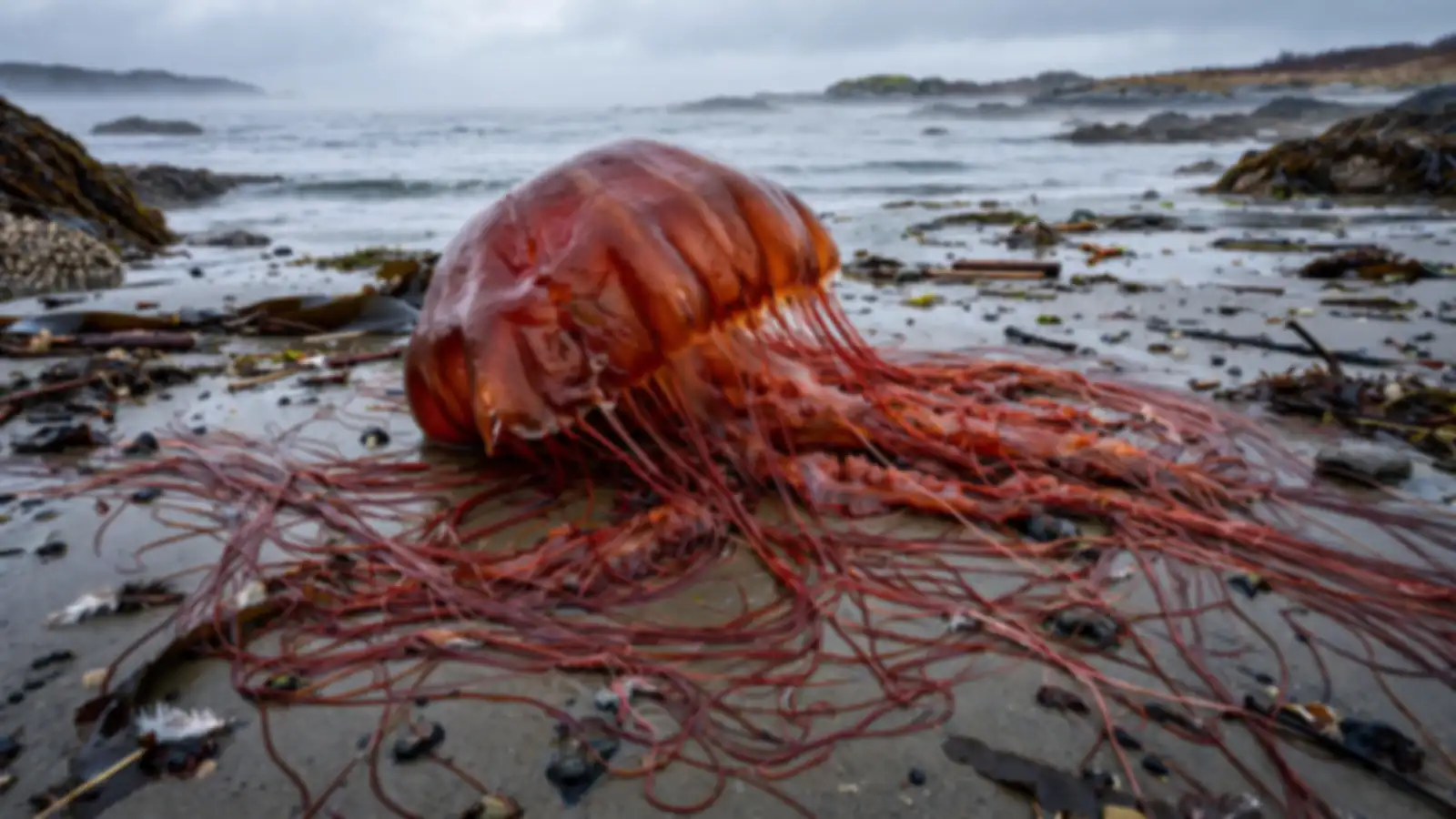
The real trap is that the sting outlives the swim. Detached tentacle pieces and stranded, drying jellyfish on beaches can sting for days, and dogs and children investigating a beautiful red mass on the sand are the classic casualties. In one often-told 2010 case in New England, fragments of a single torn-up lion’s mane stung around a hundred people at one beach. Admire stranded giants from a step back.
What Do They Eat? Diet and Tenants
A specimen eats whatever its net can hold: zooplankton and crustaceans in quantity, small fish, comb jellies and other jellyfish, including moon jellies, which it engulfs whole. The bell’s pulsing draws water and prey across the tentacles; stung food is passed to the oral arms and into the stomach pouches. A big individual in a rich summer bay is a significant predator of young fish, one reason fishermen have mixed feelings about a good lion’s mane year.
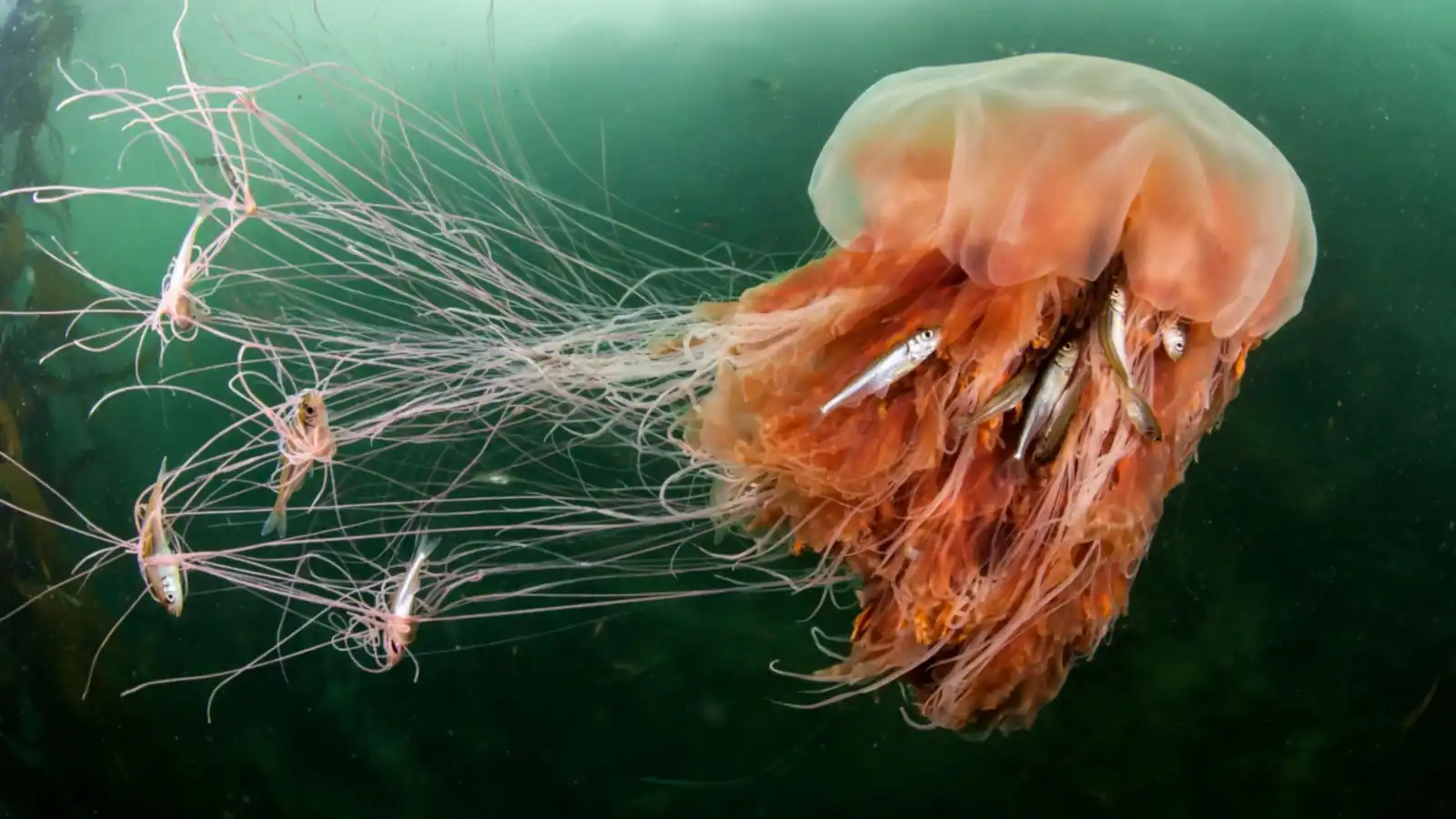
The tenants complicate the story beautifully. The young fish sheltering in the mane are not merely hiding: some nibble parasites and food scraps, and grow up inside a predator’s umbrella before graduating to open water. The jellyfish, meanwhile, is food for specialists: leatherback turtles and ocean sunfish seek out lion’s manes in quantity, and stranded giants are scavenged by birds and shore animals. Cold seas run on this exchange.
Where Do They Live? Cold Seas Only
They live only where the water stays cold: the North Atlantic from the Arctic down to about the latitude of New York and the English Channel, and the North Pacific from Alaska and Russia to the Pacific Northwest. They are creatures of the upper layers, usually within 20 metres of the surface, in bays, fjords and open coast alike, and they vanish from waters that warm past roughly 20 degrees. There are no lion’s manes in the tropics, and never will be.

Within that cold kingdom they drift with currents and tide rips, gathering where plankton concentrates, and they are a familiar late-summer sight around Britain, Scandinavia, Canada and New England. Their range and habits place them among the most northerly of the family gathered in our guide to the types of jellyfish, and their summer appearances track the cold-water season as faithfully as any calendar.
Life Cycle: A Giant in a Single Summer
For all its size, the animal lives about one year. Its polyps, tiny and anchored to shells and stones in cold bays, release ephyrae in late winter and spring; the young medusae, pale and saucer-sized, grow at a pace few animals match, feeding through the long northern days until, by late summer, the biggest are red giants with manes metres long. They spawn in autumn and die, leaving the polyps to hold the species through the dark winter.
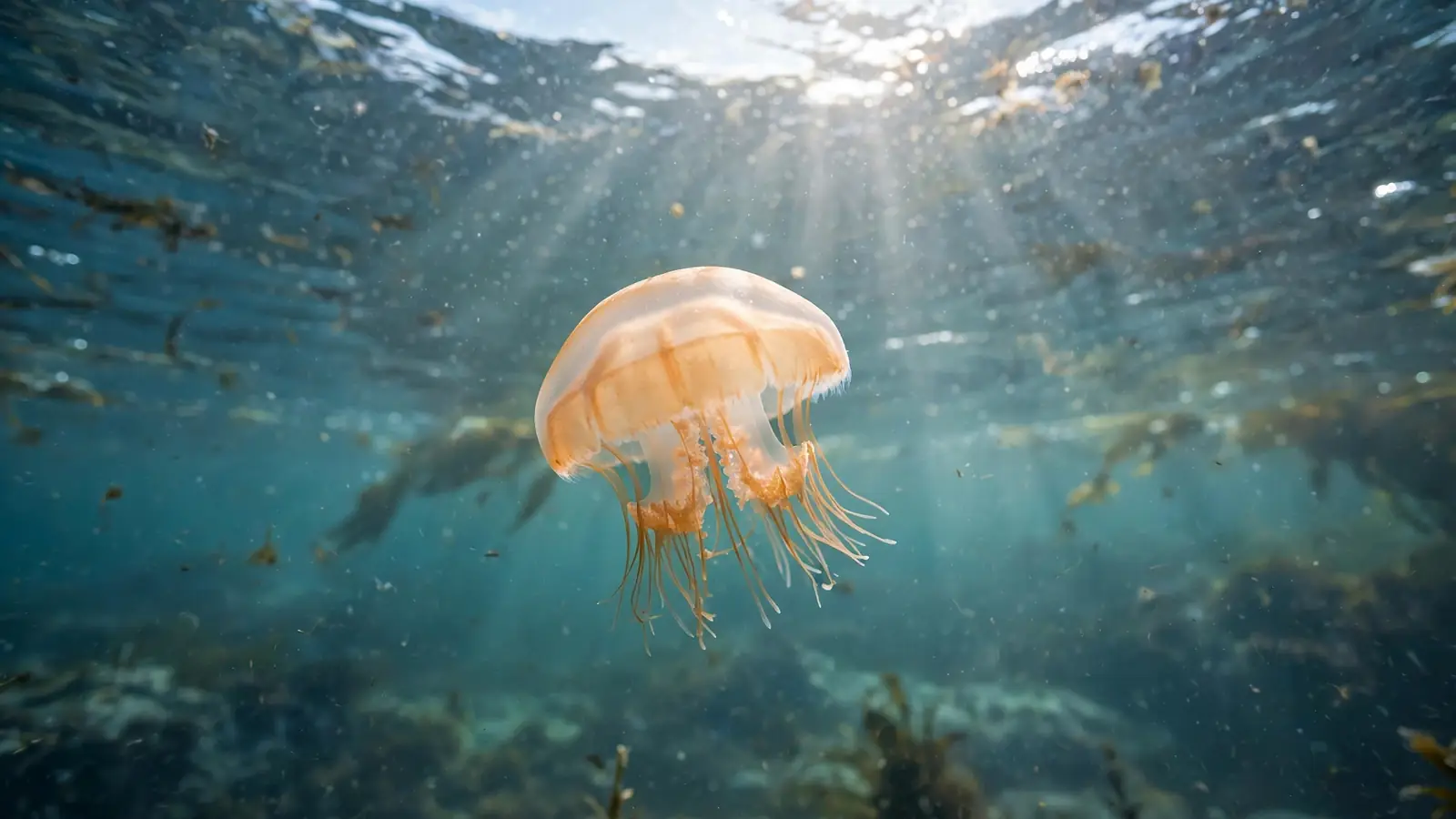
Compare its gentle cousin the moon jellyfish and the shared blueprint shows: same polyp, same stacking strobila, same one-season medusa, simply scaled up and painted red for colder water. Everything about the lion’s mane is the moon jelly’s plan, executed at the size of a parachute, in a hurry, before the winter comes.
Fun Facts
- The 1870 Massachusetts specimen’s 36.5-metre tentacles would make it longer than a blue whale, but the measurement has never been repeated and is treated with caution.
- A lion’s mane carries around 1,200 tentacles in eight clusters, plus frilled oral arms that give the “mane” its colour.
- Young butterfish and cod shelter inside the mane unharmed, growing up inside a living fortress of stings.
- In Sherlock Holmes’s story “The Adventure of the Lion’s Mane”, the jellyfish is the culprit, one of fiction’s most famous animal suspects.
- Tentacles torn from a lion’s mane can keep stinging for days, and once stung around a hundred bathers at a single beach in 2010.
- The colour deepens with size: small lion’s manes are yellow or tan, while the great northern giants are crimson to dark purple.
Frequently Asked Questions
How Big Is a Lion’s Mane Jellyfish?
A specimen typically has a bell 30 to 50 centimetres across in warmer parts of its range, growing past a metre in cold northern waters, with the largest reported bells over 2 metres. A single famous specimen washed up in Massachusetts Bay in 1870 was measured at about 2.3 metres with 36.5-metre tentacles, a record still debated and never repeated, so treat it as the extreme, not the norm.
Is a Lion’s Mane Jellyfish Sting Dangerous?
A specimen’s sting is painful, causing burning, red welts and occasionally cramps, but it is rarely dangerous to healthy adults. Seawater rinsing, careful removal of tentacle fragments and hot water or ice for pain are the standard first aid. Beware stranded jellyfish and detached tentacles on beaches, which can sting for days after the animal has died.
How Many Tentacles Does a Lion’s Mane Jellyfish Have?
A large specimen has around 1,200 tentacles, arranged in eight clusters under the bell, with well over a hundred fine tentacles per cluster. Together with its thick, frilled oral arms, they form the flowing “mane” that gives the species its name and acts as both a fishing net and a shelter for young fish. The longest tentacles ever measured were 36.5 metres, on a specimen washed ashore in Massachusetts Bay in 1870 — longer than a blue whale — but that single 19th-century measurement has never been repeated and specialists treat it cautiously.
Where Do Lion’s Mane Jellyfish Live?
They live in cold northern seas: the North Atlantic from the Arctic to about New York and the English Channel, and the North Pacific from Alaska and Russia to the Pacific Northwest. They stay in the upper 20 metres of water, in fjords, bays and open coasts, and cannot survive in warm tropical seas.
What Do Lion’s Mane Jellyfish Eat?
They eat zooplankton, small crustaceans, fish and other jellyfish, including moon jellies, caught in their vast tentacle net and passed to the stomach by the oral arms. Young fish of some species shelter inside the mane without being harmed, while the jellyfish itself is hunted by leatherback turtles and ocean sunfish.
How Long Do Lion’s Mane Jellyfish Live?
A specimen lives about one year as a medusa. Polyps release young medusae in spring, which grow explosively through the long northern summer, spawn in autumn and die. The anchored polyp stage survives the winter and starts the cycle again, so the species persists even though every giant is a single season’s work.
Is the Lion’s Mane Jellyfish the Longest Animal in the World?
It might be, but the claim rests on one measurement. The 1870 Massachusetts specimen’s tentacles were recorded at 36.5 metres, longer than any blue whale, but the record is a single 19th-century measurement that specialists treat cautiously, and it may even have been a different Cyanea species. Modern lion’s manes, while enormous, are not verified at that length, so the honest verdict is: possibly, unproven.
Is the Lion’s Mane Jellyfish the Largest Jellyfish in the World?
Yes. The species is the largest jellyfish on Earth: in cold northern and Arctic waters its bell can pass a metre across, and the largest reliably reported bells approach or exceed 2 metres.
Similar Species Worth Exploring
Keep Exploring
Keep exploring the family with the harbour ghost, the moon jellyfish, the tropical warning sign that is the box jellyfish, and the full cold-to-warm spectrum in the types of jellyfish. Then watch northern water in late summer for a lion’s mane jellyfish.