Angel Shark Facts: The Flat Shark That Ambushes Prey
Angel Shark: The Flat Shark That Hides in the Sand
The angel shark is a flat, ray-like shark that buries itself in sand and waits — and when a fish swims too close, it strikes in a tenth of a second, one of the fastest ambushes in the sea.
By Emily Carter · Reviewed by our vet team · Updated 10 November 2026 · 9 min read
Flat as a rayUp to 2.4 m longCritically Endangered
At a Glance
The angel shark looks like a ray, swims like a shark and hunts like a trap. It is a flat, bottom-dwelling shark that spends its days buried in the sand, invisible to the fish above it, and its nights hunting. There are around two dozen angelshark species worldwide, and the common angelshark of the north-east Atlantic is one of the most endangered sharks in Europe. This guide covers its size, its camouflage, the lightning ambush, and the sawback cousin that shares its seas.
Angel Shark Size: How Big Do They Get?
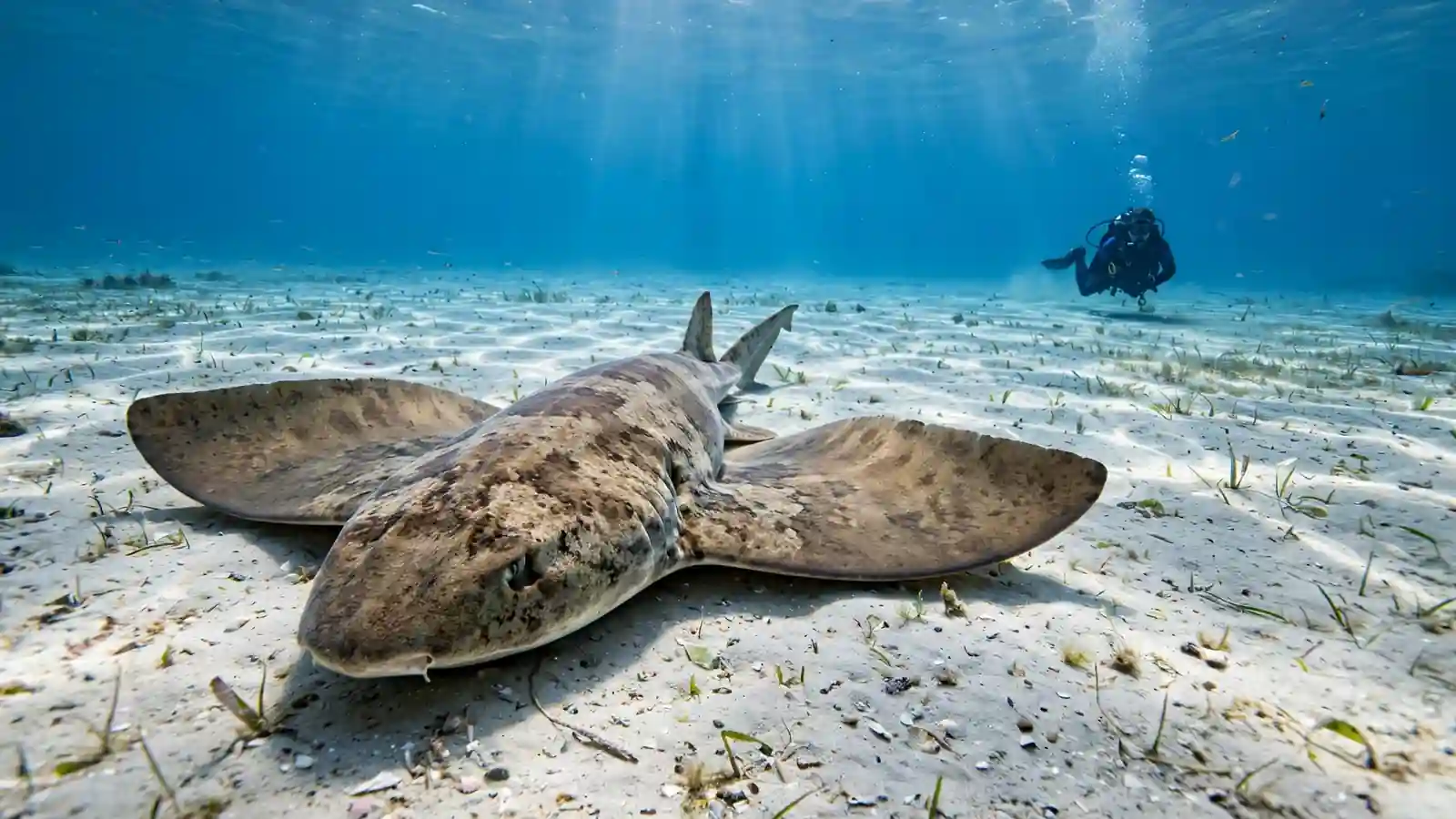
Female angel sharks reach up to 2.4 metres (7.9 feet) long and 80 kg, making the common angelshark one of the largest of its family. Males are smaller, reaching about 1.8 metres. Most adults measure 1.5 to 2 metres — a big, flat shark, wider than it is long, with a wingspan of fins that can stretch over a metre across.
Size is part of its hunting style. A big, flat shark can bury itself completely and still have room to lunge; a small one cannot. Its bulk is what makes its ambush work: when it strikes, it rises off the sand in a burst, and its weight carries it onto the prey. For the full species record, see the full angelshark species summary.
The Camouflage: A Shark That Disappears Into Sand

Its camouflage is its superpower. Its skin is grey to reddish-brown, patterned with small white spots and dark blotches that match the sand and gravel of the seabed, and its flat body lets it sink into the sand until only its eyes and the top of its head show. A fish swimming above it sees nothing but sand — until the sand strikes back.
The disguise is helped by the shark’s shape. Its eyes sit on top of its head, so it can watch while buried; its mouth is at the front, ready to snap upward; and its barbels — small fleshy whiskers near the mouth — taste the water for prey. Even the spiracles behind the eyes, which draw in water for breathing, are part of the disguise: they let the shark breathe without moving its gills, so it stays perfectly still.
Where Angel Sharks Live: The Sandy Shores of Europe

Angel sharks live on sandy and muddy bottoms in the north-east Atlantic and the Mediterranean, from Norway to North Africa, the Canary Islands and the Black Sea. They stay in shallow water, usually between 5 and 150 metres deep, and they are most common where the sand is clean and the currents are gentle — the kind of seabed a flat shark can disappear into.
They were once common all along the coasts of Europe, but they have vanished from most of their range. The last strong population lives around the Canary Islands, where the sand is protected and the trawlers are kept out. Like the nurse shark, they are bottom-dwellers that need a healthy seabed — and when the seabed is trawled, they have nowhere to hide.
How They Hunt: The Fastest Ambush in the Sea
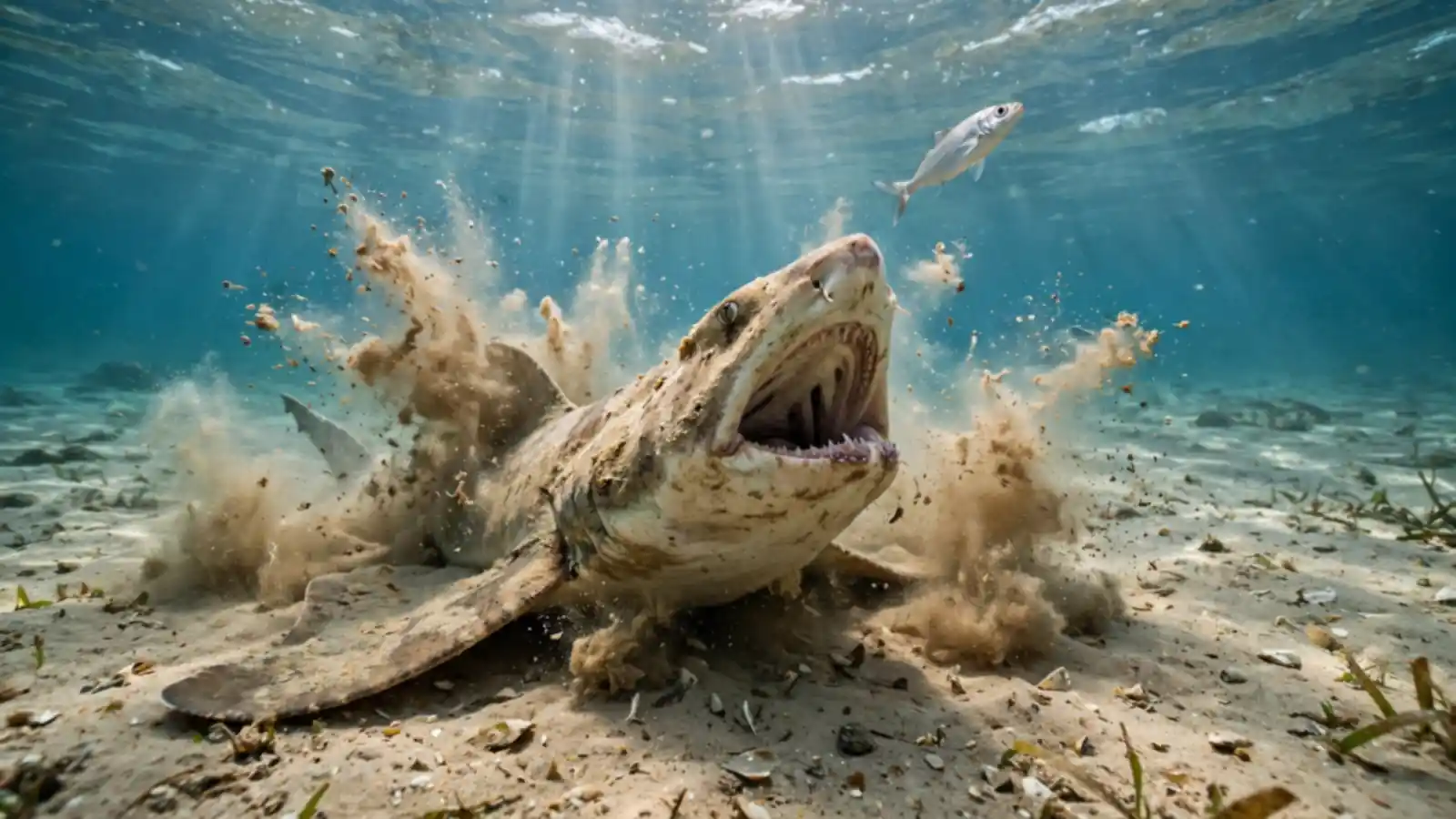
Angel sharks eat flatfish and other bottom-dwelling fish, along with crustaceans, molluscs and small skates. They hunt by ambush: buried in the sand, they wait for a fish to swim overhead, then strike upward in about a tenth of a second, engulfing the prey in a single snap. It is one of the fastest strikes of any fish, and the fish has no time to react.
The ambush is the whole hunt. It does not chase, and it does not patrol: it picks a spot, buries itself, and waits. It may wait for hours, and it may wait all day. When the strike comes, it is over in a blink — and the shark settles back into the sand, invisible again, ready for the next fish that makes the mistake of swimming too close.
Behaviour: A Night Hunter That Rests All Day
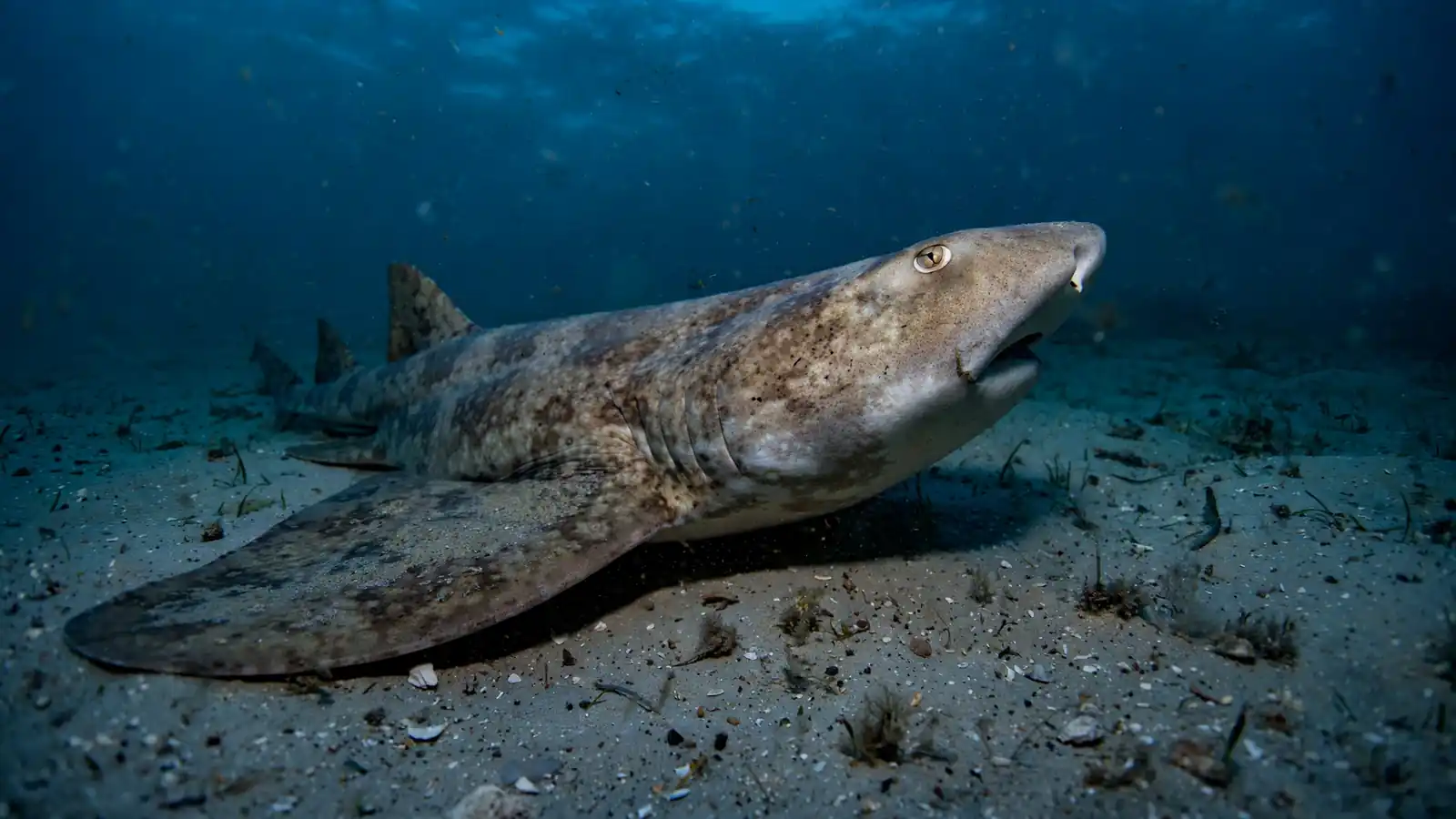
It is a night hunter. By day it lies buried in the sand, sluggish and still, with only its eyes showing; by night it swims off the bottom to hunt, rising into the water to find fish and crustaceans. It is a quiet, solitary animal that spends most of its life alone on the sand, and it moves only when it must.
They are not aggressive, but they are not harmless either. An angel shark that is stepped on or grabbed will bite, and its teeth are sharp enough to cause a serious wound. Divers are told to look before they kneel on the sand — and to give a buried angel shark its space. The shark is not hunting you; it is waiting for a fish, and it would rather you walked past.
The Sawback Angelshark: A Close Cousin
The sawback angelshark (Squatina aculeata) is the common angelshark’s closest cousin in the Mediterranean, and it is named for the row of thorns that runs down the middle of its back. It is smaller than the common angelshark, reaching about 1.9 metres, and it lives on the same sandy bottoms, hunting the same flatfish in the same way.
It is also in worse trouble. The sawback angelshark is Critically Endangered, and its numbers have fallen even faster than the common angelshark’s, because it lives in the most heavily trawled seas in the world. Like its cousin, it needs clean sand and no trawls — and it is running out of both.
Critically Endangered: A Shark on the Edge
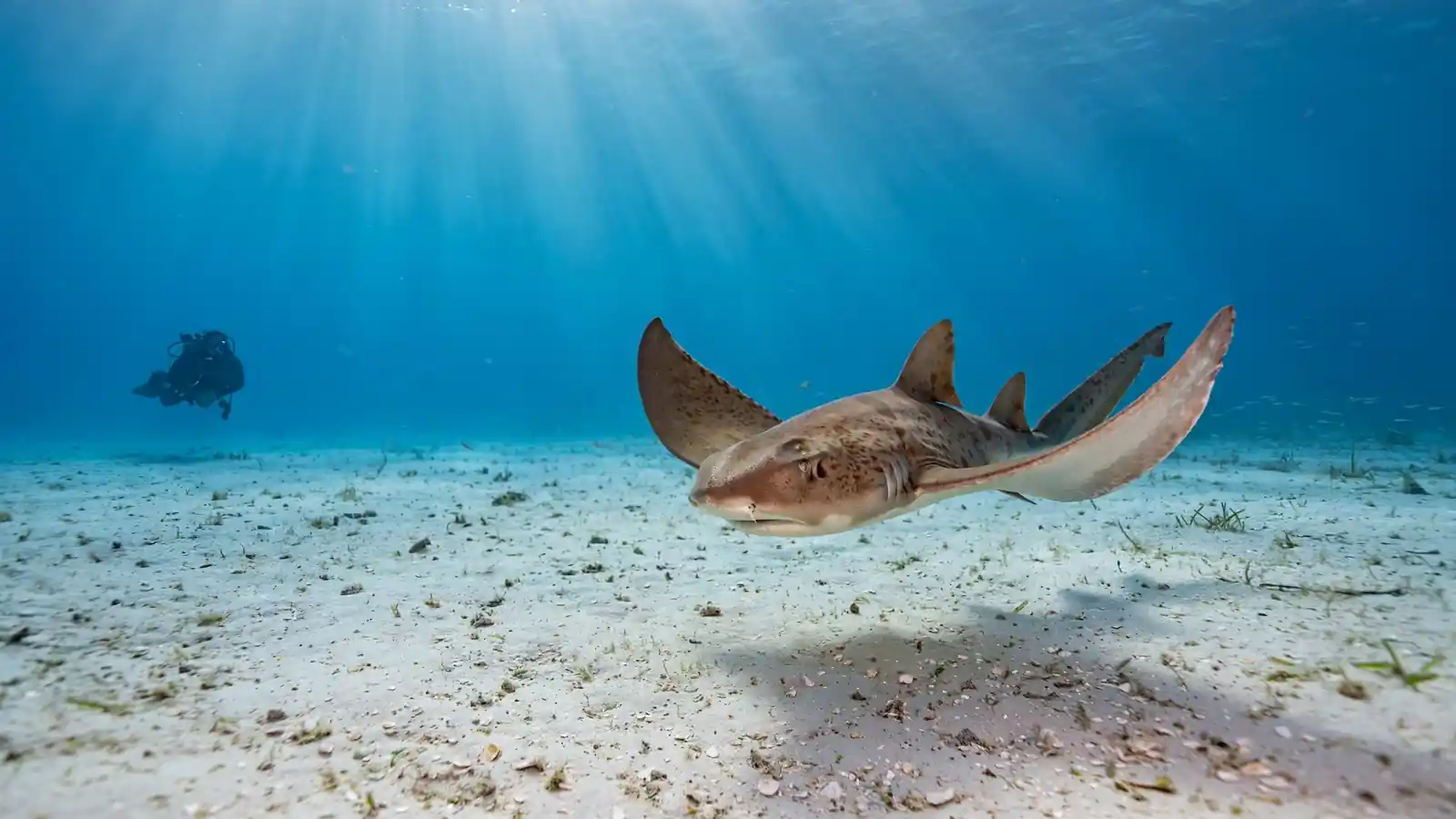
The common angelshark is listed as Critically Endangered, and its numbers have fallen by more than 90% since the 1980s. The cause is simple: it lives on the seabed, and the seabed is trawled. Bottom trawls sweep up angel sharks along with the fish they target, and a shark that grows slowly and produces few young cannot replace what the nets take. It has vanished from much of its former range, including the North Sea and the English Channel.
The recovery is under way, and it starts with the sand. Angel sharks are now protected in European waters, and fishing for them is banned. Around the Canary Islands, where the last strong population lives, the sand is monitored and the sharks are tagged and tracked. In Wales and Ireland, angel sharks are being studied and protected, and their numbers are slowly stabilising. The angel shark’s future depends on clean, untrawled sand — and on people who know that something is hiding in it.
Fun Facts
- An angel shark can strike in about a tenth of a second — one of the fastest ambushes of any fish.
- Angel sharks are flat like rays, but they are true sharks.
- They can bury themselves in sand so completely that only their eyes show.
- The common angelshark is one of the largest angelsharks, reaching 2.4 metres.
- Angel sharks are also called monkfish in some places — not to be confused with the bony fish of the same name.
- They rest all day and hunt at night, swimming off the bottom after dark.
- The last strong population of common angelsharks lives around the Canary Islands.
Frequently Asked Questions
Are Angel Sharks Dangerous?
To people, almost never — but they can bite if they are stepped on or grabbed. Angel sharks have sharp teeth and a powerful bite, and they will defend themselves if they are threatened. They do not hunt people, and most bites happen to fishers handling a caught shark.
Is an Angel Shark a Shark or a Ray?
A shark. Angel sharks are flat like rays, with wide pectoral fins and eyes on top of their heads, but they are true sharks: their gills are on the sides of the head, not underneath, and their pectoral fins are not fused to the head. They are sharks that evolved to look like rays.
How Big Do Angel Sharks Get?
Females reach up to 2.4 metres (7.9 feet) and 80 kg, and males reach about 1.8 metres. Most adults are 1.5 to 2 metres long.
Where Do Angel Sharks Live?
On sandy and muddy bottoms in the north-east Atlantic and the Mediterranean, from Norway to North Africa and the Black Sea, usually between 5 and 150 metres deep. They are most common now around the Canary Islands, where the last strong population survives.
What Do Angel Sharks Eat?
Flatfish and other bottom-dwelling fish, along with crustaceans, molluscs and small skates. They ambush their prey from beneath the sand, striking in about a tenth of a second.
Why Are Angel Sharks Critically Endangered?
Because they live on the seabed, where bottom trawls sweep them up, and because they grow slowly and produce few young. Their numbers have fallen by more than 90% since the 1980s, and they have vanished from much of their former range.
How Many Angelshark Species Are There?
Around two dozen species worldwide, in the genus Squatina. The common angelshark (Squatina squatina) is the European species; its cousins include the sawback angelshark of the Mediterranean, the Pacific angelshark of California and the smoothback angelshark of the Atlantic.
Similar Species Worth Exploring
Keep Exploring
Still watching the sand? Meet the other master of camouflage in our Wobbegong Shark guide, compare the gentle bottom-feeder in our Nurse Shark guide, and size up the whole family in the Types of Sharks hub — then look down, carefully, for the angel shark.