Dall’s Porpoise
Dall’s Porpoise: the Black-and-White Rocket of the North Pacific
This chunky black-and-white speedster is the fastest small cetacean in the ocean, a porpoise so powerful it throws a plume of spray — the famous rooster tail — as it knifes through the cold northern Pacific. Here is its size, diet, habitat, family life and wild social world.
By Emily Carter · Reviewed by our vet team · Updated 10 November 2026 · 9 min read
Top speed 55 km/hLength up to 2.4 mFastest small cetacean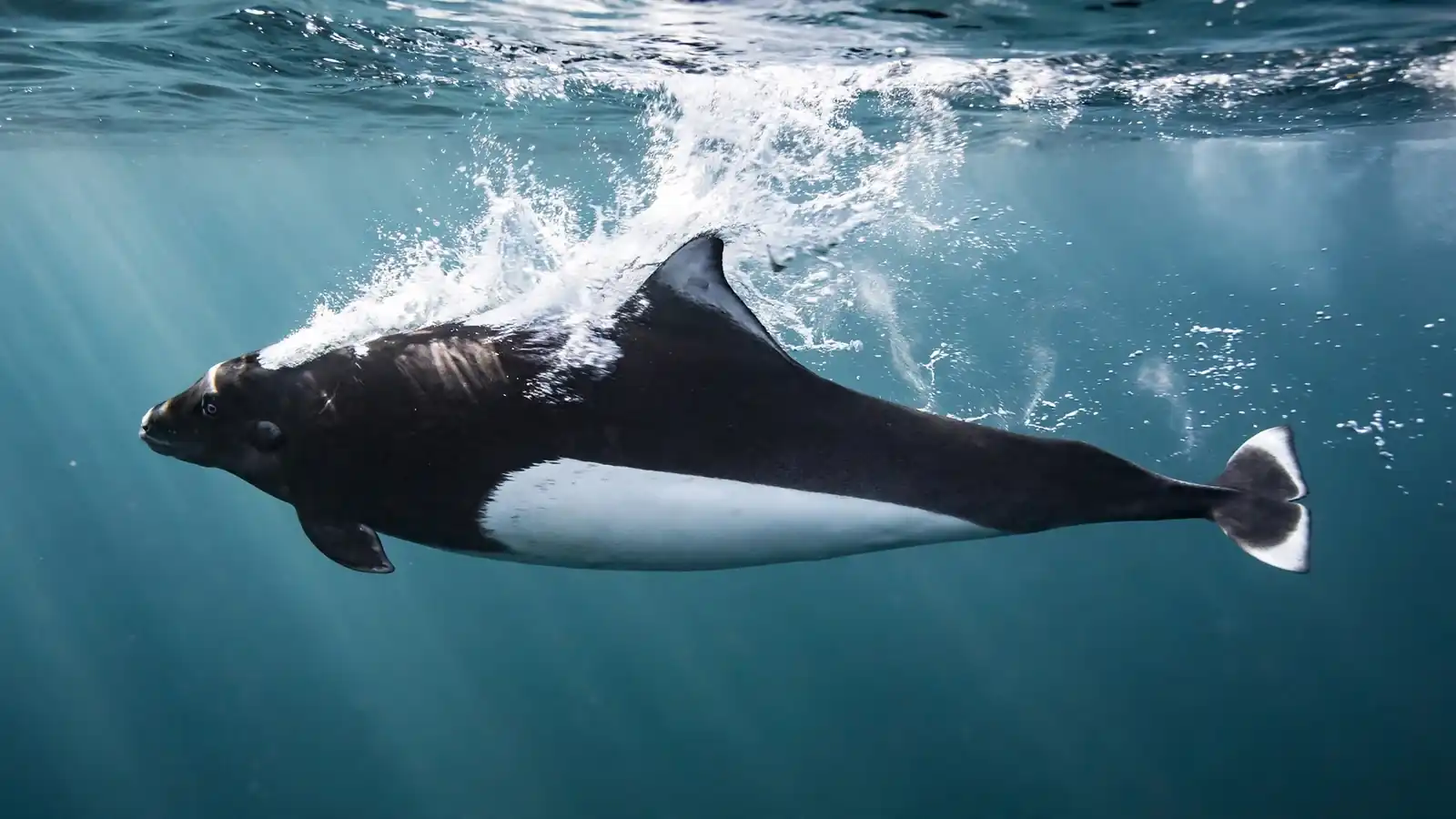
At a Glance
The dall’s porpoise is the heavyweight champion of the porpoise family: bigger, faster and far more boisterous than its shy cousins. It is the only member of its genus, and it was named after the American naturalist W. H. Dall, who collected the first specimen in Alaska in the 1870s. Two colour forms exist — one with a huge white flank patch, one with the white reaching further forward — and for years they were mistaken for two separate species.
Dall’s Porpoise Size and Weight
A grown dall’s porpoise measures between about 1.7 and 2.4 metres (5.6 to 7.9 feet) long and weighs between 130 and 220 kilograms, which makes it the largest of the seven true porpoise species by a wide margin. Males grow larger than females and develop a strikingly thickened tail stock, with a fleshy hump in front of the flukes that becomes more obvious with age. The body is deep and immensely muscular through the middle, built less like a typical porpoise and more like a torpedo.
To picture the size, imagine a large adult man lying down: the biggest males are longer and considerably heavier, yet the whole animal is compact rather than long and slender. A newborn calf measures about 1 metre (3.3 feet) and weighs roughly 25 kilograms — already a sturdy baby, and it needs to be, because calves are born into cold open water and must keep up with some of the fastest mothers in the sea from their very first day.
Appearance and Anatomy
No other small cetacean looks quite like a dall’s porpoise. The back, head and tail are jet black, while a vast white patch wraps the belly and sweeps high up the rear flank, ending in a crisp diagonal edge. The tall, triangular dorsal fin is black at the front with a frosted white trailing edge, and the flukes carry a matching white fringe. The head is small and rounded with almost no beak at all — the face simply slopes down to a tiny mouth — and the teeth are small and spade-shaped, as in all true porpoises.

Under the skin, everything serves speed: a deep keel above and below the tail stock, powerful swimming muscles and a stiff, compact frame. Males can be told from females by that thickened tail stock and their larger size. The colour pattern varies across the range — animals in the western Pacific carry the white patch much further forward along the body — which is one reason this porpoise is so often confused at a glance with a baby killer whale, and why it differs so sharply from the smaller, plainer harbour porpoise it can sometimes be seen beside.
Habitat and Range
The dall’s porpoise lives only in the cold temperate waters of the North Pacific, from Japan and the Bering Sea across to Alaska, British Columbia and down the west coast of North America as far as Baja California in cool years. It favours deep water over the continental shelf edge, submarine canyons and open ocean, and it generally avoids water warmer than about 18°C, which keeps it firmly in the chilly north.
Groups shift with the seasons and with their prey, moving inshore where deep water comes close to land and ranging far offshore in winter. In places such as the inside passages of British Columbia and Alaska, they are a familiar sight year-round, often announcing themselves with a burst of spray long before the animals themselves are seen.
Diet and Feeding
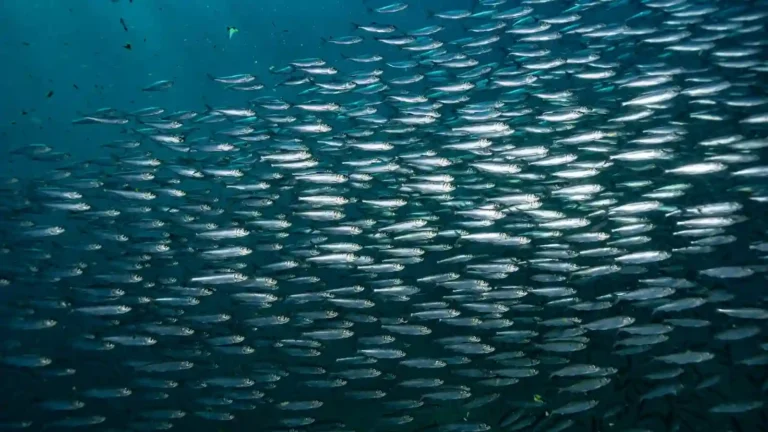
A dall’s porpoise burns energy at a ferocious rate and must eat accordingly — roughly 5 percent of its body weight in food every day. Its menu is dominated by small schooling fish such as anchovies, herring, hake and saury, along with squid and deep-water lanternfish. Much of the hunting happens at night, when lanternfish and squid rise hundreds of metres from the depths toward the surface, and the porpoises rise with them.

Hunting groups work a school of fish together, herding and slashing through the bait ball in turns. Their speed is the weapon: prey that could dodge a slower predator has little chance against an animal attacking at highway pace. When the surface is calm, feeding porpoises can be spotted from a long way off by the distinctive spray of their rooster tails as they surge and turn.
Behavior and Social Life
Few cetaceans are as hyperactive as this one. Typical groups number two to twenty animals, and they rarely swim slowly: they zigzag at the surface, porpoise in low arcs and throw their rooster tails in bursts of speed that can reach 55 kilometres per hour — close to killer whale pace. Occasionally, hundreds gather where food is concentrated, and the sea seems to boil with black-and-white bodies.
They are famous boat-chasers, racing to ride the bow wave of fast vessels and dropping away in disgust if the boat slows down. Despite the energy, they seldom leap fully clear of the water like dolphins do, and they are wary animals that can be hard to approach on their own terms. Social bonds seem loose compared with dolphins, with groups forming and splitting as feeding opportunities change.
Communication and Sound
Like other porpoises, this species navigates and hunts with narrow-band, high-frequency echolocation clicks, pitched far above human hearing at around 120 to 140 kilohertz. Keeping its signals so high may help it stay off the menu: killer whales, its main predator, hear poorly at those extreme frequencies, so the porpoise can effectively whisper where its enemy is deaf.
Short burst-pulse sounds are used in social situations, and much of a group’s coordination on a hunt probably happens acoustically in the dark. Because the animals spend so much time in deep, dim water chasing prey that migrates up at night, sound matters far more to them than sight.
Reproduction and Babies
Breeding peaks in summer. After a pregnancy of about 10 to 12 months, a female gives birth to a single calf, usually between late spring and mid-summer, in the cold surface waters of the north. The calf is born tail-first, measures about a metre long, and can swim immediately — essential in an ocean patrolled by killer whales.
Calves begin taking solid food within a few months but may continue to nurse for considerably longer while they learn to hunt. Females mature at around seven years and males at about eight, and females in their prime can produce a calf in most years. That fast breeding pace, for a cetacean, helps the population withstand the losses described below, and most animals live between 15 and 20 years.
Predators and Threats
The killer whale is the great enemy: mammal-eating orcas hunt these porpoises regularly, and only their sheer speed saves many of them. Large sharks, including salmon sharks and white sharks, also take them. Remarkably, nature has produced a twist — in British Columbia waters these porpoises occasionally hybridise with harbour porpoises, proof of how closely the two species live alongside each other.
Human threats are dominated by fishing gear. These porpoises drown in salmon gillnets in Alaska and Russia, and historically they died in huge numbers in open-ocean driftnet fleets before those were banned. A long-running harpoon hunt off Japan has also taken large numbers in some years, and the species carries some of the heaviest pollutant loads of any small cetacean, a legacy of feeding high in cold northern food webs.
Conservation and Human Interaction
The species is classed as Least Concern overall, with the North Pacific population numbering in the hundreds of thousands, but the picture is not simple: it is made up of regional groups, and some — especially around Japan — have been reduced by hunting and bycatch. Protecting it means keeping gillnet deaths down and keeping an honest count of the directed hunt.
For whale watchers from Alaska to British Columbia, an encounter is unforgettable precisely because the animals choose the terms: a detonation of spray, a black-and-white torpedo pacing the bow, then gone. Anyone wanting the deeper biology can read the full scientific account of the species, which gathers the research on its senses, life history and behaviour in one place.
Fun Facts
- At full speed it throws a hollow cone of spray called a rooster tail — visible from hundreds of metres away.
- A dall’s porpoise can dive to at least 94 metres hunting lanternfish, though most foraging happens much shallower.
- It is the largest of all porpoises, yet for decades its two colour forms were catalogued as two different species.
- Males develop a pronounced hump in front of the tail flukes as they age — no other porpoise has one.
- Its echolocation clicks are so high-pitched that killer whales can barely hear them.
- A calf is born at about a metre long and must swim strongly within minutes of birth.
Frequently Asked Questions
How Big Is a Dall’s Porpoise?
It is the largest of the true porpoises: adults measure about 1.7 to 2.4 metres (5.6 to 7.9 feet) long and weigh between 130 and 220 kilograms. Males are the bigger sex, with a distinctively thickened tail stock. A newborn calf is about 1 metre long and weighs around 25 kilograms.
How Fast Is a Dall’s Porpoise?
It is the fastest small cetacean in the ocean, capable of bursts up to about 55 kilometres per hour (34 mph) — nearly as fast as a killer whale. At speed it throws a characteristic plume of spray known as a rooster tail, which is often the first sign of one passing.
What Does a Dall’s Porpoise Eat?
Mostly small schooling fish and squid: anchovies, herring, hake and saury near the surface, and lanternfish and squid that rise from the deep at night. An adult needs to eat roughly 5 percent of its own body weight every day to fuel its high-speed life.
Where Do Dall’s Porpoises Live?
Only in the cold North Pacific, from Japan and the Bering Sea to Alaska, British Columbia and the west coast of North America. They prefer deep water along the shelf edge and over submarine canyons, and they generally avoid water warmer than about 18°C.
How Long Do Dall’s Porpoises Live?
Typically 15 to 20 years in the wild, with an average around 16 or 17. Females mature at about seven years old and can produce a calf in most years, which helps the population replace animals lost to predators and fishing gear.
Is a Dall’s Porpoise a Dolphin?
No — it is a true porpoise, not a dolphin. Porpoises have spade-shaped teeth rather than conical ones, a blunt beakless head, and a more compact body. Despite the differences, it occasionally hybridises with the harbour porpoise where their ranges overlap in British Columbia.
What Is a Baby Dall’s Porpoise Called?
A calf. Calves are born in late spring and summer after a pregnancy of about 10 to 12 months, arrive tail-first at roughly a metre long, and can swim from the moment they are born. They start eating fish and squid within a few months.
Similar Species Worth Exploring
Keep Exploring
For the wider family picture, browse the types of dolphins and porpoises side by side, then compare this speedster with the quiet harbour porpoise and the warm-water common dolphin. Every marine guide here, this dall’s porpoise guide included, follows the same layout, so the facts are always in the same place.