Scottish Fold Cat: Personality, Care, Health, History & Breed Guide
Scottish Fold: big eyes, folded ears, bigger heart
The Scottish Fold cat is famous for its folded ears and round, wide eyed gaze: sweet, loving, and undemanding companionship in a medium sized, owl like package.
By Emily Carter · Reviewed by our vet team · Updated 21 October 2026 · 9 min read
Lifespan 11–15 yrsWeight 6–13 lbFolded ears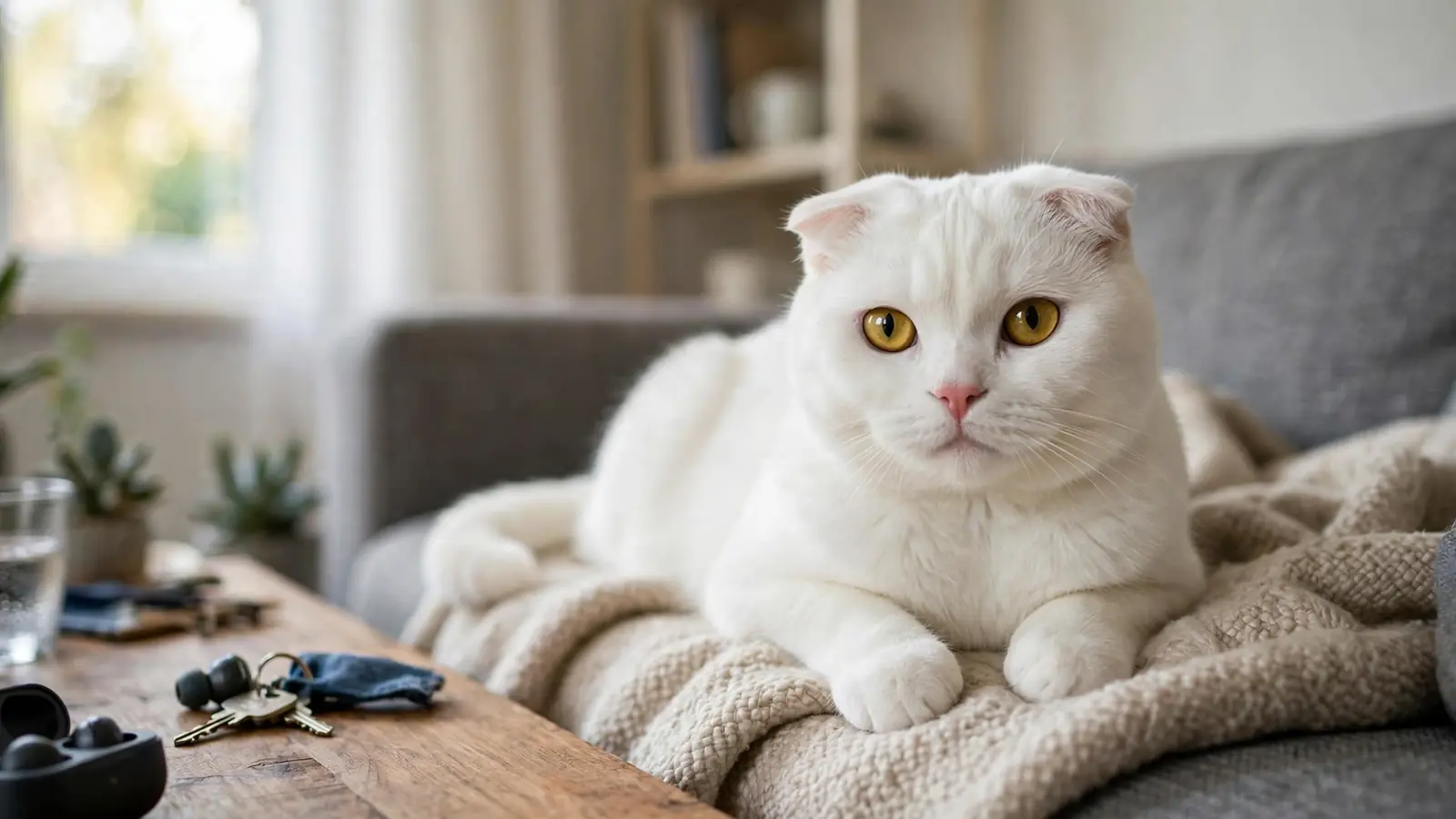
The Scottish Fold turns heads with small ears that fold forward and down, a round face, and wide round eyes that give it an owl like look. Behind that famous face sits one of the sweetest, most even tempered cats you can own. This guide covers the Scottish Fold cat in full: looks, character, daily care, health, and cost.
At a Glance
Size and Weight
Most Scottish Folds weigh 6 to 13 pounds, which makes them a medium sized cat: males usually run larger at 9 to 13 pounds, while females typically weigh 6 to 9 pounds. A Scottish Fold cat usually measures 10 to 30 inches from nose to tail tip, and the tail is medium in length and proportionate to the body, with a thick base that tapers to a rounded end.
Coat and Colors
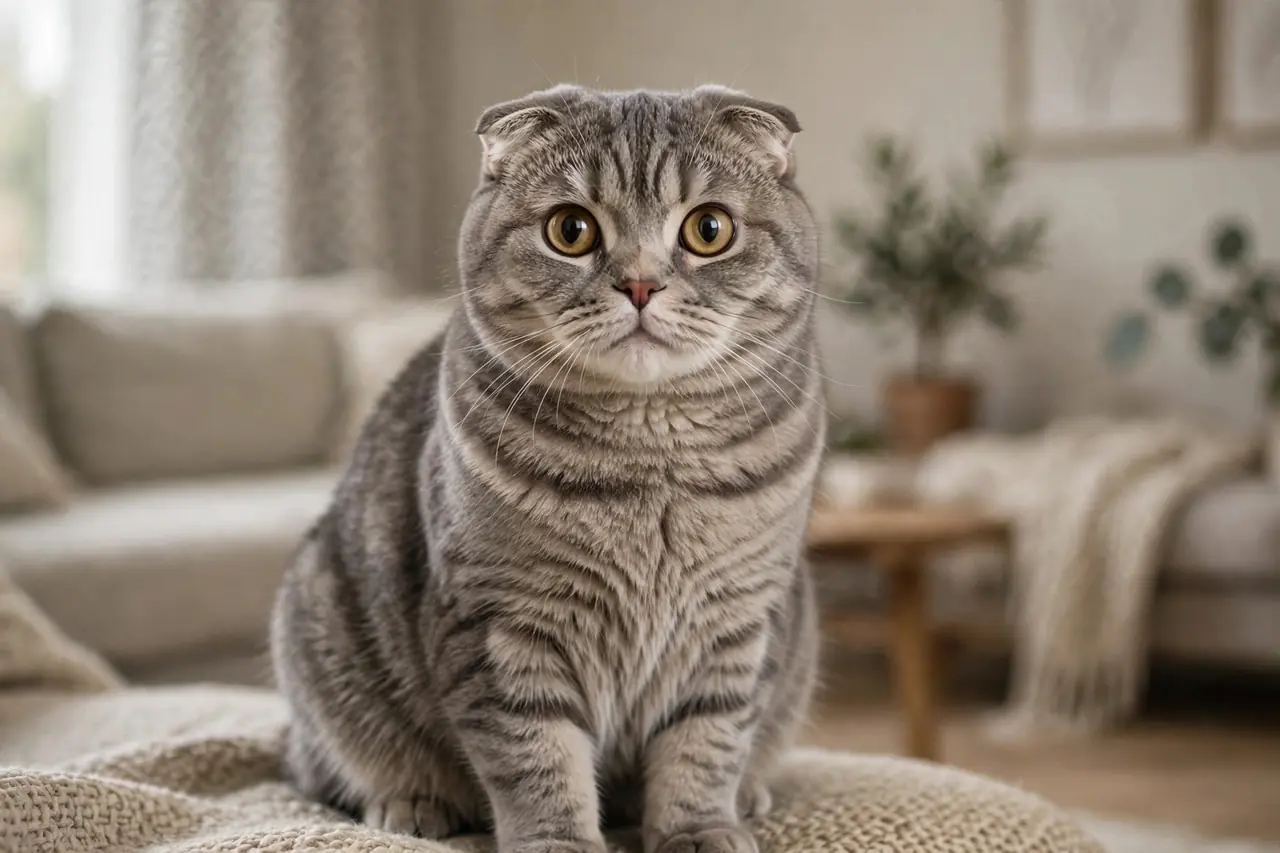
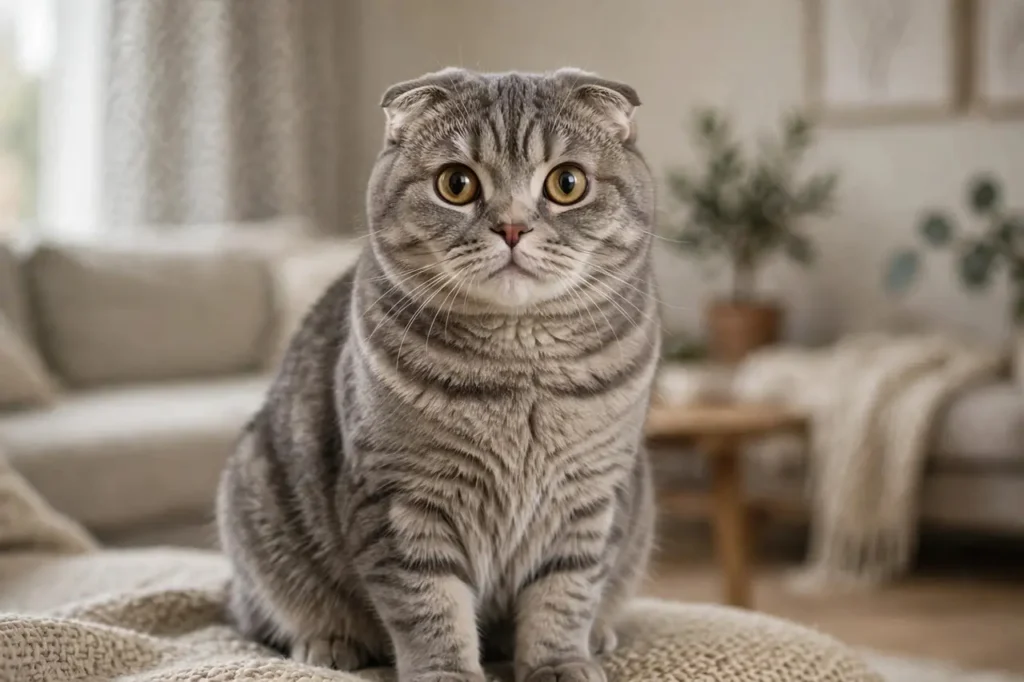
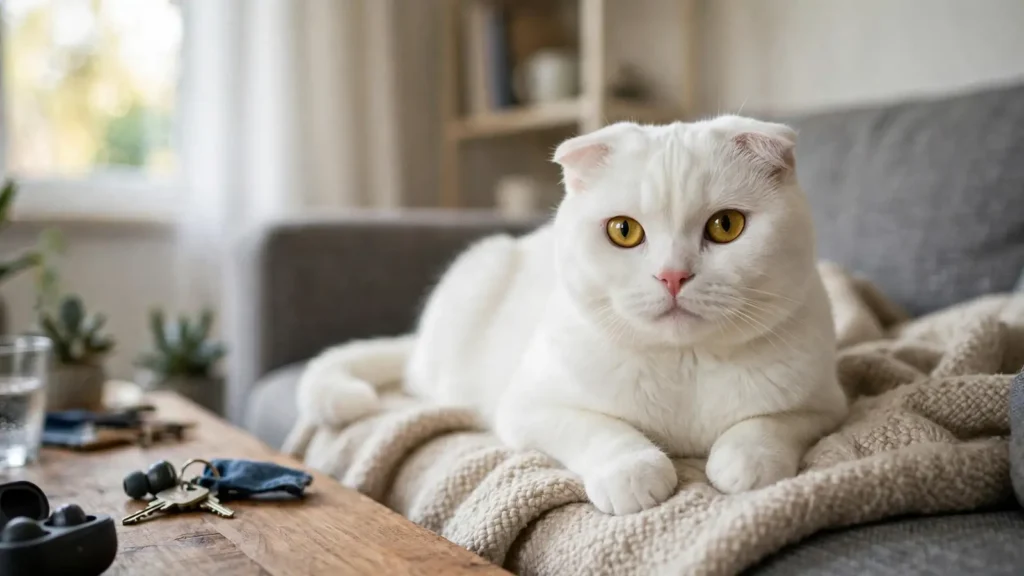
The Scottish Fold cat can appear in almost every color and pattern: solid colors like white, black, blue, red, and cream, as well as tabby, bicolor, calico, tortoiseshell, silver, and pointed patterns. The coat comes in short and longhaired varieties, dense in both, and pet lovers mostly recognize the white, blue, and silver tabby Folds.
History and Origins
Every Scottish Fold alive today can trace its ancestry back to a single white barn cat named Susie. In 1961, shepherd William Ross spotted Susie on a farm in the Tayside region of Scotland, her ears folded forward in a way no one had seen.
Susie’s daughter Snooks was first bred to a domestic male cat and then to a British Shorthair, and folded ear kittens appeared in both litters. Breeders quickly realized the folded ear trait came from a dominant gene.
The story of the Scottish Fold begins on a farm in Scotland and involves a chance genetic mutation that changed the cat fancy forever. Kittens are still born with straight ears today: the fold develops at about three weeks.
From one Scottish barn cat to one of the most recognized faces in the cat world, in a single generation of breeding.
Physical Characteristics
One look tells you almost everything: the Scottish Fold seems made entirely of curves. The defining feature is the small folded ears, which bend forward and down to lie close to the head like a cap, ranging from a loose single fold to tighter double and triple folds. The head is round with full cheeks, a firm chin, and well rounded whisker pads, and large round eyes sit wide apart with a sweet, wide open expression.
Scottish Fold Personality and Behavior
Ask owners what they love about this breed and the answer is always the same: the temperament. The Scottish Fold is sweet, loving, and undemanding: it enjoys human company without being needy, and it bonds closely with its family, sometimes following a favorite person from room to room. Folds are intelligent and curious, and playful without being hyperactive.
Enjoys human company without being needy, and bonds closely with its family.
Intelligent and inquisitive: they like puzzle toys and games that test their minds, and invent entertainment from a good toy rotation.
Playful without being hyperactive, with a medium energy level: happy to play, equally happy to cuddle on the couch afterward.
- Sweet, loving, even tempered
- One of the most family friendly breeds
- Medium energy: play, then cuddle
- Real genetic health risks: breeder choice matters
- Folded ears need weekly checks
- Handle the tail gently: stiffness can develop
Care Essentials
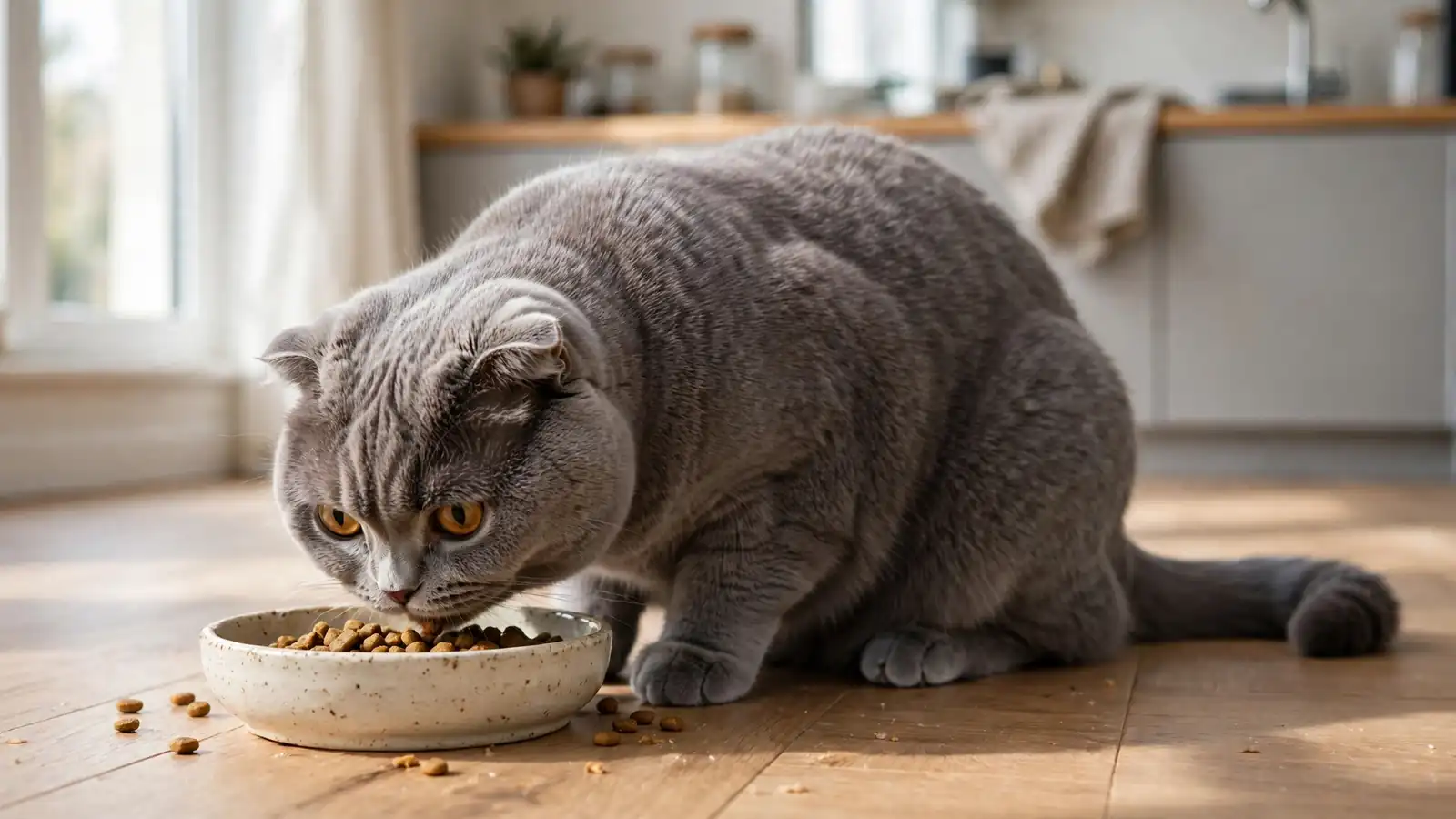
Complete and balanced food with measured meals: a good eater with a round build and lower activity gains weight easily.
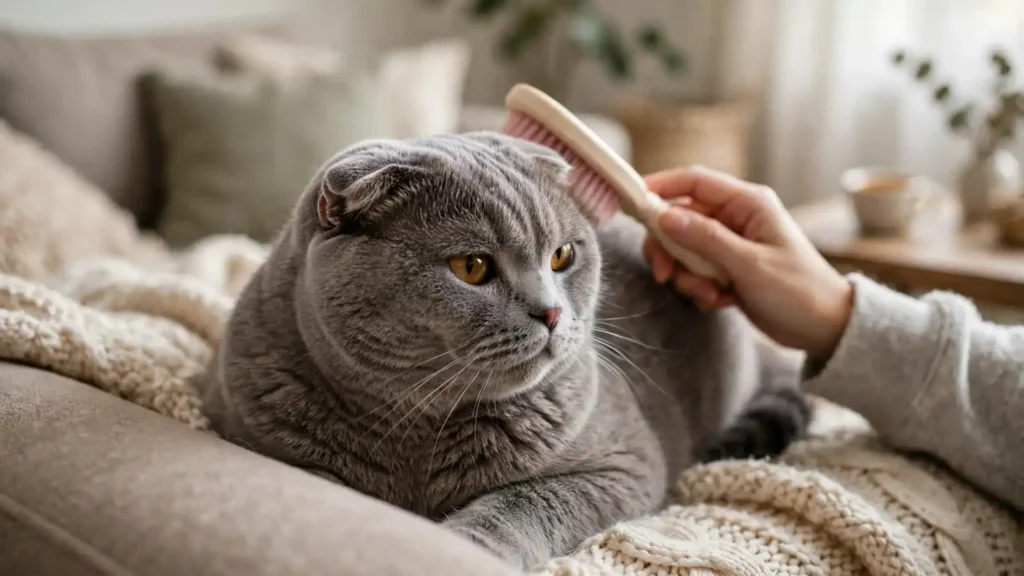
Brush shorthairs once a week and longhairs two to four times a week; check the folded ears weekly.
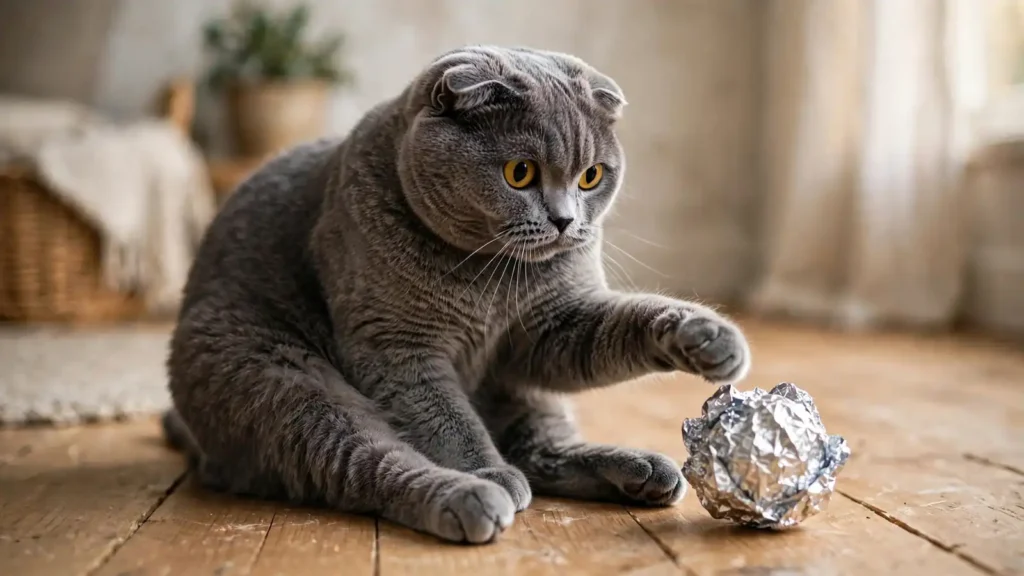
One or two short play sessions a day: wand toys, crinkle balls, feather teasers, and puzzle feeders.
Indoor living with a tall cat tree by a window, scratching posts, and rotating toys.
Nutrition and Diet
Food is the foundation of a healthy Scottish Fold, and this breed needs a little extra attention at the bowl. Choose a complete and balanced food formulated for your cat’s age, lifestyle, and health. The Scottish Fold is a good eater with a naturally round build, and it is less active than some breeds, so nutrition control is important: measure meals rather than free feeding, and follow the feeding guide.
Grooming
The Scottish Fold cat is not a high maintenance breed, but regular grooming keeps the coat in top shape and gives you a chance to spot problems early. Brush a shorthair Fold once a week with a soft brush or steel comb; the longhaired variety needs brushing two to four times a week. The folded ears deserve special care: check them weekly for excess wax, redness, odor, or signs of mites and infection, and clean only the outer ear gently.
Exercise and Enrichment
The Scottish Fold cat has a medium energy level: happy to play, equally happy to cuddle on the couch afterward. Plan at least one or two short play sessions a day: wand toys that mimic prey, crinkle balls, and feather teasers appeal to the breed’s hunting instincts, and puzzle feeders and treat balls engage the clever mind. A tall scratching post or cat tree lets your cat climb, stretch, and survey its territory.
Health
The Scottish Fold cat is generally a healthy breed, but the same gene that folds the ears can affect cartilage throughout the body. Understanding this is essential before you bring one home.
The main concern: the cartilage defect behind the folded ears can also affect joint cartilage, leading to painful degenerative joint disease and arthritis. Choosing a breeder who never breeds fold to fold is the single most important decision you will make.
Hypertrophic cardiomyopathy, a heart condition that thickens the heart muscle, occurs in the breed. Look for a breeder who health tests, including screening for HCM.
Polycystic kidney disease occurs in the breed too, though sources note the risk is lower than in Persians. Responsible breeders screen for both heart and kidney disease.
Indoor and Outdoor Living
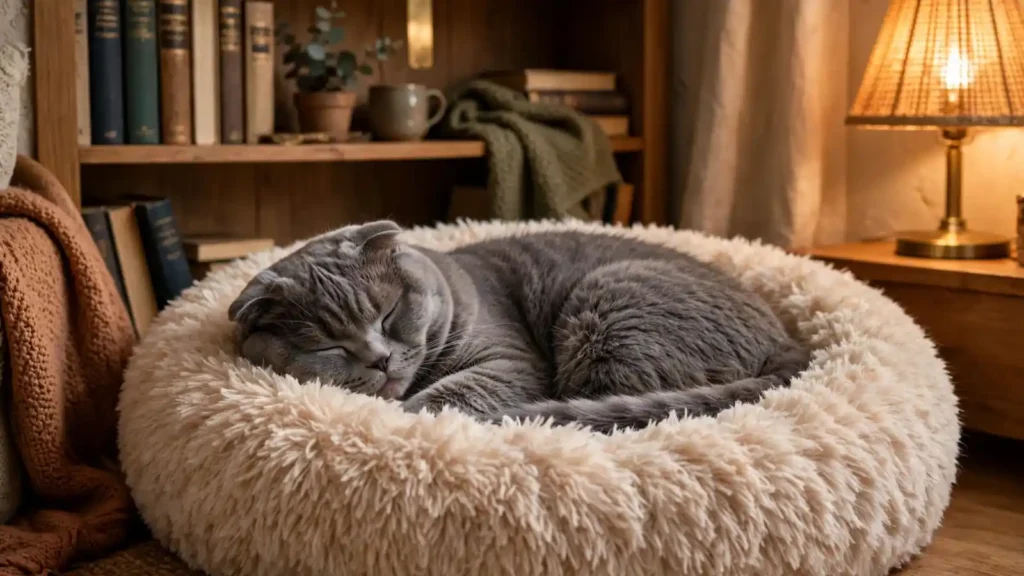
The Scottish Fold cat is best kept as an indoor cat: indoors, your cat is protected from traffic, fights with other animals, parasites, and infectious disease, and the breed’s sweet, trusting nature does not equip it well for defending itself outdoors. Make indoor life rich: a tall cat tree by a window, scratching posts, rotating toys, puzzle feeders, and daily interactive play.
Family Suitability
The Scottish Fold cat is one of the most family friendly breeds you can choose. These cats get along well with children and other pets, including cat friendly dogs, and their patient, gentle nature makes them a good match for busy households. Teach children to handle the breed gently, especially around the tail: a Fold may develop tail stiffness, and rough handling can hurt.
Finding a Breeder or Rescue
Whether you choose a breeder or a rescue, take your time: a healthy, well socialized Scottish Fold starts with a responsible source. Breed overviews list the purchase price of a kitten from a breeder at roughly $1,000 to $2,000, depending on pedigree, ear type, coat length, and region. Look for a breeder who health tests their breeding cats, including screening for hypertrophic cardiomyopathy and polycystic kidney disease, and who can explain their breeding program clearly.
- Ask for HCM and PKD screening results
- Ask whether the breeder ever breeds fold to fold: they should not
- Kittens are born with straight ears: the fold develops at about three weeks
- Kittens should be raised in the home and well socialized
Quick Quiz: Is a Scottish Fold Right for You?
Answer four questions. Tap yes or no.
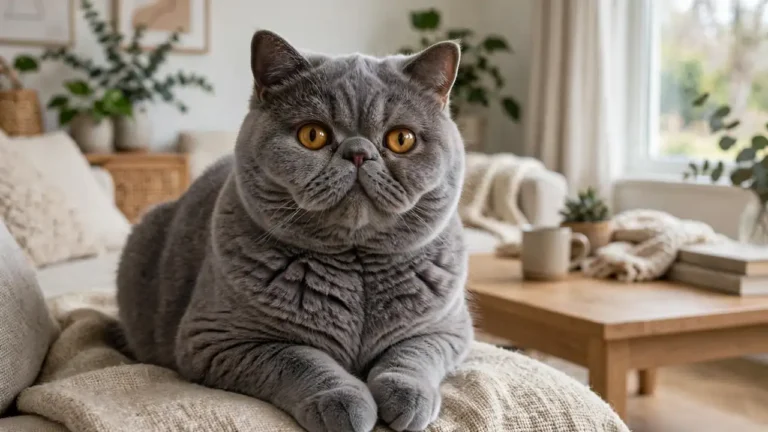
Scottish Fold vs British Shorthair
If you love the Scottish Fold but want to compare options, these breeds share some of its best traits.
Frequently Asked Questions
Do all Scottish Folds have folded ears?
No. Every kitten is born with straight ears, and the fold appears at about three weeks of age only in kittens that carry the gene. Roughly half of a litter develops folded ears; the rest are Scottish Straights, with the same round build and sweet nature but upright ears and no fold related joint issues.
Are Scottish Folds healthy?
They can be, but the breed carries real genetic risks. The fold gene can cause osteochondrodysplasia, a cartilage and joint condition that leads to arthritis. Reputable breeders reduce the risk by breeding folded ear cats only to straight eared cats and screening for heart and kidney disease. Regular vet care and a healthy weight help these cats live well.
How long do Scottish Folds live?
The typical lifespan is 11 to 15 years. Good nutrition, weight control, dental care, and regular veterinary checkups support a long, comfortable life.
Do Scottish Folds shed a lot?
Shedding is medium. They shed year round with heavier periods in spring and fall. Weekly brushing for shorthairs, and brushing two to four times a week for longhairs, keeps loose hair under control.
The Scottish Fold cat suits people who want a gentle, loving, medium energy companion that fits happily into family life. Go in with open eyes about the health risks and choose your breeder carefully, and this loyal, funny, sweet natured friend is hard to beat.
Similar Breeds Worth Exploring
Related Breed Guides
Keep Exploring
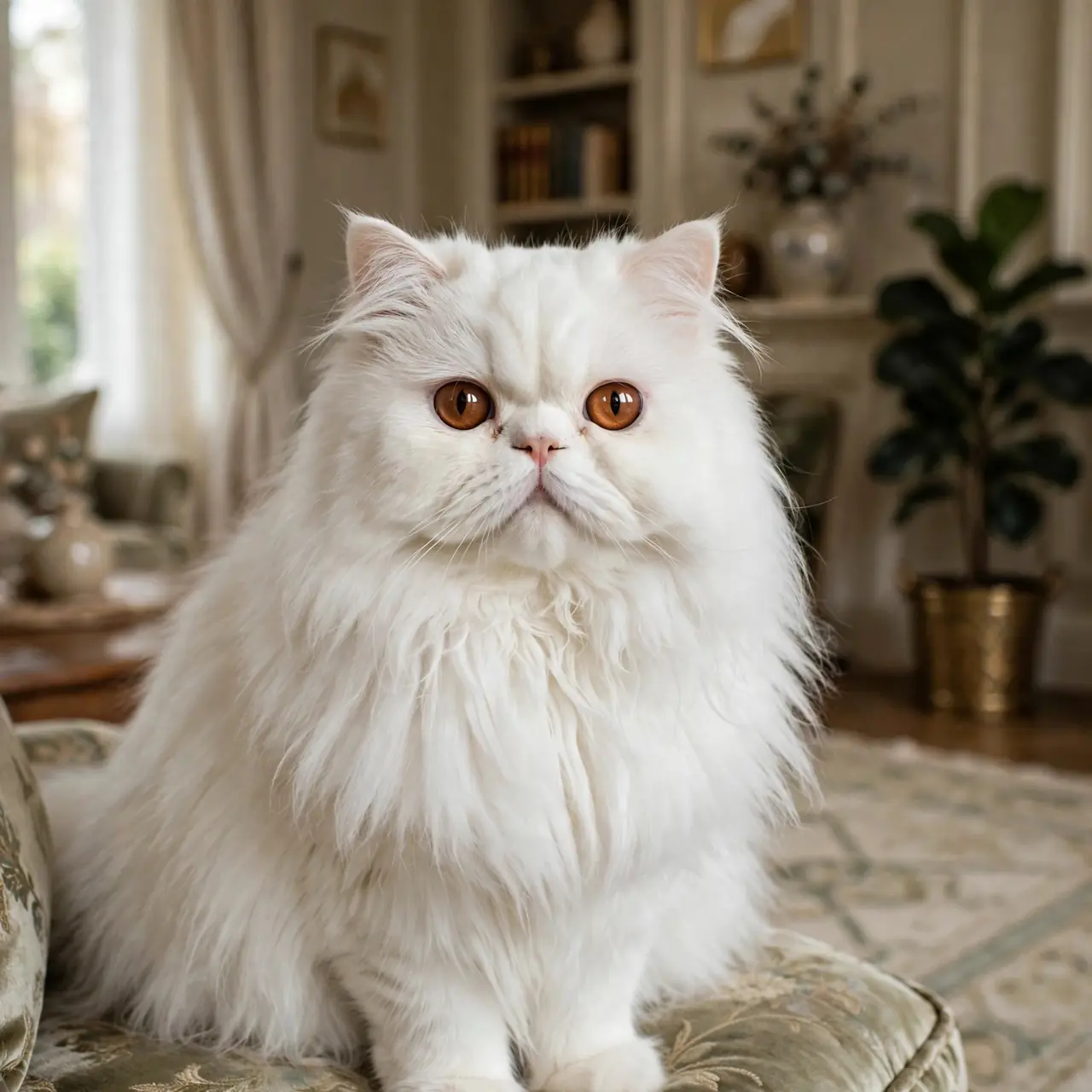
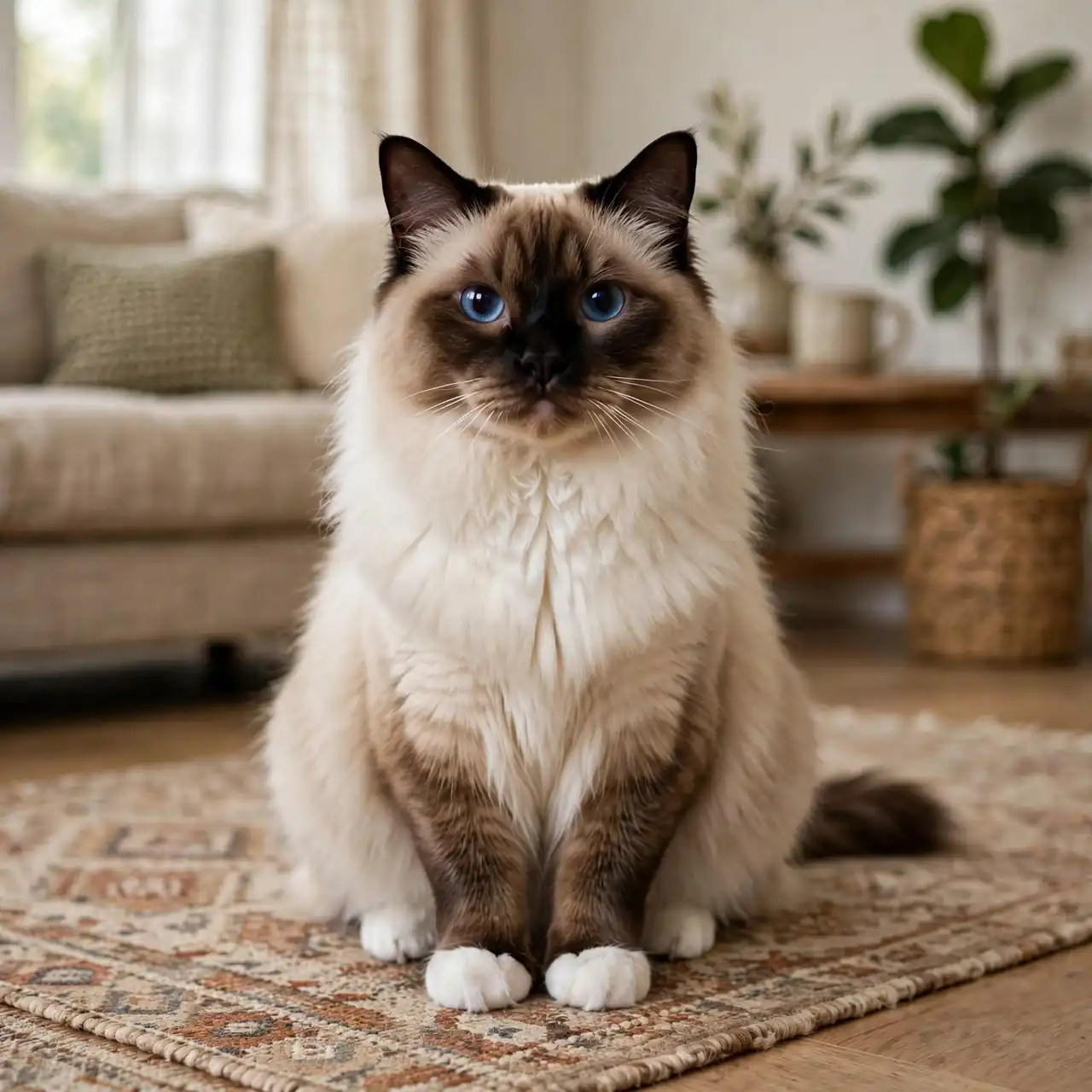
Still deciding? Compare the glamorous Persian, or the sweet, gloved Birman. Every guide on this site follows the same layout, so the facts you need are always in the same place.