Oriental Cat Breed Guide
Oriental: at a Glance
The Siamese type in hundreds of colors, with huge ears, green eyes and a loud opinion about everything. Social, intelligent and devoted, the Oriental turns every home into a conversation.
By Emily Carter · Reviewed by our vet team · Updated 21 October 2026 · 13 min read
Lifespan 15+ yrs Weight 5–10 lb Vocal & devoted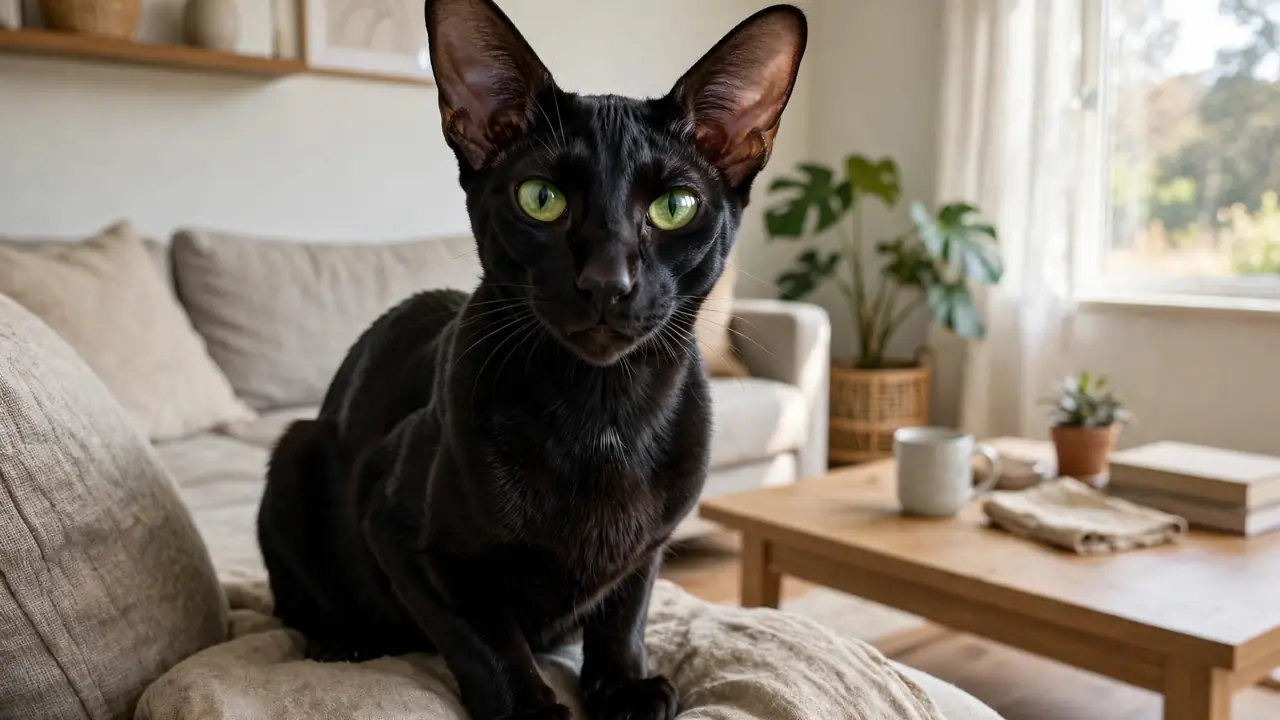
Short on time? Here is the Oriental cat in a nutshell.
At a Glance
Size and Weight
Do not let the delicate look fool you. This breed is tougher than it appears.
The Oriental cat is a study in elegant lines. Adults typically weigh between 5 and 10 pounds. The body is long and tubular on slim legs, and under the fine coat it feels firm and muscular. Males run a little bigger than females.
Coat and Colors
If you love color, this is the breed that has it all.
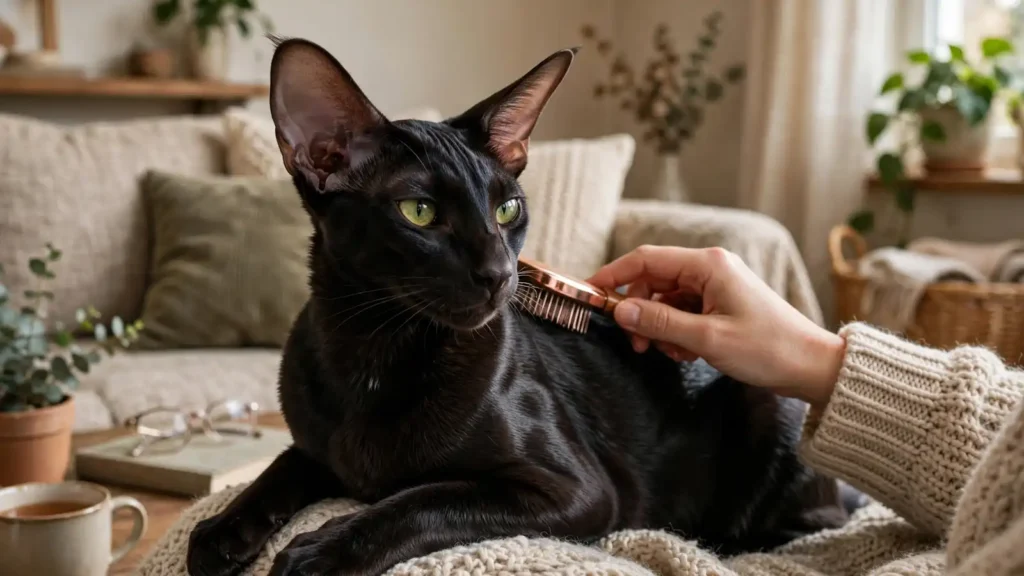
The Oriental is the Siamese type dressed in hundreds of colors and patterns instead of the pointed pattern alone. Where the Siamese limits color to the ears, face, paws, and tail, the Oriental cat wears color all over its body. The short coat lies close with a fine texture and a natural gloss, so the color looks saturated and rich, with a shine that catches the light as the cat moves.
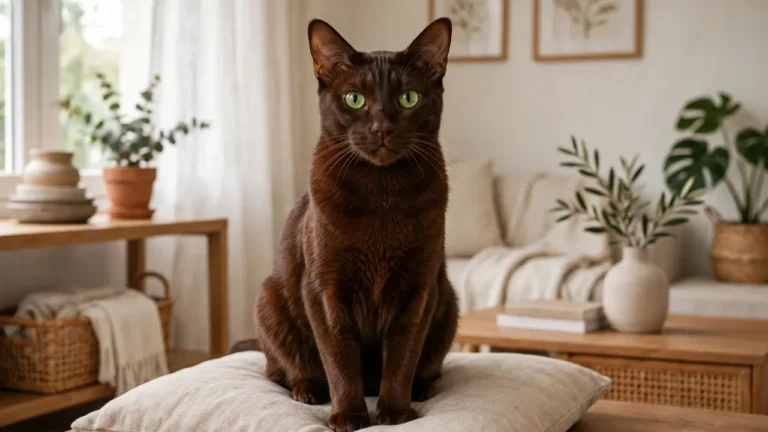
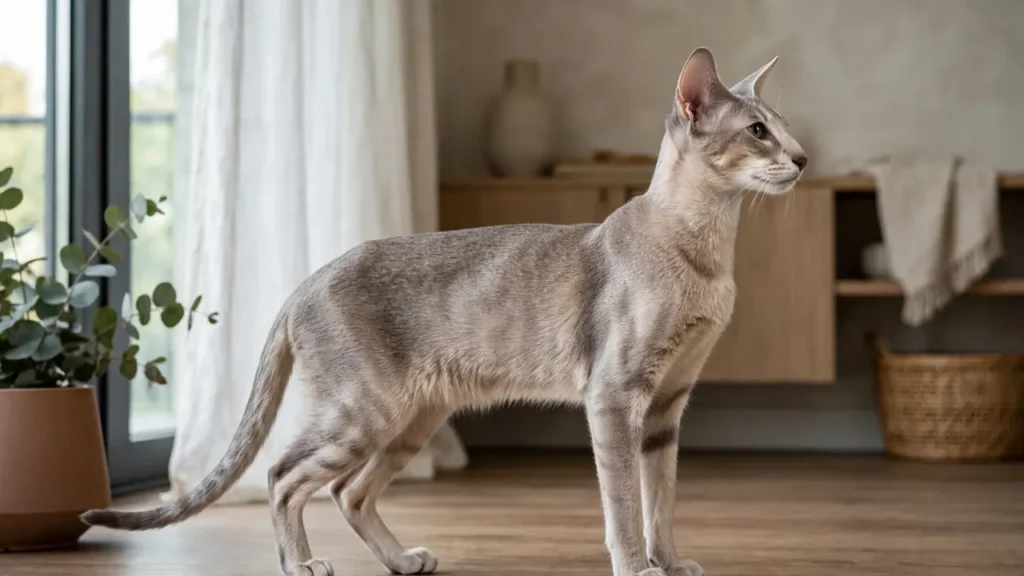
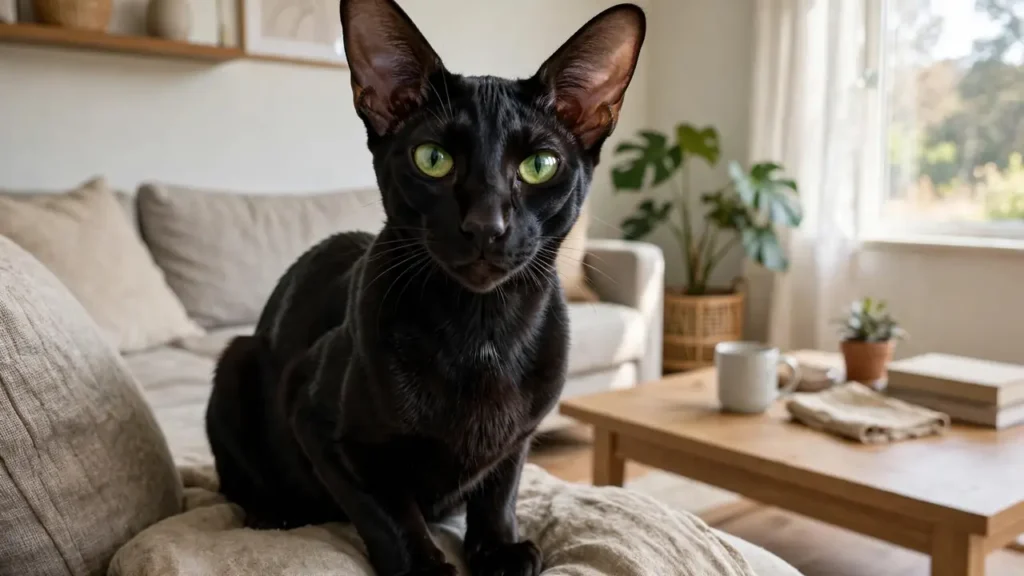
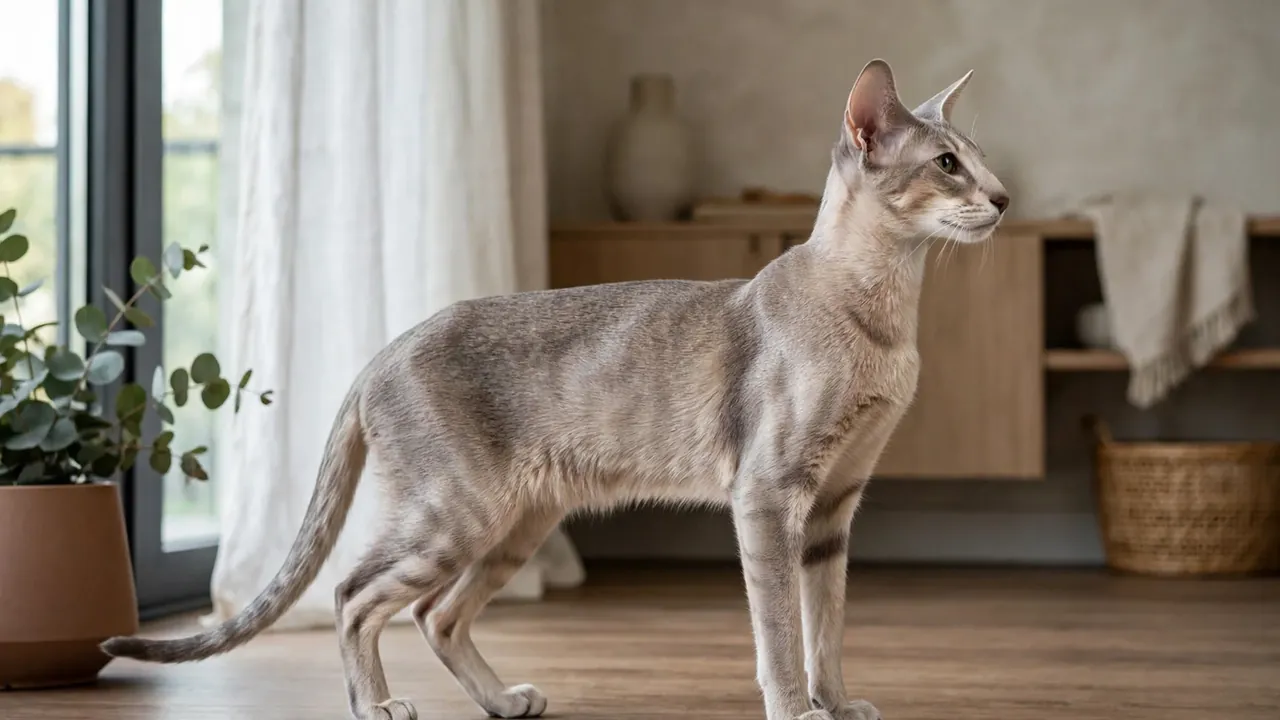
The solid colors are the heart of the breed. Ebony is a deep, warm black with no rusty tinge. White is pure and crisp, and it makes the green eyes look even more dramatic. Chestnut is a rich reddish brown that glows in sunlight. Lavender is a soft, frosty gray with pinkish undertones, one of the most unusual shades in the cat world. Cinnamon is a warm, spicy brown, and fawn is a pale, powdery beige that looks almost luminous against the green eyes.
Then come the patterns. Tabbies wear stripes, spots, or swirls in every base color, often razor sharp against the sleek coat. Tortoiseshells mix black with patches of red and cream in a marbled mosaic. Smoke coats look solid at rest, but when the cat moves, a pale undercoat flashes at the roots. Shaded coats carry color only at the hair tips, giving a frosted finish, and bicolors pair white with any other color in bold patches. Two Orientals in one household can look like entirely different breeds.
The longhaired version wears the same palette in a silky, flowing coat that needs regular brushing to stay tangle free. And the eyes deserve their own mention. Green is the signature, from a soft gooseberry shade to a deep, vivid emerald. Against a dark coat, those green eyes are unforgettable.
History and Origins
Every rainbow needs a starting point, and this one began across the ocean.
The Oriental was developed in the United Kingdom and the United States from Siamese crosses. Breeders loved the Siamese body and temperament but wanted the full spectrum of colors, so they crossed Siamese cats with solid colored shorthairs and other breeds.
Litters produced kittens with the long, elegant Siamese type in solid black, white, chestnut and more — every color except the pointed pattern itself.
The work paid off, and the Oriental stood as a breed of its own, distinct in its huge color range and its hallmark green eyes.
The Oriental cat was developed in the United Kingdom and the United States from Siamese crosses. Breeders loved the Siamese body and temperament but wanted the full spectrum of colors, so they crossed Siamese cats with solid colored shorthairs and other breeds. The goal was a cat with the Siamese silhouette in every shade imaginable.
The work paid off. Litters produced kittens with the long, elegant Siamese type in solid black, white, chestnut, and more, until the Oriental stood as its own breed, distinct in color range and eye color. Green eyes became the hallmark.
Physical Characteristics
This is a cat built from straight lines and sharp angles.
The head is a long, even wedge, tapering from wide set ears to a fine muzzle. The ears are strikingly large and placed to continue the lines of the wedge, giving an alert, almost startled expression. The eyes are shaped like almonds and set at a slant, glowing green instead of the Siamese blue.
The body is long, svelte, and tubular, with legs long and slim and the hind pair slightly longer than the front. The tail is thin and tapering, moving like a conductor’s baton when the cat is excited. Everything about the Oriental cat reads as elegant and deliberate, with nothing round or soft in the silhouette.
Oriental Personality and Behavior
Bring home an Oriental and you gain a shadow with opinions.
The breed bonds hard and often picks a favorite person. Expect lap sitting, shoulder perching, and a warm body pressed against you at night.
Cautious with strangers, but they study you, approve of you, then love you with unusual intensity.
Meals, play and greetings at the door, on schedule. These cats notice routine, and notice when it slips.
- Devoted, people focused companion
- Intelligent and endlessly entertaining
- Light shedding, minimal grooming
- Very vocal — not a quiet cat
- Fades when left alone for long stretches
- Demands daily interactive play
The Oriental cat is one of the most social and vocal breeds in the cat world. These cats follow their people from room to room, comment on the day in a loud voice, and insist on joining every activity. A closed door is a personal insult to an Oriental.
Intelligence is a defining trait. They learn routines quickly, figure out doors and drawers, and invent games when no one is watching. They thrive on interactive play and puzzle toys. This is not a cat for someone who wants a quiet ornament.
Affection runs deep. The breed bonds hard with its family and often picks a favorite person. Expect lap sitting, shoulder perching, and a warm body pressed against you at night. What the breed demands in attention, it returns many times over in devotion.
Care Essentials
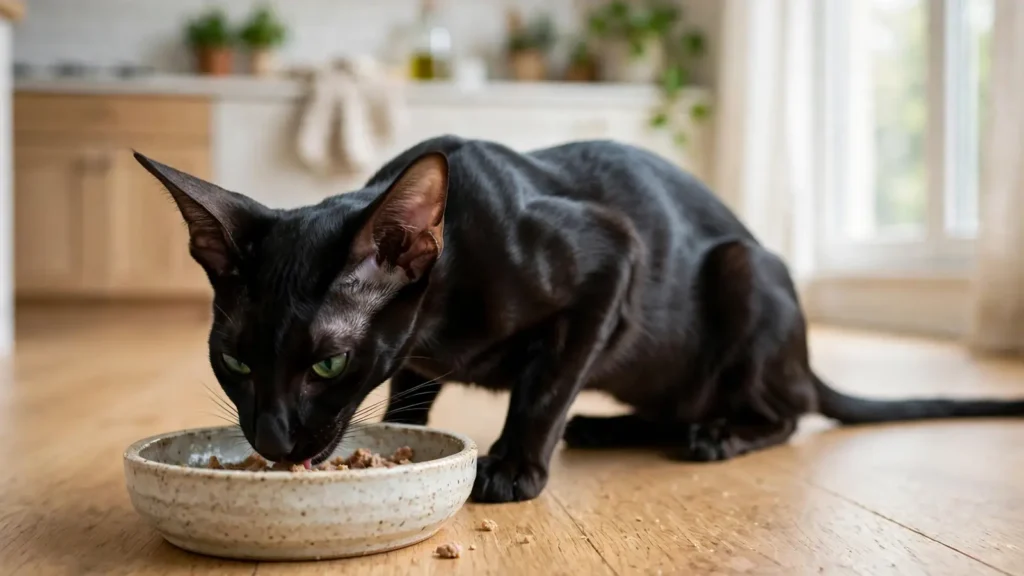
High quality food with real meat or fish first, in measured portions. The breed stays naturally lean, so feed for healthy muscle and watch body condition, not just the bowl.
A quick weekly brush keeps the short coat gleaming; the longhaired version needs two or three combings a week. Check the large ears for wax, plus nails and teeth.
Daily play is not optional — wand toys, feather teasers and crinkle balls, two or three sessions a day, plus puzzle toys for the busy mind.
Indoor living only, with tall cat trees, wall shelves and window perches. A harness or secure enclosure offers safe outdoor adventures.
This breed asks for time more than it asks for equipment.
The most important part of caring for an Oriental cat is companionship. These cats fade when left alone for long stretches, so they suit homes where someone is around much of the day. A tall cat tree feeds the love of heights, and window perches give a front row seat to the world outside.
Keep the basics steady: fresh water daily, a clean litter box, and regular feeding times. Daily interactive play is not optional. A bored Oriental is a loud Oriental, and play is the price of admission for living with such a bright friend.
Nutrition and Diet
A lean athlete needs quality fuel.
Feed a high quality food suited to the cat’s age, with real meat or fish as the main ingredient. The Oriental cat stays naturally lean, so the goal is keeping healthy muscle rather than adding weight. Measure portions and adjust with your veterinarian’s advice.
Watch body condition rather than the bowl. You should feel the ribs under a light layer of fat, with the waist tucking in from above. Keep fresh water available, and skip heavy treats and table scraps that unbalance a complete diet.
Grooming
Good news: the short coat practically takes care of itself.
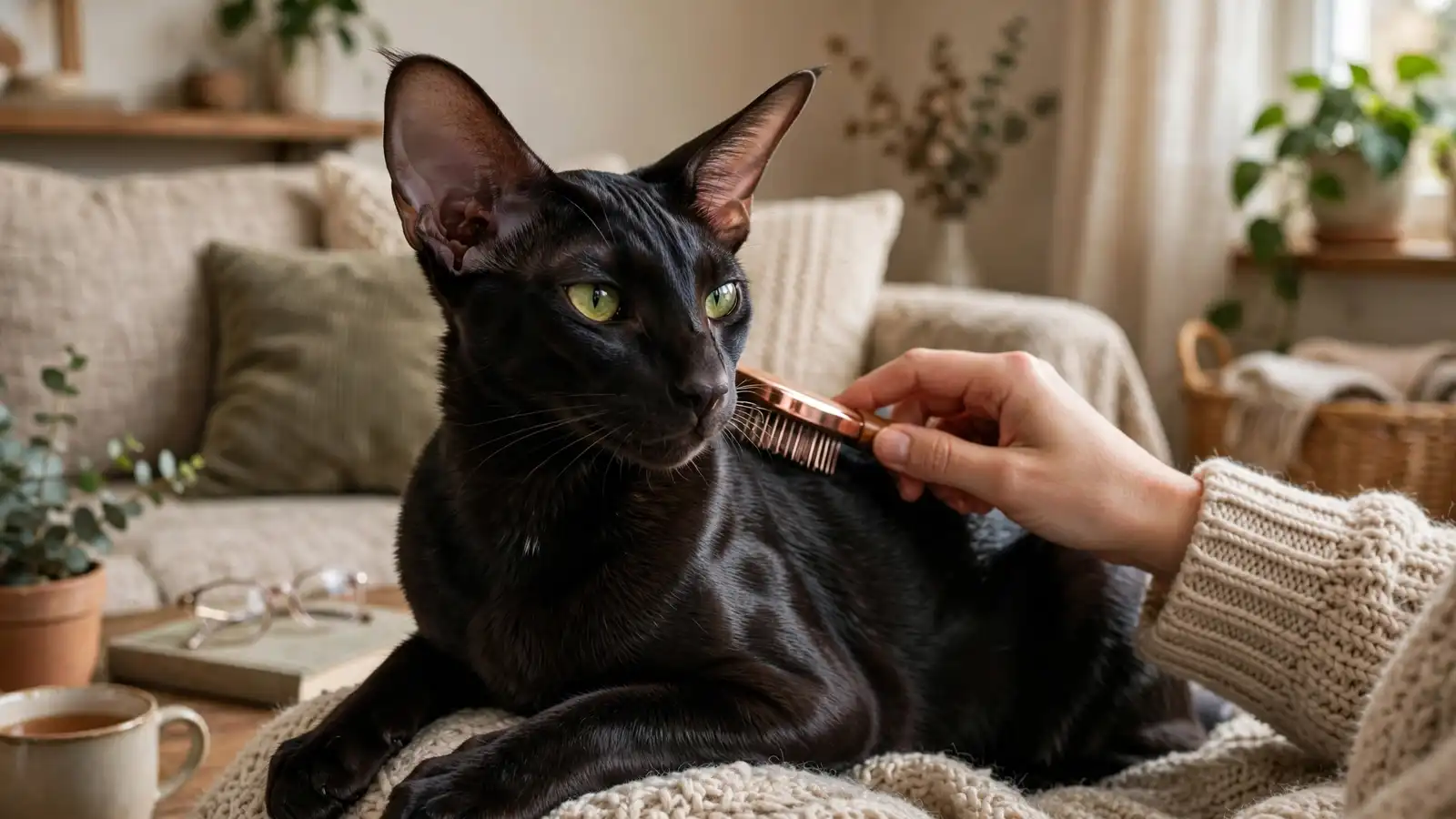
The shorthaired Oriental cat needs very little grooming. A quick weekly brushing with a soft brush removes loose hair and keeps the coat gleaming, and shedding is light. A wipe with a damp cloth restores the shine between brushings.
The longhaired version asks for more. Brush two or three times a week with a steel comb, giving extra attention behind the ears and under the legs where mats start. Trim nails every couple of weeks, check the large ears for wax, and brush the teeth as often as your cat allows.
Exercise and Enrichment
A bored Oriental is a mischievous Oriental.
This breed needs daily play. Wand toys, feather teasers, and crinkle balls tap the hunting instinct, and the Oriental cat plays with athletic grace. Two or three sessions a day keep mind and body fit.
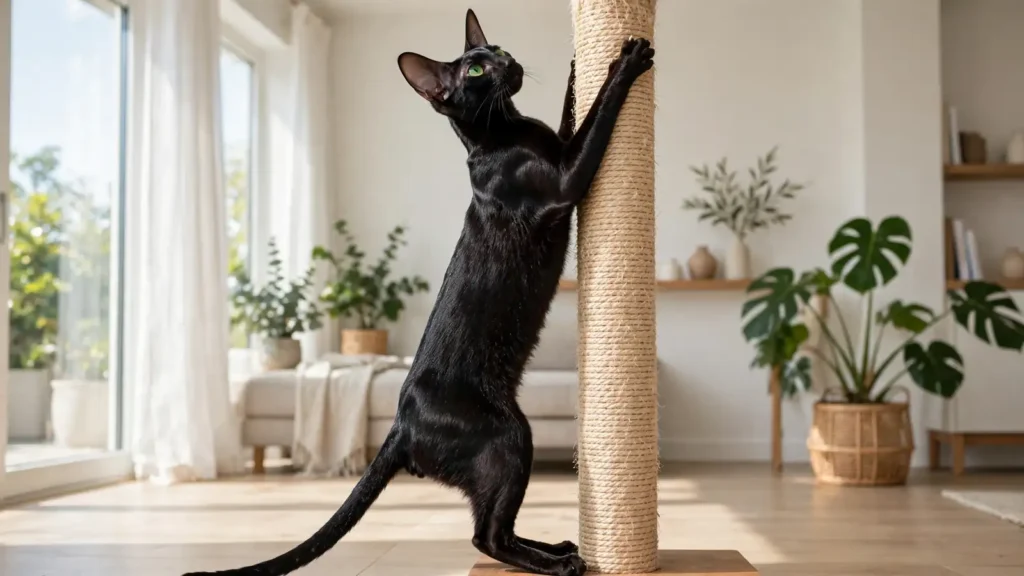
Vertical space is a must. Tall cat trees, wall shelves, and high perches suit a cat that loves to survey its kingdom. Provide approved high places, or the cat will claim your highest shelf on its own terms.
Health
An active breed still needs a watchful eye on a few inherited concerns.
Hypertrophic cardiomyopathy, a thickening of the heart muscle, is watched in the breed, and progressive retinal atrophy can affect vision. Choose a breeder who tests breeding cats for known inherited conditions.
Generally a healthy breed. Annual exams, core vaccinations, parasite prevention and dental checkups help many live well into their late teens.
The Oriental cat is generally a healthy, long lived breed, but it shares some concerns with its Siamese type relatives. Hypertrophic cardiomyopathy, a thickening of the heart muscle, is watched by responsible breeders. Progressive retinal atrophy, which can affect vision, is another screened condition. Some lines show respiratory sensitivity, so a clean, dust free home and prompt attention to breathing changes are wise.
Choose a kitten from a breeder who tests breeding cats for known inherited conditions, and expect clear answers about the screening done. With annual exams, core vaccinations, parasite prevention, and dental checkups, many Orientals live well into their late teens.
Indoor and Outdoor Living
This breed belongs inside, and it will tell you so loudly.
The Oriental should live indoors. The fine coat gives little protection from cold, and the trusting, social nature makes this breed a poor match for outdoor dangers like traffic, predators, and theft. A cat this eager for human company is especially likely to walk up to strangers.
Indoors need not be boring. Climbing structures, sunny windows, and daily play give the Oriental everything it needs. A harness and leash or a secure enclosure offer safe outdoor adventures.
Family Suitability
If your household runs on interaction, this breed will fit right in.
The Oriental thrives in busy, social homes. Families with children who respect animals do well, and these cats get along with cat friendly dogs, especially when raised together. What does not suit the breed is long solitude. A home empty ten hours a day produces a lonely, noisy cat, so consider adopting two if your schedule keeps you away.
For the right home the rewards are enormous. This breed gives back every bit of attention it receives, and then some. Owners describe sharing the house with a funny, talkative, devoted friend who happens to have whiskers.
Finding a Breeder or Rescue
Take your time. The right source is worth the wait.
Meet adult Orientals first if you can. Their energy and volume surprise some first time owners. A good breeder asks you as many questions as you ask them, because placing an Oriental cat well matters.
Look for breeders who raise kittens in the home, socialize them with household sounds, and screen breeding cats for known inherited conditions. Expect health records, a written agreement, and a promise to take the cat back at any point if you cannot keep it. Breed specific rescues also place Orientals and mixes, and an adult rescue shows you the finished personality up front.
- Breeder screens for inherited conditions and shares results
- Kittens raised in the home, socialized with household sounds
- Meet adult Orientals first — energy and volume surprise some people
- Health records, a written agreement and a take-back promise are standard
Quick Quiz: Is a Oriental Right for You?
Answer four questions. Tap yes or no.
Frequently Asked Questions
Are Oriental cats good for first time owners?
They can be, if you want an interactive cat. The Oriental cat is demanding of attention and very vocal, so be ready for a pet that acts more like a talkative toddler than a quiet roommate. If you work from home or have another pet for company, the match is much easier.
Do Oriental cats shed a lot?
No. The short coat sheds lightly, and weekly brushing keeps it under control. The longhaired version sheds more and needs regular brushing, but neither coat leaves the clouds of fur that heavy coated breeds produce.
Why do Oriental cats meow so much?
Talking is how this breed communicates. Orientals voice opinions about meals, closed doors, and your schedule. It is rarely anxiety. It is conversation, and owners find it either charming or exhausting.
Are Oriental cats hypoallergenic?
No cat is truly hypoallergenic. The shorthaired Oriental produces less loose hair than many breeds, which some allergy sufferers find easier to live with, but the breed still produces the proteins that trigger allergies. Spend time with the cats before committing if allergies are a concern.
How long do Oriental cats live?
With good care, many live 15 years or more, and late teens are not unusual. Indoor living, preventive veterinary care, and a quality diet help these cats reach their full lifespan.
What is the difference between an Oriental and a Siamese?
Think of them as cousins. The Siamese wears the pointed pattern with blue eyes, while the Oriental comes in hundreds of solid colors and patterns with green eyes. Body type, voice, and personality are very similar, since the breeds share the same roots.
The Oriental is the full rainbow version of the Siamese type: elegant, green eyed and gloriously vocal. For homes that run on interaction, it gives back every bit of attention it receives, and then some.
Similar Breeds Worth Exploring
Related Breed Guides
Keep Exploring
Browse the full A to Z cat breed collection to compare personalities, or find out your cat’s age in human years with the cat age calculator.