Himalayan Cat Breed Guide
Himalayan: at a Glance
A plush colorpoint cat with vivid blue eyes and one of the calmest natures in the cat world. It lives for laps, sunny spots and a daily grooming ritual with its favorite person.
By Emily Carter · Reviewed by our vet team · Updated 21 October 2026 · 13 min read
Lifespan 12–15 yrs Weight 7–12 lb Calm & sweet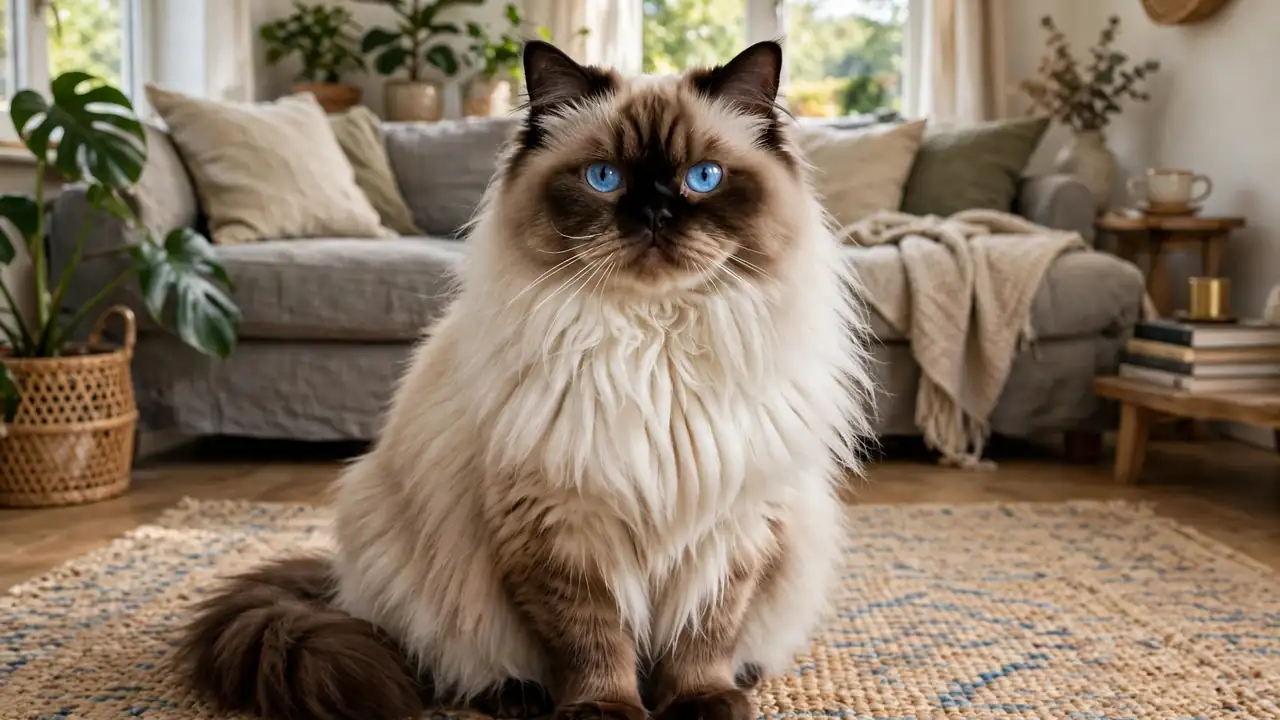
Short on time? Here is the Himalayan cat in a nutshell.
At a Glance
Size and Weight
The Himalayan cat is built low and sturdy, like a plush cushion with paws.
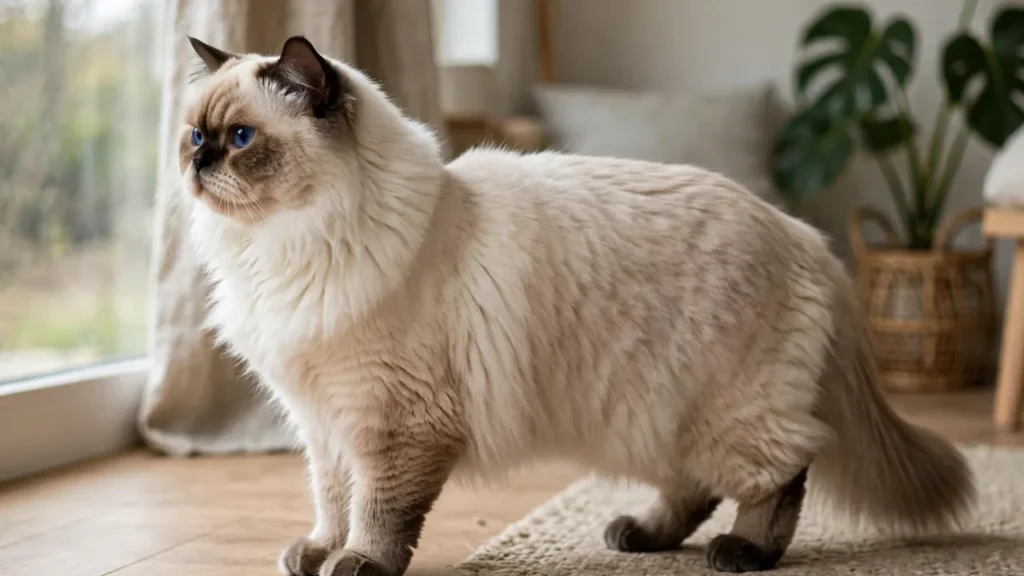
Most adult Himalayan cats weigh between 7 and 12 pounds on a short, cobby frame with a broad chest, thick legs, and a short neck. Males tend to run heavier than females. Nothing about this cat is lanky. It is all roundness and substance.
The heavy coat can make these cats look bigger than they are, so a vet is the best judge of healthy weight. Cobby breeds can put on pounds quietly. Himalayans also mature slowly, and many do not reach full size and coat until two or three years of age.
Coat and Colors
The coat is the whole point of this cat, and it deserves a close look.
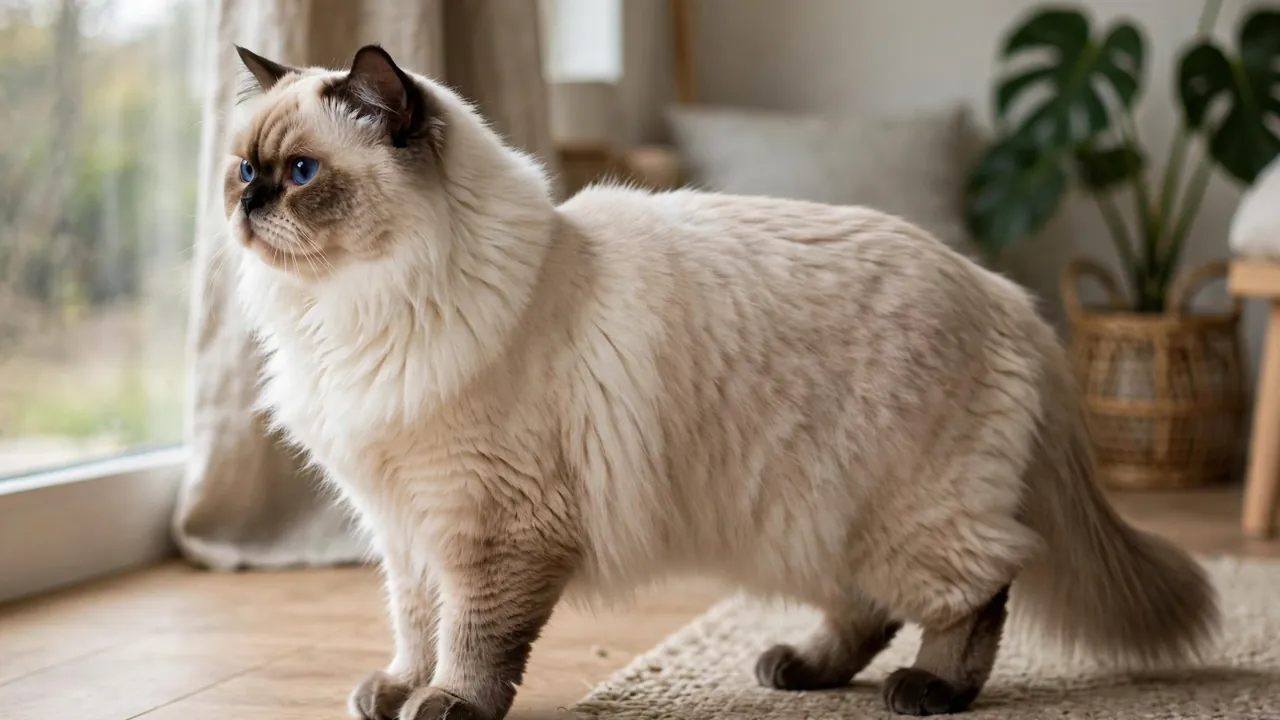
The Himalayan wears a long, thick double coat that flows out from the body and creates its famous plush silhouette. The texture is fine and silky, longest around the neck where it forms a full ruff, and along the tail, which carries like a waving plume. Regular brushing keeps it light and airy instead of clumped and dull.
What makes it special is the colorpoint pattern. The body stays pale, usually creamy white or soft ivory, while the ears, face mask, paws, and tail show a much darker shade. The pigment behind the pattern is sensitive to temperature, so it develops fully only on the cooler extremities. Himalayan kittens are born almost entirely pale, and their points deepen over the first year or two.
The accepted point colors cover a lovely range. Seal point is the classic, a deep dark brown on a pale fawn body. Blue point is a cool slate gray, almost silvery in bright light. Chocolate point is a warm milk chocolate, softer than seal. Lilac point is a delicate pinkish gray. Flame point brings warm orange red to the points. Tortie point adds a mottled blend of red and cream.
No matter the point color, the eyes stay the same: a vivid, deep blue. The dark mask against those bright blue eyes is what stops people in their tracks, and it is the feature owners mention most when they describe falling for the breed.

History and Origins
The Himalayan cat was designed on purpose, and it took years of patient breeding to get right.
The Himalayan began in the United States as a deliberate cross between Persians and Siamese, aiming for the Persian body and coat with the Siamese pointed pattern.
The name comes from the Himalayan rabbit, which wears the same colorpoint pattern — not from the mountains.
By the 1950s the look was established: the Persian’s sweetness, build and spectacular coat, with a slightly livelier spark from the Siamese side.
Breeders in the United States wanted a cat with the Persian body and temperament but the pointed coat and blue eyes of the Siamese. They spent years crossing Persians with Siamese cats, selecting kittens that carried both the long coat and the colorpoint pattern. By the 1950s the Himalayan as we know it had taken shape.
The name comes from the Himalayan rabbit, which shows a similar pointed pattern, not from the mountain region. The goal was a best of both worlds cat, and most owners would say the breeders succeeded, keeping the Persian sweetness with a slightly livelier spark.
Physical Characteristics
Everything about this cat is round, from the head to the paws.
The head is large and round with full cheeks, a short nose, and small ears set wide apart. The eyes are large, round, and always blue. The body is low slung with a deep chest and short, sturdy legs, and the tail is short and thick with a proud plume.
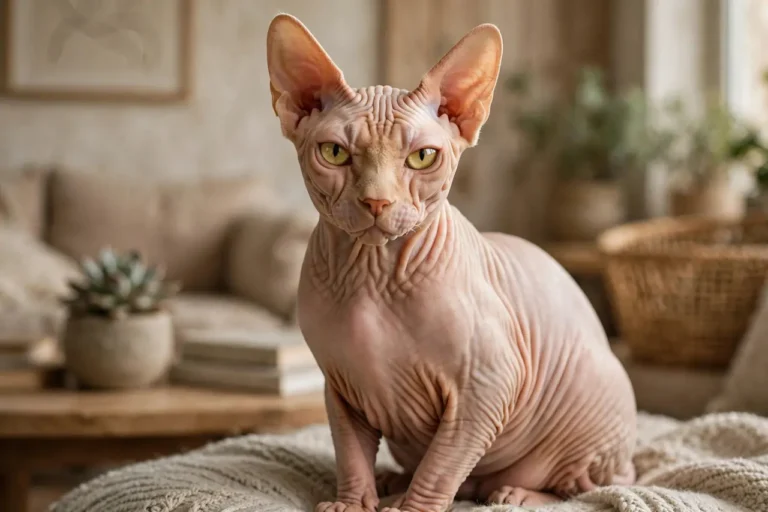
The flat face gives the Himalayan its sweet, almost doll like expression. That structure needs a little extra attention, since tears can collect around the eyes and the short nose can make breathing noisier than in longer faced breeds.
Himalayan Personality and Behavior
Expect a calm shadow that follows you quietly from room to room.
Evening bursts of kitten like play are common, then it is straight back to the nearest lap for a recharge.
Cautious with strangers, but they study you, approve of you, then love you with unusual intensity.
Meals, play and greetings at the door, on schedule. These cats notice routine, and notice when it slips.
- Sweet, calm and patient nature
- A devoted lap cat
- Patient with gentle children
- Daily brushing and eye cleaning, no exceptions
- Sheds heavily all year round
- Dislikes noise, chaos and long hours alone
The Himalayan cat is sweet, gentle, and easygoing. It enjoys laps, soft beds, and long naps in sunny spots. It is not demanding or loud, and when it wants attention it tends to ask with a soft gaze or a gentle head bump.
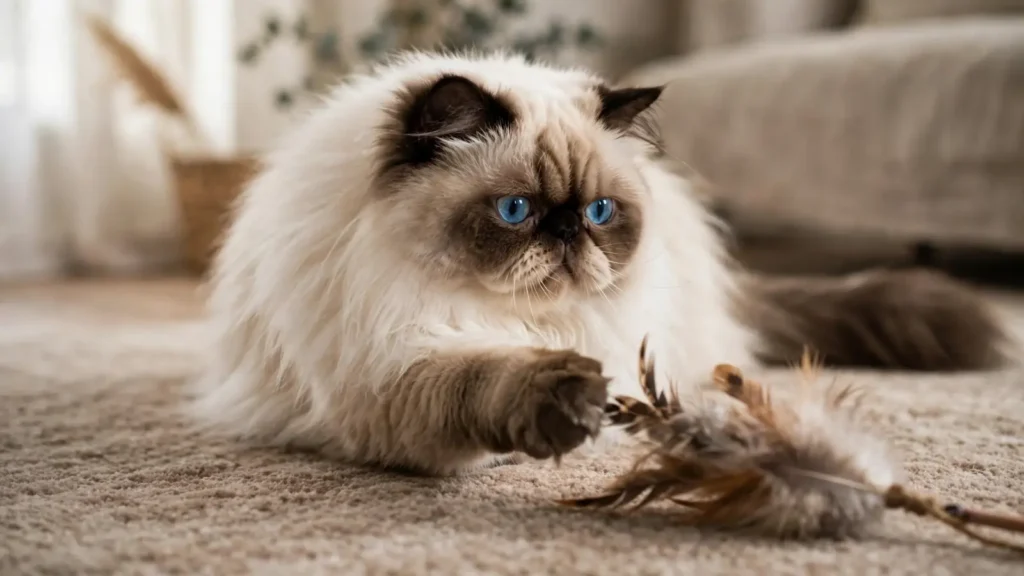
It differs from the Persian in energy. The Himalayan kept a playful streak from its Siamese ancestry, and a wand toy or crinkly ball can bring out a burst of kitten like enthusiasm, especially in the evening. After playtime it is straight back to the lap. This is a cat that wants to be near its people and can get lonely if left alone long.
Care Essentials
Two measured meals a day suited to a low activity, cobby cat. Weigh monthly, because that round build hides extra pounds well.
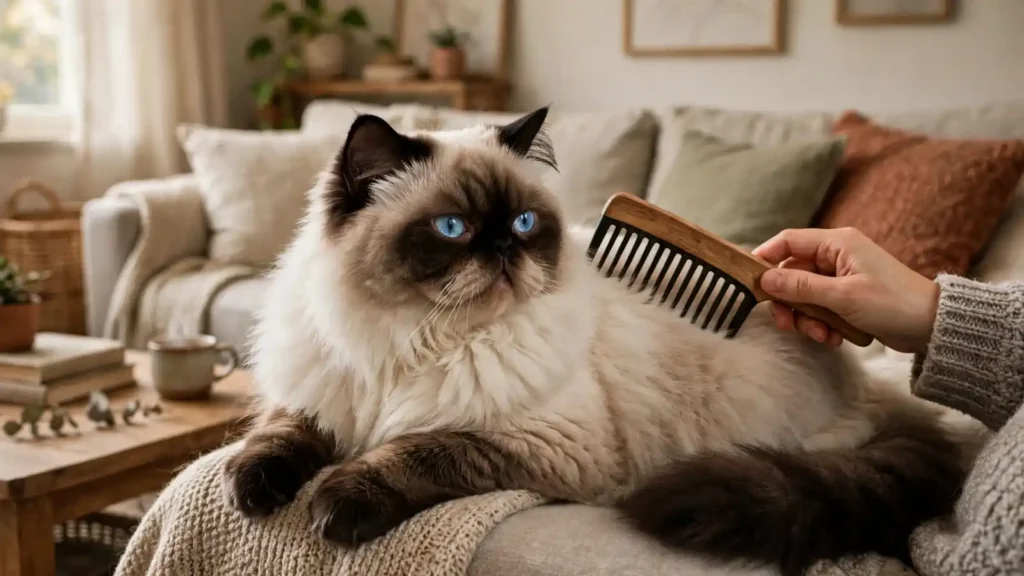
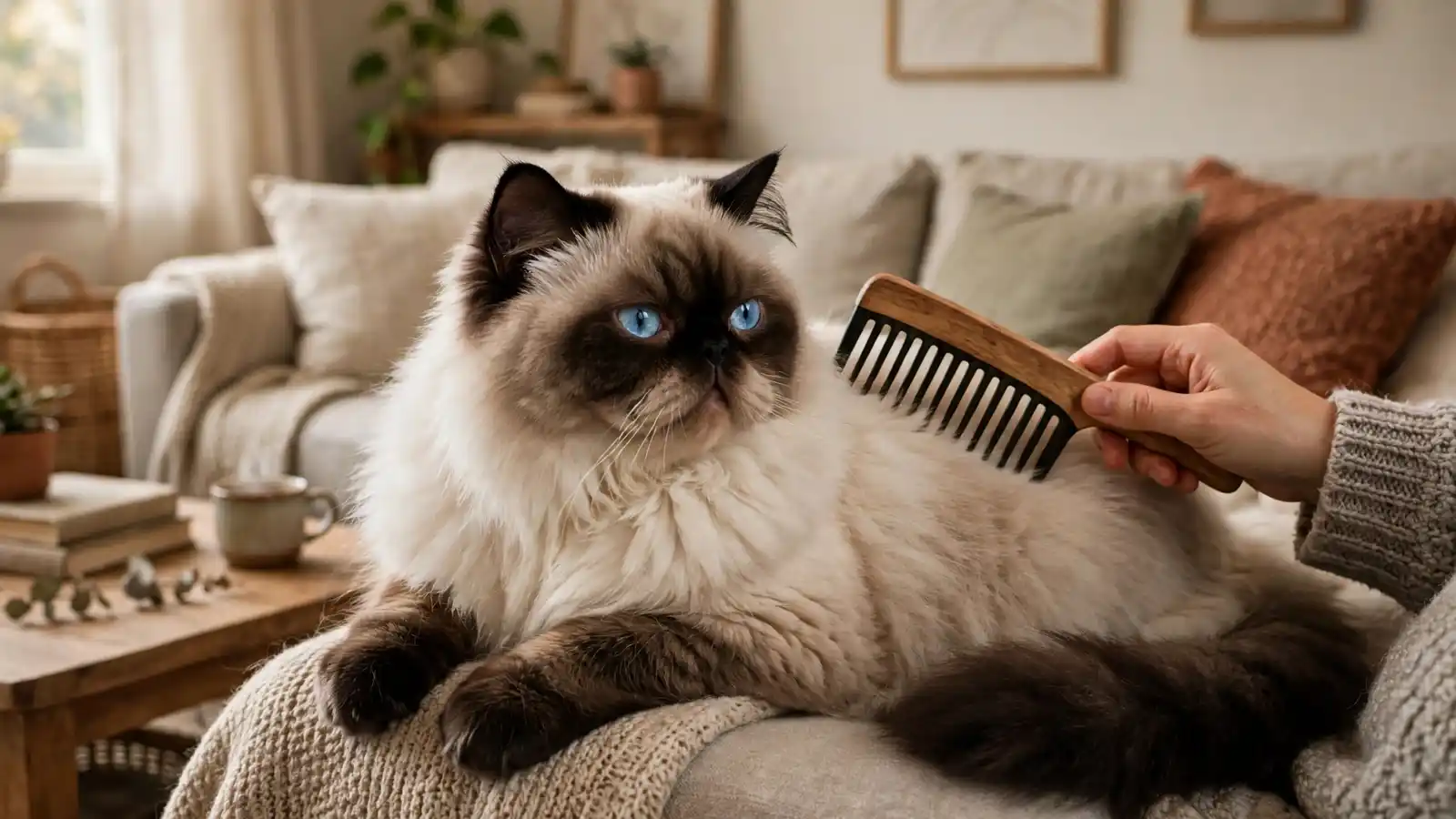
Comb daily with a wide tooth steel comb, down to the skin, a few minutes at a time. Wipe the eyes daily with a soft damp cloth.
Short, gentle play twice a day — a slow feather wand or a rolling ball. End while it is still interested.
A calm indoor home with reachable window perches, a sunny napping spot, and someone around for much of the day.
The Himalayan is not a low effort cat, but the routine is simple once it becomes habit.
Daily brushing is the centerpiece of care, since the long coat mats quickly without it. Eye cleaning is the other daily task, as tears can stain the pale fur. Beyond that, the basics apply: a clean litter box, fresh water, measured meals, and regular vet visits.
Routine matters to this breed. Himalayans like predictable days, with feeding, play, and grooming at roughly the same times.
Nutrition and Diet
A good diet keeps that famous coat glossy and the body lean.
Feed a high quality food with real meat or fish as the main ingredient, and measure meals rather than leaving food out all day. The cobby build of the Himalayan cat can hide weight gain, and extra pounds make breathing harder for a flat faced breed. Most adults do well on two measured meals a day.
Fresh water should always be available. Because of the long coat, some hair gets swallowed during grooming, so daily brushing does more for hairball control than any diet trick. If hairballs become frequent, talk to your vet about gentle options.

Grooming
If you bring home a Himalayan, the brush becomes part of your daily routine.
Brush the full coat every day with a wide tooth metal comb, working gently down to the skin where mats start. Pay special attention behind the ears, under the legs, and around the ruff, since those spots tangle first. The skin under all that hair is delicate, so go easy.
Wipe around the eyes daily with a soft damp cloth to prevent tear staining. Trim the nails every couple of weeks. Most Himalayans also benefit from an occasional bath to keep the long coat clean, followed by a thorough comb out. Start in kittenhood and grooming becomes a calm bonding ritual.
Exercise and Enrichment
Calm does not mean lazy. This cat still needs reasons to move.
Short, gentle play sessions twice a day are plenty. Wand toys with feathers, soft balls, and crinkly toys all work well, and puzzle feeders turn mealtime into a small mental workout. Keep sessions brief and let the cat set the pace.
Do not expect a champion jumper. The cobby build makes this a ground level athlete, so keep favorite toys and resting spots easy to reach. A comfortable window perch, a cozy tunnel, and a sturdy scratching post will get more use than a tall cat tree.
Health
Knowing the common health concerns helps you catch problems early.
Polycystic kidney disease can be inherited through the Persian heritage. Responsible breeders screen for it, so ask for screening results before you commit.
The short face can mean noisy breathing, heat sensitivity, tear staining and dental crowding. Keep it cool in summer and wipe the face folds daily.
Like the Persian, the Himalayan cat can be prone to polycystic kidney disease, or PKD, an inherited condition that causes cysts in the kidneys. Responsible breeders screen for it, so ask about testing before bringing a kitten home. Regular vet checkups with blood work help monitor kidney health over the years.
The flat face brings its own considerations. These cats may snore or breathe noisily and can struggle in heat, so keep them cool in warm weather. Tear staining is common because of the facial structure, which is why daily eye cleaning matters. Dental crowding can also occur, so dental checkups deserve a place in the routine.
Indoor and Outdoor Living
This is strictly an indoor cat, and it is perfectly happy that way.
The long coat picks up burrs and dirt outdoors and mats faster when damp. The flat face makes breathing harder in heat, and the trusting Himalayan temperament makes this breed a poor candidate for fending for itself against traffic or predators.
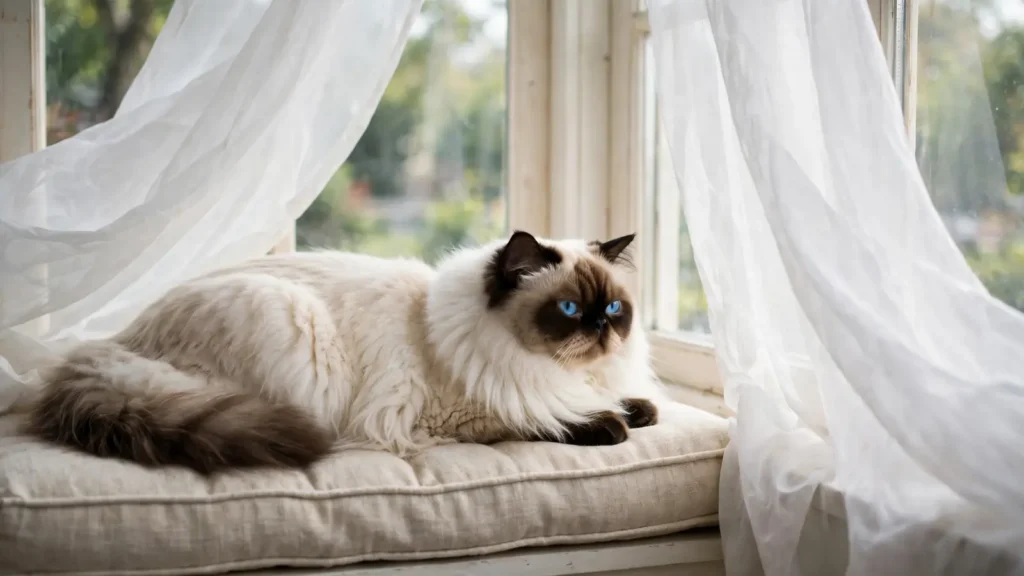
Indoors, give your cat the next best thing: a sunny window perch for bird watching and a screened porch or secure enclosure for fresh air. Supervised time in a safe enclosure can be a lovely treat on mild days. Just brush the coat afterward.
Family Suitability
Gentle with kids, polite with guests, and devoted to family.
The Himalayan cat fits beautifully into calm households. It is patient with gentle children who handle cats softly, and it usually gets along with other pets when introductions are slow. It is not the type to start trouble. It would rather share the sunny spot.
Loud, chaotic homes are a harder match, since this breed startles at sudden noise. It also dislikes being alone for long stretches, so it does best where someone is home much of the day or another friendly pet keeps it company.
Finding a Breeder or Rescue
Take your time finding the right source, and ask plenty of questions.
A good breeder will welcome your questions, show you where the kittens are raised, and let you meet the mother. Ask about PKD screening and health testing, and expect honest answers about grooming needs. Be wary of anyone who rushes you or cannot answer basic health questions.
Rescue is also worth considering. Longhaired cats, including Himalayans and Himalayan mixes, come into shelters and rescue groups. An adult rescue can be a wonderful choice, since the personality is already clear. Plan for the grooming commitment before the cat arrives, not after.
- Ask for PKD screening results
- Meet the mother and see how the kittens are raised
- Ask honest questions about the grooming workload
- Plan your daily grooming routine before the cat arrives
Quick Quiz: Is a Himalayan Right for You?
Answer four questions. Tap yes or no.
Frequently Asked Questions
Are Himalayan cats good for first time owners?
They can be, as long as you accept the grooming commitment. The temperament is easy: calm, sweet, and forgiving. The coat is the real work. If you are ready for daily brushing and eye cleaning, a Himalayan cat makes a gentle and rewarding first cat.
Do Himalayan cats shed a lot?
Yes. The long double coat sheds year round, with heavier shedding in spring and fall. Daily brushing removes most loose hair before it lands on furniture and prevents mats.
Are Himalayan cats hypoallergenic?
No. No cat is truly hypoallergenic, and the Himalayan is not a good pick for allergy sufferers. The long coat holds dander, and the close cuddling this breed loves means plenty of contact.
How long do Himalayan cats live?
With good care, most live around 12 to 15 years. Regular vet visits, a healthy weight, daily grooming, and prompt attention to breathing or eye issues all help your cat reach the upper end of that range.
Do Himalayan cats need a lot of grooming?
Yes, this is one of the highest maintenance coats in the cat world. Plan on daily brushing, daily eye wiping, and regular nail trims, plus occasional baths. Most owners find the routine becomes a pleasant ritual.
What colors do Himalayan cats come in?
They come in the colorpoint pattern: a pale body with darker points on the ears, face, paws, and tail. Common point colors include seal, blue, chocolate, lilac, flame, and tortie. The eyes are always blue.
The Himalayan cat pairs the Persian’s plush calm with the Siamese’s pointed coat and blue eyes. For owners who enjoy a daily grooming ritual, it is one of the sweetest companions there is.
Similar Breeds Worth Exploring
Related Breed Guides
Keep Exploring
Browse the full A to Z cat breed collection to compare personalities, or find out your cat’s age in human years with the cat age calculator.