Decorator Crab
Decorator Crab: the master of ocean disguise
The decorator crab dresses itself in seaweed, sponges and stinging anemones, glued on with Velcro-like hooks — camouflage it recycles after every moult. This guide explains a behaviour, not one species: many kinds of spider crab decorate themselves, and the arrow crab and its cousins are the masters of the disguise.
By Emily Carter · Reviewed by our vet team · Updated 10 November 2026 · 10 min read
Dresses in seaweed and spongeVelcro hooks hold the disguise onRecycles it after every moult
At a Glance
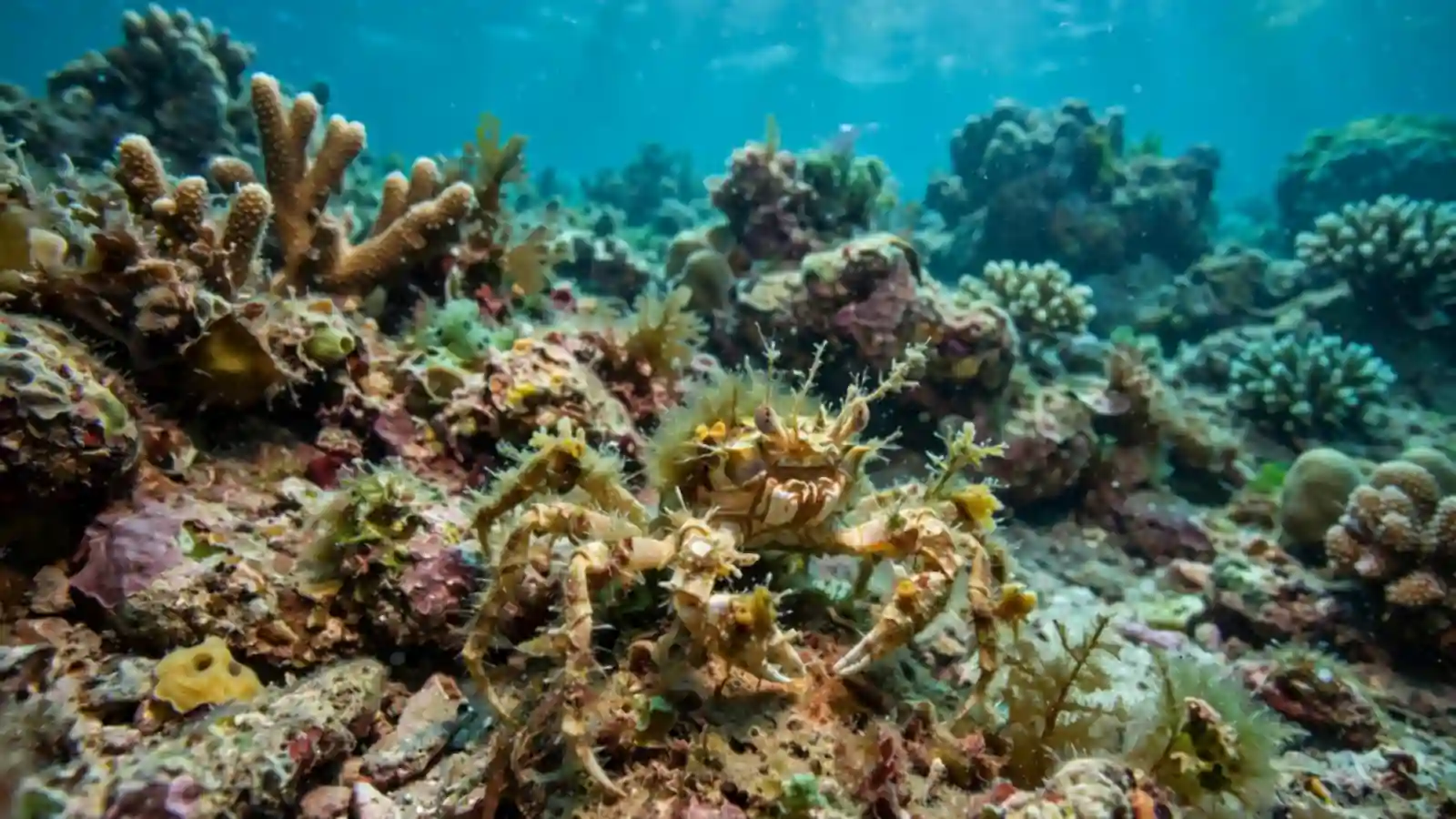
A decorator crab is hard to spot even when you are looking straight at it, because the crab is wearing the reef. Bits of seaweed, sponge and anemone cling to its shell, glued on with tiny hooked hairs, and the animal underneath is almost invisible. This is the whole behaviour, at a glance, before the detail begins.
Decorator Crab Camouflage: A Living Disguise
The crab covers its shell with pieces of its surroundings — seaweed, sponges, bits of coral and even small anemones — until the crab itself disappears into the reef. The disguise is not random: the crab chooses materials that match where it lives, so a crab on a kelp bed wears kelp, and a crab on a sponge reef wears sponge.
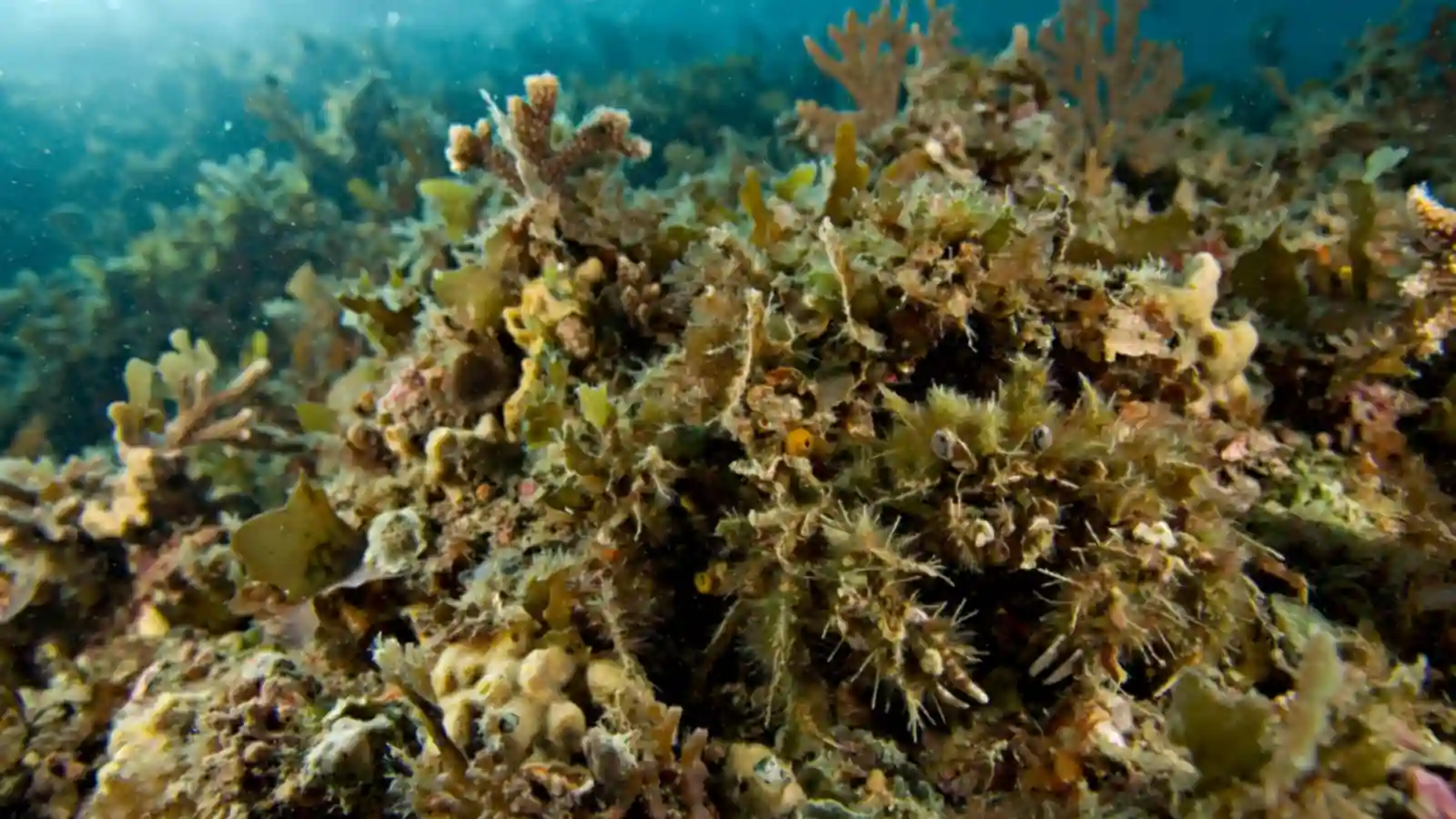
The behaviour is shared by many species, not one. About three quarters of majoid species decorate at some stage of life, according to one 2011 study, and the arrow crab and its common cousin are the best-known examples. The word names a behaviour, and the behaviour is the story.
Velcro Hooks: How the Decoration Stays On
The decoration stays on because the crab’s shell is covered in hooked setae, tiny curved hairs that grip like Velcro. The crab picks up a piece of seaweed or sponge with its claws, presses it against its shell, and the hooks catch and hold it, and the piece stays there until the crab decides to move it.
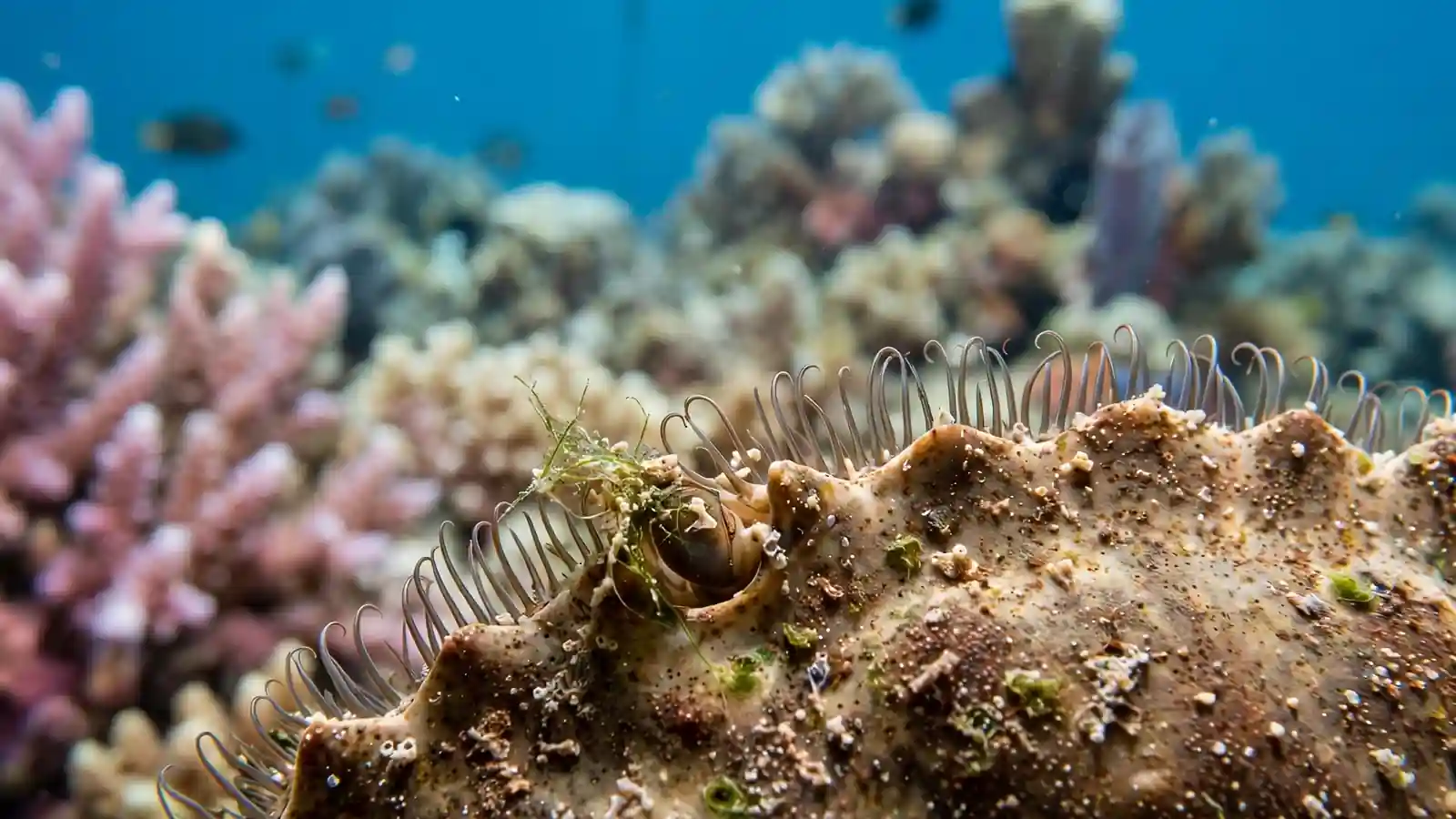
The hooks are the reason the disguise works so well. A piece of sponge glued on with Velcro-like hooks does not wash off in the current, and the crab can rearrange its outfit as it moves, swapping a piece of green algae for a piece of brown sponge when it crosses from one patch of reef to another.
Where They Live: Reefs, Rocks and Kelp
Decorator crabs live on reefs, rocky shores and in kelp beds, in shallow tropical and temperate water, wherever there is something to wear and something to hide from. The arrow crab lives on Caribbean reefs, its common cousin on Indo-Pacific reefs, and other species on temperate shores around the world.
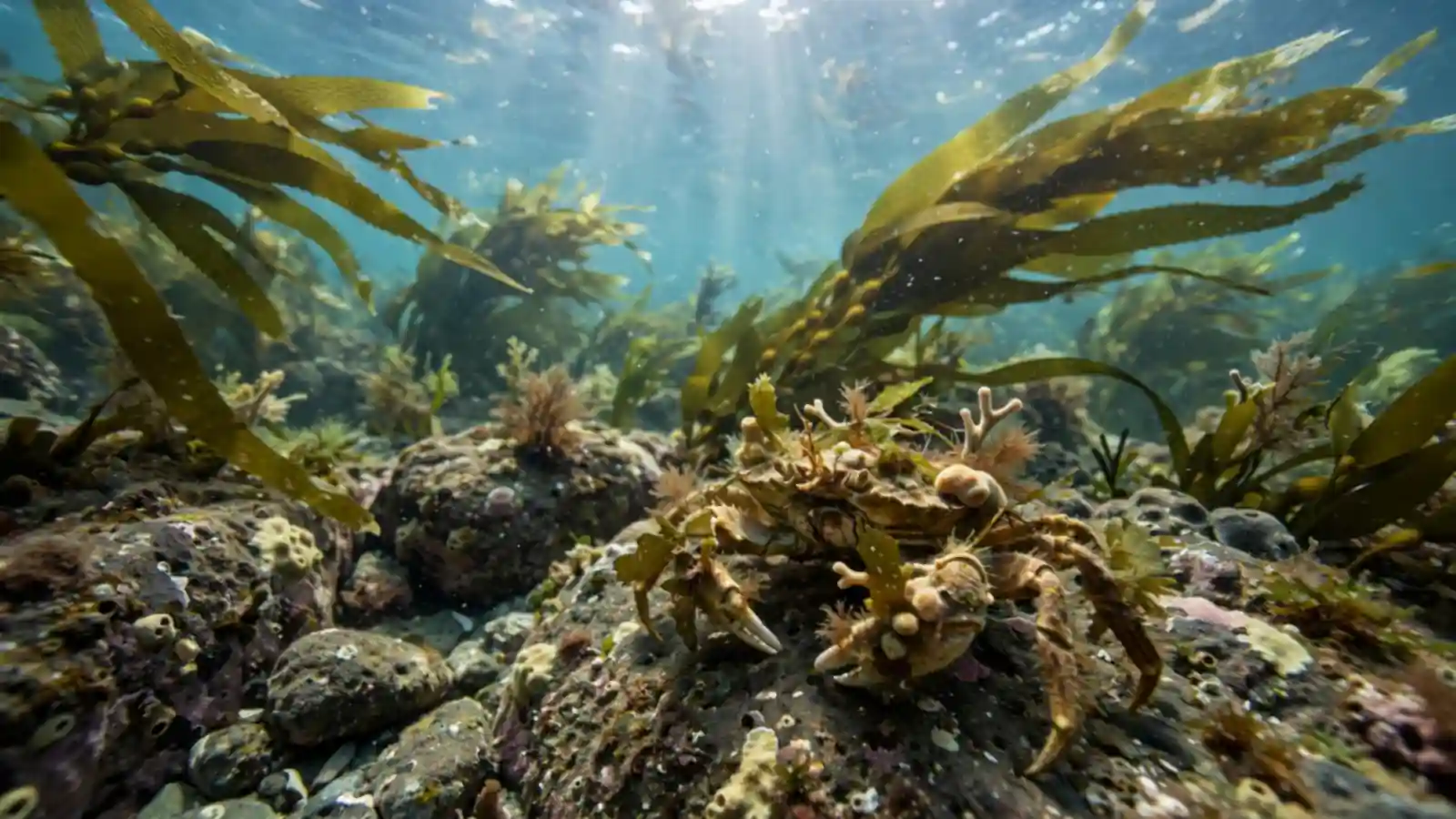
The habitat is the wardrobe. A crab that lives among kelp wears kelp, a crab that lives among sponges wears sponge, and a crab that moves between the two changes its outfit to match. The disguise is only as good as the materials at hand, and the crab is a careful shopper.
Stinging Roommates: Anemones as Chemical Defence
Some decorator crabs wear stinging anemones or noxious algae, and the decoration becomes a weapon as well as a disguise. A predator that bites the crab gets a mouthful of stinging cells, and the anemone gets a ride to new feeding grounds, so both animals gain from the arrangement.
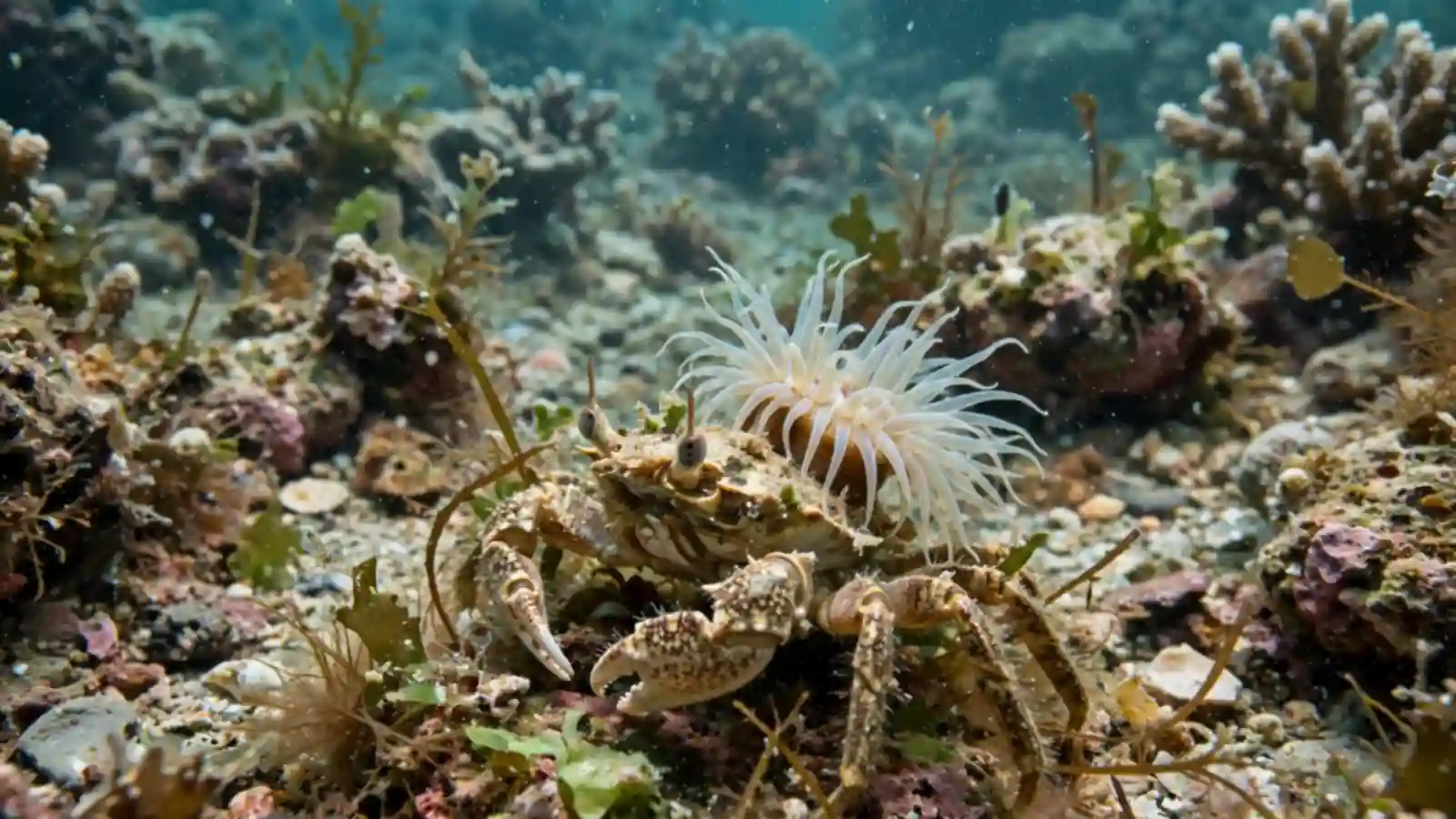
The defence is chemical as well as visual. The anemone’s sting warns predators that the crab is not worth eating, and the crab’s shell protects the anemone from being grazed. It is a partnership built on a decoration, and it works because the predator learns to leave the whole package alone.
What Do They Eat? Scavengers Under Cover
The crab is a scavenger, eating detritus and small animals it finds on the seabed, and it feeds under cover, hidden by its own disguise. The decoration lets it feed in the open without being seen, and the crab picks at dead matter and small prey with its claws while the reef swims past unaware.
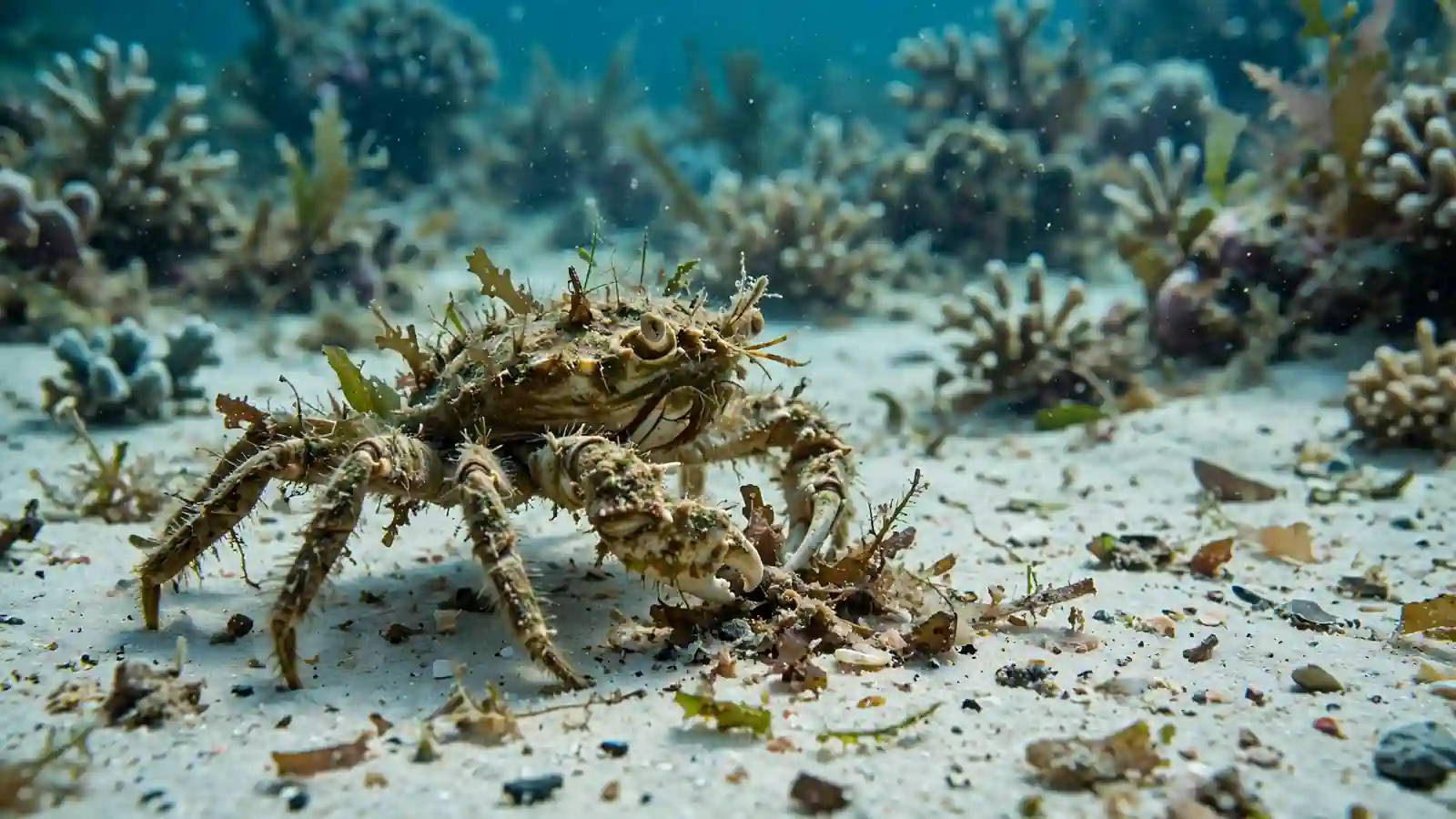
For a wider survey of the behaviour, see this guide. The diet is the reason the disguise matters: a crab that must eat in the open needs to be invisible, and the crab is invisible because it is wearing the reef itself.
The Arrow Crab and Its Cousins
The best-known is the arrow crab, Stenorhynchus seticornis, a long-legged spider crab of Caribbean reefs with a small triangular body and legs like knitting needles. It decorates sparingly, a few pieces of algae on its back, and its long legs let it walk the reef like a spider.
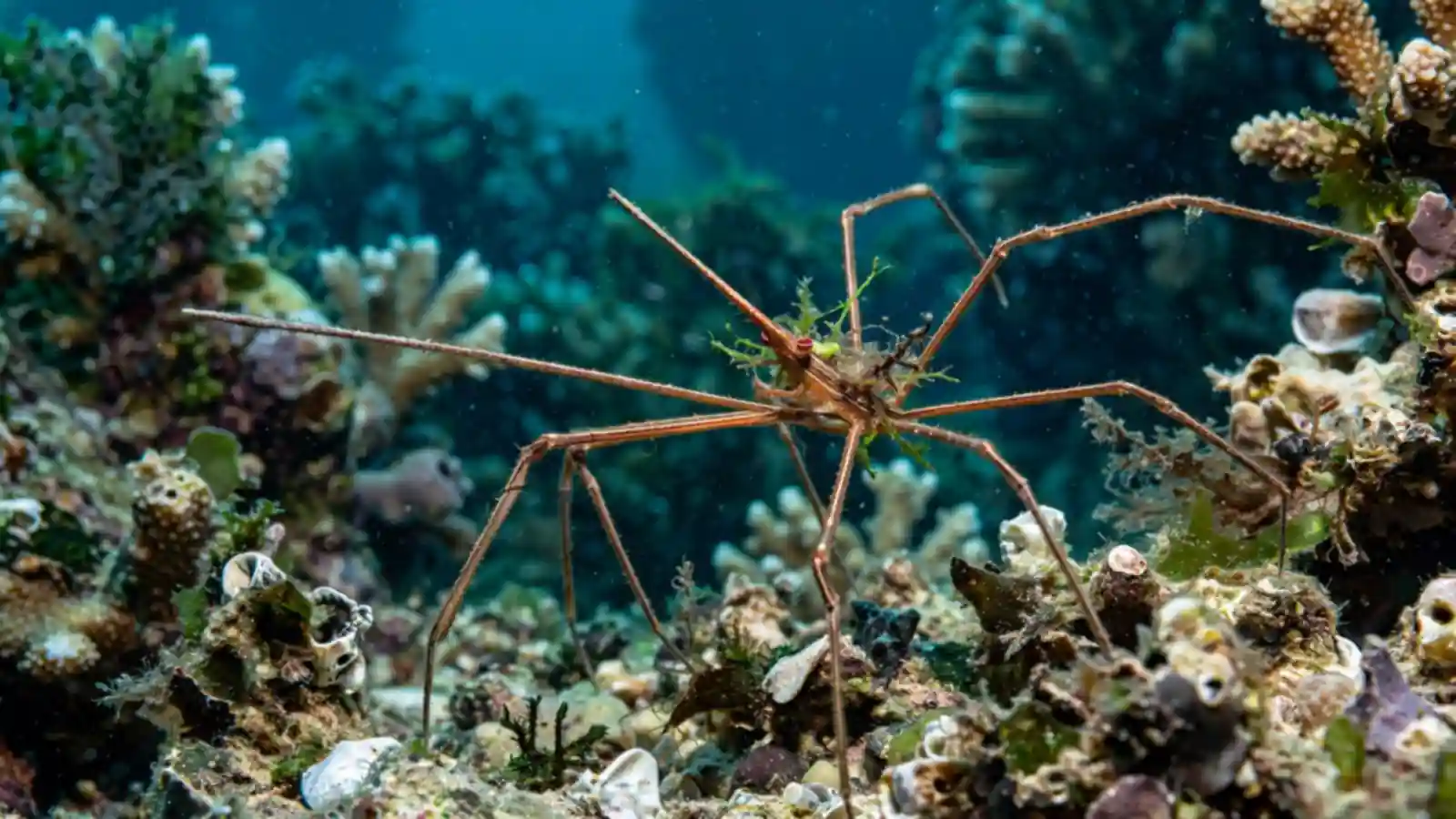
Its cousin is the common decorator crab, Camposcia retusa, of the Indo-Pacific, a heavier decorator that covers itself completely in sponge and algae. The two show the range of the behaviour: one decorates lightly and moves fast, the other decorates heavily and moves slowly, and both are hard to find on their own reefs.
Moulting: Recycling the Wardrobe
The crab loses its decorations when it moults, because the shell they are glued to is shed with the rest of the old body. The crab emerges soft and bare, hides until its new shell hardens, and then starts again, picking up fresh seaweed and sponge and gluing them on with its hooked setae.
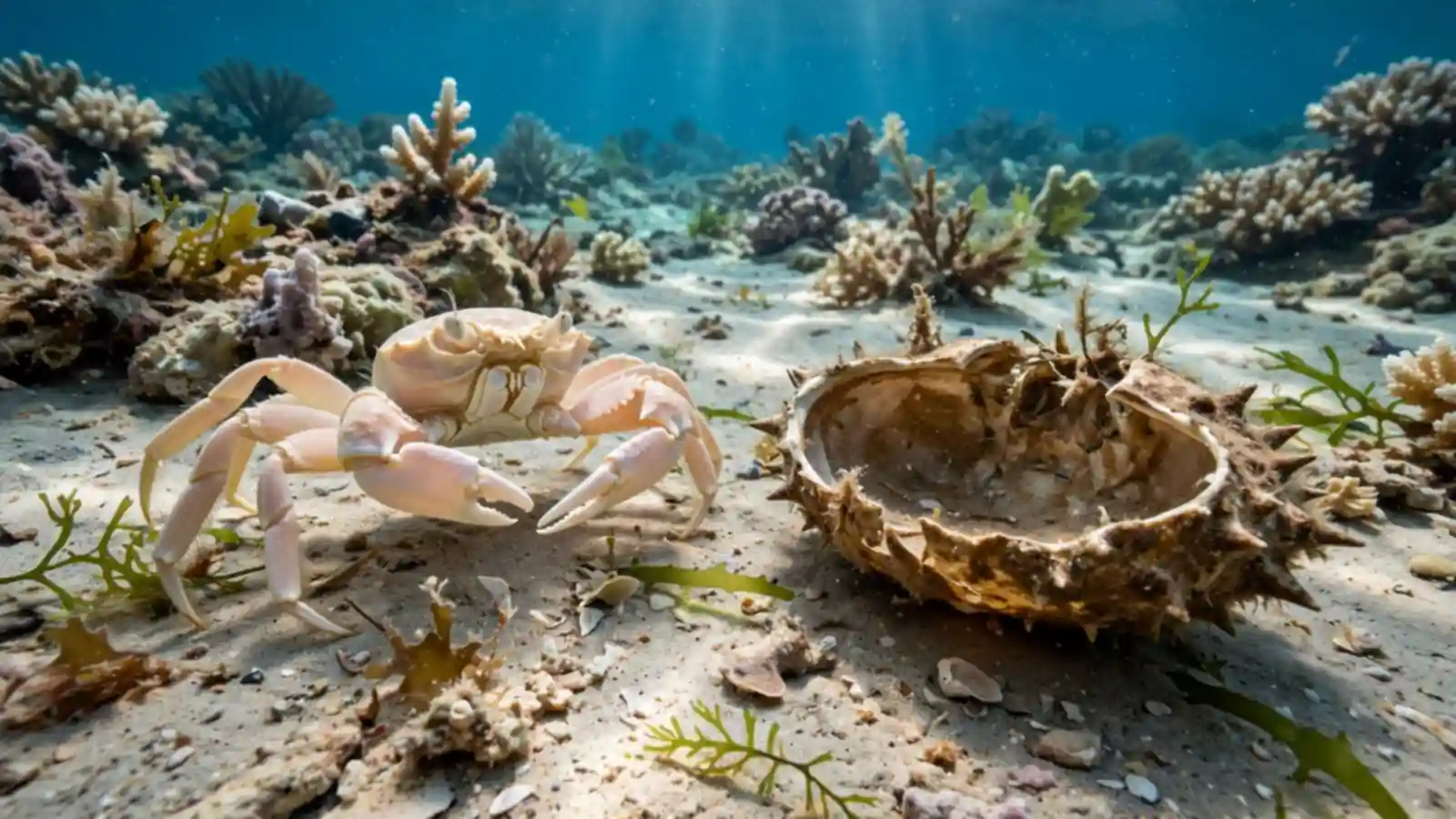
The recycling is part of the behaviour’s charm. It does not keep one outfit for life; it builds a new one after every moult, matched to wherever it happens to be living at the time, and the disguise is always current, always local, and always the reef it stands on.
Fun Facts
- The crab glues seaweed and sponge to its shell with Velcro-like hooked hairs.
- About three quarters of majoid species decorate at some stage of life, one 2011 study found.
- Some decorator crabs wear stinging anemones as chemical defence.
- The arrow crab has legs like knitting needles and a tiny triangular body.
- It loses all its decorations when it moults, then builds a new outfit.
- The term names a behaviour shared by many species, not one species.
Frequently Asked Questions
What Is a Decorator Crab?
A decorator crab is a spider crab that covers its shell with seaweed, sponges and anemones, glued on with hooked hairs. The name describes a behaviour shared by many species, not one species, and the arrow crab is the best-known example.
How Do Decorator Crabs Decorate Themselves?
A decorator crab picks up pieces of seaweed or sponge with its claws and presses them against its shell, where hooked setae grip them like Velcro. The pieces stay on until the crab moults or decides to rearrange them.
Why Do Decorator Crabs Wear Seaweed and Sponges?
Decorator crabs wear seaweed and sponges as camouflage. The decoration matches the surroundings, so predators swim past without noticing the crab, and some crabs also wear stinging anemones as chemical defence.
Do Decorator Crabs Sting?
The crab itself does not sting, but some decorator crabs wear stinging anemones on their shells, and those anemones can sting a predator that bites the crab. The sting belongs to the anemone, not to the crab.
How Big Do Decorator Crabs Get?
Most decorator crabs are small, with a typical leg span of 3 to 5 inches. The arrow crab is longer-legged than most, but its body is tiny, and the decoration often makes the crab look bigger than it is.
Where Do Decorator Crabs Live?
Decorator crabs live on reefs, rocky shores and in kelp beds, in shallow tropical and temperate water. They need materials to wear and predators to hide from, and both are plentiful on a reef.
Do Decorator Crabs Lose Their Decorations When They Moult?
Yes. A decorator crab loses all its decorations when it moults, because they are glued to the old shell. It hides until the new shell hardens, then picks up fresh seaweed and sponge and builds a new outfit.
Similar Species Worth Exploring
Keep Exploring
Keep exploring the crabs: meet the spider crab, the long-legged relative that never decorates, or browse the whole family in our guide to the types of crabs. Then come back to the reef, home of the decorator crab.