Bonefish
Bonefish: the grey ghost that vanishes over white sand
The bonefish is the most elusive fish of the tropical flats: a mirror-silver torpedo that reflects the sand beneath it until only its shadow remains, feeds upside down with its tail in the air, and leaves at 40 miles per hour the instant it feels watched. It is also not one fish at all, but a hidden family of look-alikes. Meet the ghost of the flats.
By Emily Carter · Reviewed by our vet team · Updated 10 November 2026 · 9 min read
Mirrors the sand beneath itBursts near 40 mphNine or more hidden species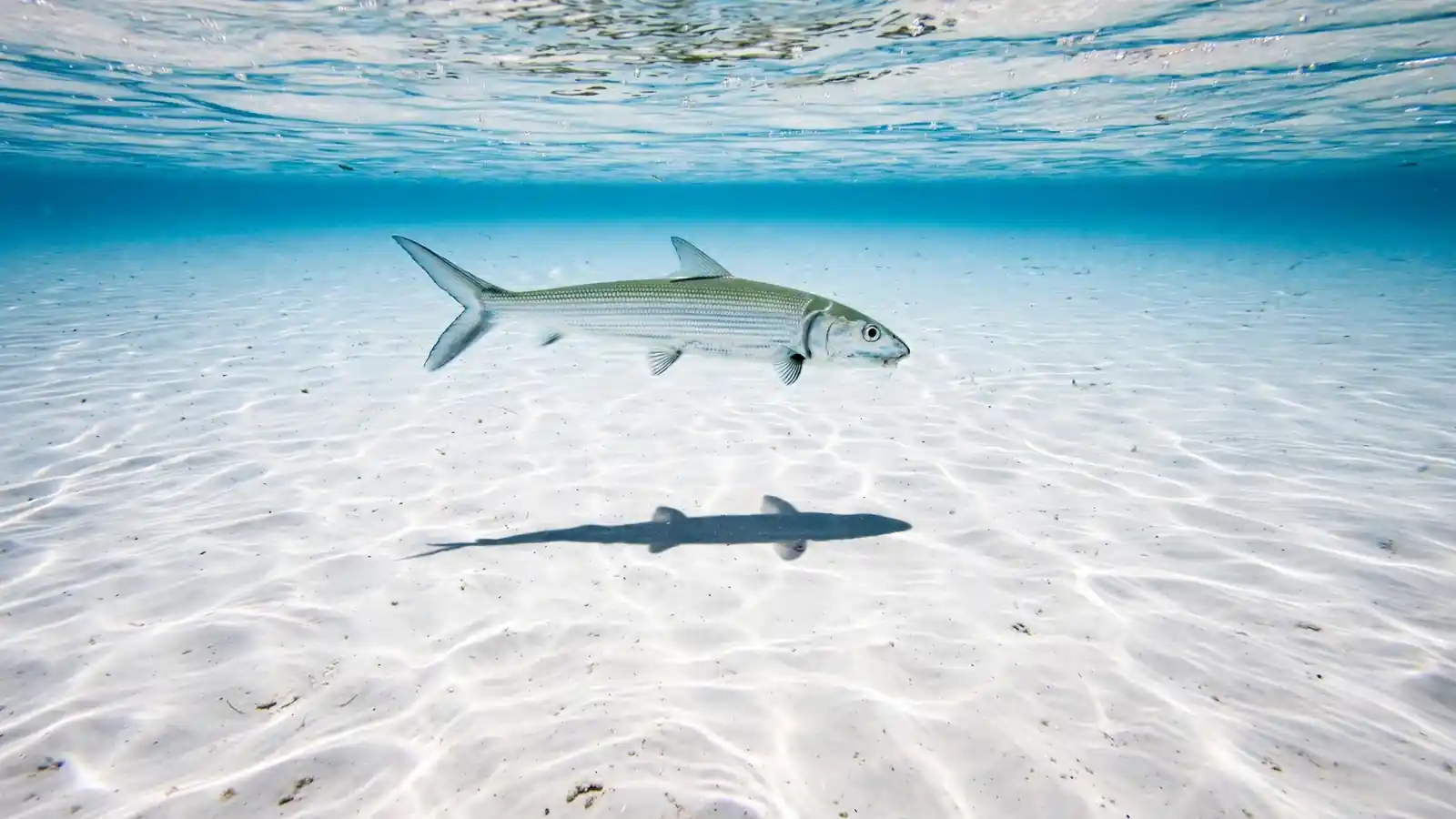
At a Glance
The bonefish is the phantom of the tropical shallows, a fish engineered around two ideas: do not be seen, and be gone before it matters. It lives in ankle-deep water under a tropical sun, eats crabs off the bottom with its tail in the air, and supports some of the most devoted catch-and-release fisheries on Earth. Here is how a small silver fish became a legend.
Bonefish Size and Shape
It is modestly sized and perfectly formed. Caribbean fish commonly run 40 to 60 centimetres (16–24 inches) and 1 to 3 kilograms, with the largest reaching about 79 centimetres and 6.4 kilograms (14 pounds); the all-tackle record stands at 16 lb 3 oz. Indo-Pacific fish can grow bigger. The shape is pure function: a torpedo body, a pointed, underslung snout for rooting in sand, and a deeply forked tail built like a racing scull.

Every detail serves the flats. The mouth sits underneath, positioned for grubbing prey out of the bottom. The eyes are large and positioned for spotting danger from above — herons, ospreys, and the shadows of barracuda and sharks that share the flat. A modified swim bladder lets the fish top up oxygen in warm, still, shallow water, the same trick its tarpon relatives use at giant scale.
And then there is the colour, or rather the absence of it. It is a mirror wearing a fish shape. You can browse the full species record for Albula vulpes for measurements — but no table explains what the flats teach you: size is not the point of this fish. Stealth is.
The Ghost of the Flats: Why Bonefish Vanish
The nickname is earned in the first minute on a flat. A fish over white sand reflects white sand; over turtle grass it darkens to olive; in a channel it turns to grey smoke. The mirroring is so complete that experienced anglers hunt the fish’s shadow instead — a dark torpedo sliding across the bottom, attached to a fish the eye cannot find.

Wariness completes the disguise. They live one mistake from death — lemon sharks patrol the flats, barracuda hang at the edges, ospreys watch from above — and thousands of generations of this pressure have produced a fish that spooks at a clicking reel, a careless footstep, a shadow crossing the water. Whole schools vanish in a puff of silt, a phenomenon flats guides call mudding when the fish feed, and gone when they flee.
It makes the fish the ultimate sight-fishing quarry: you hunt a shadow, present a fly or bait to a fish you may not actually see, and are judged instantly. No other fish of its size demands so much stealth — which is precisely why anglers cross oceans for it, and why the ghost, not the giant, rules the flats alongside the tarpon.
Its Speed: The 40 mph Getaway
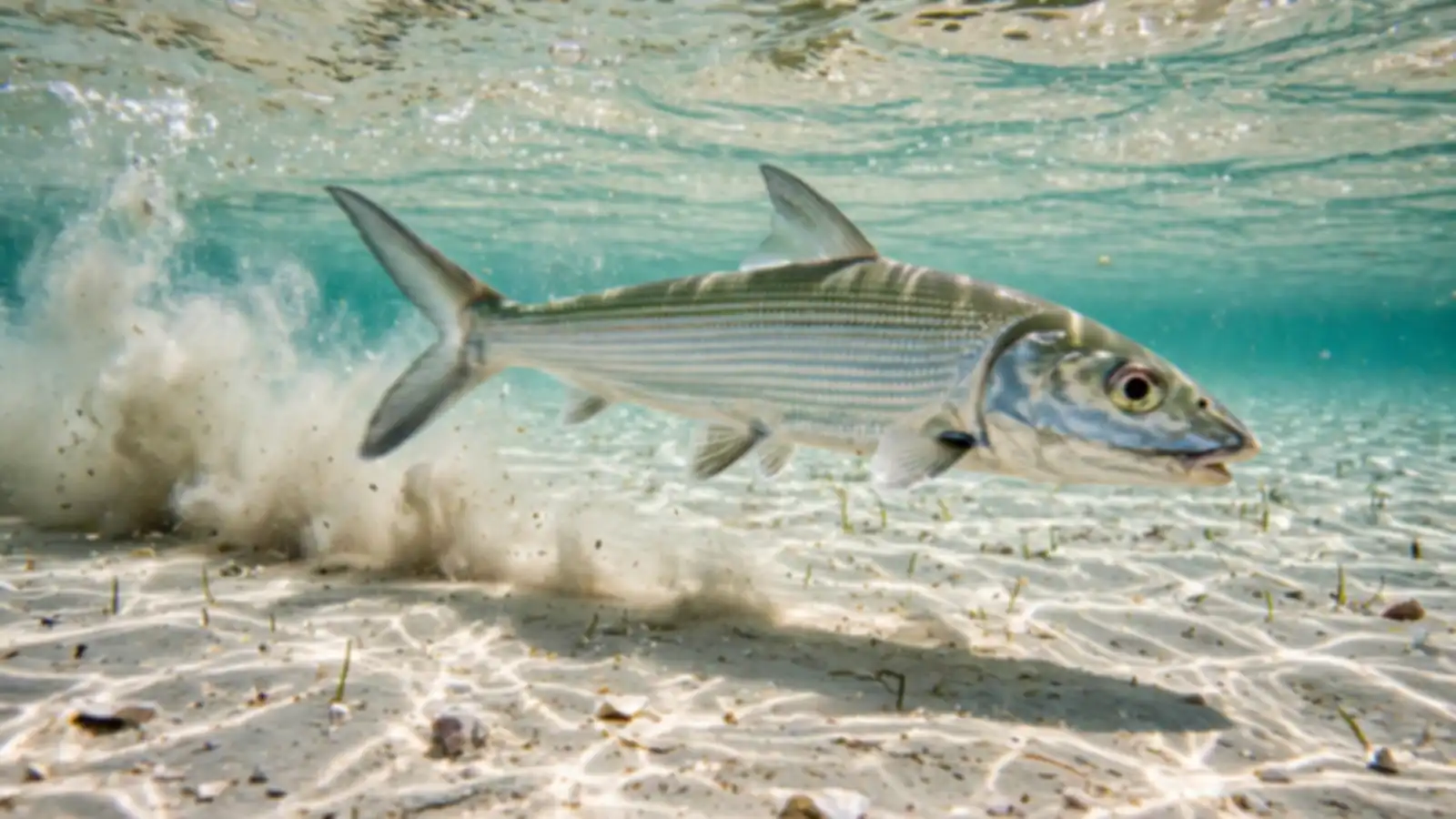
Startle a one and physics takes over. The forked tail drives a body with almost no drag, and the fish covers the flat in a streaking run that leaves a comet-trail of silt — burst speeds around 40 miles per hour (64 km/h) are widely cited, and the first run of a hooked fish, a hundred metres or more in seconds, is the stuff of flats legend.
The speed is not for hunting; they eat slow things — crabs, shrimp, clams. It is entirely defensive, an escape system for an animal that feeds in the open, in inches of water, surrounded by faster mouths. A fish that cannot hit top speed instantly is a barracuda’s lunch, so the species has optimised acceleration above almost everything else.
Anglers feel it as violence out of all proportion to the fish’s size: a three-pound fish strips line like a fish five times heavier. It is the purest pound-for-pound speed in inshore fishing, and it evolved not for sport but for survival on a bright, exposed stage where there is nowhere to hide except invisibility — and no second chance to use it.
What Is Tailing? How They Feed
At dawn, on a falling tide, the flat dimples with small silver flags. A fish feeding in water shallower than its own body has only one option: tip head-down, root in the bottom with its underslung mouth, and let the top fork of its tail break the surface. That waving tail — tailing — is the flats’ most famous sight, and the surest sign of a calm, feeding, catchable fish.
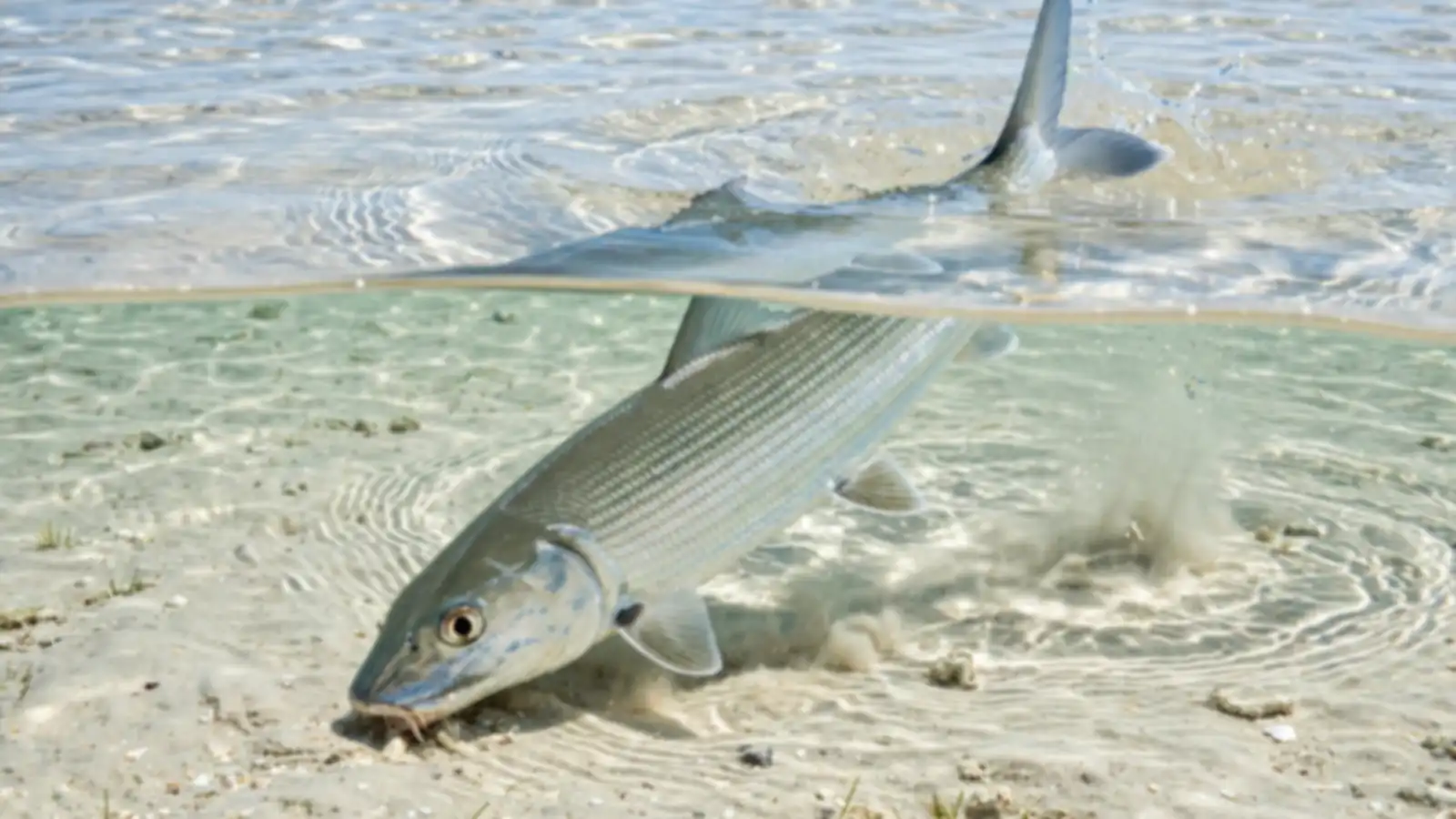
The menu is the bottom itself: swimming crabs, pistol and snapping shrimp, clams, worms and small gobies. A fish hunts by sight and smell, hovering over likely patches, then stabbing its snout into the sand and blowing out jets of water to expose buried prey. The puffs of silt — muds — linger behind a feeding school like smoke signals.
Crushing happens at the back of the mouth, where plates of blunt teeth grind shell and crab into swallowable pieces — the fish is named, unromantically, for the many fine bones in its flesh rather than anything about its diet. It is a poor food fish and a protected treasure almost everywhere it matters, which suits everyone, especially the fish.
Habitat: The Flats of Andros and Beyond
Their habitat is a map of the tropics drawn in white and green: sand flats and turtle-grass beds in water from ankle depth to a few metres, worked with the tide. The fish flood onto the flats to feed as the water rises and drain off into channels and deeper edges as it falls, timing their lives to the moon.
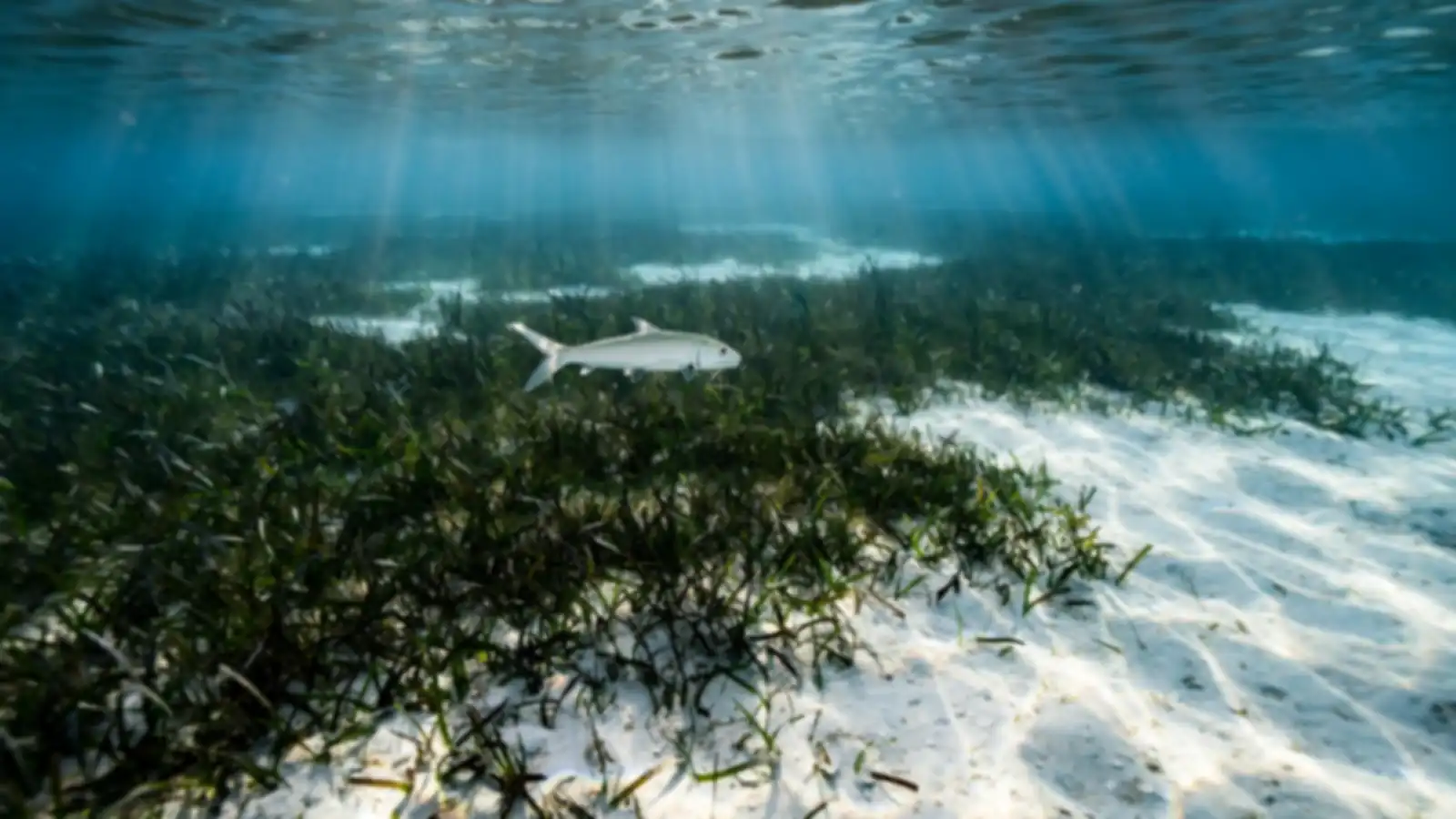
The Caribbean strongholds are famous: Andros in the Bahamas, a sprawl of flats bigger than some countries, calls itself the species’ capital of the world, and the Florida Keys, Cuba, Belize and Mexico’s Yucatán all hold legendary fisheries. The Indo-Pacific answers with the Seychelles, Christmas Island, Hawaii and northern Australia. Tagging shows most fish are homebodies, faithful to a local flat system for years.
But the flats are only half the life. Adults gather in deep water offshore to spawn, in aggregations that plunge to surprising depths at dusk, and their leaf-like larvae drift for weeks before settling inshore. Protecting a fish that lives in a foot of water turns out to require protecting a whole seascape, from mangrove creek to offshore spawning drop.
Types of These Fish and the Flats Fishery
Ask how many species exist and the honest answer is: more than the books said. For a century, one name — Albula vulpes — covered them all. Genetic studies since the 2000s have split the complex into nine or more species across the Atlantic and Indo-Pacific, separable by DNA and fine anatomy but effectively identical on the flat. The grey ghost turned out to be a family of ghosts.
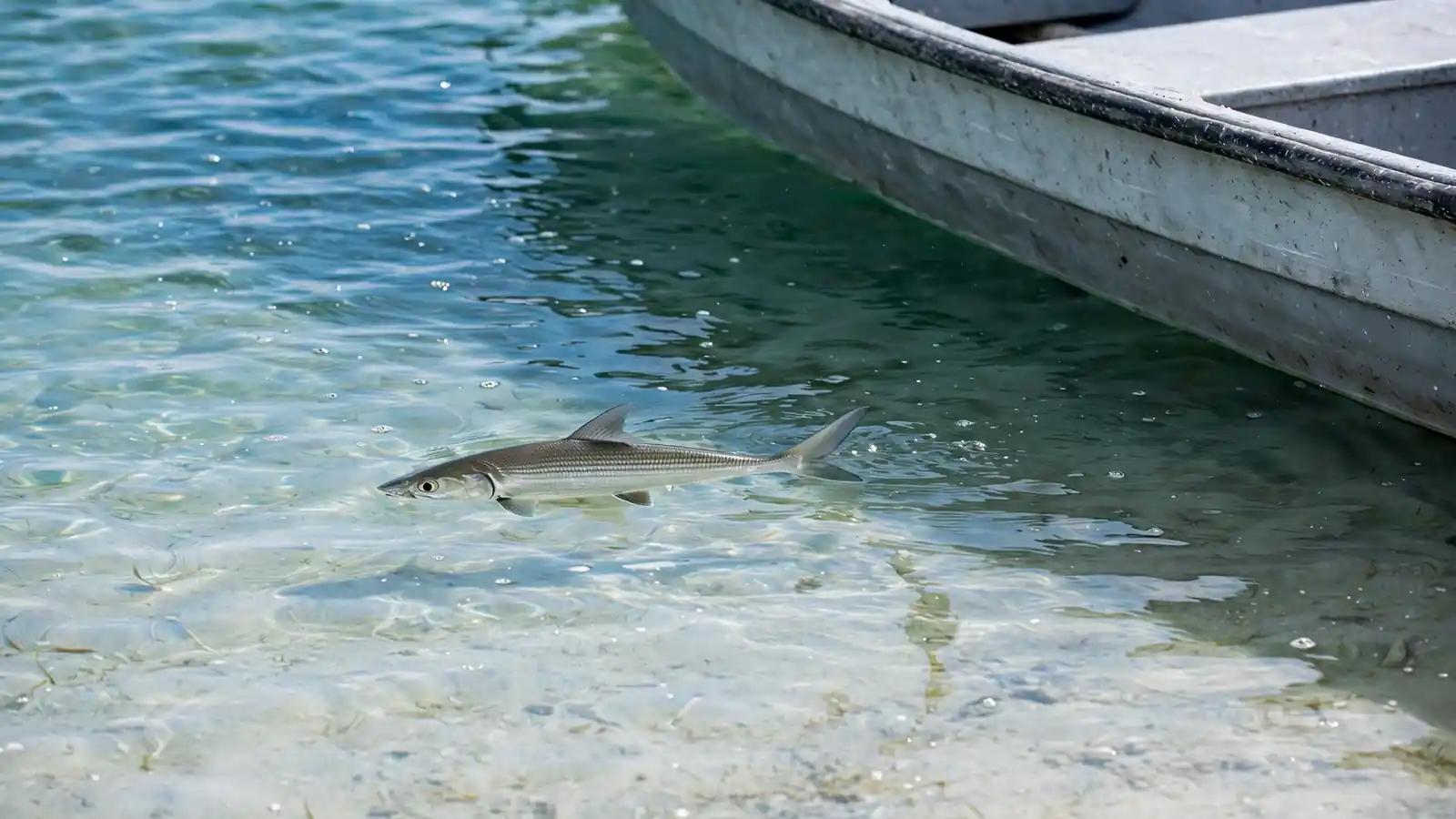
The fishery built around them is a model of value without harvest. They are released almost everywhere they are targeted — Florida protects them fully — and studies of the flats economy have valued a single living fish, caught and released over its lifetime, in the thousands of dollars to local communities. A fish worth more alive than dead, many times over, is a fish with a future.
Threats remain local and fixable: netting in some regions, and flats and mangroves lost to development. But the trajectory is hopeful — the more the world learns of the ghost’s hidden diversity, the more carefully it steps onto the flat at dawn, scanning the sand for a shadow that belongs to the ghost.
Fun Facts
- Anglers often spot a one by its shadow alone — the fish itself, mirroring the sand, is effectively invisible from above.
- They blow jets of water into the sand to expose buried clams and shrimp, leaving little craters and puffs of mud behind them.
- What was long called one species is now known to be a complex of nine or more species, told apart mainly by DNA.
- A hooked fish’s first run can strip a hundred metres of line in seconds — speed that evolved to escape sharks, not anglers.
- Andros in the Bahamas, with its vast network of flats, is known as the species’ capital of the world.
- They gather in deep offshore water to spawn at dusk, descending far below the flats where they spend their days.
Frequently Asked Questions
Why Is the Bonefish Called the Ghost of the Flats?
Because a it is nearly invisible at home. Its back is mirror-silver that reflects the sand and grass beneath it, so over a bright flat the fish effectively disappears — anglers often see only its shadow moving across the bottom. Add wariness honed by sharks and barracuda, and the fish earns its other name too: the grey ghost.
How Fast Is a Bonefish?
A fish is famously fast in short bursts — around 40 miles per hour (64 km/h) at full flight is the widely cited figure, and anyone who has seen one leave a flat believes it. Hooked fish make blistering first runs of a hundred metres or more. The speed is escape engineering: a deeply forked tail, a stiff torpedo body and a life spent one shadow away from a barracuda.
How Many Types of Bonefish Are There?
More than anyone thought. The group was long treated as one worldwide species, Albula vulpes, but genetic work since the 2000s has split it into a complex of nine or more species, several still being formally described. Anglers cannot tell them apart on the flat — the splitting is done in the DNA lab — but it means the world’s populations are more diverse than the field guides said.
Where Do Bonefish Live?
They live on tropical flats worldwide: the Bahamas (Andros is the self-styled species’ capital of the world), Florida, Mexico’s Yucatán, Belize, Cuba, and across the Indo-Pacific from the Seychelles to Hawaii and Christmas Island. They ride the tide onto sand and turtle-grass flats to feed, and drop to deeper channels when the water falls or danger comes.
What Does Tailing Mean?
Tailing is how a one feeds in water too shallow for its body. The fish tips head-down to root crabs and shrimp from the bottom, and the top fork of its tail breaks the surface, waving slowly as it feeds. A field of tails on a dawn flat is one of fishing’s great sights — and the surest sign they are feeding calmly and can be approached.
Similar Species Worth Exploring
Keep Exploring
Scale up to the flats’ giant in our guide to the tarpon, the bonefish’s air-breathing neighbour, or browse every hunter of the bright shallows in our guide to the types of fish. The tide rises, the flags appear, and the shadow slides over the sand — the bonefish.