Hammerhead Shark
Hammerhead Shark: the shark that carries a hammer for a head
The hammerhead shark is the easiest shark in the sea to recognise, a whole family of sharks whose heads are flattened and stretched sideways into a hammer called a cephalofoil, with an eye at each tip. That strange engineering is not decoration. It is a sensory array, a steering wing and a prey-pinning tool in one, and it comes in sizes from a metre-long seagrass dweller to a six-metre oceanic giant.
By Emily Carter · Reviewed by our vet team · Updated 10 November 2026 · 11 min read
Eyes at the tips of the hammer9 to 10 species in one familyScalloped schools in their hundreds
At a Glance
No other shark looks remotely like the hammerhead shark, and no other shark family divides opinion like it either. Are the hammerheads one odd idea copied nine times, or one of evolution’s most successful designs? Below you will meet every major species, learn what the hammer is actually for, and see why this family is now among the most threatened of all sharks.
Hammerhead Shark Size and Weight
Hammerhead shark size spans a remarkable range for one family. At the bottom sits the bonnethead, barely a metre long and light enough to lift with one hand. At the top, the great hammerhead reaches about 6 metres (20 feet) and can weigh roughly 450 kilograms, placing it among the largest predatory sharks. Between them, the familiar scalloped and smooth hammerheads commonly grow to around 3.5 to 4 metres. Females grow larger than males in the big species, as in most sharks.
The hammer scales with the body. In the great hammerhead the cephalofoil is broad and almost straight across the front; in the winghead shark it is absurdly wide, stretching to about half the animal’s total length, the most extreme head of any shark. The body stays classically shark-like: grey-brown above, pale below, with a tall first dorsal fin that in the great hammerhead rises like a sail.

Size shapes lifestyle. The metre-long bonnethead spends its life in knee-deep seagrass, while the great hammerhead crosses open ocean and dives deep along reef walls. One body plan, stretched across that whole range, is the family’s real achievement, and you can compare the extremes in our guide to the types of sharks.
Hammerhead Shark Species
How many hammerhead shark species are there? Most references list nine or ten, in two genera, and the count is honestly debated. The genus Sphyrna holds nearly all of them, while the winghead sits alone in Eusphyra. In 2024 researchers split a tenth species, Sphyrna alleni, from the bonnethead, a reminder that even famous sharks still hide unrecognised diversity. Meet the main members of the family below, biggest first.
Great Hammerhead (Sphyrna mokarran). The giant of the family and the one most divers dream of: up to about 6 metres, with a cephalofoil that runs almost straight across the front with a shallow notch in the centre, and a towering, sickle-shaped dorsal fin. It is a solitary, wide-ranging hunter of reefs and coasts, specialising in stingrays and even other sharks. Read our dedicated great hammerhead guide for its full story.
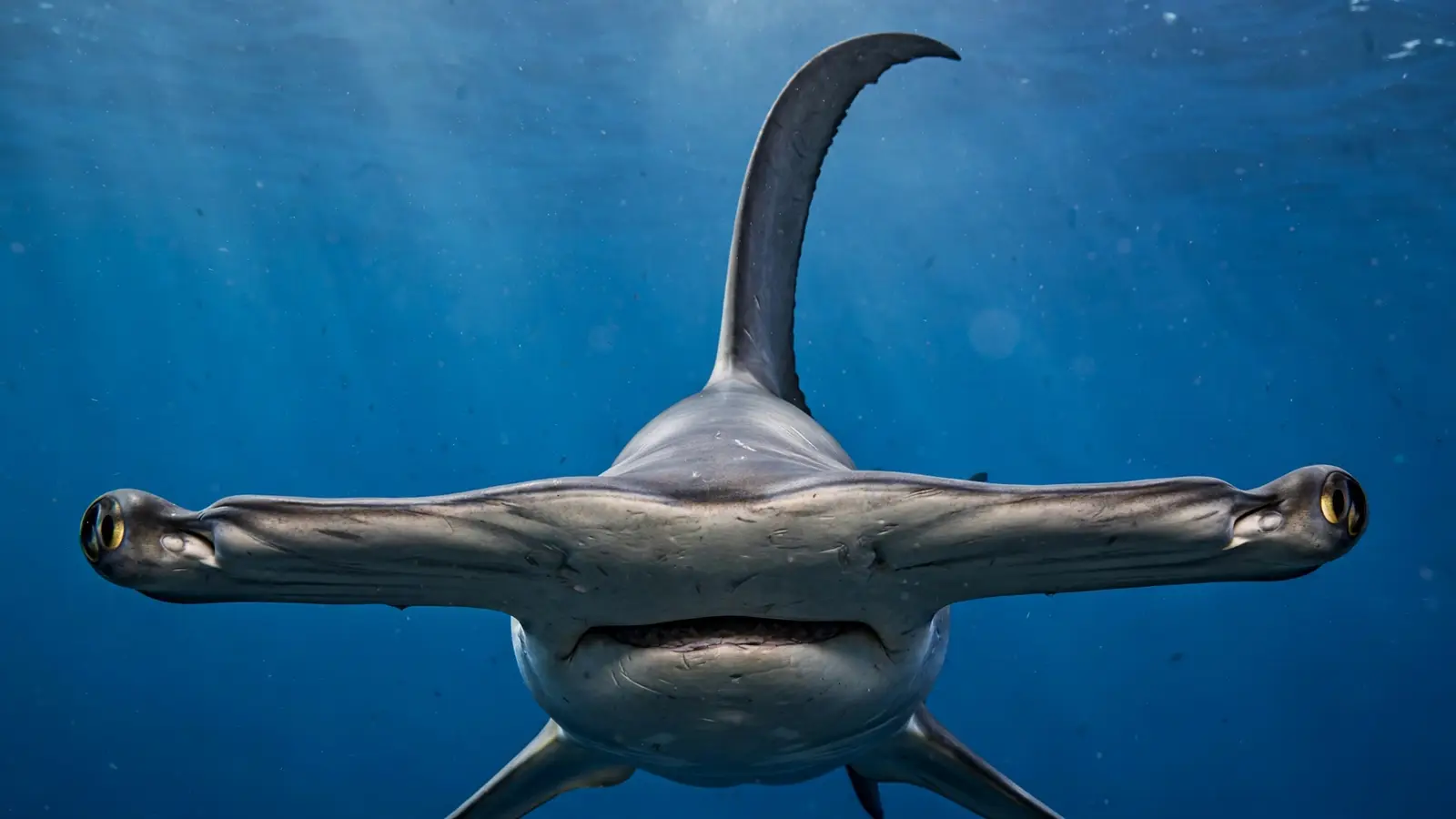
Scalloped Hammerhead (Sphyrna lewini). The schooling species, named for the scalloped front edge of its head, with lobes and a clear central notch. Scalloped hammerheads gather in daytime schools of hundreds around seamounts and islands, then disperse at night to hunt. It is among the most threatened of all sharks. Our scalloped hammerhead guide covers the schools in depth.
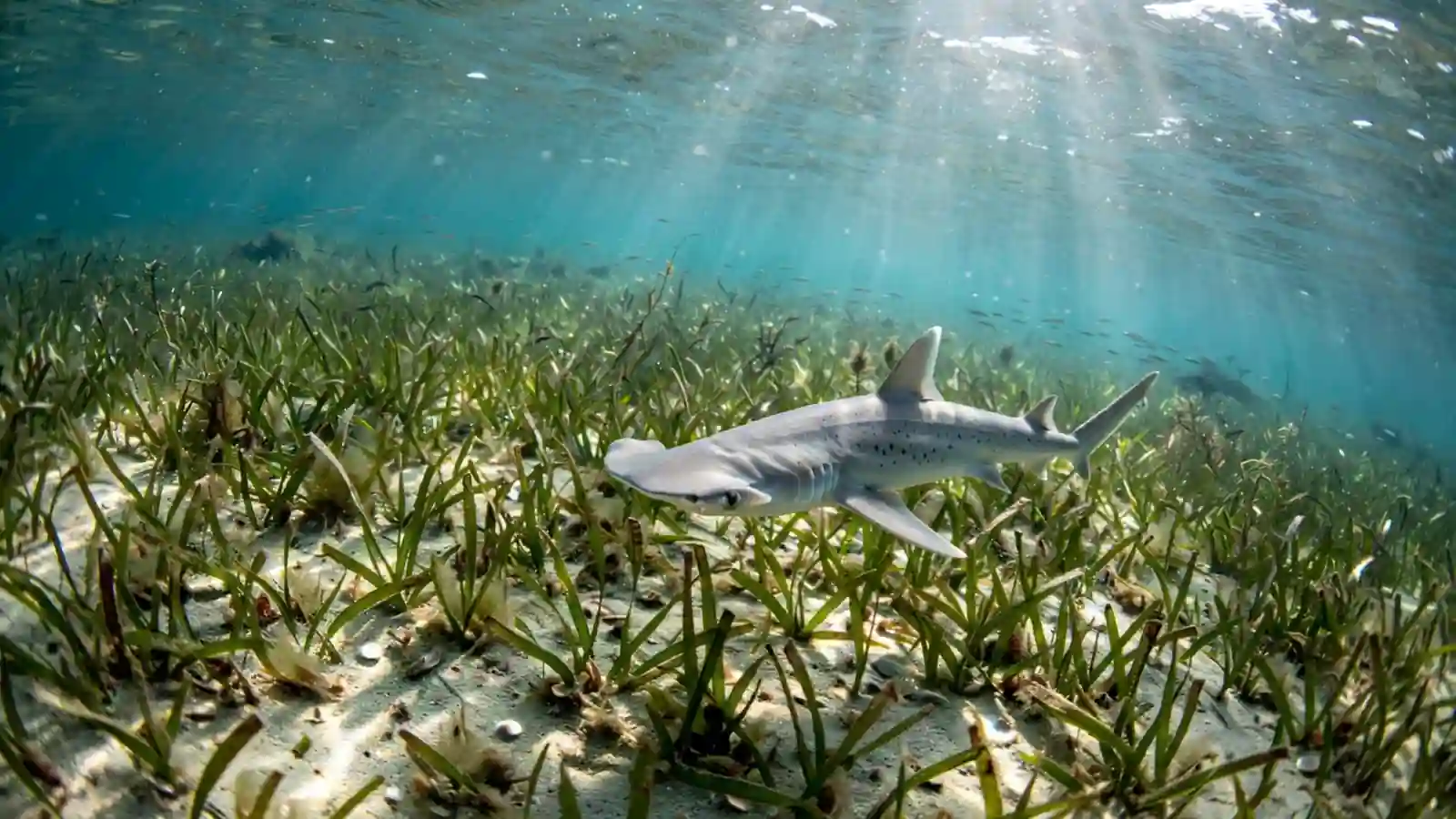
Smooth Hammerhead (Sphyrna zygaena). The temperate traveller, recognised by a rounded cephalofoil with no notch in the centre of its front edge. It ranges further into cooler water than its cousins and makes long migrations, sometimes in groups. Bonnethead (Sphyrna tiburo). The miniature of the family, with a small, rounded, shovel-shaped head. Bonnetheads live in shallow bays and seagrass, eat crabs and shrimp, and famously digest seagrass itself, the closest any shark comes to eating its vegetables. Meet it in our bonnethead shark guide.
Winghead Shark (Eusphyra blochii) carries the widest hammer of all relative to its body, a slender coastal species of the Indo-Pacific reaching about 1.8 metres. Smalleye Hammerhead (Sphyrna tudes) is a small, golden-tinted coastal species of South America. The remaining names complete the family: the scoophead, the whitefin hammerhead, the scalloped bonnethead and the Carolina hammerhead, described only in 2013, plus the newly split Sphyrna alleni.
Two portraits tell the family story at a glance: the great hammerhead’s straight-edged hammer and sail-like fin above, and below, in the bonnethead, the same blueprint shrunk to a rounded shovel for life in the shallows.
The Cephalofoil: What the Hammer Is For
So why do hammerhead sharks have a hammer shaped head? The structure is called a cephalofoil, and it does several jobs at once. First, vision: with an eye at each tip, the shark gains an exceptional field of view, including strong binocular overlap in front and the ability to see above and below at the same time. A hammerhead can watch a diver approach from almost any angle without turning.
Second, electroreception: the cephalofoil spreads the electrical sense pores, the ampullae of Lorenzini, across a far wider area, turning the head into a metal detector swept over the sand, where buried stingrays betray themselves. Third, the flat head works as a wing, generating lift and far sharper turns than a round-headed shark can manage.

And fourth, dinner service. Great hammerheads have been watched pinning stingrays to the seabed with the hammer, holding the ray down with the head while biting its wings. Hammerhead shark teeth, by contrast, are unremarkable: modest, triangular blades in several rows, suited to fish, squid and crustaceans rather than cutting up large prey. The head, not the teeth, is this family’s signature weapon.
Habitat, Schools and Behaviour
Hammerheads are warm-water sharks, found in tropical and warm temperate seas worldwide, over continental shelves, around oceanic islands and seamounts, and along reef fronts where deep water meets the coast. Small species keep to bays, estuaries and seagrass flats, while the great and scalloped hammerheads range offshore and make seasonal migrations of hundreds of kilometres.
Behaviour is where the scalloped hammerhead steals the show. By day, females gather in schools that can number in the hundreds, hanging in ordered ranks above seamounts and island drop-offs, swaying together in one of the ocean’s great spectacles. Why they school is still debated. At night the school dissolves and each shark hunts alone; the great hammerhead, by contrast, is resolutely solitary.

Reproduction follows the live-bearing pattern of their requiem-shark relatives: embryos develop inside the mother, nourished through a placenta-like connection, and litters of pups are born in shallow nursery areas. Females of the larger species breed every two years or so, another slow schedule that, like the great white shark, leaves little room for heavy losses.
Diet and Feeding
What hammerheads eat depends on their size. The family menu centres on bony fish, stingrays and skates, squid and octopus, and crustaceans such as crabs and shrimp. Stingrays are the signature prey of the big species: great hammerheads hunt them relentlessly, apparently unbothered by their venomous spines, which are regularly found embedded in the sharks’ jaws and heads. Scalloped hammerheads lean more towards fish and squid taken at night, often in deep water beyond the reef edge.
At the small end, the bonnethead adds a genuine surprise: seagrass, which experiments show it actually digests, making it the only shark known to get nutrition from plants. You can browse the family’s classification and species list to see how the two genera divide these feeding roles.

Hunting technique ties back to the hammer. The wide head sweeps for the electrical whisper of buried prey, the lift from the cephalofoil allows tight turns in pursuit, and for ray hunters the head becomes a clamp. Form and feeding, in this family, are the same story told twice.
Threats and Conservation
Are hammerhead sharks endangered? Several of them, seriously. The scalloped and great hammerheads are listed as Critically Endangered, the smooth hammerhead as Vulnerable, and the winghead and others as Endangered, making this one of the most threatened shark families on Earth. The drivers are fishing, deliberate and accidental, and above all the value of their large fins in trade: schooling species can be caught in devastating numbers in a single net set.
International trade in the main commercial species is now regulated, and some sanctuaries and island nations protect their famous schools, which are also worth a fortune alive to dive tourism. The biology still argues for caution: late maturity, litters every couple of years, and predictable gatherings at the same seamounts each season. Protecting a hammerhead school is unusually achievable, because the sharks themselves keep returning to the same few places, if those places are left in peace.
Fun Facts
- The winghead shark’s cephalofoil can be almost half as wide as the shark is long, the most extreme head of any shark.
- With eyes at the tips of the hammer, hammerheads can see above and below themselves at the same time, with a wide binocular overlap in front.
- The bonnethead is the only shark known to digest seagrass, getting real nutrition from a plant.
- A new hammerhead species, Sphyrna alleni, was split from the bonnethead as recently as 2024, and the family species count is still debated.
- Scalloped hammerhead schools can number in the hundreds, gathering by day at seamounts and dispersing to hunt alone at night.
- Great hammerheads pin stingrays to the seabed with their hammers, and are often found with ray spines embedded harmlessly in their jaws.
Frequently Asked Questions
Why Do Hammerhead Sharks Have a Hammer-Shaped Head?
Scientists think the hammer, called a cephalofoil, does several jobs at once. Eyes at its tips give a hammerhead shark an exceptionally wide field of view, pores spread across it detect the electrical signals of buried prey such as stingrays, its flat shape works like a wing for lift and sharp turns, and big species even use it to pin rays to the seabed.
How Many Species of Hammerhead Shark Are There?
Most references list nine or ten hammerhead shark species in two genera, Sphyrna and Eusphyra. The best known are the great, scalloped and smooth hammerheads, the bonnethead and the winghead. The count is still debated, and a tenth species, Sphyrna alleni, was separated from the bonnethead in 2024, so the honest answer is nine to ten and possibly rising.
How Many Teeth Does a Hammerhead Shark Have?
A hammerhead shark typically has around 50 to 60 teeth in its jaws at any one time, arranged in roughly 24 to 28 rows in the upper jaw and 25 to 30 in the lower, with more rows waiting behind to replace lost teeth. The teeth are modest triangular blades for gripping fish, squid and crustaceans, not heavy cutting tools.
How Big Do Hammerhead Sharks Get?
It depends entirely on the species. The bonnethead stays around 1 metre long, scalloped and smooth hammerheads commonly reach 3.5 to 4 metres, and the great hammerhead, the family giant, grows to about 6 metres (20 feet) and roughly 450 kilograms. Females of the large species grow bigger than males.
What Do Hammerhead Sharks Eat?
Hammerhead sharks mainly eat bony fish, stingrays and skates, squid, octopus and crustaceans such as crabs and shrimp. Stingrays are a speciality of the great hammerhead, which pins them with its head. The little bonnethead is the family oddball: it also eats, and genuinely digests, seagrass from the meadows where it hunts.
Are Hammerhead Sharks Endangered?
Several are in serious trouble. The great and scalloped hammerhead sharks are listed as Critically Endangered, the winghead and some others as Endangered, and the smooth hammerhead as Vulnerable. Fishing and the high value of their large fins in trade are the main pressures, along with accidental capture, and their slow breeding slows any recovery.
What Is a Cephalofoil?
A cephalofoil is the scientific name for the hammerhead shark’s flattened, sideways-stretched head. The word combines Greek roots for head and foil, or wing. This single structure carries the eyes at its tips, spreads the shark’s electrical sense organs across a wide area, and generates lift like a wing as the shark swims.
Similar Species Worth Exploring
Keep Exploring
Still curious about sharks with extraordinary heads? Browse the whole family tree in our guide to the types of sharks, meet the record-breaking whale shark, or contrast these warm-water schoolers with the arctic greenland shark. However you explore next, the family no one forgets after a first meeting is the hammerhead shark.