Sea Nettle
Sea Nettle: The Stinging Jelly of Bays and Coasts
The sea nettle trails tentacles up to fifteen feet long behind a golden-brown bell, and it is the jellyfish most swimmers on the Atlantic and Pacific coasts will meet. Its sting hurts like a bee sting — and it eats comb jellies by the hundred.
By Emily Carter · Reviewed by our vet team · Updated 10 November 2026 · 9 min read
Tentacles to 15 ftSting like a beeEats comb jellies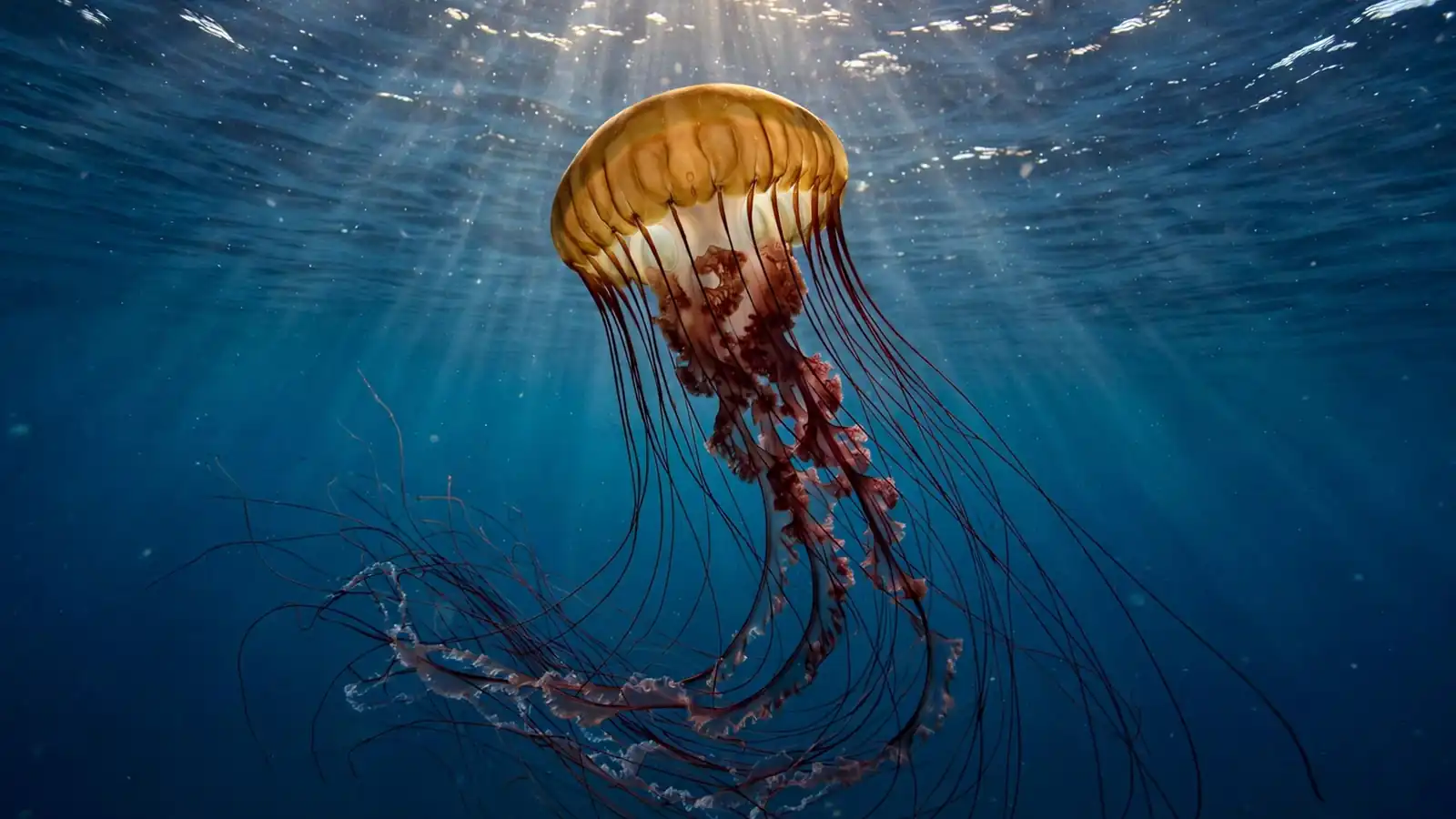
At a Glance
The sea nettle is a group of closely related jellyfish in the genus Chrysaora, and it is the stinging jelly most people meet on the Atlantic and Pacific coasts. Its long tentacles, painful sting and summer blooms in Chesapeake Bay have made it famous — and its appetite for comb jellies makes it useful too.
Sea Nettle Size: Bells to Half a Metre
It grows a bell up to about half a metre across in the largest Pacific individuals — roughly the size of a dinner plate — with tentacles trailing up to fifteen feet behind it. The Atlantic species is smaller, but even it carries tentacles several feet long, and both look bigger in the water than any measurement suggests.
The bell is the animal’s engine: it pulses gently, drawing water past the tentacles, and the tentacles do the fishing. It does not chase prey. It drifts, it pulses, and the tentacles sweep the water around it, stinging whatever they touch.
Atlantic and Pacific: The Two Best-Known Sea Nettles
The Atlantic species, Chrysaora quinquecirrha, is the one Chesapeake Bay swimmers know: a yellowish-brown bell with red tentacles, common along the Atlantic coast. The Pacific species, Chrysaora fuscescens, is the showier cousin — a golden-brown bell to about 50 cm, with tentacles that can reach fifteen feet.
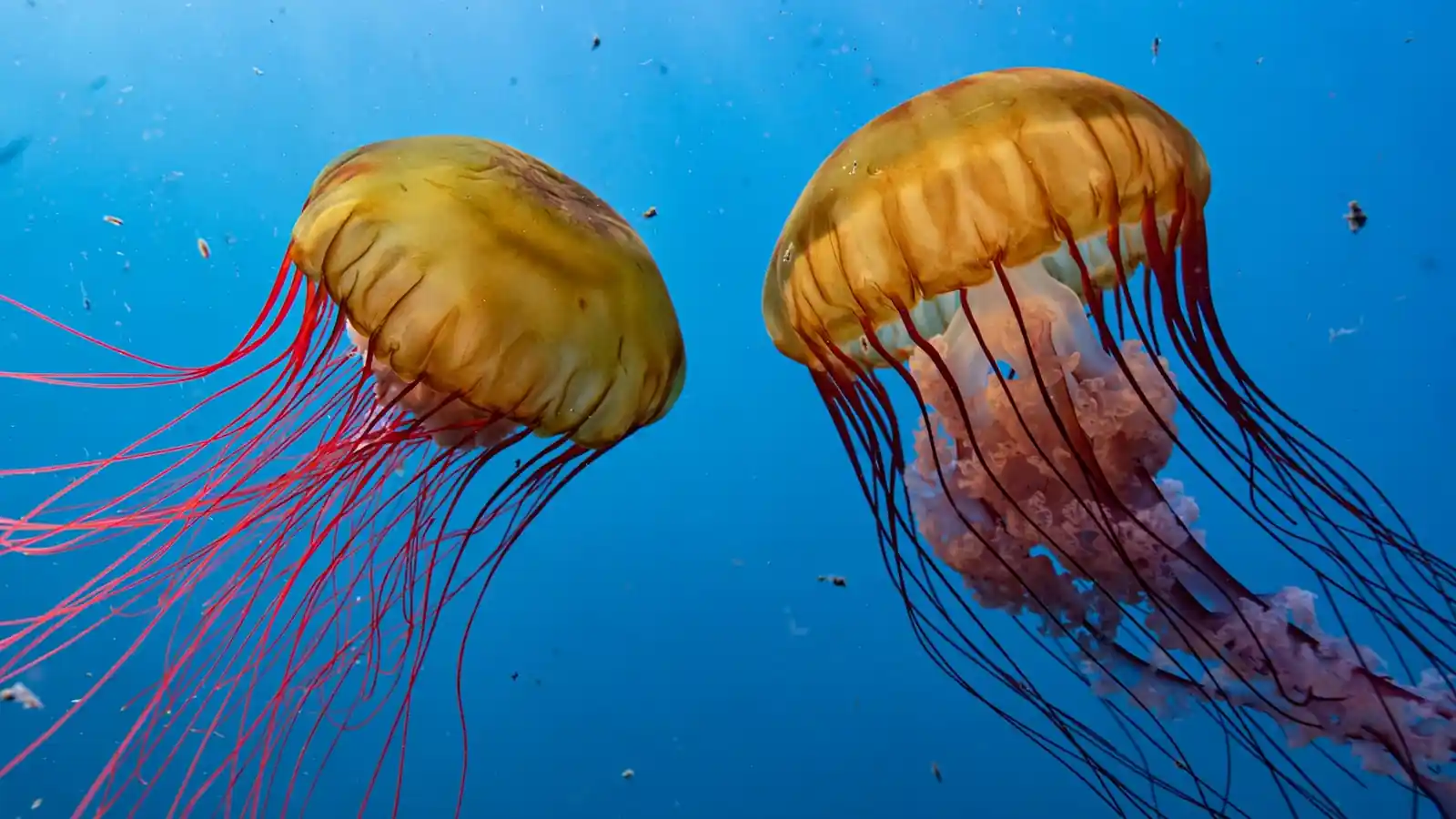
The two look alike at a glance, and for a long time they were treated as one animal. They are not: they live on opposite coasts, they differ in colour and size, and they are separate species. The Atlantic one owns the bays of the east coast; the Pacific one owns the open water of the west.
Where They Live: Bays, Coasts and the Chesapeake
It lives in the Atlantic and the Pacific, in bays, estuaries and open coasts, and it is most famous in Chesapeake Bay, where it arrives in summer — May to September — when the water warms to 78–86°F and turns brackish, at 10–16 parts per thousand of salt. The bay is its nursery and its hunting ground.
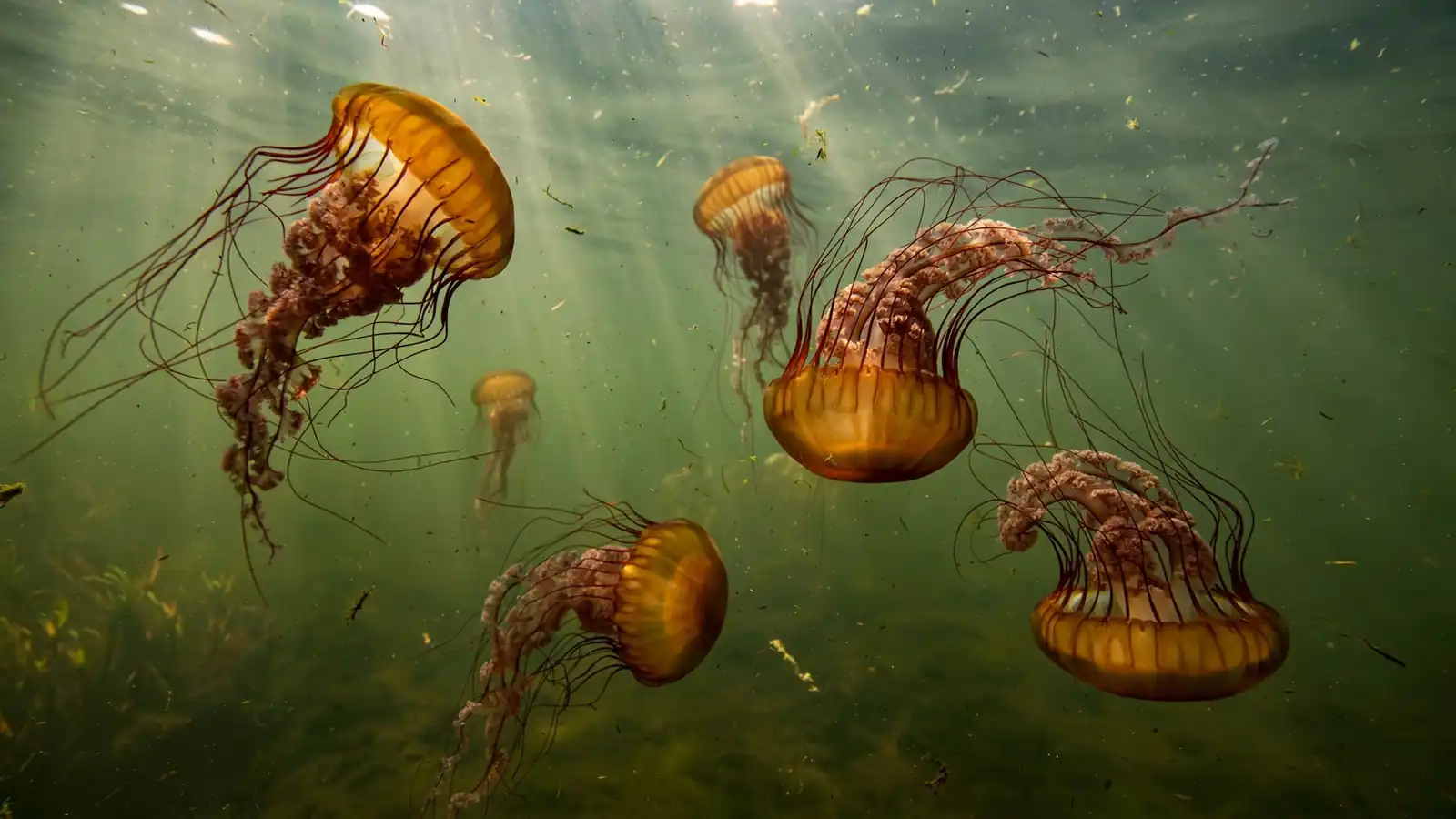
In the bay the nettles gather in such numbers that swimmers learn the season by heart. On the Pacific side they are more of an open-water animal, drifting along the coast in the same cold currents as the fish they hunt. Either way, it follows warm, food-rich water, and it is never far from shore.
What Do They Eat? Comb Jellies and Other Jellies
It eats zooplankton, comb jellies, other jellyfish and small crustaceans — whatever its tentacles catch. Its favourite prey is the comb jelly, the soft, glowing animal that blooms in the same bays, and a single one can eat dozens of them in a day.
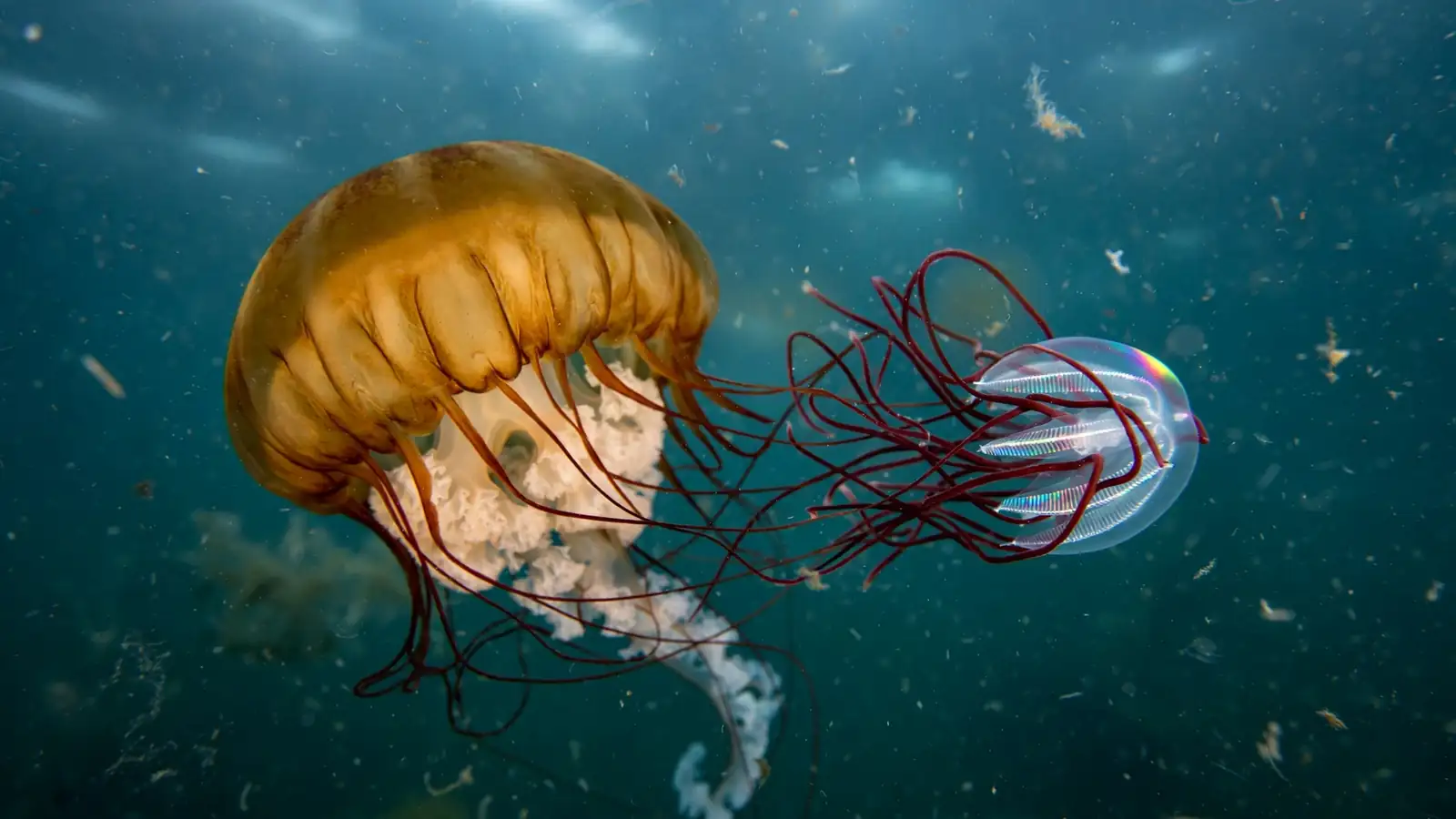
The tentacles sting the prey, the oral arms fold it in, and the mouth takes it. Comb jellies are soft and defenceless, and this jelly is one of the few animals that eats them in numbers — which matters, because comb jellies eat the eggs and larvae of fish, and a bay full of sea nettles is a bay with fewer comb jellies.
The Sting: Painful, Rarely Dangerous
Its sting is rated moderate to severe: a painful rash that appears within about twenty minutes, like a bad bee sting, and fades over hours. It is not lethal except by allergic reaction, but it is painful enough that Chesapeake Bay swimmers plan their summers around it.

If one stings you, get out of the water, rinse the spot with seawater, and use vinegar if it is at hand — Chesapeake Bay guidance recommends vinegar to neutralise the sting. Do not rub the spot, and seek medical help if symptoms spread or breathing is affected. Home treatment is first aid, not a substitute for care. For the full sting guidance, see Chesapeake Bay sting guidance from the bay’s marine researchers.
The Bay Nettle: A Species Hiding for 175 Years
For 175 years, the Atlantic species was thought to be one species. Then, in about 2017, researchers split it: the bay nettle, Chrysaora chesapeakei, is a separate species that had been hiding inside the Atlantic one all along. The two look almost identical, and only careful study of their genetics and their life cycles told them apart.
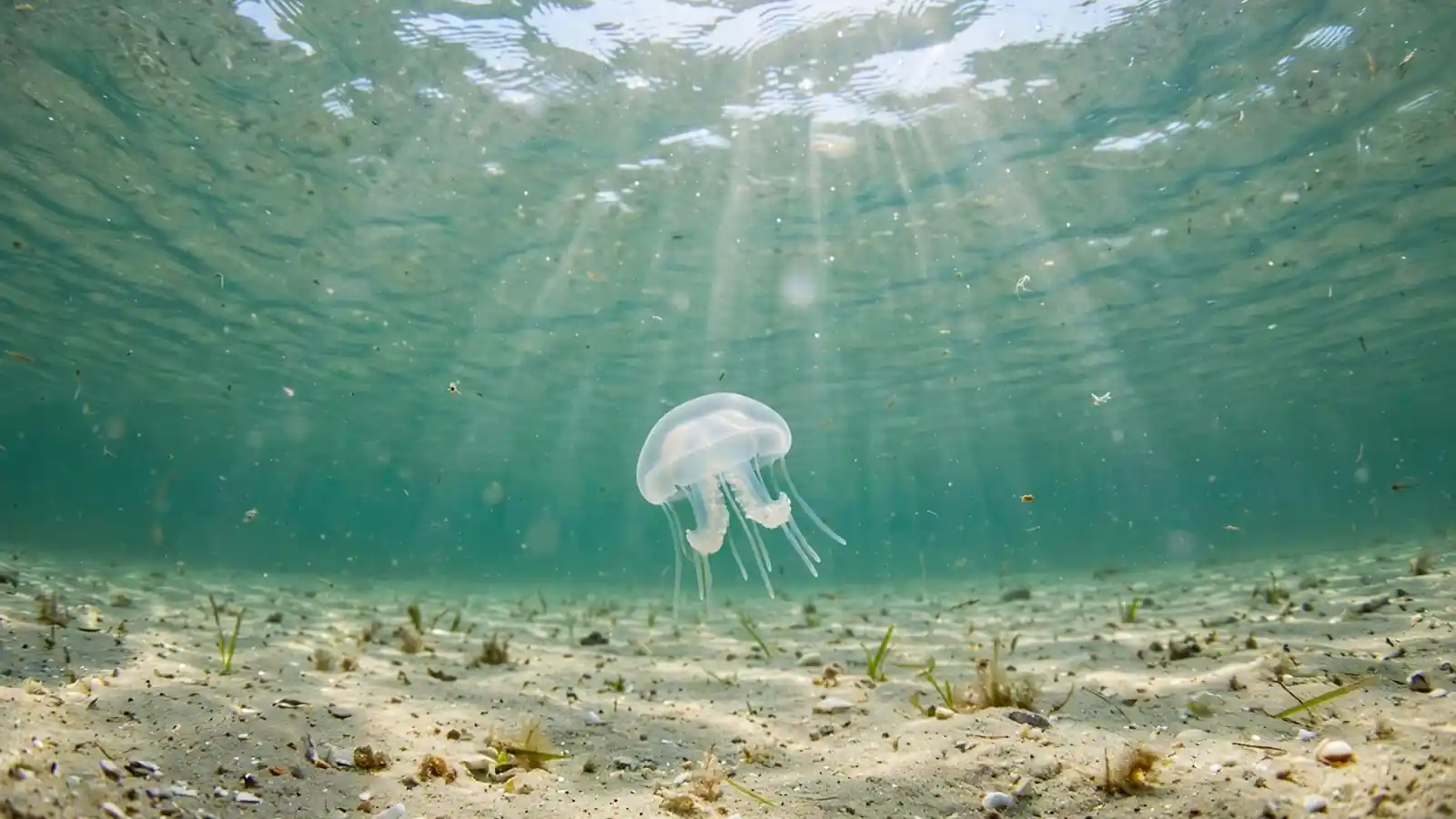
The split is a reminder of how much jellyfish taxonomy is still being written. The bay nettle lives in the same Chesapeake waters as its cousin, stings the same way, and eats the same prey — but it is its own species, and it had been waiting 175 years for someone to notice.
Life Cycle: Polyp, Medusa and Back Again
It begins as a polyp — a tiny stalked animal fixed to a piling, a rock or a shell on the sea floor. The polyp buds off young medusae, and those grow into the drifting bells that fill the bay in summer. When the season ends, the medusae die, but the polyps stay, waiting out the winter to bud again.
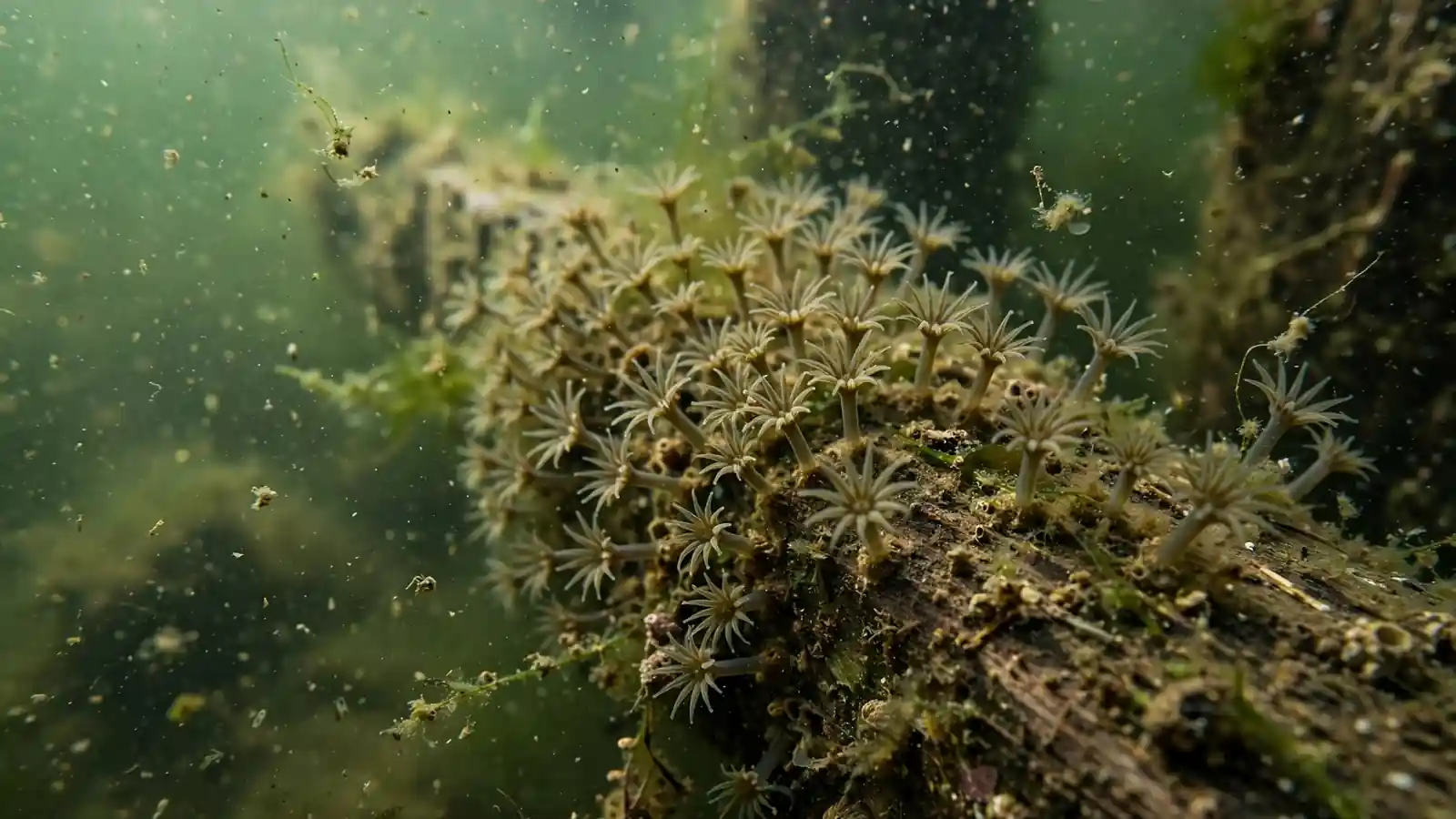
The cycle is why sea nettles return to the same bays year after year: the polyps are permanent residents, and the summer blooms are their offspring. A warm spring means more polyps budding, and a warm summer means more nettles in the water — which is why the bay’s jellyfish seasons vary so much from year to year.
Fun Facts
- Its tentacles can trail fifteen feet behind a bell half a metre across.
- It eats comb jellies — the soft, glowing animals that eat fish eggs and larvae.
- The bay nettle hid inside the Atlantic species for 175 years before scientists split it in about 2017.
- Chesapeake Bay nettles arrive in May and leave in September, following the warm water.
- The Pacific species’ bell can reach about 50 cm, bigger than its Atlantic cousin.
- Its sting is painful but not lethal except by allergic reaction — vinegar helps, per Chesapeake Bay guidance.
Frequently Asked Questions
What Is a Sea Nettle?
A stinging jellyfish in the genus Chrysaora, best known from the Atlantic and Pacific coasts. The group includes the Atlantic, Pacific and bay species, all with long trailing tentacles and a painful sting.
Do Sea Nettles Sting?
Yes. Its tentacles carry stinging cells, and a brush against them leaves a painful rash within about twenty minutes. The sting is rated moderate to severe, like a bad bee sting.
How Bad Is a Sea Nettle Sting?
Painful but rarely dangerous. The rash appears within about twenty minutes and fades over hours. It is not lethal except by allergic reaction — but the pain is real, and Chesapeake Bay swimmers plan their summers around it.
What Should You Do If a Sea Nettle Stings You?
Get out of the water, rinse the spot with seawater, and use vinegar if it is at hand — Chesapeake Bay guidance recommends vinegar to neutralise the sting. Do not rub the spot, and seek medical help if symptoms spread or breathing is affected.
Where Do Sea Nettles Live?
In the Atlantic and the Pacific, in bays, estuaries and open coasts. They are most famous in Chesapeake Bay, where they arrive in summer, May to September, when the water warms to 78–86°F and turns brackish.
What Do Sea Nettles Eat?
Zooplankton, comb jellies, other jellyfish and small crustaceans. Comb jellies are the favourite prey — a single one can eat dozens of them in a day, which helps keep comb jelly numbers down in the bays.
What Is the Difference Between an Atlantic Sea Nettle and a Pacific Sea Nettle?
The Atlantic sea nettle, Chrysaora quinquecirrha, has a yellowish-brown bell and red tentacles and lives on the Atlantic coast, especially Chesapeake Bay. The Pacific species, Chrysaora fuscescens, has a golden-brown bell to about 50 cm and tentacles to fifteen feet, and lives on the Pacific coast.
Similar Species Worth Exploring
Keep Exploring
Meet the moon jellyfish, the gentle jelly that shares its bays, then the blue jellyfish, its smaller and gentler cousin, and browse the whole family in our types of jellyfish hub — then come back to the stinging jelly of bays and coasts, the sea nettle.