Bobtail Squid
Bobtail Squid: The Tiny Squid That Glows With Bacteria
The bobtail squid glows with symbiotic bacteria and vents most of them every dawn — and it has flown to space. It is the tiny, glowing squid of the sandy bottom, and the model animal for the science of symbiosis.
By Emily Carter · Reviewed by our vet team · Updated 10 November 2026 · 9 min read
About 3 cm longGlows with bacteriaFlown to space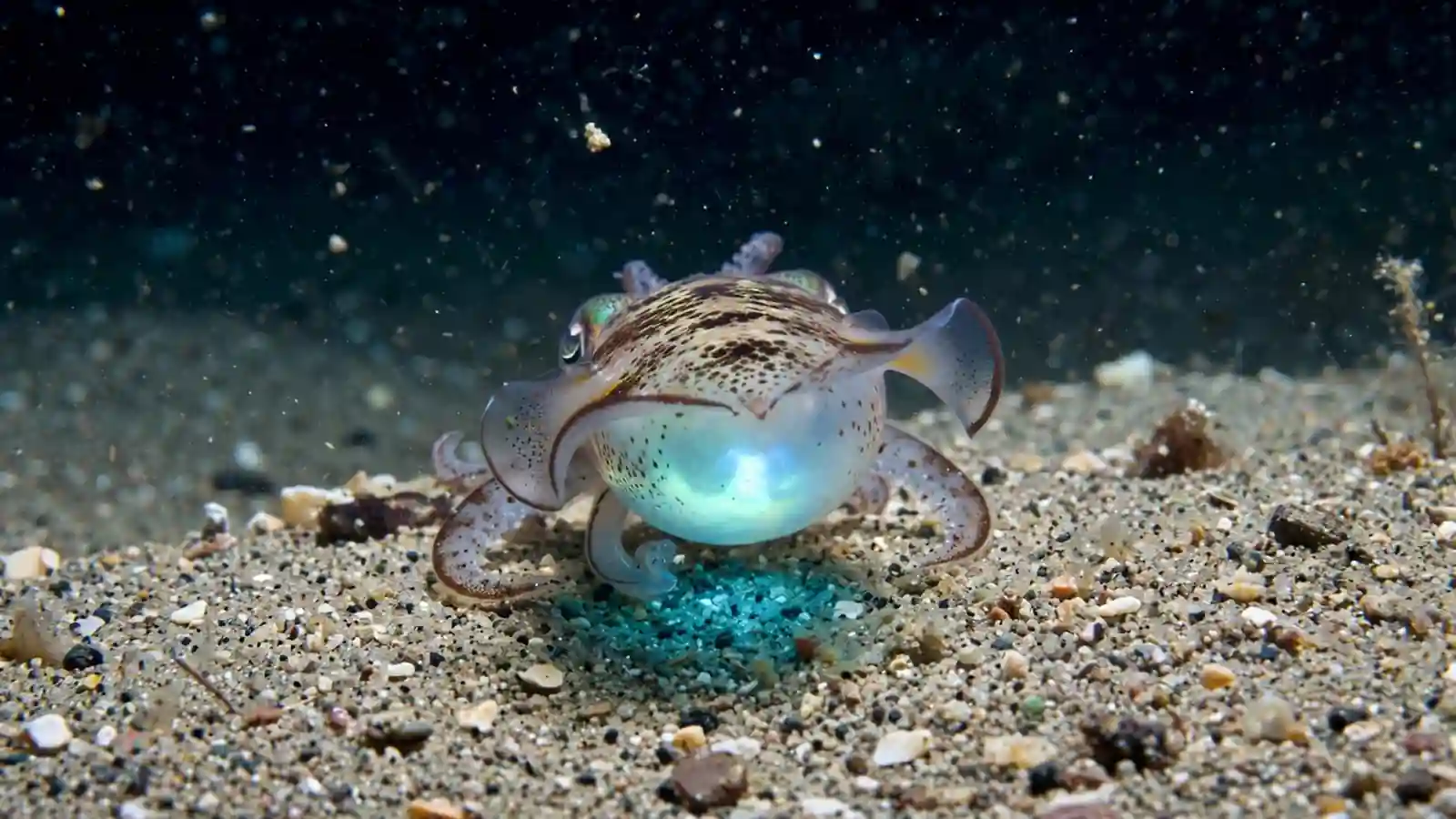
At a Glance
The bobtail squid is a tiny squid in the family Sepiolidae, the bobtail squids, that glows with symbiotic bacteria. Its mantle is 1–8 cm, the Hawaiian bobtail about 3 cm, and it vents most of its glowing bacteria every dawn.
Bobtail Squid Size: A Three-Centimetre Glow
It is tiny: the family ranges from a mantle of 1–8 cm and a total length of 5–15 cm, and the Hawaiian squid, Euprymna scolopes, is about 3 cm long and weighs 2.76 g — a squid the size of a thumbnail, small enough to hide in a handful of sand.
The small size is the point. It lives on the sandy bottom, buried in the sediment with only its eyes showing, and it needs to be small enough to hide and light enough to hover. It is one of the smallest squid in the sea, and its glow is out of all proportion to its size.
The Glow: Bacteria in a Bilobed Light Organ
It glows thanks to symbiotic bacteria — Aliivibrio fischeri, formerly called Vibrio fischeri — living in a bilobed light organ on its underside. The bacteria make light, the squid gives them food and shelter, and the partnership is one of the best-studied symbioses in biology.

Every dawn, the squid vents about 90% of the bacteria out of the light organ, and the remaining 10% multiply during the day to refill it by nightfall. It is a daily reset: the squid keeps the bacteria it needs, throws out the rest, and starts each night with a fresh, glowing culture. For the full story of the glow, see this squid profile, which covers the light organ, the dawn venting and the counter-illumination in detail. The partnership is so close that the light organ is built around the bacteria — a dedicated home, with its own blood supply, that exists only to house the glow.
Counter-Illumination: Hiding From Predators Below
It uses its glow for counter-illumination: the light from the light organ matches the moonlight coming down from above, so a predator looking up from below sees no shadow — only light. The squid becomes invisible from underneath, which is where its predators hunt.
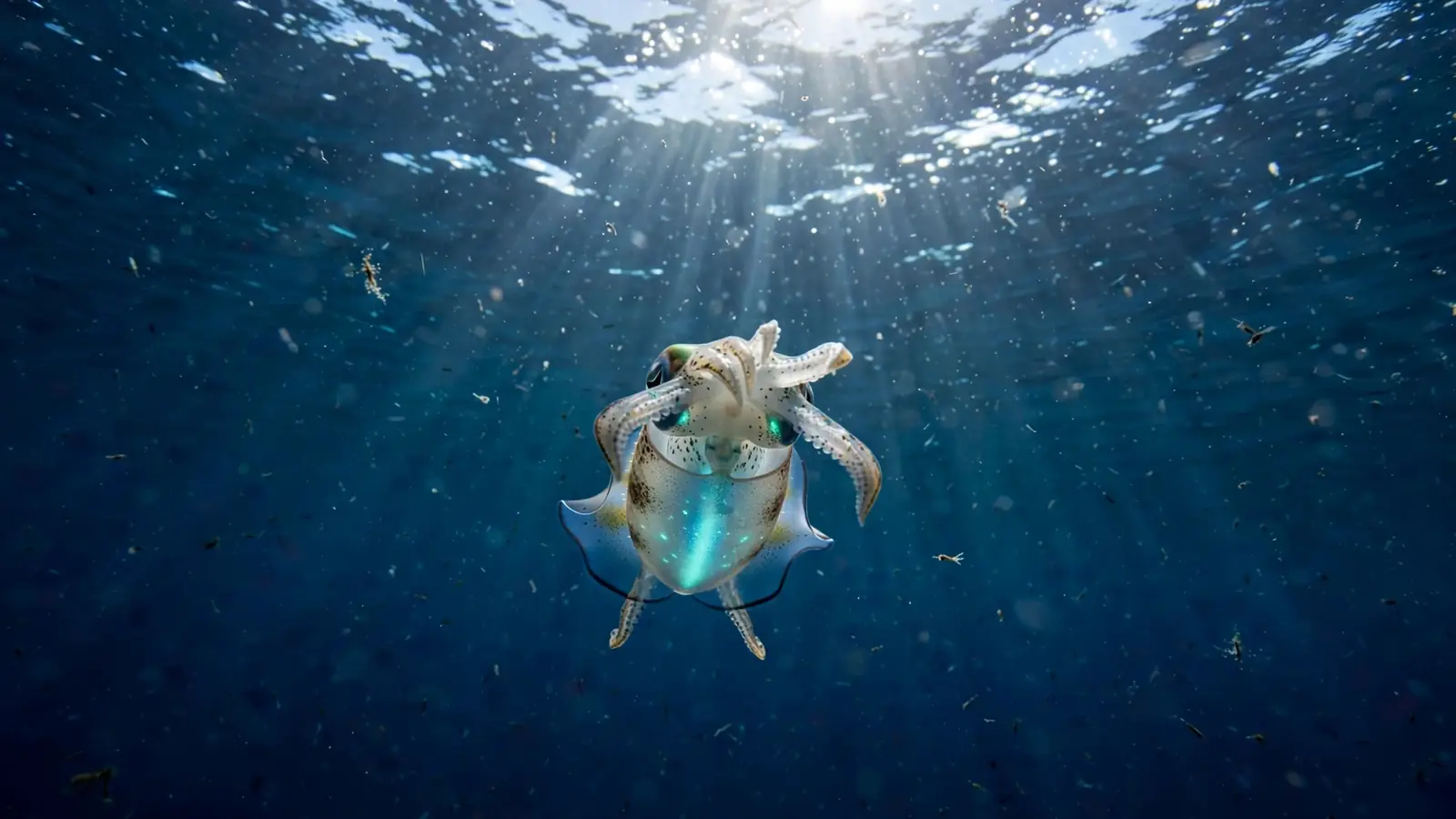
The trick is precise: the squid adjusts the brightness of its glow to match the moonlight, and the light organ is shuttered by skin that opens and closes like a camera aperture. Seen from below, the glowing squid is a silhouette lit from within, and the shadow that would give it away is gone.
Where Bobtail Squids Live: Shallow Sandy Bottoms
Bobtail squids live on shallow sandy bottoms, buried in the sediment with only their eyes showing. The Hawaiian bobtail lives in the shallow waters of Hawaii, and other bobtail species live on sandy bottoms around the world, from the tropics to the temperate seas.
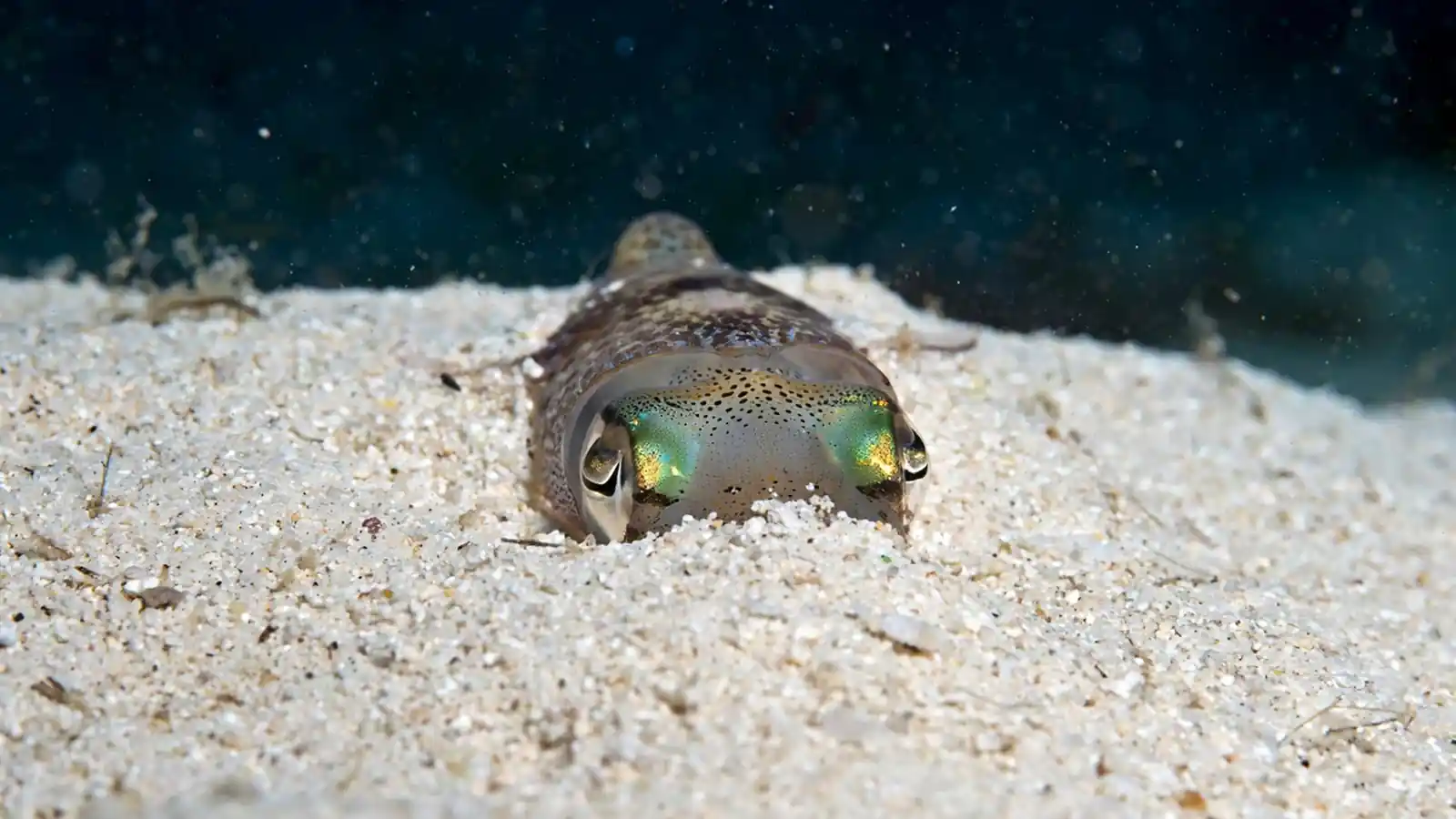
The sandy bottom is the bobtail’s home and its hiding place: it buries itself during the day, with only its eyes above the sand, and comes out at night to hunt and to glow. The sand is its shelter, its camouflage and its hunting ground, all in one.
What Do Bobtail Squids Eat? Shrimps and Small Fish
It eats shrimps and small fish, caught with its arms on the sandy bottom at night. It hunts by ambush: buried in the sand with only its eyes showing, it waits for a shrimp to come close, then strikes with its arms and pulls the prey in.

The hunting is nocturnal, and the glow helps: the light organ’s glow may attract small animals, or it may simply hide the squid while it waits. Either way, the bobtail is a patient hunter for its size, and a single night’s hunting can fill a 3 cm squid.
Bobtail Squids in Space: The 2021 ISS Flight
In June 2021, Hawaiian bobtail squids flew to the International Space Station on SpaceX CRS-22, to study how symbiosis works in space. The question was simple: does the squid still form its bacterial partnership without gravity — and the answer, from the squid that came back, is that the symbiosis works in space much as it does on Earth.

The flight made the squid the first squid in space, and it made the species famous beyond marine biology. The squid went up as a model for symbiosis, and it came back as proof that the partnership between an animal and its bacteria is robust enough to survive a trip to orbit.
Conservation: A Data Deficient Model Species
The Hawaiian squid is listed as Data Deficient by the IUCN, because its taxonomy is uncertain — and no family-wide status exists for the bobtail squids, so this guide does not print one. The species is a model animal for research, not a fished one, and its numbers are not well counted.
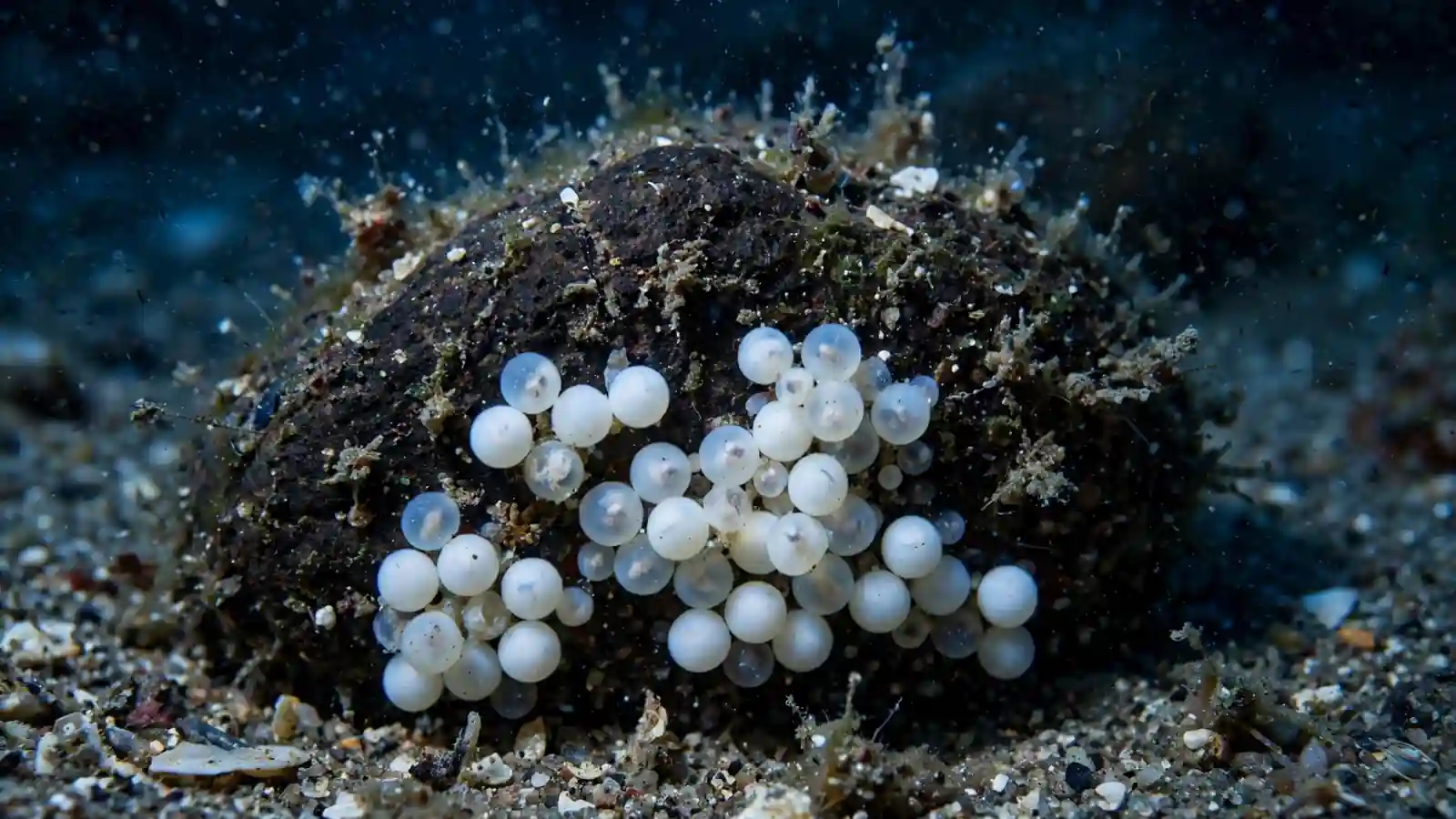
The eggs are laid on rock, in small clusters, and they hatch into tiny squid that settle straight to the bottom. The short life — 3–10 months, most under a year — means the population turns over fast, and the species is common where its sandy habitat is intact.
Fun Facts
- It vents about 90% of its glowing bacteria every dawn, then regrows them by nightfall.
- Its glow matches the moonlight so predators below see no shadow — counter-illumination.
- Hawaiian bobtail squids flew to the International Space Station in June 2021.
- The glowing bacterium is now called Aliivibrio fischeri — it was Vibrio fischeri.
- The Hawaiian bobtail is about 3 cm long and weighs 2.76 g.
- It lives 3–10 months, and most live under a year.
Frequently Asked Questions
How Big Do Bobtail Squids Get?
The family ranges from a mantle of 1–8 cm and a total length of 5–15 cm. The Hawaiian bobtail squid, Euprymna scolopes, is about 3 cm long and weighs 2.76 g — a squid the size of a thumbnail.
Why Do Bobtail Squids Glow?
Because of symbiotic bacteria — Aliivibrio fischeri, formerly Vibrio fischeri — living in a bilobed light organ on the squid’s underside. The bacteria make light, the squid gives them food and shelter, and the glow hides the squid from predators below.
Where Do Bobtail Squids Live?
On shallow sandy bottoms, buried in the sediment with only their eyes showing. The Hawaiian bobtail lives in the shallow waters of Hawaii, and other bobtail species live on sandy bottoms around the world.
What Do Bobtail Squids Eat?
Shrimps and small fish, caught with the arms on the sandy bottom at night. The bobtail hunts by ambush, buried in the sand with only its eyes showing, and strikes when a shrimp comes close.
How Long Do Bobtail Squids Live?
Three to ten months; most live under a year. It is a short life, and the population turns over fast — which is one reason the species is a useful model for research.
Did Bobtail Squids Really Go to Space?
Yes. In June 2021, Hawaiian bobtail squids flew to the International Space Station on SpaceX CRS-22, to study how the squid-bacteria symbiosis works without gravity. The partnership worked in space much as it does on Earth.
What Is the Difference Between a Bobtail Squid and a Firefly Squid?
They are different families with different light. The bobtail squid glows with symbiotic bacteria in a light organ, and uses the glow for counter-illumination. The firefly squid makes its own light with photophores all over its body, and uses it for communication and camouflage. Different mechanism, different family — cross-link them, do not mix them.
Similar Species Worth Exploring
Keep Exploring
Meet the firefly squid, the other glowing squid that makes its own light, then the glass squid, the transparent squid of the twilight zone, and browse the whole family in our types of cephalopods hub — then come back to the tiny squid that glows with bacteria, the bobtail squid.