Barnacle
Barnacle: the crustacean that glues itself down for life
A barnacle begins life as a free-swimming larva and ends it cemented head-first to a rock, a ship or a whale, feeding with its own feathery feet. It is a close cousin of crabs and lobsters that traded walking for the strongest glue in nature. This guide covers the main types, the two-stage life cycle, what barnacles eat and the passengers that ride the largest animals in the sea.
By Emily Carter · Reviewed by our vet team · Updated 10 November 2026 · 8 min read
About 2,100 known speciesFeeds with feathery legsGlue stronger than most man-made adhesives
At a Glance
The barnacle is the crustacean that stopped travelling. Where its cousins the crabs scuttle and the lobsters swim, the adult stays exactly where it landed as a youngster, sealed inside a fortress of its own limestone plates. Darwin was so fascinated by the group that he spent eight years studying barnacles before publishing his theory of evolution — and the more closely you look, the more the obsession makes sense.
This is a group guide rather than a single species: around 2,100 species share one body plan with endless variations, from the acorn barnacles crusting every harbour wall to stalked goose barnacles on driftwood and specialist species that live only on the skin of whales. The two most searched types also get their own dedicated guides in this programme.
What Is a Barnacle?
So, are barnacles crustaceans? Completely. The clue is the larva: it begins as a nauplius, the same distinctive one-eyed larval stage shared with crabs, lobsters and shrimp. Only after settling does it transform into the sessile adult, which kicks away the swimming life for good. Inside the shell the animal lies on its back, head glued down, legs pointing up toward the water.

The adult has no true heart and no gills; oxygen simply diffuses across the body and the feathery legs. The familiar shell is not a shell at all but a wall of interlocking calcareous plates, sealed by a little trapdoor. For a full taxonomic picture, this detailed reference on their classification and biology traces the group’s 325-million-year history back to the Carboniferous period.
That design answers the shoreline’s hardest problem: how to live where waves smash and tides strand you twice a day. The plates resist predators and drying air alike, the cement never lets go, and the animal simply shuts the door and waits for the sea to return.
Depth is the one frontier most barnacles never crossed. Three quarters of all species live in water shallower than 100 metres, packed into the sunlit fringe where plankton is richest and hard surfaces abound. A few lineages did push into the abyss, and others left hard ground entirely for living hosts — but the classic form remains a creature of the shore, which is exactly why it is one of the first marine animals every child learns to find.
Types of Barnacles: Acorn and Goose
Most barnacles fall into two famous body plans, with a weird supporting cast around them.
Acorn Barnacles
The barnacles of every rock and pier. An acorn barnacle builds six wall plates into a squat volcano shape, closed by four smaller plates that form a beak-like door. It cements itself directly to the surface by its head and never moves again. Because they crowd together in their thousands, neighbours grow tall and narrow, competing for feeding room like trees in a forest.
Goose Barnacles
The stalked branch of the family. Goose barnacles grip driftwood, buoys and floating debris with a fleshy stalk — the capitulum of polished plates held aloft like a tiny lantern. One group, the percebes of Spain and Portugal, is gathered from wave-beaten cliffs at real risk and sold as a luxury seafood, among the most expensive shellfish in the world.

Beyond these two, the family tree branches into burrowers that drill into coral and shell, whale specialists covered in the next section, and the rhizocephalan barnacles — parasites so transformed that they have no shell, no legs and no gut at all, which get a section of their own below.
The Barnacle Life Cycle
The barnacle life cycle has two acts that barely seem to belong to the same animal. Act one is planktonic: the nauplius larva swims and feeds in the surface water, moulting six times as it grows. Act two begins when the final larval stage, the cyprid, stops feeding and goes house-hunting, walking over surfaces on its antennae, tasting for the chemical signature of a good site — ideally one where other barnacles already live.
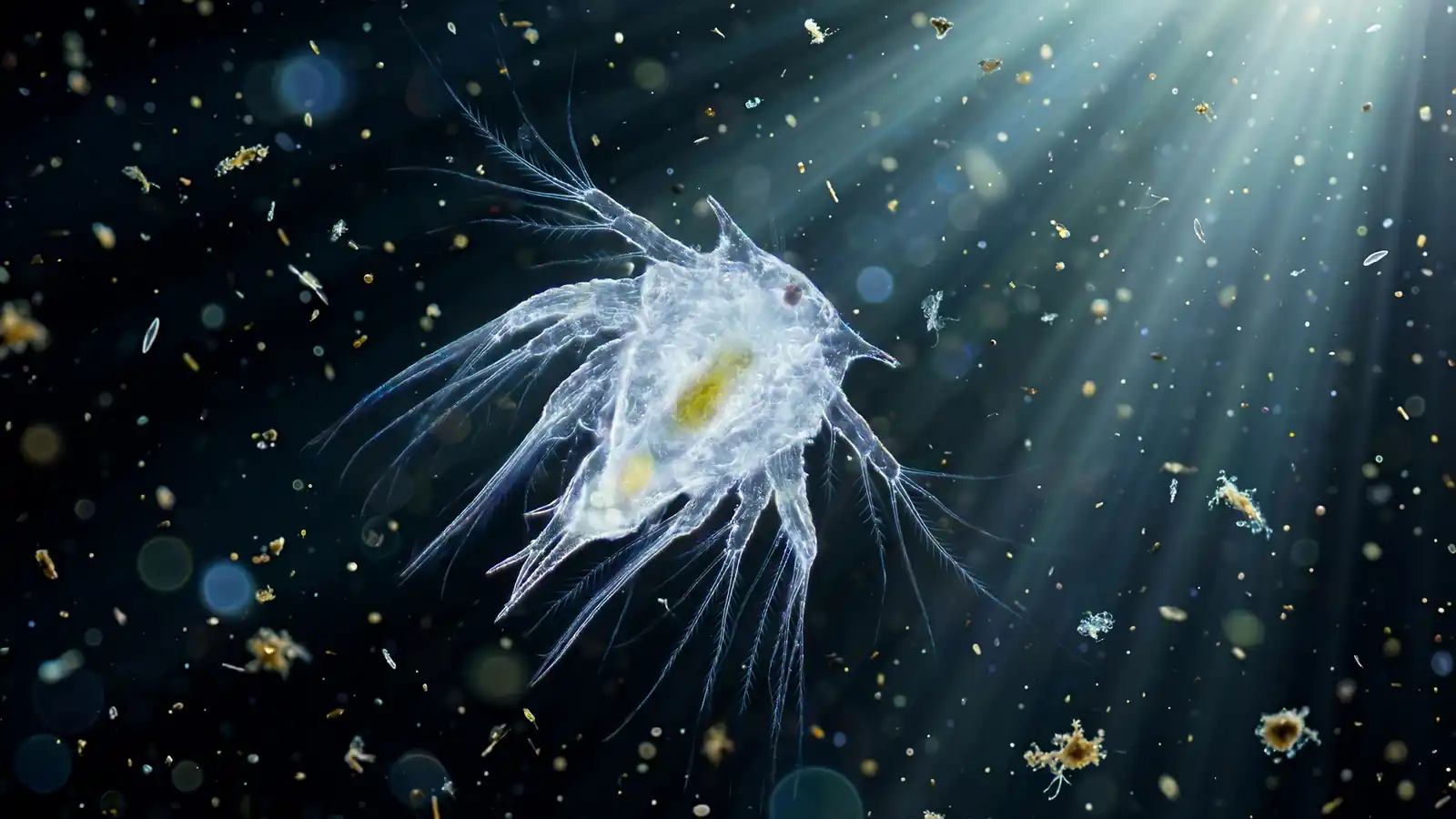
Chosen well, the cyprid cements its head down permanently and metamorphoses, growing the plates of the adult within hours. From then on, mating has to happen at arm’s length: most barnacles are hermaphrodites, carrying both sexes, and fertilise neighbours using a penis that can stretch up to eight times the body length — proportionally the longest of any animal on Earth.
The choice of site is anything but random. Cyprids are drawn to surfaces already carrying adults of their own kind, reading chemical cues left in old cement — which is why barnacles grow in crowded crusts rather than scattered singles. A good decision pays for a lifetime; a bad one, settling where a predator grazes or a rival species overgrows, cannot be undone. No animal this small makes a more permanent real-estate decision.
What Do They Eat?
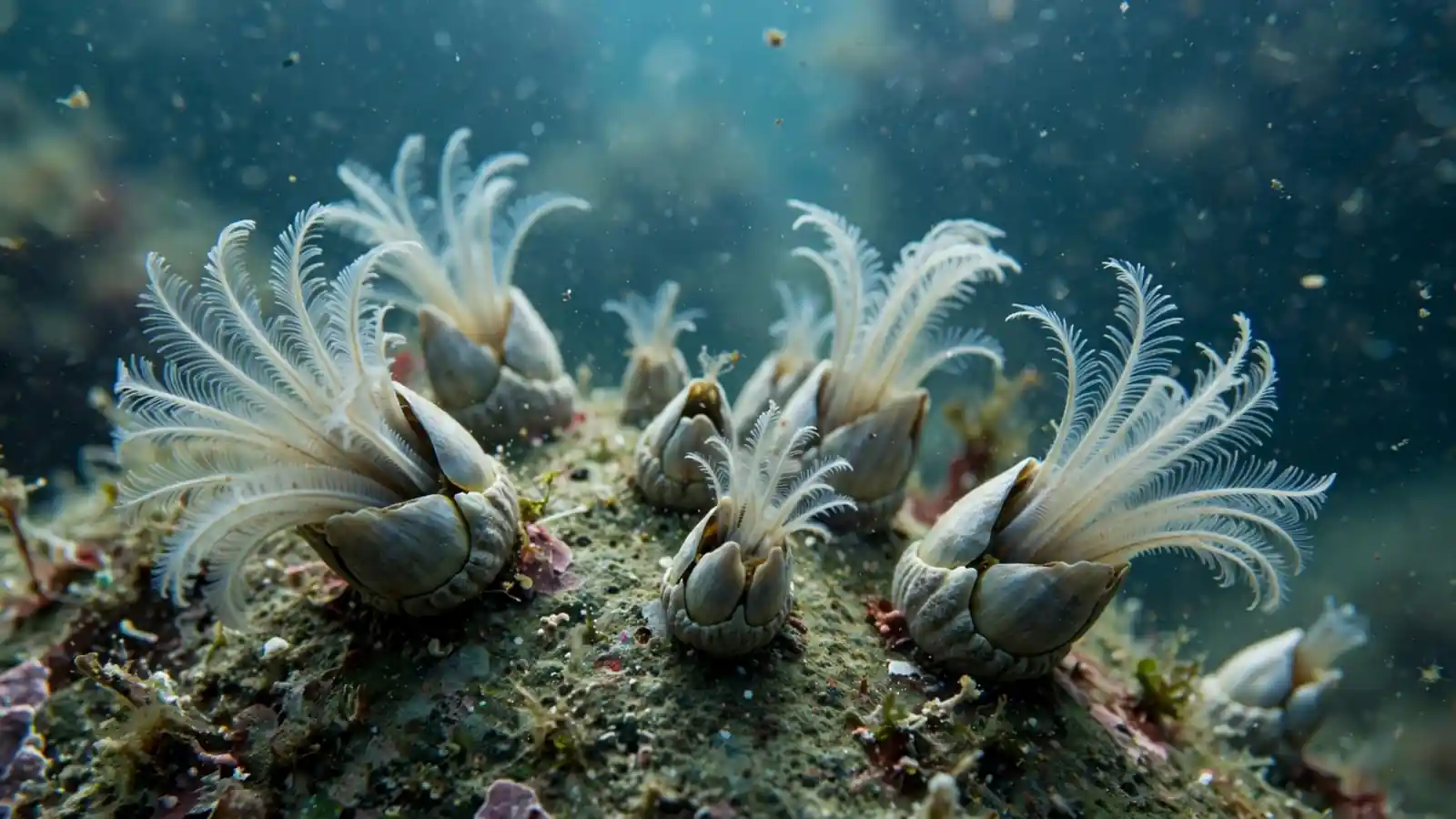
A feeding adult opens its trapdoor and unfolds six pairs of feathery legs called cirri. In acorn barnacles the cirri sweep rhythmically, combing plankton and detritus from the water and curling it down to the mouth; in quiet water the animal instead holds the cirri stiffly out like a net for the current to strain through. It is fishing with your feet while glued by your head — and it works beautifully.
Plenty of animals return the favour. Dog whelks drill through the plates, starfish lever them open, fish and shore crabs crunch them, and oystercatchers hammer them off rocks at low tide. Its whole defensive strategy is arithmetic: thick plates, tight crowds, and more offspring than the predators can possibly eat.
Life on Whales and Ships
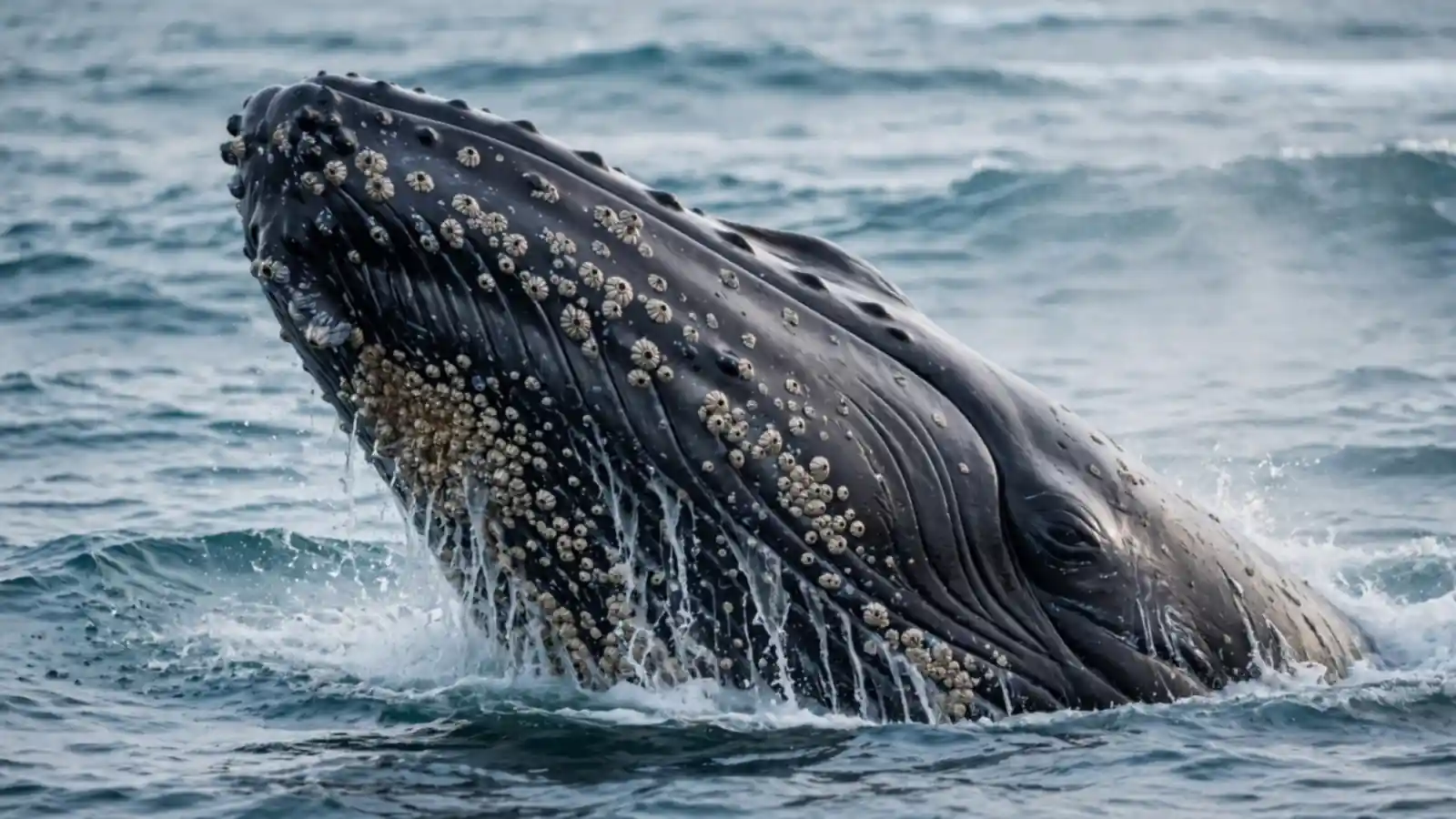
Some barnacles never touch rock at all. Whale barnacles settle only on whale skin — certain species only on humpbacks, others only on gray whales — and ride their hosts through whole ocean migrations, filtering food from water they never swim through. Humpbacks carry them in rings around the bumps on their heads, and may even use their crusted flippers as knuckle-dusters when fighting orcas.
Ships are the artificial version of the same trick. These crusts are a leading cause of biofouling, adding drag that can raise a hull’s fuel burn dramatically, which is why navies and shipping lines spend fortunes on antifouling paint. The same cement that frustrates shipowners inspires scientists, who study its glue in the hope of adhesives that set underwater — including for surgery.
The Dark Side: Parasitic Species
Not every one builds a fortress. The rhizocephalans abandoned the family business entirely: a female Sacculina, for example, injects herself into a crab and grows into a network of root-like threads through its body, emerging as a smooth sac under the tail. The crab is sterilised, feminised if male, and tricked into nursing the parasite’s sac exactly as if it were its own egg mass.
It is one of the strangest life cycles in the animal kingdom — and a reminder that the body plan is less a fixed design than a starting point evolution keeps remixing, from harbour walls to the inside of a crab.
Fun Facts
- Charles Darwin spent eight years (1846–1854) dissecting and classifying barnacles — the work that quietly trained him to write On the Origin of Species.
- Its cement is produced by special glands and sets permanently underwater; researchers study it to design surgical glues.
- Its penis can reach eight times its body length, the largest ratio of any animal — essential when you can never move toward a mate.
- The group is ancient: fossils of the group reach back at least 325 million years, to the Carboniferous period.
- Goose barnacles were once believed to hatch into geese — the bird is still named after the myth.
- Three quarters of all species live in water shallower than 100 metres, hugging the world’s coastlines.
Frequently Asked Questions
What Is a Barnacle?
A barnacle is a marine crustacean of the group Cirripedia, related to crabs and lobsters. Unlike its mobile cousins, the adult barnacle is sessile: it cements itself head-first to a hard surface — rock, shell, ship or whale — and lives inside a wall of hard plates, feeding with feathery legs called cirri. About 2,100 species are known.
What Do Barnacles Eat?
Barnacles eat plankton and fine organic particles filtered from seawater. When submerged, a barnacle opens the plates at the top of its shell and sweeps the water with six pairs of feathery legs, combing food down to its mouth. In currents it can simply hold the legs outstretched like a net.
What Eats Barnacles?
Barnacles are eaten by dog whelks, which drill through their plates, by starfish, shore crabs and fish, and by oystercatchers and other shorebirds that hammer them off rocks. Their thick plates, tight crowding and huge numbers of offspring are the defence: predators get some, but never all.
Can You Eat Barnacles?
Yes — one type is a famous delicacy. Goose barnacles, called percebes in Spain and Portugal, are gathered from dangerous wave-swept rocks and sold at high prices for their sweet, sea-tasting flesh. Ordinary acorn barnacles are not eaten by people; they are all shell and cement with almost no meat.
Do Barnacles Move?
Adult barnacles do not move at all: once the larva has cemented its head to a surface, it stays there for life. Only the larvae move, swimming in the plankton and then crawling over surfaces to choose their permanent home. The adults can still open and close their shell plates and sweep their feeding legs.
How Do Barnacles Reproduce?
Most barnacles are hermaphrodites with both male and female organs, but they still mate with neighbours, fertilising each other with an extendable penis that can reach eight times the body length. Eggs are brooded inside the shell until they hatch as tiny swimming larvae, which drift in the plankton before settling.
Similar Species Worth Exploring
Keep Exploring
From the rocks, head out to sea with the krill swarms that feed the whales, or browse the whole family tree in our guide to the types of crustaceans. Every harbour wall in the world is decorated with the barnacle.