Rock Shrimp
Rock Shrimp: the shrimp with a stone-hard shell
The rock shrimp wears a thick, stony shell that must be split to eat — a deep-water shrimp of sandy bottoms from Virginia to the Yucatan. This guide follows the brown species, Sicyonia brevirostris, through its sandy home, its hard shell and its short life of twenty months.
By Emily Carter · Reviewed by our vet team · Updated 10 November 2026 · 10 min read
Shell like stone, hard to peelLives on sand bottoms to 600 ftShort life of 20–22 months
At a Glance
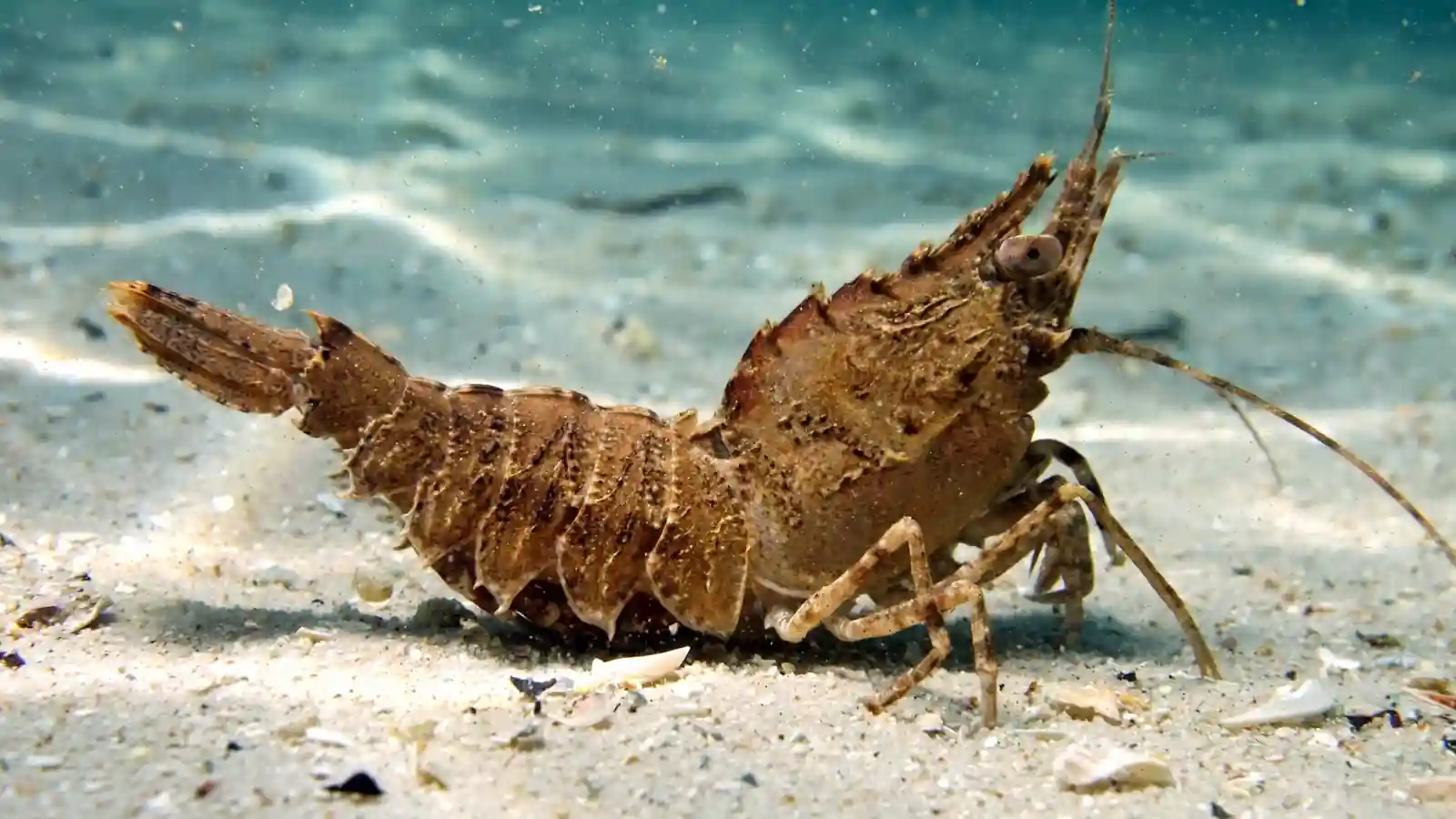
A rock shrimp looks like an ordinary shrimp that has been armoured, and that is close to the truth — its shell is thick, ridged and stony, far harder than a pink shrimp’s, and it is the reason for the name. The name is a warning to cooks and predators alike: this shell does not peel. Under that shell is a deep-water animal of sandy bottoms, living fast and dying young. This is the whole animal, at a glance, before the detail begins.
Rock Shrimp Size: Up to Six Inches of Armour
It grows to about 6 inches long, though most of the animals in shallow water are under 2 inches, and the size is paired with a shell that looks and feels like stone. The brown species is the species of the western Atlantic, and a big one is a substantial animal, broad and ridged, with a shell that resists a knife.

The size tracks the depth. Animals in shallow water stay small, while the largest animals live deeper, where the water is colder and the food is richer, and the biggest animals are found on the deep sand bottoms off the continental shelf. Depth is safety and supper at once — colder water, richer food, and fewer mouths competing for it.
The Stone Shell: Why It Is So Hard
Its shell is thick, ridged and hard, and it is the reason for the name. The name is a warning to cooks and predators alike: this shell does not peel. Where a pink shrimp’s shell is thin and flexible, its shell is like a stone casing, segmented and rough, and it must be split or cut to reach the meat inside. Splitting the shell is the tax every eater pays for what is inside it. The shell is armour first and packaging second.
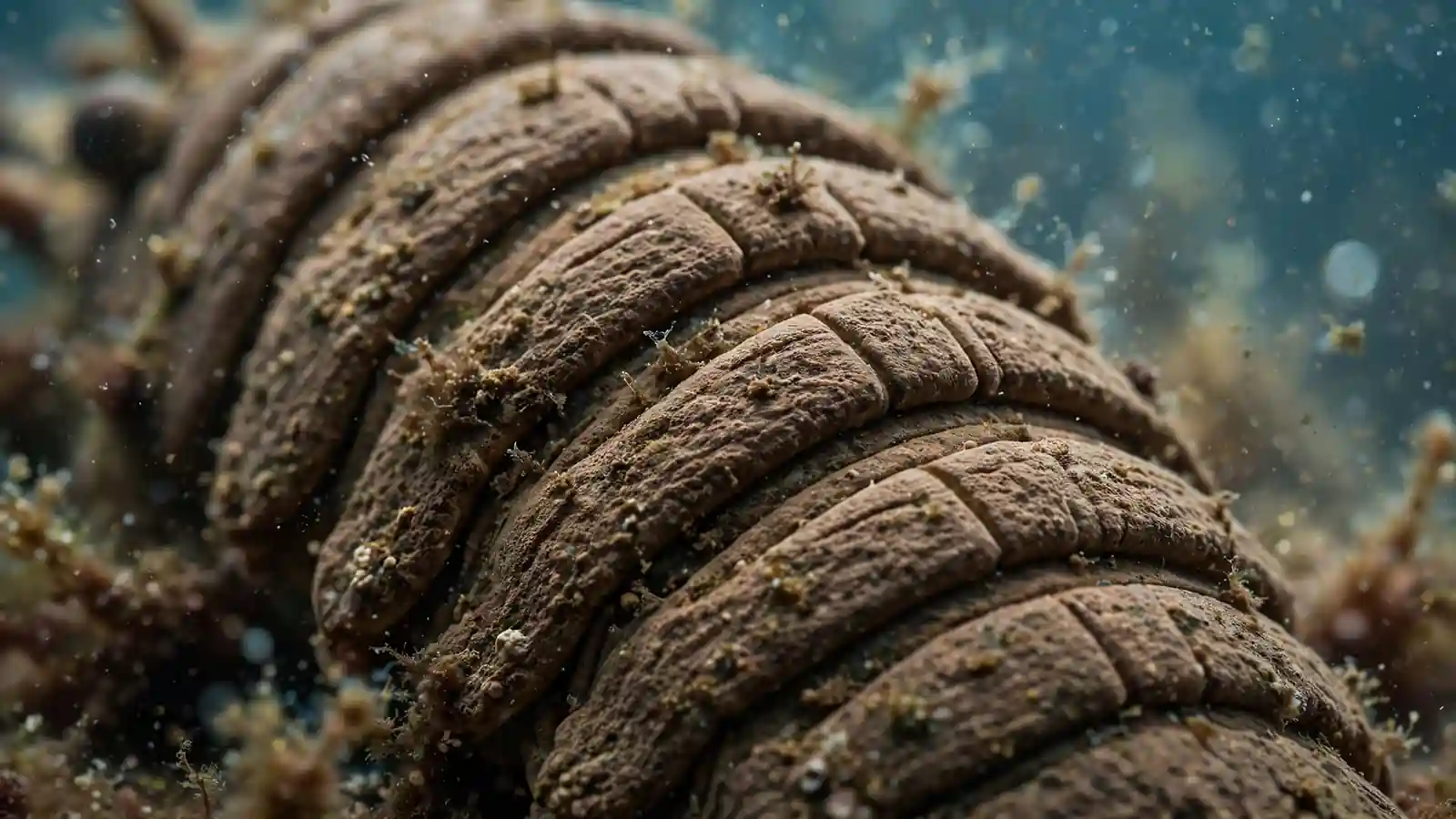
The hardness comes from the shell’s thickness and its ridges, which stiffen it the way corrugation stiffens a sheet. A predator that bites one meets a hard, unyielding surface, and the shrimp’s best defence is simply to be too hard to bother with. Armour this heavy is rare in a shrimp, and it shapes everything about how the animal lives. The trade-off is growth: a thick shell is harder to moult, and it moults less often than its softer cousins. Every moult is a gamble — a new shell must harden before something finds the animal soft.
Where They Live: Sand Bottoms, Deep Water
They live on sand bottoms, typically in 80 to 215 feet of water and down to 600 feet, from Norfolk, Virginia to the Yucatan. They are animals of open sand, not of reefs or rocks, and they spend their lives on the flat seabed where the current brings them food.
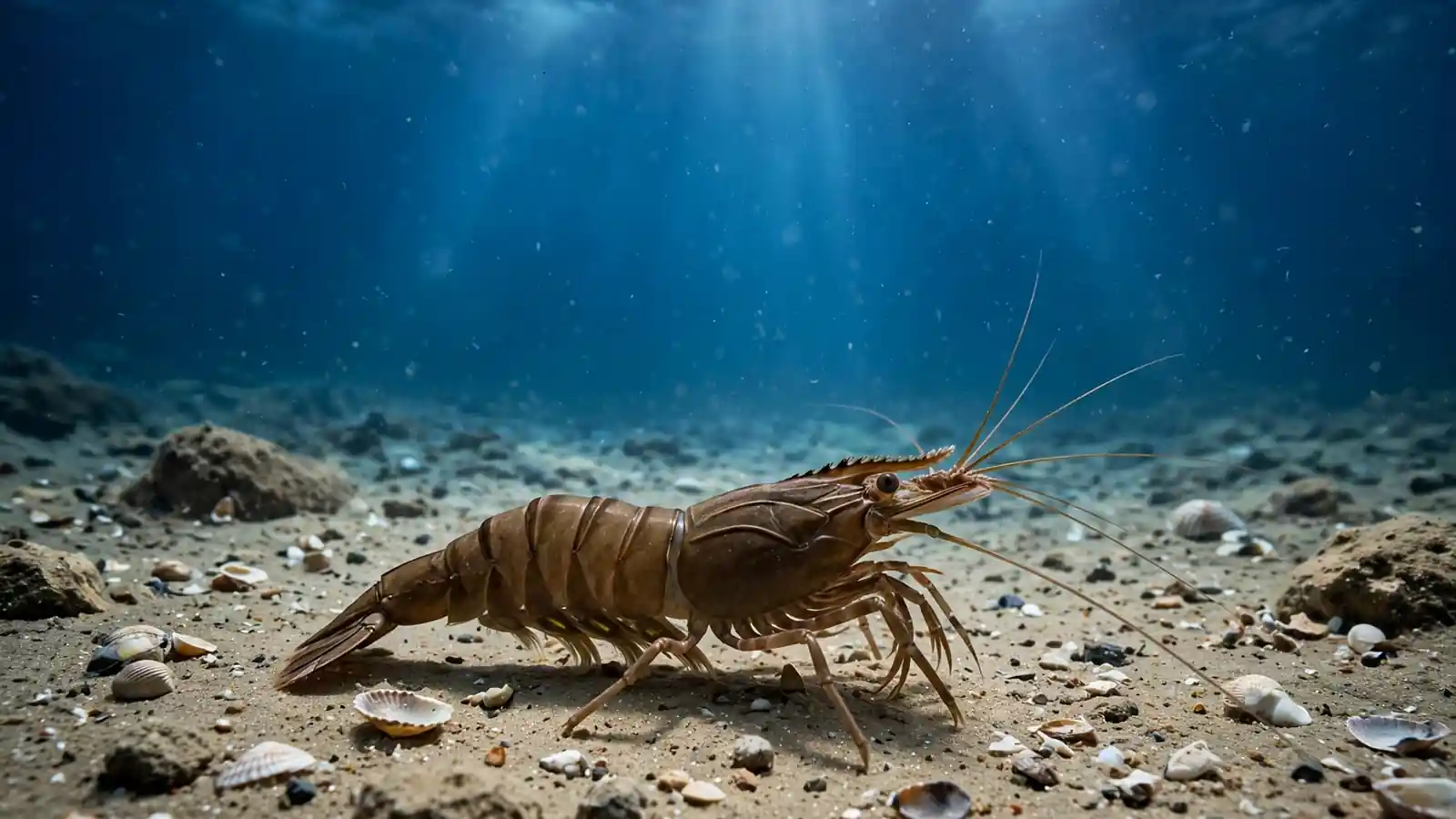
The depth is the key to the habitat. In shallow water it is a small animal among many, but on the deep sand bottoms it is one of the larger shrimps, and the sandy ground suits its feeding: it sifts the sand for small animals and detritus, and the open bottom gives it room to move. There is nowhere to hide on open sand, which is exactly why the armour matters.
What Do They Eat? Life on the Sand
It eats small animals and detritus on the sand, sifting the bottom with its small legs and picking out what it can use. The menu is whatever the sand provides: worms, tiny crustaceans and the rain of dead matter from above. The diet is the diet of a bottom-feeder: worms, small crustaceans, and the dead matter that settles on the sand, all taken from the top layer of the seabed.
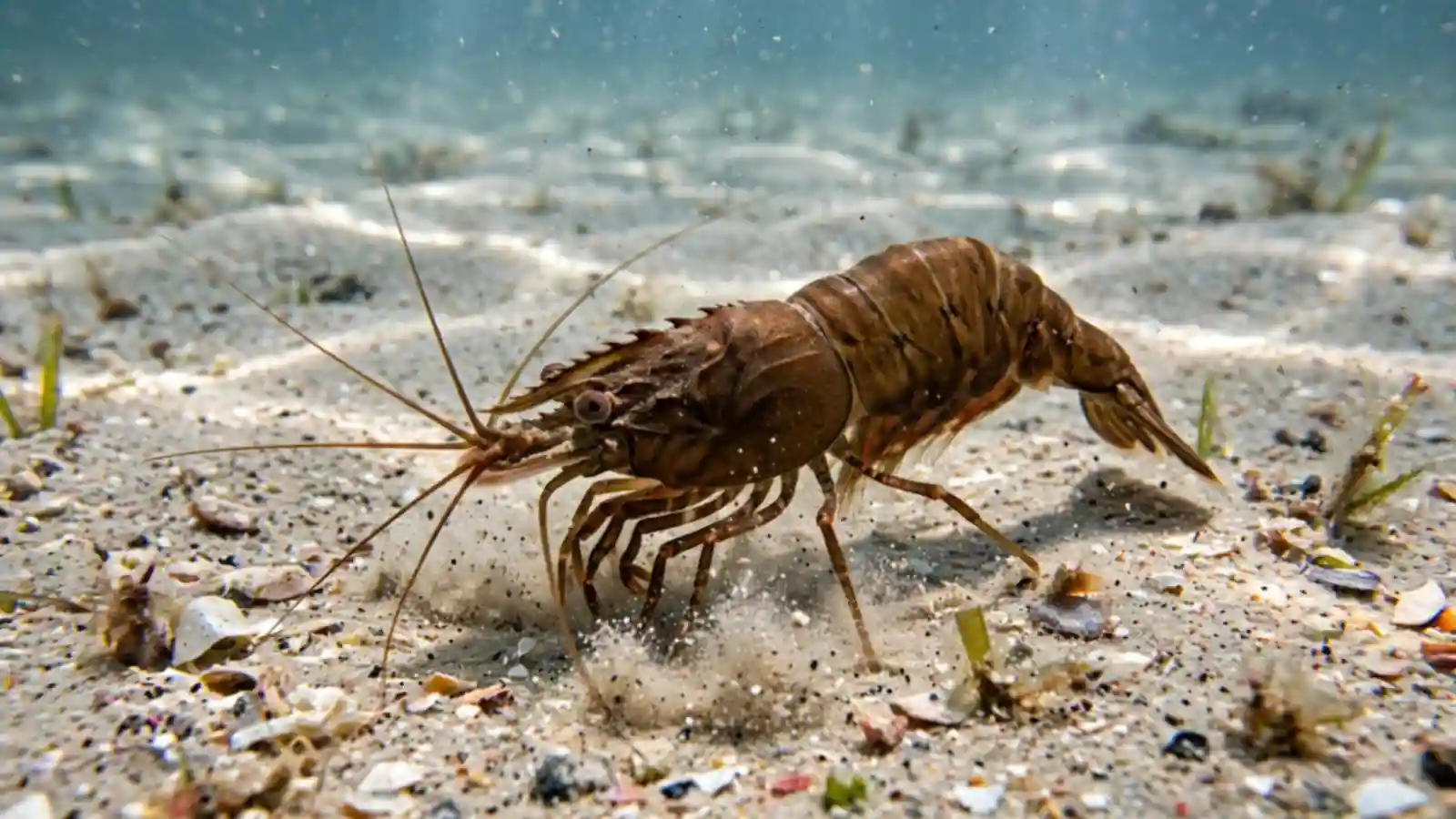
For a wider survey of the species, see this brown species guide. The feeding is slow and steady, and it spends most of its time on the bottom, walking the sand and sifting as it goes, with its hard shell as its only protection. It walks, sifts and feeds in the open, trusting the shell to handle whatever finds it.
Rock Shrimp vs Regular Shrimp: The Difference
The difference between this shrimp and a regular shrimp is the shell. A pink shrimp’s shell is thin and peels away easily, while its shell is thick, ridged and stony, and must be split to reach the meat. A pink shrimp surrenders in seconds; this one makes you work for every bite. It is also a deeper-water animal, living on sand bottoms far below the shallow bays where pink shrimp are caught.
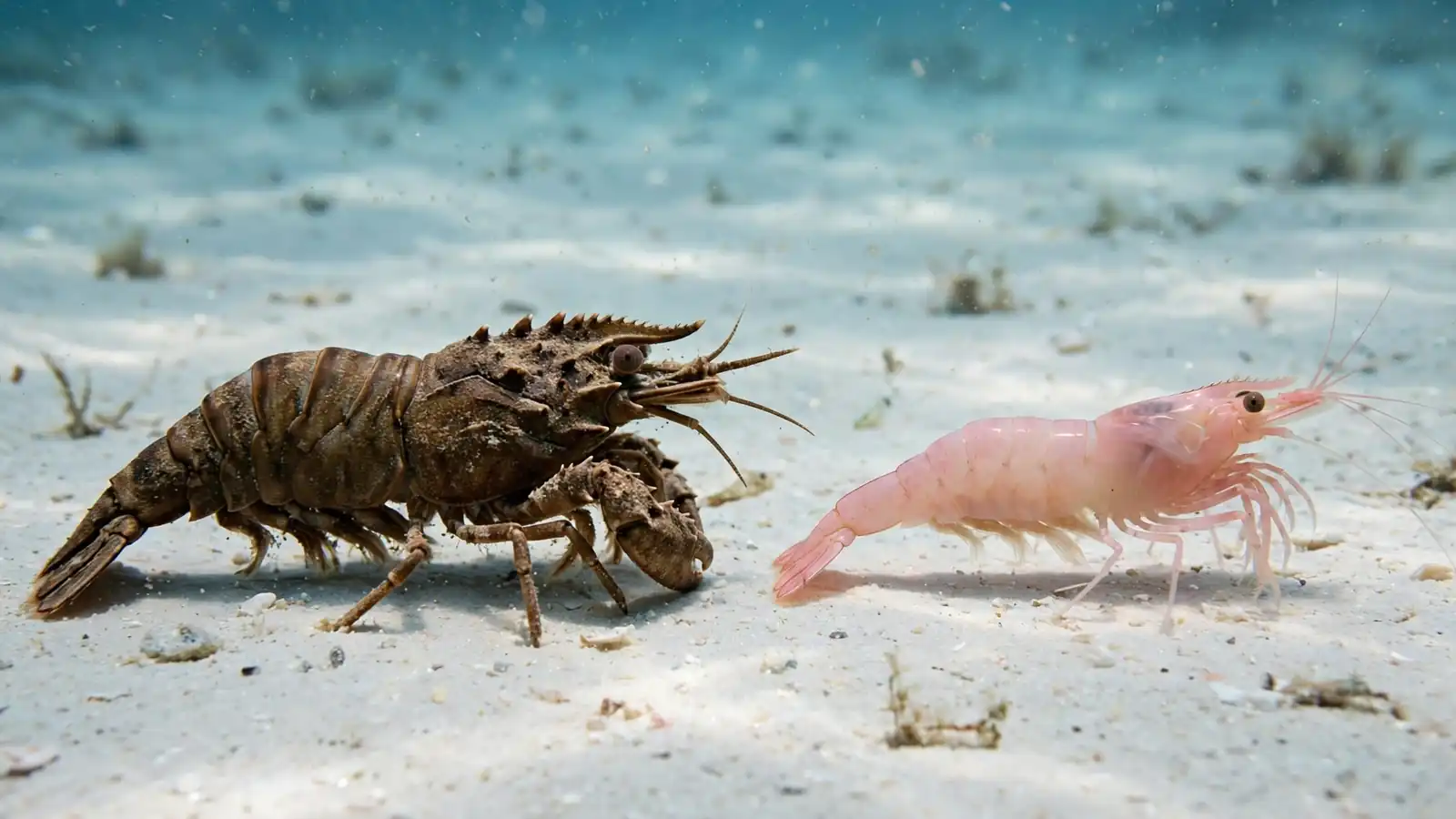
The meat is different too, and cooks know it: its meat is firm and sweet, with a texture closer to lobster than to shrimp, and the hard shell is the price of it. Cooks who learn to split the shell quickly stop minding the price — the meat rewards the effort. The comparison is the classic way to learn both animals — same shape, same life on the sand, and a shell that could hardly be more different.
Life Cycle: A Short Life of 20 Months
It lives fast and dies young. Its lifespan is about 20 to 22 months, and it spends that time growing quickly, moulting often, and breeding early, because the sandy bottom is a dangerous place and few of them survive to old age.
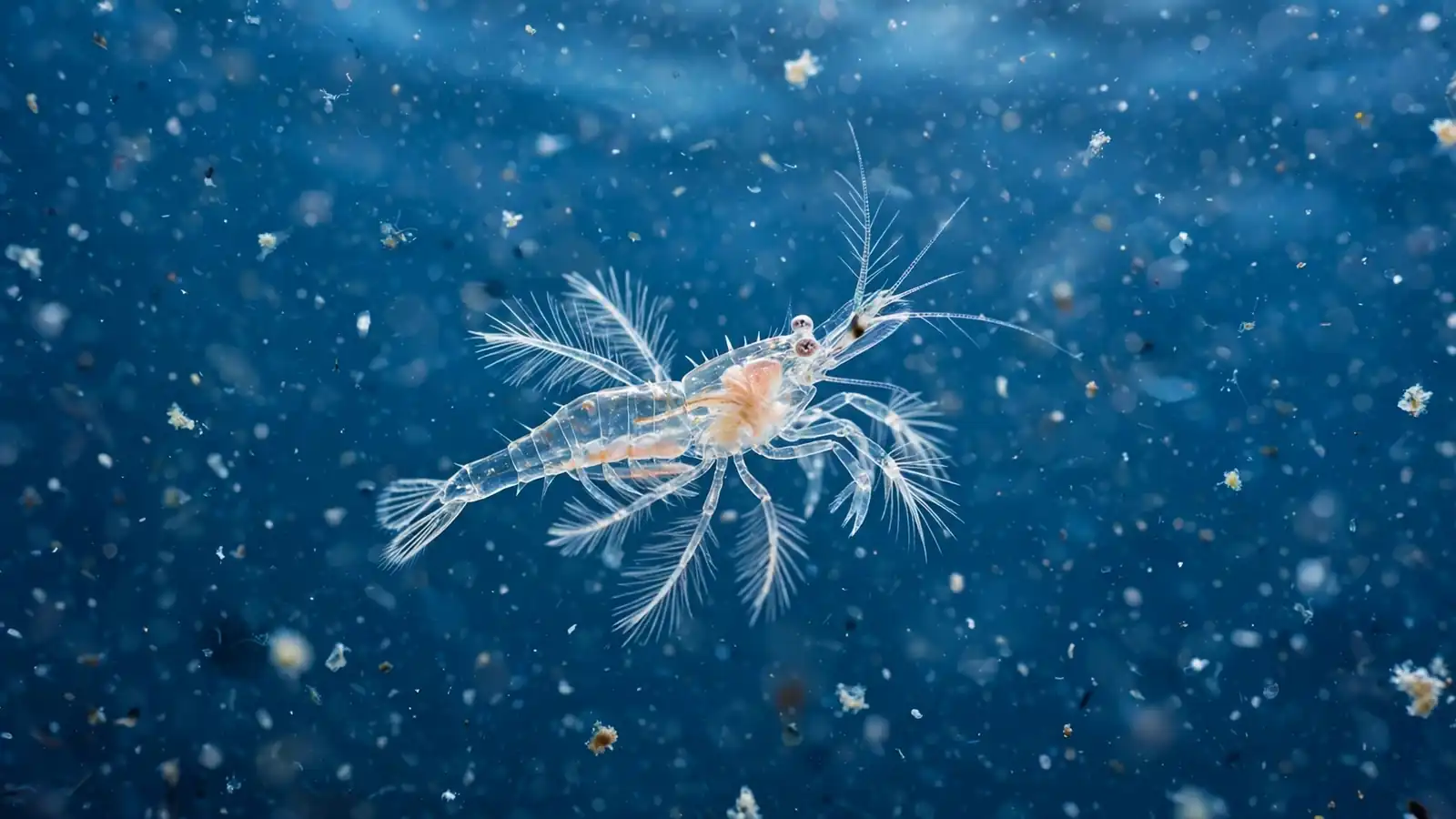
The life begins as a larva in the plankton, drifting in open water before it settles onto the sand as a young shrimp. From there it grows by moulting, and the thick shell hardens a little more with each moult, until the animal is full-sized, walking the deep sand. Twenty months from larva to adult to ancestor — the whole life runs at sprint pace.
A Sustainable Fishery: Not Overfished
The species is fished, and the fishery is a small one compared with the pink shrimp fishery, but it is managed. Managed means assessed, limited and watched — the catch is set against what the stock can spare. A 2018 assessment found the stock not overfished, and the fishery works because the shrimp is abundant on its deep sand bottoms and breeds fast enough to replace the catch.
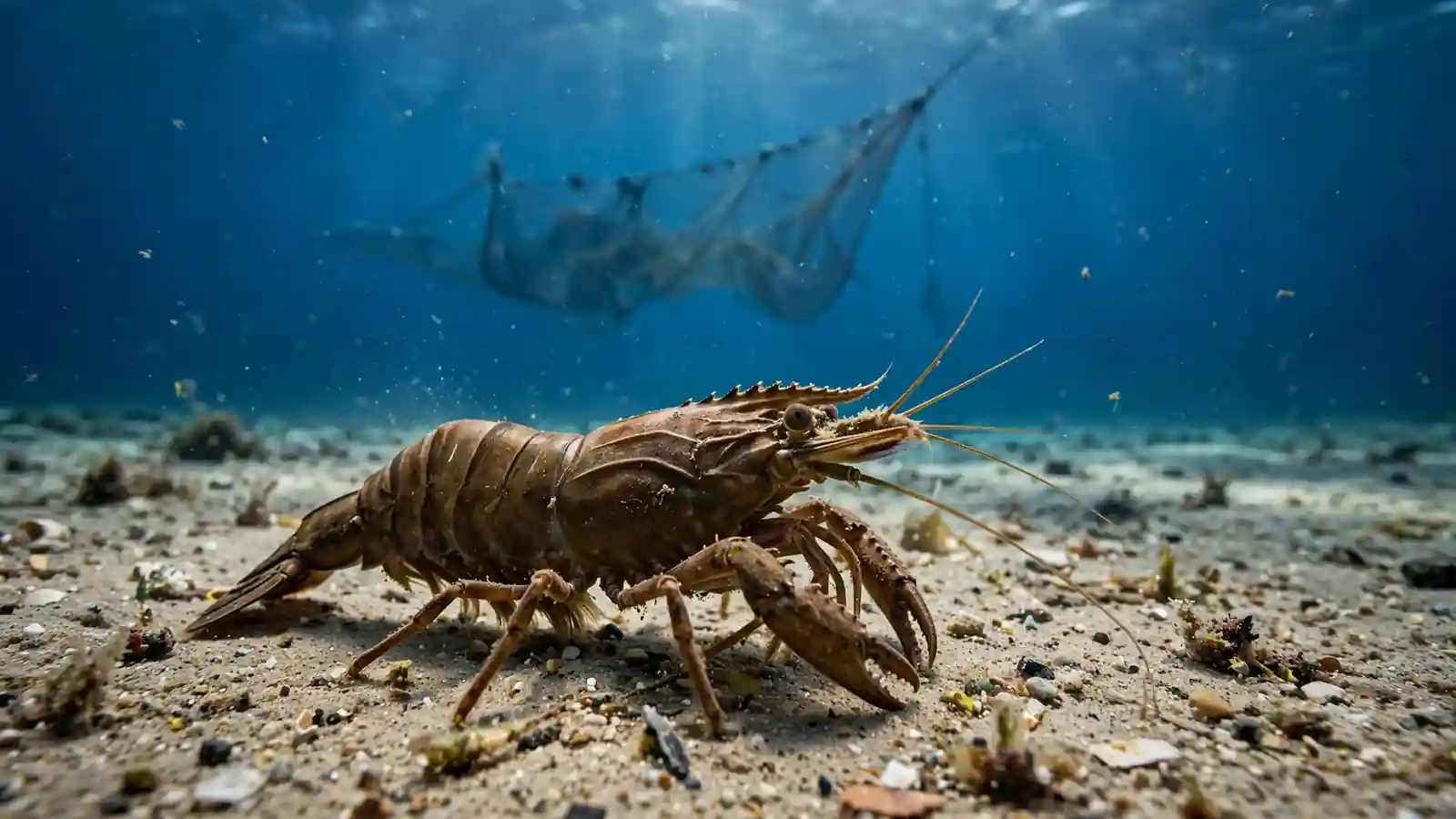
The short life is the reason the fishery can work. An animal that lives only twenty months replaces itself quickly, and a stock that turns over that fast can support a catch without collapsing — provided the catch stays within the limits the assessment sets. Fast turnover is the stock’s protection: a species that replaces itself in twenty months can absorb a managed catch.
Fun Facts
- Its shell is thick and stony, and must be split to reach the meat. A pink shrimp surrenders in seconds; this one makes you work for every bite.
- They grow to about 6 inches, though most in shallow water are under 2 inches. The six-inch animals are the deep-water giants of the species.
- They live on sand bottoms, typically 80 to 215 feet deep and down to 600 feet.
- It lives only about 20 to 22 months.
- The 2018 assessment found the stock not overfished.
- The meat is firm and sweet, closer to lobster than to shrimp.
Frequently Asked Questions
What Is a Rock Shrimp?
It is a shrimp with a thick, stony shell, from the family Sicyoniidae. The brown species, Sicyonia brevirostris, is the species of the western Atlantic, living on sand bottoms from Virginia to the Yucatan.
Why Is It Called a Rock Shrimp?
It is named for its shell, which is thick, ridged and hard like stone. Where a pink shrimp’s shell peels away easily, its shell must be split or cut to reach the meat inside. Splitting the shell is the tax every eater pays for what is inside it.
How Big Do Rock Shrimp Get?
It grows to about 6 inches (15.3 cm) long, though most animals in shallow water are under 2 inches. The largest animals live in deeper water.
Where Do Rock Shrimp Live?
They live on sand bottoms, typically in 80 to 215 feet of water and down to 600 feet, from Norfolk, Virginia to the Yucatan. They are animals of open sand, not of reefs or rocks. Open sand is the whole address: feeding ground, shelter and nursery in one bare plain.
What Do Rock Shrimp Eat?
It eats small animals and detritus on the sand, sifting the bottom with its small legs. It feeds on worms, small crustaceans and the dead matter that settles on the seabed. Nothing edible that reaches the sand is wasted on this animal.
How Long Do Rock Shrimp Live?
It lives about 20 to 22 months. It grows quickly, moults often and breeds early, because the sandy bottom is a dangerous place and few of them survive to old age.
Are Rock Shrimp the Same as Regular Shrimp?
No. It has a thick stony shell that must be split, while a regular pink shrimp has a thin shell that peels away. It is also a deeper-water animal, living on sand bottoms far below the shallow bays.
Similar Species Worth Exploring
Keep Exploring
Keep exploring the crustaceans: meet the whiteleg shrimp, the world’s most farmed prawn, or browse the whole family in our guide to the types of crustaceans. Then come back to the deep sand, home of the rock shrimp.