Epaulette Shark Facts: The Walking Shark of the Reef
Epaulette Shark: The Walking Shark of the Reef
The epaulette shark walks across reef flats on paddle-like fins at low tide, a small spotted shark that can survive an hour out of water in a tide pool.
By Emily Carter · Reviewed by our vet team · Updated 10 November 2026 · 7 min read
Walks on its fins70–90 cm longLeast Concern (2015)
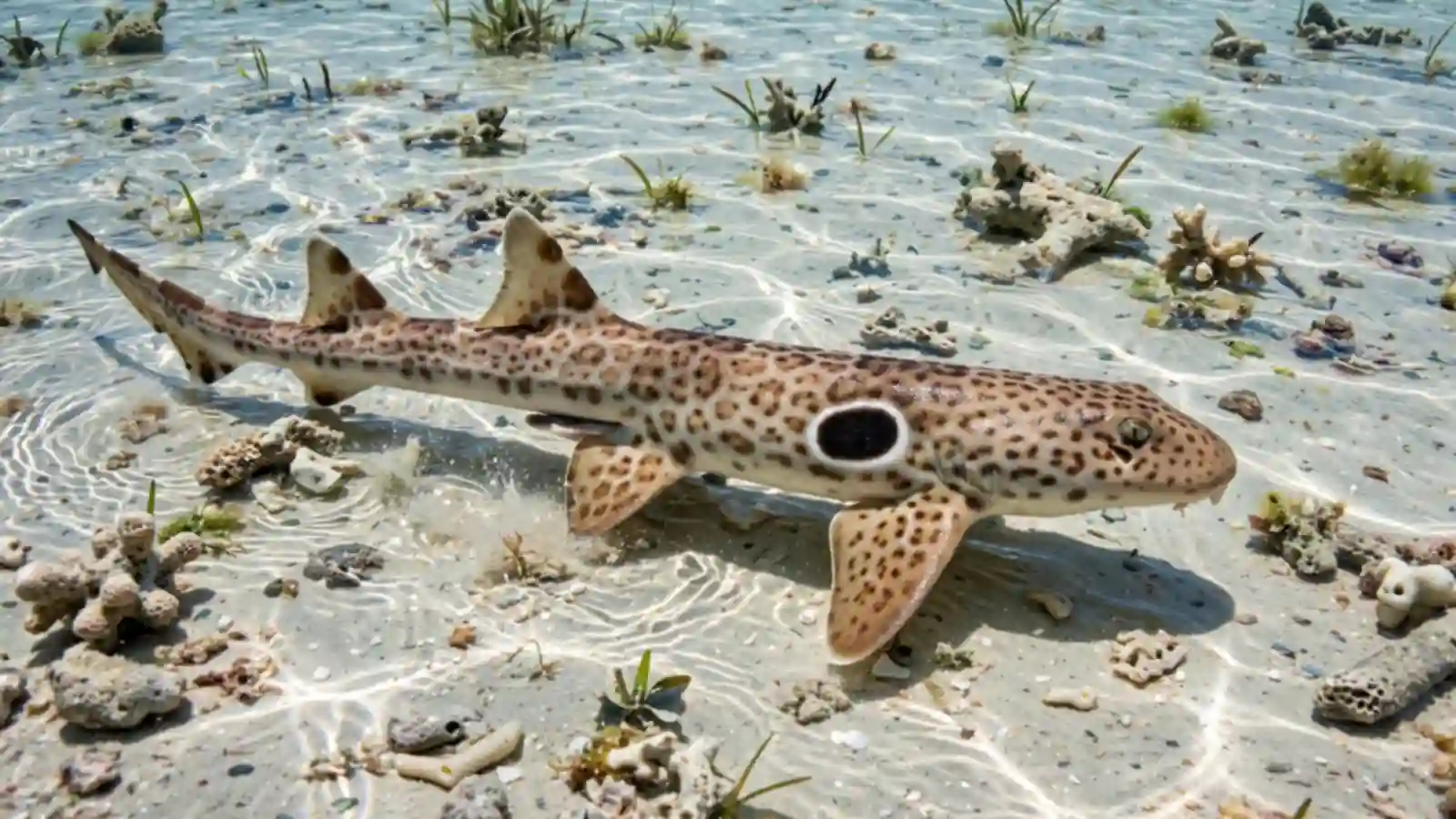
At a Glance
The epaulette shark is the shark that walks. At low tide it uses its paddle-like pectoral and pelvic fins to crawl across exposed reef flats, hunting in pools that other sharks cannot reach — and when a pool runs out of oxygen, it simply slows down and waits. This guide follows the walking shark across the reef flat, into the tide pools, and through the night hunt.
Epaulette Shark Size: A Small Reef Shark
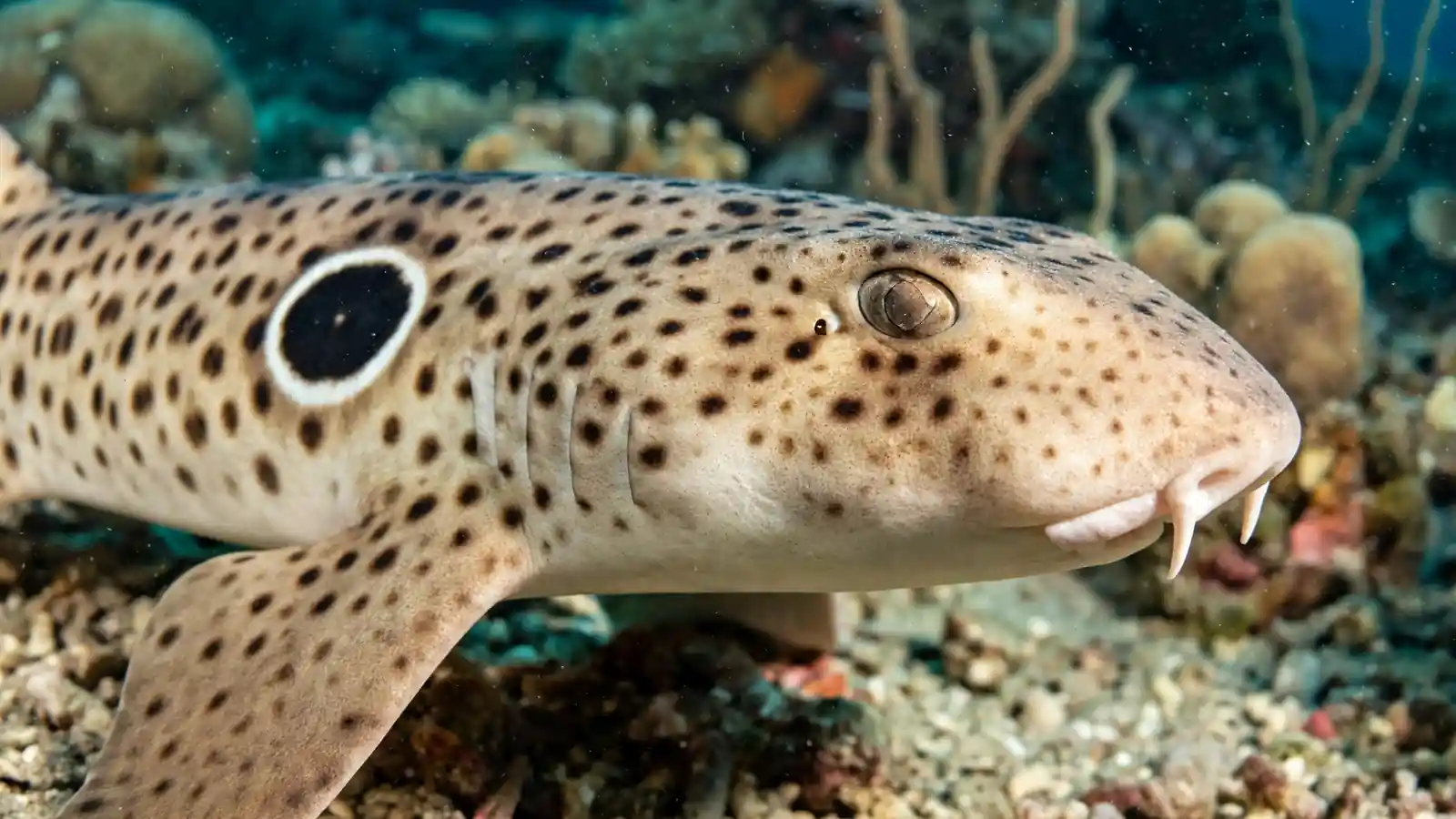
Most epaulette sharks measure 70 to 90 cm long, and the largest on record reached 107 cm — a small shark by any measure, about the length of a skateboard. Its slim, spotted body is built for squeezing through coral rubble and sliding across reef flats, not for open-water speed. For the full species record, see the full species profile.
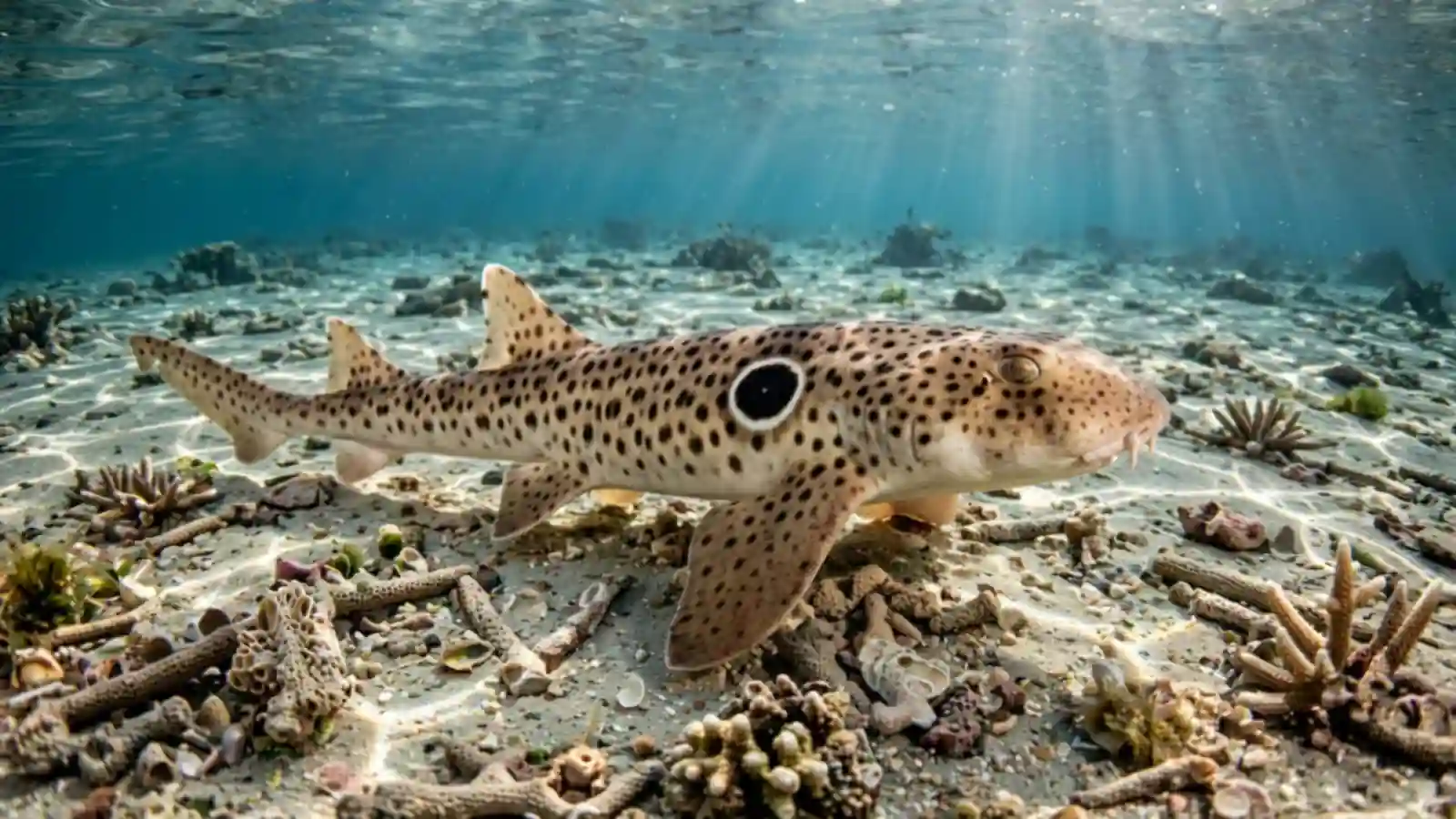
The identification mark is the large black eyespot ringed in white just behind the head, on each side of the body. The spot looks like a staring eye, and it gives the shark its name: an epaulette is the ornamental shoulder piece on a uniform, and the spot sits exactly where one would go.
The Walking Shark: How Epaulette Sharks Move on Land
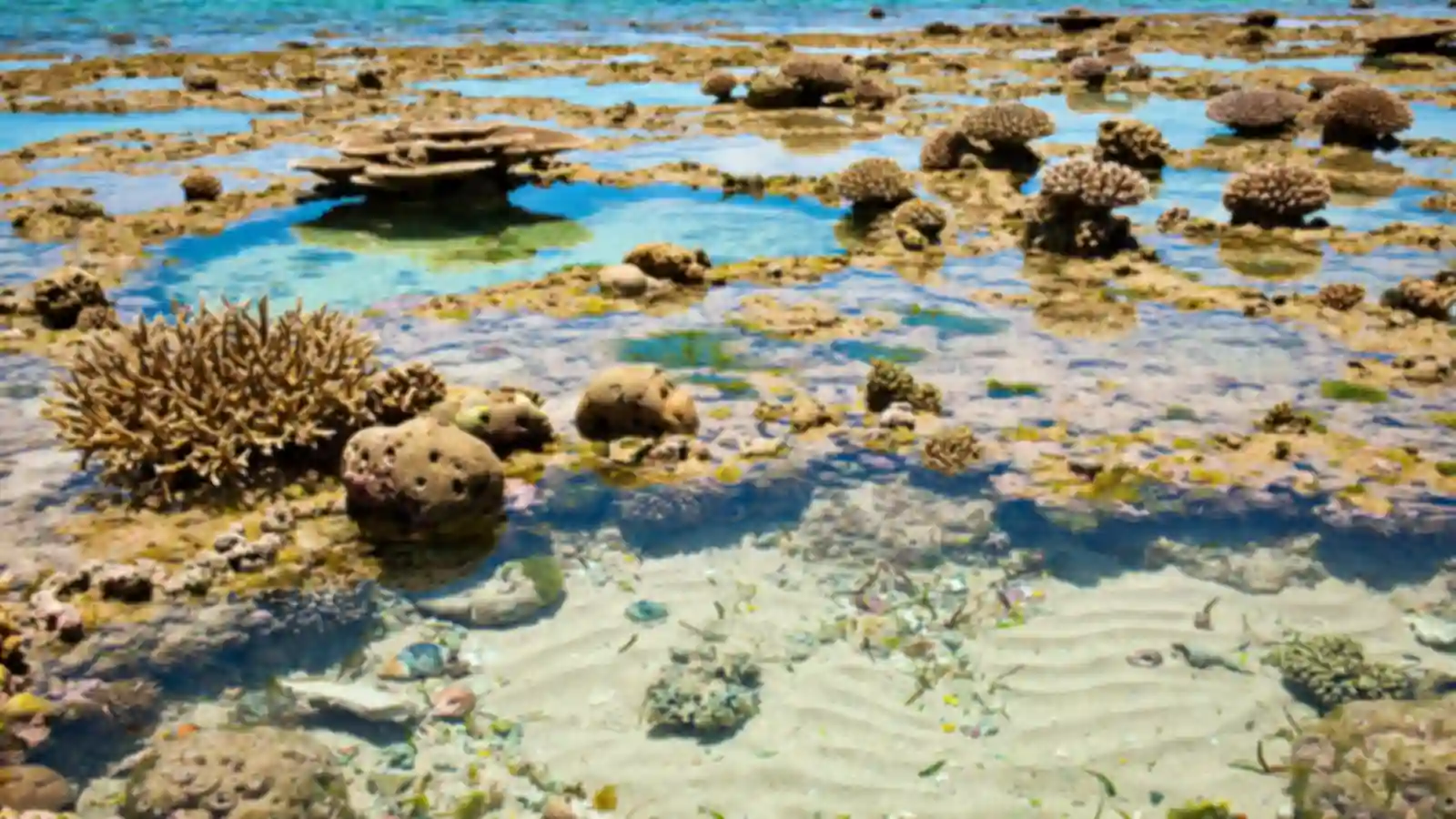
The epaulette’s fins work like paddles. Its pectoral and pelvic fins are muscular and jointed, and the shark plants them on the reef and pushes itself forward in a slow, deliberate crawl — a motion closer to a salamander’s walk than to any fish’s swim. It can cross dry reef flats this way, moving from pool to pool as the tide falls.
Walking is not a party trick; it is how the epaulette feeds. The pools it reaches on foot are full of worms, crabs and small fish with nowhere to run, and the shark hunts them at its leisure. Few predators can follow it there, so the reef flat is both a pantry and a refuge.
Surviving Without Oxygen in Tide Pools
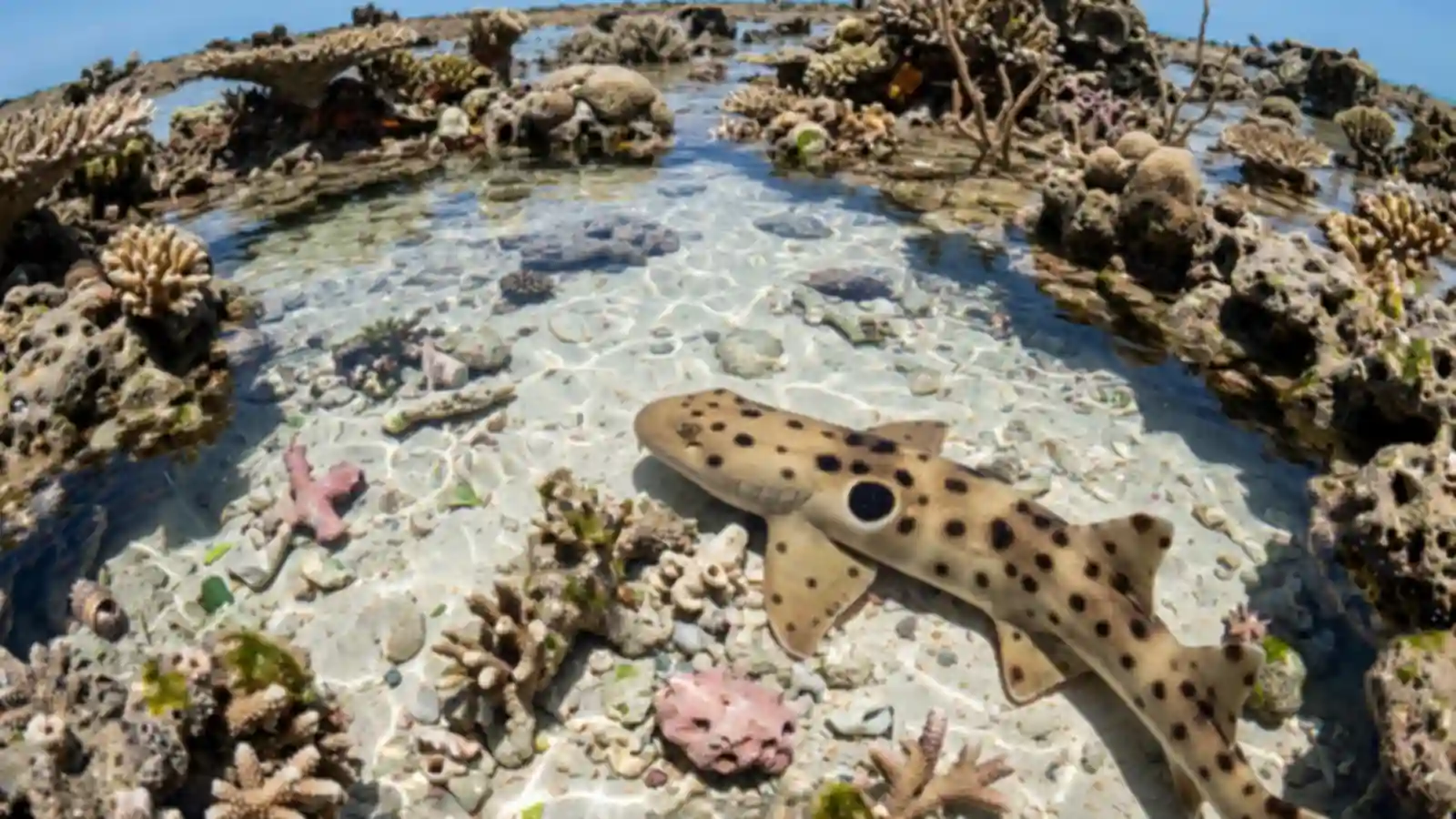
A tide pool at low tide is a hard place to breathe. As the sun warms the shallow water, oxygen drops, and most fish would suffocate within minutes. It can survive about an hour without oxygen, slowing its brain and body down until the tide returns.
It manages this by switching off the parts of its brain that burn the most oxygen, a trick no other shark is known to match. The shark sits quietly in the pool, barely moving, while its metabolism idles — then resumes hunting the moment fresh seawater floods back in.
Where Epaulette Sharks Live: Reefs of Australia and New Guinea
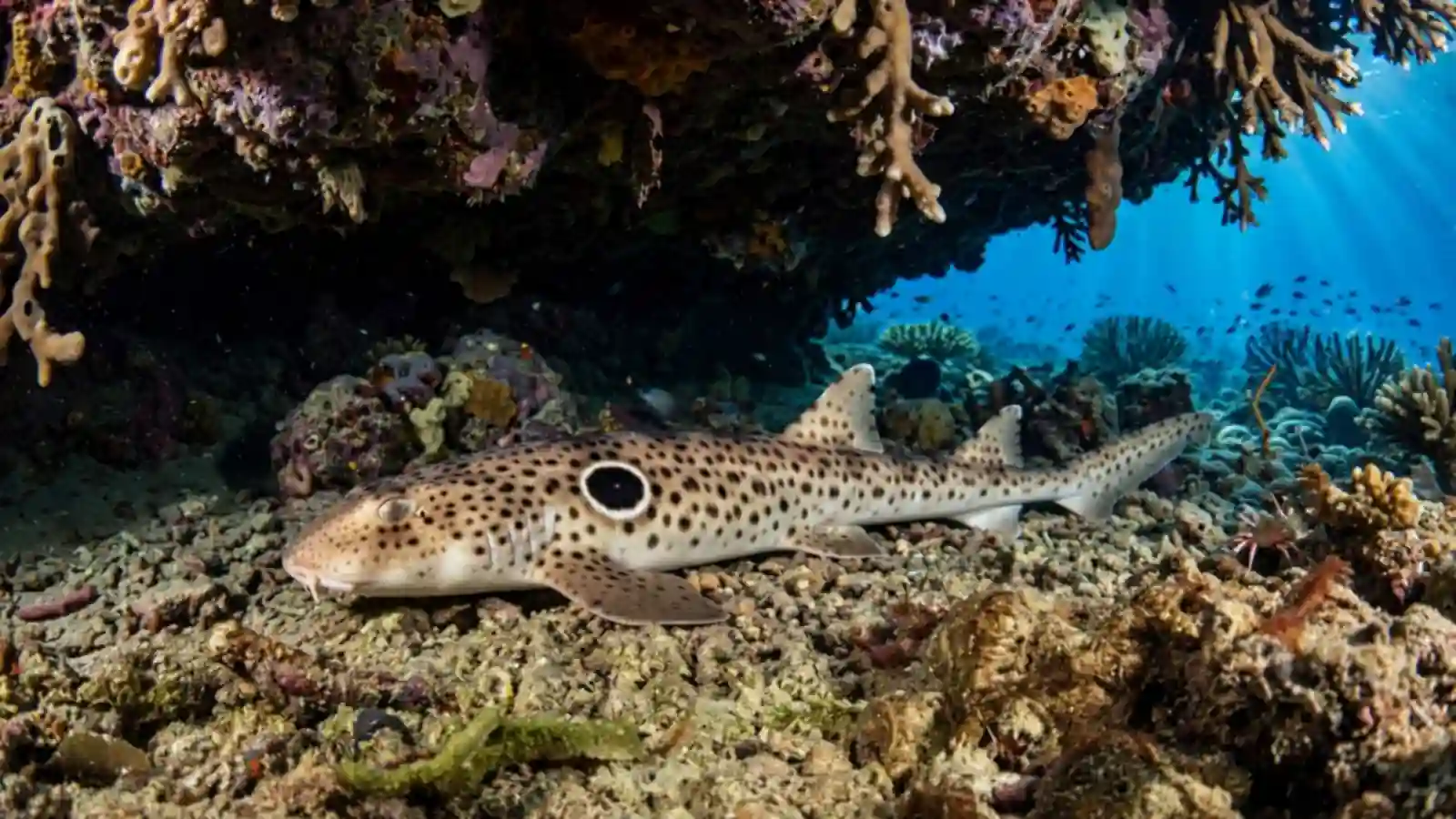
Epaulette sharks live on the shallow reefs of the Great Barrier Reef and the coasts of New Guinea, from intertidal pools down to about 50 metres. They favour reef flats, coral rubble and seagrass beds — the messy, shallow edges of the reef where a walking shark can hunt on foot.
The epaulette shares its reef-flat world with two other small bottom-dwellers worth knowing. The Australian swellshark swallows water to puff itself up when threatened, wedging into crevices, while the blackmouth catshark is a small deep-water catshark with a dark mouth lining. Both are different species from the epaulette, but all three make their living on the reef floor.
What Do Epaulette Sharks Eat? Night Hunting on the Reef Flat
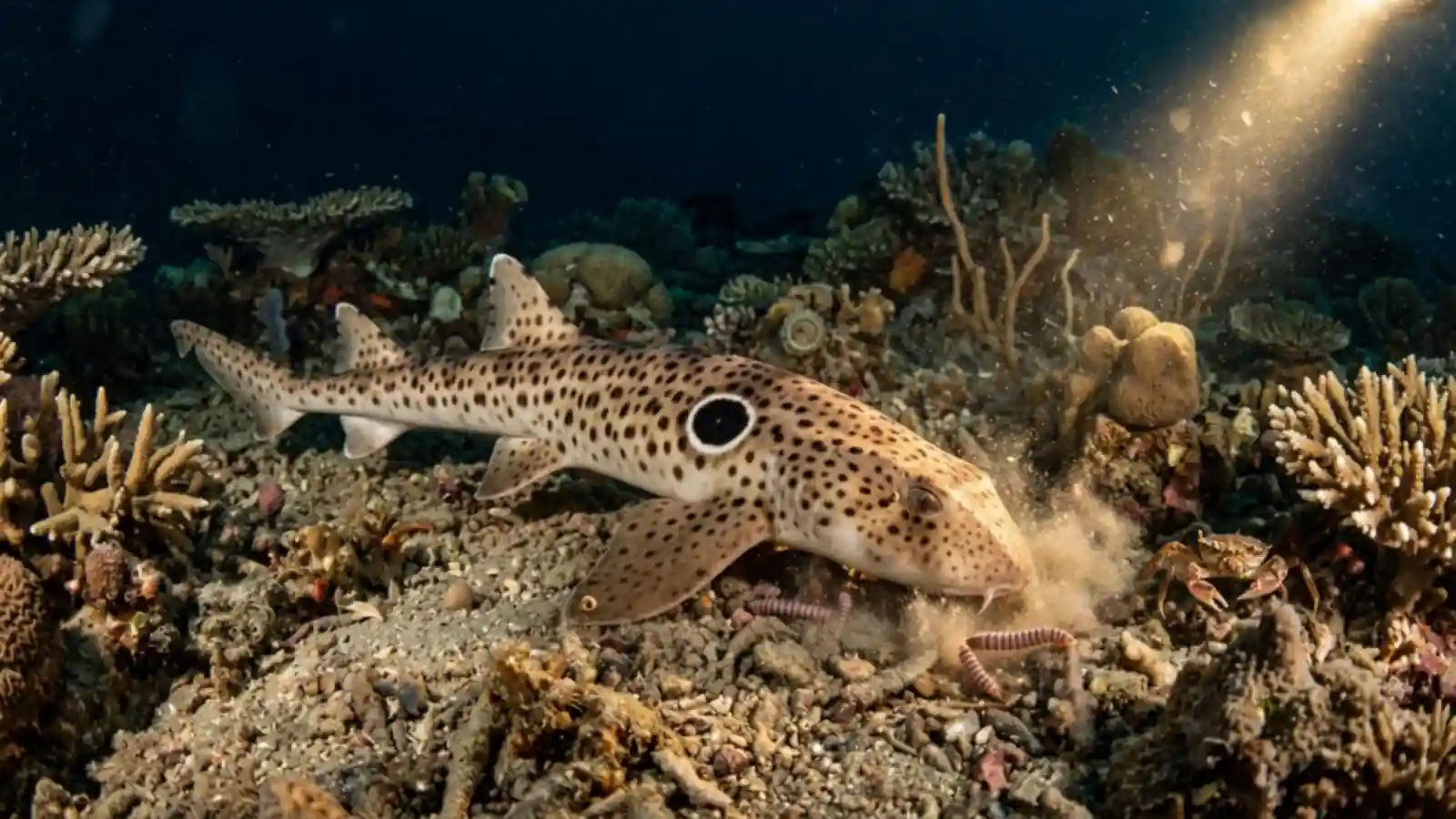
The epaulette is a nocturnal hunter. By night it prowls the reef flat for worms, crabs, shrimp and small fish, sniffing them out with the sensitive pores on its snout and sucking them from crevices and sand. Its small mouth and crushing teeth are built for hard-shelled prey, not for chasing fish in open water.
The night hunt is when the walking pays off. At low tide the shark crosses exposed reef on foot to reach pools that daytime hunters never visit, and it feeds there in the dark while the reef sleeps.
Epaulette Shark Reproduction and Life Cycle
Epaulette sharks lay eggs. The female deposits tough, leathery egg cases on the reef, and the young hatch as fully formed miniature sharks, ready to walk and hunt from their first day. The egg cases are often wedged into crevices where the current keeps them oxygenated.
Young epaulettes grow up in the same shallow pools as the adults, learning the reef flat from the start. Their small size and bottom-dwelling habits keep them out of the way of bigger reef predators, and the eyespot that marks the species may help confuse attackers about which end is the head.
Conservation: A Least Concern Reef Shark
It is listed as Least Concern, a status set in 2015 that reflects a wide range and no major fishery pressure. It is too small to be a food target and too shallow-dwelling to be caught in deep nets, which has kept its numbers steady.
The real risk to the epaulette is the reef itself. Its whole life depends on shallow reef flats and tide pools, so coral bleaching, coastal development and warming seas matter more to this shark than any fishing boat. Protect the reef flat, and the walking shark keeps walking.
Fun Facts
- It walks on paddle-like fins across reef flats at low tide.
- It can survive about an hour without oxygen in a tide pool.
- The big black spot behind its head looks like a staring eye — and gives it its name.
- Epaulette sharks hunt at night, sniffing out worms and crabs in the dark.
- A full-grown epaulette is about the length of a skateboard.
- It is one of the few sharks that can move on land, crawling from pool to pool.
Frequently Asked Questions
Can Epaulette Sharks Really Walk?
Yes. The epaulette uses its muscular pectoral and pelvic fins like paddles, planting them on the reef and pushing itself forward in a slow crawl across exposed reef flats at low tide.
How Long Can an Epaulette Shark Survive Out of Water?
About an hour. In a tide pool that has run out of oxygen, the epaulette slows its brain and body down until the tide returns, a trick no other shark is known to match.
How Big Do Epaulette Sharks Get?
Most measure 70 to 90 cm long, and the largest on record reached 107 cm — a small shark, about the length of a skateboard.
Where Do Epaulette Sharks Live?
On the shallow reefs of the Great Barrier Reef and the coasts of New Guinea, from intertidal pools down to about 50 metres, favouring reef flats, coral rubble and seagrass beds.
What Do Epaulette Sharks Eat?
Worms, crabs, shrimp and small fish, hunted at night on the reef flat and sucked from crevices and sand.
Are Epaulette Sharks Dangerous?
No. The epaulette is a small, shy bottom-dweller with a mouth built for worms and crabs. It poses no danger to people.
Are Epaulette Sharks Endangered?
No — the epaulette shark is listed as Least Concern (2015). Its numbers are steady, though its reef-flat habitat is sensitive to coral bleaching and warming seas.
Similar Species Worth Exploring
Keep Exploring
Still exploring the reef floor? Meet the other small bottom-dweller, the Horn Shark, with its auger-shaped egg cases, see the spiral eggs of the Port Jackson Shark, browse the whole reef community in the Types of Reef Fish hub, and then come back to the tide pools to meet the epaulette shark.