Chocolate Chip Sea Star Facts: Size, Habitat and Diet
Chocolate Chip Sea Star Facts: Size, Habitat and Diet
The chocolate chip sea star wears dark knobs across its back like chips in a cookie, and it is one of the most recognisable starfish in the western Pacific. It hunts the sandy seagrass beds, prying open molluscs and worms, and it can reach 30 centimetres across — a big, bold star on a quiet seabed.
By Emily Carter · Reviewed by our vet team · Updated 10 November 2026 · 9 min read
Knobs like cookie chipsWestern Pacific seagrassTo 30 cm across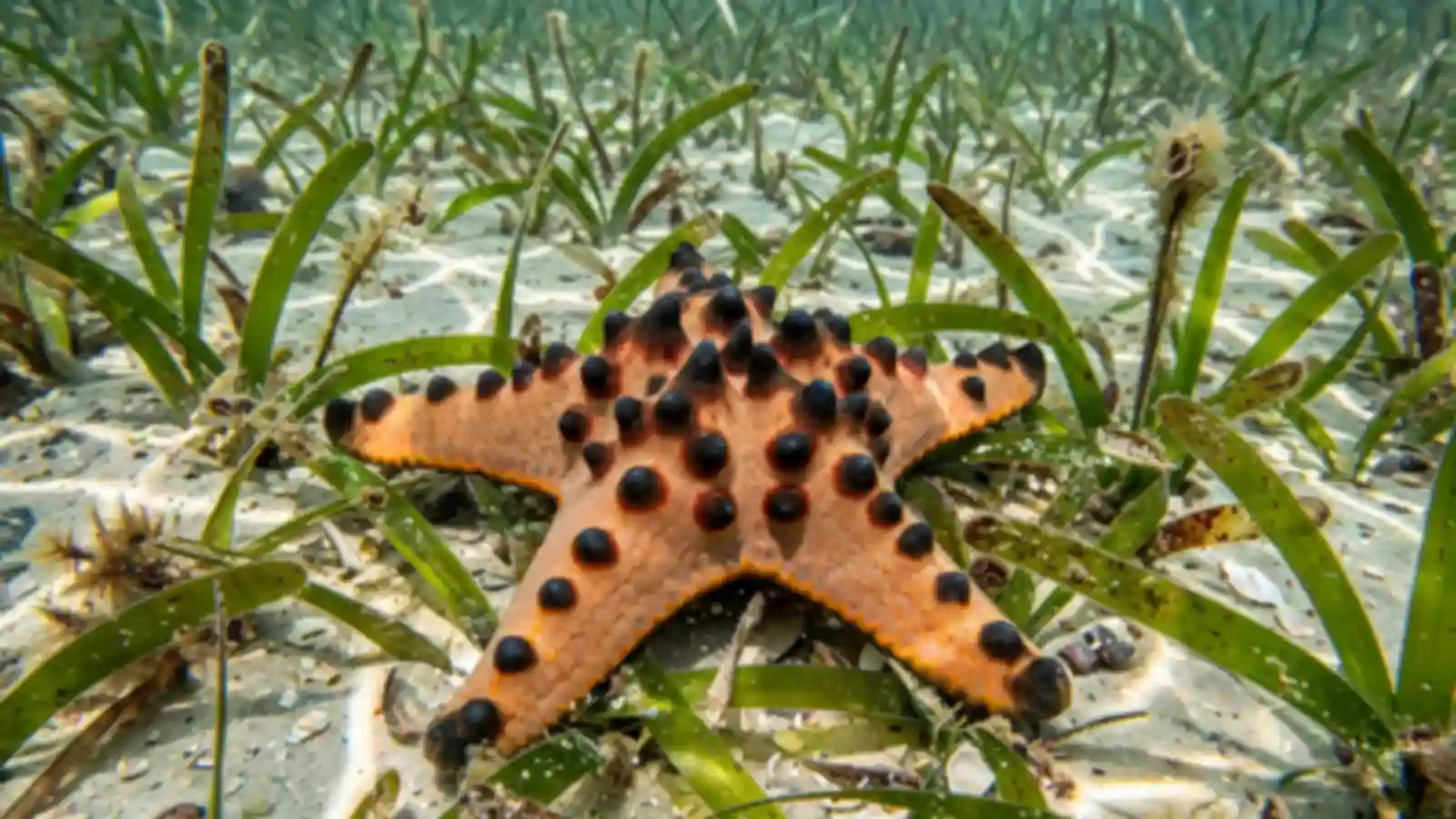
At a Glance
The chocolate chip sea star is named for the dark, conical knobs that stud its upper surface, like chocolate chips pressed into a cookie. Protoreaster nodosus — also called the horned sea star or knobbly sea star, the same animal under three names — lives on the sandy seagrass beds and reef flats of the western Pacific, from Thailand to Samoa and Japan to New Caledonia. It is a hunter, not a grazer, and it is one of the largest starfish a diver is likely to meet on a tropical sand flat.
Chocolate Chip Sea Star Size: Up to 30 cm
It grows to about 30 centimetres across, arm tip to arm tip, which makes it one of the larger starfish on a western Pacific sand flat. The arms are thick and tapering, with a broad base and a pointed tip, and the central disc is large and raised — the star is built for strength, not speed, and its size is a match for the molluscs it hunts.
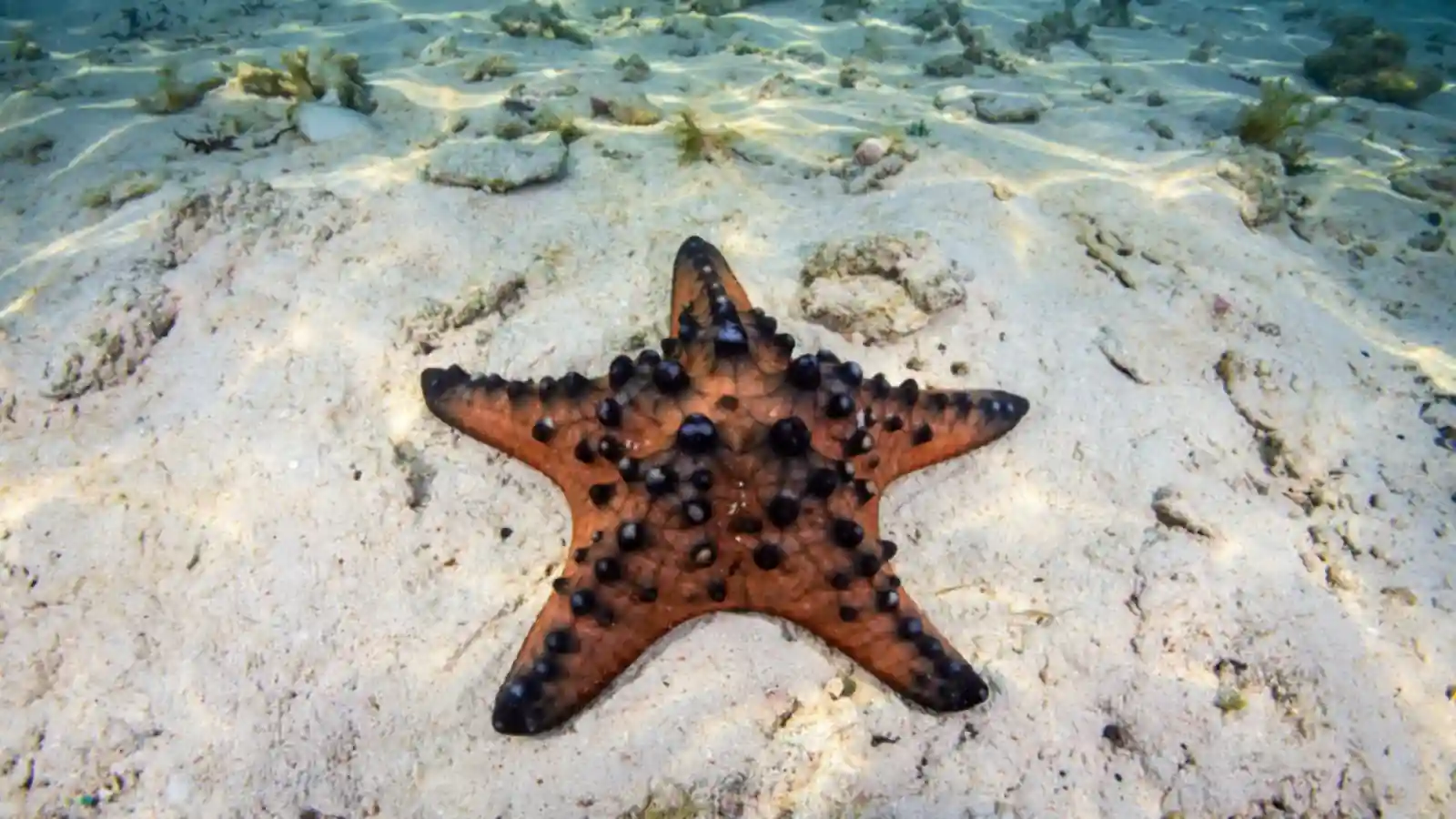
The knobs are the giveaway, and they grow with the animal. A young sea star is small and smooth, with only a few low knobs, and the knobs grow taller and darker as the animal ages. A large adult is unmistakable: a pale, knobbly star with dark chips standing proud of the surface, like a cookie fresh from the oven.
Growth is slow, and a large animal is an old one. It lives about ten to twenty years, and it reaches its full size over several years of steady feeding on the sand flat. A 30-centimetre star is a veteran of the seagrass bed, and it has survived by being too big, too tough and too well-defended for most predators to bother with.
The Knobs: Why Chocolate Chips?
The knobs are not decoration — they are armour. Each knob is a hard, conical spine rising from the starfish’s skeleton, and together they make the animal difficult to bite, difficult to swallow and difficult to grip. A predator that tries to take one gets a mouthful of hard points, and most predators learn to leave it alone after one try.
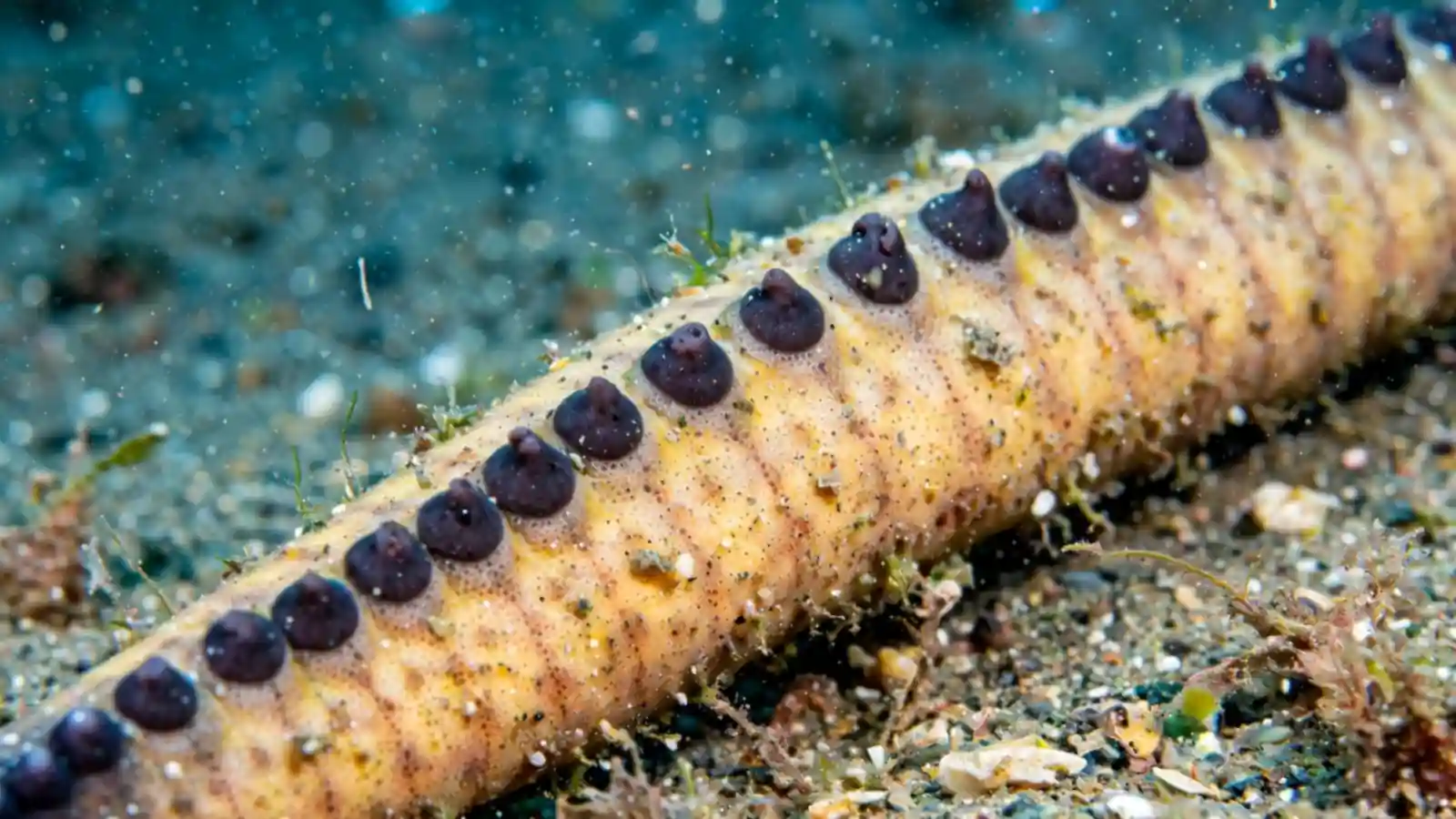
The knobs also give the starfish its name, and the name is a good one: the dark knobs against the pale body look exactly like chocolate chips in a cookie. The pattern varies by individual — some stars have many small knobs, others fewer and larger — and the colour varies too, from pale cream to grey-brown, with the knobs usually darker than the body.
The same knobs give the animal its other common names. “Horned sea star” and “knobbly sea star” both describe the same animal, Protoreaster nodosus, and all three names refer to the knobs. There is also a name collision to watch for: the eastern Pacific has its own “chocolate chip” sea star, Nidorellia armata, a different species that shares the nickname but not the identity.
Chocolate Chip Sea Star Habitat: Seagrass and Sand
It lives on sandy seagrass beds and reef flats in the western Pacific, in water to about 30 metres deep. It favours open sand and seagrass meadows, where its prey — molluscs, worms and other small animals — live buried in the sediment, and where the starfish can crawl freely without getting tangled in coral. It is a sand-flat animal, not a reef animal, and it is rarely seen on the coral itself.
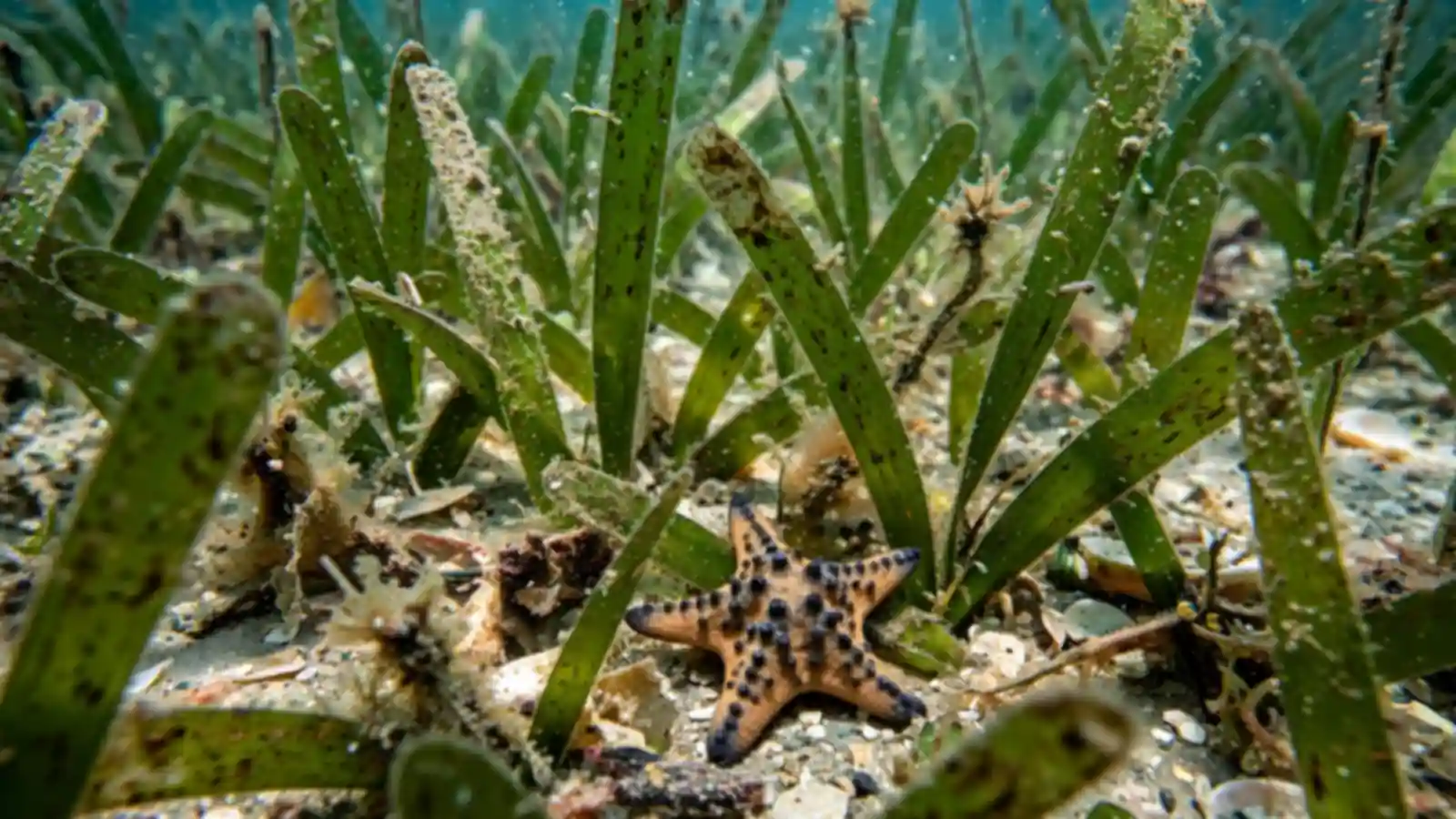
The seagrass bed is the starfish’s hunting ground and its shelter. The seagrass roots hold the sand in place, the blades give cover from predators, and the sediment beneath is full of the small animals the starfish eats. A sea star on a seagrass bed is a hunter on home ground, and it can spend its whole life in a single meadow.
The sea star facts page from TheSea covers the animal’s seagrass habitat and its western Pacific range, and it is worth noting the range carefully: this is a western Pacific species, from Thailand to Samoa and Japan to New Caledonia, and it does not belong to the Indian Ocean despite some older maps that drew its range wider.
What Do Chocolate Chip Sea Stars Eat?
It is a hunter. It eats molluscs, worms and other small animals that live buried in the sand, and it finds them by smell and by touch, crawling across the seagrass bed with its tube feet tasting the sediment. When it finds prey, it everts its stomach — pushes its stomach out of its mouth and over the prey — and digests the animal outside its body, a trick that lets it eat prey larger than its mouth.
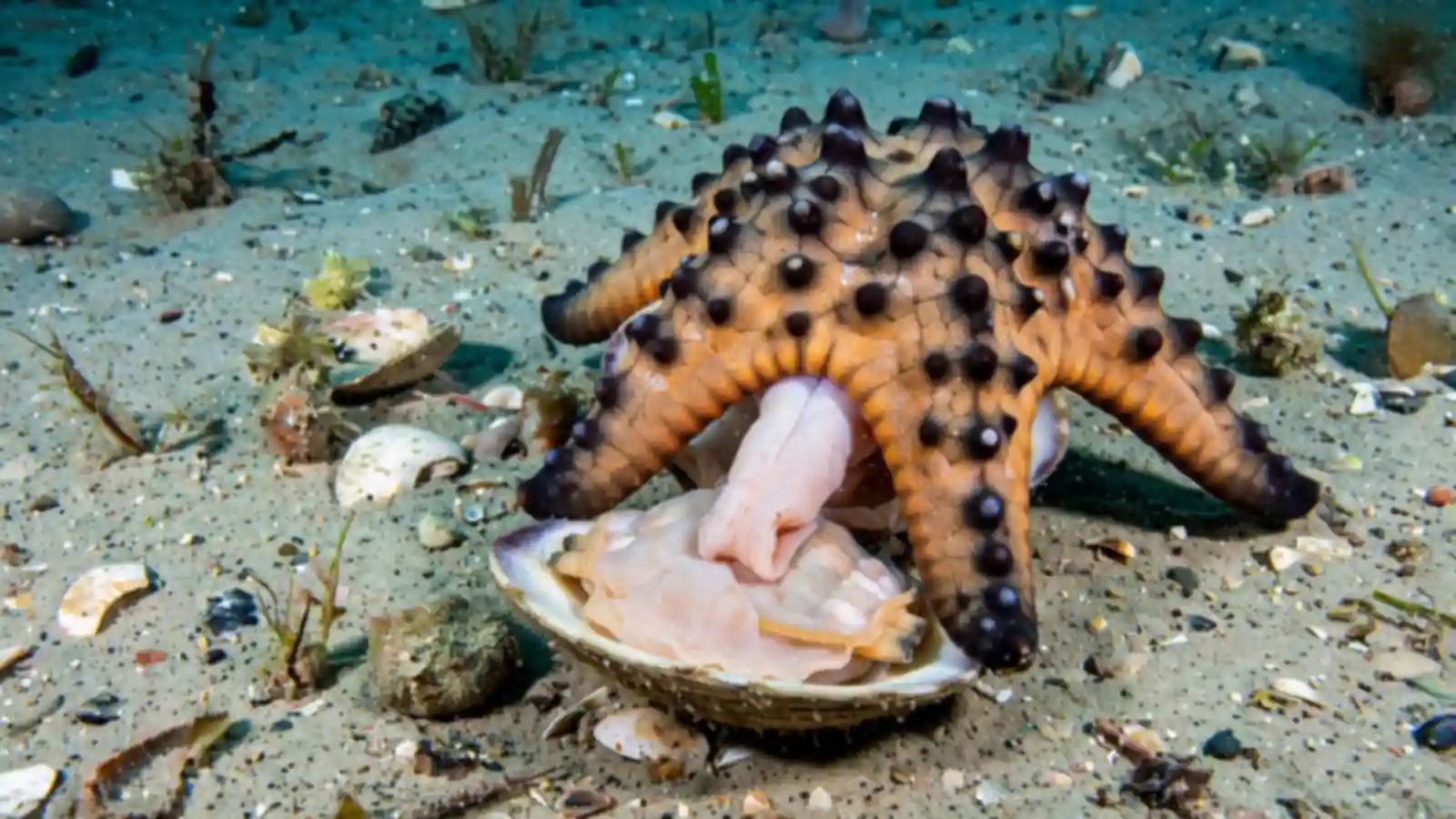
The diet includes sponges and other sessile animals, and the starfish is not fussy. It will eat almost any small animal it can overpower, and its size lets it tackle prey that smaller starfish cannot handle. The hunting is slow — the starfish crawls at a few centimetres a minute — but it is relentless, and a seagrass bed with chocolate chip sea stars is a bed with a top predator on the sand.
The everted stomach is the key to the whole diet. A starfish’s mouth is small, but its stomach is not, and by pushing the stomach out over its prey the animal can digest a clam or a worm without ever getting it inside its body. The process takes hours, and the starfish sits over its prey, stomach out, until the meal is done.
Range and Reproduction
The range is the western Pacific, and only the western Pacific. It lives from Thailand to Samoa and from Japan to New Caledonia, on sandy seagrass beds and reef flats across that arc. Older sources sometimes drew the range wider, including the Indian Ocean, but a 2022 review by Ducarme raised doubt about those Indian Ocean records, and the current picture is a western Pacific species with no confirmed Indian Ocean population.
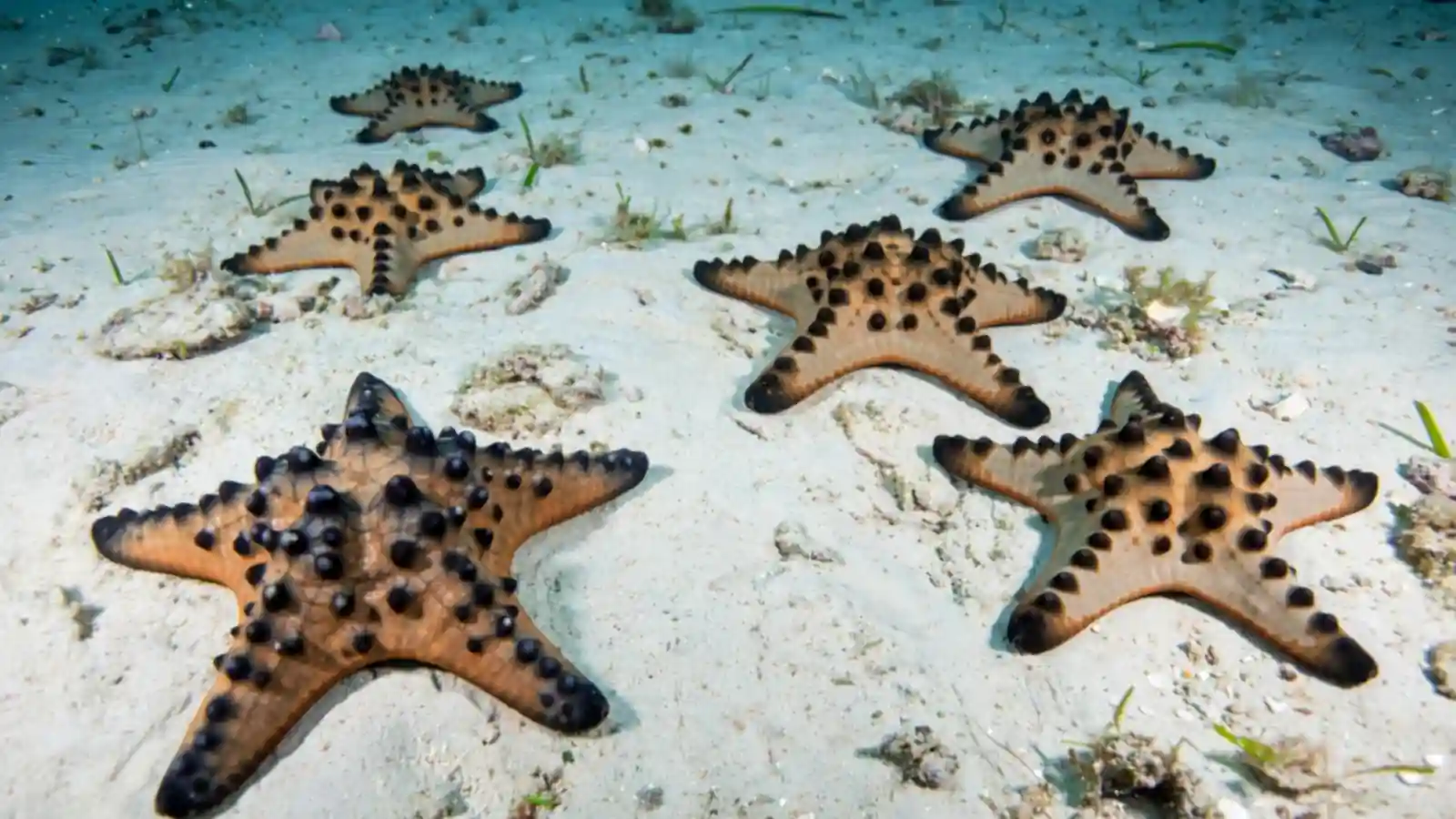
The range matters because it is also the species’ identity. The western Pacific population is Protoreaster nodosus, and the animals that look similar in other oceans are different species — the eastern Pacific’s Nidorellia armata is the best-known example, sharing the chocolate chip nickname but not the species. A sea star outside the western Pacific is almost certainly a different animal wearing the same name.
Reproduction is by broadcast spawning. The starfish releases eggs and sperm into the water, and the larvae drift in the plankton before settling on the seabed as tiny juvenile starfish. The juveniles are small, smooth and knobless, and the knobs grow as the animal ages. A juvenile sea star is a pale, smooth star a few centimetres across, and it takes years of feeding on the sand flat to grow into the knobbly adult.
Is the Chocolate Chip Sea Star Reef Safe?
No — it is not reef safe, and it should not be kept in a reef aquarium. It eats molluscs, worms and sponges, and in a tank it will eat the very animals a reef keeper is trying to grow: clams, snails, feather duster worms and soft corals are all on its menu. A sea star in a reef tank is a predator loose among the livestock.
The problem is compounded by the animal’s size and appetite. A 30-centimetre starfish eats a lot, and a tank that looks full of life to a human is a small hunting ground to a starfish. The animal will work its way through the tank’s invertebrates methodically, and by the time the keeper notices, the damage is done. The starfish is not being malicious — it is doing exactly what it does on the seagrass bed — but the tank is not the seagrass bed.
If it is kept at all, it belongs in a species-only tank with a deep sand bed and plenty of food, not in a reef tank. The animal is hardy and long-lived, ten to twenty years, and in the right setup it can thrive — but the right setup is a sand flat, not a reef, and the honest answer to “is it reef safe?” is no.
Fun Facts
- The knobs are armour — hard conical spines that make the starfish hard to bite.
- It is also called the horned sea star and the knobbly sea star — same animal, three names.
- It eats by pushing its stomach out of its mouth and over its prey.
- Its range is the western Pacific only — Indian Ocean records are doubted after a 2022 review.
- The eastern Pacific has its own “chocolate chip” sea star, Nidorellia armata.
- It is not reef safe — it will eat clams, snails and soft corals in a tank.
Frequently Asked Questions
What is the chocolate chip sea star?
The chocolate chip sea star is Protoreaster nodosus, a large starfish of the western Pacific named for the dark, conical knobs that stud its upper surface like chocolate chips in a cookie. It is also called the horned sea star and the knobbly sea star — all three names describe the same animal.
Where do chocolate chip sea stars live?
On sandy seagrass beds and reef flats in the western Pacific, from Thailand to Samoa and Japan to New Caledonia, in water to about 30 metres deep. Older maps sometimes included the Indian Ocean, but a 2022 review by Ducarme raised doubt about those records, and the current picture is a western Pacific species only.
How big do chocolate chip sea stars get?
About 30 centimetres across, arm tip to arm tip. The arms are thick and tapering, the central disc is large and raised, and the knobs grow taller and darker as the animal ages. A large adult is unmistakable on a sand flat.
What do chocolate chip sea stars eat?
Molluscs, worms, sponges and other small animals buried in the sand. It finds prey by smell and touch, then everts its stomach — pushes its stomach out of its mouth and over the prey — and digests the animal outside its body, a trick that lets it eat prey larger than its mouth.
Is the chocolate chip sea star reef safe?
No. It eats molluscs, worms and sponges, and in a reef tank it will eat clams, snails, feather duster worms and soft corals. It belongs in a species-only tank with a deep sand bed, not in a reef aquarium.
How do chocolate chip sea stars reproduce?
By broadcast spawning: the starfish releases eggs and sperm into the water, and the larvae drift in the plankton before settling on the seabed as tiny juveniles. The juveniles are small, smooth and knobless, and the knobs grow as the animal ages.
Is the chocolate chip sea star the same as the eastern Pacific chocolate chip sea star?
No. The eastern Pacific ‘chocolate chip’ sea star is Nidorellia armata, a different species that shares the nickname but not the identity. The western Pacific animal is Protoreaster nodosus, and a chocolate chip sea star outside the western Pacific is almost certainly a different animal wearing the same name.
Similar Species Worth Exploring
Keep Exploring
Knobs like cookie chips, a stomach that comes out to eat, and a range drawn tighter than the old maps said — keep exploring the chocolate chip sea star.