Feather Duster Worm
Feather Duster Worm: The Fan That Vanishes in a Blink
The feather duster worm wears two spiralled fans of feathery radioles on its head, and at the first shadow or touch it vanishes into its tube in milliseconds — crown and all.
By Emily Carter · Reviewed by our vet team · Updated 10 November 2026 · 9 min read
Crown to 8 cmVanishes in millisecondsFilter feeder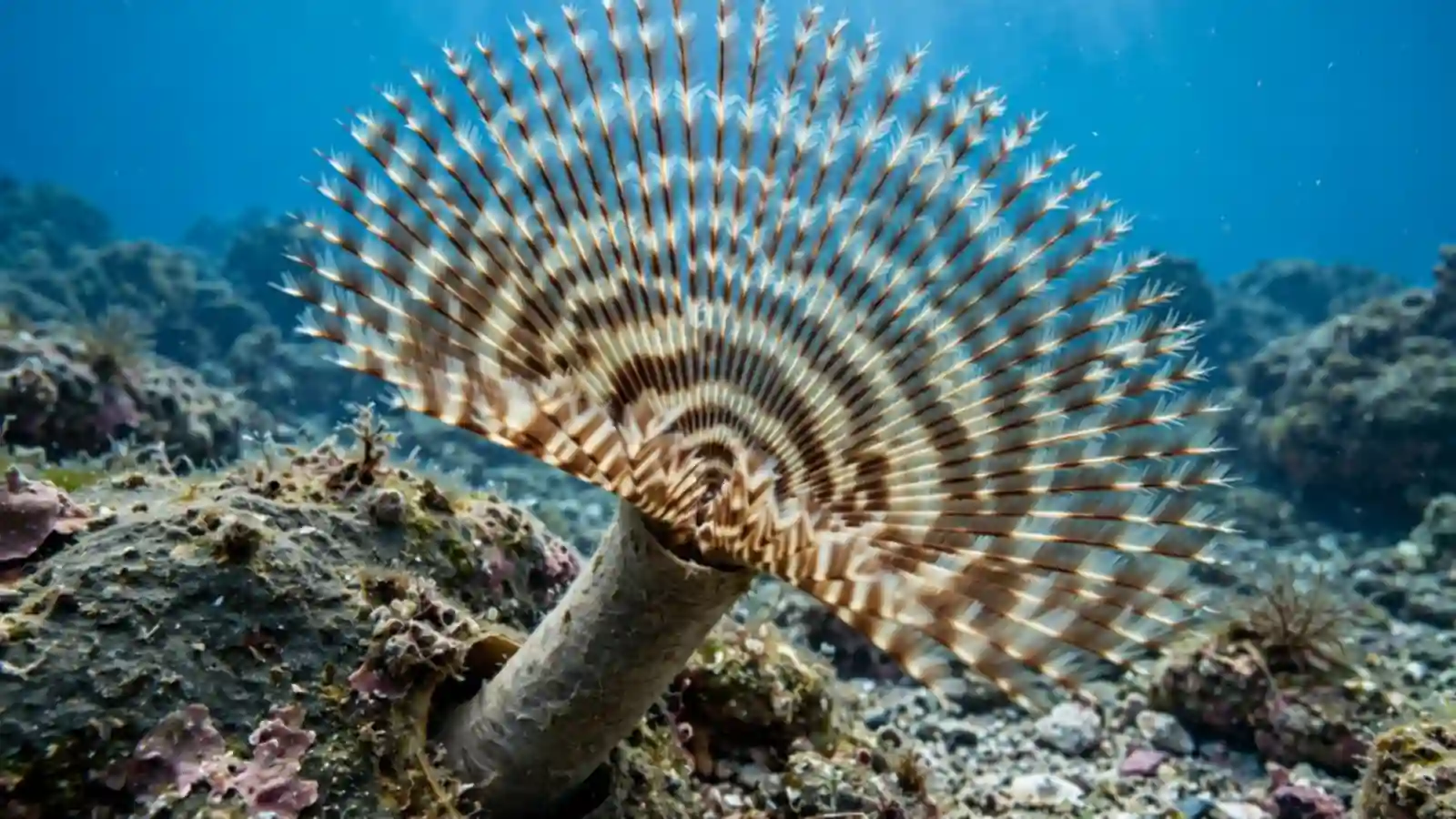
At a Glance
The feather duster worm is a sabellid fan worm of shallow water, named for the two feathery fans it opens like a duster and folds away in a blink. It filter-feeds from a soft tube it never leaves, and it is a favourite of reef aquariums.
Feather Duster Worm Crown: Two Fans That Feed and Breathe
Its crown is two spiralled fans of feathery radioles — fine, hair-like branches arranged in a double spiral on the worm’s head. The fans do two jobs at once: they catch food from the water, and they breathe, pulling oxygen from the current as it flows past. Open, the crown is the most beautiful thing on the worm; closed, the worm is invisible.
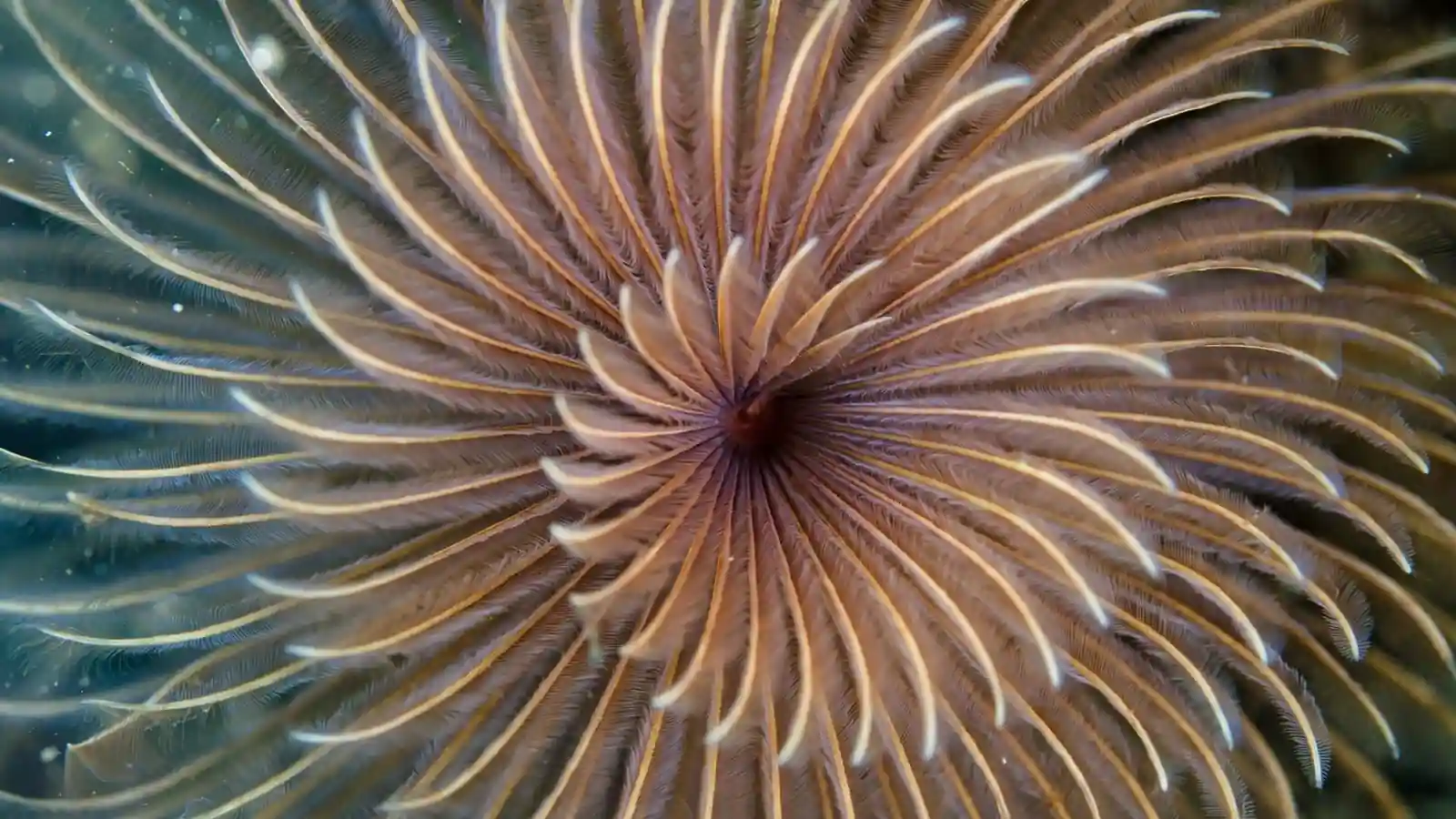
The crown is also the worm’s early-warning system. The radioles are covered in tiny eyespots that sense shadows, and the moment a shadow crosses them the whole crown snaps shut and the worm drops into its tube. The fans are feeding tools, breathing tools and alarm bells in one — and they are what give the worm its name.
Feather Duster Worm Size: Crown to 8 cm Across
Its crown reaches about 8 cm across — the width of a teacup — on a body that can run to 30 cm long inside its tube. The crown is the part you see, and the body is the part you do not: most of the animal lives hidden in the tube, with only the fans showing above the rock.
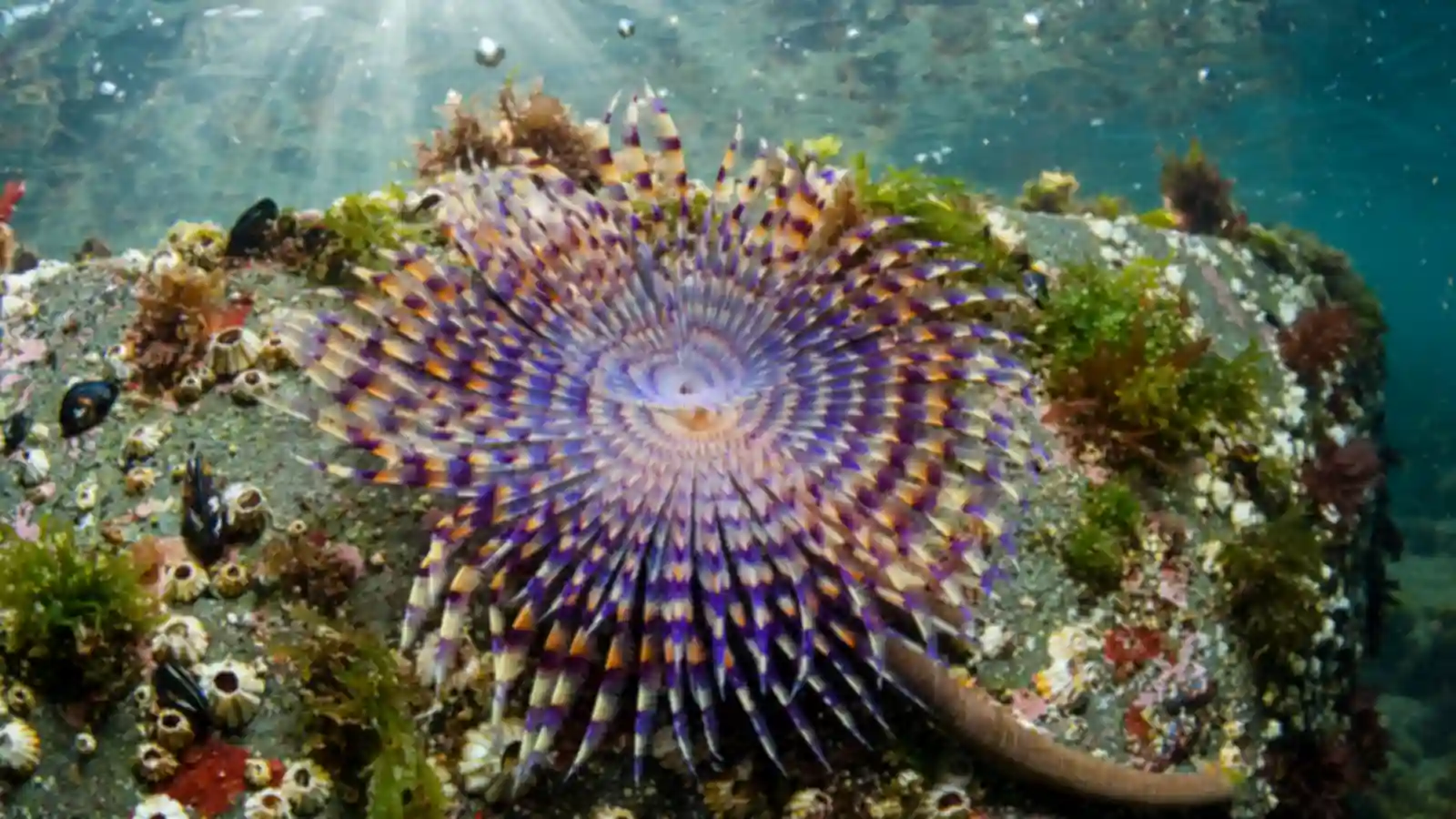
Eight centimetres of crown is large for a fan worm, and it is the peacock worm, Sabella pavonina, that sets the standard: a banded crown of purple and white, opening like a fan on harbour walls and rocky reefs. Smaller species carry smaller crowns, but the shape is the same — two spirals, finely branched, opening and closing with the current.
The Vanishing Act: Retraction in Milliseconds
Its vanishing act is one of the fastest moves in the sea. At a shadow, a touch or a change in the current, the worm contracts a powerful muscle and drops its whole crown into the tube in milliseconds — fans, head and all — leaving nothing but the tube mouth showing. It is gone before the eye registers the movement.

The speed is the defence. The crown is soft, exposed and delicious, and a fish that sees it will try to eat it — so the worm does not give the fish a chance. The eyespots on the radioles sense the shadow before the fish arrives, and the worm is already inside its tube. It waits, it listens, and when the danger passes the crown opens again, as if nothing had happened.
Where They Live: Rock, Shell and Harbour Walls
Feather duster worms live attached to rock, shells and harbour walls in shallow water. They do not burrow and they do not swim: they glue their soft tube to a hard surface and stay there for life, opening their crown to the current. Harbours are full of them, and so are rocky reefs, wrecks and the shells of dead molluscs.
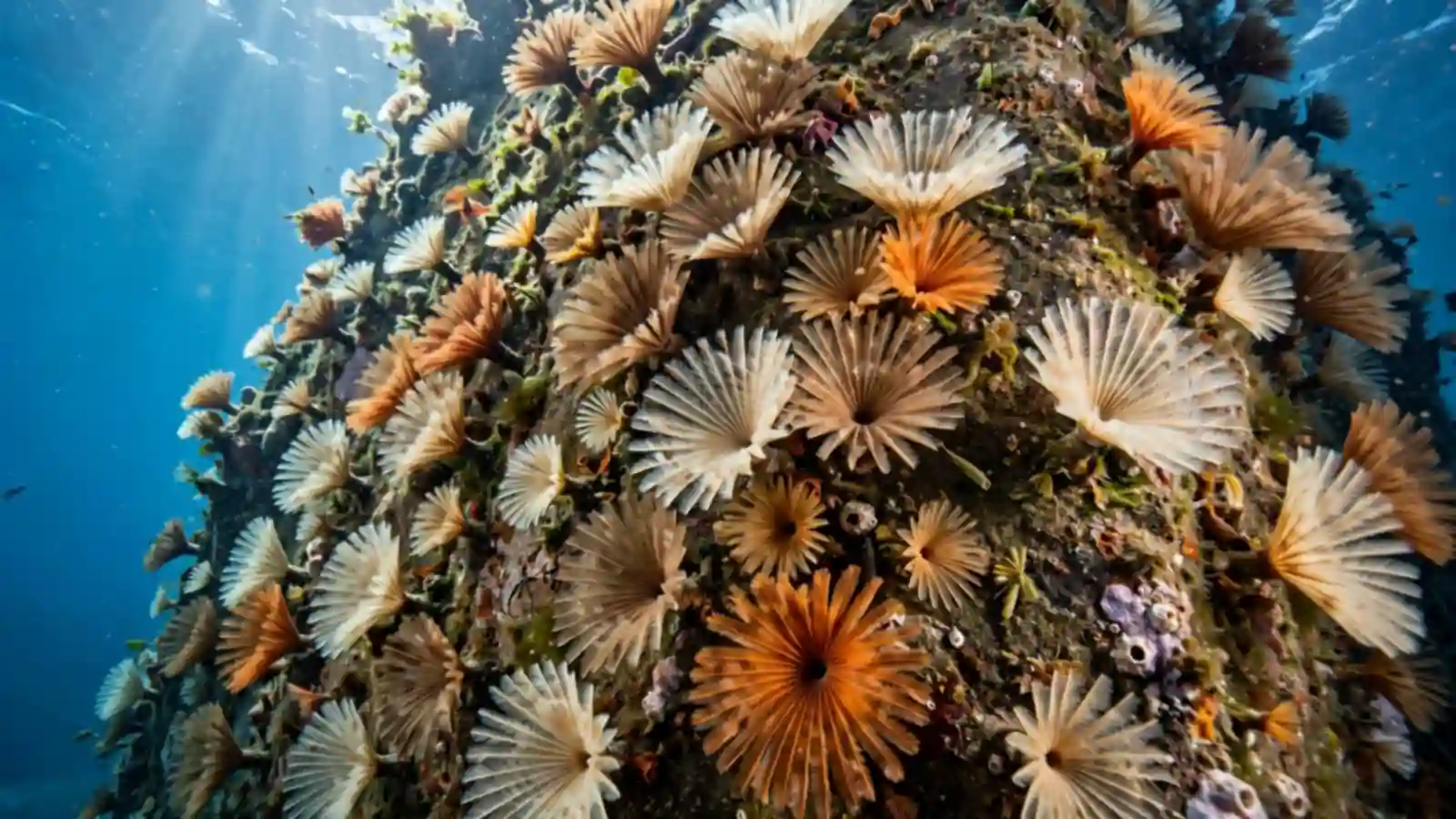
A rock face with feather duster worms on it looks like a garden. The crowns open in every colour — purple, white, orange, banded — and the colony feeds together, each worm filtering the same current. The peacock worm is the harbour-wall classic, its banded crown opening on the concrete where the tide brings it food all day long. For the full profile of the lead species, see this peacock worm profile, which covers its crown, its tube and its harbour-wall habitat.
What They Eat: Filter Feeding
Feather duster worms are filter feeders. The crown’s radioles are lined with cilia that catch plankton and fine organic particles from the water, and the cilia carry the food down to the mouth in a slow conveyor. The worm does not hunt and does not chase — it opens its fans and lets the current bring dinner.
The feeding is why the crown is so large. A bigger fan catches more food, and an 8 cm crown filters far more water than a 2 cm one — which is why the biggest feather duster worms grow the biggest crowns. The worm’s whole life is tuned to the current: open when it flows, closed when it stops, and always feeding while the water moves.
Cousins With Crowns: The Christmas Tree Worm
Its closest lookalike is the Christmas tree worm, Spirobranchus giganteus — and the two are easy to confuse until you know the split. Both are sabellid fan worms with spiral crowns, but this post covers the sabellid family generally, led by the peacock worm, while the Christmas tree worm post covers Spirobranchus giganteus specifically, the coral-dwelling species with twin spiral crowns.
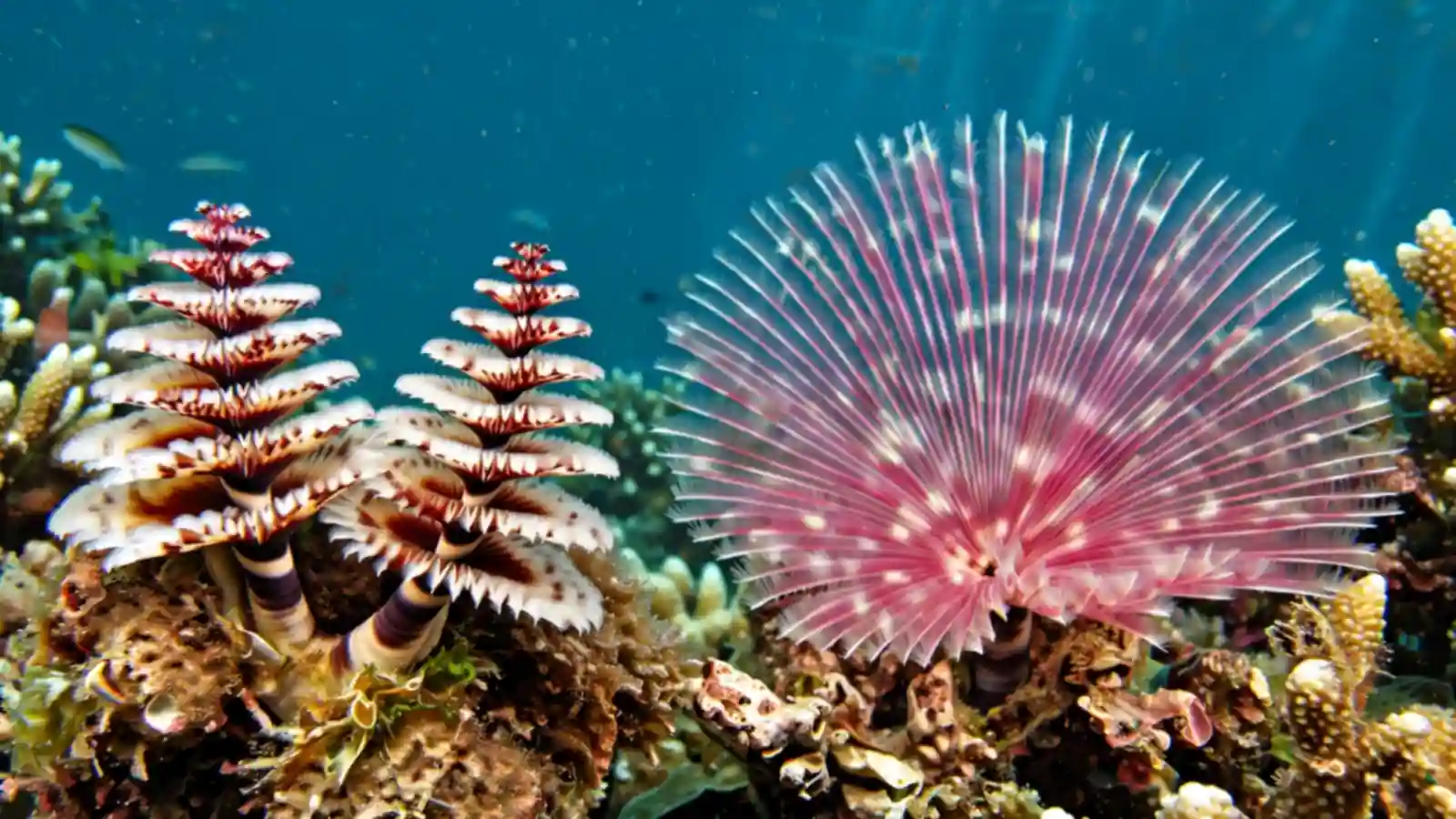
The difference is in the home as much as the crown. The Christmas tree worm lives in a hard calcareous tube bored into living coral; it lives in a soft tube of mucus and sediment glued to rock, shell or harbour wall. Same family, same trick, different address — and the two posts cover them separately, with links both ways.
In Reef Aquariums: A Filter-Feeding Favourite
Feather duster worms are popular reef-tank animals, and the reason is the crown: an 8 cm fan of purple and white opening on the rockwork is one of the prettiest sights in a reef aquarium. They are filter feeders, so they need a tank with plankton in the water and a gentle current — and they need to be left alone, because a startled worm drops its crown and hides.
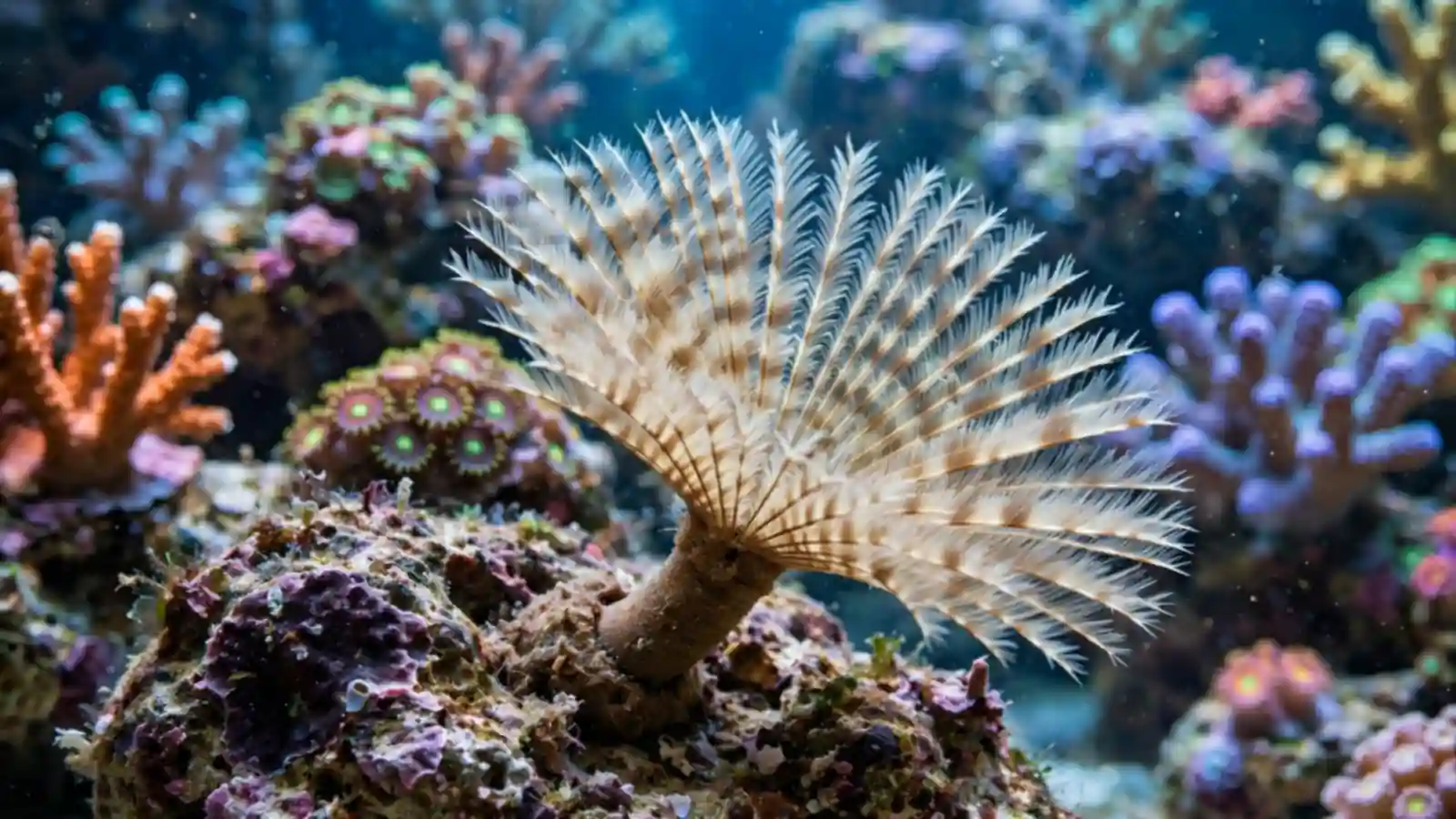
The crown can be shed and regrown in 4–8 weeks, which is both a reassurance and a warning. A worm that loses its crown to a nippy fish will grow a new one, but a worm that sheds its crown repeatedly is stressed, and a stressed worm starves. In a calm tank with good water, it will open every day for years — a quiet, filtering, vanishing piece of the reef.
Fun Facts
- Its crown is two spiralled fans of feathery radioles.
- It vanishes into its tube in milliseconds at a shadow or a touch.
- Its crown reaches about 8 cm across — the width of a teacup.
- A shed crown can be regrown in 4–8 weeks.
- It lives in a soft tube of mucus and sediment, never a hard calcareous tube.
- It is a favourite of reef aquariums — and a sign of good water when it opens daily.
Frequently Asked Questions
What Is a Feather Duster Worm?
A feather duster worm is a sabellid fan worm in the family Sabellidae, led by the peacock worm Sabella pavonina. It wears two spiralled fans of feathery radioles on its head, lives in a soft tube of mucus and sediment, and vanishes into the tube in milliseconds when startled.
How Big Do Feather Duster Worms Get?
The crown reaches about 8 cm across — the width of a teacup — on a body that can run to 30 cm long inside its tube. The crown is the part you see; most of the animal lives hidden in the tube, with only the fans showing.
Why Do Feather Duster Worms Disappear Into Their Tubes?
Because the crown is soft, exposed and delicious. The radioles carry tiny eyespots that sense shadows, and at a shadow, a touch or a change in the current the worm contracts a muscle and drops the whole crown into the tube in milliseconds — before the fish that cast the shadow arrives.
Where Do Feather Duster Worms Live?
Attached to rock, shells and harbour walls in shallow water. They glue their soft tube to a hard surface and stay there for life, opening their crown to the current. Harbours, rocky reefs, wrecks and dead mollusc shells are all home.
What Do Feather Duster Worms Eat?
Plankton and fine organic particles, caught from the water by the crown. The radioles are lined with cilia that trap food and carry it down to the mouth. They are filter feeders — they open their fans and let the current bring dinner.
Can You Keep a Feather Duster Worm in an Aquarium?
Yes — they are popular reef-tank animals, prized for the coloured crown. They need plankton in the water, a gentle current and to be left alone: a startled worm drops its crown and hides. A shed crown regrows in 4–8 weeks, but repeated shedding means a stressed, starving worm.
What Is the Difference Between a Feather Duster Worm and a Christmas Tree Worm?
Both are sabellid fan worms, but the Christmas tree worm (Spirobranchus giganteus) lives in a hard calcareous tube bored into living coral, while the feather duster worm lives in a soft tube of mucus and sediment glued to rock, shell or harbour wall. This post covers the sabellid family generally; the Christmas tree worm has its own post.
Similar Species Worth Exploring
Keep Exploring
Meet the Christmas tree worm, its sabellid cousin in the coral, then the spaghetti worm, the other tentacle-crown worm, and browse the whole family in our types of marine worms hub — then come back to the fan that vanishes in a blink, the feather duster worm.