Anchovy
Anchovy: The Little Fish That Feeds the World
The anchovy is a finger-length fish with an outsized job: it eats plankton by the ton and turns it into food for almost everything else in the sea — seabirds, dolphins, tuna and us. It powers the largest single-species fishery on Earth, flavours cuisines on three continents, and lives fast and dies young. Meet the hardest-working fish in the ocean.
By Emily Carter · Reviewed by our vet team · Updated 10 November 2026 · 10 min read
140+ species worldwideMost live just 3 to 5 yearsThe world’s biggest fishery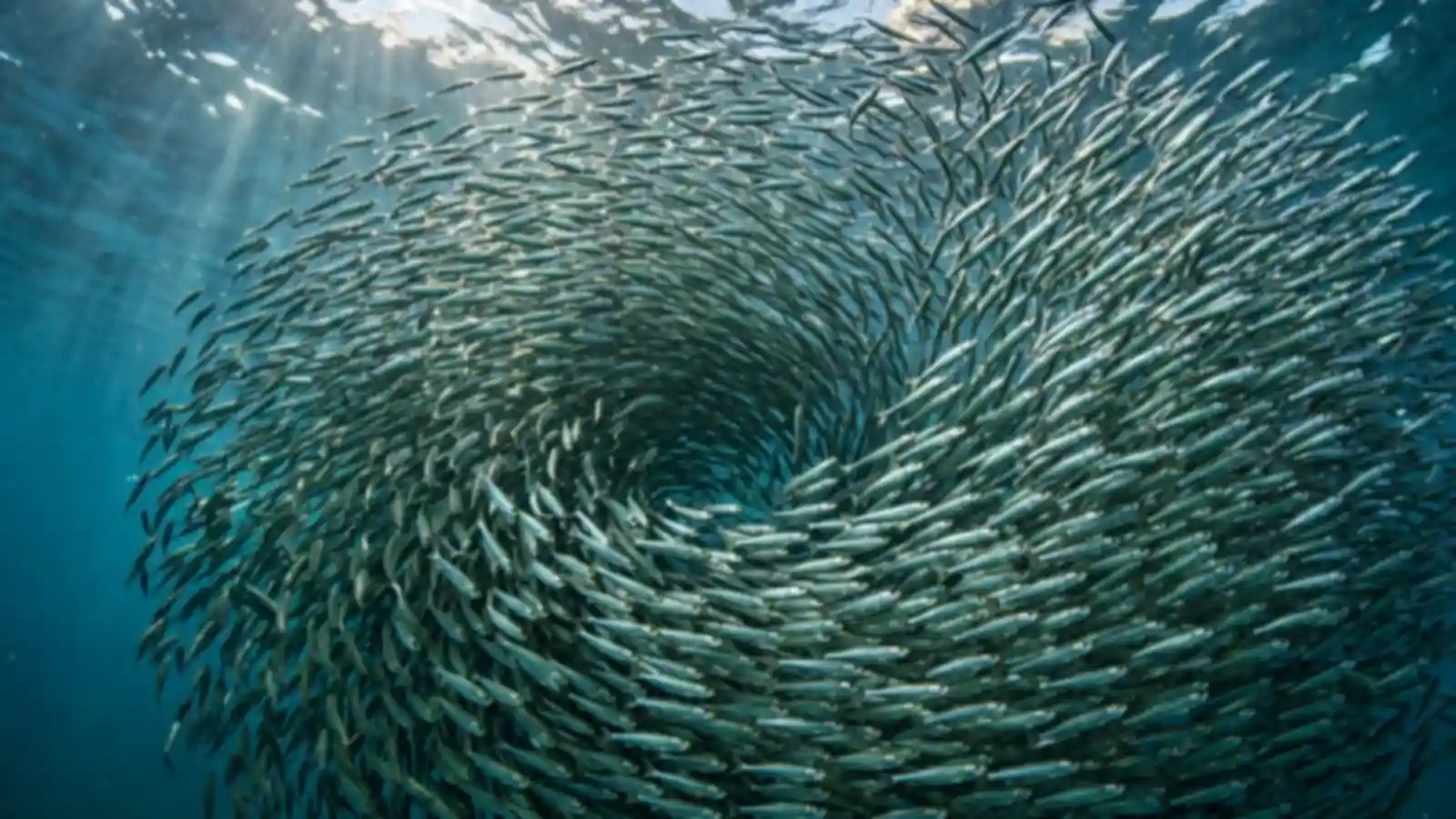
At a Glance
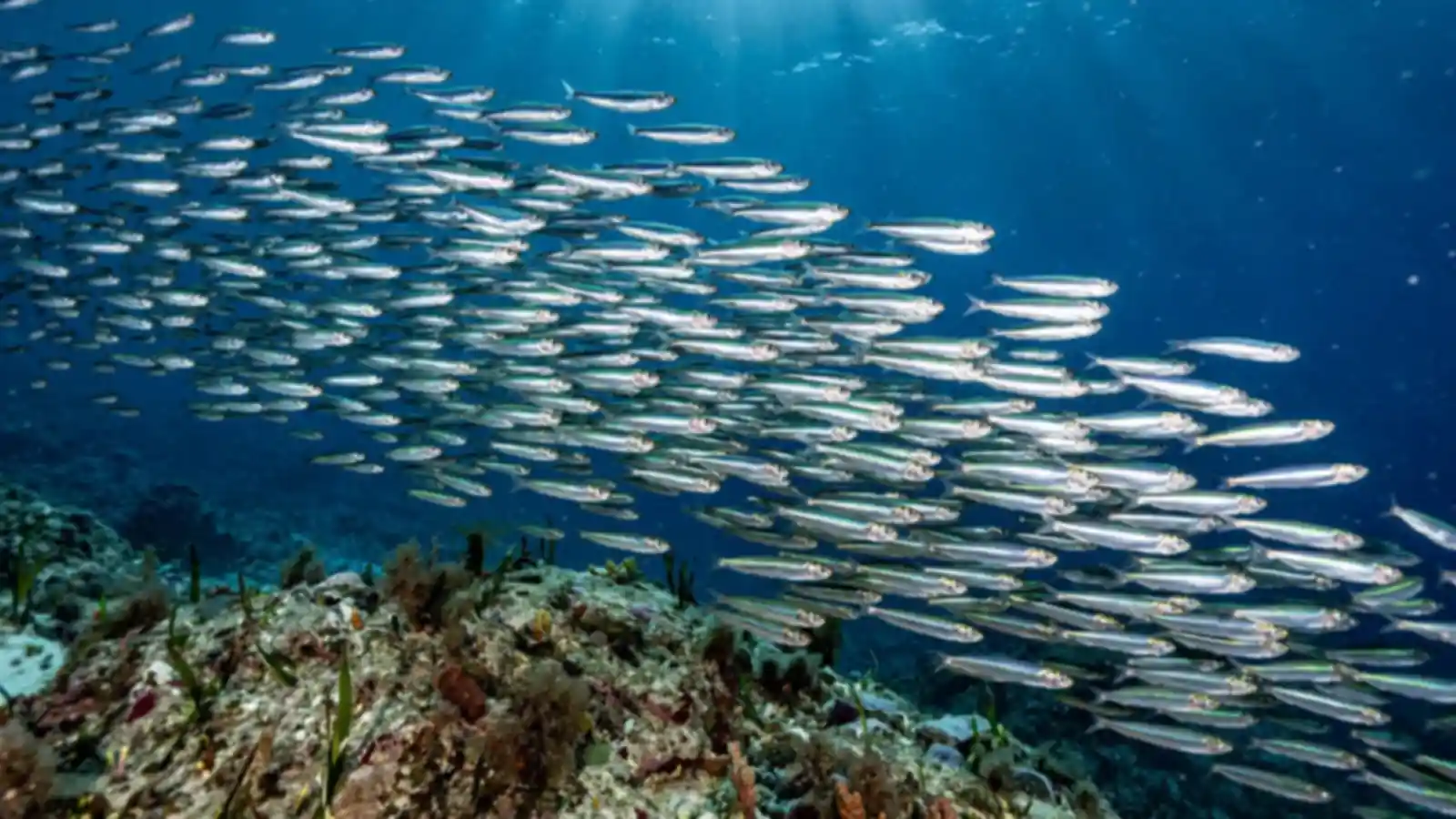
An anchovy is a small forage fish of the family Engraulidae — more than 140 species of slender, silvery plankton-eaters found in every warm and temperate ocean. You can recognise one by its silhouette: a blunt, pig-like snout that overhangs a surprisingly large mouth, a green-blue back, and a silver stripe down the flank. Alone, one is a mouthful for anything bigger. In their millions, anchovies are something else entirely: the conveyor belt that carries energy from microscopic plankton up to the ocean’s great hunters — and to our own tables.
Types of Anchovy: From the Mediterranean to Peru
More than 140 species swim the world’s oceans, but a handful of Engraulis species dominate both nature and the catch. The European species rules the Mediterranean and Black Sea — the fish of a thousand coastal recipes. The Peruvian anchoveta, riding the cold Humboldt Current off Peru and Chile, may be the most abundant fish on the planet. The northern species does the same work off California, and the Japanese species across the northwest Pacific.
The family holds surprises, too. A few species have left the sea entirely for South American rivers, and the giants of the family — a few predatory kinds — reach 40 centimetres, dwarfing their 15-centimetre cousins. Almost all, however, share the family plan: small, schooling, plankton-fed and short-lived.
Two mix-ups are worth clearing up. Whitebait is not a species at all — it is a mixed catch of young fish, which can include juvenile anchovies alongside baby herrings and sprats. And while anchovies are forever compared with sardines, they are different families with different lives: the sardine is a herring relative sold whole and fresh or canned, while anchovies are usually cured in salt, which transforms them completely.
Anchovy Size and Lifespan
Their size is modest by design. The family spans just 2 to 40 centimetres, and the commercial species cluster tightly around 13 to 20 centimetres: a European one maxes out at 20 centimetres and about 49 grams, while the Peruvian anchoveta is commonly 14 centimetres. Look closely and the design is all about eating plankton — the overslung mouth opens wide, and the gills carry an extraordinary number of fine rakers (34 to 49 in the anchoveta) that work as a sieve.
Life is lived at full speed. An anchoveta is mature at about one year old and 10 to 12 centimetres, and dead by three. The European species stretches to five years at most. With natural mortality that can claim half a stock in a year, anchovies bet everything on numbers: grow fast, spawn early and often, and let the sheer size of the school carry the species through.

The numbers behind the family’s champion are striking enough to browse directly: the full species record for the Peruvian anchoveta sets out its growth, its diet and its extraordinary fishery in detail.
Where Do Anchovies Live? Habitat and Range
Anchovies live where the ocean is generous: coastal surface waters, usually in the top 80 metres and within about 80 kilometres of shore. The richest waters are the great upwelling zones — off Peru, California, northwest Africa and in the Benguela Current — where rising cold water fertilises plankton blooms. Enclosed seas teem with them too: the Turkish fleet alone takes around 300,000 tonnes of anchovies a year, mostly from the Black Sea in winter.
A school’s day runs on a rhythm: down to 50 metres or so in daylight, rising toward the surface at night to feed where the plankton gathers. Spawning follows the food — females release batches of oval eggs (unusually, the eggs are elliptical rather than round) that drift with the currents, hatching into the same plankton soup the parents feed on.

Diet: Filtering the Plankton Soup
The diet is the plankton itself. Swimming slowly with mouth agape, it strains the water through those comb-like gill rakers, swallowing phytoplankton — in the anchoveta, diatoms alone have made up as much as 98 per cent of stomach contents in some studies — together with tiny zooplankton such as copepods and fish larvae. Bigger anchovies graduate to picking off individual prey, but filtering is the family trade.
This is what makes anchovies irreplaceable. Almost nothing else in the sea can harvest microscopic plankton at their scale, and everything larger depends on the conversion: anchovies package the ocean’s smallest food into parcels that tuna, dolphins, seals, seabirds and people can actually eat. Remove the anchovies, and the whole structure above them goes hungry — a lesson written into the great forage-fish cycles of every upwelling coast.

The Peruvian Anchoveta: The Biggest Fishery on Earth
No wild fish is caught in greater quantity than the Peruvian anchoveta. Through the 2010s its annual harvest ran between about 3.1 and 8.3 million tonnes — more than any other single species — and the all-time record, 13.1 million tonnes in 1971, still stands. Most of that catch is reduced to fishmeal and oil that feeds farmed fish and livestock around the world; a smaller, choicer share of anchovies is eaten directly, above all the salt-cured European one, whose fillets flavour Mediterranean cooking far beyond their size.
As food, it punches absurdly above its weight: oily and rich in omega-3 (about 0.76 grams per 100 grams in the anchoveta), loaded with calcium when the soft bones are eaten, around 19 per cent protein, and — because the fish is small and short-lived — very low in mercury. The catch with cured anchovies is the salt used to preserve them, so they are best enjoyed as the condiment they have always been: a little goes a very long way.
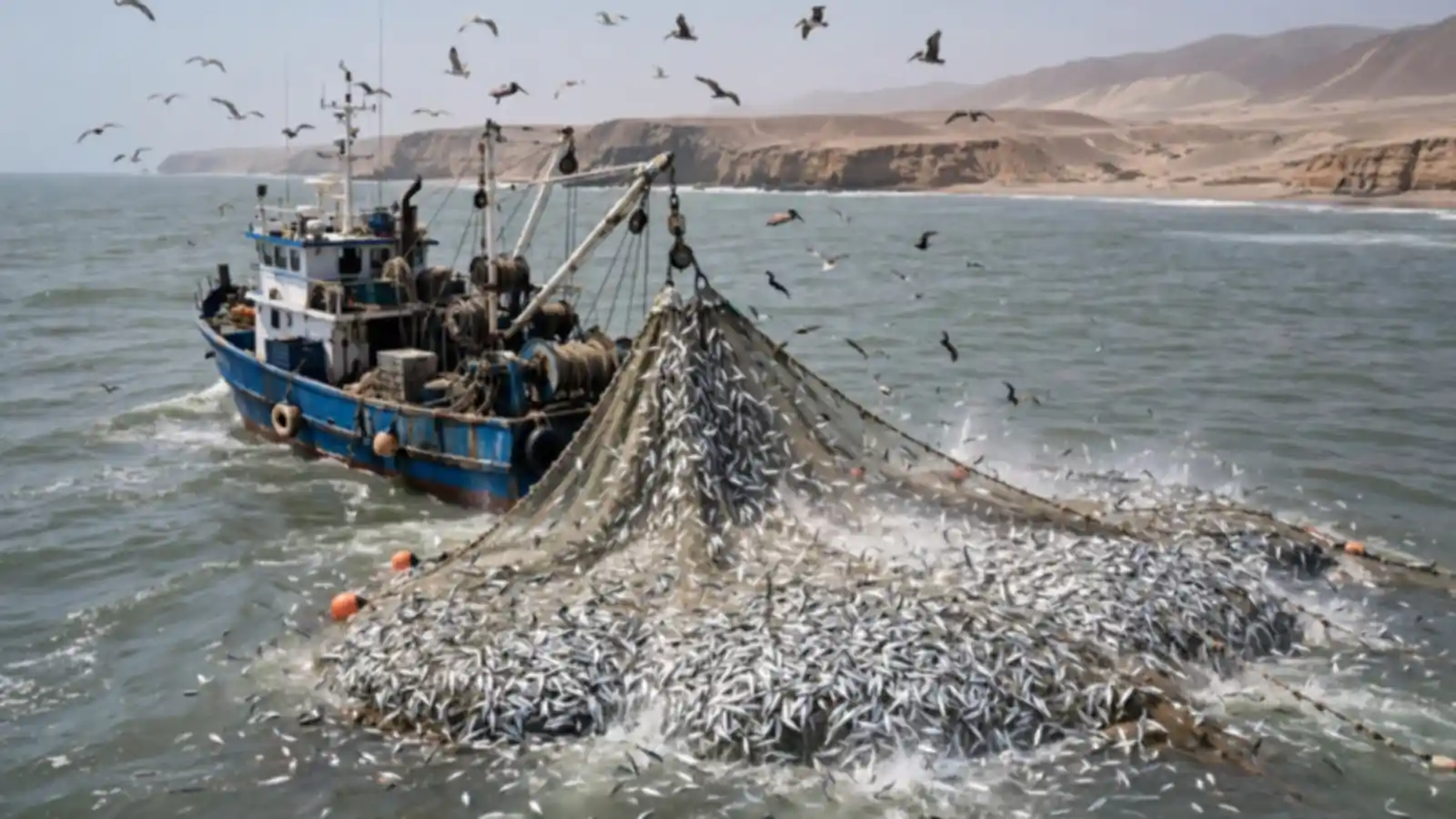
The fishery is also a cautionary tale with a hopeful ending. In 1972, warm El Niño water arrived on top of years of heavy fishing and the anchoveta stock collapsed — the fleet, and the seabirds, and the guano trade all crashed with it. Recovery took two decades. Peru now manages the fishery with scientific surveys, per-vessel catch limits and closed seasons, and shuts it entirely when juveniles dominate — a working model of how to fish a forage species without eating the ecosystem’s lunch.
Anchovies and the Animals That Depend on Them
Stand over a school and you stand over a dinner bell. Off Peru, vast colonies of guano birds and pelicans depend on the anchoveta, and their breeding fails in years when the fish disappear. Dolphins herd the schools into bait balls, gannets rain down from the sky, and tuna, bonito, sea lions and sharks all take their share. Even the fertiliser history of the 19th century ran on anchovies: the prized guano scraped from Peru’s seabird islands was, in effect, anchovies once removed.
That web of dependence shapes how anchovies should be fished. The major commercial species are currently assessed as Least Concern — the fish themselves are in no danger of vanishing — but the modern rule of forage-fish management is to leave a generous share in the water for everything that eats them. Its real value is not the fillet or the fishmeal. It is being the ocean’s middleman, and middlemen must never be squeezed dry.

Fun Facts
- The 13.1 million tonnes of anchoveta landed in 1971 remains the largest single-species catch ever recorded.
- The eggs are oval rather than round — a small oddity that lets scientists identify them in plankton samples.
- In some studies, diatoms made up 98 per cent of the Peruvian anchoveta’s stomach contents.
- Its snout overhangs its mouth so strongly that the fish looks as if its jaw is upside down.
- Half or more of a northern stock can die of natural causes every year — the species survives by sheer numbers.
- Salt-curing transforms its flavour completely, which is why the cured fillet tastes nothing like the mild fresh fish.
Frequently Asked Questions
What Fish Is an Anchovy?
An anchovy is a small, schooling forage fish in the family Engraulidae — more than 140 species of slender, silvery plankton-eaters. Recognise one by the blunt snout overhanging a large mouth, the green-blue back and the silver stripe along the flank. The best-known species are the European one and the Peruvian anchoveta.
How Many Species of Anchovy Are There?
More than 140 species, grouped in 16 genera, across the Atlantic, Indian and Pacific oceans and seas like the Mediterranean and the Black Sea. A few species live entirely in fresh water in South America, and the family ranges in size from 2 centimetres to about 40.
Are Anchovies and Whitebait the Same Fish?
No. Whitebait is not a species but a mixed catch of juvenile fish — young herrings, sprats and sometimes young anchovies, depending on the country. It is a specific family of fish; whitebait is simply whatever small young fish came up in the net.
What Do Anchovies Eat?
Plankton, mostly. Anchovies filter-feed by swimming with their mouths open, straining phytoplankton such as diatoms and small zooplankton through fine gill rakers. The Peruvian anchoveta is so specialised that diatoms alone can make up nearly all of its diet.
Where Do Anchovies Live?
In coastal surface waters worldwide, usually in the top 80 metres and close to shore. The biggest populations follow cold, plankton-rich upwelling currents off Peru, California and northwest Africa, and enclosed seas such as the Mediterranean and Black Sea hold huge stocks of the European species.
Are Anchovies Healthy to Eat?
Yes — anchovies are one of the most nutritious small fish: rich in omega-3 oils, protein and calcium (from the edible bones), and very low in mercury because they are small and short-lived. The one caution is salt: cured anchovies are preserved in it, so they are best used as a flavouring rather than a main course.
How Long Do Anchovies Live?
Not long. The Peruvian anchoveta lives about three years, and the European species up to five at most. Anchovies mature at around one year old and survive as a species through enormous numbers and constant spawning rather than individual longevity.
Similar Species Worth Exploring
Keep Exploring
From the smallest schooling fish, climb the food web to its hunters: chase the golden mahi mahi, compare the anchovy’s great rival the sardine, or browse the full types of fish guide — then come back down to the mighty little anchovy.