Atlantic Oyster
Atlantic Oyster: The Reef Builder of the Western Atlantic
The Atlantic oyster builds reefs from Canada to the Gulf of Mexico, filters gallons of water a day, and can even change sex as it grows. It is the oyster that built the Chesapeake — and the one the Chesapeake is now trying to rebuild.
By Emily Carter · Reviewed by our vet team · Updated 10 November 2026 · 9 min read
Shell to 20 cmFilters up to 50 gallons a dayChesapeake Bay reefs
At a Glance
The Atlantic oyster is the reef-building oyster of the western Atlantic, also called the eastern, American or Virginia oyster. From Canada to the Gulf of Mexico it cements its shells together into reefs that shelter fish and crabs, filter the bay, and hold the shoreline together.
Atlantic Oyster Habitat: Brackish Bays and Estuaries
It lives in brackish bays and estuaries, 8 to 35 ft deep, attached to hard surfaces — shell, rock, pier pilings, anything solid. Its range runs from Canada down the eastern seaboard of North America to the Gulf of Mexico, and it is the oyster of the Chesapeake Bay, where it once built reefs so vast they were a hazard to navigation.

The reef is the habitat. An oyster reef is a wall of living shell, and it shelters crabs, small fish, worms and shrimp among the oysters. The reef slows the water, traps sediment, and gives other animals a place to live — and it does it all in water that is neither fresh nor salt, but the brackish mix in between.
Atlantic Oyster Size: 3 to 8 Inches
It is typically 3 to 5 inches long, with old animals reaching up to 8 inches — about 20 cm. The shell is grey-brown and rough on the outside, pearly on the inside, and it grows in layers, each one recording a season of growth. A three-inch oyster is a young adult; an eight-inch oyster is an elder, decades old.

Size is the difference from its Pacific cousin. It is smaller and more regular than the Pacific oyster, with a smoother shell and a more even shape. It is the native oyster, grown in place over thousands of years, and its size is the size the bay made it.
How Atlantic Oysters Filter Water
It filters water — up to 50 gallons a day from a single oyster, a figure commonly cited for the species. It opens its shell, pumps water through its gills, and traps plankton and algae on mucus, cleaning the bay as it eats. A whole reef filters the estuary, and a healthy reef can clear the water of an entire bay.
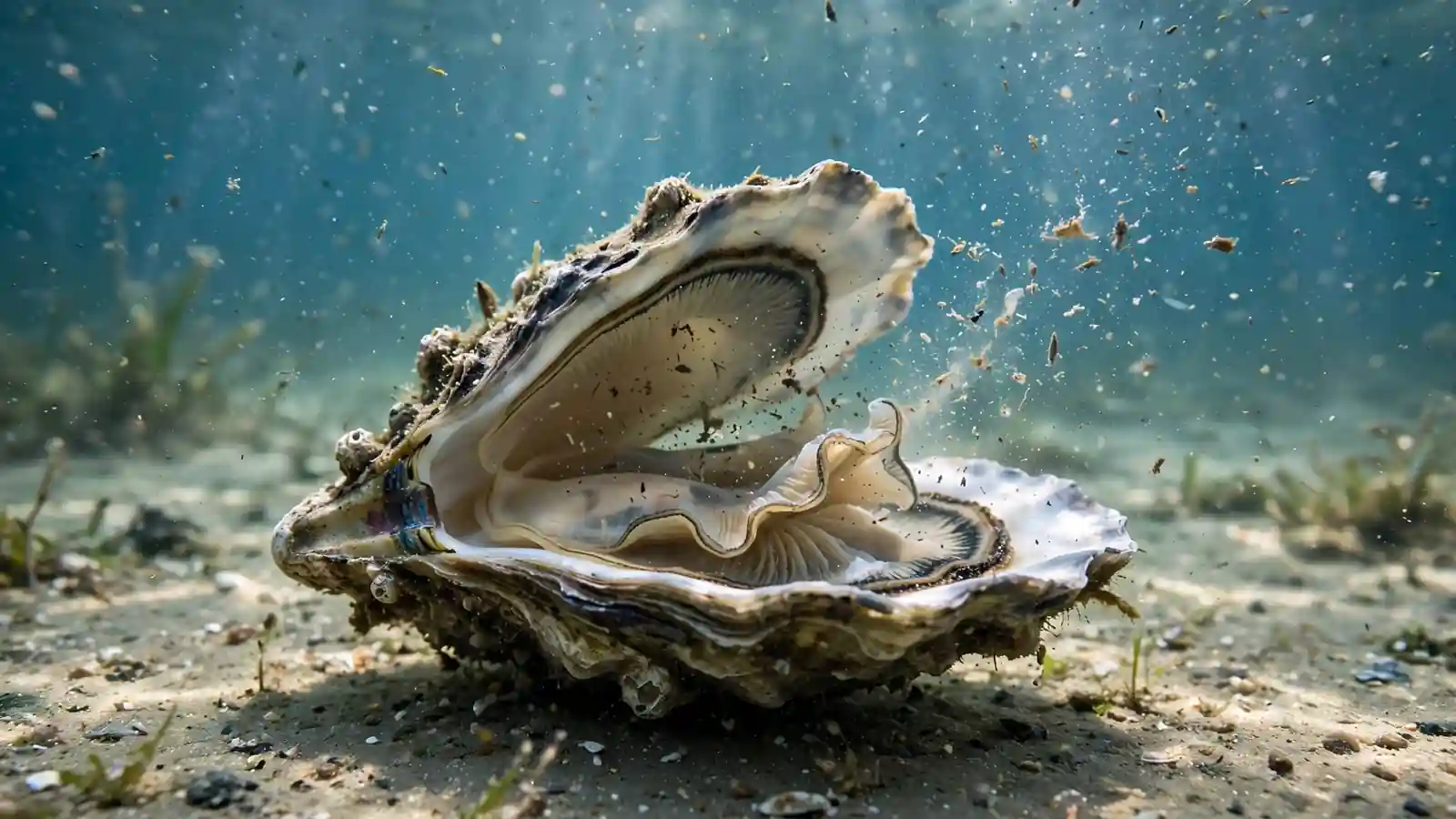
The filtering is why the Chesapeake wants its oysters back. When the reefs were at their peak, the bay’s oysters filtered the whole bay in days; today, with the reefs a fraction of their old size, it takes far longer. Every oyster restored is a filter put back to work, and the bay notices the difference.
Oyster Reefs: Cities Built by Shells
It builds reefs by cementing its shells together — each generation settling on the shells of the last, until the reef is a wall of living shell rising from the bay floor. The reef shelters fish and crabs, gives worms and shrimp a place to live, and breaks the waves before they reach the shore. It is a city built by shells, and it is built to last.

Restoration works the same way. For a guide to the species, see this eastern oyster guide from American Oceans. Volunteers sink bags of old shell into the bay, and wild oyster spat settle on them, cement themselves down, and start a new reef. The shell bags are the foundation; the oysters do the building. A restored reef can take years to grow, but once it is growing it builds itself.
Oyster vs Pacific Oyster
It and the Pacific oyster are the two oysters most people meet, and the Atlantic one is the native. It is smaller and more regular than the Pacific oyster, with a smoother grey-brown shell, and it is the eastern American oyster — the one that built the reefs of the western Atlantic over thousands of years. The Pacific oyster is the larger, introduced species, with a rougher, more irregular shell.

Where the two meet, the Pacific oyster often wins. It grows faster, settles more readily, and takes the same reefs it needs. Its defence is its history: it is adapted to the bays it built, and in its home water it still holds its ground.
Do Atlantic Oysters Change Sex?
Yes — Atlantic oysters change sex as they grow. Young oysters are mostly male, and older ones are mostly female: in Chesapeake Bay, about 80 percent are female by age five. The change is a strategy: a small oyster is better off as a male, releasing sperm cheaply, while a large oyster is better off as a female, producing the millions of eggs that keep the reef going.
The 80 percent figure is attributed to the Chesapeake, and this guide does not present it as universal — other bays may differ. But the pattern is the same everywhere: the oyster starts male, grows, and becomes female, and the reef’s future is carried by its oldest, largest animals.
Conservation: Chesapeake Bay Restoration
Its conservation story is the Chesapeake Bay restoration: the effort to rebuild the reefs that were fished out, diseased and smothered over the last century. Restoration means sinking shell bags, planting spat, protecting the reefs that remain, and letting the oysters rebuild what they built before. It is slow work, and it is working — restored reefs are growing, filtering and sheltering fish again.

The restoration is also the reason the oyster matters beyond the plate. An oyster reef is a filter, a nursery and a breakwater in one, and the bay needs it. Every restored reef is a piece of the old Chesapeake put back, and every oyster on it is a filter, a builder and a survivor.
Fun Facts
- A single oyster can filter up to 50 gallons of water a day.
- Young oysters are mostly male — about 80 percent are female by age five in Chesapeake Bay.
- Its shells cement together into reefs that shelter fish and crabs.
- It is also called the eastern, American or Virginia oyster.
- Chesapeake Bay’s reefs were once so vast they were a hazard to navigation.
- Restoration volunteers sink bags of old shell for wild spat to settle on.
Frequently Asked Questions
Where do Atlantic oysters live?
In brackish bays and estuaries, 8 to 35 ft deep, attached to hard surfaces — shell, rock, pier pilings, anything solid. The Atlantic oyster ranges from Canada down the eastern seaboard of North America to the Gulf of Mexico, and it is the oyster of Chesapeake Bay.
How big do Atlantic oysters get?
Typically 3 to 5 inches long, with old animals reaching up to 8 inches — about 20 cm. The shell is grey-brown and rough on the outside, pearly on the inside, and it grows in layers, each one recording a season of growth.
How much water can one oyster filter?
Up to 50 gallons a day, a figure commonly cited for the Atlantic oyster. It opens its shell, pumps water through its gills, and traps plankton and algae on mucus — cleaning the bay as it eats. A whole reef filters the estuary.
What is an oyster reef?
A wall of living shell built by Atlantic oysters cementing themselves together — each generation settling on the shells of the last. The reef shelters fish and crabs, gives worms and shrimp a place to live, and breaks the waves before they reach the shore.
Do Atlantic oysters change sex?
Yes. Young Atlantic oysters are mostly male, and older ones are mostly female — in Chesapeake Bay, about 80 percent are female by age five. The 80 percent figure is attributed to the Chesapeake and is not presented here as universal.
Atlantic oyster vs Pacific oyster: what’s the difference?
The Atlantic oyster is the native eastern American oyster — smaller and more regular, with a smoother grey-brown shell. The Pacific oyster is the larger, introduced species, with a rougher, more irregular shell to 30 cm. Where the two meet, the Pacific oyster often outcompetes the Atlantic one.
Are Atlantic oysters endangered?
Not Red-Listed — no IUCN status is printed for the Atlantic oyster. But its reefs were fished out, diseased and smothered over the last century, and Chesapeake Bay restoration is now rebuilding them with shell bags, spat planting and reef protection.
Similar Species Worth Exploring
Keep Exploring
Meet the Pacific oyster, the larger rival that competes for these reefs, then the blue mussel, its intertidal neighbour, and browse the whole family in our types of mollusks hub — then come back to the reef builder of the western Atlantic, the Atlantic oyster.