Stone Crab
Stone Crab: the crab that gives up its claws and lives
The stone crab gives up its claws and lives: fishermen take one claw and return the crab to the sea, and the claw grows back in about a year to eighteen months. The Florida fishery is the only claw-only fishery of its kind, and its season runs from October 15 to May 1. This guide covers the Florida and Gulf stone crabs, the rules, and the honest question of whether declawing kills crabs.
By Emily Carter · Reviewed by our vet team · Updated 10 November 2026 · 10 min read
Claws grow back in 12–18 monthsSeason Oct 15 – May 1Claw-only fishery
At a Glance
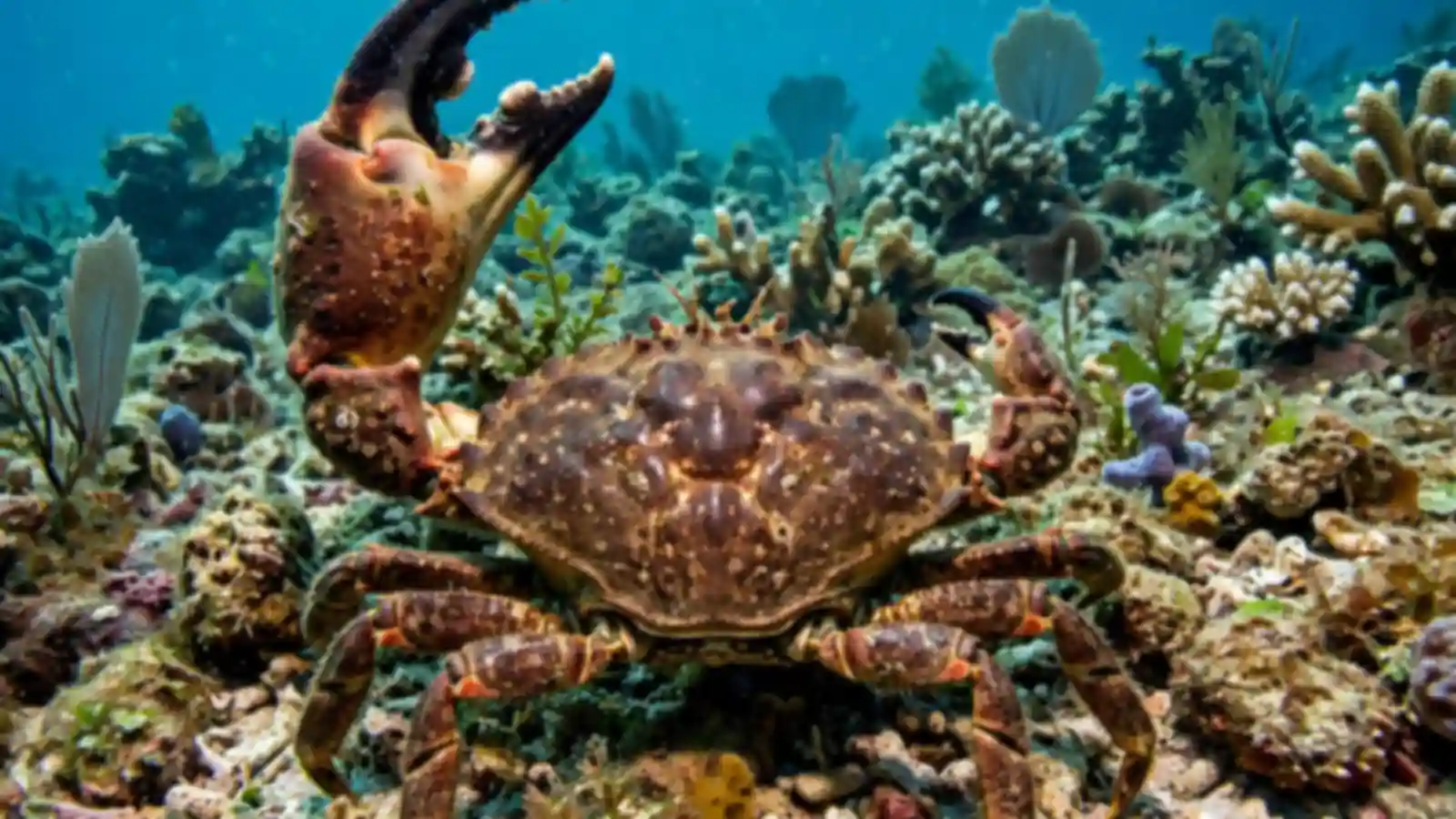
A stone crab is a heavy, mottled-brown crab with two mismatched claws, one a massive crusher and one a smaller pincer, and it lives on the reefs and seagrass beds of Florida and the Gulf of Mexico. It is the only crab fished for its claws alone, and the fishery’s rules are built around the animal’s ability to regrow what is taken. Here it is at a glance.
Stone Crab Species: Florida and Gulf
It is a group term, and two species share it. The Florida species, Menippe mercenaria, is the famous one, living on the reefs and seagrass beds of Florida’s Gulf coast and the Keys, and about 99 percent of the American harvest is Floridian. The Gulf species, Menippe adina, lives further west in the Gulf of Mexico, and the two meet and hybridise where their ranges overlap.

The two are close cousins, and telling them apart takes a specialist’s eye: the Gulf species is a little smaller and paler, and the shape of the claw differs in detail. For the fishery and the table, the Florida species is the animal that matters, and this guide leads with it, giving the Gulf species its own section below.
The Florida Stone Crab: Menippe mercenaria
The Florida species, Menippe mercenaria, is a heavy crab with a mottled brown carapace 5 to 6 inches across, and two claws that do different jobs. The crusher claw is massive, built to crack open molluscs and crush the shells of oysters and clams, while the pincer claw is smaller and quicker, used to pick at food and to defend the animal. The asymmetry is its signature, and the crusher is the claw the fishery takes.
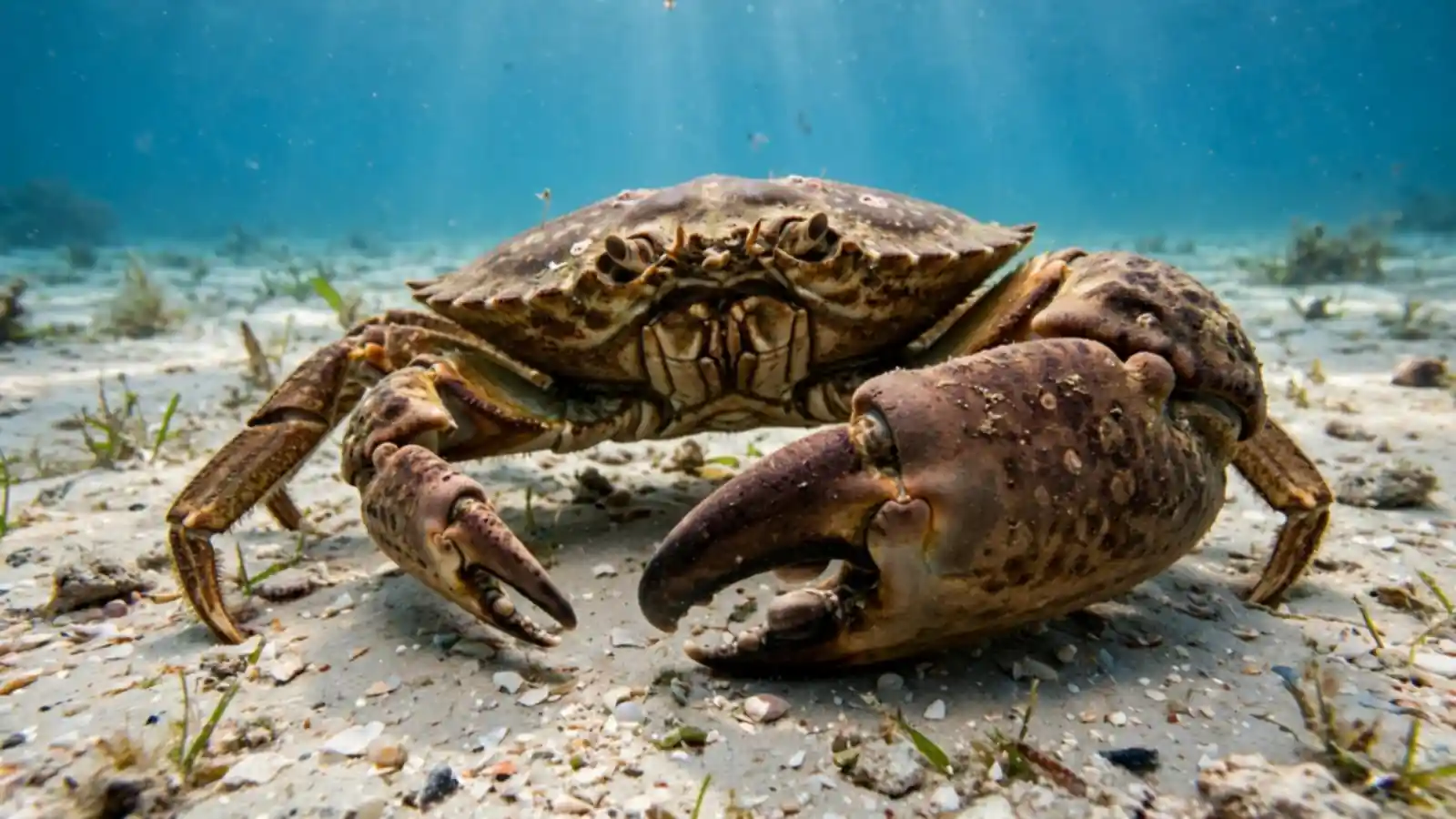
The crab lives 7 to 9 years, moulting as it grows, and it spends its life on reefs, jetties and seagrass beds, hiding in crevices by day and foraging at night. It is a strong, aggressive animal, and its claws can break a finger, so fishermen handle it with respect and with tools, not bare hands.
Crusher and Pincer: The Two Claws
It carries two different claws, and the difference is the point. The crusher claw is the big one, a heavy, blunt weapon with broad molar-like teeth, built to crack the shells of oysters, clams and snails. The pincer claw is smaller and sharper, built to pick, tear and defend, and the two work together like a hammer and a pair of pliers.
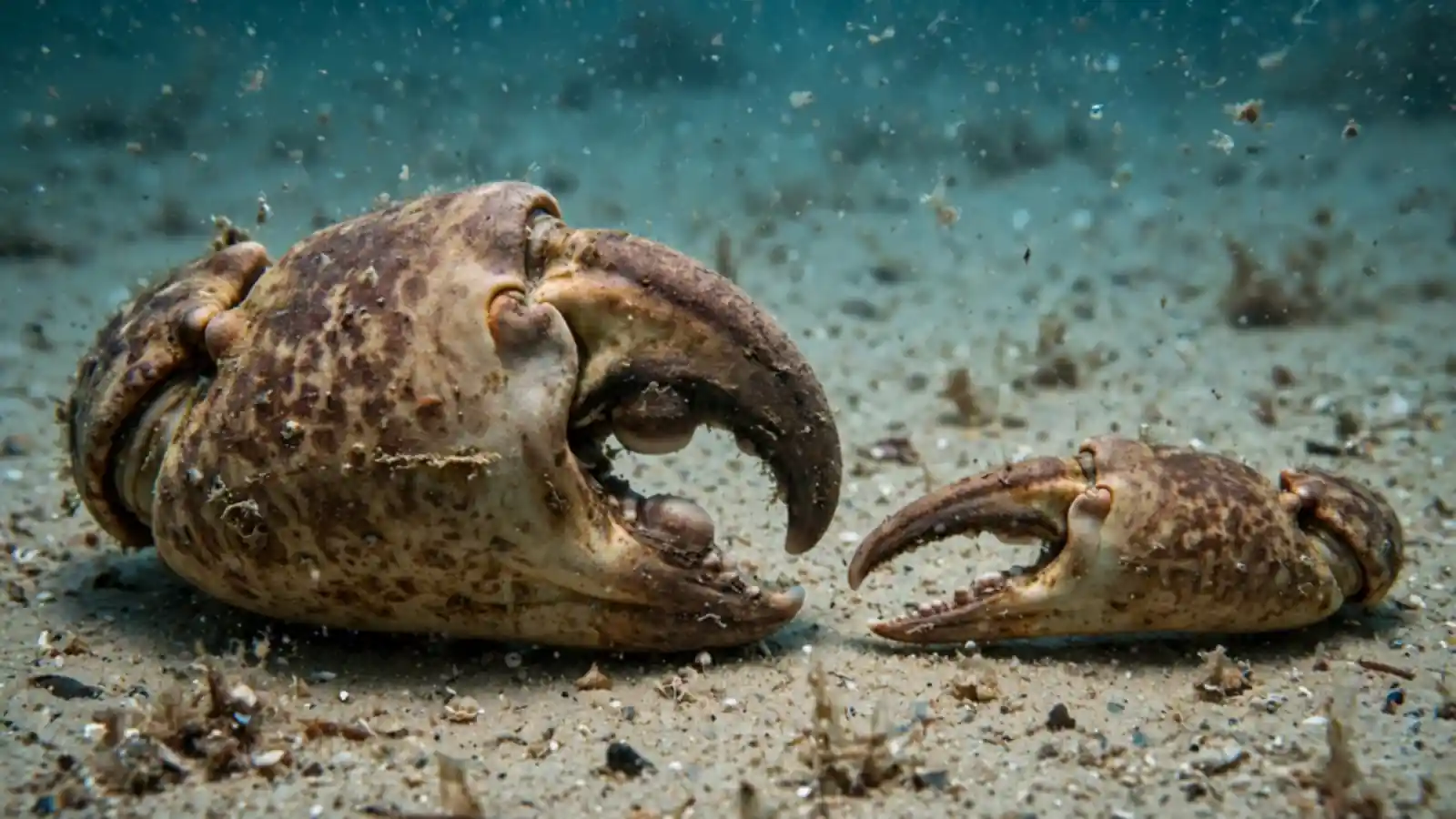
If one loses its crusher, the pincer can grow into a crusher over successive moults, and a new pincer grows beside it — the animal rebuilds its toolkit, not just its claw. The handedness is not fixed: a crab can be right- or left-clawed, and the crusher can sit on either side. The two claws are its livelihood, and the fishery is built around taking only one of them.
Why Only the Claws? The Claw-Only Fishery
The fishery takes only the claws, and the reason is regeneration. A fisherman pulls a trap, takes one claw from each legal crab, and returns the crab to the sea alive, where it grows a new claw in about a year to eighteen months. The body is never taken, and the animal gets a second chance, which is why the fishery has lasted for generations.
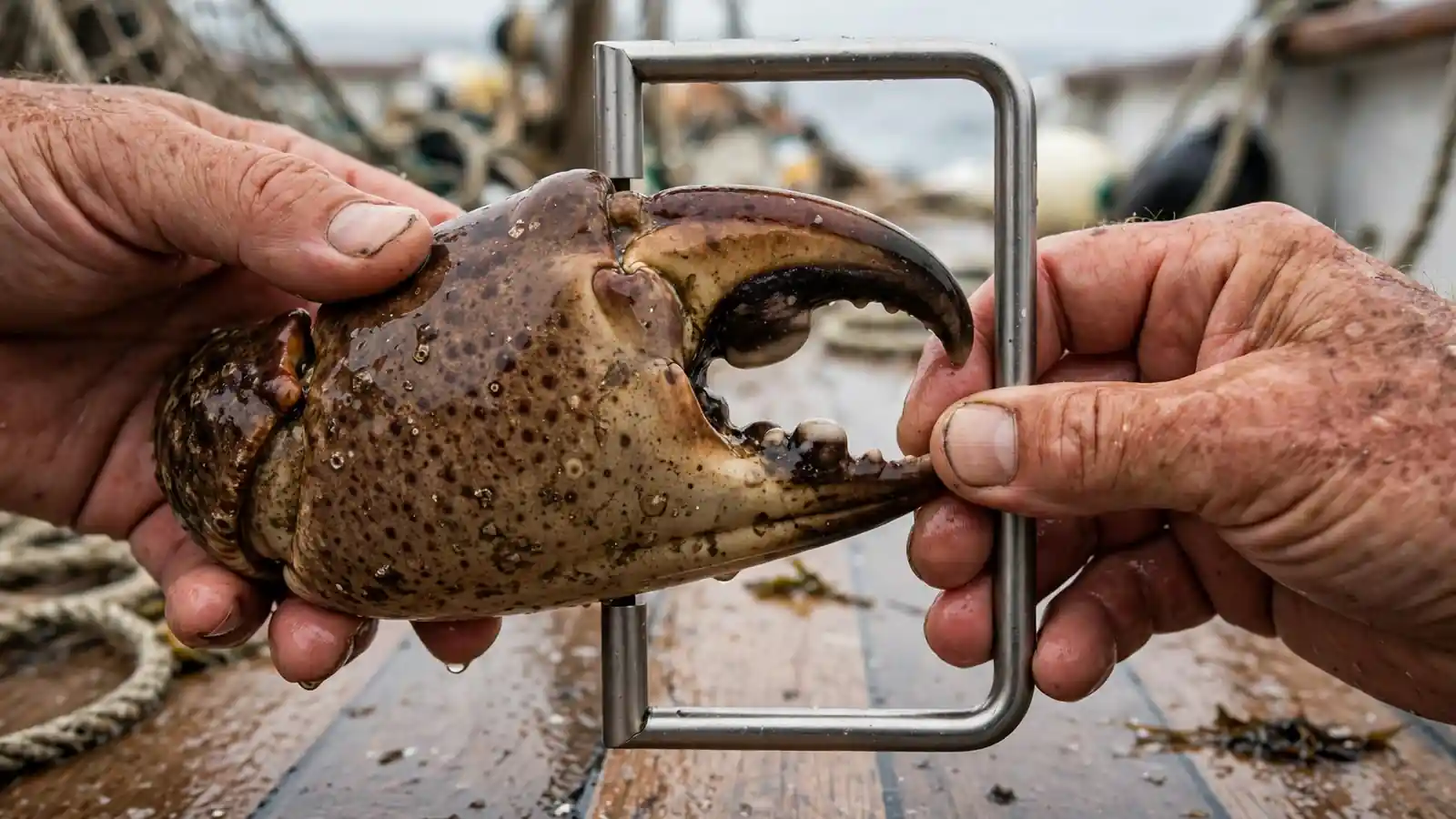
The rule is one claw only, and it matters. Taking both claws leaves the crab unable to feed or defend itself, and the mortality figures show it plainly. The claw-only rule is the compromise that makes the fishery possible: the fishermen get the valuable meat, and the crabs get to live, regrow and be caught again. It is the only fishery of its kind in the world.
Do the Claws Grow Back? Regeneration
Yes, the claws grow back, and the time is about a year to eighteen months. Sources give 12 months and 18 months, so the honest range is a year to eighteen months, and the new claw starts as a small bud after the next moult, growing larger with each moult until it reaches full size. The replacement is fully functional, and a crab can be caught, declawed and regrown more than once in its life.
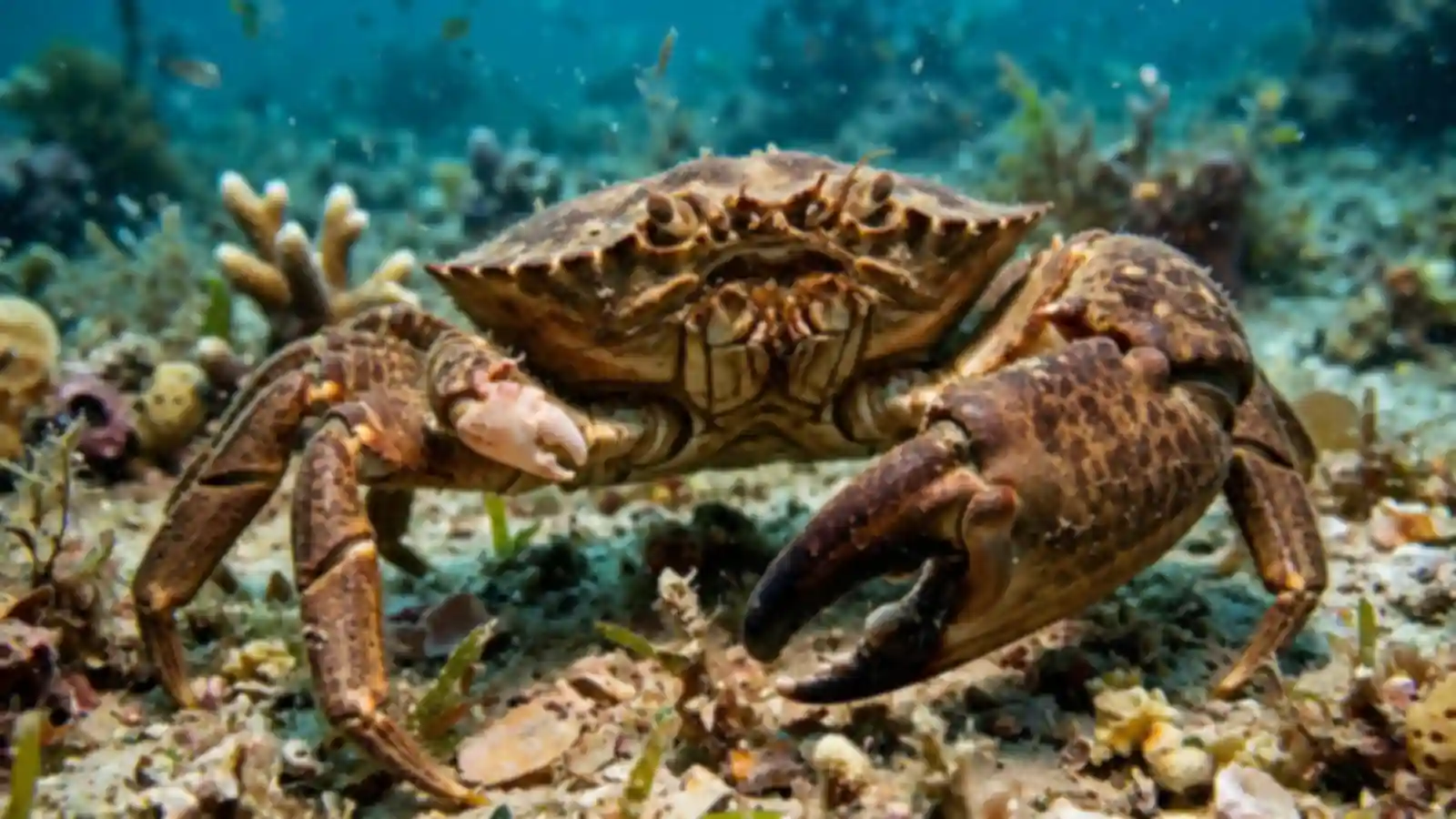
Regeneration is not free. A declawed crab eats less, grows more slowly and is more vulnerable to predators while its claw is small, and the mortality figures in the next sections show the cost honestly. But the ability to regrow is real, and it is the biological fact the whole fishery rests on.
Season and Rules: Oct 15 to May 1
The Florida season runs from October 15 to May 1, and the current season is running now. The dates protect the crabs during the summer breeding season, when the females carry their eggs, and the closed season gives the population time to spawn. The rules are enforced by the Florida Fish and Wildlife Conservation Commission, and they cover the season, the size and the claws.

The current minimum claw size is 2⅞ inches, measured from the tip of the claw to the first joint, and the rule changed in 2020 from the old 2¾ inches. The size is measured with a gauge, and undersized claws must be returned with the crab. The rules also limit the traps, the soak time and the number of claws per trip, and the whole system is designed to keep the fishery going for another generation. For the full detail, see the state stone crab guide.
The Mortality Question: Does Declawing Kill Crabs?
Declawing kills some crabs, and the honest figures should not be softened. Studies report mortality of 23 to 59 percent when one claw is removed, and 46 to 82 percent when both claws are removed, and those figures are attributed to the studies that produced them. The range is wide because the studies differ in method, handling and season, but the pattern is clear: one claw is survivable, two claws often are not.
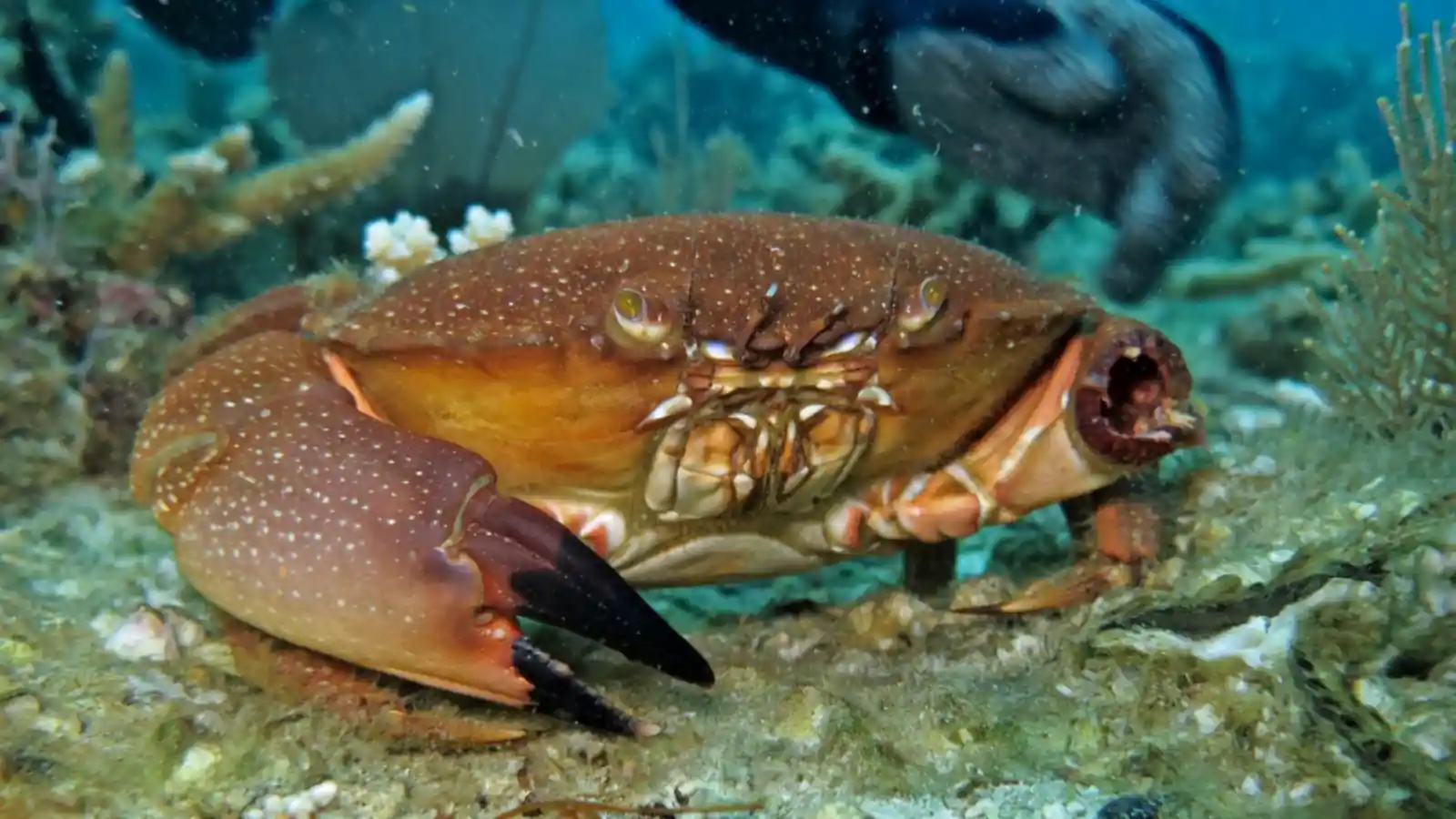
The figures are the conservation argument for the one-claw rule, and they are also the argument for careful handling. A crab that is handled gently, kept wet and returned quickly survives better than one that is left on a hot deck, and the fishermen who take care with their catch are the ones whose fishery lasts. Its story is not a simple one, and the mortality question is the part that deserves the most honest telling.
Fun Facts
- The claws grow back in about a year to eighteen months.
- The Florida stone crab season runs from October 15 to May 1.
- The current minimum claw size in Florida is 2⅞ inches, changed in 2020 from 2¾ inches.
- Studies report 23 to 59 percent mortality when one claw is removed, and 46 to 82 percent when both are removed.
- It is the only crab fished for its claws alone.
- If one loses its crusher claw, the pincer can grow into a crusher over successive moults.
Frequently Asked Questions
Why are only the claws harvested?
Only the claws are harvested because the claw grows back. A fisherman takes one claw from each legal crab and returns the crab to the sea alive, where it regrows the claw in about a year to eighteen months. The body is never taken, and the animal gets a second chance, which is why the fishery has lasted for generations.
Do stone crab claws grow back?
Yes, the claws grow back in about a year to eighteen months. The new claw starts as a small bud after the next moult and grows larger with each moult until it reaches full size. A crab can be caught, declawed and regrown more than once in its life.
When is stone crab season in Florida?
The Florida stone crab season runs from October 15 to May 1. The dates protect the crabs during the summer breeding season, when the females carry their eggs, and the closed season gives the population time to spawn.
How big do stone crabs get?
Its carapace grows 5 to 6 inches across, and the crusher claw is massive in proportion. The crab lives 7 to 9 years, moulting as it grows, and the Gulf species is a little smaller and paler.
What is the difference between a Florida and a Gulf stone crab?
The Florida species, Menippe mercenaria, lives on the reefs and seagrass beds of Florida’s Gulf coast and the Keys, and about 99 percent of the American harvest is Floridian. The Gulf species, Menippe adina, lives further west in the Gulf of Mexico, is a little smaller and paler, and the two hybridise where their ranges overlap.
What do stone crabs eat?
Stone crabs eat molluscs, worms and carrion. They use the massive crusher claw to crack open oysters, clams and snails, and the smaller pincer claw to pick at food and defend themselves. They forage at night on reefs, jetties and seagrass beds.
Are stone crabs endangered?
No, stone crabs are not listed as endangered. The fishery is managed with a closed season, a minimum claw size of 2⅞ inches and a one-claw rule, and the population is monitored. The conservation concern is the mortality from declawing, not the species’ survival as a whole.
Similar Species Worth Exploring
Keep Exploring
Keep exploring the crabs: meet the hermit crab, a crab that borrows its shell, or browse the whole family in our guide to the types of crabs. Then come back to the crab that gives up its claws and lives, the stone crab.