Types of Mollusks
Types of Mollusks: Shells, Sea Slugs, Snails and Clams
Types of mollusks include sea snails, sea slugs, clams, oysters and even octopuses, making mollusks the second-largest animal phylum. This guide profiles 22 marine mollusks, from jewel-like nudibranchs to the giant clam. Most share a soft body, a muscular foot and a shell-making mantle, yet their forms could hardly differ more.
By Emily Carter · Reviewed by our vet team · Updated 10 November 2026 · 7 min read
Second-largest animal phylum7 living classes22 profiles in this guide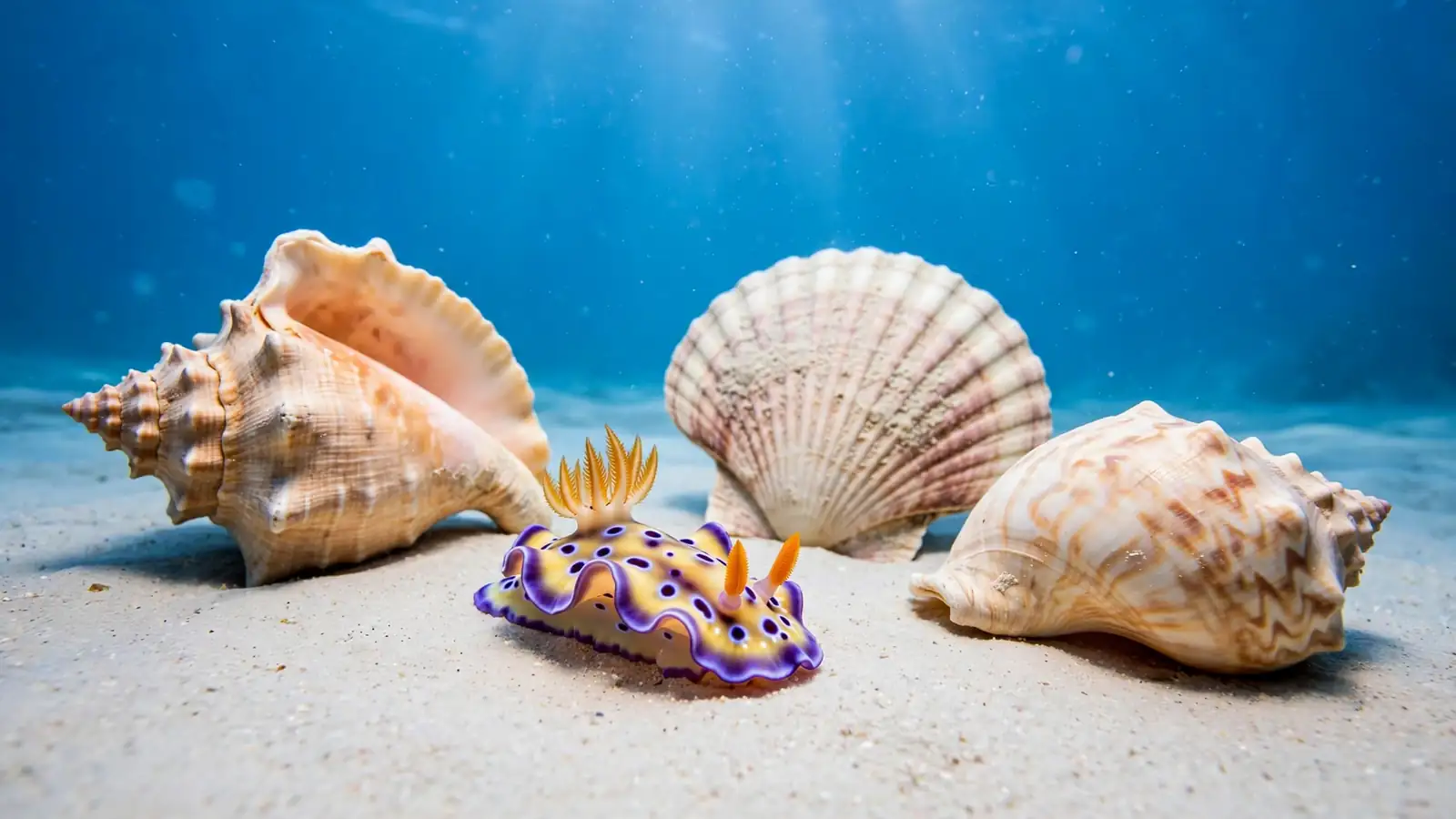
At a Glance
The types of mollusks in this guide built almost every shell on a beach. The phylum runs from a limpet clamped to a rock to the colossal squid, and its members feed as grazers, filter feeders, drillers and hunters. This hub covers the marine shelled and shell-less mollusks; their cephalopod cousins have their own hub. Start with the sea snails and slugs, the largest and most colourful group, then move through the bivalves to the oddballs that break every rule in the phylum.
The Main Types of Mollusks
Three classes dominate. Gastropods, the snails and slugs, are the largest class, usually carrying one coiled shell or none at all. Bivalves, the clams, scallops and oysters, live between two hinged shells and mostly filter feed. Cephalopods, covered in their own hub here, are the brainy swimmers. Smaller classes include chitons with eight shell plates and the tusk-shelled scaphopods.
Despite the variety, the mollusk blueprint repeats: a muscular foot for moving, a mantle that builds the shell, and in most, a radula, a ribbon of tiny teeth for scraping or drilling food. Change the proportions and you can build almost every animal below.
Mollusks also run the shore itself. Mussel and oyster beds shelter young fish, grazing snails keep rocks clean of algae, and burrowing clams turn over sediment like worms do in a garden. Remove the mollusks and most coastlines would quickly look, and work, very differently.
What Are the Classes of Mollusks?
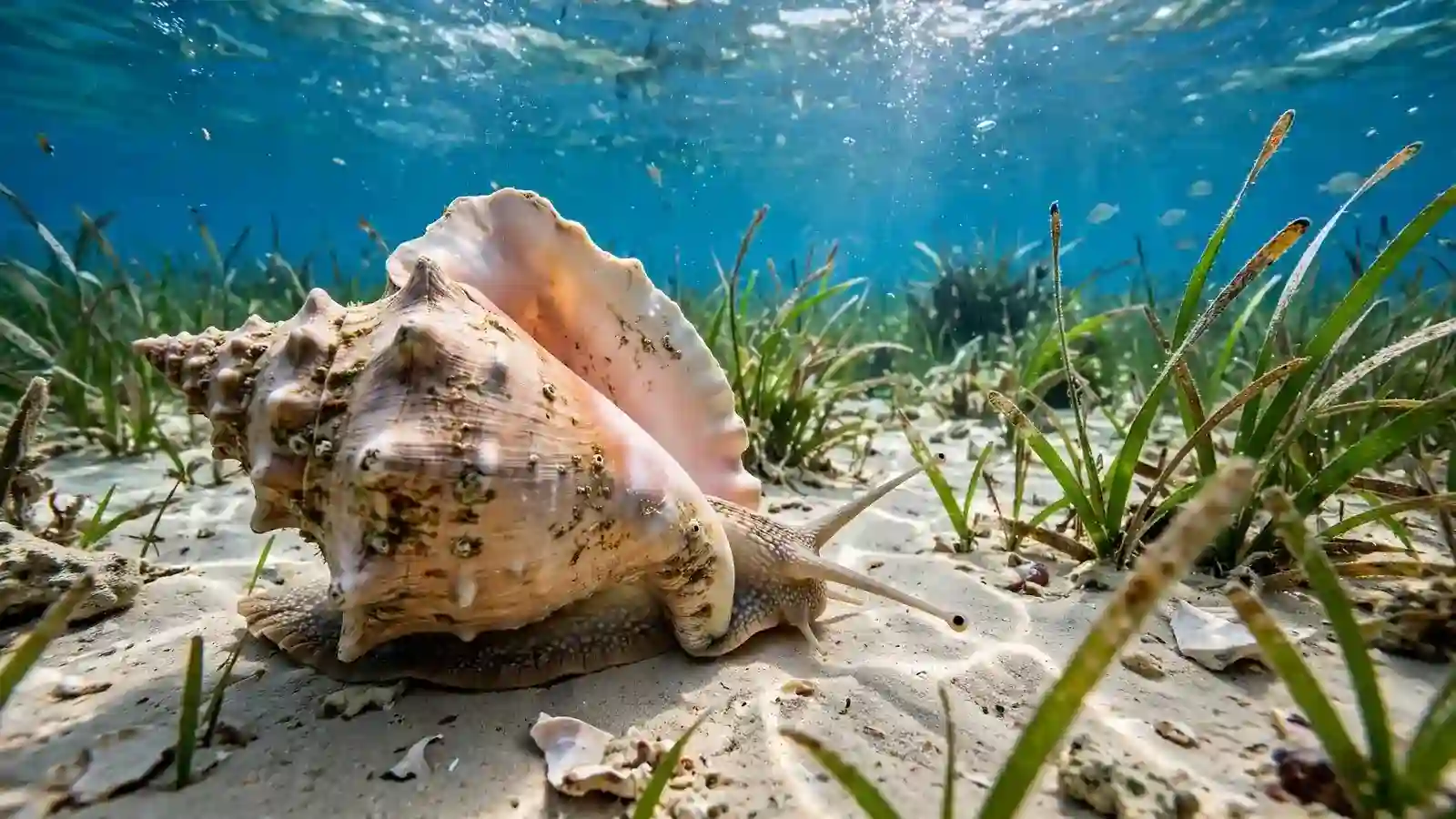
Seven living classes are recognised: gastropods, bivalves, cephalopods, chitons, scaphopods or tusk shells, monoplacophorans, once thought extinct until found alive in the deep sea, and the worm-like aplacophorans. Gastropods alone account for most described mollusk species, which is why snails and slugs fill half of this guide.
For the full scientific picture of the phylum, its anatomy and its fossil record, see this overview of the mollusk phylum, then browse the 22 marine profiles below, grouped from sea snails to the oddballs.
Shells, Feet and the Radula: The Mollusk Body Plan
The shell is built by the mantle, a sheet of tissue that lays down calcium carbonate layer by layer, which is why shells grow in spirals, fans and plates but never change their basic pattern. Underneath sits the muscular foot: a crawling sole in snails, a digging wedge in clams, and in cephalopods a set of arms and a funnel. One body plan, endlessly remodelled.
Feeding uses the radula, a conveyor belt of tiny teeth found in almost all mollusks except bivalves. Grazers scrape algae with it, cone snails turn one tooth into a venomous harpoon, and moon snails use theirs like a drill. Bivalves gave the radula up entirely and instead strain food from the water with their gills, filtering as they breathe.
Sea Snails and Slugs
The gastropods: one muscular foot, one shell or none at all, and the most varied feeding styles in the whole phylum, from algae grazers to venomous harpoon hunters and solar-powered slugs.

Clams, Scallops and Oysters
The bivalves: two hinged shells, no head and no radula, and a living made by filtering water, burying deep in sand or farming sunlight with algae that live inside the mantle tissue.
Chitons and Oddballs
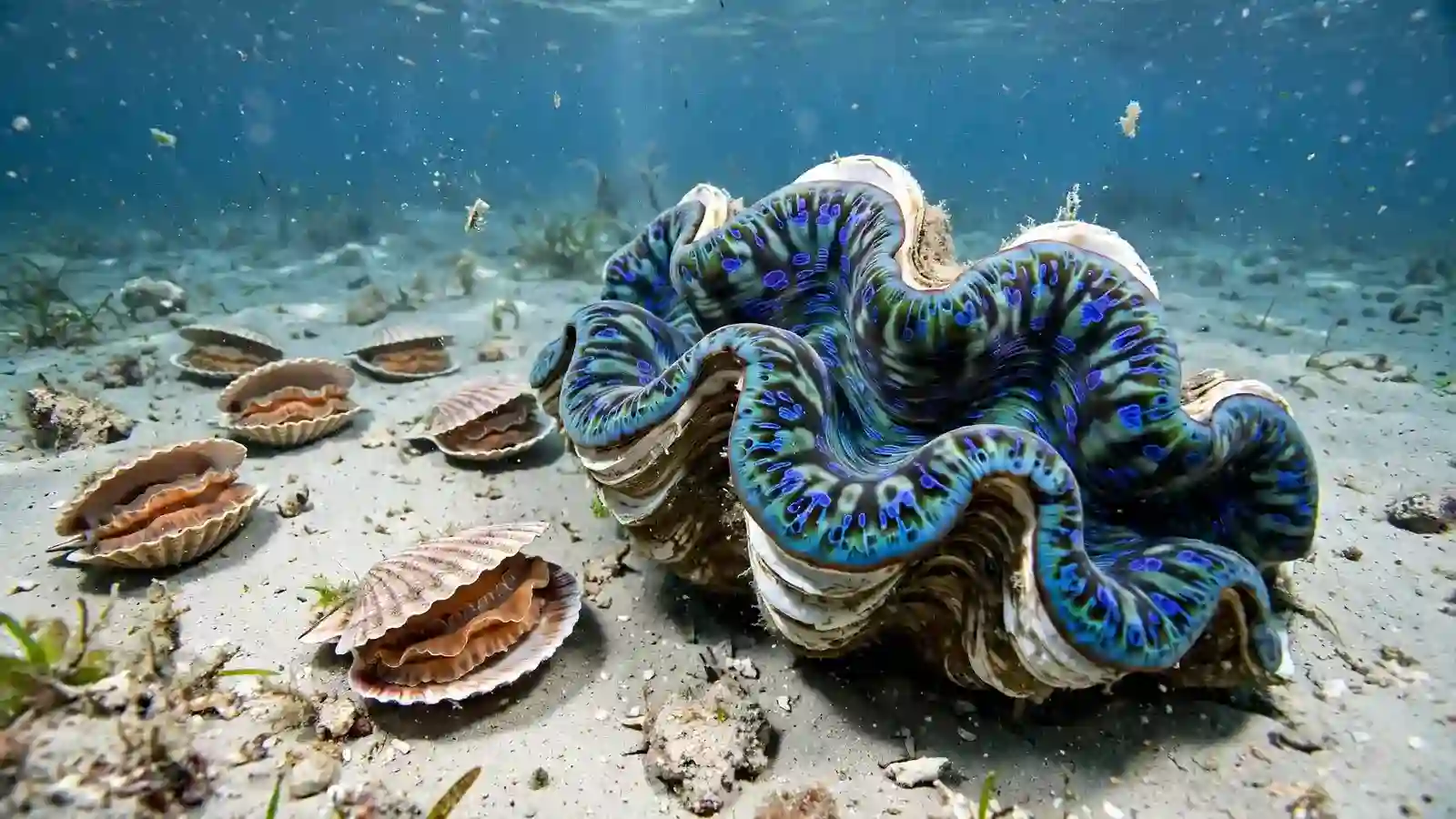
The rule-breakers of the phylum: armour made of eight separate plates, a clam that bores through wood, and a shelled cephalopod the plan files here.
Fun Facts
- The giant clam can weigh more than 200 kilograms and live for over a century.
- Some nudibranchs steal the stinging cells of jellyfish and reuse them for defence.
- A limpet’s teeth are among the strongest natural materials known to science.
- Oyster reefs filter huge volumes of water; a single oyster can filter dozens of litres a day.
- The geoduck is one of the longest-lived animals, with a record age above 160 years.
- Cowrie shells were used as currency in parts of Africa, Asia and the Pacific for centuries.
- Pearls are a mollusk defence: an oyster coats an irritating grain in shell material, layer by layer.
Frequently Asked Questions
What Are the Main Types of Mollusks?
The main types of mollusks are gastropods such as snails, slugs and nudibranchs, bivalves such as clams, scallops and oysters, and cephalopods such as octopuses and squid. Smaller groups include chitons with their eight shell plates, tusk shells, and two obscure deep-sea classes that few people ever see alive.
How Many Classes of Mollusks Are There?
There are seven living classes of mollusks: gastropods, bivalves, cephalopods, chitons, scaphopods, monoplacophorans and aplacophorans. Gastropods are by far the largest class, while monoplacophorans were known only as fossils until living ones were found in 1952.
How Many Species of Mollusks Are There?
More than 85,000 living mollusk species have been described, making mollusks the second-largest animal phylum after arthropods. Estimates of the true total run far higher, because many deep-sea and tropical species remain undescribed.
Is an Octopus a Mollusk?
Yes. The octopus is a mollusk in the cephalopod class, related to snails and clams. It has lost the outer shell, but it keeps the mollusk mantle and foot, transformed into the arms and funnel it swims with. Its full family is covered in our cephalopod hub.
What Is the Difference Between Gastropods and Bivalves?
Gastropods have one shell, or none, a distinct head and a single muscular foot, and most graze or hunt with a radula. Bivalves have two hinged shells, no head or radula, and most filter plankton from the water with their gills.
Do All Mollusks Have Shells?
No. Sea slugs and nudibranchs have lost the shell, octopuses have lost it too, and in squid and cuttlefish it survives only inside the body as a pen or cuttlebone. Some slugs keep a tiny internal shell remnant. Even so, most living mollusks, including all the clams, oysters and snails profiled here, keep a proper outer shell.
What Is the Largest Mollusk in the World?
The colossal squid is the largest mollusk by weight, and the giant squid is among the longest. Both are cephalopods. The largest shelled mollusk is the giant clam, whose shell alone can exceed a metre across.
Similar Guides
Keep Exploring
From the types of mollusks, swim on to their most athletic relatives in the types of cephalopods, or meet the ocean’s top hunters in the types of sharks. The brightest animals in this hub are barely longer than your thumb, and all of them reward a slow look through the types of mollusks.